
• Our Blogger

    Fr. Joseph Jenkins

  • The blog header depicts an important and yet mis-understood New Testament scene, Jesus flogging the money-changers out of the temple. I selected it because the faith that gives us consolation can also make us very uncomfortable. Both Divine Mercy and Divine Justice meet in Jesus. Priests are ministers of reconciliation, but never at the cost of truth. In or out of season, we must be courageous in preaching and living out the Gospel of Life. The title of my blog is a play on words, not Flogger Priest but Blogger Priest.

  • Archives

  • Categories

  • Recent Posts

  • Recent Comments

    forsamuraimarket's avatarforsamuraimarket on Ask a Priest
    Jeremy Kok's avatarJeremy Kok on Ask a Priest
    Jeremy Kok's avatarJeremy Kok on Ask a Priest
    V's avatarV on Fallen Priests & Their…
    anonymous's avataranonymous on Ask a Priest

We Will Never Exhaust the Divine Mystery

The souls of the dead in heaven are divinized as saints by grace but by nature are still human.  We will have a share in the risen life of Christ. However, we will always be finite creatures. There can be no tedium in heaven because by intellect and will, we can never fully exhaust the divine mystery. We will be drawn eternally into the depths of knowing and loving God.  This process begins in this world. We come to the Lord with a faith realized in loving obedience. God gives us sanctifying grace and we are made sons and daughters to the Father, kin to Christ, children of Mary and inheritors of the kingdom of heaven.  Death makes this orientation permanent. We encounter Christ, not as strangers but as friends. Restricting ourselves to this world, we find that all the saints of the Church demonstrate great holiness while many of their opinions, even in reference to religious faith, sometimes fall short or are inexact.  Error will certainly end when we pass through the door from this world to the next; but our capacity to understand and to contain the mystery of God will always be limited by our nature.  This truth applies to both angelic and human spirits.

I do suspect there is a profound openness to truth and the gift of love in heaven.  This would conflict with hell where the demons and lost souls know something of the truth but place a limit or barrier upon their knowing and loving.  We experience in this world a similar type of division and adversity from those with hardened hearts, “I want nothing to do with you!  I’ll use you up and throw you away!  You mean nothing to me! I disown you!” The damned in hell probably have a comparable mentality and stagnation of the heart.

Here on earth we receive the risen Lord in the Eucharist.  God feeds us.  There are no sacraments in heaven as there is no need for sacred signs.  The saints see God and the mystery directly. There is no more faith because the saints behold and know God (as well as his truths) in an immediate fashion.  There is no more hope because every aspiration has been realized.  The only theological virtue that can cross the threshold of heaven with us is love or charity. This love draws us into the Trinitarian life. The sacrifice of the Pilgrim Church re-presents the oblation of Christ. The sacramental meal is a foretaste of the banquet of heaven where our union with God is realized and our Lord gives us a full share in his life. There can be no melancholy or boredom in heaven. Paradise is a far cry from the popular image of lazy angels sitting on clouds playing harps. The mystery of God can never be exhausted.  There will always be more to know.  The more we know, the more we will love.  The more we love, the more we will want to know.  This is the pattern of the finite creature to the infinite Creator.

I can well appreciate that secular critics deny the soul and view the intellectual life as the operation of fleshy brains.  Romantics might speak of the heart as the source of love, but in truth the brain is the place where material memories and thinking takes place. As a Christian, I would suggest that as a composite of flesh and spirit, the efforts of the brain mimic the powers of the soul.  Brains are not all the same and all of them have limits in regard to learning and to the physical senses. Cerebral matter  can also become diseased, causing people to struggle with thinking and remembering the most basic of facts and relationships.  The brain is physical and like the rest of the body, it has parts that can break down.  Parallel to this, the human soul has no parts and is indestructible.  It grants us a self-reflective knowledge that goes beyond the ability of the brain.  We are more than thinking meat.  Memories are not merely stored as electrochemical processes used by neurons but also make lasting impressions upon the human soul.  Just as we are often surprised by the detail of dreams; I suspect we will also be surprised as to what the soul retains after death.  What would a human being be if he were never to forget and we were to ponder matters with perfect clarity?  I suspect that the material brain both enables rational knowing and reflection as well as impedes it.  (In any case, I would not want to define the soul as simply a hard drive or cloud backup of what is in our brains.  There is a constant inter-working that is part of the mystery of the human mind as understood by Christian believers.)  What we now see as through a fog or veil, we will see clearly.

What and who we know, as well as love, survives the grave.  Indeed, it gives us our eternal orientation.  We are either like the wise virgin bridesmaids at the door with the burning lamps or like the foolish ones who walk away looking for more oil.  When Christ, the divine bridegroom comes for us, he should find us alert and ready to enter into the nuptial banquet.  If we fail to remain steadfast and prepared, we might hear those terrible words of damnation, “Amen, I say to you, ‘I do not know you.’”

If pride is the overriding sin of the devils, then a lasting humility is the posture of the saints.  Compared to God we may seem insignificant, literally as nothing. And yet, Almighty God has looked upon us as his children.  I would argue that the prayer that Jesus gives his apostles has an eternal significance.  The word Jesus uses for “Father” is purported by certain exegetes as the one used by little children. I suppose we would render it as “papa” or “daddy.” All of us, even the greatest doctors of the Church like Augustine and Aquinas, may be counted among the babes of heaven.  We are summoned to know and to love God while in this world.  All we know is still just scratching the surface. Eternity will allow us to continue this exploration of knowing and loving.  Humility is not just the approach of men and women in this world, but of the saints and angels in the next.  We must become like little children if we want a place in the kingdom.  Those who are bloated with pride, feeling that they are all grown up and know enough already will find themselves in hell.  Similarly, all those who place limits on love will also know the loss of heaven.

The Ranks of Heaven

While discussing the nature of heaven, a view was put forward that seemed eerily similar to the utopian goal of communism. It was suggested that the kingdom was a classless society where everyone was equal in terms of standing and in reference to spiritual gifts. This was claimed as necessary to avoid conflict and competition.  It was even argued that God, or at least the incarnate Christ, would be in the mix as just one of the crowd.  I was aghast at the notion, and argued that Jesus is a divine Person of the Blessed Trinity.  Our posture in heaven is to adore or worship God.  Given that there is a hierarchy of angels and multiple choirs, why would we think that mankind would be reduced to one rank and a single chorus?

It was charged that I would divide the heavenly kingdom between an elete class and second-class citizens. As a believer, it is my conviction that the dignity of persons and the sanctity of life are “incommensurate” goods. If such be the case in this world, then how could I argue a loss of value or multiple values in the world to come? Attempting a response, I asserted as a fundamental truth that everyone is loved by God as precious and irreplaceable. But that does not speak to our personal histories, the depth of our faith and convictions and the capacity we have for grace and holiness. It is apparent that some have a greater capacity to sacrifice and to love than others. There are certain people who live such exemplary lives of witness that they are canonized as saints by the Church. They become our heroes who demonstrate how many callings and lives can follow in the one way of Christ. Some have walked with the Lord their entire lives.  Others have borne great crosses.  Still some come back to the Lord late in life.  They may all win heaven, but I would not suspect that we would suddenly become all the same.  While I certainly think the existence of heaven and hell is an expression of divine mercy and justice; I do not think it necessitates an egalitarian equality in our status before God.

Pride can have us wrongly demand a choice place. I suspect this type of mentality might awkwardly land us in hell.  Pride can also demand that no one else have a better or more desirable place. This way of thinking would probably (at least) land us in purgatory.  I do not believe the souls of the just are concerned about such matters.  They are just happy to have a room in the house of God.  One may have the basement and another, a penthouse; the saints are not afflicted with jealousy.  Our posture or place will reflect the truth and that will be enough for us.  The tremendous joy of being in God’s presence will make any sentiments of loss impossible.

I suspect our proximity to God will be dynamic and always moving forward.  Just as we must be disposed or open to the graces of God in this world; the souls of heaven will abide with God in direct proportion to their ability to know, to love and to open themselves to the divine mystery.  Analogies fall short.  More than being in a mere room, we will know a profound union with God.  We will live within the Trinity itself.  Some will find themselves in the periphery of this mystery and others will be closer to its heart. We are made for God. We are not interchangeable, and as distinct persons, each of us will have our own song in the divine harmony of praise.

The Intercession of the Saints

Taking the side of the Pharisees over the Sadducees, Jesus testifies to life after death. “That the dead will rise even Moses made known in the passage about the bush, when he called ‘Lord’ the God of Abraham, the God of Isaac, and the God of Jacob; and he is not God of the dead, but of the living, for to him all are alive” (Luke 20:37-38).  While the gates of heaven are closed before the coming of Christ, our Lord speaks of a genuine communion between the living (on earth) and those heroes of faith who had come before.  Jesus will ultimately translate these souls from the limbo of the fathers into heaven.

Over the years in debates with fundamentalists about the communion of the saints, many of them insist that the saints are sleeping and others that they are alive but cannot possibly be aware of what is happening on earth.  Catholicism would argue that the heavenly saints are alive, aware of us and praying for us.  Admittedly, there is some question as to whether this awareness is part of the fabric of the afterlife or whether it is made possible through a special divine intervention. We know that in Jesus Christ love is stronger than death.  While our loved ones are taken from our sight, we are still bonded to them in love. This speaks to the profound mystery of the Church in pilgrimage, in purgation and in glory.

Some of our number have run the race and have won a share in the crown of Christ.  They remain in solidarity with brothers and sisters in the world who are still being tested.  “Therefore, since we are surrounded by so great a cloud of witnesses, let us rid ourselves of every burden and sin that clings to us and persevere in running the race that lies before us” (Hebrews 12:1).

I do not believe that our guardian angels and the blessed souls watch us as earthly voyeurs might watch a reality television program. Instead, they are actively engaged.  They reach out to us with their love and worship God with orations of praise and incessant intercession. They seek to protect us from malignant spiritual entities.  They would have us where they are. Those in glory are not suffering amnesia about those they have left behind. Indeed, I suspect they know us better than before because now they see us as we truly are, behind all our posturing and deception. They cannot force us to the will of God. But their witness and prayers may help some to find the path to eternal life. One critic suggested that if the saints were to see their earthly family and friends sinning then it would bring them sadness— no, this is contrary to heavenly joy. While it might be hard for us to understand, this is not the case.  Heaven will never be held hostage to sin or hell. The saints cannot be sad because where they are has no room or vacuum for sadness. While they are aware of us, their sights are also always upon God. The barrier or membrane between heaven and earth will allow such helps as happiness, counsel, and love to pass through; but never sadness, manipulation, hatred or despair. The heavenly saints like our Lord are now impervious to pain. This is one of the most profound mysteries for us who must still endure this veil of tears.  The saints implore grace that we might know repentance, conversion and faith. They pray that we might be courageous in adversity.  They beseech the throne of God to be merciful to us.  Chief among the saints is Mary who loves and intercedes for us with her immaculate and “maternal” heart.

Christ is the way, literally the link between heaven and earth.  This is our lifeline.  This is the real reason why the saints are still aware of us and why we remember them as alive in the Lord.  We are not orphaned by God.  While we await the final judgment and the consummation of the world, we acknowledge that we have not been abandoned.  Christ is present in the proclaimed Word. Christ is present in his priests who stand at the altar and who offer the forgiveness of sins.  Jesus is present in his person and in his saving activity at every Eucharist. We receive the risen Christ in Holy Communion.  The Lord is with us when we gather to pray.  The Church is the Mystical Body of Christ.  No part of this body has been severed.  The Church is one:  the Church in pilgrimage, the Church in purgatory and the Church in heaven.  We are one in the Lord.  We have been reborn and given a new identity by the power of the Holy Spirit.

The saints are calling us to the other side of the rainbow.  The Lord calls us each by name.  Heaven beckons to us.

The Reality of Ghosts

“When Saul saw the Philistine camp, he grew afraid and lost heart completely. He consulted the LORD; but the LORD gave no answer, neither in dreams nor by Urim nor through prophets. Then Saul said to his servants, ‘Find me a medium through whom I can seek counsel.’ His servants answered him, ‘There is a woman in Endor who is a medium.’ So he disguised himself, putting on other clothes, and set out with two companions. They came to the woman at night, and Saul said to her, ‘Divine for me; conjure up the spirit I tell you.’ But the woman answered him, ‘You know what Saul has done, how he expelled the mediums and diviners from the land. Then why are you trying to entrap me and get me killed?’ But Saul swore to her by the LORD, ‘As the LORD lives, you shall incur no blame for this.’ ‘Whom do you want me to conjure up?’ the woman asked him. ‘Conjure up Samuel for me,’ he replied. When the woman saw Samuel, she shrieked at the top of her voice and said to Saul, ‘Why have you deceived me? You are Saul!’ But the king said to her, ‘Do not be afraid. What do you see?’ ‘I see a god rising from the earth,’ she replied. ‘What does he look like?’ asked Saul. ‘An old man is coming up wrapped in a robe,’ she replied. Saul knew that it was Samuel, and so he bowed his face to the ground in homage. Samuel then said to Saul, ‘Why do you disturb me by conjuring me up?’ Saul replied: ‘I am in great distress, for the Philistines are waging war against me and God has turned away from me. Since God no longer answers me through prophets or in dreams, I have called upon you to tell me what I should do.’ To this Samuel said: ‘But why do you ask me, if the LORD has abandoned you for your neighbor? The LORD has done to you what he declared through me: he has torn the kingdom from your hand and has given it to your neighbor David. Because you disobeyed the LORD’s directive and would not carry out his fierce anger against Amalek, the LORD has done this to you today. Moreover, the LORD will deliver Israel, and you as well, into the hands of the Philistines. By tomorrow you and your sons will be with me, and the LORD will have delivered the army of Israel into the hands of the Philistines.’ Immediately Saul fell full length on the ground, in great fear because of Samuel’s message. He had no strength left, since he had eaten nothing all that day and night. Then the woman came to Saul and, seeing that he was quite terror-stricken, said to him: ‘Remember, your maidservant obeyed you: I took my life in my hands and carried out the request you made of me. Now you, in turn, please listen to your maidservant. Let me set out a bit of food for you to eat, so that you are strong enough to go on your way.’ But he refused, saying, ‘I will not eat.’ However, when his servants joined the woman in urging him, he listened to their entreaties, got up from the ground, and sat on a couch. The woman had a stall-fed calf in the house, which she now quickly slaughtered. Then taking flour, she kneaded it and baked unleavened bread. She set the meal before Saul and his servants, and they ate. Then they got up and left the same night.” (1 Samuel 28:5-25).

If genuine, then Samuel was a ghost summoned by a medium. He would be regarded as a hero of faith and today as a saint.  However, he would have come from the limbo of the fathers as Christ had not yet opened the way to true heaven. Genuine or not, the manner in which the ghost was called forth was a violation of God’s law. I suspect that he appeared, not because of the medium but rather by God’s permission to announce judgment against Saul.

Jews and Christians alike are forbidden to use mediums, oracles or fortune-tellers (see Deuteronomy 18:11 and Leviticus 19:31).  God was already displeased with Saul.  Now Saul had sealed his fate by employing the services of a witch.

Many of us are intrigued by ghost stories. Protestants more so than Catholics, tend to regard them as either pure fiction or as demonic deception.  Many Catholics have an open mind about such phenomena.  Indeed, some of the stories seem to reaffirm our teachings about purgatory.  If there be ghosts, from where do they come?  This topic can be somewhat dangerous. We are warned not to be obsessed by such preoccupations. Séances and Ouija boards are condemned, not merely as superstition but as a slippage into witchcraft or the occult.  Catholics pray for the dead and invoke the saints to intercede for us.  However, we do not seek direct two-way communication.  The proper focus of all prayer, even sanctoral orations, is always almighty God. There are stories of the saints appearing and speaking with the living, as in the life of Joan of Arc.  However, there is a difference between what God permits and what men might seek. The danger is demonic subterfuge and lies. There are cases where demons masqueraded (supposedly) as souls of the dead.

Dr. Peter Kreeft speaks of three types of ghosts:

1.  Ghosts from heaven;

2.  Ghosts from purgatory; and

3.  Ghosts from hell.

I have already made some reference to the first.  There are numerous other cases in the long history of the Church.  These are the apparitions of visionaries, often with messages. Like the Virgin Mary, they always direct us back to Jesus and implore repentance and faith.  We are urged to pray and to remain steadfast. They are not subject to diabolic necromancy or sorcery. They would never promote rebellion against the Lord or his Church.  Neither would they tolerate or legitimize immorality. If a paranormal entity is malicious then it is not from heaven.

Kreeft speaks about the saints who come with a message or warning from heaven. I have always emphasized the ones from purgatory who need our prayers. The third type has undergone much speculation but about which many of us are unsure. If there were an evil or malicious haunting, I would usually regard it as demonic and not originating with a human soul or ghost. However, those who speak about the need to heal the family tree and certain forms of deliverance would join Kreeft in speaking about ghosts from hell. While the living can be haunted by past trauma and memory, I would have thought the damned souls too helpless and restrained by God to intervene in earthly affairs, but I may be wrong.

I remember a story told years ago about a convent of women that felt assured about the saintliness of a particularly pious nun who had recently died.  One day while at chapel in prayer, her ghost walked toward the altar.  Turning to her fellow sisters, she beseeched, “Pray for me.”  She then placed her hand print in wet mortar recently used to repair the wall and disappeared. Presumptuous of her personal holiness, correction was offered; she needed their prayers as a soul in purgatory.

The Saints Raise Their Hearts & Minds to God

There are a lot of misconceptions about heaven.  It is not a place where we can better satisfy hedonistic longings.  Many of the renditions of heaven on television and in movies would in time probably more resemble hell than paradise. It is not simply a place where nice people go after death.  Being nice will not save us.  The pattern given to us by Scripture is crucial: repentance, faith in Christ, conversion and loving obedience. Jesus is the Way and the Truth and the Life. There is no other way to the Father.  This truth of the kingdom may strike many as unfair, but God is the one who sets the parameters for justification.  The acquisition of heaven is not further self-absorption; no, it is rather a detachment that allows for transformation and identification with Christ. The disposition open to grace and holiness is what remains crucial. We must empty ourselves to be vessels of the holy.  The saints of heaven have one overriding activity— they give eternal glory to God. Any vision of heaven that neglects this facet is false.

We were made for God.  Our hearts will know incalculable joy in being within the divine presence. Heaven is not merely a place where men will reason without feeling like the Star Trek Vulcans attempt to do. Our minds will acquire the truth for which we have always longed— to see and know God face to face within the beatific vision.  But while we will not be afflicted with fickle emotions, as human beings we will have our hearts and feelings saturated by the divine presence and we will be touched by infinite love. We will be home with the Lord.  There will be no more sadness and tears.  All will be joy.

We are promised restoration beyond the grave. We will not be disembodied ghosts forever. We believe that just as our Lord rose from the dead in a glorified body, so shall we be restored, and similarly with immortality.  Further, while on our earthly pilgrimage, our emotions and passions are often rebellious and our nature is wounded by concupiscence. The saints will not know rebellion in their members. We will know control and order, not as robots or ants, but as the children of Adam and Eve were meant to be from the beginning.  Of course, we will also be more as the incarnation and work of Christ has merited for us a share in the grace-filled divine life.  Humanity is raised to a level higher than ever before.  Like the angels, there will neither be marriage nor the begetting of children; instead, we will experience in the light of Christ the immensity and purity of love beyond the current shadows.  While our bodies have often had dominion over our souls, the situation is reversed in heaven.  We will be our true selves.  We will know and love and live in grace, no longer subject to the accidents of nature or corporeal chemistry. We will be able to think and feel without distraction and disorientation. Our human nature will be perfected. As Dr. Kreeft says in his essay on heaven, “All our humanity is perfected, not diminished, in Heaven.”

No Loss or Suffering in Heaven?

Can God and the saints of heaven experience sorrow for those who have alienated themselves from the Lord and are lost to heaven?

“He will wipe every tear from their eyes, and there shall be no more death or mourning, wailing or pain, for the old order has passed away” (Revelation 21:4).

A priest who answers questions at EWTN insists that the souls of the just will no longer remember those who have damned themselves. He argues that this is necessary to preserve heavenly happiness and peace. I do not believe this is the case.  Rather, given the profound unity of the saints with God, there is no room for such a sense of loss. God, himself, is regarded by classical philosophers as the unmoved mover. He possesses all perfections. He cannot be hurt or changed. The philosopher Dr. Peter Kreeft would direct us to the generations of the triune persons, “a system of self-dying, self-giving.” He is complete and those who abide in him will know fulfillment.  

Recent online debates are also resorting to revised calculations about the number of the damned.  Dr. Ralph Martin is often cited by those who further the traditional assumption that more might be lost than saved. Bishop Robert Barron is frequently quoted by the other side— that most will somehow go to heaven. If the latter were true, there would not be that many to feel any loss about.  But of course, within the perspective of God, one soul is as loved as all souls. (Over a decade ago, a debate raged between orthodox writers of The Wanderer newspaper with those of The New Oxford Review on the subject as to whether some were predestined for damnation. The latter, converts to the faith if my recollection serves me, subscribed to a Calvinistic view and argued that God “hated” sinners and thus the denizens of hell had forfeited the love of God. It was argued that the saints would then concur that they got what they deserved and that would be the end of it. I did not buy the argument and sided with The Wanderer in this debate.)

Part of the problem may be that we are trying to resolve how we will know and feel within the unknown conditions of beatific vision and heavenly light. Currently our awareness is often blurred and everything is touched by an oppressive darkness: suffering, loss, pain, sin and death.  Can we even imagine how things will seem to us when these elements are subtracted?  Theoretically we can try but on the level of real and immediate experience, it is all we know.

Sorrow is defined as “a feeling of deep distress caused by loss, disappointment, or other misfortune suffered by oneself or others.” The resolution in reference to God seems to be within the mystery of the Cross and how we have always appealed to the Sacred Heart devotion. It may be that part of our conundrum is that we are still thinking in a temporal and terrestrial manner. The secret or suitable answer may be in how we spiritually understand the Mass, which is a sacramental re-presentation albeit unbloody of the passion and death of Jesus.  We know that Jesus dies once and for all and that he can never suffer or die again. The weight of the world’s sins included both those who would respond in an affirmative way to his self-offering and gift of himself as well as those who would still reject his saving work and join themselves to the devil.  Look at the apostles Peter and Judas.  Both betray and fail Christ; however, one will later be healed by his love of Christ and the other will despair and destroy himself.  The gift of salvation is available to everyone.  But not all will accept it, only the “many” that constitute the elect.  The misnomer of heavenly sorrow is in the paschal mystery of Christ. God as a perfect spirit cannot be moved; however, in Jesus Christ we have a God who has made himself one of us. This is central to this reflection and I would return to it again and again.

As pilgrims, we celebrate the sacraments and enter into the betrayal, passion and death of Christ.  We apply our many sufferings to the oblation of Jesus, for ourselves and for the reparation of sins.  We may not mourn or feel loss in heaven, but that does not preclude such sentiment in the present.  The mystery of the Cross cannot be restricted to one page of salvation history. It bleeds through the many pages of the story.  Along with the sacraments, we are also called to take up our crosses and to follow Jesus.  Here again, any loss or pain toward brothers and sisters who have said no to God is also experienced. This will later extend beyond the time of testing to the process of purgation. We will suffer not just for ourselves but like our Lord for all those whom we love and would have as a part of us. Parents weep for rebellious children. Siblings lament the ravages of sin in brothers and sisters.  However, once translated into heaven, all the tears would have been shed and wiped away. The time for mourning and pain will come to an end.

The saints in heaven fully embrace divine providence.  The emphasis is upon the goodness of God, what he has done for us and the offer of freedom— not the misuse of freedom or the rejection of God’s gifts.  There is solace to be found in that our Lord as both the Divine Justice and the Divine Mercy has given us every opportunity to share his life and presence.  Those who have turned away are remembered, but as those who have misused their freedom.  They received what they wanted.  God will not force himself upon his children.

God will so saturate us with his joy and his presence that there will be no room or space in us for sadness or sorrow in heaven.  That part of the dance will be completed.  That element of the celestial harmony will already be sung.  God withdraws himself from the damned only because they hate and do not want him. Nevertheless, a spark remains that keeps them in existence. This minuscule spark is what constitutes the legendary and frightening fire of hell.  Poor but happy souls in purgatory will be perfected (or healed) and saints will dance for joy in the great conflagration of God’s love and the damned will withdraw in pain from the smallest glint of a flame.

Dr. Peter Kreeft wonders about the tears of Mary for wayward children. Here again, I would return to the mystery of Christ’s saving work.  Mary is the sorrowful Mother at the hill of Calvary.  She weeps not only for her Son but for all who would become her spiritual children. She will take the dead body of Jesus into her arms. While never ordained a priest, she would have every right to say, “This is my flesh.  This is my blood.”  There is a profound unity between the Immaculate Heart of Mary and the Sacred Heart of Jesus.  They beat in unison, loving not just the holiest of men and women, but also those who are wayward and the most prodigal. There is something eternal about that moment at the Cross. Jesus offers himself to the Father as a sin offering for the world.  However, in a spiritual sense, and as the new Eve, Mary joins Jesus in this precious offering or surrender.  Mary is always the handmaid of the Lord, first of the temple built by men and now of the temple that is Christ’s body.  Even as we begin to tear it down, Mary holds her Son in her arms, seeking already to rebuild this temple— an effort made complete in the resurrection and ascension.

We can never fully appreciate the immense suffering of our Lord on the Cross. This is because he is a divine Person.  It is said that with a greater depth of love there comes an increased capacity for pain or suffering. 

God neither creates nor redeems us from necessity. He fashions us for himself with a perfect freedom.  He wants us to love him freely in return.  The measure of the Cross is to free or liberate us from the bondage to sin and death.  While we prefer slavery, he would again make us free.  The infinite love of God is measured for us on the Cross.  This is how much God loves us.  God makes himself into an absurdity for us, and one that the fallen angels could not stomach.  The almighty is made weak. The invulnerable is wounded.  The eternal is put to death.  Here is the full measure of pain and loss.  While it could not last it would never be dismissed. It is a moment in time given everlasting significance. Heaven touches earth. The eternal enters the temporal.  The full ramifications of the Creator joining himself to his creation are realized.  We do not have the words to express what happens.  It is terrible and yet wonderful.  It seems so awfully bad and yet we even call it Good Friday. Tears of suffering will be transmuted into those of joy.  What would normally be a sign of defeat becomes the greatest of victories.

C.S. Lewis would remind us in his book, The Great Divorce, that hell cannot blackmail heaven.  Manipulation through loss would make a hell of heaven. Dr. Kreeft explains this as God and the saints being entirely active, not passive.  He writes, “We too can love without sorrow or vulnerability because we love only with the active feeling of caring, not the passive feeling of being hurt.”

Is One Free to Sin in Heaven?

There are some questions that can be regarded as silly.  Why?  It is because they focus on a fallacy.  For instance, take this question:  Given that God can do anything; can he make a rock too heavy for him to pick up?  If the answer is YES, then he is not all powerful because he cannot lift the rock. If the answer is NO, then he is not all powerful because he cannot make such a rock.  What is the answer?  The assertion is nonsense because it contains an inner contradiction.  Similar conflicts are found as in the biblical temptation scene. Some will argue that if the devil’s temptations were real then Jesus could have potentially given in and sinned. However, temptation does not necessarily imply the possibility of succumbing. In the case of Jesus, it is impossible.  Sin is by definition an act of disobedience against God. However, Jesus is a divine Person. God cannot sin against himself. Similarly, the question is raised:  if the saints of heaven are free then are they free to sin? The problem is how we understand freedom. While it might be misused in this world, it is perfected in the world to come. True freedom means loving obedience to God.  The misuse of freedom or a false freedom is realized in sin or disobedience to God.  Indeed, it is to embrace bondage to the diabolical.

Free will and moral perfection are in sync for the saints of heaven.  While sin is possible for those who only see dimly as through a veil, such is not possible for those who see God face-to-face. When confronted by the greatest good, which is God, the will is immediately disposed or moved to embrace it. There is no apparent good that can compete with it. Arguably even the angels knew some sort of demarcation when they were tested.

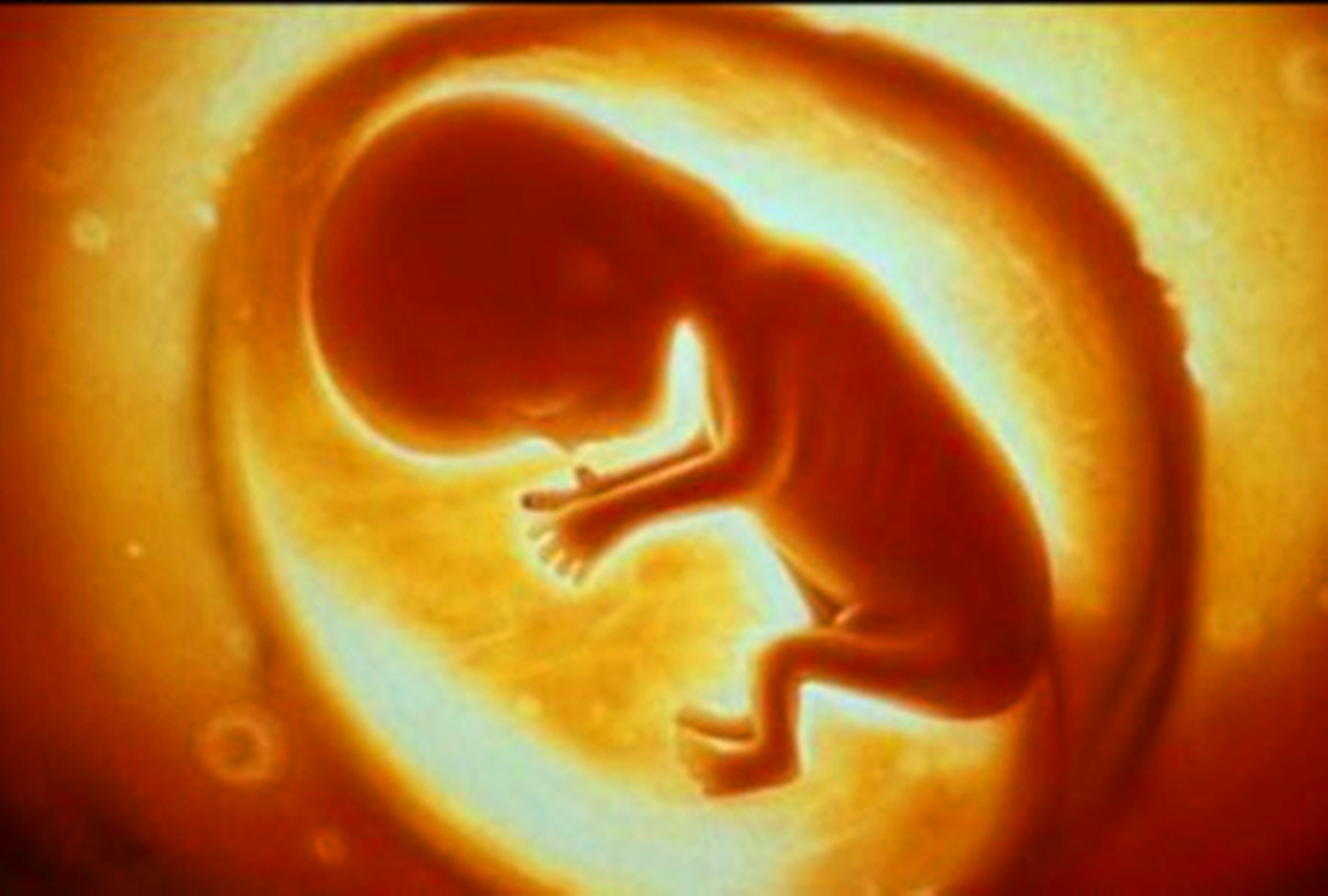
It must also be argued that our ultimate decisions are already made during our mortal lives.  Our orientation is fixed with death. Along these lines, certain theologians argue that the unborn and children who die before reaching the age of reason might be given the opportunity for making a choice in regard to their eternal destiny.  Many suspect that their personal innocence and the intercession of the parents and/or the Church would nudge them to make free decisions in loving God.  But this is speculation, no matter how optimistic the Church might be in their regard.  In any case, the denizens of heaven, both human and angelic cannot change their minds.  They have freely turned their backs to sin and have set their sights on almighty God. Coincidentally, such is also the state of hell and the slavery they have exchanged for freedom. We read the following in the fourth book of Milton’s Paradise Lost:  “Nay, cursed be thou; since against his thy will / Chose freely what it now so justly rues. / Me miserable! which way shall I fly / Infinite wrauth and infinite despair? / Which way I fly is Hell; myself am Hell…” (line 75)

Sin in heaven would be a violation of the very identity of the saints.  Their wills are united to that of Christ. They have been made holy as God is holy.

The Dimensions & Appearance of Heaven

Where is heaven? How big is heaven? What does it look like? Many past believers imagined heaven in the sky, particularly since Jesus ascended and Mary was assumed into heaven. There is also the biblical presumption that hell or Hades is under the earth. Artists have imagined heaven with cathedral like buildings, where the streets are paved with gold and everything is illumined with an interior light. As for how big, we imagine a vastness further than the eye can see. God would certainly insure enough space for all who would call it home. While God and the angels as spirits take up no space or extension; Jesus and the Blessed Mother have glorified bodies, just as the saints will possess. These bodies will have to reside somewhere. We sometimes speak of a new heaven and a new earth. However, I doubt there will ever be a celestial surveyor who could determine the boundaries of heaven or measure the jurisdiction. How big is it?  It is big enough.  I have often pondered the question in reference to our final end.  We will live within the Trinity.  Any way we turn, we will see God.

Physicists speak about the relativity of time and space.  It is my supposition that when it comes to heaven, this relativity is taken to another level entirely with a signification hinted in the sacraments.  When we speak of the Eucharist, we assert that Christ is present in his person and in his saving activity. The entire paschal mystery (our Lord’s betrayal, scourging, crucifixion, resurrection and ascension) is made present in the liturgical action and in the consecrated species.  Just as a taste of heaven can be condensed to the sacrament, we might imagine heaven as a spiritual gravity well, where the providence of God is fully realized and we are offered a share in eternal life.  This new signification or meaning makes the question about size inconsequential. All of creation and salvation history meets in this singularity of the kingdom. One might argue that material creation mimics this situation with its initial singularity, the release of energy with the big bang, and then the unfolding of the universe. God sustains both his material and spiritual creation.

Angels are discussed as spiritual creatures without physical bodies. Stories about full-bodied angels are interpreted as phantasms fashioned so as to relate to men.  Like God, they are perfect spirits that exist outside of time and space.  However, God can give them liberty to become involved with human affairs.  Similarly, God as a perfect spirit can reveal himself to us by entering the human family through the incarnation.  The angels and the souls of the dead know duration but are outside of time.  It has been conjectured that with glorified bodies, the clock might start ticking again as matter and time are partners to each other.  But, having said this we really do not know much about the spiritualized matter or immortality of glorified men and women (where souls and bodies are reconnected).  The risen Christ appears in locked rooms and to men on the road— then just as suddenly he disappears and shows up somewhere else.  What would the space or dimensions of heaven matter if we could all travel at the speed of thought?

Much of this reflection is speculation.  What do we know for sure?  We have the promise of Christ.

“In my Father’s house there are many dwelling places. If there were not, would I have told you that I am going to prepare a place for you? And if I go and prepare a place for you, I will come back again and take you to myself, so that where I am you also may be” (John 14:2-3).

Heaven & the Comedy of God

One definition of humor is this: “Complying with the wishes of someone in order to keep them content or happy with us, no matter how unreasonable such wishes might be.”  It is in this vein that we might understand God and heaven as having a sense of humor.  It may be that in the kingdom that which is serious and that which is comic somehow coalesce or become one. 

There is much about the truth of Christ which consoles and challenges, and yet, simultaneously there is much that seems absurd. Creation itself is not immune from the comic. It should be warned that trying to discern this element in God might inadvertently lead to a kind of cynicism. For instance, focusing on God as the author of creation, I have heard it remarked: “Why did God make the most fertile females in the world, only sixteen years old?” Teens that are least able to deal with the needs of children easily have babies while established and mature women struggle to have offspring.  Those who work with crisis pregnancies often shake their heads in bewilderment.  We can laugh or we can cry about it.  God’s ways often seem unfathomable. It is almost as if intelligent design took a wrong turn.

Turning to salvation history, the ministry of Jesus begins with a humorous oddity.  His mother tells him that they have run out of wine at a wedding banquet.  Our Lord is curt, what has this to do with me— my time has not yet come?  Mary tells the servants to do as he says.  He has water poured into jars. The stewards are already imagining the disappointment of the gathering when they get water instead of wine. But miraculously water becomes wine; indeed it is the best wine so far. Who would have thought such a thing?  Surprise!

If your eye causes you to sin, pluck it out!  If your hand causes you to sin, cut it off! Call no man your father!  You must be born again!  He who loses his life will save it!  He who does not hate mother and father is not worthy of me! Let the dead bury their dead! Hebraic hyperbole gives an emphasis to the demands of Christ, but still it seems crazy to our ears.  If we were to view such matters in a literal way, we would find ourselves set firmly within a Monty Python script.

There are some elements of the Gospel that readily lend themselves to joking.  Even the questions of Jesus can be funny.  A blind man comes up to Jesus and our Lord asks, “What do you want?”  Is it not obvious?  It may be he is hoping that someone would ask for sins to be forgiven, but the given response is more than likely.  The afflicted man says, “I want to see!”  No surprise in the response here, only in the question.

When a woman is caught in adultery, our Lord tells the crowd, let the one without sin cast the first stone.  The text relates that they all walk away and that our Lord, who could condemn her, forgives her instead.  A contemporary joke version has a stone sailing past Jesus and plunking the woman on the head, knocking her down.  Surprised, Jesus looks around and says, “Mother, I told you to stay home!” (This is a Catholic joke as we understand Mary to be the sinless or immaculate Virgin Mary.)

Our Lord tells parables that are familiar to us but which were ridiculous to his first listeners.  Which among you would not leave his ninety-nine sheep to go in search of the one lost lamb?  Later, he speaks about the shepherd rejoicing in having found it.  However, in truth, most shepherds would have written it off.  Why risk all the rest to thieves and wolves? And yet, this good shepherd regards the least of his flock as having a value commensurate with all the rest.  This is crazy but it is part of the irony or humor of God.  Then there is the story of the good housewife. She tears her house apart in search of a lost coin. When she finds it she has a party with her friends that probably amounted to more than the coin’s value.  Again, his listeners, probably frugal women, would have thought the whole business was crazy or nonsensical.

Take the last place at gatherings.  You must become like little children.  Sell all that you have and follow me.  The one who would be the greatest must become the least servant of all.  Our Lord never lets up.  The absurdity is amplified as the topics become more grave or important.  Thousands have followed him to an isolated location.  When asked to dismiss them so that they might find sustenance, he tells his apostles to feed the crowd themselves.  All they have are a few fish and a little bread.  Nevertheless the multitude are fed and there is food left over.

His humor is so severe that one day most of his followers walk away. He says that unless we eat his flesh and drink his blood then we can have no life in us.  Today, the guys in the white suits would be coming to take him away.  And yet, it is precisely this Eucharist that has sustained the Church for two thousand years. Indeed, these are the rations from the promised shore to which we travel as pilgrims of faith.  We must become a parable people.  We must become fools for Christ.

Everyone likes to receive a gift or reward, so Jesus assures us of a litany of favors. Our Lord gives a series of benedictions, assuring us that we will receive the kingdom, will be comforted, inherit the land, have justice satisfied, know mercy, see God, become God’s children, and one more thing—know persecution, including torture and murder.  It sounds pretty good until that last bit.  But such is the humor of God.

“Blessed are you when they insult you and persecute you and utter every kind of evil against you [falsely] because of me. Rejoice and be glad, for your reward will be great in heaven” (Matthew 5:11-12).

“For as I see it, God has exhibited us apostles as the last of all, like people sentenced to death, since we have become a spectacle to the world, to angels and human beings alike. We are fools on Christ’s account, but you are wise in Christ; we are weak, but you are strong; you are held in honor, but we in disrepute. To this very hour we go hungry and thirsty, we are poorly clad and roughly treated, we wander about homeless and we toil, working with our own hands. When ridiculed, we bless; when persecuted, we endure; when slandered, we respond gently. We have become like the world’s rubbish, the scum of all, to this very moment “(” (1 Corinthians 4:9-13).

Our Lord writes his straight lines with our crooked ones.  He shows his greatness, not by calling the best of men but making the least and the weakest into his ministers and messengers.

These are the ones that make up the great saints of heaven.  Yes, the joke is on us, but it is a joke that brings not brief laughter but eternal joy. The infinite and omnipotent God has filled his house with the likes of thieves, prostitutes and traitors.  Just as he could change water to wine and wine and bread into his flesh and blood, he can transform the weakest of sinners into the greatest of saints. I suspect, albeit in a spiritual manner, there erupts a celestial guffaw that the children of heaven appreciate and which leaves the devils of hell scratching their heads.  They do not get it and that is why they have cast themselves outside the gates to paradise.

The greatest humor or ironic sign of contradiction is found in the heart of the incarnation.  It is here that we discover the full scope of infinite power, love and humor.  The perfect Spirit, the Creator of this and all dimensions and universes, the one who is truly omnipotent and omniscient, the one that stands outside and yet sustains all that he has made— makes himself almost infinitely small, weak and subject to all the petty jealousies and enmity of humanity.  The devil is the first to distance himself from God in utter disbelief— something ridiculous and impossible happens— the great Unmoved Mover seems to move… and the Word becomes flesh.

Step Up to Fidelity & the Law of Love

Looking at Deuteronomy 30:10-14, the translation of verse 10, “If only you would heed the voice of the LORD, your God, . . .” implied that future divine blessings and promises were contingent on the obedience of God’s people. The prophetic address  assured the Israelites that the commandments were reasonable for them to know and obey. God knows all things, and despite their brokenness, God had designed a covenant that fit his people. They could do this. The almighty was not far away but close to his people. If they kept faith in him, he would not lead them wrong. Regarding the law and faithfulness, God told his people that their fidelity was not an insurmountable goal, rather he said, “No, it is something very near to you, already in your mouths and in your hearts; you have only to carry it out.”

While many believers suppose they are going to the promised land of heaven, they are quick to say they are not saints, implying that perfect holiness is too hard or impossible. It was this attitude that Moses was facing with his people regarding fidelity to God’s law. Remember that through Moses, God had brought them out of the bondage of Egypt by tremendous displays of divine power. The real work of liberation belonged not to them but to the LORD. Similarly, Christ has redeemed us from Satan by the power of the Cross and Resurrection. Again, we did not save ourselves. We are saved by the LORD. And yet, then and now, many claim fidelity and holiness is too hard.  This is exposed as an empty excuse; indeed, let us call it what it is—a lie. We can do all things in Christ. The gift of grace can make what seems impossible, possible.

Psalm 69:33 echoes this theme of reliance upon God: “Turn to the Lord in your need, and you will live.” Fidelity to the covenant always assures God protecting and nurturing his people. Look at the words or expressions in the rest of Psalm 69 associated with God’s intervention: “your favor, great kindness, constant help, bounteous kindness, great mercy, saving help, hears the poor, spurns not,” etc. The selection ends with an affirmation that “God will save Zion and rebuild the cities of Judah.” True for the first people of God it is even more so realized for Christians since the Church is the new Zion or Jerusalem.

The story of the Good Samaritan in Luke 10:25-37 spells out the essential law that we must obey to merit eternal life. We need to be possessed by a divine love that is so thorough that it spills over into love of neighbor. If we want to reach the promised land of heaven, we must avoid the current name-calling, the polemics of hate and bigotry, and indifference to the oppressed and poor. It we want God to care about us then we must also care for others. Ours is a jealous God and he wants all that we are. The transformation of love must reach the mind and heart of the believer, our core identity. Many are hesitant to love in such a way. It signifies risk and sacrifice.  This radical call demands obedience to God. Saving faith is literally an active fidelity realized in obedient love.  A failure to love is a refusal to obey. A failure to love is to dismiss God and our obligations to one another.  Love brings life in Christ. A failure to love brings death.

We humbly submit to the Lord, we obey.

We ask for contrite and compassionate hearts, we love.

We bend both the knee and our will, we are faithful.

OBEY! LOVE! BE FAITHFUL!