














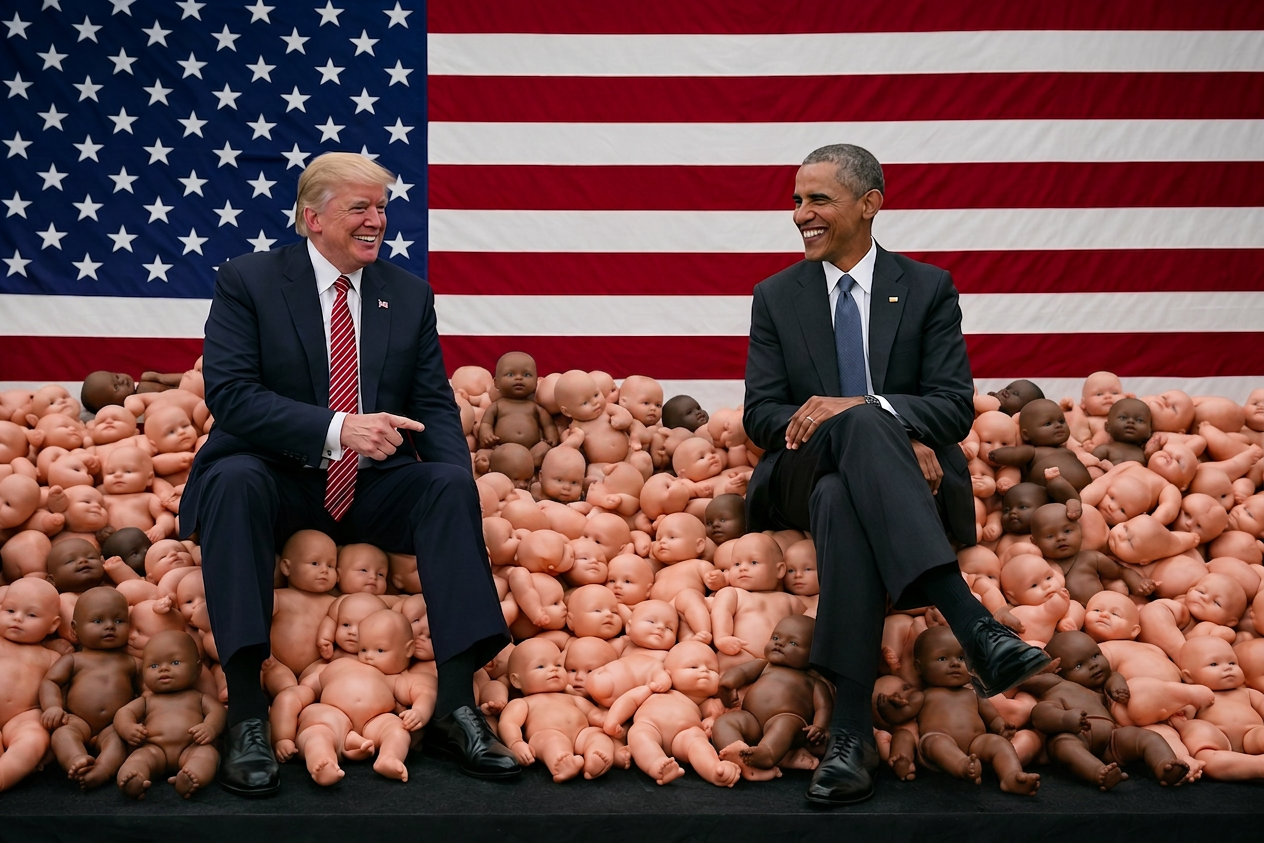
The argument is made that abortions went down with President Obama and up with Trump. It is argued in online social media forums that: “Obama policies were far more helpful to women, pregnant women, mothers, poor women, infants and children than Trump policies.” This is the proposition that needs scrutinizing: “Poverty is the greatest and strongest driver for choosing abortion.” Is this true? Maybe, but I suspect the matter is more complex than one factor, especially among people of faith. The Guttmacher Institute statistics show that women living in poverty (below $31,200 for a family of 4 in 2026) account for 40-50% of all women who receive abortions. Almost three quarters of women seeking abortions are classified as low-income households. But poverty must also be evaluated by a lack of support and the status of one’s value system. While the distress of poverty and the anxiety of abandonment could certainly lead to the tragic choice of abortion, more so than not, as a pastor, my assessment is that the poor and struggling among churchgoers often prove quite courageous in claiming their children and safeguarding the sanctity of life.
While the seal of confession must never be compromised, it is my experience that the sin of abortion also heavily afflicts those who are affluent and formed by the dictates of a secular world. They tend to treat sexual activity as a form of recreation. When contraception fails, they quickly resort to termination. They come to Mass intermittently and are elitist in their world view. They like being counted among the prosperous and “beautiful” people. They are likely to abort an unwanted child to preserve a high standard of living and a certain extravagant lifestyle. I have known several in this camp that were guilty of serial abortions. There is no bond with a man who might step up as a father. Pregnancy would affect finances, reputation and have an impact upon their bodies— none of which they want. They want sex without consequences.
The assertion that there were more abortions under President Trump than Obama is an ambiguous claim depending upon the parameters considered. The statistics gathered by the Guttmacher Institute demonstrate that the claim is false. The total number of abortions each year under President Obama were significantly higher than any year under Trump.
Obama Administration – Abortions began at over 1.2 million in 2008 and declined to 862,320 by 2017.
Trump Administration – Abortions began at around 862,000 at the start of his term and rose to 930,160 by 2020.
It is true that under President Obama the official U.S. abortion rate saw a 25% drop, however, it was largely the result of available chemical termination and cheap longer-acting contraceptives. His administration judged the morning after pill as a contraceptive, not as an abortifacient. Under President Trump, progressive states expanded medical coverage for abortion and abortion pills were added to abortion totals. At the same time, the Trump administration restricted federal Title X funding for artificial contraception. It is suggested that the impact of this contributed to the rise of unintended pregnancies among the poor.
Filed under: Uncategorized | Tagged: Abortion, health, News, Politics, reproductive-rights | Leave a comment »