







• Our Blogger

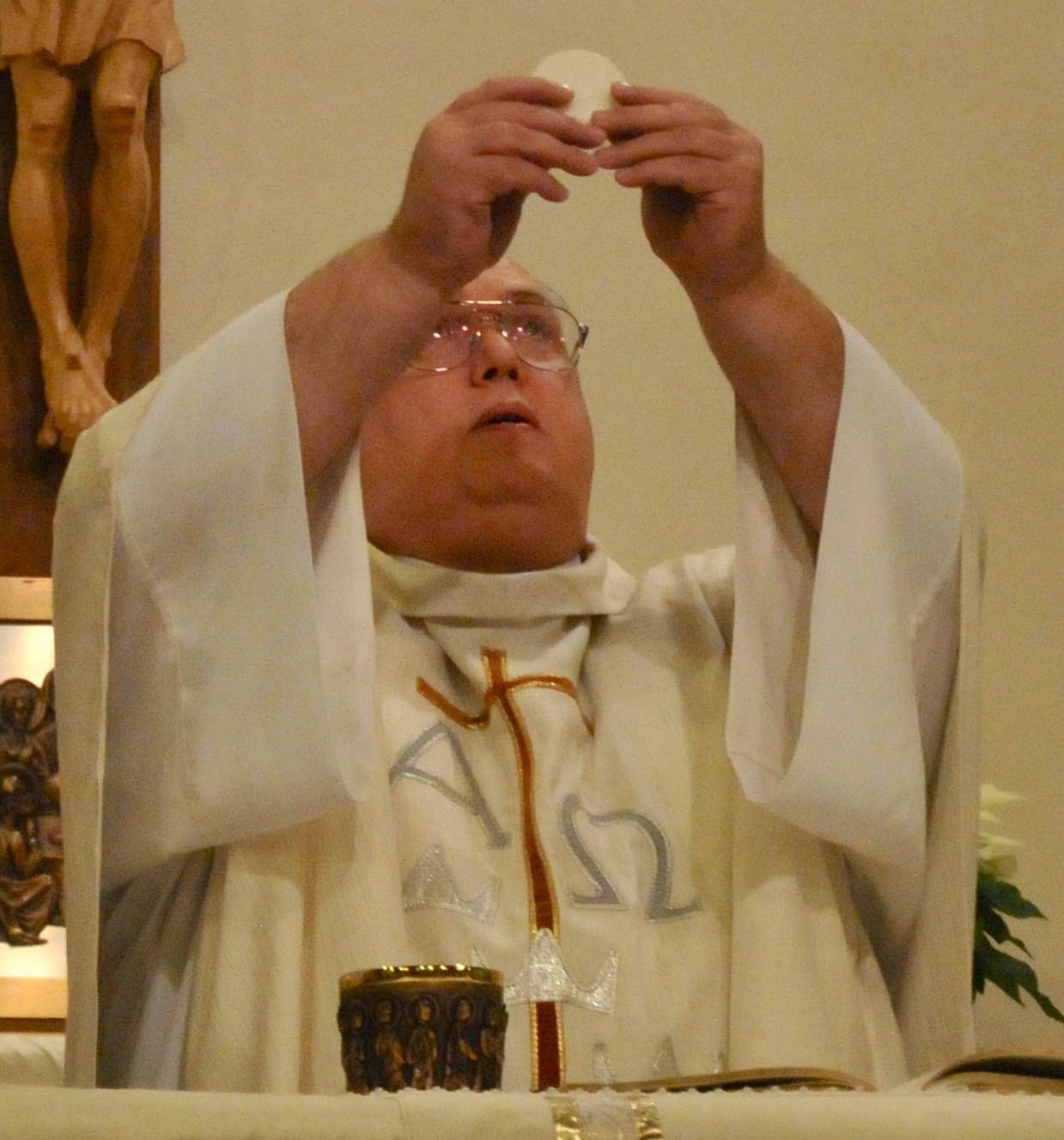
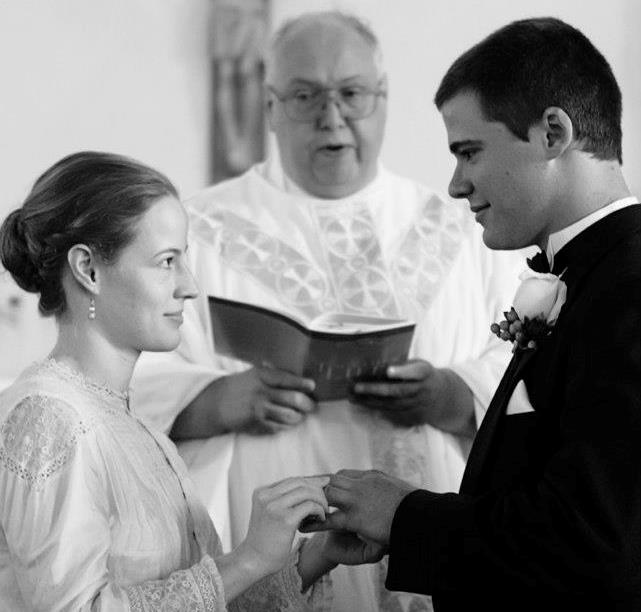
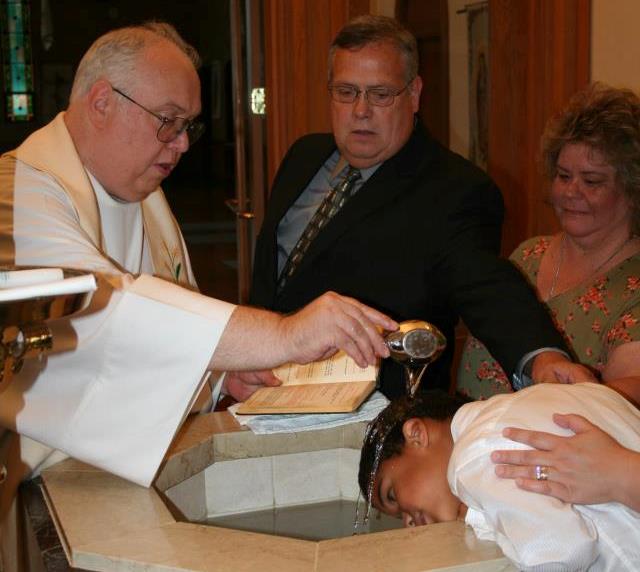
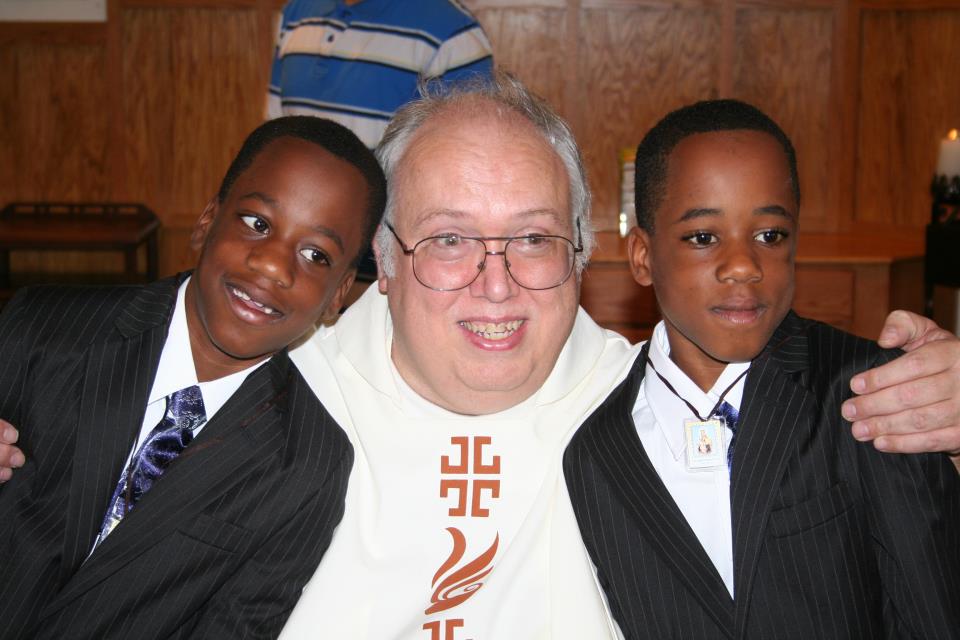
    Fr. Joseph Jenkins

  • The blog header depicts an important and yet mis-understood New Testament scene, Jesus flogging the money-changers out of the temple. I selected it because the faith that gives us consolation can also make us very uncomfortable. Both Divine Mercy and Divine Justice meet in Jesus. Priests are ministers of reconciliation, but never at the cost of truth. In or out of season, we must be courageous in preaching and living out the Gospel of Life. The title of my blog is a play on words, not Flogger Priest but Blogger Priest.

  • Archives

  • Categories

  • Recent Posts

  • Recent Comments

    Josh's avatarJosh on Mixed Signals about Homosexual…
    gjmc90249's avatargjmc90249 on Marian Titles & the Mantle…
    Jeremy Kok's avatarJeremy Kok on Ask a Priest
    Anonymous's avatarAnonymous on Ask a Priest
    forsamuraimarket's avatarforsamuraimarket on Ask a Priest

Priestly Celibacy: Challenges to Priestly Fellowship

I have already spoken about the need for close friendships among the presbyterate. The priest shortage and the busy lives of clergy make this increasingly difficult. But there is another factor that damages efforts at fellowship among clergy and that is ambition or careerism. I have always thought that such was poison to the essence of priesthood as servant. Nevertheless, men get caught up in titles, positions of honored trust, desires for influential parishes and dreams of the purple. The best bishops battle this attitude in their priests, insisting upon hearing their opinions and urging against “yes-men.” Ambitious men might distance themselves from certain assignments and from brother priests who are seen as an embarrassment or possible roadblock to their desired promotion. They fear guilt by association. There is also the dilemma of dishonesty. A priest could be afraid to share personal struggles and feelings because tongues might wag and his reputation would be tarnished. A priest might have personality quirks and phobias. He is relegated to special ministry or a hospital. He wants to be a pastor but he is not trusted. No one shares the truth with him. Rather, he is given feigned praise for his dedication to sick calls or even with secular matters like cutting the grass or watching the boiler. Whatever the reason, certain priests find themselves distanced from their brother priests. This intensifies their eccentricities and their experience of loneliness. Such might also amplify their struggle with feelings of inadequacy and self-worth. Priests should not be so self-possessed that they ignore the needs of others, either parishioners or brother priests. Given the scandals, the current atmosphere is not a healthy one among priests and their bishops. One case of injustice, even if only apparent, resonates in a negative way throughout the presbyterate. Priests view themselves as very vulnerable to allegations and gossip of any kind. This effectively shuts down communication or dialogue. I recall one priest literally bragging about his disclosure to the bishop of what he presumed to be a secret sin or scandal of a brother priest. When I asked if he had privately discussed his concern with his brother, he said no. I was very blunt, which wins me few accolades, and told him that he wronged his brother in ministry. His allegations were proven to be largely groundless and a good man suffered needlessly. He was trying to win points as a squealer; instead he should have followed the Scriptural pattern where Church censure is the final appeal. Both men, in this instance, were now needlessly alienated from others in the presbyterate. Who will share anything with a man who only tattles? Who will seek active fellowship with a man charged with scandal and immorality? Priests need to preach and witness to what is right. But they are fundamentally ordained as healers. If we forget this, then we have lost sight of a truth that resides at the very heart of the priesthood.

Priestly Celibacy: The Issue of Loneliness

A priest’s celibacy faces challenges on many fronts. The most obvious is the issue of sexual attraction and yet that may not prove as great a temptation as that posed by loneliness. Rectories with multiple priests in the past are today frequently the home of only one. Priests become accustomed to a definite “aloneness” but there are times when his separation from most other men and his solitary life might truly be trying. Women are among the first to give comfort and support. But here is the danger. Even if no sexual indiscretion is ever committed, a priest could develop a friendship with a secretary, catechist or housekeeper that might be somewhat analogous to a husband-wife relationship. This can catch the man unawares. Then when the time comes for a transfer, he finds that there is a bond that holds him. The Church is well aware of such possibilities and so priests are generally reassigned every six to twelve years. He really has no home except the Church. It is vital that he knows this. Yes, even if he has living parents and brothers and sisters; he belongs first to the Church. My mother cried on my ordination day when my father spoke about this to her. She said, “He will always be mine!” Yes, she is right, to a degree, because a man’s mother and the Blessed Virgin Mary are the two closest women to a celibate priest. But there need be no contradiction; their motherhood is symbolic or expressive of Mother Church to which he belongs.

It is said that a priest who gets into trouble is a priest who has neglected his prayers. I would add to this the lack of continuing study and theological reflection. If there is a hole in his heart it is likely that a woman might begin to fill it. The only safeguard is to avoid a vacuum and to fill the space with the presence of God. Such a man will know that he is never really alone. The Lord is desirous of an intimate relation with his priests, so that he might satisfy as their treasure and sole passion.

Priestly Celibacy: Dealing with Tough Questions

1. Do all relationships between men and women have to lead to sexual intimacy and physical expression? If so, would this not compel men and women who do not desire such developments to select friends and co-workers of the opposite sex who are unattractive and sexually repellant to them?

2. Not desiring sexual congress, can and should one cultivate a mindset where gender distinctions are extracted or ignored in social interaction? Can the celibate honestly look upon the female segment of the world through the eyes of a spiritualized non-corporeal charity? Would not our theology of the body highlight such a posturing attitude as a fictional absurdity? Does this not reflect a prejudice toward a sexless, spiritualized preoccupation over the physical which acknowledges Eros? Would it not be better to recognize ourselves and others as sexual-embodied-beings?

I believe the first question exposes a fiction; the second one finds its answer in degree. Referencing these questions, our society’s wresting with these queries is illuminated by how we treat or mistreat children, today. Our society has so emphasized sexual interaction that we forcibly impose an adult archetype even upon small children. Little girls are dressed in sexy or provocative clothes. Certain responsible parents complain that they cannot find modest age-appropriate clothing for their daughters. Movies are also illustrative of the infection of Eros. Children are pictured as sexually active and/or develop romantic liaisons in elementary school. Grammar school boys and girls date and share passionate kisses. This is wrong. Everything around us is heavily sexualized, way beyond the necessary strictures of nature. This abandon has given us a voyeuristic world where everything and anything goes. While the Church is faulted for the scandals, it is popular culture that has given us a pedophile attitude that preys upon the innocent. The sexual appetites are so thoroughly expanded with abandon that they neither respect age nor the demarcations of gender. Everything that brought God’s judgment down upon Sodom and Gomorrah is present in full measure in our society. It is into this confusion that the Church would ask men and women to be chaste and moral. It is in this world that the celibate priest must find his way and fulfill his work.

Priestly Celibacy: Love Means Not Crossing the Line

Here is the root cause for my upset or anger when priests cross the boundary lines with women and then fault the Church for their trespass. The famous Father Cutie episode in Florida is a case in point. When his affair was exposed, he defected to the Episcopalian church and attempted marriage with a divorcee. Evidently their sins or broken promises, his to priesthood and hers to marriage, did not trouble him enough to check his wrongdoing. The secular world took his side regardless of fornication and adultery. If a man had left his loving wife for another woman; there might have been some recrimination. But our society dismisses marriage vows between a priest and his Church. It chronicles a terrible double standard. I would insist that we must all play by the same rules. Good morality and a properly formed conscience must always be exhibited by the Catholic man in his relations with females. There should be no wrongful encouragement, no selfish seduction, no premeditated entrapment, and no empty promises. No relationship or intimacy should be fostered that cannot rightly be satisfied. The principle of “no harm” applies to all relationships, but especially to interactions between priests and the People of God. A priest is ordained to save souls, not to become an accomplice in damning them. A man who truly loves a woman should be willing to preserve her virtue and to safeguard the presence of saving grace. Anything less or different is not just an expression of weakness but of the demonic. A man, priest or not, cannot say with sincerity, “I love you,” to a woman while blackening her soul and possibly casting her into hell.

Men and Especially Women Need Celibate Priests

Pious women delight in the presence of a priest. He signifies in his preaching, rituals and person something of the transcendent for which they long. He is the spiritual father figure who assists them to see over the fences and hedges of lives weighted heavily toward the earthly and immediate chores of survival. Cleaning dippers, feeding families, caring for a home, and working outside the home fills the hours. It is all good but there is a yearning for something more that is satisfied by religion. The priest is the porter for this other world. He is the sentinel for Christ’s kingdom breaking into our world. As a light-bearer, he reflects in his priestly way, Jesus who is the Light of the World. Women were at the Cross and at the empty tomb. Their religion or faith has little to do with abstraction; rather it is an enfleshed encounter with a person. That was true two thousand years ago and it is still true today. The celibate priest, as St. Paul relates of himself, satisfies what is lacking in the oblation of Christ for his people. He is the human medium to make present the saving person and activity of Christ.

Women are largely regarded and treated by men as sexual creatures. While some might invite or find a certain appeal to this role, it can alternately bring about both an empowerment and an intense vulnerability. Men want to please women and win their favor. Unfortunately, some men want much more and may not take no for an answer. The priest is the one man who does not regard women as merely sexual objects. He encourages and looks to their spiritual side. Mentoring women as a spiritual director, I have heard numerous times from them, “I wish I could pray with my husband as I can pray with you.” It is here that the priest must proceed carefully. The woman may feel that here is one man about whom she need not be afraid. She sees in him one to whom she can open her heart and soul. She can be pretty or ugly with him. She can be honest. While not erotic or sexually aroused, his heart is responsive to her. Women often hold priests in high regard and possibly even with infatuation. Men often want women for their bodies. The priest is a man who wants to save their souls. His interest in men and women is the same— that they might believe and belong to Christ.

Priestly Celibacy: Men & Women are Wired Differently

We know that the brains of men and women are wired differently. Men have more cerebral mass and synapses connecting cells in a particular section of the brain. The ratios of white and gray matter, as well as the density of nerve cells differ. Women have more developed neuropils (the space between cells) and a larger corpus collosum. The neuropils are composed of synapses, dendrites and axons. Such allows better communication between neurons. The more developed corpus collosum allows women a faster data transfer rate between the right and left hemispheres. The deeper limbic system in females allows them to be more in touch and in sync with their feelings than men. This brings us to my real concern here, what does this all mean in the world outside of our heads?

While the person in the Christian estimation is more than thinking meat, and has an immortal soul, our physical attributes impact upon how we perceive and interact with one another. Men and women are complementing one another but they are physically different. This difference also exists in how our minds work.

Men’s brains are specialized, with various parts devoted to specific tasks while women’s brains tend to use both hemispheres and diffuse the mental work throughout the whole brain. Women are highly effective at communicating with one another. They process information quickly and talk faster than men. Women tend toward the creative while men want to fix things. Men tend to process information slower, something that is evidenced in their more paced speech. It is no wonder that there is certain confusion between men and women. Women can literally talk too quickly for men to follow. While it may be that men think deeper, they can easily get lost in thought. How many times have we heard a woman angrily ask a man, “Are you listening to me?” Women frequently complain about the man’s general confusion or the dull look on his face. Women multitask while men are intensely linear, doing one thing at a time, even if it takes longer.

Looking at the home, the woman might shout for her husband to help her and get angry with his slow response. But I have heard men say, in all honesty, that they did not know where to begin? Give him one thing and he will do it well. Give him a list of things to do and he will do them one after the other until completed. Give him a series to do simultaneously and he will look at you like you are crazy.

The female mental diffusion is complemented in the male where it can be tightly focused. Men can be largely engrossed in athleticism and sexual themes; but they are also intensely interested in the ultimate questions of truth and meaning. Women may be curious or follow this philosophical lead; but they are more likely to dismiss it with chatter about the price of eggs and baby’s new tooth. Women are incredibly bonded to the earth and everyday details. Yes, there are exceptions, as well as culturally conditioned stereotypes. While women are very hormonal, they are about more than their emotions. They want to make sense of life’s complexities. Men are good about this if they are not distracted, and they are easily distracted, particularly by sexual themes. The celibate priest can provide the sage’s illumination in a remarkable way. Women long for such leadership and are frequently more religious or devout than men. Women clergy in Protestant churches, like female help in Catholic ones, treat their work much like the care of a home. They balance multiple jobs at one time and there is a harried busy-ness. They also prize creativity, sometimes at the cost of routine or tradition. Compared to men, there are few female philosophers; but there are millions upon millions of faithful and believing women. You would think that Catholic women would be upset that only men can be priests; but the vast majority is content with a male-only priesthood. They recognize that he can give them something that maybe a woman could not.

Priestly Celibacy: What is a Priest? What is He Not?

The priest is many things. He is physician, judge, teacher, servant and father. His celibacy amplifies all these models of the priesthood and more. His single-hearted love acts as a catalyst, focusing and intensifying his efforts as a priest of God. He is Jesus feeding the multitude, healing the sick and chasing the money-changers out of the temple at the end of a whip. His compassion never compromises upon the truth. He belongs wholly to Christ and to his Church. He is one with the Good Shepherd, ready and willing to lay down his life to protect his lambs against the robber and the wolf. He is the champion of the poor, the oppressed, the marginalized— indeed, on behalf of all who are weak, vulnerable and voiceless.

The celibate priest is not caught up with the obligations of family life. Rather, in addition to his ministry, he pursues long hours of study and prayer. It is expected that he exerts an intense mental life, seeking always to understand so that he might be a vessel for truth and meaning. People want answers. They are yearning for meaning. Many have come to embrace chaos, thinking that there is no God and that creation is a cosmic accident. Priests let them know that God is real and that he cares. Repeatedly he reminds a dubious world of three important themes: freedom, love and evil. Creation, salvation history, and our own struggles can be understood in the context of these three factors. God freely created us out of love. Man freely rebelled, rejecting God’s love and falling into bondage to evil. God promised redemption and lovingly called us back to fidelity. Love was born in human flesh with Jesus Christ. God did not have to save us but he freely entered the human family. Our Lord freely embraced the Cross and died for us. He had every reason to hate us. We betrayed him. We murdered him with our sins. He loved us so much that he forgave us and offered us a share in his life. Now we are called to freely love him in return, taking up our crosses and following him. We were evil and still in our sins. But he grants us mercy and healing. Our priests perpetuate the love of Christ, a love that faces down evil, brings forgiveness, and renders a share in eternal life. Over and over again, we see these three themes played out.

Priestly Celibacy: The Devil Hates Priests

The devil and his minions hate priests. Satan mocks him. “You’re not a real man— where’s your woman? You have nothing that gives other men solace. There is no woman who loves you. You have no children to carry forward your name and legacy. The pews are empty. Your sacrifices were all for nothing. You are abandoned. You are a bad priest. You have wasted your life. Sermon after sermon you give, but nobody cares. Just get Mass over quickly so we can watch the football game. Your morality is a joke. No one listens to you. You hate homosexuals and yet you’re probably a closet one yourself. No one trusts you with their kids. You might be one of THOSE priests. Even your bishop does not trust you; all contracts must be reviewed and every decision must pass muster with the legal department. Face it, you are nothing. You are told what to do like a puppet on a string; where is your manhood? You are everyone’s lackey. Make waves and we will report you to the bishop. You’re told you can’t talk about certain issues. Don’t make trouble! Don’t you dare speak against contraception or gays or abortion! If I come up the aisle with a pitchfork in hand and wearing the skulls of dead babies around my neck, don’t you dare refuse me communion. Ah, here is the blasphemy. You cannot even protect that which you hold most dear, the so-called Blessed Sacrament. You are pathetic, weak and passive. You are all dress up and talk. And you call yourself a priest of God?” As long as there is hope, the priest will prevail. But if he despairs, then all is lost.

Priestly Celibacy: The Priest as MAN of God

Although he is celibate, the priest engages men and women in very masculine ways. Anything of the effeminate in his manner compromises his posture and undermines the vitality of his vocation. Because he signifies Christ, the new Adam and most perfect man; the priest must be wholly a man. The pattern of the male apostles and the exclusion of women from holy orders is a further guarantee of this basic quality in the Catholic priesthood. Jesus demonstrates to our over-sexed society that a priest can be very much a man and still remain chaste and celibate. The priest relates to men and women as father and brother. He sees his charges as spiritual children. He acknowledges that we are all adopted sons and daughters of our heavenly Father, brothers and sisters to each other, and kin to Christ. A father will do all he can to protect his family. A big brother will fight for his siblings, especially for the honor of his kid sister. Similarly, the role of father and brother is realized in the many duties of his ministry.

Real men keep their promises. This means that they are prepared to accept responsibility and take charge. They do not run away from obligation and duty. Accepting either praise or blame for their actions, they must be courageous. Cowards have no place in the priesthood. All the virtues, albeit in a masculine manner, should be actualized in priestly life and ministry. The priest is also a unique spiritual soldier. His celibacy resonates with this because an ordinary soldier would not drag his wife and children into battle with him; the priest will contest against the devil until his dying breath. Everyone is caught up in this conflict but it is the priest alone who can call God down from heaven in the Eucharist and make saints out of the damned through his Absolution. Every priest is an exorcist against the presence of the beast that seeks to devour souls. His celibacy along with prayer is his armament against the snares of the enemy. It is because of all this that people should pray for their priests, supporting them in the perilous work they do.

Priestly Celibacy: Women & Encountering Mystery

The priest also encounters women as pastoral subjects. They come to him for the sacraments, devotions, and counsel. It is within these meetings that the priest must have a sincere respect for mystery. I mean here not only the mystery of God and his saving intervention; but also, the mystery that is woman. Female friendships can give him insight into the female heart and mind; however, there are depths that are forever hidden to him which touch the divine. How could it be otherwise, given that women by design can so intimately cooperate with God in the work of creation? Men and women are not the same, despite efforts in our society to treat them interchangeably. Men and women who get married readily realize this. It represents a type of paradox. The more these couples live together, the more they appreciate the quality of mystery that cannot be penetrated. The celibate priest should both respect this mystery and see in it something of his yearning to know God. Priests study and pray as facets of their vocation, and yet, the deeper they understand God and his providence, the more they discover a mystery eluding their grasp. It has been said that God gave mankind two genders so that they might discover something of the divine otherness in each other.