• Our Blogger

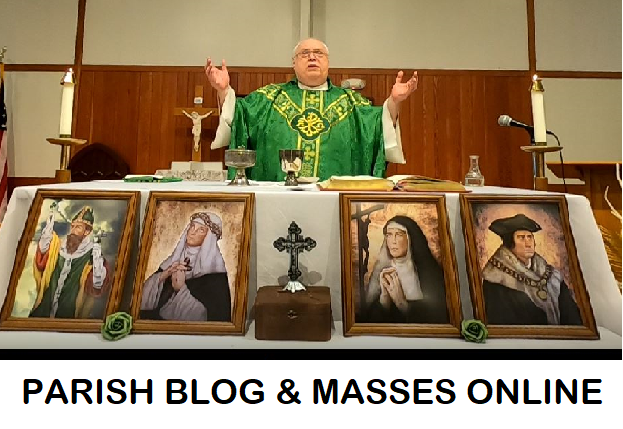
    Fr. Joseph Jenkins

  • The blog header depicts an important and yet mis-understood New Testament scene, Jesus flogging the money-changers out of the temple. I selected it because the faith that gives us consolation can also make us very uncomfortable. Both Divine Mercy and Divine Justice meet in Jesus. Priests are ministers of reconciliation, but never at the cost of truth. In or out of season, we must be courageous in preaching and living out the Gospel of Life. The title of my blog is a play on words, not Flogger Priest but Blogger Priest.

  • Archives

  • Categories

  • Recent Posts

  • Recent Comments

    Josh's avatarJosh on Mixed Signals about Homosexual…
    gjmc90249's avatargjmc90249 on Marian Titles & the Mantle…
    Jeremy Kok's avatarJeremy Kok on Ask a Priest
    Anonymous's avatarAnonymous on Ask a Priest
    forsamuraimarket's avatarforsamuraimarket on Ask a Priest

Dealing with a Transgendered Spouse

downloadQuestion

I am a Catholic and I am seeking your help. My husband of thirty-one years has told me he is gay. He says he has felt this all his life. I am crushed. I feel my entire marriage has been a lie. He moved out of our house to live with a twenty-seven year old transgendered prostitute. Honestly, I am at a total loss. My heart is broken and I am deeply pained.  My thoughts about all this preoccupy my waking moments and I cannot eat and sleep.  My husband wants a divorce. I have decided to grant him the divorce because I cannot handle his cheating and deception.

Please help me through this time. I do not know where else to turn.  I have prayed to God for guidance.  But I still feel hurt and betrayed. Is there a prayer you would suggest? Any help would be gratefully appreciated.

Response

Your life together was not a lie… not for you. Remember the good times. His defection from you is like a death. There is anger and grieving. But eventually you have to let go. Do not allow this to drag you down. Move on and make a new life for yourself.

You are not responsible for his deception and infidelity. Given that he married you and that for many years you were unaware of his sexual deviancy, there is no certainty that he is honest even now about his orientation. You have every right to be upset. Since he left you to pursue a life of depravity, no one would fault you for giving him the divorce he wants. (However, it should be documented that he abandoned you— he is at fault.) Further, make sure that you are financially or materially secure.

As for what prayers should be offered, the Rosary is always efficacious. Instead of any particular prayer, that for which you pray might be the more important. Try not to hate your errant husband but rather pray for him as a poor sick man who has lost his way. He may not come back to you (indeed you may not want him back in your life) but you can ask the Lord to save his soul. You should also pray for peace in yourself. There is so much we cannot change. Suffering touches us all. We should not despair. Our Lord was also betrayed and made his passion the means of saving us. Offer your heartache with that of Jesus on the Cross. It is in Jesus that the dark elements of life can be made redemptive.

Blame When a Child Falls Away

downloadQuestion

My son was three years old when my husband had a serious car accident. My husband ended up having a traumatic brain injury. That was nearly twenty years ago. Obviously, this caused multiple issues in my family. My son is now claiming to be an atheist. I am blaming myself for this. I struggled to pass on the faith and raised my son largely on my own.  Given how much there was on my plate, I feel that I was not a good parent. How can I bring my son back to God?

Response

I know families that pray daily, go to Mass every Sunday and had their children catechized to receive their sacraments… and still there are some that stray from the faith. Blaming yourself will not help. We live in a society where modernity targets faith for ridicule. What can you do? Pray for your family and continue to witness by your life what the faith means to you. Maybe in time this testimony of yours will bring your son home to the safe harbor of faith?

The Importance of Fatherhood

downloadQuestion

A person may have trouble seeing God as a loving spiritual Father when one’s biological father has caused sexual abuse and physical trauma. Is one still culpable when past abuse makes faith in God difficult?  Does God understand why some of his children hesitate to call him by the title Father?  I know counseling helps but it does not make the problem go away.

Response

God understands everything, but the appreciation of God as our heavenly Father is a constitutive element of Christian revelation. We would short-change ourselves by eliminating this title that identifies the deity as a “personal” God who has created us out of love. Today there are many families where the father is missing and the mother is the sole parent. This is a terrible loss although these mothers are often very courageous and sacrificing for their children. The question is asked: How can these children possibly come to an appreciation of God as Father when they have no role model of fatherhood in their lives? It is a problem. But instead of eliminating any paternal theme, it is properly argued that we should accentuate it. Why? The fatherhood of God might be the only Father that many people will ever know. It should be a corrective to deadbeat dads or men who corrupt themselves through abuse or the abandonment of their families. If there be genuine healing, then an understanding of true fatherhood has to emerge. Otherwise, the spiritual life becomes stunted. Indeed, the familial relationships of the next generation are also damaged. How could one who flees the notion of fatherhood ever fully embrace healthy spousal love where the couple becomes mother and father?

Grieving & Angry at God

downloadQuestion

My sister recently lost her husband to cancer at the age of 55. My teenage nieces are having a difficult time coping. They are angry at God and refuse to go to Mass.  I am looking for advice or words of comfort.

Response

The Blessed Mother lost her son Jesus when he was between 33 to 35 years of age. Our Lord rose from the dead and promised us a share in his life. We are all mortal and we will all die. But, there is hope in Christ. I would urge them to attend Mass and to pray for their father. We can intercede for souls and assist them into heaven. Our heavenly Father did not spare his own son. However, we are urged to trust Jesus when he says that he goes ahead of us to prepare a place for us. Instead of getting mad at God, this should be a time of increased devotion. The mystery of the communion of the saints is that we are still attached to our beloved dead in Christ. We can apply the fruits of the Mass for poor souls in purgatory. It is in Jesus that love is stronger than death. Despair and anger is not the answer. Tell them to find hope and peace.

Trouble Finding Godparents for Baptism

downloadQuestion

I am a Catholic and my wife is a non-Catholic.  We had a son together and I am facing a dilemma about choosing his godparents. My best friend is a pastor at a Protestant church and he and his wife would be great role models for my son. I have family members who could be his godparents but they would not be as exemplary in their witness for Christ.  What should I do?

Response

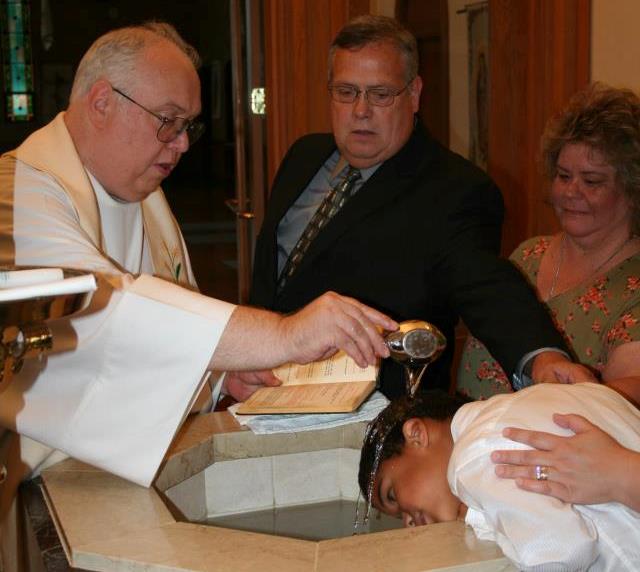
Were you married in the Catholic Church and are you practicing your faith? If so, then the child should be baptized in a Catholic Church. Given that your friend is baptized, he can stand in as a Christian Witness at the baptism in place of one Catholic godparent. The other sponsor should be a Catholic godparent in good standing. Of course, everyone affirms the Apostles’ Creed. Would your pastor friend be okay with this?  Your friend may be a wonderful role model as a Christian, but the Catholic godparent is also a witness for the Church. Granted this spiritual bond, the godparent pledges to pray for the child and to do all in his or her power to assist the parents in raising the child in the Catholic faith.  During the early days of formation, this means insuring that the child receives religious education and the other sacraments.  The Catholic godparent should be practicing the faith and in a state of grace.

Facing Anxiety as People of Faith

downloadQuestion

How might one who is living a very anxious and fearful life learn to trust in God?  I am always worried about what is coming next instead of finding joy in the many blessings and consolations of the present.

Response

First, I think there are personality types that are more prone to anxiety. Are introspective introverts more susceptible… maybe, I am not sure. It may that some will always deal with such feelings. Second, I think a prayerful abandonment to divine providence may be helpful. We have to trust that whatever comes, God will not abandon us. Unfortunately, there is no guarantee of smooth sailing in life. We will face hardships, suffering, betrayal, sickness and dying. Can we trust the Lord in both the bad times and the good times? I suspect that is where we find the test of faith.

Do Our Sins Wound or Hurt God?

downloadQuestion

My question is when we do something that might hurt others— does it hurt God, too?  If our sins wound God, does this mean that he has emotions like us?  Does God love and feel as we do?  This confuses me because we also sometimes speak about God as if he is something utterly alien, perfect in every way and unmovable.

Response

This is a question I repeatedly get asked. God as an immutable and perfect spirit cannot be harmed. Our sins have dishonored the supreme dignity of God. God the Father does not have human emotions. However, God can be honored or dishonored. The justice of God demands that we maintain the correct posture before him. Sin offends him.

It is only with the incarnation, God becoming man, that we can speak of a divine Person being targeted by our sins and wounded.  All the sins of the world, throughout all time, and in every place, found their terminus in Christ and his Cross. Jesus embraces his Cross and surrendered his life as a sin offering for the whole world. The suffering Sacred Heart of Jesus is precisely the betrayed, scourged and crucified Christ. Our Lord’s Paschal Mystery takes place in time and yet it is not locked in human history. The Mass through an unbloody but real re-presentation brings us back to the sacrifice of the Cross and permits us to offer ourselves as an acceptable oblation to the Father, albeit joined to Christ. Jesus knew betrayal, abandonment, suffering and death. The risen Christ can never suffer or die again. But the sacrifice of Calvary has an eternal dimension.

Confusion about emotions in God is often due to the many definitions given to love. The Gospel understanding of love is not as an emotion although human beings often relate to love as an emotion or as chemistry. Theologically, love is an act of the will, not of the emotions. Our participation in divine love or charity is the infusion (with saving grace) of the virtue of love within the rational will. It is this supernatural love that would have us embrace or even sacrifice ourselves for those whom we have trouble in liking. This is the meaning behind loving those who hate you, giving to those who take from you and forgiving those who hurt you.

Thomists speak of God as the Unmoved Mover. God as such is a perfect Spirit and there is no biological chemistry or emotions. He possesses every perfection. He creates us with our emotions, even though because of Original sin, we must deal with concupiscence. Jesus is the incarnate God and in him there is both divinity and humanity, the latter including a body (with its emotions) as well as a human soul and his divinity. Of course, Jesus is the All Holy One and is not subject to the brokenness we experience because of the primordial fall. Jesus is defined as a Divine Person, not a human person. This is his ultimate identity. We are saved by Jesus who is God.

The Scriptures will sometimes resort to anthropomorphic language because this is all that we know. That is why God, especially in the Old Testament, often seems to reflect human wrath. Our language and categories are strained in trying to express the deity who reveals himself to us. For instance, ours is a jealous God. What does this mean? It actually says more about us than God. We were made for God. Separated from him and we are frustrated in terms of our ultimate ends.

What does it mean when we say that GOD IS LOVE? It is appreciated within an understanding of the Trinity. The Love of God is eternally generated between the Father and the Son. This perfect good will or the Holy Spirit is a divine interior power that harmonizes our hearts with that of Christ. God moves us to participate or to share in his love; a love that the Cross shows us is sacrificial. We are summoned to love one another as our Lord has loved us. This “personal” divine power or energy (not an impersonal force like Star Wars) always calls us to conversion or transformation. Hardened hearts are softened or changed within the body of the Church. This is what it means to witness the love of God to the world around us. We are made adopted sons and daughters to the Father. We are invited to abide within the Trinity (the inner life of God) forever.

Loneliness & Possible Self-Absorption

downloadQuestion

I am single, 40 and very lonely. I feel invisible. I have no friends but enjoy making general small talk, especially with people I meet either at the supermarket or as I commute to work or at church. If anyone tries to get close or wants to visit my home I brush them off.

Since I was a child, particularly in my teenage years, I spent a lot of time talking to myself using a mirror. I still enjoy doing this although I would rather have another with whom to talk.

Were any of the saints lonely?  How can I handle being lonely as a Catholic without giving in to despair and suicidal thoughts?

Response

Despite suggestions to the contrary, it is not always unhealthy to talk to yourself. But if such behavior becomes excessive and/or replaces real human communication and relationships, then it would be regarded as wrong or even sinful. Self-absorption is not genuine spiritual growth in the Lord. I am told that mirrors present a particular issue because extended use for such purposes might signify schizophrenia or some other ailment of the mind. As believers, we should also avoid any undue preoccupation with perceived images, real or imagined. (Some become obsessed with faces in the leaves of trees or images in clouds… treating them as ghostly appearances or omens.) The fairy-tale of Snow White references the evil stepmother seeking secret knowledge about beauty in her bewitched mirror. The mirror was literally under demonic influence. The practice of scrying into mirrors, water or crystal balls is frowned upon by the Church.

At forty years of age there is no way to regain the years and opportunities that are lost. If you need to see a therapist, do so. If you want friends then you have to seek the courage to make them. Libraries have reading groups. Parishes have fellowship associations. The public sector also has activities and opportunities to pursue. You want more than faceless online associations. There are also other lonely people looking for friends with whom they can talk and have fun and with whom they can pray. Take the chance. It will also help your spiritual life. God wants us to love him, both directly and in our neighbor. Build a circle of friends. You may not agree about everything but that is okay. Unlike the face in your mirror, these faces will have hopes, dreams and experiences different from your own. There is a world to know and to share. Put down the mirror. Turn off the computer. Take the risk of meeting new people and having new experiences— be ready for surprises. God bless you.

Salvation, Christ & the Unborn

downloadQuestion

If Original sin affects all mankind and the only way to cleanse it is through baptism, would not that then imply that those not baptized carry Original sin and are forbidden from entering heaven? Following that train of thought, if the Catholic Church believes that unborn children are in fact alive human persons does that then imply that babies which pass away as a result of stillbirth cannot enter heaven since they are unbaptized and still carry Original sin?

On a related note, if I as a Christian believe that life begins with “sentience” or “personhood” as opposed to consummation, can I still consider myself a good Christian, particularly if I support a woman’s right to abortion during the first trimester (when the child is not alive at all)?

Response

Strictly speaking, Original sin is not a voluntary sin but is a moral corruption that is contracted. It is a child’s state of the soul before Christian baptism. We inherit a fallen nature from Adam. Separated from God, we cannot save ourselves and we are left devoid of the original grace and holiness that our first parents enjoyed. Sin breached our friendship with God. The redemptive work of Christ restores this relationship. The sacraments, beginning with baptism, bring the paschal mystery of Christ to bear upon our souls. We have a fallen nature and suffer from concupiscence. Baptism brings spiritual regeneration; however, while there is forgiveness for Original sin, the effects have yet to be undone.

The question you ask is essentially this: can a person be saved apart from baptism and faith in Christ?

The Second Vatican Council teaches that everything necessary for our salvation “subsists” in the Catholic Church. This speaks to her membership but we are also reminded, as in the Good Friday liturgy, that the Church prays for Protestants, Atheists, Jews, Moslems and others. We would only do so if we thought that such intercession might be heard by God. The Orthodox Christians have authentic sacraments and are a “church” albeit defective. The Protestants are ecclesial communities that love the Lord and possess baptism, the Scriptures and so much more as an inheritance from Catholicism. These are saving elements.

The necessity of baptism emerges in the words of Christ (John 3:5 & Mark 16:16). He tells his apostles to go out to the entire world and to baptize with water in the name of the Trinity (Matthew 28:19-20).

Your question really references those who are not Christian and thus not baptized. Vatican II made reference to the plight of non-Christians (Jews, Moslems and seekers of “the unknown God.” Lumen Gentium 16:

“Those who, through no fault of their own, do not know the Gospel of Christ or His Church, but who nevertheless seek God with a sincere heart, and moved by grace, try in their actions to do His will as they know it through the dictates of their conscience those too may achieve eternal salvation.”

Lumen Gentium 14 states:

“[Jesus] explicitly asserted the necessity of faith and baptism, and thereby affirmed at the same time the necessity of the Church which men enter through baptism as through a door. Hence, they could not be saved who, knowing that the Catholic Church was founded as necessary by God through Christ, would refuse either to enter it, or to remain in it.”

Note the qualification. Those who KNOW that the Catholic Church is the true Church and who still refuse to enter it bring dire judgment upon themselves. But, most that do not join do not have this insight. Ignorance may be an important factor. The Church is bound to proclaim the Gospel and to dispense the sacraments. The Church is the great sacrament of encounter with the saving Christ. This is what we know and this is what Jesus has entrusted to us.

Nevertheless, God can save whomever he wills and is not necessarily restricted to the sacraments. That is why we do not condemn or judge those outside the strict or juridical confines of the Catholic Church. The truth remains that none are saved apart from Christ and none are saved apart from his mystical body, the Catholic Church. We as Catholics do not believe that once saved one is always saved. Instead of such a view of “blessed assurance,” Catholics believe that with baptism we are called to a faith that is lived out in obedience and charity. If this saving faith be sustained then we have every right to hope for our ultimate salvation. In other words, faith can sour, people can commit mortal sin, and even baptized Catholics can go to hell. It should be mentioned that the Church has also accepted two extraordinary cases of baptism outside the normative formula: baptism by blood and baptism of desire. They are technically not baptism but make possible similar effects and saving grace.

The early Church would know several centuries of harsh persecution. It was the age of martyrs. Catechumens preparing to enter the faith were sometimes tortured and executed by the Roman authorities. The Church always embraced them as her children since they died to uphold the faith and surrendered themselves with Jesus. This was baptism by blood (see Matthew 10:32 & Luke 9:23-24).

Somewhat controversial among certain authorities in the Church is baptism of desire. A basic truth has to be properly nuanced. Christ gives us a universal call to salvation. He desires that all would be saved. Nevertheless, this must be distinguished from the heretical position that all people are saved in actuality. This would signify a false religious indifferentism or universalism. Hell is real. Not all will be saved. I would refrain from entering the debate as to whether more people will be in heaven or hell. I would leave such matters entirely to divine providence. Like the late Frank Sheed, we can pray that the devil is lonely. The saving effects of the paschal mystery of Christ (his passion, death and resurrection) cannot be contained by human history or locked into any one place. The very created order of the universe has changed. Thus, so the argument goes, even those who have not heard the Gospel may yet be saved. Gaudium et Spes 1260 states:

“Since Christ died for all, and since all men are in fact called to one and the same destiny, which is divine, we must hold that the Holy Spirit offers to all the possibility of being made partakers, in a way known to God, of the Paschal mystery.”

The missionary mandate remains. We cannot trust that one might somehow find their way into heaven without the explicit help of the Church. Further, Christ alone is the Way and the Truth and the Life. No one is saved apart from Christ. He is the only bridge to the heavenly Father. Pope Benedict XVI was wrongly criticized by the Jewish community when he reiterated the Catholic teaching that Jews in heaven will have to acknowledge Jesus as their Lord and Savior— the true Messiah. Upon this point, the late Cardinal-priest Avery Dulles even corrected the USCCB document on relations with the Jews, our elder brothers and sisters called by God. There are not two covenants. There is one covenant and it has been fulfilled by Christ.

We should never water-down the importance of baptism and the graces we receive. There can be all sorts of speculation about how others might be saved, but we can have certainty in the efficacy of Christian faith and the sacraments, beginning with baptism. If we really care about others then we will never be silent in proclaiming the lordship of Christ and his desire for us to be in unity with his new People of God.

If babies should die without baptism, we entrust them to divine mercy. In days gone by we spoke about the possibility of limbo, a scholastic theory about a place of natural happiness but ignorance of God. The universal catechism says nothing about limbo. Our Lord called the children to himself. He says the kingdom belongs to “such as these” (Mark 10:14). We are also reminded of the Holy Innocents martyred in Christ’s stead. They are counted as saints. Maybe all children as reflections of the Christ Child share in their reward? The Church urges parents not to delay in having their children baptized. Jesus just never explicitly speaks about the urgency to baptize babies. Of course, the Bible tells us that whole households were converted to the Lord and baptized in the early Church. This no doubt included babies. The faith of parents was seen to suffice. We are connected. We are a family. Ours is both a personal and a communal faith. The universal catechism states:

“As regards children who have died without Baptism, the Church can only entrust them to the mercy of God, as she does in her funeral rites for them. … All the more urgent is the Church’s call not to prevent little children coming to Christ through the gift of holy Baptism” (CCC #1261).

Turning to the subject of abortion and miscarriage…

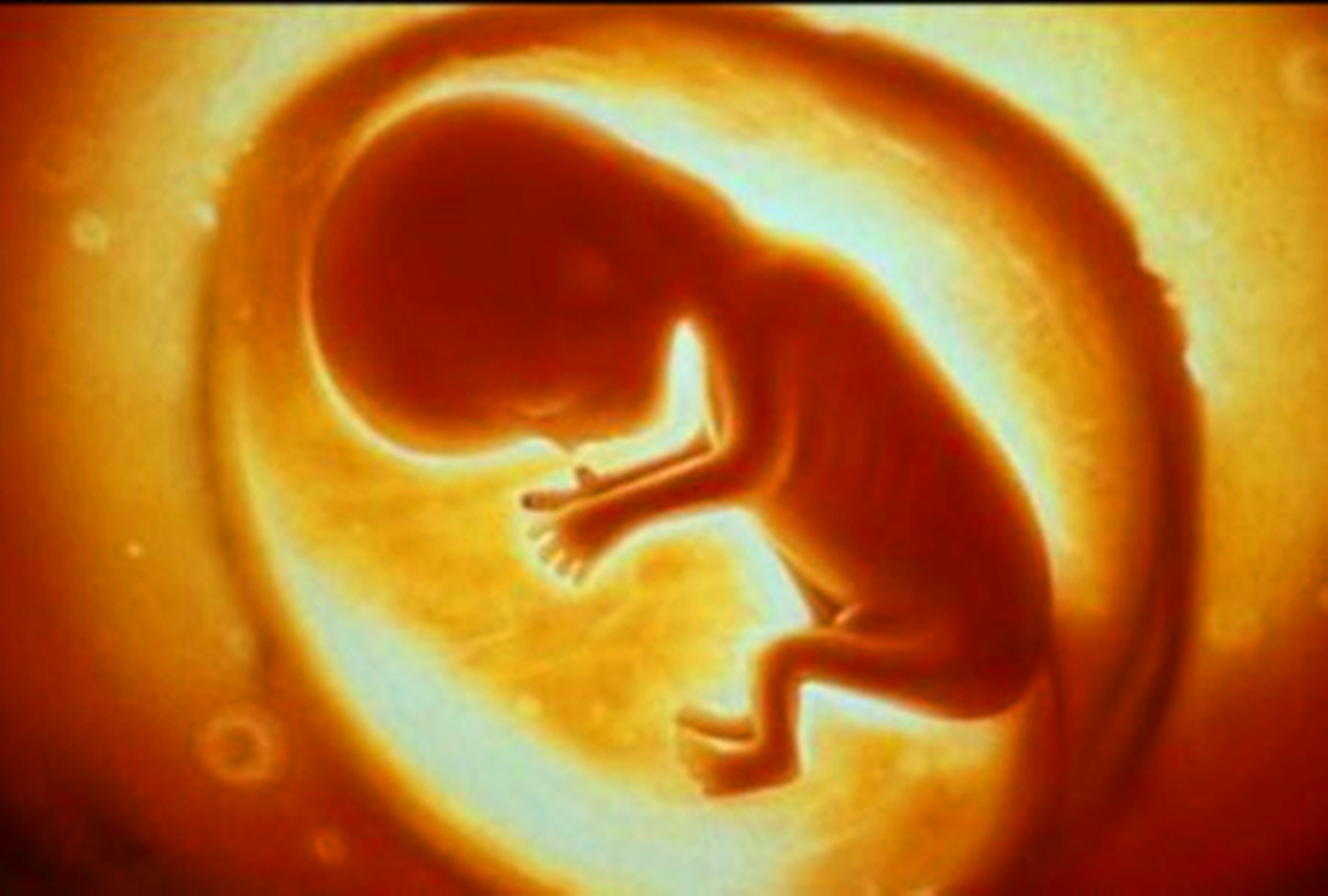
Catholics believe that the incarnation began at the annunciation with the overshadowing of the Holy Spirit. We also believe that Mary is the Immaculate Conception, preserved from sin from the very first moment of her existence in the womb of St. Ann. An argument for personhood based on sentience could arguably lead not only to abortion but infanticide and euthanasia. Indeed, a eugenics program might classify those with severe intellectual defects as non-sentient, and thus target them for mass extermination.

If sentience were defined as the age of reason, one could arguably terminate six year old children. I suspect you would not so loosely define it but the can of worms would still be opened. Catholicism would rather argue for personhood based upon the general humanity of the embryo. You are what you are throughout your developmental trajectory. Just as Jesus was God and man, as an embryo or even as a single-celled zygote, so we can speak about the humanity and personhood of all conceived of women. Everything genetically that will make us who we are (the whole organism) is present from the beginning— although immature. Even apart from religious teaching, Catholicism would philosophically renounce any argument for personhood based purely on current or immediate biological consciousness. Rejecting a stark mind/body dualism, we would stress the innate capacity to eventually develop into what we regard as a rational being. In other words, when it comes to people, “the tree is in the acorn.”

The Church would contend that if you support first trimester abortion, you are still involved with the murder of human beings. As for the religious element, we believe that those children have souls. No matter whether the physical life is terminated by therapeutic or spontaneous abortion (miscarriage), the child’s soul survives. We intercede as a Church for these children. The late Archbishop Fulton Sheen composed a prayer of spiritual adoption for children threatened with abortion. We earnestly try to save them. Failing that, we commend them to God. As for your personal question, think about it this way: can you kill children and still regard yourself as a good Christian? Could you even do so if there were the slightest chance that you were wrong in your opinion and the Church was right?

Celibacy is Sacrificial Loving

downloadQuestion

I promised God twelve years ago that I would live a celibate life as an act of penance. Twelve years later I have kept that penance, albeit for one day when I slipped and for that I went to Confession.

Today I was tempted to lust.  Instead of sinning, I looked at a very graphic picture of the passion of Christ and then prayed twenty minutes for world peace and prosperity.  This made it possible for me to say no to lust.

I know monks pray and fast. I pray three hours daily for humanity.

Can my celibacy be offered to make my daily prayers more effectual, as the monks do with fasting, abstinence and other mortifications?

I am going to repent through celibacy for the rest of my life.

Response

You are going to repent through celibacy?  About what are you repenting?  Do you mean that you desire to offer it in reparation for sin?

Celibacy is a form of sacrificial loving.  It is a precious element of religious men and women who respond to an evangelical calling. The laity can also pursue a life of Christian celibacy but, as with those pursuing religious vocations, it must always be within the context of a life of prayer, service and charity.  This is a hallmark of the celibacy that serves as part of the COURAGE movement founded by my cousin the late Fr. John Harvey for Catholic homosexuals desiring to live a life in conformity with Church teachings.  God will give his grace for such a discipline; however, it is not viewed as something negative but as a positive and virtuous way of discipleship.  Celibate individuals and married couples may both pursue penance and various acts of mortification.  Celibacy itself should be embraced as a joyous gift, not reduced into a difficult means to degrade and to abase the flesh.

Outside of the convent experience, a few women pursue lives as consecrated virgins.  There are a few lay organizations where members take yearly promises of celibacy.  Embracing Christian celibacy may not be understood by the world, but it is a wonderful gift.  More than a lifestyle choice, it is a manner of self-donation.  The person centers him or herself upon a relationship with the Lord.  The two-fold commandment of Christ comes into play.  The love of God uniquely spills over into the love of neighbor.  We all need to love.  Christian celibacy is more than not having romantic relationships and/or sexual relations.  Celibacy is a way of living and expressing our love.  I stress this because it is so much more than penance.  If a person saw his or her celibacy only as mortification or humiliation, then it would not be genuine Christian celibacy.  It cannot be embraced only because the person did not find another of the opposite sex with whom to share his body and life.  It cannot be lived out if the person hates himself and does not see himself as lovable.  It cannot be followed in truth if the person is afraid of relationships and would prefer to flee them.  Celibacy requires strength and courage, not weakness and fear.  God does not want us to suffer for the sake of enduring pain.  St. Paul told his listeners that it is better to marry than to burn.  That is why men called to the celibate priesthood consider the work of a priest and his aloneness and celibate love.  If it be too difficult or robs the soul of joy then it is not the vocation and/or the way of loving that God wants for us.