• Our Blogger

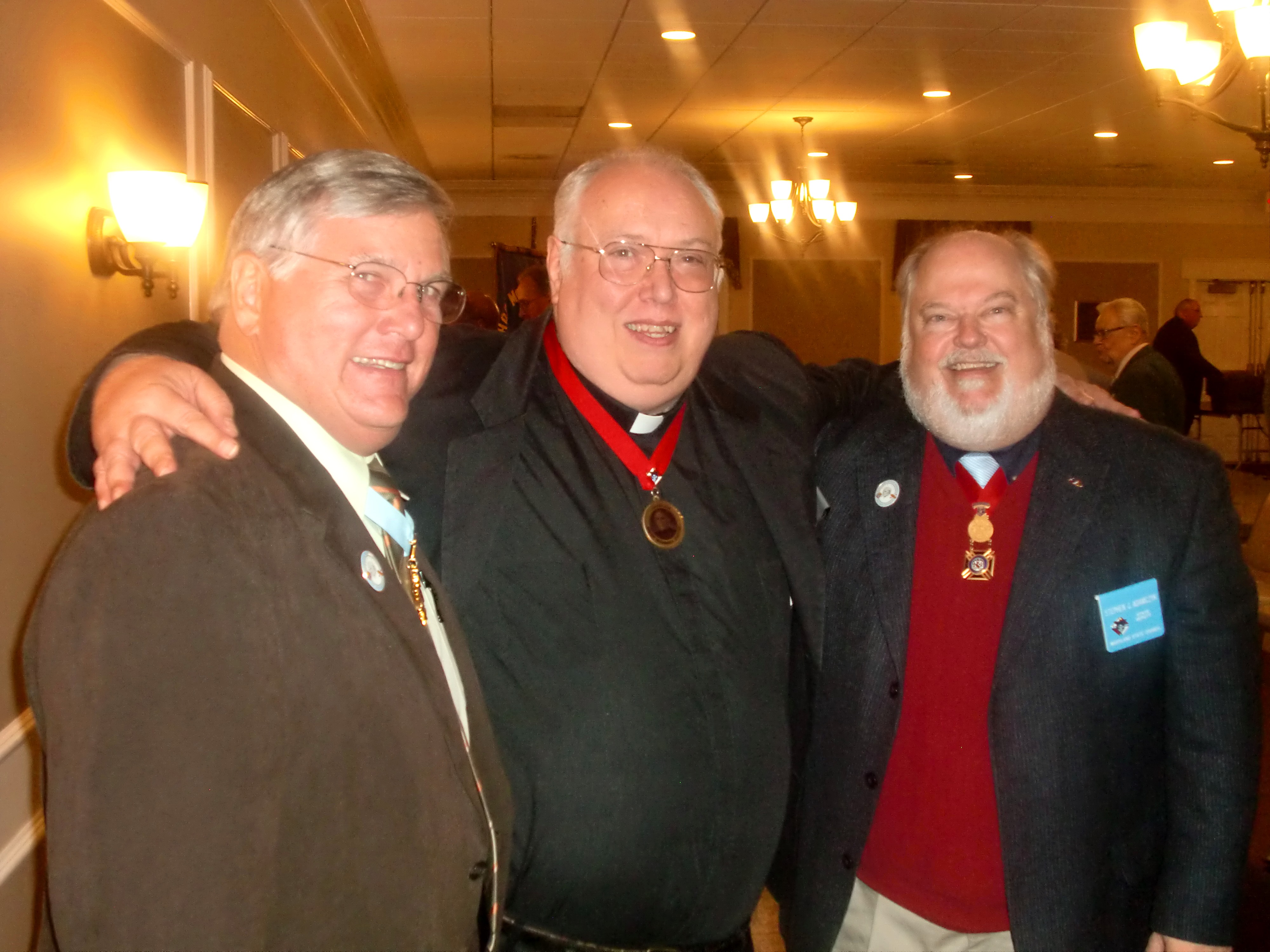
    Fr. Joseph Jenkins

  • The blog header depicts an important and yet mis-understood New Testament scene, Jesus flogging the money-changers out of the temple. I selected it because the faith that gives us consolation can also make us very uncomfortable. Both Divine Mercy and Divine Justice meet in Jesus. Priests are ministers of reconciliation, but never at the cost of truth. In or out of season, we must be courageous in preaching and living out the Gospel of Life. The title of my blog is a play on words, not Flogger Priest but Blogger Priest.

  • Archives

  • Categories

  • Recent Posts

  • Recent Comments

    Barbara King's avatarBarbara King on Ask a Priest
    Ben Kirk's avatarBen Kirk on Ask a Priest
    Jeremy Kok's avatarJeremy Kok on Ask a Priest
    Barbara's avatarBarbara on Ask a Priest
    forsamuraimarket's avatarforsamuraimarket on Ask a Priest

[1] First Sunday of Advent 2025

Isaiah 2:1-5 / Psalm 122: 1-2, 3-4, 4-5, 6-7, 8-9 / Romans 13:11-14 / Matthew 24:37-44

Today we begin the Advent season and Advent is a time of preparation. Look into your lives as you prepare for the non-spiritual celebration of Christmas – a time of shopping and cooking – of tree-buying and decorating – a time of cleaning. It is also a time of renewal. Before texting, Facebook and emails, many of us would write letters and holiday cards to friends reconnecting and telling them about the past year with its joys and sorrows. We would renew old friendships. Given the current cost of postage and the intrusion of modern technology, letters and cards are increasingly out of fashion.

It is still a time of travel. Families and friends try to get together. If this is so physically, I would remind us that Advent is a season of spiritual travel. We travel into the Light and by the Light. Today, we ignite one candle on the Advent wreath and as the weeks go by we will light the second, third, and fourth. It is hoped that the Light of Christ will burn evermore brightly in our hearts. While we might be surrounded by darkness, we are called as pilgrims to follow the one who is the Light of the World. He illumines our way into the kingdom.  The promise of the first reading is realized: “O house of Jacob, come, let us walk in the light of the Lord!” Without the Lord, we would be lost.

Advent is a time of coming home.  It is also a season of becoming, knowing both growth and fulfillment in the Lord. Advent is the pregnant time in the history of salvation. We make ready for the Second Coming of Christ by remembering his first coming hidden in the womb of Mary.  Advent signifies the ancient promise given the Jews for a coming Messiah. Christmas is the realization of that promise.  Later Lent and Easter will celebrate the work of our Savior to redeem a people and to give us a share in his divine life.

Today’s first reading speaks of a day of promise when God’s justice will be fulfilled and peace will reign.  The responsorial recalls Jerusalem as the city for the first people chosen as we await a new house of the Lord. “Let us go rejoicing to the house of the Lord.” This admonition is fulfilled with the house Jesus built, the Church. The second reading urges us to read the signs of the times. The days grow short and we must be awake or alert as watch-persons for the Lord, ready when he comes. We read: “You know the time; it is the hour now for you to awake from sleep. For our salvation is nearer now than when we first believed . . . .” The Gospel continues this theme. We are urged to be steadfast, awake sentinels for the Lord’s return and judgment.  Jesus says, “So too, you also must be prepared, for at an hour you do not expect, the Son of Man will come.”

In our readings over the next few weeks, we will hear of a call to peace, and a call to justice. There is a joyful hope. Indeed, we will be told to rejoice because the Lord is near, because the Lord has removed the judgment against us. We also begin a new liturgical year. We have a fresh start; a chance to set our spiritual lives on a path that will lead us to that joyful welcoming of the Christ-child on Christmas morning. We will also heed the words of John the Baptizer when he says, make ready the way of the Lord; and when he tells us to receive a baptism of repentance. In the light of the liturgical renewal and in response to the Baptist’s cry, we would do well to reflect upon the sacrament of reconciliation.

The sacrament of reconciliation, as we shall see is also a means of preparation. It allows us to be healed and restored. It joins us more closely to Almighty God as it is his life, his grace, which we receive every time we celebrate the sacrament. Oftentimes we think that we only receive God in the Eucharist. We receive God every time we celebrate any of the sacraments; because each sacrament was instituted to be a channel or instrument of God’s life – God’s grace. The sacrament of penance is a sign of hope and loving trust in God’s forgiveness. It is a call to justice, a justice which forces us to examine, in truth, our relationship with God, with our brothers and sisters, and with our very selves. The sacrament also brings us peace. Oftentimes, the emotional burdens of guilt can weigh heavily upon us. It causes stress and disruption in our lives. By celebrating the sacrament of reconciliation, we can put much of this behind us. We can be at peace with ourselves and with those whom we encounter. Finally, this sacrament allows us to begin again— to be restored— to be made whole.

Mixed Signals about Homosexuality in the Church

Recently the morning news was buzzing from right to left about Gio Benitez receiving his confirmation at the Church of St. Paul the Apostle in New York on Monday, November 10, 2025. Normally, such an event would not be news, even for a celebrity, as he is the co-anchor of the Good Morning America television program. However, what made this event controversial in the eyes of many is the fact that he is a homosexual and that his same-sex husband Tommy DiDario was his sponsor.

The journalist says some wonderful things about his spiritual journey. However, our standing with God is not purely subjective. Each of us must earnestly struggle with our weaknesses and sins under the light of the revealed Gospel so that we might be disposed to divine grace. What the Bible and the Catechism teach matters if we accept that God has revealed his truths to the Catholic Church.  The Scriptures are critical of homosexual acts and classify them as grievous sins. There is no getting around that fact. The universal catechism, while not opposed to an air of welcoming, nevertheless, classifies same-sex attraction as a “disorientation.”    

The Old Testament is the most severe (Leviticus 18:22 and Leviticus 20:13) and is often cited by those who favor criminalizing homosexual activity. Secular critics have gone so far as to stamp these passages as hate speech. The story of Sodom and Gomorrah (Genesis 19) is reckoned as corporate condemnation for any society that permits or condones homosexual acts. The apostle Paul is the chief moral teacher in the New Testament. He stamps same-sex intimacy as sinful and contrary to the laws of nature (Romans 1:26-27). St. Paul warns that deviant acts will forfeit our place in the kingdom of heaven (1 Corinthians 6:9-10; 1 Timothy 1:9-10).   

Benitez had long wrestled with his Christian faith. His online testimony to this struggle is quite moving. Here it is in his own words:

“Six months ago, the death of a humble pope unexpectedly took me on a journey that was a lifetime in the making. Fr. James Martin, SJ was on GMA speaking about Pope Francis’ legacy of inclusivity. His words struck me. It was the first time I had seen a priest speaking in such a beautiful way about LGBTQ people. / I had received my baptism with my mom 25 years ago when I was 15. In secret, that nagging question persisted: if God created me, how could he not love me? I went on to study religion in college, searching for proof of God’s love. / In May, I walked through the doors of St. Paul the Apostle Church for the first time as Fr. Eric Andrews preached on three simple words spoken by Christ: Love One Another. ‘When we’re able to love and love freely and openly – and love ourselves as well – we are a long way down the road to fulfilling the Kingdom of God.’ / It turns out proof of God’s love wasn’t in the books or lecture halls, or even the amount of years I spent studying. That divine love was in me all along, always whispering guidance, gently reaching out with arms wide open, and like Michelangelo’s Creation of Adam, patiently waiting for me to reach back out and embrace the greatest mystery. / My Confirmation Mass was a very small gathering of family and friends who have quietly been with me on this journey. But in my mind, those empty pews were filled with a cloud of witnesses: my grandparents who taught me how to pray, my aunts and uncles who helped raise me, and dear friends – praying for me behind an invisible veil. / I found the Ark of the Covenant in my heart, stored there by the one who created me… exactly as I am.”

In all this my one concern is about identifying a whole class of persons as “LGBTQ people.” While we can be distinguished by gender, and then only male and female, many of us fail to see how sexual orientation suffices as a sufficient category to denote a class of people. Each of us is so much more than our sexual attraction and behavior. It may be the result of past segregation and criminalization, but I would urge everyone to get beyond such classifications. Proponents of the homosexual lifestyle argue that such identification is a personal decision rooted in orientation and gender identity.  But gender is not fluid; rather, it is fixed. Heterosexual or homosexual, one is not an animal without control or discipline.  We all have freedom and choice about what we do, good and bad. Those who espouse a strict determinism and lack of choice are deceived. Yes, you have no say about being black or white or about being male or female; however, one can either remain virtuous and pure or pursue vice and immorality. While our discipleship will come to define us in the world to come as either saved or lost, in this world we need not allow our identity to be utterly exhausted by the sins of fornication, adultery or sodomy.   

The core problems raised by critics emerge in Benitez’s remarks of appreciation:

“My deepest gratitude to Fr. Eric Andrews, Fr. James Martin, Fr. Paul Rospond, and Fr. Chris Lawton, SP for showing me that God’s loving mercy is unconditional, for Joey Chancey for pouring his heart out into the piano keys and into our friendship, Catherine Allison for allowing us to hear what an angel sounds like, Don Saladino for his prayers, my mom and sister for being examples of grace in action, and to my incredible husband and sponsor, Tommy DiDario, for supporting me through it all.”

First, we have lost something of the distinction between official Catholic doctrine and laws on one hand and pastoral accommodation on the other. This was long understood regarding the matter of artificial contraception among married couples. The prohibition was publicly affirmed by the Magisterium; however, Pope John Paul II urged confessors (within the internal forum) to exhibit heightened sensitivity. Fr. James Martin and many of his fellows say and do little that is not widely publicized. There is a lack of consistency in echoing the catechism. Ecclesial discipline is regularly compromised. This ministerial imprudence has created moral scandal in the public forum.  Gio Benitez, as a layman drawn to the faith, largely follows the priest’s lead. Papal favor extended to Fr. Martin, along with an ambiguity rooted in compassion, set the stage for such head-scratching incidents as reported here.   

Second, we must be careful about judging the candidate because those who had charge of him sought to normalize his irregular union. Red flags are raised and questions asked. Did Benitez go to confession prior to confirmation so that he would receive the sacraments in a state of grace?  Was there firm amendment of life? Would there be a real effort at living a brotherly life with his special friend in mutual celibacy? Certain answers could very much change the moral tone of the situation.

Third, he not only refers to Tommy DiDario as his “husband,” but we are told that he acted as his sponsor.  How can we process this?  The Christian faith clearly teaches that the sacrament of marriage is an exclusive “covenant” relationship between a man and woman that is both “love giving” and “life giving.” No simulation of the marital act between two males or two females can realize the potency of the true marriage bed. The fact that he was his sponsor makes what happened quite brazen.  I would argue that not being married in the Church would alone be a sufficient impediment to the sacrament. But who knows? He may have been confused or misguided about this as well. Clergy bless same-sex couples and do so with impunity. It may very well be the case that certain clergy have conducted clandestine marriage ceremonies for same-sex couples. This muddies the water even though such efforts would always and everywhere only be “attempted” marriages.

No sooner did this news story break, it was followed up with one about the private Vatican audience of Archbishop José Gomez of Los Angeles with a same sex “married couple,” Alex Capecelatro, CEO of Josh.ai, and his so-called husband Brian D. Stevens, a celebrated Catholic philanthropist. The encounter was cordial and they joked with one another. Christopher Hale’s article posted at LETTERS FROM LEO stated:

“A lifelong Catholic who briefly entered the seminary to become a priest, Brian Stevens has dedicated decades to charitable works. He’s a Knight of Malta who has led pilgrimages for the sick to Lourdes nearly 33 times. Close friends say his generosity knows no bounds.”

While compassion and hospitality are clear to me, I am really at a loss about what is happening. It seems to me that this was a teaching moment, and yet it is not the lesson many of us would have expected from the magisterial office of the Church. Yes, we need to meet people where they are. Certainly, we should acknowledge the goodness and charity they share with others. But can we be silent about sin? What about pointing out the way to repentance and greater fidelity? Maybe I am too hard-headed to understand? Do I stand guilty of hardness of heart? Maybe I am missing something. If clergy are confused and uncertain about the direction of the Church, how can the flocks be properly led by their shepherds? We all need to pray for the good of souls and to pray for the Holy Father.

A Catholic analysis must take into consideration our Christian anthropology that flows from the sources of revelation (Scripture and Tradition), natural law, and Church authority.   

  1. Crucial in this discussion is the definition or meaning of love. Often the element of sexual intimacy collapses into what we mean by love.  When it comes to same sex relationships, indeed even heterosexual involvement outside of traditional marriage, any sexual activity is morally wrong.  Sexual congress outside of what constitutes the marital act (consensual vaginal intercourse) is highly problematical. Neither oral nor anal sex consummates or realizes the nuptial bond. The former is often blamed for certain cancers of the mouth and the latter for tearing the rectal lining.  There are consequences for the violation of nature.
  2. The Church is no enemy of love. Indeed, our Lord gives us a two-fold commandment that should guide us in our union with God and with one another.  We read in Matthew 22:37-39: “You shall love the Lord, your God, with all your heart, with all your soul, and with all your mind. This is the greatest and the first commandment. The second is like it: You shall love your neighbor as yourself.” While there are various types of love, the Church would argue that the erotic must be reserved to married men and women.  However, this love must detach itself from lust as it devalues the beloved and makes bodies interchangeable.  Relationships poisoned by lust are often manipulative, corrupted by pornography and frequently subject to infidelities leading to adultery. The Church would counsel “holy passion” for married couples. This passion includes the drive for union as an expression of fidelity and a desire for a family. The intensity is focused on a particular person and no one else. The good and happiness of the beloved becomes paramount. Outside of marital love, what is left? Obviously, there is parental love, love between siblings (brothers and sisters), fraternal love (with friends and neighbors), etc. 
  3. What is left if anything for special friends who share a same-sex attraction? First, there must be due caution given the ancient maxim that true love cries out for unity. Disorientation creates a danger of a moral fall when people live in “close” proximity. Second, celibate friendships between men, as those between women, can be intensely strong, becoming something on the level of family.  We perceive this in religious communities and in fraternal orders of Catholic men. Many will call special friends their “brothers” and “sisters” despite the lack of blood ties.  If couples can adopt children as their own, why cannot men and women do something similar? Might it be recognized by the Church and by the state? Well, surprise, we have been here before.  It may be a way out of the present conundrum if same-sex couples are willing to embrace sacrifice and if the Church is able to trust her people.
  4. Christian antiquity included a service for joining two people into a non-carnal relationship called adelphopoiesis (Greek for “brother-making”). This is not analogous to marriage and as with the Courage Movement, men and women so united would be commended to celibate love or service to others as well as to lives of intense prayer.  This spiritual brotherhood (and by extension today, spiritual sisterhood) would be formally recognized. They could reside together and share their lives. Such unions were celebrated and blessed by the Church until the 14th and 15th centuries. The practice is somewhat reminiscent of the friendships between boys when they informally pledge themselves as “blood brothers.” However, this Church bond emphasized both a chaste and pure life (no dating or courtship) and mutual support in the growth into holiness. They would throw themselves into sacramental life, i.e. the Mass and the regular use of the sacrament of penance.
  5. This rite of becoming siblings was never understood as akin to becoming spouses in marriage. It recognizes the moral law from both nature and revelation. Why is this important? The Church does not have the authority to modify or dismiss the moral law. The commandments still bind us. Even the Pope is merely the servant of the Word, not its master. Priests who take it upon themselves to welcome those in intimate same-sex bonds or attempted marriages err grievously by not echoing the call for repentance and reform. Outside of such admonitions, they do them disservice and enable or validate sinful behavior. This is a travesty because every ordained priest is given the vital mission to extend Christ’s mercy. His essential mission is the forgiveness of sins.  Any compromise about this is a violation of his mission as a minister of reconciliation with God. If one truly believes what the Church teaches, then the leading of another into error and sin is a failure to love as we should. Special friends of the same gender, as spiritual brothers or sisters, should be willing to place any selfish desires or urges behind the good of the beloved.  Real love means actualizing the three “Hs” in the beloved’s life—making him of her happy, healthy and holy. This may require a high degree of mutual sacrificial love. Indeed, it makes love real and heroic.

We cannot directly bless same-sex unions or bonds. However, a 2023 Vatican decree does permit non-liturgical benedictions for those seeking divine grace and mercy.

While we should show natural respect to persons, compassion to those in difficult situations, and a practical sensitivity, we can never bless same-sex unions as marriage. Conceding that homosexual acts are “intrinsically disordered,” the Church urges homosexuals to live chaste and pure lives so that they might regularly receive the sacraments and be counted as full members of the faith community. While differing orientations can make us nervous and uncomfortable around each other, orientation should not be grounds for unjust discrimination.    

Homosexuals are hurt or feel insulted when well-meaning people say about homosexuality, “I hate the sin, not the sinner.” The reason for the basic upset is that many have come to associate their central identity with orientation and lifestyle.  They have connected what they feel and what they do with who they are. This is a mistake. As children created by God, they are treasured for an infinite value and with a high dignity that can be further enhanced by divine grace. Sins of rebellion and/or of weakness rob them of all they can be.    

All individuals should be respected as God’s children. The two-fold commandment would have us treat one another with compassion, not with any meanness of spirit. Instead of a harshness that comes when we focus purely on the law, we need to develop a sensitivity to the struggle and woundedness of others.  We are not mindless and heartless robots of metal but knowing and loving creatures of flesh and blood.  Many are driven less by their heads and more by their hearts and what they feel.

Can we welcome and accept those that believers of old would have stoned, so that by accompanying them they might yet be saved, and us along with them? Friendship, prayer, sacraments, prudent counsel, and faithful witness can form consciences and make possible repentance and conversion. Pope Francis would never have us underestimate what it means to be companions on the journey. I would suggest that the greatest fruits will not be in the ministry of Fr. James Martin SJ (who is strong with inclusion but weak with orthodoxy) but rather in the efforts of the late Fr. John Harvey, OSFS. He left us with Courage International (for celibate Catholic homosexuals) and EnCourage (for their families and friends). Fr. Harvey believed that our homosexual and lesbian brothers and sisters might find meaning and happiness, not in fighting the teachings and structures of the Church, but by embracing them.

Satan Club at Anne Arundel Community College

Anne Arundel Community College is literally in our backyard. Montgomery County is also considering adding a Satan Club to their approved campus organizations. Disguised behind a false rationalism and a host of liberal causes, it is a hate group and exists only to mock both faith and believers.

When people claim Satan but then argue that it is all a ploy, don’t believe it. They are fooling themselves. I have no doubt that the devil has his hand in this!

The Satanic Circle asserts that it does not believe in a literal Satan. Members claim a degree of enlightenment they do not possess. Dismissive of the many great scientists and thinkers who posited faith in a higher power, they grant to science a form of natural faith even though it asks different questions than philosophy and theology. Deductive science might tell us how a watch runs but not who made the watch. The theoretical sciences and mathematics deal with abstraction over the real. While many aggressive atheistic thinkers attack religion as espousing a “God of the Gaps,” they are blind to their own gaps in understanding both the macro- and micro universe. Many of the so-called rational satanists are those with weak minds who parrot the arguments of influential atheists in the scientific community. They are particularly influenced by those in the media. Kids in high school and rebellious youths in college are quick to distance themselves from the beliefs and values of parents and others. They image religious believers as ignorant fools while in fact they are the ones who have little knowledge of anything and know next to nothing about the ultimate questions. They live lives devoid of any appreciation of metaphysics and genuine intellectual reflection. Adherents rattle on against theistic faith even as they make a religion or cult of their atheism and proposed satanism.

Their reasoning signifies dislocated or illogical atheistic rationalism. They make many claims but do not know how to think for themselves.  Question them about the definition of a syllogism and they would only give a blank stare. Those with recourse to a dictionary or the internet might answer with words they do not understand. Unable to truly debate, they turn to so-called proof-statements from leaders in the movement.  But those answers fail to satisfy so they turn to mockery and ridicule.  These new militants who promulgate an evangelistic or missionary atheism, have fooled themselves. We must not allow the wool to be pulled over our own eyes.  This is a real concern at a time when many youths are only superficially Christian. They do not understand their faith as they should, and they cannot defend it.

The devil is powerful, and he strategically exploits doubts and denials about his existence. Those who caricature him as a joke do not know that the joke is on them. This new breed of satanist might welcome occult witches or Wiccans or even new age religionists to their gatherings for “fun,” but in debates they are also criticized as closet theists. They purloin their symbols and nomenclature as their own. They deny that the supernatural is real even as they come under a hidden spiritual oppression. Signs of such manipulation are realized in the dark fruits of their coalition. They go out of their way to mock Christian believers while demanding respect for themselves. They hate the Jews as the progenitors of the Judeo-Christian faith. Indeed, they would side with terrorists against the state of Israel. They are inherently Marxist, contending for “mischief” or revolution to overthrow genuine faith and the Mosaic commandments.  They create a false dichotomy between reason and faith, elevating a science that does not have all the answers, especially about the ultimate meaning for humanity.

They are political activists. Instead of arguing for Christian stewardship over creation, they raise up nature and ecology as in rivalry or war with humanity. They would save whales but exterminate unwanted human babies. The new Gnostics, while they claim an allegiance to science and nature, wholeheartedly endorse same-sex disorientation and gender dysphoria. They not only support the LGBTQ+ agenda, but they also embrace a no holds barred sexual expression between consenting adults. Despite the clear mention of the Almighty in our founding documents as a nation, their interpretation of separation of church and state would go far beyond the intent of our founding fathers. Instead of a mere prohibition of a national denomination or confession, they propose the disavowal of any belief in God and the accompanying religious values. Under the heading of “bodily autonomy,” they would deny the right to life of the unborn. Against the Gospel of Life, they are activists for abortion on demand “whenever women want it.” This false secular humanism allows hidden demons to savor their favorite food, the sacrifice of children to the lust and selfishness of their sycophants.

The satanists are of two types, exhibitionists on one side and cowards on the other.  The first group believes in shock value.  They are often heavily tattooed and have disturbing body piercings.  They wear clothes that immediately offend with crude or derogatory messages. The second group are outright cowards.  They love to wear masks and hoods to disguise their identities.  Both feel that they can use Satan as a weapon and not get hurt, themselves. But they are slaves of the devil even if they are unaware. They are wounded by sin and sentinels for hell.

We Will Never Exhaust the Divine Mystery

The souls of the dead in heaven are divinized as saints by grace but by nature are still human.  We will have a share in the risen life of Christ. However, we will always be finite creatures. There can be no tedium in heaven because by intellect and will, we can never fully exhaust the divine mystery. We will be drawn eternally into the depths of knowing and loving God.  This process begins in this world. We come to the Lord with a faith realized in loving obedience. God gives us sanctifying grace and we are made sons and daughters to the Father, kin to Christ, children of Mary and inheritors of the kingdom of heaven.  Death makes this orientation permanent. We encounter Christ, not as strangers but as friends. Restricting ourselves to this world, we find that all the saints of the Church demonstrate great holiness while many of their opinions, even in reference to religious faith, sometimes fall short or are inexact.  Error will certainly end when we pass through the door from this world to the next; but our capacity to understand and to contain the mystery of God will always be limited by our nature.  This truth applies to both angelic and human spirits.

I do suspect there is a profound openness to truth and the gift of love in heaven.  This would conflict with hell where the demons and lost souls know something of the truth but place a limit or barrier upon their knowing and loving.  We experience in this world a similar type of division and adversity from those with hardened hearts, “I want nothing to do with you!  I’ll use you up and throw you away!  You mean nothing to me! I disown you!” The damned in hell probably have a comparable mentality and stagnation of the heart.

Here on earth we receive the risen Lord in the Eucharist.  God feeds us.  There are no sacraments in heaven as there is no need for sacred signs.  The saints see God and the mystery directly. There is no more faith because the saints behold and know God (as well as his truths) in an immediate fashion.  There is no more hope because every aspiration has been realized.  The only theological virtue that can cross the threshold of heaven with us is love or charity. This love draws us into the Trinitarian life. The sacrifice of the Pilgrim Church re-presents the oblation of Christ. The sacramental meal is a foretaste of the banquet of heaven where our union with God is realized and our Lord gives us a full share in his life. There can be no melancholy or boredom in heaven. Paradise is a far cry from the popular image of lazy angels sitting on clouds playing harps. The mystery of God can never be exhausted.  There will always be more to know.  The more we know, the more we will love.  The more we love, the more we will want to know.  This is the pattern of the finite creature to the infinite Creator.

I can well appreciate that secular critics deny the soul and view the intellectual life as the operation of fleshy brains.  Romantics might speak of the heart as the source of love, but in truth the brain is the place where material memories and thinking takes place. As a Christian, I would suggest that as a composite of flesh and spirit, the efforts of the brain mimic the powers of the soul.  Brains are not all the same and all of them have limits in regard to learning and to the physical senses. Cerebral matter  can also become diseased, causing people to struggle with thinking and remembering the most basic of facts and relationships.  The brain is physical and like the rest of the body, it has parts that can break down.  Parallel to this, the human soul has no parts and is indestructible.  It grants us a self-reflective knowledge that goes beyond the ability of the brain.  We are more than thinking meat.  Memories are not merely stored as electrochemical processes used by neurons but also make lasting impressions upon the human soul.  Just as we are often surprised by the detail of dreams; I suspect we will also be surprised as to what the soul retains after death.  What would a human being be if he were never to forget and we were to ponder matters with perfect clarity?  I suspect that the material brain both enables rational knowing and reflection as well as impedes it.  (In any case, I would not want to define the soul as simply a hard drive or cloud backup of what is in our brains.  There is a constant inter-working that is part of the mystery of the human mind as understood by Christian believers.)  What we now see as through a fog or veil, we will see clearly.

What and who we know, as well as love, survives the grave.  Indeed, it gives us our eternal orientation.  We are either like the wise virgin bridesmaids at the door with the burning lamps or like the foolish ones who walk away looking for more oil.  When Christ, the divine bridegroom comes for us, he should find us alert and ready to enter into the nuptial banquet.  If we fail to remain steadfast and prepared, we might hear those terrible words of damnation, “Amen, I say to you, ‘I do not know you.’”

If pride is the overriding sin of the devils, then a lasting humility is the posture of the saints.  Compared to God we may seem insignificant, literally as nothing. And yet, Almighty God has looked upon us as his children.  I would argue that the prayer that Jesus gives his apostles has an eternal significance.  The word Jesus uses for “Father” is purported by certain exegetes as the one used by little children. I suppose we would render it as “papa” or “daddy.” All of us, even the greatest doctors of the Church like Augustine and Aquinas, may be counted among the babes of heaven.  We are summoned to know and to love God while in this world.  All we know is still just scratching the surface. Eternity will allow us to continue this exploration of knowing and loving.  Humility is not just the approach of men and women in this world, but of the saints and angels in the next.  We must become like little children if we want a place in the kingdom.  Those who are bloated with pride, feeling that they are all grown up and know enough already will find themselves in hell.  Similarly, all those who place limits on love will also know the loss of heaven.

The Ranks of Heaven

While discussing the nature of heaven, a view was put forward that seemed eerily similar to the utopian goal of communism. It was suggested that the kingdom was a classless society where everyone was equal in terms of standing and in reference to spiritual gifts. This was claimed as necessary to avoid conflict and competition.  It was even argued that God, or at least the incarnate Christ, would be in the mix as just one of the crowd.  I was aghast at the notion, and argued that Jesus is a divine Person of the Blessed Trinity.  Our posture in heaven is to adore or worship God.  Given that there is a hierarchy of angels and multiple choirs, why would we think that mankind would be reduced to one rank and a single chorus?

It was charged that I would divide the heavenly kingdom between an elete class and second-class citizens. As a believer, it is my conviction that the dignity of persons and the sanctity of life are “incommensurate” goods. If such be the case in this world, then how could I argue a loss of value or multiple values in the world to come? Attempting a response, I asserted as a fundamental truth that everyone is loved by God as precious and irreplaceable. But that does not speak to our personal histories, the depth of our faith and convictions and the capacity we have for grace and holiness. It is apparent that some have a greater capacity to sacrifice and to love than others. There are certain people who live such exemplary lives of witness that they are canonized as saints by the Church. They become our heroes who demonstrate how many callings and lives can follow in the one way of Christ. Some have walked with the Lord their entire lives.  Others have borne great crosses.  Still some come back to the Lord late in life.  They may all win heaven, but I would not suspect that we would suddenly become all the same.  While I certainly think the existence of heaven and hell is an expression of divine mercy and justice; I do not think it necessitates an egalitarian equality in our status before God.

Pride can have us wrongly demand a choice place. I suspect this type of mentality might awkwardly land us in hell.  Pride can also demand that no one else have a better or more desirable place. This way of thinking would probably (at least) land us in purgatory.  I do not believe the souls of the just are concerned about such matters.  They are just happy to have a room in the house of God.  One may have the basement and another, a penthouse; the saints are not afflicted with jealousy.  Our posture or place will reflect the truth and that will be enough for us.  The tremendous joy of being in God’s presence will make any sentiments of loss impossible.

I suspect our proximity to God will be dynamic and always moving forward.  Just as we must be disposed or open to the graces of God in this world; the souls of heaven will abide with God in direct proportion to their ability to know, to love and to open themselves to the divine mystery.  Analogies fall short.  More than being in a mere room, we will know a profound union with God.  We will live within the Trinity itself.  Some will find themselves in the periphery of this mystery and others will be closer to its heart. We are made for God. We are not interchangeable, and as distinct persons, each of us will have our own song in the divine harmony of praise.

The Intercession of the Saints

Taking the side of the Pharisees over the Sadducees, Jesus testifies to life after death. “That the dead will rise even Moses made known in the passage about the bush, when he called ‘Lord’ the God of Abraham, the God of Isaac, and the God of Jacob; and he is not God of the dead, but of the living, for to him all are alive” (Luke 20:37-38).  While the gates of heaven are closed before the coming of Christ, our Lord speaks of a genuine communion between the living (on earth) and those heroes of faith who had come before.  Jesus will ultimately translate these souls from the limbo of the fathers into heaven.

Over the years in debates with fundamentalists about the communion of the saints, many of them insist that the saints are sleeping and others that they are alive but cannot possibly be aware of what is happening on earth.  Catholicism would argue that the heavenly saints are alive, aware of us and praying for us.  Admittedly, there is some question as to whether this awareness is part of the fabric of the afterlife or whether it is made possible through a special divine intervention. We know that in Jesus Christ love is stronger than death.  While our loved ones are taken from our sight, we are still bonded to them in love. This speaks to the profound mystery of the Church in pilgrimage, in purgation and in glory.

Some of our number have run the race and have won a share in the crown of Christ.  They remain in solidarity with brothers and sisters in the world who are still being tested.  “Therefore, since we are surrounded by so great a cloud of witnesses, let us rid ourselves of every burden and sin that clings to us and persevere in running the race that lies before us” (Hebrews 12:1).

I do not believe that our guardian angels and the blessed souls watch us as earthly voyeurs might watch a reality television program. Instead, they are actively engaged.  They reach out to us with their love and worship God with orations of praise and incessant intercession. They seek to protect us from malignant spiritual entities.  They would have us where they are. Those in glory are not suffering amnesia about those they have left behind. Indeed, I suspect they know us better than before because now they see us as we truly are, behind all our posturing and deception. They cannot force us to the will of God. But their witness and prayers may help some to find the path to eternal life. One critic suggested that if the saints were to see their earthly family and friends sinning then it would bring them sadness— no, this is contrary to heavenly joy. While it might be hard for us to understand, this is not the case.  Heaven will never be held hostage to sin or hell. The saints cannot be sad because where they are has no room or vacuum for sadness. While they are aware of us, their sights are also always upon God. The barrier or membrane between heaven and earth will allow such helps as happiness, counsel, and love to pass through; but never sadness, manipulation, hatred or despair. The heavenly saints like our Lord are now impervious to pain. This is one of the most profound mysteries for us who must still endure this veil of tears.  The saints implore grace that we might know repentance, conversion and faith. They pray that we might be courageous in adversity.  They beseech the throne of God to be merciful to us.  Chief among the saints is Mary who loves and intercedes for us with her immaculate and “maternal” heart.

Christ is the way, literally the link between heaven and earth.  This is our lifeline.  This is the real reason why the saints are still aware of us and why we remember them as alive in the Lord.  We are not orphaned by God.  While we await the final judgment and the consummation of the world, we acknowledge that we have not been abandoned.  Christ is present in the proclaimed Word. Christ is present in his priests who stand at the altar and who offer the forgiveness of sins.  Jesus is present in his person and in his saving activity at every Eucharist. We receive the risen Christ in Holy Communion.  The Lord is with us when we gather to pray.  The Church is the Mystical Body of Christ.  No part of this body has been severed.  The Church is one:  the Church in pilgrimage, the Church in purgatory and the Church in heaven.  We are one in the Lord.  We have been reborn and given a new identity by the power of the Holy Spirit.

The saints are calling us to the other side of the rainbow.  The Lord calls us each by name.  Heaven beckons to us.

The Reality of Ghosts

“When Saul saw the Philistine camp, he grew afraid and lost heart completely. He consulted the LORD; but the LORD gave no answer, neither in dreams nor by Urim nor through prophets. Then Saul said to his servants, ‘Find me a medium through whom I can seek counsel.’ His servants answered him, ‘There is a woman in Endor who is a medium.’ So he disguised himself, putting on other clothes, and set out with two companions. They came to the woman at night, and Saul said to her, ‘Divine for me; conjure up the spirit I tell you.’ But the woman answered him, ‘You know what Saul has done, how he expelled the mediums and diviners from the land. Then why are you trying to entrap me and get me killed?’ But Saul swore to her by the LORD, ‘As the LORD lives, you shall incur no blame for this.’ ‘Whom do you want me to conjure up?’ the woman asked him. ‘Conjure up Samuel for me,’ he replied. When the woman saw Samuel, she shrieked at the top of her voice and said to Saul, ‘Why have you deceived me? You are Saul!’ But the king said to her, ‘Do not be afraid. What do you see?’ ‘I see a god rising from the earth,’ she replied. ‘What does he look like?’ asked Saul. ‘An old man is coming up wrapped in a robe,’ she replied. Saul knew that it was Samuel, and so he bowed his face to the ground in homage. Samuel then said to Saul, ‘Why do you disturb me by conjuring me up?’ Saul replied: ‘I am in great distress, for the Philistines are waging war against me and God has turned away from me. Since God no longer answers me through prophets or in dreams, I have called upon you to tell me what I should do.’ To this Samuel said: ‘But why do you ask me, if the LORD has abandoned you for your neighbor? The LORD has done to you what he declared through me: he has torn the kingdom from your hand and has given it to your neighbor David. Because you disobeyed the LORD’s directive and would not carry out his fierce anger against Amalek, the LORD has done this to you today. Moreover, the LORD will deliver Israel, and you as well, into the hands of the Philistines. By tomorrow you and your sons will be with me, and the LORD will have delivered the army of Israel into the hands of the Philistines.’ Immediately Saul fell full length on the ground, in great fear because of Samuel’s message. He had no strength left, since he had eaten nothing all that day and night. Then the woman came to Saul and, seeing that he was quite terror-stricken, said to him: ‘Remember, your maidservant obeyed you: I took my life in my hands and carried out the request you made of me. Now you, in turn, please listen to your maidservant. Let me set out a bit of food for you to eat, so that you are strong enough to go on your way.’ But he refused, saying, ‘I will not eat.’ However, when his servants joined the woman in urging him, he listened to their entreaties, got up from the ground, and sat on a couch. The woman had a stall-fed calf in the house, which she now quickly slaughtered. Then taking flour, she kneaded it and baked unleavened bread. She set the meal before Saul and his servants, and they ate. Then they got up and left the same night.” (1 Samuel 28:5-25).

If genuine, then Samuel was a ghost summoned by a medium. He would be regarded as a hero of faith and today as a saint.  However, he would have come from the limbo of the fathers as Christ had not yet opened the way to true heaven. Genuine or not, the manner in which the ghost was called forth was a violation of God’s law. I suspect that he appeared, not because of the medium but rather by God’s permission to announce judgment against Saul.

Jews and Christians alike are forbidden to use mediums, oracles or fortune-tellers (see Deuteronomy 18:11 and Leviticus 19:31).  God was already displeased with Saul.  Now Saul had sealed his fate by employing the services of a witch.

Many of us are intrigued by ghost stories. Protestants more so than Catholics, tend to regard them as either pure fiction or as demonic deception.  Many Catholics have an open mind about such phenomena.  Indeed, some of the stories seem to reaffirm our teachings about purgatory.  If there be ghosts, from where do they come?  This topic can be somewhat dangerous. We are warned not to be obsessed by such preoccupations. Séances and Ouija boards are condemned, not merely as superstition but as a slippage into witchcraft or the occult.  Catholics pray for the dead and invoke the saints to intercede for us.  However, we do not seek direct two-way communication.  The proper focus of all prayer, even sanctoral orations, is always almighty God. There are stories of the saints appearing and speaking with the living, as in the life of Joan of Arc.  However, there is a difference between what God permits and what men might seek. The danger is demonic subterfuge and lies. There are cases where demons masqueraded (supposedly) as souls of the dead.

Dr. Peter Kreeft speaks of three types of ghosts:

1.  Ghosts from heaven;

2.  Ghosts from purgatory; and

3.  Ghosts from hell.

I have already made some reference to the first.  There are numerous other cases in the long history of the Church.  These are the apparitions of visionaries, often with messages. Like the Virgin Mary, they always direct us back to Jesus and implore repentance and faith.  We are urged to pray and to remain steadfast. They are not subject to diabolic necromancy or sorcery. They would never promote rebellion against the Lord or his Church.  Neither would they tolerate or legitimize immorality. If a paranormal entity is malicious then it is not from heaven.

Kreeft speaks about the saints who come with a message or warning from heaven. I have always emphasized the ones from purgatory who need our prayers. The third type has undergone much speculation but about which many of us are unsure. If there were an evil or malicious haunting, I would usually regard it as demonic and not originating with a human soul or ghost. However, those who speak about the need to heal the family tree and certain forms of deliverance would join Kreeft in speaking about ghosts from hell. While the living can be haunted by past trauma and memory, I would have thought the damned souls too helpless and restrained by God to intervene in earthly affairs, but I may be wrong.

I remember a story told years ago about a convent of women that felt assured about the saintliness of a particularly pious nun who had recently died.  One day while at chapel in prayer, her ghost walked toward the altar.  Turning to her fellow sisters, she beseeched, “Pray for me.”  She then placed her hand print in wet mortar recently used to repair the wall and disappeared. Presumptuous of her personal holiness, correction was offered; she needed their prayers as a soul in purgatory.

The Saints Raise Their Hearts & Minds to God

There are a lot of misconceptions about heaven.  It is not a place where we can better satisfy hedonistic longings.  Many of the renditions of heaven on television and in movies would in time probably more resemble hell than paradise. It is not simply a place where nice people go after death.  Being nice will not save us.  The pattern given to us by Scripture is crucial: repentance, faith in Christ, conversion and loving obedience. Jesus is the Way and the Truth and the Life. There is no other way to the Father.  This truth of the kingdom may strike many as unfair, but God is the one who sets the parameters for justification.  The acquisition of heaven is not further self-absorption; no, it is rather a detachment that allows for transformation and identification with Christ. The disposition open to grace and holiness is what remains crucial. We must empty ourselves to be vessels of the holy.  The saints of heaven have one overriding activity— they give eternal glory to God. Any vision of heaven that neglects this facet is false.

We were made for God.  Our hearts will know incalculable joy in being within the divine presence. Heaven is not merely a place where men will reason without feeling like the Star Trek Vulcans attempt to do. Our minds will acquire the truth for which we have always longed— to see and know God face to face within the beatific vision.  But while we will not be afflicted with fickle emotions, as human beings we will have our hearts and feelings saturated by the divine presence and we will be touched by infinite love. We will be home with the Lord.  There will be no more sadness and tears.  All will be joy.

We are promised restoration beyond the grave. We will not be disembodied ghosts forever. We believe that just as our Lord rose from the dead in a glorified body, so shall we be restored, and similarly with immortality.  Further, while on our earthly pilgrimage, our emotions and passions are often rebellious and our nature is wounded by concupiscence. The saints will not know rebellion in their members. We will know control and order, not as robots or ants, but as the children of Adam and Eve were meant to be from the beginning.  Of course, we will also be more as the incarnation and work of Christ has merited for us a share in the grace-filled divine life.  Humanity is raised to a level higher than ever before.  Like the angels, there will neither be marriage nor the begetting of children; instead, we will experience in the light of Christ the immensity and purity of love beyond the current shadows.  While our bodies have often had dominion over our souls, the situation is reversed in heaven.  We will be our true selves.  We will know and love and live in grace, no longer subject to the accidents of nature or corporeal chemistry. We will be able to think and feel without distraction and disorientation. Our human nature will be perfected. As Dr. Kreeft says in his essay on heaven, “All our humanity is perfected, not diminished, in Heaven.”

No Loss or Suffering in Heaven?

Can God and the saints of heaven experience sorrow for those who have alienated themselves from the Lord and are lost to heaven?

“He will wipe every tear from their eyes, and there shall be no more death or mourning, wailing or pain, for the old order has passed away” (Revelation 21:4).

A priest who answers questions at EWTN insists that the souls of the just will no longer remember those who have damned themselves. He argues that this is necessary to preserve heavenly happiness and peace. I do not believe this is the case.  Rather, given the profound unity of the saints with God, there is no room for such a sense of loss. God, himself, is regarded by classical philosophers as the unmoved mover. He possesses all perfections. He cannot be hurt or changed. The philosopher Dr. Peter Kreeft would direct us to the generations of the triune persons, “a system of self-dying, self-giving.” He is complete and those who abide in him will know fulfillment.  

Recent online debates are also resorting to revised calculations about the number of the damned.  Dr. Ralph Martin is often cited by those who further the traditional assumption that more might be lost than saved. Bishop Robert Barron is frequently quoted by the other side— that most will somehow go to heaven. If the latter were true, there would not be that many to feel any loss about.  But of course, within the perspective of God, one soul is as loved as all souls. (Over a decade ago, a debate raged between orthodox writers of The Wanderer newspaper with those of The New Oxford Review on the subject as to whether some were predestined for damnation. The latter, converts to the faith if my recollection serves me, subscribed to a Calvinistic view and argued that God “hated” sinners and thus the denizens of hell had forfeited the love of God. It was argued that the saints would then concur that they got what they deserved and that would be the end of it. I did not buy the argument and sided with The Wanderer in this debate.)

Part of the problem may be that we are trying to resolve how we will know and feel within the unknown conditions of beatific vision and heavenly light. Currently our awareness is often blurred and everything is touched by an oppressive darkness: suffering, loss, pain, sin and death.  Can we even imagine how things will seem to us when these elements are subtracted?  Theoretically we can try but on the level of real and immediate experience, it is all we know.

Sorrow is defined as “a feeling of deep distress caused by loss, disappointment, or other misfortune suffered by oneself or others.” The resolution in reference to God seems to be within the mystery of the Cross and how we have always appealed to the Sacred Heart devotion. It may be that part of our conundrum is that we are still thinking in a temporal and terrestrial manner. The secret or suitable answer may be in how we spiritually understand the Mass, which is a sacramental re-presentation albeit unbloody of the passion and death of Jesus.  We know that Jesus dies once and for all and that he can never suffer or die again. The weight of the world’s sins included both those who would respond in an affirmative way to his self-offering and gift of himself as well as those who would still reject his saving work and join themselves to the devil.  Look at the apostles Peter and Judas.  Both betray and fail Christ; however, one will later be healed by his love of Christ and the other will despair and destroy himself.  The gift of salvation is available to everyone.  But not all will accept it, only the “many” that constitute the elect.  The misnomer of heavenly sorrow is in the paschal mystery of Christ. God as a perfect spirit cannot be moved; however, in Jesus Christ we have a God who has made himself one of us. This is central to this reflection and I would return to it again and again.

As pilgrims, we celebrate the sacraments and enter into the betrayal, passion and death of Christ.  We apply our many sufferings to the oblation of Jesus, for ourselves and for the reparation of sins.  We may not mourn or feel loss in heaven, but that does not preclude such sentiment in the present.  The mystery of the Cross cannot be restricted to one page of salvation history. It bleeds through the many pages of the story.  Along with the sacraments, we are also called to take up our crosses and to follow Jesus.  Here again, any loss or pain toward brothers and sisters who have said no to God is also experienced. This will later extend beyond the time of testing to the process of purgation. We will suffer not just for ourselves but like our Lord for all those whom we love and would have as a part of us. Parents weep for rebellious children. Siblings lament the ravages of sin in brothers and sisters.  However, once translated into heaven, all the tears would have been shed and wiped away. The time for mourning and pain will come to an end.

The saints in heaven fully embrace divine providence.  The emphasis is upon the goodness of God, what he has done for us and the offer of freedom— not the misuse of freedom or the rejection of God’s gifts.  There is solace to be found in that our Lord as both the Divine Justice and the Divine Mercy has given us every opportunity to share his life and presence.  Those who have turned away are remembered, but as those who have misused their freedom.  They received what they wanted.  God will not force himself upon his children.

God will so saturate us with his joy and his presence that there will be no room or space in us for sadness or sorrow in heaven.  That part of the dance will be completed.  That element of the celestial harmony will already be sung.  God withdraws himself from the damned only because they hate and do not want him. Nevertheless, a spark remains that keeps them in existence. This minuscule spark is what constitutes the legendary and frightening fire of hell.  Poor but happy souls in purgatory will be perfected (or healed) and saints will dance for joy in the great conflagration of God’s love and the damned will withdraw in pain from the smallest glint of a flame.

Dr. Peter Kreeft wonders about the tears of Mary for wayward children. Here again, I would return to the mystery of Christ’s saving work.  Mary is the sorrowful Mother at the hill of Calvary.  She weeps not only for her Son but for all who would become her spiritual children. She will take the dead body of Jesus into her arms. While never ordained a priest, she would have every right to say, “This is my flesh.  This is my blood.”  There is a profound unity between the Immaculate Heart of Mary and the Sacred Heart of Jesus.  They beat in unison, loving not just the holiest of men and women, but also those who are wayward and the most prodigal. There is something eternal about that moment at the Cross. Jesus offers himself to the Father as a sin offering for the world.  However, in a spiritual sense, and as the new Eve, Mary joins Jesus in this precious offering or surrender.  Mary is always the handmaid of the Lord, first of the temple built by men and now of the temple that is Christ’s body.  Even as we begin to tear it down, Mary holds her Son in her arms, seeking already to rebuild this temple— an effort made complete in the resurrection and ascension.

We can never fully appreciate the immense suffering of our Lord on the Cross. This is because he is a divine Person.  It is said that with a greater depth of love there comes an increased capacity for pain or suffering. 

God neither creates nor redeems us from necessity. He fashions us for himself with a perfect freedom.  He wants us to love him freely in return.  The measure of the Cross is to free or liberate us from the bondage to sin and death.  While we prefer slavery, he would again make us free.  The infinite love of God is measured for us on the Cross.  This is how much God loves us.  God makes himself into an absurdity for us, and one that the fallen angels could not stomach.  The almighty is made weak. The invulnerable is wounded.  The eternal is put to death.  Here is the full measure of pain and loss.  While it could not last it would never be dismissed. It is a moment in time given everlasting significance. Heaven touches earth. The eternal enters the temporal.  The full ramifications of the Creator joining himself to his creation are realized.  We do not have the words to express what happens.  It is terrible and yet wonderful.  It seems so awfully bad and yet we even call it Good Friday. Tears of suffering will be transmuted into those of joy.  What would normally be a sign of defeat becomes the greatest of victories.

C.S. Lewis would remind us in his book, The Great Divorce, that hell cannot blackmail heaven.  Manipulation through loss would make a hell of heaven. Dr. Kreeft explains this as God and the saints being entirely active, not passive.  He writes, “We too can love without sorrow or vulnerability because we love only with the active feeling of caring, not the passive feeling of being hurt.”

Is One Free to Sin in Heaven?

There are some questions that can be regarded as silly.  Why?  It is because they focus on a fallacy.  For instance, take this question:  Given that God can do anything; can he make a rock too heavy for him to pick up?  If the answer is YES, then he is not all powerful because he cannot lift the rock. If the answer is NO, then he is not all powerful because he cannot make such a rock.  What is the answer?  The assertion is nonsense because it contains an inner contradiction.  Similar conflicts are found as in the biblical temptation scene. Some will argue that if the devil’s temptations were real then Jesus could have potentially given in and sinned. However, temptation does not necessarily imply the possibility of succumbing. In the case of Jesus, it is impossible.  Sin is by definition an act of disobedience against God. However, Jesus is a divine Person. God cannot sin against himself. Similarly, the question is raised:  if the saints of heaven are free then are they free to sin? The problem is how we understand freedom. While it might be misused in this world, it is perfected in the world to come. True freedom means loving obedience to God.  The misuse of freedom or a false freedom is realized in sin or disobedience to God.  Indeed, it is to embrace bondage to the diabolical.

Free will and moral perfection are in sync for the saints of heaven.  While sin is possible for those who only see dimly as through a veil, such is not possible for those who see God face-to-face. When confronted by the greatest good, which is God, the will is immediately disposed or moved to embrace it. There is no apparent good that can compete with it. Arguably even the angels knew some sort of demarcation when they were tested.

It must also be argued that our ultimate decisions are already made during our mortal lives.  Our orientation is fixed with death. Along these lines, certain theologians argue that the unborn and children who die before reaching the age of reason might be given the opportunity for making a choice in regard to their eternal destiny.  Many suspect that their personal innocence and the intercession of the parents and/or the Church would nudge them to make free decisions in loving God.  But this is speculation, no matter how optimistic the Church might be in their regard.  In any case, the denizens of heaven, both human and angelic cannot change their minds.  They have freely turned their backs to sin and have set their sights on almighty God. Coincidentally, such is also the state of hell and the slavery they have exchanged for freedom. We read the following in the fourth book of Milton’s Paradise Lost:  “Nay, cursed be thou; since against his thy will / Chose freely what it now so justly rues. / Me miserable! which way shall I fly / Infinite wrauth and infinite despair? / Which way I fly is Hell; myself am Hell…” (line 75)

Sin in heaven would be a violation of the very identity of the saints.  Their wills are united to that of Christ. They have been made holy as God is holy.