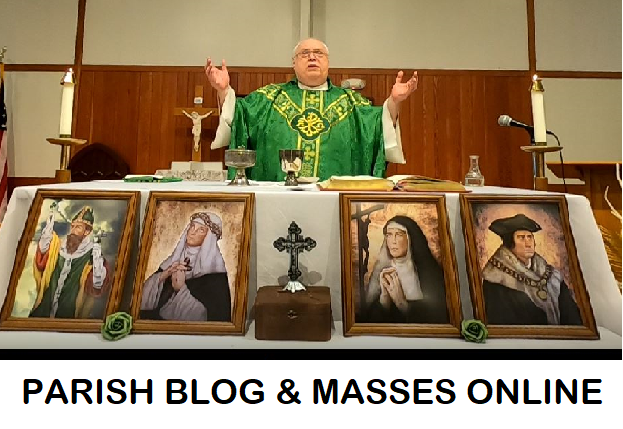

• Our Blogger

    Fr. Joseph Jenkins

  • The blog header depicts an important and yet mis-understood New Testament scene, Jesus flogging the money-changers out of the temple. I selected it because the faith that gives us consolation can also make us very uncomfortable. Both Divine Mercy and Divine Justice meet in Jesus. Priests are ministers of reconciliation, but never at the cost of truth. In or out of season, we must be courageous in preaching and living out the Gospel of Life. The title of my blog is a play on words, not Flogger Priest but Blogger Priest.

  • Archives

  • Categories

  • Recent Posts

  • Recent Comments

    Barbara King's avatarBarbara King on Ask a Priest
    Ben Kirk's avatarBen Kirk on Ask a Priest
    Jeremy Kok's avatarJeremy Kok on Ask a Priest
    Barbara's avatarBarbara on Ask a Priest
    forsamuraimarket's avatarforsamuraimarket on Ask a Priest

The Meaning of the Offertory: The Wine

What was said about the significance of the bread at the Offertory can be said of the wine that is changed into the sacramental-physical presence of the glorified Christ. No whether one receives the host or from the cup, one receives the whole and entire Christ. The sign value of the separate consecrations of the bread and wine is that we are proclaiming the death of Christ. Such was shown in his last moments by the separation of blood and body on the Cross— the sign of death. We need our drink as we need our bread for sustenance. So the Lord tells us to drink his blood as an indication of its life-sustaining value. As ordinary liquid is to our human life, the wine turned into precious blood sustains our spiritual life. Why did our Lord use those apparently indelicate words: “eat, drink, body and blood” in connection with the Eucharist? The words, “body and blood,” make it abundantly clear the kind of presence in the Eucharist. It is not the presence as hailed in God’s proclaimed Word, the Scriptures. Nor is it the same as in us when we are in a state of grace. Rather, it is the real substantial, living and glorified Christ. The only place his “physical” body is present is at the right hand of the Father and in the Eucharist. This is why we call it THE REAL PRESENCE. Not that the other presences are not real, but this is the presence par excellence. We respond to that spiritual reality by saying, “When we eat this Bread and drink this Cup, we proclaim your Death, O Lord, until you come again.” He does not die again, but his real presence is actualized and presented to us in the Eucharist. Of course, Christ cannot suffer again, but the Mass makes present the death and resurrection of Christ. His dispositions at Mass are the same as they are on Calvary; he is obedient to his Father’s will and offers praise and thanks to the Father. The Eucharist is not only a divine presence, but a divine activity. He who is present is above and beyond time; he makes his death-resurrection present to us. The sign, bread and wine, changed into the body and blood of Christ under the appearance or accidents of bread and wine, does what they signify. Life, nourishment, strength and healing come to us from the Eucharist on our way to our Father’s house. Indeed, it is Christ under the appearance of bread and wine that helps us on that journey.

Meaning of the Offertory: The Bread

Why did our Lord use bread and wine to give us his presence in the Eucharist? As in all the sacraments, the outward sign indicates what Christ is doing at the moment of reception of the sacrament. Bread is a sign of life. Even the hippies of old used the phrase, “Give me some bread, man” as a way of asking for that which would sustain them and their lifestyle. Bread is not something we get without work. There’s planting, growing, and reaping. In addition, the wheat has to be ground (connected to contrition). Then the ground wheat must be baked in heat (with yeast in some cases so it rises) and then we have bread. One can see that the finished product is the result of human labor. When used at the altar (unleavened bread in the West), we are saying that we offer God all that comprises our life: The sweat of our brow from labor, the joys of our life (as at harvest time) and the grinding of our selfishness in the separation of the wheat from the chaff. Yeast symbolizes many things in Christianity. The Eastern churches use yeast in the sacrament to signify the resurrection. Just as yeast causes the bread to rise, our work is offered up to the Lord. The symbolism of yeast is that our work is raised up by God as apostolic as we heed our Lord, “you are the yeast of the world.” Bread sustains us in our life’s journey; so does Christ sustain us in our way to our Father’s house. If our Lord intended, as he did, when he said, “eat my flesh,” he would have to have given us something that we could consume. The accidents of the consecrated bread allow that consuming. As Creator of all things, Christ could have chosen a precious metal, and changed its substance into his physical presence. We would be able to adore, but not consume it for that most intimate of unions between Christ and ourselves. There is thanksgiving involved. We thank God for the seed, the work, the harvest and then the bread. When bread becomes Christ, Christ gives thanks to the Father for us; hence, the name of the ceremony, “Eucharist,” which word means thanksgiving. But we do not give back to God just what he gave us, namely, wheat. We put the work of our lives into our gift. These are the words of our offering (over the bread): “Blessed (thanks) are you, Lord God of all creation, for through your goodness we have received the bread we offer you: fruit of the earth and work of human hands, it will become for us the bread of life.” Today, the collection takes the place of the foodstuffs for the Church and the poor, since we have moved from the barter system to coinage as an indication that we are giving a portion of our lives. Does our offering to the Church and to the poor really represent a goodly portion of our livelihood, as the bread and wine were products of our life and labor in days of old? Are we aware that the bread stands for all the elements of our life— work, joys, sustenance and livelihood? Do we realize that our offering of bread becomes the presence of Christ and that those things for which the bread stands are offered to the Father by Christ along with his offering?

Prayer of the Faithful

When the sacrament of baptism is received, a personal relationship is set up between the person newly initiated and God. Often overlooked is the other relationship which is that of the family of faith— a bond between the baptized and with God. For want of a better description, the union between Christ (the head of our family) and the various members baptized or “born again” is referred to as the “mystical” body. We do not know the “how” of this union, only the fact that it exists. There are many members of the body, but one head who is Christ. This union is surely brought to our attention when we gather for the Eucharist. We all have the same last name, Christian. We all eat at the same table— we are family. We all have the same share in the life of Christ within us. This union is brought out clearly in the Prayer of the Faithful after the homily at Mass. We pray then as a family. Some of the petitions may not be on the top of our personal list of concerns, but it is the prayer of all the faithful. There is a structure to the Prayer of the Faithful. We pray for the Church, visible and invisible, for the Church’s teaching authority, the Vicar of Christ, the Pope. We pray for those oppressed by various needs (present and absent). Hence, we pray for victims of floods and earthquakes, the poor, and in short, for all our brothers and sisters in Christ. We pray for the needs of the sick. We pray for the deceased and for the salvation of the whole world. This is our family prayer. At each petition, the gathered faithful respond and pray for all. The response is either recited or sometimes even sung. However, it should never be said just perfunctorily or mumbled by rote. The response should be said in an emphatic way, demonstrating that we are conscious of who we are and of what we are doing in union with Christ, the great intercessor for his body, the Church. We can pray for the local community (parish) with specific intentions about the needs and work of our parish family.

Faith & Values in the News

Former president of APA says organization controlled by ‘gay rights’ movement

Further support for a new organization to bypass the APA’s liberalism. I suspect a similar problem infects the NEA. The politicization of America continues.

Iconic science fiction writer Ray Bradbury dies at 91

We have lost a great author and a dreamer of dreams. He and his stories meant a lot to me; this is like losing piece of one’s soul. He was not just another science fiction writer; he was a great short story author and an insightful authority on the human condition. Rest in peace.

Head injury turns man into musical savant

Okay, I never thought I would say this but, somebody, hit me in the head!

Same-sex ceremony on Army post draws fire

Here it comes. There is trouble ahead.

Greatest Church Soon To Be Mega Mosque?

Instead of apologies for stealing Christianity’s greatest church, there are just threats. Can there really be dialogue and cooperation with growing militant Islam?

Tunisian Muslims sever the head of convert to Christianity

“Dear God, we ask you to remember your servant who refused to deny you, even at the cost of his life. Rest in peace.” This happens at a time when the State Department has expunged the section on religious liberty in its world status report. What does it mean? We are next, take courage and keep the faith.

Liturgy of Thanksgiving

What’s in a name? The word “Eucharist” means thanksgiving. We all remember at least once a year to give thanks as we eat turkey, watch football, and take a day off. At least, I hope, we are thankful. But that word needs to be unloaded. We should be thankful to God. This thankfulness is not just a mood or disposition but a prayerfulness and fulfillment of a relationship with God. To alter a word in the operatic song, “every day is thanksgiving day for me.” The Scriptures tell us to dedicate ourselves to thankfulness. Does that mean we neglect prayers of asking, sorrow and adoration? No. But we may be neglecting thanksgiving at other times of the year. When we go to Mass, we must realize that Christ is still giving thanks (Eucharist) to God. Christ gives thanks to the Father. Christ can do this because he is also one of us, human. Listen to the words at Consecration: “… he himself took bread, and, giving thanks, he said the blessing…” Then “… he took the chalice, and, giving you thanks, he said the blessing…” When the bread is first offered, the celebrant says, “Blessed are you, Lord God of all creation…” That word, “blessed,” really means “thanks.” Notice the gesture of holding aloft the bread and wine. It is done in thanksgiving for all that God has given us. This bread will be changed into the living, substantial presence of Christ, still giving thanks in the Eucharist. We join our gratitude to his as between consecration and communion; Christ is giving thanks until we join him in a special way in thanksgiving. We thank him, and with him, thank the Father who is so good to us. It may be that on Sundays and weekdays, the faithful say to themselves, “I am going to church,” or “I am going to hear Mass,” or “I am going to celebrate the Liturgy.” All these phrases are good. But, maybe once in awhile, we could say to ourselves, “I am going to give thanks to and with Christ in the Eucharist”? There is no better way to give thanks to God than in this action, which gives us the word, “Eucharist” or “thanksgiving.” As the old prayer used to say, “What shall I give to the Lord for all he has given us? I will take the chalice of salvation and call on the name of the Lord.”

Praying to and with the Saints

While I have given some emphasis to the angels, we are also in the company of our beloved dead who are saints. The saints are our kinfolk, those who have gone before us marked with the sign of faith. Some are well known, as the ones remembered at Mass and frequently found in religious art and statuary. The majority are members of our family and friends who have gone to the Lord without the notoriety of canonization. They are saints, nonetheless. The saints present to us many ways to walk in the footsteps of Jesus. There are martyrs, doctors of the Church, confessors, virgins, pastors, missionaries, etc. Some churches fill their windows with depictions of the saints and maybe statues, too. This reminds us that we are surrounded by the saints, our circle of friends. They are not far off, long ago, but with us praising God and interceding for us. They bring back to us the whole history of our Church in remembering them. They pray for us. We talk to them. In addition to famous saints, the personal saints of family and friends pray with and for us. Unfortunately, “out of sight is (often) out of mind.” Do we neglect calling upon our personal saints? Do we remember those to whom at death, we said, “I will never forget you”? Who is the saint whose name you bore at baptism? When was the last time you spoke to him or to her? What do you know of your patron, protector and intercessor? Are you conscious in the liturgy that you are not alone but surrounded by a host of witnesses? We join with them in praise and thanks to God. We also remember the souls in purgatory who are assured of heaven but cannot really pray for or help themselves. However, they can pray for us and they appreciate our prayers for them. The Church is full of people trying to live their faith; but, we do not do it alone. Our prayer and praise always includes the unseen members of our family in faith. What a great gift is our faith! We are so very privileged to know these blessings from the Lord!

Rejoicing with the Angels

We attend the liturgy in a church, not just for our private and personal prayer, but for the prayer of the whole family. The saints and angels also pray with us. How many times do we advert to the presence of the angels at Mass just before the Canons at the “Holy, Holy, Holy,” when we say “with the Angels and all the Saints we declare your glory, as with one voice we acclaim….” We pray also that the angels will take this sacrifice to the altar in heaven. At the funeral Mass we say, “May the angels lead you into paradise.” Many churches have angels on either side of the tabernacle and/or in the stained-glass windows. The angels of God constantly sing God’s praises because they see the face of God. How many turn to the personal guardian angel which we each have? When was the last time you spoke to your guardian angel? They are not just for children, but for all of us. There was a prayer that many of us used to say: “Angel of God, my guardian dear, to whom his love commits me here. Ever this day be at my side, to light and guard, to rule and guide. Amen.” Your angel prays and praises God with you in the liturgy. All of God’s saints and angels are with us in our prayers. As the familiar prayer here says, they guard, protect and guide. They have been given this commission by God to care for us. Are we conscious of praying to them (for intercession and help) and praying with them at Mass? Many years ago, we used to say a prayer at the end of Mass to St. Michael the Archangel. His name means “he who is like to God.” Archbishop Michael Curley was the Ordinary and he regularly referred to his patron saint name in catechesis about the importance of this special messenger from God. As sort of an inside joke, if you look at the archbishop’s chair at St. Matthew’s Cathedral in the sanctuary, you will see the words, “Quis ut Deus,” which means “who is like to God.” We place great confidence in Michael. Michael drove Satan into hell. Is not our world in need of invoking him again to protect the Church (that’s us) from the diabolical time and atmosphere in which we live? We should be saying, “Michael, the Archangel, defend us in battle. Be our defense against the wickedness and snares of the Devil. May God rebuke him, we humbly pray, and do thou, O Prince of the heavenly hosts, by the power of God, thrust into hell Satan, and all the evil spirits, who prowl about the world seeking the ruin of souls. Amen.” You are not alone at Mass. In addition to your fellow Catholics, you are with your guardian angels. Sing with them. Rejoice with them. Speak to them. Do this so that you may one day stand with them at the throne of God, just as they stand at your side during your mortal pilgrimage to the home prepared for you in your Father’s house.

Christ’s Presence in His Body & Blood

Sometimes we receive communion under both species, which is the consecrated bread and wine. Reception under both species does not mean that we receive more than when we receive under one species. The sick person who can only swallow a fragment of the host receives the whole resurrected Christ. The one who only drinks of the consecrated cup receives the whole Christ. While there is a separate consecration and then elevation of the host and chalice, either communion with the consecrated bread only or the consecrated cup only brings us the whole living presence of Christ. We might speak of this as a physical presence, but given that we use sacred signs, we more properly refer to it as a sacramental presence. It is still the REAL Jesus. St. Paul says, “Whether you eat this bread or drink this blood unworthily you are guilty of the body and blood of Christ.” So why did Christ seemingly separate the host from the cup? It was a sign of the manner in which Christ is present and comes to us. Christ could have said simply, “It is I,” or “I am there.” But when the words, body and blood are used, it differentiates that presence from the other modes in which God is present with us. This is the sacramental-physical presence of Christ which is different from his spiritual presence as when we come together for prayer, when Christ is in us by grace, and when Christ is present in the reading of the Scriptures. There is no doubt that when Christ used the words “body and blood” we are talking about the actual substantial presence of Christ. The host is not just a part of Christ. The whole physical presence of Christ comes to us either in the host or in the precious blood, taken together or singly. Also, the two consecrations of the host and wine are signs of Christ’s death. His body seemingly separates from the blood. The blood seemingly separates from the body. A living body has blood and the blood courses its way through a living body. Later in the Mass, when the priest drops a particle of the host into the chalice, he says, “May this mingling of the Body and Blood of our Lord Jesus Christ bring eternal life to us who receive it.” Seemingly, this looks like a reunion of the body and blood, but it is a sign again of the resurrected Christ. It is the sacramental-physical resurrected Christ we receive in communion.

Editor’s Note: Msgr. Awalt likes to use the word “physical” in reference to the real presence in the sacred species. It is not his desire to circumvent the more inclusive “sacramental” presence. He simply wants to stress the fact that the presence is substantial and genuine. We are not dealing merely with a spiritual or ghostly presence. Language falls short to express the Eucharistic mystery. I have hyphenated the word “sacramental” to his word “physical” to help avoid confusion. A figurative or empty symbolic representation would be no authentic presence at all. A spiritual presence would speak to Christ’s soul and his divinity, but not to the full implications of the bodily resurrection. A mere physical presence might be crudely understood as the presence of a corpse. It has pained me to hear some teach the real presence in such terms, as if the Eucharist is merely our Thanksgiving turkey ready for the carving. Jesus is sacramentally and substantially present. The Eucharist is the risen Lord, whole and complete. He is totally present in every fragment of the host and in every drop of the precious blood. This point is what the late pastor tries vigorously to emphasize.

Peace Be With You

When a bishop offers Mass, he greets the people with “Peace be with you.” At the sign of peace, the priest acknowledges their unity in Christ by saying, “The peace of the Lord be with you always.” In both cases, the congregants respond, “And with your spirit.” This extension of peace and variations on the dialogue response are frequently used in the liturgy. When congregations are scattered throughout a large church, instead of the handshake, some make the symbolic “V” sign with their fingers. The “V” sign that was so significant in years past is not seen as much today. After the Second World War it signified victory. During the 1960’s it was a secular sign of peace. But in either case, we ought to rediscover what these words and that gesture mean. This is particularly true of that which is commonplace in the liturgy. What finer salutation can the celebrant at Mass make to the congregation than “the Lord be with you.” It is a wakeup call to the indwelling of God in our souls for those in a state of grace. God, who is all powerful, all merciful, and all wise, lives in us. Do we speak to God present there? God is present in us, in our celebrant and in our neighbor. Are we conscious of that in our dealings with each other, or is the ritual so routine or commonplace that it stirs us not at all? This phrase is put into action at the “sign of peace,” when by any decent gesture we may choose (it is not specified), we greet each other. We often see a quick kiss between spouses, a hug or a handshake. We extend to each other God’s peace. It has a deeper meaning than renewing old friendships and just being polite socially. Our appreciation of peace comes from the Hebrew word, “shalom,” as peace is our devout desire and prayer for our co-worshippers. It is not a Dale Carnegie greeting or a “hail fellow” well met— it is deeper than that. Try to think of difficult neighbors as being vicariously present in the person standing next to you. Do we really forgive them? Do we ask to be forgiven, as in “Forgive us our trespasses as we forgive those who trespass against us”? SHALOM means not just the absence of hostility. It means things that cannot be fully expressed in a single word. This peace means forgiveness, joy, comfort, support, tranquility and God’s presence with you. This is a great preparation for communion, which expresses our unity in the Body of Christ. Peace be with all who read this. Let us be cognizant of what we say and why we are saying it.

Look Not on Our Sins, But on the Faith of Your Church

There is a phrase in the Canon of the Mass upon which we cannot long dwell while saying it but about which we should ponder at times so that it will mean more to us in its usage. “Look not on our sins, but on the faith of your Church….” We use this phrase in approaching God in the Liturgy. The faith of the Church does not refer to that segment of the faithful who have gone before us. They have lost their faith— they have no need for it as they see God face to face. The souls of Purgatory awaiting the completion of their purification before full union with God also do not need faith as they, too, have seen the Lord. It must then refer to us or at least to those among us who give great examples of the faith in our day to day living. Because of our union with these in Christ, we ask the Lord to look favorable upon us. When using this phrase, I think of the bishops and cardinals who have lost their lives or who are imprisoned for decades in China, Mexico, India, Sudan, etc. and have still held on to the faith. I think of missionaries, men like you and me, who live in strange cultures, eat unfamiliar foods, and work tirelessly for the spread of the Word of God. I met one of our own priests whose mission in Brazil involves paddling up the rivers in search of souls to tell them that God loves them and has sent his son to die for them. He works in the heat; others work in the cold and like St. Paul, in dangers and threats. What faith they have! I recall an article by Fr. Peter Daly in The Catholic Standard where he wrote about the examples of great faith in the ordinary lives of our people. For instance, several young mothers who get their little toddlers up and dressed, bringing them to daily Mass. He tells of the husband who stays routinely at the bedside of his wife of 57 years, holding her hand as she is dying. There is a young man who works in a fast-paced information technology job, who starts the day off with the Liturgy of the Hours (a book he keeps on his desk). Worthy of note is the father of six whom on his way home from work stops by the church to pray for his family. Then there are the adult leaders who give up their Wednesday evenings to work with teenagers, just because they love kids regardless of their baggy pants and pierced body parts. A retired nurse volunteers her time and effort to hospice work for the dying. A young lawyer devotes his lunch hours to teaching illiterate adults to read. The doctor and nurse, a husband and wife team, twice each month cook meals for the area homeless shelter and their three teenage sons help deliver the meals. Important to mention are the young women who volunteer at the neighborhood crisis pregnancy center so as to weekly save lives. Any pastor, and for that matter, any observant person could make a similar list. There is so much goodness and grace. It is truly amazing. “Look not on our sins, but on the faith of your Church,” and help us to go and do likewise.