• Our Blogger

    Fr. Joseph Jenkins

  • An important theme for this blog is the scene in the New Testament where Jesus can be found FLOGGING the money-changers out of the temple. My header above depicts a priest FLOGGING the devils that distort the faith and assault believers. The faith that gives us consolation can and should also make us very uncomfortable. Both Divine Mercy and Divine Justice meet in Jesus. Priests are ministers of reconciliation, but never at the cost of truth. In or out of season, we must be courageous in preaching and living out the Gospel of Life. The title of my blog is a play on words, not Flogger Priest but Blogger Priest.

  • Archives

  • Categories

  • Recent Posts

  • Recent Comments

    Father Joe's avatarFather Joe on The Prayer to Saint Michael at…
    Inveilis's avatarInveilis on Ask a Priest
    Joanne M Rowan's avatarJoanne M Rowan on Reflecting Upon SSPX Dissent…
    Joanne M Rowan's avatarJoanne M Rowan on The SSPX Makes It Itself Out M…
    Jeremy's avatarJeremy on Ask a Priest

Sixth Sunday in Ordinary Time

February 16, 2020
Sixth Sunday in Ordinary Time
[76] Sirach 15:15-20 / Psalm 119 / 1 Corinthians 2:6-10 / Matthew 5:17-37
158195397330348711

The first reading from Sirach is all about choices. God takes the initiative. He creates us and reveals himself. He forgives us when we fall and puts us on the path of redemption. He calls a people to himself and gives them his law. His providence directs saving history with the leadership of patriarchs, prophets and deliverers. Ultimately he sends his Son so that we might truly see his face and know his love and mercy. Every choice of God enables and calls forth choices from us in response. You can choose to keep the commandments. You can choose to trust God. You can choose good or evil, life or death. It was such in the Garden of Eden when disobedience and purloined fruit from a forbidden tree distorted the spiritual trajectory of the whole human race. It was true in the Garden of Gethsemane when the fidelity of Christ in embracing his mission made possible the saving fruit of his flesh and blood on the dead tree of the Cross; our Lord would restore our course or orientation to God the Father. Between these two choices are all the choices of men and women from the beginning of time to the final consummation.

One of my favorite biblical passages (Deuteronomy 30:19-20) teaches a similar message:

“I call heaven and earth today to witness against you: I have set before you life and death, the blessing and the curse. Choose life, then, that you and your descendants may live, by loving the LORD, your God, obeying his voice, and holding fast to him. For that will mean life for you, a long life for you to live on the land which the LORD swore to your ancestors, to Abraham, Isaac, and Jacob, to give to them.”

Our sins affect us but they also touch others. They hurt our families and the community. Disharmony and iniquity is also passed down from one generation to the next. If we choose life and fidelity then we can help break the chain. As Christians we know that Jesus is the one who has interceded so as to help us exchange an inheritance of suffering, sin and death for one of healing, forgiveness and life.

Willing obedience in charity disposes us to the choice or providence of God to forgive and to save us. The choice to trust God is never made in vain, even if we fail to understand his response. Trust is the opening of our hands to receive the gifts of God. His ultimate gift is life, not just physical life, but a share in the eternal life merited by God’s Son. Closed hands— faces turned away— hardened hearts— such cannot receive the Lord’s life-giving graces. The choice has always been the same: life or death, good or evil. What are the choices we face in the modern world? It may be that many decisions we make have no definite right or wrong. We decide to go to college or a trade school or straight to work. We decide on an occupation or vocation to pursue. We decide where we might live and the lifestyle we want to pursue. We make decisions about friends and relationships. Some decisions have only immediate weight; others like marriage or a vocation have a lasting gravity. Choices are also connected to promises. God promises to restore a fallen people in the book of Genesis. That promise is fulfilled in the Gospel with Christ. Just as God keeps his promises so should we. Remaining true to promises is a statement about commitment and one’s depth of character. Promises can cost us. This truth is realized every time we look at a crucifix. It is the meaning behind our Lord’s summons to take up the cross and to follow him.

The choices we make have a role in defining us and our relationship with God and each other. Those who are war mongers, violent, bigoted, liars, greedy, lustful, jealous, and self-absorbed have chosen sin. While we are all sinners, some are consumed by their iniquity. Those who are deceptive try to escape their promises. Those who are adulterers have broken their promises to a beloved and to God. Those who are narcissistic have no room in themselves to properly love others or to worship God. There are many who make excuses for their sins or have beseeched the demonic to cover up their wrongs and so invoke a spiritual blindness. We often see this, even in people who say they care. About this they lie to themselves. They forget that ours is a jealous God and they substitute the demands of a worldly reign over the kingdom of Christ. Forfeiting freedom in Christ, they choose to become the property of corporations or movements or parties or the devil or what-have-you.

They enable as lawful the destruction of unwanted children or the neglect and castigation of the unsightly poor or the persecution of feared ethnic groups and immigrants. Often they will substitute apparent goods, like a short-sighted concern for women or the need to conserve limited resources or the preservation of national security and identity. The Church is ridiculed for trying to set guideposts to alternative choices, particularly those that safeguard human dignity, the sanctity of life and marital fidelity between men and women. We live at a time, when choices mired in selfishness and sin, are rationalized as lawful liberties and rights. There is even the blasphemy that God would desire or bless murder and sexual deviation. The first reading is clear, “No one does he command to act unjustly, to none does he give license to sin.”

Vector Cartoon of Nun standing with ruler ready to strike.

The responsorial emphasizes how God blesses those who “observe his decrees” and “follow the law of the Lord.” Given that a quarter of the U.S. population currently does not believe in God and many others only go through the motions, it is no wonder that so many dismiss what God commands in Scripture and in the preaching of the Church. Take God out of the picture and divine positive law would be reduced to the impoverished dictates of flawed human beings, capricious and changeable. Those who have embraced atheism or the other extreme (the occult) have substituted something else for the true God, breaking the first commandment. Those who curse and take the Lord’s name in vain have violated the second. Those who take no time out for rest and prayer, only going to Mass when they feel like it, have obviously forgotten the third commandment. Neglect God and we do not know how to love and how to treat others. Parents should be honored but how can they be so treated when they are not honorable, failing in the faith formation of their children and in substituting materialism and pornography for the presence of the Lord in their homes. There goes the fourth. Hatred, violence and abuse are often visited in the family but many also promote abortion, all of which are sins against the fifth commandment. Broken marriages and divorce is widespread. Couples cohabitate and commit acts of fornication and/or adultery— so much for the sixth commandment. Many take what they can get and feel that it is okay so long as they are not caught. Goodbye to number seven, “thou shall not steal.” As for lying, sometimes it seems that people have lost the ability to give a straight answer. Lying to protect ourselves has become a widespread social habit. That is the collapse of commandment eight. Coveting another’s spouse has become the lucrative industry of porn in movies, magazines, on television and the internet. This lust devalues human beings. With the desecration of commandment nine there is only number ten left. The dominoes keep falling. Coveting a neighbor’s goods is what drives our rampant consumerism and materialism. Few are content with what they have and they resent those who have more. There is not a commandment of the Decalogue that is left undisturbed.

The selection from Corinthians asserts that the wisdom of God is not known by the world. How we live in the world betrays whether we know and love the Lord. The violation of the commandments is more than the breaking of rules; it is a failure to love and trust the person of Christ. There is an intimate connection between human iniquity and our participation in the crucifixion of the Lord of glory. Indeed, in the Gospel he asserts that our place in the kingdom will be measured out according to how we keep the commandments and enable others to do so. Jesus says that he has come not to abolish the law and the prophets but to fulfill them. Our Lord raises the bar. He tells his listeners that their holiness must surpass the scribes and Pharisees. When it comes to the fifth commandment, Jesus says, “You have heard that it was said to your ancestors, you shall not kill; and whoever kills will be liable to judgment. But I say to you, whoever is angry with his brother will be liable to judgment . . . .” We recall the first murder of Abel by Cain. Killing is way too easy for us. We are a race of murderers. Indeed, our sins target the Son of God for execution. When it comes to the sixth commandment, the Lord tells us that just to look at women with lust would constitute adultery. Divorce, tolerated by the Mosaic Law, is forbidden as associated with adultery. Referencing the eighth commandment, Jesus finally urges against any deception. This last reference is important because Christians will be called to proclaim the truth of the Gospel. Any perjury would be an offense against God and undermine the truth. Each and every sin in the life of a Christian disciple constitutes a falsehood or hypocrisy or lie. We pretend to be something we are not. Jesus would have us as authentic witnesses to his saving work and mercy.

This homily is largely about the choices that we make. There can be no passive discipleship. While it might sound contradictory, the decision not to choose is a choice, and not a good one. While the devil would prefer us engaged in active iniquity; he would settle with inactivity. If we are not proactive with the Lord then we stand in opposition to him. The culpability of sin falls upon both its immediate agents and those who allow evil and ignorance to spread unopposed. There come times in the lives of believers when we must take a stand or fall. We cannot remain spectators along the road to Calvary. Any who would belong to Jesus must eventually take up his own cross and follow where the Master has gone before us. This move to discipleship should not be hesitant or without enthusiasm. We do not embrace suffering and death for its own sake. Rather, the believer delights in the opportunity to witness for the Lord. We seek transformation by the blessings or benedictions of Christ.

Jesus has conquered the curse that we might receive the blessings of God (Matthew 5:3-12) — benedictions that transform our identity from children of wrath to adopted children of a loving Father.

  • We are refashioned as “poor in spirit,” finding our true treasure in the kingdom.
  • Weeping over our sins we are given divine “comfort.”
  • We turn away from violence and seek to be the “meek” that trust in God.
  • We are confident that our “hunger and thirst for righteousness” will one day be satisfied.
  • We seek “clean hearts” washed by the blood from the Paschal Lamb.
  • We invoke the blessing of the Prince of Peace that we might be “peacemakers” in a world that needs to see the loving face of God and know the brotherhood of man.

Believers find joy in standing in right relationship with God. They are given a share in eternal life and eternal joy. It is this joy that propels the long legacy of martyrs to receive the blessing of “persecution for the sake of righteousness.” This world is passing. We set our sights on the kingdom of heaven.

Men under Authority & Heralds of the Truth

158110127231705583 (1)

The Priest as a Man between Two Kingdoms

Priests are citizens with the rights that all citizens enjoy, including the freedom of speech. However, priests are also the shepherds or sentinels of another kingdom, one that has its own laws and superiors. While the priest is consecrated to the truth by his ordination, he also functions as an extension of his bishop. He is given faculties to preach, to celebrate Mass, to absolve sins in confession and to offer the other sacraments. At ordination he makes a promise or vows to be obedient to the bishop and to his successors. While the Church can enact sanctions when missteps are made, she appreciates that her priests must be free to engage the world and to proclaim the Gospel in all the forums available to them in contemporary society.  That does not mean that certain voices cannot be censured, only that we as a Church should err on the side of orthodoxy and freedom.

The State of Affairs

Individuals (like priests) and organizations can come under scrutiny for their public stances.  This may or may not result in just assessments and responses.

I recall years ago McCarrick (then Cardinal) telling me prior to a funeral that EWTN and her commentators (including priests) were not our friends.  (I hesitated to tell him that I had met and supported Mother Angelica back in the 1980’s.)  She succeeded on a shoestring budget to maintain a Catholic television network when the USCCB effort floundered despite the millions of dollars earmarked.  Mother Angelica cold be quite vocal and combative about her faith and values.  Notably I recall her rant about a girl in the role of Jesus during the Stations of the Cross at World Youth Day as well as her public fight with Cardinal Mahoney over a pastoral letter judged weak on the real presence of the Eucharist.  She was compelled to apologize to the archbishop and when she attempted to do so the cable feed to Los Angeles went out for a few moments . . . a mystery to this day.

A high ranking clergyman held council with peers where he asked, “What are we to do with these young priests and conservative bloggers?” He was a hard working priest but also an aging progressive concerned about what he saw as growing numbers of men attached to the old Latin Mass and lacking enthusiasm for Vatican II.  He has since passed away.  Soon thereafter the tabernacle in his church returned to the center.

Similarly, I have encountered angry critics on the right who demanded that The Catholic Reporter newspaper be told to stop calling itself “Catholic,” given its dissent on women priests, contraception and so much else. Nothing happened because the left often ignores churchmen who speak from tradition.  Their experience is that threats can be ignored as they often prove to be mere empty bluffs.

However, by contrast the much maligned RealCatholicTV (regarded as somewhat unapologetic or even caustic in its defense of orthodoxy and tradition) became Church Militant in the face of canonical pressure from the Detroit Archdiocese.  Those on the right might take strong exception to the excesses of liberalism and upset certain higher ups; but when all is said and done (unlike the left) they are frequently the ones who embrace obedience as a measure of fidelity.

I daily read online voices (to which I am honestly sympathetic) demanding censure for figures like the Jesuit Fr. James Martin who is widely viewed as an advocate for homosexual acceptance and other progressive issues.  Instead, he is frequently hailed as the darling of the liberal establishment.  Given my personal proclivity toward tradition and to embrace eternal truths over fad, I am at a loss to understand weak responses to those voices that dissent against our traditional doctrines, values and ceremonial practices.

Confusion & the Many Voices

Why does correction so often come first from the laity or lower clergy when the bishops are the chief shepherds of the faith?  Why does it sometimes seem that the wrong voices are dismissed or silenced?  Further, the confusion of our age, so often realized in the media, has various bishops and cardinals at odds with each other.  I am reminded of St. Paul’s counsel when he wrote,

I urge you, brothers, in the name of our Lord Jesus Christ, that all of you agree in what you say, and that there be no divisions among you, but that you be united in the same mind and in the same purpose. For it has been reported to me about you, my brothers, by Chloe’s people, that there are rivalries among you.  I mean that each of you is saying, “I belong to Paul,” or “I belong to Apollos,” or “I belong to Cephas,” or “I belong to Christ.” Is Christ divided? Was Paul crucified for you? Or were you baptized in the name of Paul? (1 Corinthians 1:10-13)

Preaching & Teaching the TRUTH in the Modern Media

Unless there is a willingness to remonstrate dissenters, then any upcoming policies or stratagems for the involvement of clergy on radio, television, internet social media, etc. would become capricious and likely unjust.  More than rules, there must be a clear articulation of rights and responsibilities that will insure the continued preaching and teaching in these forums of priests who love the Lord, care about God’s people and have the mind of the living Church.

As a long-time priest blogger (going back to 1995) any constructive criticism I would personally render the universal Church would always be accompanied with a great deal of trepidation and reserve. Too often I have witnessed media priests on television and online parade as if they are the all-knowing judges of bishops and popes. Current forums for communication and of social media give them a standing far more extensive than their actual status would merit. Many have displaced their bishops in the expansive reach that they have in speaking to the masses of the faithful and those outside the Church.

A priest might have a disagreement with his bishop but ultimately the priest is to discern the voice of Christ and the movement of providence in this profound relationship of a father to his son.  Both men need to exert proper discretion and demonstrate a respect for persons.  The priest must earnestly seek to be of one mind with his bishop and honest with him if that should be difficult or impossible.  Unity with the living Christ is what makes this possible.  The priest has embraced a servitude not shared with the layman. Values and the demands of conscience are strained if the bishop is unjust or if his hypocrisy ranks with that of McCarrick in living a duplicitous and hypocritical life.  No one can compel another to commit evil but there are all sorts of practical decisions that might not cross this threshold.  A priest may have to follow the practical decisions of his bishop (made in good faith) even when he personally takes exception to them.  Taking up the cross and following Jesus places the priest in the role of the slave to the centurion.

“For I too am a person subject to authority, with soldiers subject to me. And I say to one, ‘Go,’ and he goes; and to another, ‘Come here,’ and he comes; and to my slave, ‘Do this,’ and he does it.” When Jesus heard this, he was amazed and said to those following him, “Amen, I say to you, in no one in Israel have I found such faith.” (Matthew 8:9-10)

A Shared Message & Acting with Prudence or Tact

Again, while no authority can compel a man to sin or to commit an unethical act; the priest must generally do as he is told by his bishop.  He accepts the work given to him, goes where he is sent and communicates a message that is in solidarity with his bishop and the universal Church.  Such is for the good and furtherance of the kingdom.  If both men have the heart and mind of the Christ and his Church then there should be little problem.  The priest should not ordinarily discuss personal disagreements with his superiors in homilies or on public blogs. Criticism is often picked up by those who are angry with the hierarchical Church.  Renegade priests, with their egos wildly inflated, might quickly be hailed as heroes in opposition to the bishops and the Holy See (maligned as anachronistic or as villains). This can also lead to a feigned fidelity or hollow obedience to lawful authority where privileged information and private communications are recklessly published for the entire world to see. It is unseemly for priests to solicit public opinion and controversy so as to sustain their efforts against their ordinary’s will and to increase their popularity in the press and blogosphere.

Canon law is not silent about this:

Can. 273Clerics are bound by a special obligation to show reverence and obedience to the Supreme Pontiff and their own ordinary.

Can. 287Most especially, clerics are always to foster the peace and harmony based on justice which are to be observed among people.

Can. 1369A person who in a public show or speech, in published writing, or in other uses of the instruments of social communication utters blasphemy, gravely injures good morals, expresses insults, or excites hatred or contempt against religion or the Church is to be punished with a just penalty.

Can. 1373A person who publicly incites among subjects animosities or hatred against the Apostolic See or an ordinary because of some act of power or ecclesiastical ministry or provokes subjects to disobey them is to be punished by an interdict or other just penalties.

Can. 1390A person who offers an ecclesiastical superior any other calumnious denunciation of a delict or who otherwise injures the good reputation of another can be punished with a just penalty, not excluding a censure.

Our Unity with the Pope

Like a number of priests, I have sometimes felt hurt by the harsh words of Pope Francis toward faithful priests labeled as “rigid.” (However, no matter how reluctantly, I also try to take his words to heart for self-reflection.)  I have confessed to confusion as to how we might invite those under the sin of adultery to receive the Eucharist and sacramental absolution as the Holy Father seems to suggest. But is this what he really teaches?  The lack of clarity can be frustrating.  Is he hoping that we might come up with some of the practical answers and is merely stirring the pot?  I have been troubled in conscience by sentiments on behalf of and allowances for false religion. I would very much like a more proactive and tough stance toward the issue of wayward clergy, especially the active homosexuals and the pederasts. But I am not the Pope. Maybe he is closer to the Divine Mercy than many of us?  Voices from the left and right might attempt to usurp papal prerogatives but it is to him alone that Jesus has made the ROCK of the Church. Other bishops have a special role to assist him as members of the Magisterium. Priests and laity have the obligation to support the hierarchy and to remain faithful to the mission given us by the Lord.

Civil Discourse & the Danger of Scandal

While there is a moral requirement that all should avoid damaging scandal, this must be measured with the weight that belongs to the necessary value of revealed truth. Not in direct possession of all the facts, individual priests need to be extremely careful as to what they write and say, no matter how deeply troubled in their souls. Fr. Barron (now Bishop Barron) would model for us a clergyman who thinks with the Church and respects lawful authority. Online he is quicker to celebrate Catholicism then to condemn particular believers or leaders. I might agree with certain opinions he holds or not (as about the peril of hell and judgment) but we are still on the same side.  However, there are plenty of others who lack charity and good judgment. They have introduced the polarity we see from civil politics into Church discourse where if one does not absolutely agree with them then he or she is portrayed as the enemy. They would quickly label others as heretics, even the Pope. They utterly dismiss any checks-and-balances that would be placed on their actions. They seem to forget that the only one of us assured of any singular protection regarding the teachings and morals of faith is the Holy Father who enjoys a special relationship with the Holy Spirit. Yes, he can make personal mistakes about praxis and in private opinions. That is why he (most of all) needs to be careful when he speaks or writes. But his office always requires respect and there must be a certain degree of religious assent even regarding things that we would judge as needing fraternal correction. Progressive or liberal dissenters have often shown little concern about teaching things at variance with the Holy See. That cannot be the way for those who feel a commitment to tradition even if there is an apparent variance with the Pope on certain matters. Ultimately, what does Pope Francis desire? What answer is he struggling to find? How can we co-exist in the modern world? Is there a way to bring those in irregular unions back home to the faith? How do we restore the importance of marriage and family? How might we call people to holiness, even those who define themselves as homosexuals? Is there a way to love them and not compromise upon what we believe to be true? How do we wake up those in a culture of death to the Gospel of Life? So-called conservatives, I prefer the word “orthodox” believers, should never perceive themselves as adversaries to the Holy See. Reflecting upon the Council of Jerusalem, St. Paul would argue with St. Peter but St. Peter was still the ROCK instituted by Christ. When St. Peter concurred with St. Paul on the manner of receiving the Gentiles into the faith then the debate was closed and the issue resolved— St. Peter had spoken.

Need for Good Bishops & Priests Dedicated to the Truth

Bishops— good, bad and mediocre— are still the full successors of the apostles and high priests of the Church. The tragedy is that criminal priests and bishops walk in the dark shadows of Judas, the one apostle who betrayed his Lord. It is this pain that we feel about the abusers among the priests and bishops. Like Judas, they must be removed and replaced.  Some bishops did not abuse anyone but they were more fearful of scandal than the need to protect the “little ones.” These are like the other apostles who went into hiding. They failed to profess the complete truth, as with St. Peter in the courtyard. When identified as one of Jesus’ followers, he cries out again and again, “I tell you, I do not know the man.” There is a lot of anger about dangerous men reassigned or hidden away. Some listened to the wrong voices.  How do we protect the children but also prevent wronging innocent men?  We are quick to condemn but Jesus forgives St. Peter and his other followers. He tells them, “Be not afraid.” Today, more than ever before, we need bishops, priests and laity who can live out a “courageous” faith dedicated to compassion and the “truth.”

CLICK THIS LINK for a few words about this blog and those of other priests.

Our Posture in the Face of Scandal

158110127231705583

The issue of sexual abuse by clergy is a topic that pains us all very deeply, including good priests. We take very seriously our role as spiritual fathers to the children of God. Clergy suffer much guilt by association and while we lament the growing distance and hurdles to privacy between ourselves and those whom we serve, we realize that it is necessary if we are to protect the youth from possible predators in our ranks. As a priest of the Archdiocese of Washington, I feel a particular shame that our former archbishop McCarrick could live a duplicitous life of depravity while being hailed as an important and holy churchman. Bishop Joseph E. Strickland of Tyler, Texas reported to the Catholic News Service last month that he asked the Holy Father why the files of the McCarrick case were still sealed:  “I said these allegations about McCarrick need to be investigated, and they have been, and the report, according to Pope Francis yesterday will be published.

While we certainly want transparency in how such matters are investigated to insure both compassion to victims and justice, it must be admitted that bishops are in a precarious situation. Given the “corporate sole” status of a diocese, each ordinary is both entrusted with the ecclesial resources of God’s people and is the most liable target for litigation. Often the innocent in the pews pay for the sins of priests. Good bishops try to protect vulnerable persons, bring healing to the betrayed and wounded, safeguard the resources of the larger faith community (which is also innocent) and preserve the reputation of Christ’s Church. While episcopal apologies might not suffice they are necessary in the process of healing for those wronged and others who are disappointed.

EWTN and other credible news sources have all reported that McCarrick’s sexual abuse of seminarians was supposedly known to bishops going back to the 1990’s. Here I would agree with the voices demanding answers about how such a man could rise to power. This is not a matter of calumny or gossip but something that must be made known if it is to be prevented from happening again. Was it because of the large amounts of money he raised? Was it because he was the darling of liberal politicians? Was there a homosexual network that protected and promoted its own? All this is very scandalous and the Church needs to be forthcoming with answers. God’s people must be assured that those who were involved are no longer pulling the strings. The weight of moral culpability is raised several notches with the charges of abused minors. The allegations of Archbishop Carlo Maria Viganò would imply a string of dark associations that trouble the soul but which remain the province of the Church to investigate and to share with God’s people. More heads might roll but the old proverb is true, “the truth will set you free.”

Remain faithful to the Catholic Church.  Pray for the victims and for good priests.  If we trust the Lord then we will weather this storm.

Entering into the Liturgy

157927065017129207

We read in the Gospel that after the Lord’s Supper the apostles and Jesus went to the Mount of Olives singing a hymn. This hymn is a Jewish prayer called the Great Hallel. It is a verbatim recitation of psalms 113 to 118. The very first Mass included music. Those with appropriate skill might today sing the entire liturgy. Indeed, certain priests and deacons can even sing the Scripture readings. Antiphons in the current liturgy are often replaced by hymns: the introit or entrance hymn, the offertory hymn, the communion hymn and the recessional hymn. Frequently the responsorial, harkening back to the Jewish tradition, is also sung by a cantor with the congregation.

It is commonplace that music accompanies movement or action. We see this in the employment of musical scores and soundtracks in films as well as in coordination with marches and parades. The music helps to set a theme or it amplifies the drama or action. Both words and song have power to move the human spirit. Along with the artistry of movement in dance and/or ritual, the experience is given a heightened intensity. It should also be admitted that the wrong kind of music or sound or words can insert dissonance into what we experience. When it comes to liturgy that which accompanies the entrance rite is rightfully designed to explain why we gather to worship as well as to amplify the potency or disposition of the soul for inspiration and awe. The congregation celebrates the movement of its earthly pilgrimage; it is prepared to discern its goal of a heavenly banquet behind appointed gestures and sacramental signs.

There may be an elaborate procession from the entry doors into the body of the church. The priest might also enter from a side sacristy door.  Leading the entourage may be the thurifer with the thurible or incense spraying the path with a perfume that announces the odor of sanctity. The action we are about to perform is out of the ordinary. It is of a spiritual nature directed to the one who is all holy. Next comes the crucifer carrying the great sign of our redemption, the cross or crucifix. Behind him are the acolytes reminiscent of the wise virgins who maintained sufficient oil to keep their lamps burning so they might properly receive the bridegroom. The Eucharist is the marriage banquet of the Lamb of God.  They carry candles that lighten the way and reflect the one who is the light of the world. There may be other servers and a deacon. The deacon is the minister of the Word. Sometimes the Book of the Gospels will be brought in procession to the altar. The deacon will proclaim the Gospel as he is especially entrusted with this ministry. Then there is the celebrant or priest. Every entrance procession harkens back to the first Palm Sunday. Jesus is entering Jerusalem to die. There are many symbols and signs for the presence of Christ. The priest is viewed as “another Christ” who will speak the words of consecration and transport us through time and space to the hill of Calvary and the one oblation that makes atonement for the whole world. He will greet the altar, which because of the Eucharistic sacrifice is forever associated with our Lord and his Cross. The Word proclaimed at Mass will be no mere narrative to inform but will be an encounter to transform. Inspired Scripture is a divine communication between us and the person of Christ. Every meeting with the Lord changes the creature forever. We are either sanctified (remade ever more into the likeness of Christ) or we are convicted by sins that still needlessly disease the soul. The Holy Spirit gives us the gift of faith and efficacy to the sacraments. The priest  will  announce,  “Behold, the Lamb of God, behold . . .” and we will be given the great mystery of Holy Communion. Jesus, who is God made man, will give himself to us as our saving food. It is Jesus that we present to our heavenly Father as the one sacrificial gift that pleases him and reconciles creation to its Creator. Bread and wine is transformed into the body and blood of Christ— our risen Lord. We are offered a share in the victory of Christ.

The whole movement of the introit and processional should be descriptive of order and beauty. There is no triumphalism other than the insurance that our faith is true and that it is directed to the restoration of those who were lost. A billion believers throughout the world are members of this sacred communion, the house that Jesus built. Languages and various accidentals vary but there remains a profound unity. We are one with all others who come together for the Breaking of the Bread. How we begin sets the stage for what follows. The congregation has risen to its feet. The antiphon is read or the hymn is sung. It is the same everywhere around the globe. However, even if other words are used in song, the Church in pilgrimage is now joining its song to the celestial choir of heaven. This speaks to the cosmic reach of this liturgy. While there are many voices, there is one song and one celebration of worship. Creatures were designed for this— we gather together in a corporate faith to give glory to God.

Christianity believes that words have power. How could it not given that we believe the eternal Word became flesh? Music has its own mystery, the ability through patterns and sounds to impact upon our emotions and to raise us up, bring us down, inspire the spirit or turn the stomach. I have sometimes wondered if the angels might always speak their messages in song, with melodies and harmonies that say as much or more than any words could possibly convey.  Indeed, certain saints suggest that God often speaks to souls with a music that might be compared to a peaceful silence.  Some are attuned to his voice and others are frustrated because they cannot hear him.

Song of some sort has always been recommended for the liturgy. I often lament the neglect of the Church’s great treasury in chant, polyphony and even in the classical symphonic. Modern hymns often sound trite or folksy or like musical theater. Hymns should raise souls to heaven. Note that many people are attracted to Gregorian chant even though they know little Latin and fail to appreciate what is being said. The music speaks on a level beyond the words. This is often the case in great instrumental pieces. While often regarded as too complicated for the liturgy, who has not been moved both emotionally and spiritually by a Mass by Mozart, Faure’s Requiem, Bach-Gounod’s Ave Maria or Franck’s Panis Angelicus?

The introit or entrance antiphon is often replaced on Sundays with a hymn. Parishioners are encouraged to sing and directors sometimes tell the congregants that it does not matter if we have good voices or not. I must take exception to that. Why would we think that God has no taste in music and does not prefer harmony over the discordant? God is deserving of that which is good, ordered and beautiful. Yes, as dubiously attributed to St. Augustine, “To sing is to pray twice.” But God is not deaf. If he can hear a pin drop then he can certainly hear those quiet voices blended but not utterly lost in a beautiful chorus of many more attuned voices. Our participation is still a part of a whole, even if there is no solo and we sing pianissimo (in  a soft voice).

Indeed, in reference to the entire Mass, the most important participation is not the dialogue between the people and the priest. Behind the words, songs and gestures there is a more vital “passive” participation. We come to the Eucharist disposed by grace to the mysteries that God wants to offer us. We are attentive to the substance behind the accidentals. We stand at the foot of Calvary and acknowledge the redemptive work is accomplished by our high priest Christ. He is the priest and the victim. We could not save ourselves. The meaning to his command, “Take up your cross and follow me” is now understood. It is only grafted to Christ— transformed into his likeness— that we can truly offer ourselves to the Father. If the heavenly Father should see his Son in us then we will have a share in his life and reward. If for no other reason, this is why we should never disparage our priests. These men who share in the one priesthood of Christ make present the sacrifice of Calvary so that we might enter into this offering and worship— adding that which was missing 2,000 years ago— our own self-offering. The altar is our liturgical cross. While the Mass and our churches today are often somewhat noisy, we should in truth nurture a sacred silence. If there is one ingredient that the reformed rites could learn from the traditional, it is this— a sense of awe.

Consecration of a Woman Bishop… Nope!

I read in the news this morning that the consecration of a female Episcopal bishop (Susan Bunton Haynes) scheduled for February 1 at St. Bede Catholic Church in Williamsburg, VA was cancelled after a backlash from parishioners and a petition of 3,000 names from the faithful.

157927065017129207 (1)

Former auxiliary of Washington, Richmond Bishop Barry Knestout lamented the cancellation. Thanking the bishop for the offer, Haynes changed the venue to the Williamsburg Community Chapel.

Explaining himself, Bishop Knestout stated:

“In granting permission for this ordination to be held at St. Bede, we were welcoming, as the Fathers of the Second Vatican Council encouraged, those who have in common with us ‘the written Word of God, the life of grace, faith, hope and charity, with the other interior gifts of the Holy Spirit’ (Decree on Ecumenism, 3). We were following the example of St. John Paul II, Pope Benedict XVI and Pope Francis, who enthusiastically engaged in ecumenical outreach and hospitality. We look forward to continuing our ecumenical dialogue with the Episcopal community and to working with Bishop-Elect Haynes in fortifying the long standing, cordial relationship between our communities and our joint service to the poor. As I assure Bishop-Elect Haynes of my prayers for her and the community she leads, I ask our Catholic faithful to pray for them, too, and to pray that the fruits of the Holy Spirit, along with humility, kindness, gentleness and joy be expressed and strengthened in all our faith communities.”

The bishop is a good man and a caring shepherd.  He means well.  While I would seriously question theological concurrence in this invitation with St. Pope John Paul II or Pope Emeritus Benedict XVI, most of us would likely agree that we should acknowledge a commonality with Protestants in regard to faith in Jesus, the Scriptures, the need for saving grace, the theological virtues, and the movement of the Holy Spirit in our lives. The problem, as I see it, is the missing middle-term that would allow the leap to a false ordination in a Catholic church. When we hit the wall regarding dialogue, the best of churchmen will note the need for charity and our partnership with Protestants in reaching out to the poor (the social gospel). This is well and good as we can even work with non-Christians for the poor and the oppressed. However, here too there is not total agreement as many liberal Protestant faith communities do not respect the right to life of the unborn (not to mention disparity on issues like contraception, divorce and remarriage, active homosexuality, etc.).

My first encounter with Protestants using Catholic facilities came in 1983. Not only was there a major coming together of various branches of Lutheranism, the Lutherans and Roman Catholics had apparently resolved a 500 year dispute on the matter of justification. Lutherans came to Washington from around the country. A church had to be found large enough for all the participants. It was decided that the Basilica of the National Shrine of the Immaculate Conception would host the event. As a seminarian at Theological College, I was recruited with others to assist the many visitors. (I have to admit that I took a somewhat wicked delight in reminding Lutheran guests that it was the Holy Year of the Redemption. If properly disposed, pilgrims to the shrine would get a papal indulgence!  I could imagine Luther spinning in his grave.) I remember meeting the famous actor and singer David Soul there; his father was a Lutheran minister and he was very involved with the church in those days. The Lutheran Church in America, the American Lutheran Church and the Association of Evangelical Lutheran Churches planned to merge in 1987 (strangely enough, another Holy Year albeit specially called by the Pope).

I had reservations about the gathering and yet it seemed to me possibly expressive of a true ecumenism, i.e. the reassembling of Christendom with the hope (even if unspoken) of reconciliation with Rome. However, when it came to this Virginia happening— there was no real dialogue, no real agreement and no movement to true unity. Indeed, the planned event would celebrate feigned holy orders, a Eucharist bankrupt of the Lord’s presence, and the promotion of heresies: denominationalism and the ordination of women. True ecumenism was an effort to take perennial Catholic truths and practices and make them palpable for separated brethren so that they might come home to the Mother Church. It was not about watering down what we believe or surrendering or polluting the full meaning of the Church’s institution and her sacraments.

Authentic ecumenism would acknowledge human rights or liberties for those outside the Catholic Church; however, it would never falsely compromise the spiritual standing or sovereignty of Catholicism as the one true faith.  While the bishop defends the initial decision as “hospitality to a Christian neighbor in need,” I would argue that this was hospitality taken too far. It would be different if we were truly speaking about a situation of real need as when a church is destroyed by a natural disaster or vandalism and a congregation needs a place for weekly worship. While our focus as Catholics is always upon our Mass as a valid and true worship and sacrifice; all Christians are commanded by divine law to render worship the best they are able, especially on the Lord’s Day. I could see a Catholic church lending its hall for such assistance.  (However, there was no real emergency here. While smaller there were several local Episcopal parishes available.  Indeed a hall or hotel banquet room could have been rented.)  Further, an ordination speaks to the very institution of the Church. Given that we reject Anglican orders across the board and the ordination of women as even a possibility given the revelation we have from Christ and the solemn definition of St. Pope John Paul II, such an invitation posed an egregious mistake. The critics of the Decree on Ecumenism have warned that misreading or interpreting it as is done here can readily lead to religious relativism. Perhaps there is some substance to their critique that it lends itself to such misunderstandings? Catholicism is not simply another denomination alongside Episcopalianism; Catholicism is the true Church instituted by Christ while Anglicanism has forfeited much of its ecclesial identity with the break in apostolic succession. What does such a “hospitality” communicate to women dissenters in the Catholic Church who have been told that Holy Orders is closed to them and that merely attempting to get ordained will result in excommunication? Does it give them false hope? Is it a slap in their faces?

I would argue that here is a case in point where the laity (expressing a genuine “sensus fidelium”) have spoken and have made a difference with their prayers and arguments in opposition. If we are worried about clericalism or absolutism from bishops, then here is something of the needed corrective. Instead of castigation of the so-called “conservative” and “religious right” that have long sought solidarity with the Holy See and the perennial teachings of the faith, maybe the hierarchy should better listen to their concerns?  Those laity who are true “signs of contradiction” are witnesses for us all.  Yes, these voices from the laity may represent only the still faithful remnant.  Those voices that would tolerate sin and most every liberality speak instead for a fallen world.  They would compromise the Gospel of truth for a gospel of nice.  True faith going back to our Jewish roots has never exhibited a blind toleration, always opposing false worship and sin.  The shepherds of the Church, and this includes the Pope, are the servants of the Word and the truth, not the masters. Beyond this immediate news item, no leader of the Church, of any standing, can in principle urge sinful behavior or demand silence in the face of error.  The clergy and laity must walk together, acknowledging their differing roles but always respecting each other’s faith and the divine Spirit that sustains us in the truth and gives efficacy to the sacraments.

The question is also being raised that if a Catholic church can be used for the consecration of an Episcopalian woman bishop and that a false Mass might be permitted upon the altar then why are the SSPX not allowed to use our worship spaces for a real Catholic priest to offer a valid Mass and for far smaller numbers (desperate for a place to worship)?  Why does ecumenism swing only to the left?

Vatican Leaks & Obedience

popeamazon

Just thinking out loud… if the Holy See has a so-called secret letter sent to bishops which it wants to keep internal or confidential… is the leaking of the letter to the press a venial or mortal sin. Might it be a form of gossip or calumny? Further, as with the reception of stolen goods, does the publication of such information constitute a moral transgression, especially for believers and/or Catholic organizations? Sometimes I wonder about the extent of obedience and respect that the Church can demand or expect from her “loyal” subjects. Peace!

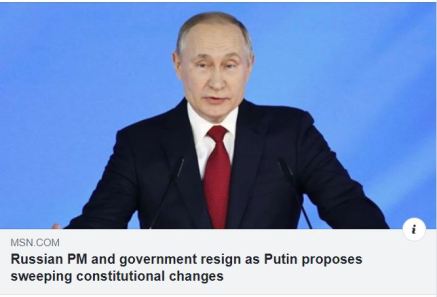
New Constitution for Russia, Good or Bad

putin
I suspect that those of us who grew up during the Cold War will be the ones most concerned about any major political changes (good or bad) in Russia.

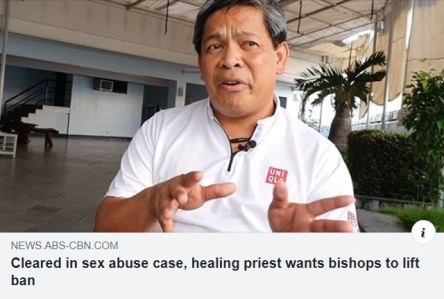
The Trials of Fr. Fernando Suarez

suarez

The famous Filipino healing priest gave a service here at Holy Family a number of years ago (with archdiocesan permission).

1167339_10151630863163435_2010882298_o

Here I am with Fr. Fernando Suarez who offered a healing Mass and service here at Holy Family on August 30, 2013. We figure about 650 people came out.

The Coming Militant Atheism

157772181810777715 (1)

It may be if you live long enough, you can see things happen that would have been unimaginable years earlier. As a youth, the matter of atheism was a subject that evoked for me immediate sentiments of revulsion. Atheism was debated in a civil fashion by philosophers, but at the grass roots, atheists were lumped together with pornographers and godless Communists. The equation was simple:  no deity equals no positive values.  This was likely too simplistic.  Many scientists espoused evolution but this was not yet a topic hijacked by non-believers. Catholics and others who espoused intelligent design made the appropriate accommodations. As for the Big Bang, far from disproving creation, it seemed to reaffirm the faith and the appreciation that at the beginning, God said, LET THERE BE LIGHT. Fundamentalists may have insisted upon a biblical chronology, but the Catholic Church maintained a Vatican astronomer and regarded the Bible as our guide as to how to go to heaven, not as to how the heavens go.

Starting in 2008, I was surprised at the vigor of the attacks against believers from atheists. The Communist party in the United States sought to exploit this phenomenon.  Most atheists I had known were tolerant of believers and recognized we lived within a culture where faith of some sort was important for many people and where tolerance should be exhibited. The so-called Blasphemy Challenge seemed fueled, not by a scientific and/or philosophical atheism, but largely by anger and as a knee-jerk reaction to scandals, hypocrisy and fundamentalism from the various denominations of Christianity. Since the Scriptures spoke about blasphemy against the Holy Spirit as the unpardonable sin; young people were dared to post videos of such blasphemy.

In truth, many of these efforts involved a confused appreciation of religion, since the only unforgivable sin may be a suicide that expresses a cold hatred of God free from emotional distress and mental anguish. Can people hate what they say they do not believe in? Jesus probably referenced those who discounted the workings of the Holy Spirit in his miracles, healings and the forgiveness of sins. They blasphemed the works of God as having a demonic source. The next stage in the assaults was the so-called Eucharist Challenge where religious terrorists stole the consecrated hosts for desecration. They faulted Catholics for getting upset and for attempts to protect the Eucharist. Indeed, emails and comments sent to me would even deny Catholics the right to believe in the Eucharist. We were mocked as stupid and delusional. While we would claim that everyone has a right to their opinion, these new more militant atheists would shut us down and repress religion. But wait a minute, is that really new? Islamic nations and Communist China still restrict religious liberty.  The Chinese totalitarian regime demonstrates how a militaristic atheism would repress churches, temples and mosques.  There are Catholic clergy and other believers in prison for refusing to submit to such manipulation.

Here is a poster from an anti-Catholic campaign of the Communist Party in the United States:

catholicchurchcompart

Here at home the American Communists are supportive of the new atheists and deliberately seeking converts.

  • They encouraged families to see the film, THE GOLDEN COMPASS which mocks the faith and treats God as the great enemy.
  • They attacked Pope Benedict Emeritus as a NAZI and the Church’s stand against homosexuality as a witch-hunt.
  • They ridiculed the Church’s stand for the sanctity of human life as simply making women into egg incubators.
  • They promoted Evolution and Creationism, not as part of a serious discussion, but because they vehemently hate religion.

They would persecute and subjugate the faith if they got the chance. Young atheists should not fall prey to their mindset; rather, they should relate to people of faith with a shared sense of human decency and respect of persons. We can disagree but we should not seek to ignite the emotions behind a rhetoric that fuels violence and gives rise to mob violence. Communism is not only about atheism but about aggression to fulfill an ends. It leads to dictatorships and repression. Basic human rights given by nature are stripped away. Communist or socialist atheism makes itself the arbiter of right and wrong, based upon the needs of the many and the state but would sacrifice the individual and the weak.

Communist or socialist atheism and similar forms of militant atheism as we have experienced here in the West represents a real threat to the salvation of souls and the freedoms we hold dear.

Priests Forbidden to Marry

priestkiss

Many years ago I had a website called the GEHENNA PAGE (1996-97). There really were no blogs back then and the Catholic presence online was pathetic. However, anti-Catholic sites were popping up everywhere and little men were pontificating like popes against the Church. I posted this response below to one critic’s biblical proof texts which were supposed to hurt the Church.

Contending that it was from the devil to prohibit the good of marriage, he made the following citations:

Now the Spirit explicitly says that in the last times some will turn away from the faith by paying attention to deceitful spirits and demonic instructions, through the hypocrisy of liars with branded consciences. They forbid marriage and require abstinence from foods that God created to be received with thanksgiving by those who believe and know the truth. For everything created by God is good, and nothing is to be rejected when received with thanksgiving, for it is made holy by the invocation of God in prayer (1 Timothy 14:1-4).

I responded that these words refer to a false asceticism and not to the practices of Catholic Christianity. The early Church and well into the Patristic period, had to deal with cults and movements which made all sorts of exaggerated claims and required various austire practices. Some urged a return to Jewish dietary laws. Others wanted to go to dangerous extremes with fasting and abstinence, perpetually destroying joy in the goods of creation. There were even movements which urged strict celibacy upon all members as the only way to enlightenment and salvation.

The Catholic position is quite different. Our use of fasting and abstinence is not perpetual and it is not a rejection of certain foods as unclean or unworthy of man. Rather, their absence, to coin a cliche, is to make the heart grow fonder. It is precisely because something like meat is good that we might temporarily abstain. Jesus himself fasted and prayed in the desert and alluded to it in the future as something his followers would do. As for marriage, Catholics believe that Christ raised it up to a level of a sacrament, a special sacred sign of his relationship as the bridegroom to his bride, the Church. It is a mysterious means of encountering the Lord himself and receiving grace. Obviously, if such is the Catholic view, we would not be seeking to degrade it by our practice of celibacy. Priests and religious vow celibacy freely, not because marriage is bad, but because it is so good. Celibacy becomes a wonderful gift, freely embraced, as a sacrifice for God and his holy people. Jesus was celibate. St. Paul not only practiced it but encouraged it. The celibate priest becomes a sign of contradiction pointing toward the kingdom of Christ while living in a hedonistic world. It is not a rejection of love, but a selfless abandonment to divine love as manifested in service to God’s people, the Church. It is not a calling for everyone, just as not everyone is called to priesthood or consecrated life. The majority of people seek holiness in marriage and family life.

Noting that Peter was married, he asked how could the purported apostolic line come through Peter when Catholic priests and bishops were celibate? The critic followed with more piece-meal verses:

And when Jesus had come into Peter’s house, he saw Peter’s mother-in-law lying in bed, sick with a fever (Matthew 8:14).

Now Simon’s mother-in-law was keeping her bed sick with fever, and they immediately told him about her (Mark 1:30).

But he rose from the synagogue and entered Simon’s house. Now Simon’s mother-in-law was suffering from a great fever, and they besought him for her (Luke 4:38).

These references to Peter’s mother-in-law do indicate that Peter was married; although her absence from these texts might lend one to think that she experienced some mishap or was away. Be this as it may, the Catholic Church has never hidden the fact that Peter and other religious leaders of the Church were married. Indeed, the Catholic Church had a married clergy all the way up to the 12th century. The Fourth Lateran Council was quite decisive in mandating compulsory celibacy for any who would be priests of the Roman or Western Rite. The Eastern rites of the Catholic Church, to this very day (in Europe and the Far East especially) have an optional married clergy. These priests are in full union with Rome.

Also, in our own nation many Protestant clergy, Lutheran and Episcopal, have entered into the Roman Catholic priesthood, even though they are married and have families. Those who are raised in the Western rite realize that celibacy is a special gift and a particular charism of our priestly experience. It is a sign of a wondrous single-hearted love. One of the fruits of this sacrifice is the availability that a priest can give to his prayers, study, and service.

Any indication that Peter’s married state would affect apostolic succession is a low blow. Those who followed Peter had a spiritual and not a physical affinity to the great apostle. While the Church has known nepotism, such is the exception and not the rule.

No one forces a young man to become a priest or brother. There is no coercion for a woman to become a nun. They know that vows of poverty, obedience, and celibacy are part of the package. If God gives a person a vocation in the Catholic Church, we believe that he will give each of them the graces and gifts to follow this life.

I have heard it said that a majority of men who leave the priesthood to get married ultimately have failed marriages. I pray this is not the case.  Promises are made to be kept. The problem is not the Church or God; the dilemma is people who are unwilling to surrender their lives fully to Christ. Marriage is also a sacrifice, amidst the joys. However, if we trust God and walk with him, he will guide our path.

Acknowledging that St. Paul was single, he claimed that the apostle thought we should have the freedom to marry. The debate continued and the anti-Catholic critic quoted more poorly applied Scripture:

Do we not have the right to take along a Christian wife, as do the rest of the apostles, and brothers of the Lord, and Kephas? (1 Corinthians 9:5).

The Catholic Church also recognizes the right of people to get married. However, the Church has a right of her own to regulate her ministries. Permanent deacons, Extraordinary Ministers of Holy Communion, Catechists, Readers, Acolytes, and Lay Evangelists and Ministers all serve the Church and may be married. Would the anti-Catholic demand compulsory matrimony? I hope not. Those who opt for priesthood in the Roman Rite also freely embrace celibacy. This is no less than what St. Paul did. After listing all the various rights that a follower in Jesus possesses, he acknowledges that he has chosen not to use these rights for himself.

Here are some Scripture citations of my own:

[After listing the right to marry among many other freedoms, St. Paul says] Yet we have not used this right. On the contrary, we endure everything, so as not to place an obstacle to the Gospel of Christ. … I have not used any of these rights, … (1 Corinthians 9:12,15).

[After speaking about marriage] This I say by way of concession, however, not as a command. Indeed, I wish everyone to be as I am, but each has a particular gift from God, one of one kind and one of another. Now to the unmarried and to widows, I say: It is a good thing for them to remain as they are, as I do, … (1 Corinthians 7:6-8).

[Advice to Virgins and Widows] Now in regard to virgins, I have no commandment from the Lord, but I give my opinion as one who by the Lord’s mercy is trustworthy. So this is what I think best because of the present distress: that it is a good thing for a person to remain as he is. Are you bound to a wife? Do not seek a separation. Are you free of a wife? Then do not look for a wife. If you marry, however, you do not sin, nor does an unmarried woman sin if she marries; but such people will experience affliction in their earthly life, and I would like to spare you that. I tell you, brothers, the time is running out. From now on, let those having wives act as not having them, those weeping as not weeping, those rejoicing as not rejoicing, those buying as not owning, those using the world as not using it fully. For the world in its present form is passing away (1 Corinthians 7:25-31).

[More on virginity] So then, the one who marries his virgin does well; the one who does not marry her will do better (1 Corinthians 7:38).

[About a widow] She is more blessed, though, in my opinion, if she remains as she is, and I think that I too have the Spirit of God (1 Corinthians 7:40).

[Celibacy is a sign of the kingdom!] His disciples said to him, “If the case of a man with his wife is so, it is not expedient to marry.” And he said, “Not all can accept this teaching; but those to whom it has been given. For there are eunuchs who were born so from their mother’s womb; and there are eunuchs who were made so by men; and there are eunuchs who have made themselves so for the sake of the kingdom of heaven. Let him accept it who can” (Matthew 19:10-12).).