• Our Blogger

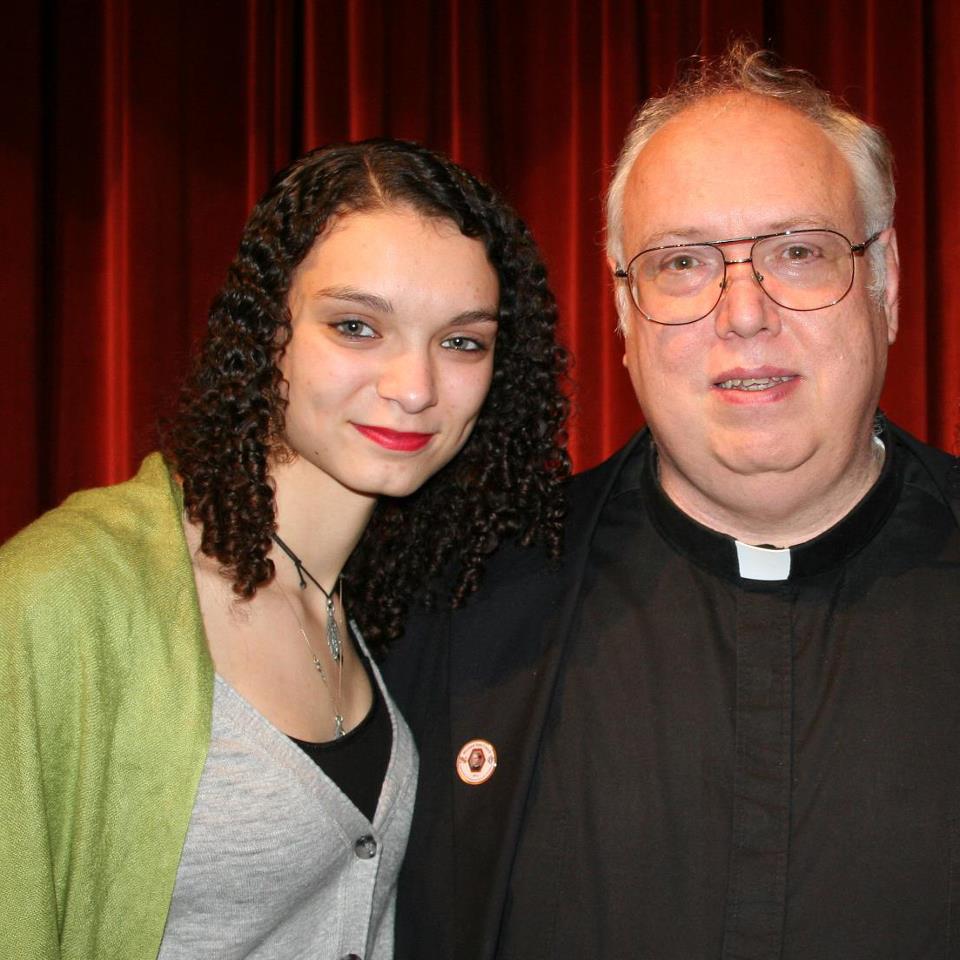
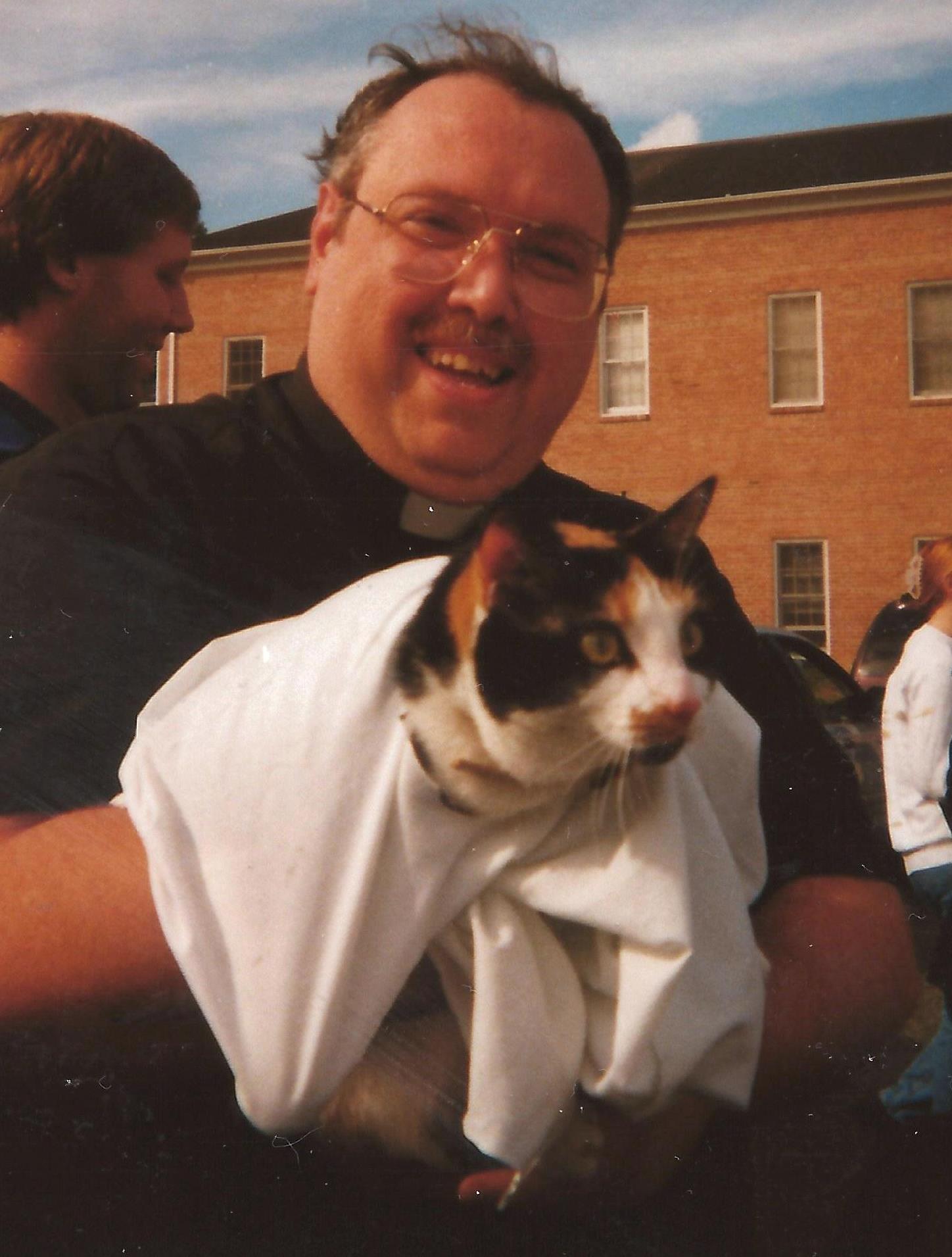
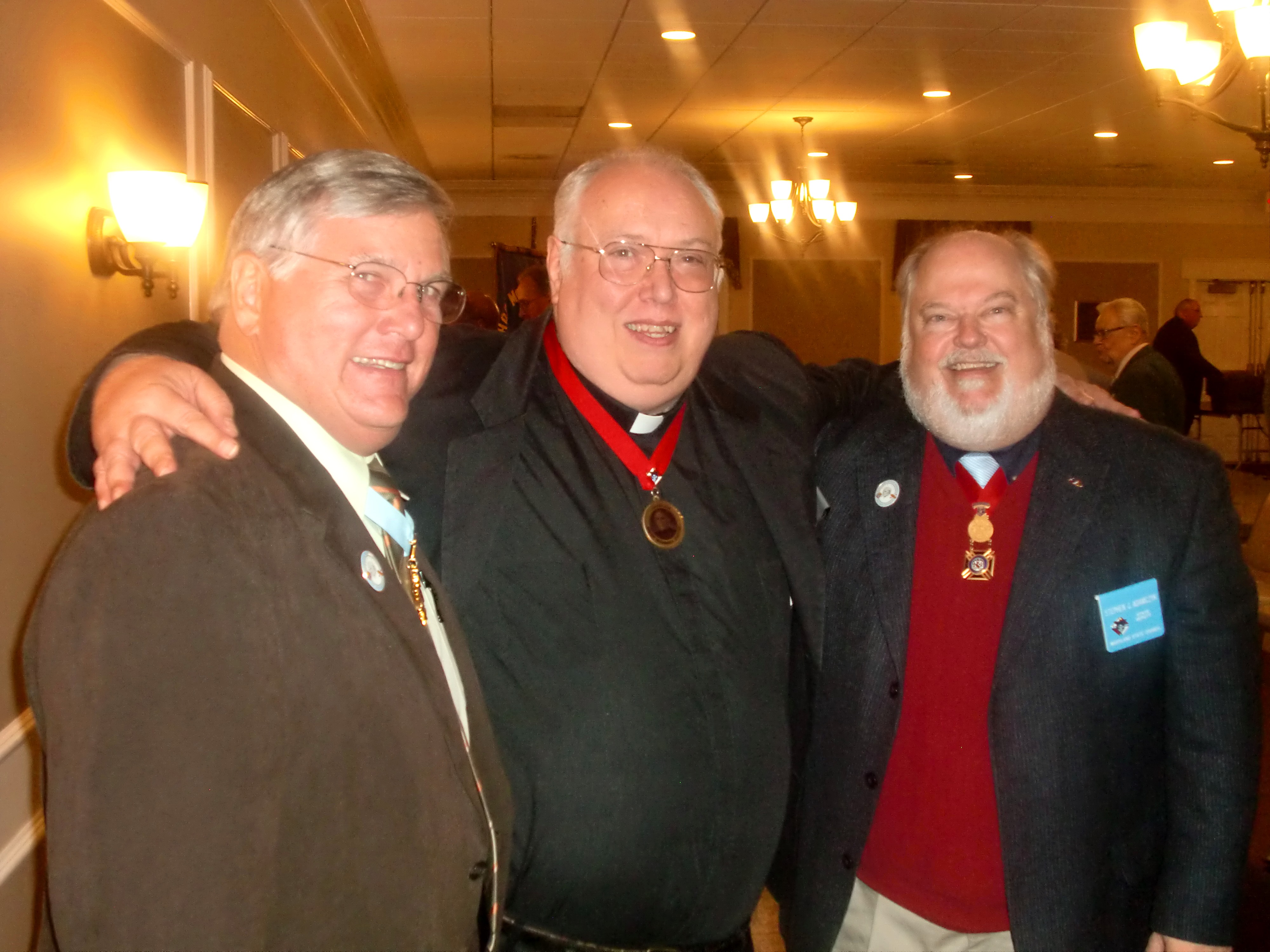
    Fr. Joseph Jenkins

  • The blog header depicts an important and yet mis-understood New Testament scene, Jesus flogging the money-changers out of the temple. I selected it because the faith that gives us consolation can also make us very uncomfortable. Both Divine Mercy and Divine Justice meet in Jesus. Priests are ministers of reconciliation, but never at the cost of truth. In or out of season, we must be courageous in preaching and living out the Gospel of Life. The title of my blog is a play on words, not Flogger Priest but Blogger Priest.

  • Archives

  • Categories

  • Recent Posts

  • Recent Comments

    Anonymous's avatarAnonymous on Ask a Priest
    Michael J's avatarMichael J on Ask a Priest
    Jeremy Kok's avatarJeremy Kok on Ask a Priest
    Mike Zias's avatarMike Zias on Ask a Priest
    Jeremy Kok's avatarJeremy Kok on Ask a Priest

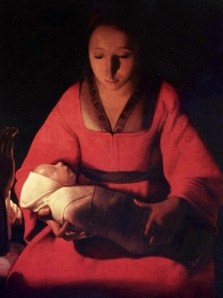
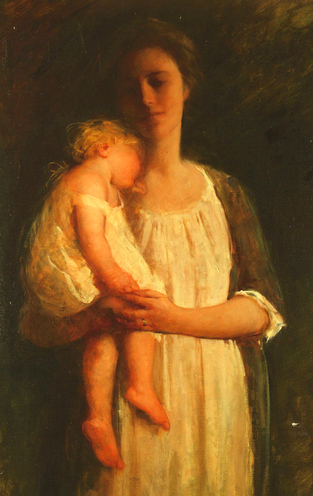
Mary is the Signpost to Jesus

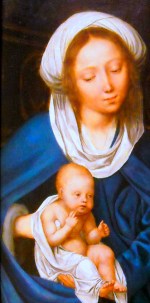
Mary always brings us back to her Son. The Eastern churches have such a high appreciation of this truth that all icons of Mary have her holding the child, Jesus. A possible exception to this was brought to my attention with an icon of Mary in an Eastern chapel at the Basilica Shrine of the Immaculate Conception in Washington, DC. However, looking closer we find that Jesus is still present, albeit through a stole she holds emblazoned with the Greek, Alpha and Omega. Jesus is the beginning and end of all things. The stole signifies Christ the High Priest. He is our Mediator. No one comes to the Father except through him.

It has been argued in Catholic circles that just as the titles and history around Mary have insured an orthodox Christology; so too is Mary and our devotion toward her necessary for a full and genuine Christian faith. A priest friend long involved with Lutheran-Catholic dialogue was challenged about this in an ecumenical setting. He said no slight was intended toward our Protestant brothers and sisters. Nevertheless, he insisted that Mary still had to figure in the equation of faith. Catholics would give her direct recognition; but my friend insisted that any good Lutheran who loved Jesus Christ still gave Mary a degree of unspoken or indirect honor. Jesus will always be the Son of Mary.

A genuine love of Jesus makes room for love of Mary.

Mary’s Titles Inform Our Own Calling

I would go to some lengths to show how Mary is singularly honored by God; in truth, a number of her titles and benefits could be applied to others, even if only analogously or in a lesser and contingent fashion. Mary is rightly called the Mother of God and such a title is strictly reserved to her; but every child reflects the Christ Child and every pregnancy shares “in potency” the promise of a Messiah. Other titles would be more easily shared, like that of the Daughter of the Father and the Temple of the Holy Spirit. Our baptism and faith makes us adopted sons and daughters of the heavenly Father. Granted the gift of sanctifying grace, we are also made into temples of the Holy Spirit. Of course, Mary is the great precursor, for both the whole Church and her individual members.

Before the Spirit of God descended upon the apostles in the upper room, the Holy Spirit had already intervened in her life, preserving her from sin and conceiving the Christ. Mary is the Spouse of the Holy Spirit. She is also called the Ark of the Covenant. Just as the sacred tablets of stone revealed God’s law, this time around he reveals his loving mercy.

The New Covenant is literally the flesh and blood of Christ. He is the Covenant. Similarly, we are to be bearers of Christ for our world today.


Mary at the Annunciation

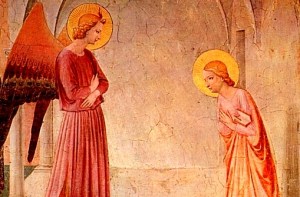
We trace the Hail Mary prayer to the singular citation of the angel Gabriel to Mary, “Hail, full of grace, the Lord is with you” (Luke 1:28). This greeting puzzled Mary, not because of ignorance of her own character, but because of the depth of her humility. We might also wrongly posit timidity in her stance, but such was an expression of reverence and not fear. Here, before her, was an emissary of the Most High God. All the power behind the throne accompanies her heavenly visitor. Nevertheless, she faces him with courage and an openness of both heart and mind. The angel explains, “Behold, you will conceive in your womb and bear a son; you shall call his name Jesus” (Luke 1:3). The angel brings with him a divine wisdom. Angels are wholly committed to the will of God. He recognizes in Mary a creature of flesh who utterly shares his disposition toward divine providence. Mary embodies a true freedom that always says YES to God. “Behold, I am the handmaid of the Lord, let it be done to me according to your word” (Luke 1:38). Mary’s consent was part of a celestial symphony, where God is both the composer and conductor and where she plays her part in the orchestral music of salvation.

What the marital act is for a husband and wife in the natural course of things, Mary’s response was to God’s message; the fruit was the incarnation of the Redeemer.

Mother of God & Queen Mother of the Church

Pope Pius IX said of Mary:

“From the beginning and before all ages, God selected and prepared for His only Son the mother from whom, having taken flesh, He would be born in the blessed fullness of time. He loved her by herself more than all creatures and with such a love as to find His delight in a singular way in her” (Ineffabilis Deus).

Mary is given many titles and each speaks to distinctive elements which point to Christ. Against Nestorius, she is called the Mother of God. This acknowledges that Jesus is a divine person. It answers the question, who is Jesus? She is also called the Mother of the Redeemer and the Mother of the Savior. They immediately answer the question, what does Jesus do? He is the sin-offering who buys us back from the devil and offers us the gift of salvation.

The Jews awaited a Messiah from the royal line of King David. They thought this warrior king would restore their political place in the world and vanquish the Romans and any other enemies of God’s people. The genealogy of Joseph was of this line and while he was only the foster father of Jesus, it was typical that couples married within their tribe.

Mary was also of the line of David. Since Jesus is born of the Virgin Mary, he is the new Jewish king.

Mary, the Messiah and a New Nation

The People of God began as a family, later grew into a tribe and eventually became a great nation. But they would also know upheaval and exile. The one prophet who spoke most forcibly about restoration and the coming of a Messiah was Isaiah. He gives a broken people the gift of hope:

“The Lord will give you a sign in any case: It is this: the young woman is with child and will give birth to a son whom she will call Immanuel” (Isaiah 7:14).

This young maiden or virgin is Mary (Matthew 1:23). Similarly, the prophet Micah also speaks of a woman who would restore Israel. Understanding that those of the Church, Jew and Gentile alike, are members of the New Israel or New Zion, the prophecy fits Mary quite nicely:

“Hence Yahweh will abandon them only until she who is in labor gives birth, and then those who survive of his race will be reunited to the Israelites” (Micah 5:3).

Given her unique role in salvation history as the vehicle through whom the All Holy One would enter our world, she herself is preserved from every stain of sin as the first fruits of his saving works (Proverbs 8:22-35).

Mary, “the Woman” from Genesis to the Gospels

If one were to compose a life of Mary, one could rightfully go back to the book of Genesis. Satan seems to have won the day in the Garden, but God will have the last word. Indeed, God will speak his Word to Mary, she will consent and receive it and then this Word will undo all the damage inflicted by the serpent’s temptation. This Word becomes flesh so that just as sin entered the world through the sin of a man and woman, now grace and redemption could be restored through a woman and her seed. The Good News of our redemption begins not in the New Testament writings at the end of the Bible, but in the first book of the Old Testament, Genesis.

God has no secret plan, he tells it in a straight-forward way right to Satan’s face. This is how sure God is that nothing can thwart his plans. He says: “I shall put enmity between you and the woman, and between your offspring and hers; it will bruise your head and you will strike its heel” (Genesis 3:15). God is going to win, that is all there is to it! Mary’s combat with Satan is still seen in the lives of believers. We invoke her intercession in the rosary for peace, conversion and the dignity of life.

Along with the Eucharist, the rosary is a great weapon in the Church Militant’s arsenal against sin and the powers and principalities which battle the saints.

Priestesses & Dissent Against the Deposit

It is evident from the Epistles and the Acts of Apostles that the roots of our ordination teaching are pre-Nicene. While insufficient to remedy the break in apostolic succession that afflicted the Anglican ordinal early in England’s reformation, it is true that their priests and bishops who have shored up their orders with Old Catholic and Orthodox Bishops concelebrating their ordinations and consecrations may indeed be sharers in holy orders. When the Anglican Archbishop of London was received into the Roman Catholic Church, he was not re-ordained as is the usual practice but was conditionally ordained a priest. This exception was shown because he was able to show with some certitude his pedigree of orthodox precursors. Otherwise, the 1896 papal bull, Apostolicae Curiae, still holds: Anglican orders are null and void. This all aside, the point I want to make is that the exclusion of women is a long held tradition that cannot be dismissed arbitrarily. Indeed, it is a fitting example of the canon discerned by St. Vincent of Lerins about the certitude of a doctrine as a practice or belief common to the Church “everywhere, to everyone, at all times.” The Church would allow for the organic development of doctrine analogous to the growth of a human body from infancy to maturity; but, and this comes straight from John Henry Newman, this development while real must not result in the least alteration to the original significance of the doctrine involved. This cannot be said of the revisionist position in favor of Christian priestesses. The faithful Catholic must “guard the deposit” (1 Timothy 6:20), the revelation enshrined in the Scriptures and interpreted in the Church’s tradition by the Magisterium.

Proponents of women’s ordination dissent from the promulgated Catechism of the Catholic Church. This work has been given the Imprimi Potest by Joseph Cardinal Ratzinger himself, head of the Congregation of the Faith, who is now Pope Benedict XVI. It is introduced by the Apostolic Constitution, Fidei Depositum, by Pope John Paul II. He writes: “It can be said that this Catechism is the result of the collaboration of the whole Episcopate of the Catholic Church, who generously accepted my invitation to share responsibility for an enterprise which directly concerns the life of the Church.” He makes no qualification in declaring “it to be a sure norm for teaching the faith and thus a valid and legitimate instrument for ecclesial communion.” A couple of paragraphs later, he says it again: “This catechism is given to them that it may be a sure and authentic reference text for teaching catholic doctrine . . . .”

Nevertheless, by dissenting against the teaching of the male-only priesthood, critics seek to undermine the truthfulness of the entire document and the God-given authority of the Church to teach it. They even castigate the Magisterium as murderers of vocations. They make relative what should be objective truth. They reinterpret Scripture according to their own “personal” and false enlightenment and dismiss the exegetical role of the teaching Church. They ignore tradition as irrelevant or pretend that it is somehow in their favor. They do all this, and yet plead to be a good Catholics. We must be careful of dissent.

Let us look at what the catechism says about women priests:

[1577] “Only a baptized man (vir) validly receives sacred ordination” (CIC, can. 1024). The Lord Jesus chose men (viri) to form the college of the twelve apostles, and the apostles did the same when they chose collaborators to succeed them in their ministry. The college of bishops, with whom the priests are united in the priesthood, makes the college of the twelve an ever-present and ever-active reality until Christ’s return. The Church recognizes herself to be bound by this choice made by the Lord himself. For this reason the ordination of women is not possible (Cf. John Paul II, MD 26-27; CDF, declaration, Inter insigniores: AAS 69 [1977] 98-116).

Inter insigniores leaves no room for discussion. It says:

“. . . the Sacred Congregation for the Doctrine of the Faith judges it necessary to recall that the Church, in fidelity to the example of the Lord, does not consider herself authorized to admit women to priestly ordination.” A sentence or so later it reiterates the point: “The Catholic Church has never felt that priestly or episcopal ordination can be validly conferred on women.”

Mary’s Role in the Sacred Encounter

The entire history of salvation is subjected to two poles: first and foremost, it is the self-revelation of God along with his desire to share his life with us; and second, is man’s own graced movement toward God in seeking understanding and salvation. Of course, while it is not for finite creatures to completely understand or to exhaust the divine mystery, we are exposed to as much of the mystery as we can comprehend. When we enter into eternity, we will progress ever deeper and deeper into the mystery of the Trinity, knowing eternal joy and discovery. In other words, there is no boredom in heaven. There is a foretaste of this knowing and loving in this world. Such is a component of romantic love, where a couple falls in love and then actively seek to know more and more about each other.

God may be the Unmoved Mover but heaven is not static. The saints share the beatific vision and are ever in motion, drawing ever closer to the Infinite Goodness which called us into existence and sustains us. Mary plays a significant role in both God’s self-revelation and our approach to the Almighty. So that we might know and love God more truly, in Jesus he takes to himself a human face.

God and man will be joined, not simply on the level of the spirit, but in the flesh. God becomes one with his creation.

Mary & Jesus are the Answer

We are all searching for meaning and answers. Mary and Jesus are at the core of this pursuit for Christians. Meditation upon the mysteries of the rosary helps us to access what we need to know and insures that we do not lose our bearings in a secular society filled with distractions. If the Church is a ship and the Pope is our captain, then we sail as pilgrims by the Mary star to that Promised Shore where Christ awaits us. While the Bible is a library of inspired books, the rosary is a collection of prayers. Along with the Eucharist, it is a great weapon in the Church Militant’s arsenal against sin and the powers and principalities which battle the saints.

Mary’s Mantle of Divine Mercy

Adam and Eve ate from the tree of knowledge of good and evil. But the name of this tree was deceptive. They already knew the good, indeed, it was all they knew. Really, the fruit of this tree was the knowledge of evil, not in an academic appreciation but by an actual participation in it. Innocence is destroyed and ashamed of their nakedness they hide themselves.

We should ask ourselves, are we like the old Adam and Eve or like the new, Jesus and Mary? Full of grace, Mary has not been touched by sin. She is utterly devoted to her Son, the source of her holiness. She brings all her spiritual children to Jesus. She would invite them to put on the wedding garment of the Lamb. We do not have to be fearful or ashamed anymore. Forgiveness is available. But, without the Lord, we remain naked and exposed. We are called to put on Christ.

When I imagine Mary’s mantle, my mind races back to my childhood. My mother would tuck me in when I went to bed. She would check on me on cold nights and adjust the blanket. She desired to keep me safe and warm. Mary wants the same.

Mary’s mantle of mercy does not merely protect us from the justice of God; its very fabric is the Divine Mercy, himself.