• Our Blogger

    Fr. Joseph Jenkins

  • The blog header depicts an important and yet mis-understood New Testament scene, Jesus flogging the money-changers out of the temple. I selected it because the faith that gives us consolation can also make us very uncomfortable. Both Divine Mercy and Divine Justice meet in Jesus. Priests are ministers of reconciliation, but never at the cost of truth. In or out of season, we must be courageous in preaching and living out the Gospel of Life. The title of my blog is a play on words, not Flogger Priest but Blogger Priest.

  • Archives

  • Categories

  • Recent Posts

  • Recent Comments

    Anonymous's avatarAnonymous on Ask a Priest
    Michael J's avatarMichael J on Ask a Priest
    Jeremy Kok's avatarJeremy Kok on Ask a Priest
    Mike Zias's avatarMike Zias on Ask a Priest
    Jeremy Kok's avatarJeremy Kok on Ask a Priest

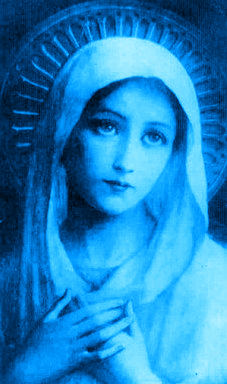
The Catholic View of Mary’s Virginity

While Mary knew a preservative redemption and we are granted a normal chronological redemption (in the normal course of events), the agent is the same, Jesus Christ and his Cross. While the majority of Catholics are aware that the Immaculate Conception is in reference to Mary in the womb and not Christ, there are a few which confuse the title and doctrine. Similarly, many have a hard time distinguishing the Assumption of Mary from the Ascension of Christ.

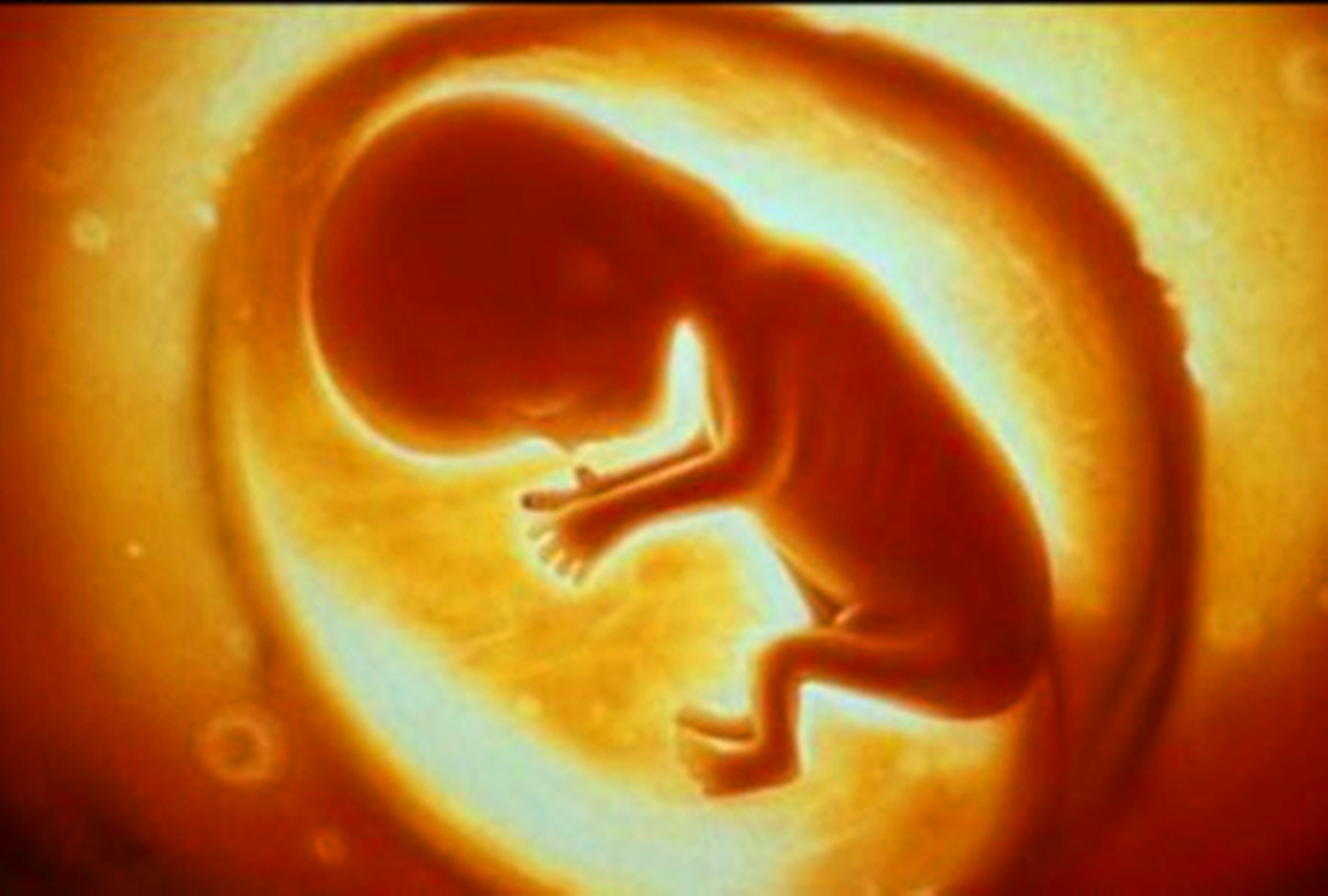
Ignorance is even more widespread regarding the perpetual virginity of Mary. Some Catholics subscribe to the false Protestant assumption that the brethren in the Gospels were children of Joseph and Mary. The Lateran Synod of 649 AD defined the unique virginity of Mary. The definition is somewhat challenging to us today for many reasons. We tend to associate virginity with an absence of sexual activity. While this is certainly an essential component of the definition, it also places great store in Mary being physically intact. At the risk of being blunt, many women rupture or lose the virginal membrane due to physical exercise or medical intervention. However, we would still regard such “good girls” as virgins. The definition apparently insists that Mary was physically and morally a virgin.

Mary’s virginity is measured three ways: before the birth of Christ, during the birthing, and post-birth.

The Story of Mankind Changes with Mary

Many of us recall from our children’s catechism that the fall of Adam and Eve brought sin and death into the world. The story of Genesis was a crossroads in the history of humanity. Suddenly upon the scene there arose creatures that were both intensely self-aware and, having been made in God’s image, could know and love God in return. They opted to turn back in upon themselves. It was as if a creature suddenly stood on two feet to look up in wonder only to quickly drop back on all fours like the beasts, denying his nature and dignity. A pattern was broken and a new one established. There would be no preternatural gifts, no direct vision or immediate friendship with God, no harmony in either men or the creation around him, no life without death, and no awareness without suffering and pain. What would remain would be the struggle to embrace virtue against the increasing current of selfishness and temptation. Generations to come would be born in pain and concupiscence. This tragic story begins to be rewritten in Mary for whom the promised redemption first takes place. The Second Vatican Council reaffirms this Marian doctrine:

“Enriched from the first instant of her conception with the splendor of an entirely unique holiness, the virgin of Nazareth is hailed by the heralding angel, by divine command as “full of grace” (Lumen Gentium, no. 56).

The Mind of Christ About Priestesses

Emotionalism often pollutes the debate about women’s ordination. As in so many liberal dissents, there seems to be the impression that shouting and acts with shock value can replace rational discussion and humble obedience to the Magisterium and the sacred deposit. Personal biases spouted in slogans will help no one. The sober question has to be asked, what does our Lord reveal to us about this question in the Scriptures and faith of the Church? It is crystal clear that he did not call any women into the number of the apostles (Mark 3:13-19).

First, this fact alone takes on heightened importance because certain women accompanied the group on their journeys and financed their needs (Luke 8:2-3). None of them were given priesthood.

Second, Jesus did not hesitate in dismissing then current religious and cultural attitudes in relating to females. He disregarded the hemorrhaging woman’s legal impurity (Matthew 9:20); he allowed the disreputable woman in Simon the Pharisee’s house to approach him (Luke 7:37); he sided with the adulteress (John 8:11); and he undermined the Mosaic Law in espousing the equal rights of men and women in marriage, protecting the woman from abandonment in divorce (Mark 10:2; Matthew 19:3). Obviously, Jesus could not be coerced by societal prejudices to prohibit women priests; it must have been his own choice.

Third, he illustrated in his stories an unheard of empathy with the lives of women as in the parable of the good housewife (Luke 15:8-10) and of the widow before a crooked judge (Luke 18:1-8). It can be assumed that Jesus did not feel that his exclusion of women from holy orders was any real slight to them.

Fourth, as his disciples, many of the women showed a courage greater than that of the apostles, even so far as to stand at the foot of his Cross (Mark 15:40-41). Individual qualifications apparently took a backseat to other concerns; perhaps the inability of female humanity to image Christ as the head of the Church? Does not the laity, as feminine, still look upon the Cross now transformed into an altar at which the priest renders Christ’s sacrifice? Yes.

Fifth, they were the first to proclaim the Good News on Easter morning, and to the apostles themselves (Matthew 28:7; Luke 24:9; Jn 20:11). Does this not tell us how much the Lord prizes the laity in the Mystical Body? Maybe the problem is not that we esteem the ordained priesthood too highly, but that we look upon the laity too disdainfully. The bulk of all evangelism is still done by the people in the pews. However, despite all this, the women were not mentioned at the Last Supper (Mark 14:17). Surrounded only by the apostles, this absence is made all the more striking since the Passover is a family meal at which women and children were customarily present (Exodus 12:1-14).

In light of this evidence, one can readily conclude that the exclusion of women from priesthood must have been freely and directly willed by Christ.

POPE JOHN PAUL II: “I declare that the Church has no authority whatsoever to confer priestly ordination on women and that this judgment is to be definitively held by all the Church’s faithful” (Ordinatio Sacerdotalis).

The Dogma of the Immaculate Conception

While the dogma of the Immaculate Conception was defined late in the Church’s history, its roots go back to the earliest days. The early Church fathers spoke about Mary as the new Eve because they viewed her as possessing the same original grace and justice. Sentiments about Mary’s purity and sinlessness are found in Tertullian, St. Justin, St. Irenaeus, St. Ambrose and St. Augustine.

Although the belief was generally accepted, the Church often spoke about the Immaculate Conception in an indirect or reverse manner. This was because there was a serious debate about how it could be true since Jesus is the Way and the Truth and the Life. He alone is the Savior. None are saved except through him and his Cross. Given the lack of precision, the Church just refused to talk about Mary in the context of sin. Even the Council of Trent insisted that while we could speak of original sin as infecting all mankind, the council fathers did not intend to include the “immaculate” Virgin Mary in this discussion.

The great theologian John Dun Scotus (1265-1308 AD) would set the groundwork for a later definition by speaking about how the redemptive work of Christ reached back into human history and preserved Mary from sin in honor of her place in salvation history as the Mother of Jesus Christ, the Messiah and Lord.

Immaculate Conception & Handmaid of the Lord

It is impossible for us to know with certainty what Mary appreciated through any infused science or knowledge. I suspect that God wanted to preserve her simplicity and innocence as a Jewish maiden in the particular culture where she found herself. She was filled with faith and may have given herself to the service of God’s temple. The Annunciation is a real awakening of her purpose but it would not change who Mary was all along. She does not say that she “will be” God’s servant, but confesses that she has always been “the handmaid of the Lord.” Everything was prepared for this day when she would become the special vehicle for God. She could not save herself but was preserved from sin by our Lord’s saving power reaching backward from the Cross and touching her in the womb of St. Ann. Despite this singular honor, she is quite aware of the vast gulf between the Creator and his creatures. She may not understand but she accepts what God has planned for her. She does not feel worthy because no creature could be worthy of such a favor. Mary’s yes to the angel Gabriel, really her free assent to God, was enabled by her condition of holiness. Otherwise, she could not speak for all mankind. The wound from the primordial rebellion must be healed. It has already happened for this one special daughter.

The actual work and battle must take place in the Paschal Mystery of Christ.

Mary is Holy Because Christ is Holy

Learned Catholics explore the mystery of Mary as the Immaculate Conception by first looking to Jesus. Do we really fully appreciate who he is? Every time we participate at Mass, we acclaim God as “Holy, Holy, Holy.” The All-Holy One, the source of holiness itself, is conceived and born of Mary. It was this fact of the incarnation that caused the high priest Caiaphas to tear his cloak. He could not accept it. It seemed absurd and in dangerous opposition to everything they held as true. He did not recognize the truth about Jesus but he was right that this claim would utterly change the nature and practices of their Jewish religion. The unseen God would be made visible. The core of their religion would switch from the promise and the law to an emphasis upon a person, namely Jesus Christ. The teaching of Mary’s preservation from original sin is all about honoring the dignity of God in Christ. Original sin was passed on through human generation. It would not be fitting that the All-Holy One should be touched by sin in the womb. “Therefore the child to be born will be called holy, the Son of God” (Luke 1:35). Jesus is pure. Holiness is his very nature. He would share this sanctity with us. Selfishness and dissent strip away our disposition for holiness. Many play deaf or say no to Christ’s command to take up our crosses and follow him.

But, yesterday and today, there is still the remnant, the nucleus that keeps the flame of faith burning.

Mary as the New Eve

John Cardinal Newman studied the ancient fathers of the Church and helped the Church recover the understanding of Mary as the new Eve. Eve is a name which simply means “the mother of all the living.” Not by nature but in the order of grace, Mary is the new mother of all the living. Because of the identity and mission of her Son, one might speak of her as both the womb of Christ and the womb of the Church. This title “womb of the Church” is also given the baptismal font.

It is at this font that we become like Mary, free from sin and disciples of her Son. St. Jerome wrote that “Death (entered the world) through Eve, life through Mary.” This helps to give us a sense of where Mary is within the mystical body of Christ. Given this intimate unity with Christ (see Colossians 1:18 and Ephesians 4:15), Mary in giving birth to the head also gives birth to the body. Of course, Mary is also part of this mystical body. This is not contradictory because, while she was no priest, she had every right as the Mother of the incarnation to hold Jesus in her arms and say, “This is my body… This is my blood.” Continuing with the analogy of the body, certain theologians have spoken about her as the NECK of the mystical body.

All graces flow from the head and through the neck to the rest of the body.

Christ’s Demand & Mary’s Final Work

I have often preached upon how Catholicism interprets saving faith as humble obedience or submission to God’s will. Jesus tells John, “Behold your Mother.” Notice that he does not ask a question like, “Please, would you take care of my Mother for me?” Rather, he gives a direct command to John and through him to all mankind who would be redeemed. Further, he attests to her motherhood but leaves the full dynamics of the relationship unspoken. There is a duality in this command. We are being told to cherish Mary as our spiritual Mother, always insuring her rightful place in the lives and hearts of believers. There is also a final summons for Mary. Mary accepted the motherhood of Christ in the annunciation. At Calvary, she embraces her new role as the Mother of Christ’s mystical body, the Church. She cooperates in the redemptive work of her Son and becomes our chief intercessor among the saints.

Mary & the Witnesses at the Cross

Mary, a few other women and John stand at the center of the great saving mystery. The other women represent the rest of the community that will form Christ’s Church in pilgrimage. Mary, herself, signifies the final end of the Church, attired in glory and holiness. John is one of the apostles and he represents those who would be ministers and priests of Christ’s new people. Their numbers are few but they witness at the Cross for all who are weak and afraid.

Today, the Church counts over a billion followers within the membership. But still, only a small remnant comes to the Mass which is the unbloody re-presentation of Calvary. Many are distracted or weak or afraid to embrace their high calling. If one becomes a real or committed Christian then everything changes. Every aspect of our lives becomes subject to the critique of the Gospel. While we might be Christian in name and because water was poured upon our heads as babies, we have to freely dispose ourselves to God’s presence and commission. Faith is not magic. We must cooperate with the movement of the Holy Spirit and God’s grace. Mary still implores the Church community to follow Christ. We remember what our Lord said when she came looking for him.

He said that all who do the will of his Father are brother, sister and mother to him.

Mary the Woman

Both at Cana and at the Cross, Jesus uses a peculiar form of address for his Mother. When the wine runs out, his Mother lets him know and he curtly tells her, “Woman, how does your concern affect me? My hour has not yet come” (John 2:4). She simply tells the stewards to do as he says and he turns water into wine. At the Cross, he addresses Mary again as THE WOMAN, saying, “Woman, behold your son,” and next to John, “behold your mother”(John 19:26-27). Everything has come to pass, from his first sign at Cana to the sign of the Cross at Calvary. The hour has finally come. Now he will not change water to wine but offer an oblation that will be renewed in wine and bread transformed into his body and blood. Jesus is offering his life for his bride the Church. He goes to his own marriage banquet, the supper of the Lamb. Mary is not a mere spectator. She is a player in the divine drama with a purpose. There may seem to be some confusion in Christ’s words, but I suspect that our Lord says many things with the few spoken words remaining to him. Certainly, Mary beholds the spectacle and her eyes are steadily upon her beloved Son, Jesus. But our Lord is also directing her eyes away to John, who is our emissary at the Cross.

Mary must be there for the believing community. They will need her. Jesus also directs John’s gaze to Mary. Christ is entrusting his Mother to John and the early Church.