“The Reign of God is at hand! Reform your lives and believe in the gospel!” (Mk 1:14-15). The cry for men and women to reform their lives had long been one echoed in the history of God dealing with his people. With the coming of Christ, we for the first time can fully respond to this admonition.
In the days of Noah the people were also called to faithfulness and yet they remained in their debauchery. I recall a reproduction of a painting my parents used to have of the deluge. A young beautiful woman with long hair clung to a jagged rock while surrounded by heavy winds and thrashing tides. I recall staring at the picture and feeling deeply sorry for her. She was so beautiful. How could God be so cruel? As I have gotten older and hopefully wiser, still sometimes the actions of God in the Old Testament seem like such over-reactions to me. I suppose what we forget is that the more primitive the people, the less sophisticated had to be the ways to keep them in line and to guide them. The story of the flood is not one simply about destruction and disobedience; in Noah and his companions we see an image of God’s steadfast fidelity and love for mankind, despite our disobedience. God sets up a covenant with Noah and promises never to flood the world again; he even sets the rainbow in the sky as a sign of his promise. The words of Genesis convey here the deep love of God. Because of our sins, we deserved death. However, not only are a remnant rescued but later God would send us his Messiah to save us from our sins and eternal death.
I would probably be negligent if I failed to say a few words about the kind of literature which this text in Genesis represents (see Genesis 9:8-15). It is linked with the story of creation, even though there was no scribe or news reporter taking notes in the first days of humanity. It is a later reflection. When the Jewish people were in Babylonian exile surrounded by a people who followed false Gods, the story of the flood reaffirmed to them how much God loved them; and that no matter how desperate their situation became, God would not abandon them.
The story of creation and the flood also made up a kind of satire against the Babylonian gods. Much of the linguistic allusion is lost in English. The particular story which parallels ours is called the Gilgamish epic. In it, the hero is not Noah but Ut-napishtim. When the gods, notice the horrendous plural, decree the deluge, the pagan god Ea reveals their designs to Ut-napishtim by speaking secretly through a reed wall. You see, Ea did not want to let the other gods, who wanted to get rid of mankind, know what was coming. He is urged to build a cubical boat of ten cubits. This is not like the rectangular boat of Genesis, just a box. He is warned to take ample provisions, as well as a sampling of the beasts of the field and the wild creatures. This is like Genesis. However, he is also told to take craftsmen lest their skills be lost. For six days and nights the storm persists. Finally, the ark comes to rest on Mount Nisir. Like Noah, he sends forth a dove, a swallow, and a raven, leaving the boat when the raven fails to come back. Ut-napishtim offers a sacrifice to the gods who cluster around him like flies. Instead of a covenant as we see in our story today, there follows an angry dispute among the gods. Enlil, angry about the remnant which has escaped, inquires as to who leaked the secret of the flood. Ea confesses but questions the prudence of Enlil in sending the storm. Upon the sinner, he says, should be imposed his sin, and on the transgressor, his disobedience. Instead of a universal disaster, Enlil, he complains, should have simply sent a wolf or a lion or a famine or a pestilence which would not have wiped out the entire race. Because Ut-napishtim and his wife escaped destruction, they must now be given immortality and transplanted so that they would not mingle with mortals. This and similar stories question the wisdom and goodness of the providence of the gods. The Jewish people believed in one God who was all knowing and all good. The destruction is then not seen as the act of a whimsical god but rather was something which a disobedient people brought upon themselves. God’s response is to save a remnant from further depravity and have them start brand new. You can see from these two stories the resemblance. Father John McKenzie, a Scripture scholar, tells us that “The differences between the Mesopotamian and the biblical stories show how the Hebrews took a piece of ancient tradition and retold it in order to make it a vehicle of their own distinctive religious beliefs, in particular their conception of divine justice and providence” (Dictionary of the Bible, p. 189). Although this flood may not have actually wiped clean our planet, it could well be that both stories emerge from some common memory of a disastrous flood of prehistoric times — a recollection which has grown out of all proportions.
Having said this, theologically, the wisdom and faith of righteous man was praised for having followed God who saved humanity from his folly. Noah listened and obeyed God. This is the key. In 1 Peter 3:18-22, the deluge is reckoned an example of God’s patience and is compared to the waters of baptism. Water for us thus becomes a symbol of both life and death. In the history of salvation, it meant death to the peoples around Noah — it meant death to the Egyptians who chased the Jews across the Red Sea — and it even meant death for Jesus who once baptized by John would engage in a ministry which would demand the highest cost. It also meant life — it meant life and a second chance for Noah — it meant life and freedom for those fleeing Egyptian slavery — it meant life in the natural processes of the world where plants and animals perish without water. In baptism, by submerging and dying with Christ in those waters of regeneration, we are promised to rise with him. Like a seed which has flowered, we are born again and made brand new. Our sins are forgiven and we are made members of a new People of God.
Recall your baptismal promises often and allow Christ to live in you. Have Noah’s kind of faith. He trusted God even in the absurd task of building an ark. Living out our Christianity will sometimes seem absurd to others, but do not allow the storm of sin and death to drown you. Christ has given us a fine ship called the Church and if we remain faithful, it will take this Pilgrim People to the Promised Shore.
For more such reflections, contact me about getting my book, CHRISTIAN REFLECTIONS.
Filed under: Discipleship, Forgiveness, Jesus, Sin | 1 Comment »





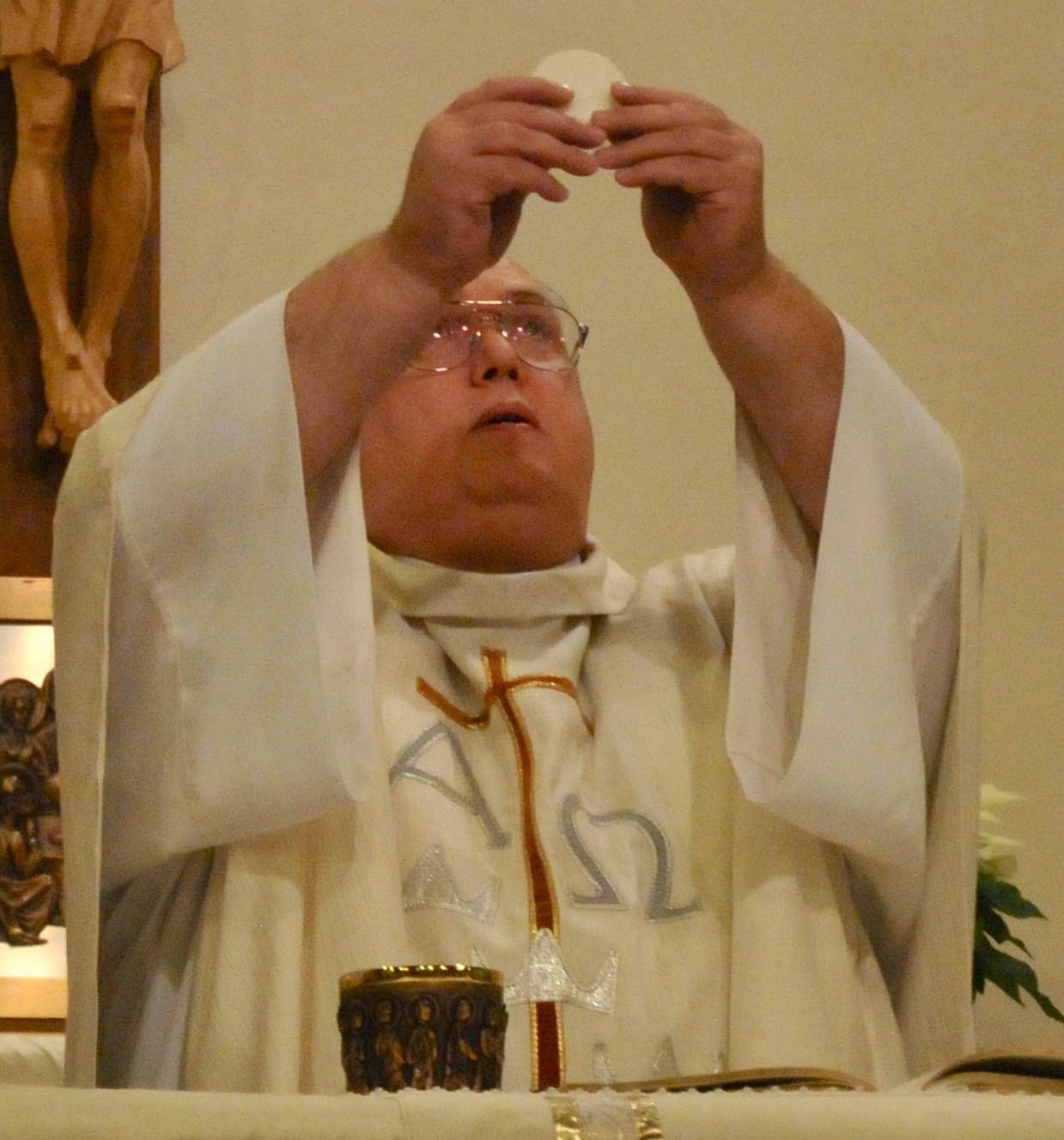










 Isaiah 50:4-7 gives us a few lines about the suffering servant. This prophecy is directly connected to Christ. “I gave my back to those who beat me . . . My face I did not shield from buffets and spitting.” Our Lord has his flesh torn by scourging. He was mocked and spat upon. His own condemned him as a criminal and betrayed him. The selection concludes, “I have set my face like flint, knowing that I shall not be put to shame.” Jesus remained faithful to his Father to the last. His Father would restore him to life by the power of the Holy Spirit, and yet it was also by his own authority. The resurrection would overturn the false verdict and condemnation of sinful men.
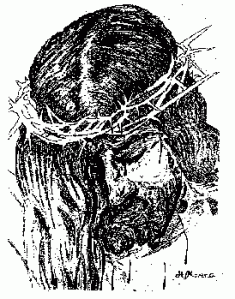 Many of my reflections touch upon the liturgical year. We can learn a great deal in our ritual, worship and the Church readings. Lent is probably my favorite time for pondering the things of faith. We have so many worthwhile opportunities. Take for instance the reading of the Passion and the ceremonials of Palm Sunday. They are so powerful that many if not most priests do not offer homilies on Palm Sunday. However, in a few words or in bulletins, much can be added to help people in their Lenten reflection. Our Lord is acclaimed with palm branches and cries of Hosannas. Nevertheless, many of the same voices that praise him will eventually cry, “Crucify him!” The drama is glorious and frightful. While we are given the ultimate example of that love of which there is none greater; we are also given a terribly real picture of human fickleness and treachery. What makes matters more intense is that we see ourselves in the Christ-story. Jesus reveals the self-sacrificing love of God. However, our own sinfulness and faithlessness is put up against the mirror. When done in a dialogue style, the reading itself puts Christ’s rejection as a criminal upon our own lips. Sometimes people object to this or remain silent. But, there is no running away from it. The Apostles tried running away, but our Lord would catch them hiding in the Upper Room after his resurrection. There is no fleeing the truth. There is nowhere to which we can run. Every sin we have ever committed, both large and small, was a denial of Christ and a hammer blow to his crucifixion. We are guilty, not just the Jews or the Romans or the few living in Palestine two thousand years ago. All of us have blood on our hands. The Church deliberately intensifies the readings and rituals to bring this home to us. Unless we come to a genuine realization of our sinfulness, then true repentance would be impossible.














 Blogger Priest