



• Our Blogger

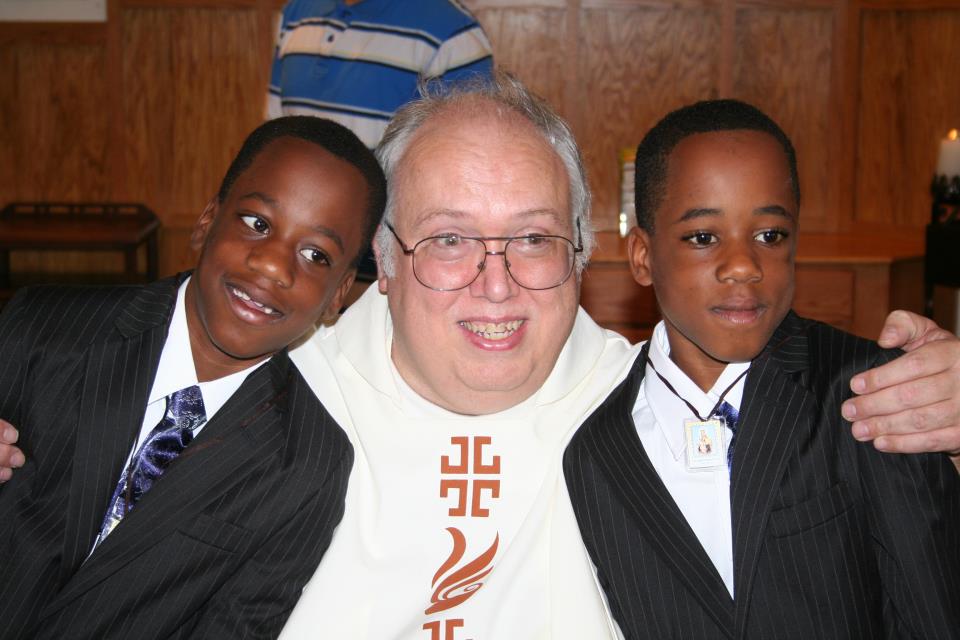
    Fr. Joseph Jenkins

  • The blog header depicts an important and yet mis-understood New Testament scene, Jesus flogging the money-changers out of the temple. I selected it because the faith that gives us consolation can also make us very uncomfortable. Both Divine Mercy and Divine Justice meet in Jesus. Priests are ministers of reconciliation, but never at the cost of truth. In or out of season, we must be courageous in preaching and living out the Gospel of Life. The title of my blog is a play on words, not Flogger Priest but Blogger Priest.

  • Archives

  • Categories

  • Recent Posts

  • Recent Comments

    Jeremy Kok's avatarJeremy Kok on Ask a Priest
    Barbara's avatarBarbara on Ask a Priest
    Josh's avatarJosh on Mixed Signals about Homosexual…
    gjmc90249's avatargjmc90249 on Marian Titles & the Mantle…
    Jeremy Kok's avatarJeremy Kok on Ask a Priest

Happy All Hallows’ Evening

FamilyFunNight03

I was recently involved with a FACEBOOK discussion on the topic of Halloween.  A college student was challenged by his roommate that the celebration was “evil.”  His friend was a “born again” Christian.  He asked friends to shed light on the question.

A Catholic Reflection on Halloween

Halloween in a pluralistic society means various things to different people.  Indeed, given the contemporary fascination with vampires, werewolves, witches, ghosts and zombies, it might seem that Halloween is now a year-long celebration.  But the question at hand is a narrow one, does Halloween place superstition above authentic faith?  The dialogue is not only between Christians but must confront the values and meanings imposed by a liberal secular humanism and the emergence of modern paganism.

Questions of sectarian faith aside, we have also connected Halloween to the fall harvests, thus the symbols of pumpkins, apple bobbing, corn mazes, hay rides, scarecrows, owls, etc. Such a feast provides a fun dress up for children and the giving of candy, which reinforces the joy of childhood and the solidarity of the community in caring for them.

The Tension over Halloween

Certain reformed Protestants often object to Halloween because of its apparent preoccupation with the dead and their souls.  Remember, such believers reject purgatory and prayers for the dead. Other groups deny even the soul and hell, like Seventh-day Adventists.  Obviously, as Catholics, we cannot play along with arguments focused against our holy faith.  While we might regard ghosts as souls in purgatory, in their estimation the whole business is either a fantasy or a devilish deception.  Since Christ has destroyed death, any preoccupation with it is negatively judged as “popery.”  But Catholicism stresses both a personal and a corporate faith.  The saints live in a communion with Christ and one another.  The souls in purgatory are still part of the Church.  We pray for the poor souls just as we ask the heavenly saints to pray for and with us.  The bond of our unity is Christ, himself.

The so-called pagan foundation of Halloween (as in Samhain) is a modern exaggeration. The roots are actually Christian, or Catholic. The name Halloween is a derivation of All Hallows’ Evening or Eve. Neo-pagan religion, perverse occultists, and New Age believers would attempt to make it something else.  Catholic immigrants from countries like Mexico are also introducing the similar “Dia de los Muerto.”

Some have the peculiar notion that All Hallows’ Eve is a night where spirits or ghosts enact violence.  This is nonsense!  It is the made-up stuff of the occult and/or horror movies.  It probably has roots in the pranks played by juveniles while dressed up and moving from house to house.

Puritans and/or Calvinists associated prayers for the dead with witchcraft and necromancy.  Their religious descendants are still among us.  Today when we think of Puritans, the legacy of Plymouth Rock is tarnished by the legendary Salem Witch Trials.  Religious hysteria brought about the condemnation and execution of innocent women.  Each year witches, real and imaginary, pilgrimage to Salem, Massachusetts. Tourism soars as revelers come to celebrate the holiday.  This has even precipitated seasonal tension between Wicca or naturalistic pagans and those who perpetuate the caricature of witches on brooms. I recall that the Salem Knights of Columbus hall had to cancel contracts when they realized that renters were using their facility for genuine witchcraft, not the make-believe variety.  It is precisely because of such fears that a number of Christian communities have now utterly rejected Halloween.  Of course, certain Christian cults reject any holiday or special day that is not clearly scripturally based.  Others object just to be different from Catholics or to illustrate their disdain for Rome’s authority.  That means that a number of these faith communities do not celebrate Christmas, Easter or the Sunday Observance.

The fundamentalist Christian critic insists that Halloween is a capitulation of the Christian commission.  This seems to be a bit of a stretch, at least in terms of boys dressed as cowboys and girls as princesses.  My only regret is that I would have children yearn for Holy Communion as much as they race to fill their Halloween bags with candy.

While some Protestants politely agree to disagree with Catholicism and about the celebration of Halloween; other Christian groups condemn the festive day as devilish and pass out anti-Catholic “Chick Tracts” to the trick-or-treaters.  Still other Christians, like most Catholics, see nothing inherently wrong with children dressing up and collecting candy.  Certain Catholics and Protestants will pass out alternative treats, like crosses, prayer books, religious stickers, etc.  Concerned about the direction that Halloween is taking, a number of Catholic families and churches urge the children to dress up as saints.  I recall one little boy who was quite upset when Sister at school told him that he could not dress as a monster.  When Halloween came she pulled him aside, angry with his costume.  She lamented, “I thought I told you that you had to be a saint?”  He answered, “I am a saint, Sister— I’m John the Baptist… after the beheading!”

The weekend of our Halloween Party at Holy Family Parish, a lady rebuked me after Mass for celebrating the “devil’s holiday.”  If such were true then Christians could have no part of it.  But the case cannot currently be made.  Baptist and Catholic churches both have Halloween parties and trunk-or-treat activities in their parking lots.  As Christians our strength is in the Lord.  The children of light are in conflict with the darkness.  But the game is fixed.  There may be casualties who reject the Lord but the victory over sin and death is already accomplished.  We need no longer be the devil’s property.  We have been redeemed or purchased at a great price.  Jesus dies that we might live.  Prayer and the life of charity are the essential ways that we confront darkness.  God made the pumpkins, the spiders, the bats, the owls and us.  He made candy sweet and gave innocence to children.  God gave us the day and the night. Halloween belongs to God.

The negative critic feels that Halloween gives the devil a foothold in the lives and hearts of Christians.  However, as in our recent parish Halloween party, I saw selfless volunteers running games, cooking, and distributing goodies to children out of a Christian love for youth and their families.  The devil will have nothing to do with real love.

A Christian Understanding of the Symbols of Halloween

Some authorities trace the carved pumpkin to Irish folklore about a drunk who trapped the devil in a tree and carved a cross upon it.  Having made a deal with the devil never to be tempted again by drink, Jack was denied entry into heaven.  He was given a cinder of fire in a turnip for light.  Supposedly the turnip became a pumpkin in America.  The jack-o’-lantern became a visible against compromise with the devil.  It also serves the same function as the gargoyles on the Gothic cathedrals of Europe. They became a type of sacramental to invoke divine protection.

Scary costumes, like the carved pumpkins, fulfill a similar purpose.  These were cultural or folkloric ways in which simple people sought to ward off evil.  While it may be a bit silly, the notion that people had was that evil or dark spirits would be encouraged to pass over their homes and leave their communities undisturbed.  The assumption was that the demons might be fooled by the caricatures of themselves (kids in costume) into supposing that the area was already infested or occupied.  There is no real doctrinal weight to such a practice… just a desire to be holy and not molested by evil.  Today most people just dress up for fun.

The practice of trick-or-treating probably finds its roots in All Souls Day.  There used to be processions or parades on November 2nd.  Christians would beseech “soul cakes” (dried raisin/square bread) in return for saying prayers for dead family members.  They were mostly collected by children and the poor.  Each cake represented a soul being released from purgatory.  Dressing up and singing was often parting of “souling” from house to house.

Some Christians are unhappy with the symbolism of Halloween.  I recall one person angrily upset about skulls or skeletons.  However, this prejudice fails to appreciate that the skull is embraced by Catholicism as both an immediate sign of death and of our dependence upon God. It is used by the Knights of Columbus, in depictions of the crucifixion and even decorates certain European churches.   We do not worship death but are ever mindful of the price paid for our redemption.  Further, our time in this world is short.  The theme of death or mortality is one to which we return on Ash Wednesday. “Remember, O man that thou art dust and unto dust thou shalt return.”

It is unfortunate that venerable Christian symbols should be confused by the ignorant and bigoted as satanic.  I was in one parish where a shrine to St. Peter was vandalized, not by crazy kids or occultists, but by Christian fundamentalists.  They ripped the inverted cross from the ground and argued that it was a sign of Satan and of the antichrist.  You still hear such foolishness about the upside-down cross on the back of the papal chair.  But the bigots misinterpret an ancient symbol of martyrdom.  St. Peter did not feel worthy to die like his Lord so he asked his executioners to crucify him with his feet in the air and his head toward the ground.  Critics make a mockery of an inspiring witness to Christ.

Catholics also venerate the relics of the holy dead, wear medals and scapulars, carry and say rosaries and use holy water.  These are not talismans or the accidentals for magic.  Rather, they are visible signs of our faith in the incarnate God, the God made visible in Jesus Christ.

Keep Christ in Halloween

We read in Philippians 4:8-9:  “Finally, brothers, whatever is true, whatever is honorable, whatever is just, whatever is pure, whatever is lovely, whatever is gracious, if there is any excellence and if there is anything worthy of praise, think about these things. Keep on doing what you have learned and received and heard and seen in me. Then the God of peace will be with you.”  Christians are committed to the pure and the good.

This might make us reflective of the spiritual elements attached to the secular commemoration of Halloween. We cannot buy the entire package. However, it may yet be reclaimed for Christ. The Christian effort is to Christianize the world, not to run away or hide in a spiritual ghetto. Certainly, there is innocence about children dressing up and finding delight in sweets. My growing reservation is about where adults are taking the festivity. Catholics and significant numbers of other Christians offer alternatives to trick-or-treat and spend All Hallows’ Eve at church worshipping God and recalling the witness of the saints in Christ. I agree with the criticism that there are sinister undercurrents that are seeking to hijack the expanding season of Halloween. As a child I dressed as a clown, a cowboy, an astronaut and as a superhero. It troubles me to see children attired today as characters from “R” rated horror movies. Why do they even know anything about these murderous and blasphemous characters? I am repulsed “personally” by the sleazy costumes that cast derision upon priests and nuns. Adult costumes, especially for females, increasingly celebrate vulgarity and eroticism. If Christians cannot redirect the fun away from these elements then it is true (I would agree) we might have to opt out entirely. It may be that Halloween is escalating in the direction of the occult and vulgarity.  Maybe we as good Catholics and Knights need to campaign for Halloween as we would for Christmas?  We also need to keep Christ in Halloween.  All Saints’ assures us that we can have a share in Christ’s life and in the kingdom.  All Souls’ reminds us that while we are sinners, God is infinitely merciful.  What he has started in us, he will finish.

How a Celibate Priest Looks at Women

Friends have joked from time to time that I seem shy in public. What they mean is that I tend to look at the ground. I am not the only priest who does this. What they interpret as shyness is something more or quite deliberate. Many of us were taught or picked up from other priests what was commonly called a concern for the “custody of the eyes.” The proverb is quite true that “the eyes are the windows to the soul.” Men are both visual and tactile. We like to see and to touch. This starts with childhood. A little boy sees a cookie and his eyes open wide with delight and he immediately reaches for it, even if it is forbidden by his mother because it will spoil his supper. The man appreciates that there are sweeter delights than cookies and candy. The hormones kick in, we pass through puberty, and suddenly we are all eyes and maybe hands for the girls. Women might be drawn to the fact that a priest is one man who does not treat them as a sexual object. He is regarded as safe and as a spiritual man. This is as it should be. The priest wants to save souls, and in this he must regard men and women as the same. More than this, he must give every woman the same regard— young and old, smart and dull, fat or skinny, attractive or ugly, etc. He must look upon them with the eyes of Christ. Nevertheless, the priest is still a man.

I recall that one sensitive woman became hurt because the local priest seemed to have time and eyes for everyone but her. He would glance at her and look away when he talked. She complained that he did not like her. The woman was quite wrong. He liked her very much, too much. The priest thought she was intensely attractive. He looked away so that he might not look her over, up and down. Women can also become upset if they should notice or suspect that a priest (like other men) is devouring them with his eyes. Flattery for one is deep disappointment for another. The priest is concerned about such impressions. He is also worried about his own soul. That is one of the reasons why I (along with many other priests) avoid beaches and public pools. Scantily clothed women make the proper custody of the eyes almost impossible. These images linger in the mind and what enters the mind can quickly move to the imagination.

Priests face many hurdles, but by the grace of God we remain strong and resilient. Celibacy is but one area of challenge but it is a crucial one if we want to continue as shepherds of Christ’s flock. We are faithful, obedient and do our duty.

As a priest mindful of his duty, I am drawn to Robert Frost’s Poem, “Stopping by Woods on a Snowy Evening.” A stanza reads:

The woods are lovely, dark and deep.
But I have promises to keep,
And miles to go before I sleep,
And miles to go before I sleep.

Priestly Celibacy: A Truth Some Discover the Hard Way

A number of years ago, I had regular association with seminarians. As a young priest, I discovered certain truths which I lamented were not shared with me in my own formation. I passed them on to these good men. The most pressing of these revelations was that the seminarian and priest had less to fear from the bad girl as they did from the good one. Clergy are religious men, generally turned off by overt seduction, fragrant immodesty and sexual vulgarity. However, their hearts are very vulnerable to the woman whose piety is reflective of their own. A pretty girl who loves the Church and the priesthood can very quickly start loving one particular priest. Priests are men and their temptation is ironically found in their seriousness. A religious woman, modest and demure, will come to the priest for spiritual guidance and the sacraments. She will be the first to volunteer and the last to go home. She will sympathize with the priest and defend him against his critics. She never misses Mass and expresses how she is deeply moved and enriched by his preaching. In short, if priests could marry, she is everything he could ever want. He seeks, within the sphere of ministry, to be a father-figure and spiritual physician for her soul; but according to nature, a part of him begins to long for physical intimacy with her, for a shared life, and for a home where he could claim her as wife and mother to his children. The priest has no choice but to minister to her and other women like her. We cannot neglect the very ones most drawn to the faith. However, the priest must be honest about his emotions and very circumspect about his actions. He must not fool himself— this woman is dangerous to his vocation as a celibate priest. And he might pose a threat to her. No excuses can be tolerated so that he can spend more time to be near her. The priest needs to focus less on friendship with such a woman and more upon his duty to her as a priest. His energies must not be directed exclusively toward her. His promise mandates that as a priest, he should remain morally strong, for his own sake, for hers and for the larger believing community. Along with others, he gives her the sacraments; but he should not go out of his way to give her special favors and gifts. The Eucharist is enough for her; anything more constitutes the beginnings of flirtation. He might presume that she is safe with him; certainly more so than with other men who would quickly take advantage of her. But he is lying to himself and placing them both at risk. Unchecked, one day they notice their eyes upon one another and there comes the full awakening of what they have done. He holds her hand or gives her a quick embrace or maybe they even share a tender kiss, and a boundary line is crossed. It is still not too late but to break it off now will wound them both, possibly for a lifetime. He could have spared them both something of this pain. Some priests will leave ministry and if there is marriage, the woman will always carry guilt. She will think, “Did I cost the Church the services of a good priest? Did I selfishly steal him for myself?” If the priest makes distance, then they will be haunted by a love unfulfilled and a friendship that was needlessly destroyed by their weakness. There is a lesson learned. Sometimes you cannot be with the person you love. You cannot have everything you want. We usually associate love with presence and union; however, there is a sacrificial love that lets go or surrenders the beloved. Many priests have had this experience and can say, even many years later, “I loved her so much, I let her go.” Such a business can take a man to the Cross. One priest confided that he accidentally ran into a girl that he had fallen in love with over a quarter of a century earlier. It tore him up inside but he made distance from her to preserve his priesthood and to protect her honor. She was very cordial and introduced him to her husband and children. He tried desperately to keep tears from his eyes. Afterwards he was visibly shaking. Although older he thought she was still beautiful. All his old feelings returned and he spent the night in tears. He realized that he still loved her, that he would always love her. She could have been his. Her children could have been his children. But they went their separate ways. She was happy and had her family. What did he have? Hopefully he would look upon his years of priesthood with a sense of accomplishment and joy. Quickly as possible he needed to shrug off the ghost of unexplored potentialities. The fact that he had not ruined her life should have given him a degree of peace. He did the right thing, for both of them.

Priestly Celibacy: In Order to Be Loved, We Need to Love

If the priest feels he has no one who really loves him, he may respond in kind and stop loving. When this happens the priest begins to die. The very meaning of his celibacy and priestly service is as a formula of loving. He should realize the love of Christ on the altar and upon the Cross. Just as muscles weaken with inactivity, a priest’s spiritual heart atrophies if he avoids loving. This can also happen with priest-transfers. It hurts to constantly make friends and then move on. He might reach a stage where he stops loving those around him so as to avoid being hurt again. Complicating the situation is the general understanding of love. The word has too many definitions and yet, in practice, is often immediately and popularly equated with romantic situations. The priest (and the Church he serves) must allow himself to explore the myriad colors of love that are in sync with his vocation as a celibate priest. The issue of scandal, first with defections for relationships with women and second with a failure to adequately protect children, has precipitated a forced dissipation in the priest’s fatherly associations. In the tradition of Don Bosco and Father Flanagan, priests interceded for the needs of children and spent time with them. The ever tightening policies and fear of litigation have stripped the priest of this sacred trust and have thus diminished both his effective value and his satisfaction from ministry. The circle of religious brothers and sisters, as well as other priests, has been devastated by the diminutive nature of current vocations. Like a bubble that has popped, he is no longer surrounded by these supportive relations. The general air of hospitality and volunteerism exhibited in parochial settings has been increasingly strained by recriminations and suspicion toward clergy. The priest is no longer welcome in every home and those that do extend invitations might seek to link their generosity to a manipulative favor, often to the detriment of another parishioner. When the pastor fails to comply or refuses to share secrets that fuel gossip, he is summarily dismissed, never to cross their threshold again, barring the possibility of last rites. Even requests for sick calls are fewer than in the past and are frequently redirected to extraordinary ministers.

Eros is denied the priest, at least in its extreme and consensual manifestation; but also weakened are paternal love and fraternal love. Society as a whole and the Church authorities strip away the priest’s supports leaving little or nothing to replace them. It is no wonder the married-priest movement is picking up steam. Platters are becoming empty and priests are hungry for friendship and sharing love.

Nevertheless, with all the contemporary hurdles, most celibate priests are happy, even if increasingly lonely. They find real and sustaining satisfaction from prayer and worship. While they take care of many, there is an indescribable delight over the absolution given individual sinners. God has entrusted them with the authority to forgive transgressions, great and small. With a gesture and a few words, they can steal the damned from the devil. They have power over hell. Never in the history of the world had Almighty God given such power to men as he did to his priests. He can draw God down from heaven and place him upon the altar as our food and he can plant his Spirit and grace into human hearts, transforming a sinner into a saint. Good priests are always in awe of that with which God has entrusted them.

Priestly Celibacy: Challenges to Priestly Fellowship

I have already spoken about the need for close friendships among the presbyterate. The priest shortage and the busy lives of clergy make this increasingly difficult. But there is another factor that damages efforts at fellowship among clergy and that is ambition or careerism. I have always thought that such was poison to the essence of priesthood as servant. Nevertheless, men get caught up in titles, positions of honored trust, desires for influential parishes and dreams of the purple. The best bishops battle this attitude in their priests, insisting upon hearing their opinions and urging against “yes-men.” Ambitious men might distance themselves from certain assignments and from brother priests who are seen as an embarrassment or possible roadblock to their desired promotion. They fear guilt by association. There is also the dilemma of dishonesty. A priest could be afraid to share personal struggles and feelings because tongues might wag and his reputation would be tarnished. A priest might have personality quirks and phobias. He is relegated to special ministry or a hospital. He wants to be a pastor but he is not trusted. No one shares the truth with him. Rather, he is given feigned praise for his dedication to sick calls or even with secular matters like cutting the grass or watching the boiler. Whatever the reason, certain priests find themselves distanced from their brother priests. This intensifies their eccentricities and their experience of loneliness. Such might also amplify their struggle with feelings of inadequacy and self-worth. Priests should not be so self-possessed that they ignore the needs of others, either parishioners or brother priests. Given the scandals, the current atmosphere is not a healthy one among priests and their bishops. One case of injustice, even if only apparent, resonates in a negative way throughout the presbyterate. Priests view themselves as very vulnerable to allegations and gossip of any kind. This effectively shuts down communication or dialogue. I recall one priest literally bragging about his disclosure to the bishop of what he presumed to be a secret sin or scandal of a brother priest. When I asked if he had privately discussed his concern with his brother, he said no. I was very blunt, which wins me few accolades, and told him that he wronged his brother in ministry. His allegations were proven to be largely groundless and a good man suffered needlessly. He was trying to win points as a squealer; instead he should have followed the Scriptural pattern where Church censure is the final appeal. Both men, in this instance, were now needlessly alienated from others in the presbyterate. Who will share anything with a man who only tattles? Who will seek active fellowship with a man charged with scandal and immorality? Priests need to preach and witness to what is right. But they are fundamentally ordained as healers. If we forget this, then we have lost sight of a truth that resides at the very heart of the priesthood.

Priestly Celibacy: The Issue of Loneliness

A priest’s celibacy faces challenges on many fronts. The most obvious is the issue of sexual attraction and yet that may not prove as great a temptation as that posed by loneliness. Rectories with multiple priests in the past are today frequently the home of only one. Priests become accustomed to a definite “aloneness” but there are times when his separation from most other men and his solitary life might truly be trying. Women are among the first to give comfort and support. But here is the danger. Even if no sexual indiscretion is ever committed, a priest could develop a friendship with a secretary, catechist or housekeeper that might be somewhat analogous to a husband-wife relationship. This can catch the man unawares. Then when the time comes for a transfer, he finds that there is a bond that holds him. The Church is well aware of such possibilities and so priests are generally reassigned every six to twelve years. He really has no home except the Church. It is vital that he knows this. Yes, even if he has living parents and brothers and sisters; he belongs first to the Church. My mother cried on my ordination day when my father spoke about this to her. She said, “He will always be mine!” Yes, she is right, to a degree, because a man’s mother and the Blessed Virgin Mary are the two closest women to a celibate priest. But there need be no contradiction; their motherhood is symbolic or expressive of Mother Church to which he belongs.

It is said that a priest who gets into trouble is a priest who has neglected his prayers. I would add to this the lack of continuing study and theological reflection. If there is a hole in his heart it is likely that a woman might begin to fill it. The only safeguard is to avoid a vacuum and to fill the space with the presence of God. Such a man will know that he is never really alone. The Lord is desirous of an intimate relation with his priests, so that he might satisfy as their treasure and sole passion.

Priestly Celibacy: Dealing with Tough Questions

1. Do all relationships between men and women have to lead to sexual intimacy and physical expression? If so, would this not compel men and women who do not desire such developments to select friends and co-workers of the opposite sex who are unattractive and sexually repellant to them?

2. Not desiring sexual congress, can and should one cultivate a mindset where gender distinctions are extracted or ignored in social interaction? Can the celibate honestly look upon the female segment of the world through the eyes of a spiritualized non-corporeal charity? Would not our theology of the body highlight such a posturing attitude as a fictional absurdity? Does this not reflect a prejudice toward a sexless, spiritualized preoccupation over the physical which acknowledges Eros? Would it not be better to recognize ourselves and others as sexual-embodied-beings?

I believe the first question exposes a fiction; the second one finds its answer in degree. Referencing these questions, our society’s wresting with these queries is illuminated by how we treat or mistreat children, today. Our society has so emphasized sexual interaction that we forcibly impose an adult archetype even upon small children. Little girls are dressed in sexy or provocative clothes. Certain responsible parents complain that they cannot find modest age-appropriate clothing for their daughters. Movies are also illustrative of the infection of Eros. Children are pictured as sexually active and/or develop romantic liaisons in elementary school. Grammar school boys and girls date and share passionate kisses. This is wrong. Everything around us is heavily sexualized, way beyond the necessary strictures of nature. This abandon has given us a voyeuristic world where everything and anything goes. While the Church is faulted for the scandals, it is popular culture that has given us a pedophile attitude that preys upon the innocent. The sexual appetites are so thoroughly expanded with abandon that they neither respect age nor the demarcations of gender. Everything that brought God’s judgment down upon Sodom and Gomorrah is present in full measure in our society. It is into this confusion that the Church would ask men and women to be chaste and moral. It is in this world that the celibate priest must find his way and fulfill his work.

Priestly Celibacy: Love Means Not Crossing the Line

Here is the root cause for my upset or anger when priests cross the boundary lines with women and then fault the Church for their trespass. The famous Father Cutie episode in Florida is a case in point. When his affair was exposed, he defected to the Episcopalian church and attempted marriage with a divorcee. Evidently their sins or broken promises, his to priesthood and hers to marriage, did not trouble him enough to check his wrongdoing. The secular world took his side regardless of fornication and adultery. If a man had left his loving wife for another woman; there might have been some recrimination. But our society dismisses marriage vows between a priest and his Church. It chronicles a terrible double standard. I would insist that we must all play by the same rules. Good morality and a properly formed conscience must always be exhibited by the Catholic man in his relations with females. There should be no wrongful encouragement, no selfish seduction, no premeditated entrapment, and no empty promises. No relationship or intimacy should be fostered that cannot rightly be satisfied. The principle of “no harm” applies to all relationships, but especially to interactions between priests and the People of God. A priest is ordained to save souls, not to become an accomplice in damning them. A man who truly loves a woman should be willing to preserve her virtue and to safeguard the presence of saving grace. Anything less or different is not just an expression of weakness but of the demonic. A man, priest or not, cannot say with sincerity, “I love you,” to a woman while blackening her soul and possibly casting her into hell.

Men and Especially Women Need Celibate Priests

Pious women delight in the presence of a priest. He signifies in his preaching, rituals and person something of the transcendent for which they long. He is the spiritual father figure who assists them to see over the fences and hedges of lives weighted heavily toward the earthly and immediate chores of survival. Cleaning dippers, feeding families, caring for a home, and working outside the home fills the hours. It is all good but there is a yearning for something more that is satisfied by religion. The priest is the porter for this other world. He is the sentinel for Christ’s kingdom breaking into our world. As a light-bearer, he reflects in his priestly way, Jesus who is the Light of the World. Women were at the Cross and at the empty tomb. Their religion or faith has little to do with abstraction; rather it is an enfleshed encounter with a person. That was true two thousand years ago and it is still true today. The celibate priest, as St. Paul relates of himself, satisfies what is lacking in the oblation of Christ for his people. He is the human medium to make present the saving person and activity of Christ.

Women are largely regarded and treated by men as sexual creatures. While some might invite or find a certain appeal to this role, it can alternately bring about both an empowerment and an intense vulnerability. Men want to please women and win their favor. Unfortunately, some men want much more and may not take no for an answer. The priest is the one man who does not regard women as merely sexual objects. He encourages and looks to their spiritual side. Mentoring women as a spiritual director, I have heard numerous times from them, “I wish I could pray with my husband as I can pray with you.” It is here that the priest must proceed carefully. The woman may feel that here is one man about whom she need not be afraid. She sees in him one to whom she can open her heart and soul. She can be pretty or ugly with him. She can be honest. While not erotic or sexually aroused, his heart is responsive to her. Women often hold priests in high regard and possibly even with infatuation. Men often want women for their bodies. The priest is a man who wants to save their souls. His interest in men and women is the same— that they might believe and belong to Christ.

Priestly Celibacy: Men & Women are Wired Differently

We know that the brains of men and women are wired differently. Men have more cerebral mass and synapses connecting cells in a particular section of the brain. The ratios of white and gray matter, as well as the density of nerve cells differ. Women have more developed neuropils (the space between cells) and a larger corpus collosum. The neuropils are composed of synapses, dendrites and axons. Such allows better communication between neurons. The more developed corpus collosum allows women a faster data transfer rate between the right and left hemispheres. The deeper limbic system in females allows them to be more in touch and in sync with their feelings than men. This brings us to my real concern here, what does this all mean in the world outside of our heads?

While the person in the Christian estimation is more than thinking meat, and has an immortal soul, our physical attributes impact upon how we perceive and interact with one another. Men and women are complementing one another but they are physically different. This difference also exists in how our minds work.

Men’s brains are specialized, with various parts devoted to specific tasks while women’s brains tend to use both hemispheres and diffuse the mental work throughout the whole brain. Women are highly effective at communicating with one another. They process information quickly and talk faster than men. Women tend toward the creative while men want to fix things. Men tend to process information slower, something that is evidenced in their more paced speech. It is no wonder that there is certain confusion between men and women. Women can literally talk too quickly for men to follow. While it may be that men think deeper, they can easily get lost in thought. How many times have we heard a woman angrily ask a man, “Are you listening to me?” Women frequently complain about the man’s general confusion or the dull look on his face. Women multitask while men are intensely linear, doing one thing at a time, even if it takes longer.

Looking at the home, the woman might shout for her husband to help her and get angry with his slow response. But I have heard men say, in all honesty, that they did not know where to begin? Give him one thing and he will do it well. Give him a list of things to do and he will do them one after the other until completed. Give him a series to do simultaneously and he will look at you like you are crazy.

The female mental diffusion is complemented in the male where it can be tightly focused. Men can be largely engrossed in athleticism and sexual themes; but they are also intensely interested in the ultimate questions of truth and meaning. Women may be curious or follow this philosophical lead; but they are more likely to dismiss it with chatter about the price of eggs and baby’s new tooth. Women are incredibly bonded to the earth and everyday details. Yes, there are exceptions, as well as culturally conditioned stereotypes. While women are very hormonal, they are about more than their emotions. They want to make sense of life’s complexities. Men are good about this if they are not distracted, and they are easily distracted, particularly by sexual themes. The celibate priest can provide the sage’s illumination in a remarkable way. Women long for such leadership and are frequently more religious or devout than men. Women clergy in Protestant churches, like female help in Catholic ones, treat their work much like the care of a home. They balance multiple jobs at one time and there is a harried busy-ness. They also prize creativity, sometimes at the cost of routine or tradition. Compared to men, there are few female philosophers; but there are millions upon millions of faithful and believing women. You would think that Catholic women would be upset that only men can be priests; but the vast majority is content with a male-only priesthood. They recognize that he can give them something that maybe a woman could not.