











• Our Blogger

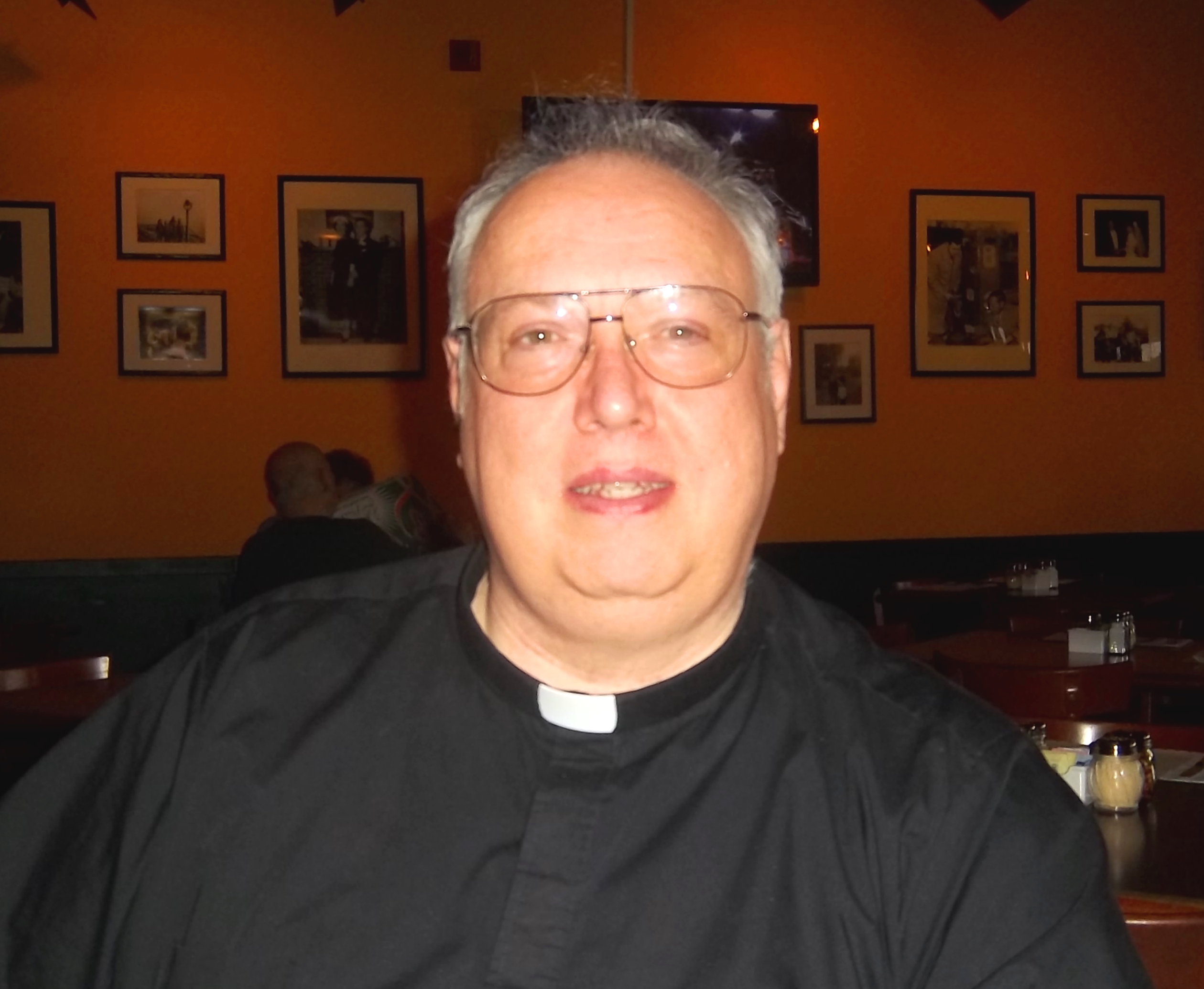
    Fr. Joseph Jenkins

  • The blog header depicts an important and yet mis-understood New Testament scene, Jesus flogging the money-changers out of the temple. I selected it because the faith that gives us consolation can also make us very uncomfortable. Both Divine Mercy and Divine Justice meet in Jesus. Priests are ministers of reconciliation, but never at the cost of truth. In or out of season, we must be courageous in preaching and living out the Gospel of Life. The title of my blog is a play on words, not Flogger Priest but Blogger Priest.

  • Archives

  • Categories

  • Recent Posts

  • Recent Comments

    Barbara King's avatarBarbara King on Ask a Priest
    Ben Kirk's avatarBen Kirk on Ask a Priest
    Jeremy Kok's avatarJeremy Kok on Ask a Priest
    Barbara's avatarBarbara on Ask a Priest
    forsamuraimarket's avatarforsamuraimarket on Ask a Priest

Ask a Priest

Feel free to submit a new question or concern in the comment box below.  Various topics and questions are archived here for easy retrieval.  Please be courteous.  Comments are moderated so please be patient in waiting for them to appear and for any responses.  God bless you!
aboutfrjoe

NEW MESSAGES/HOMILIES   CHRISTIAN REFLECTIONS   DEFENDING THE FAITH

QUESTIONS & ANSWERS   MARY OUR MOTHER

NEWMAN COLLEGE OUTLINES

5,442 Responses

  1. Father Joe, is it possible to have a Mass said for a departed beloved family pet? This is not a joke or a wise crack in any way.

    FATHER JOE: You can pray for the living person who is mourning the loss of the pet. You can bless living animals. While posts on the issue of animals and the afterlife can become quite heated, the sacraments are for human beings, not animals. Thus you cannot directly offer a Mass intention for a deceased animal. My position is that animals do not have particular or individual souls. In other words, while there is some debate, I am not of the opinion that pets survive past the grave. This may be hard to hear but I would not want to lie to you. My view is that the generic animal soul is not immortal but is a substantial form that only endures as a paradigm in the divine mind. In that sense “dogness” or “catness” is never lost although the individual ceases to exist.

    Do Animals Go to Heaven?

    MORE on Do Animals Go to Heaven?

  2. Hello Father Joe,

    I have a question regarding voting. We are having our general elections in South Africa on the 7th of May. In the past, I have always voted for the same party, who is the official opposition to the ruling party at the moment. However, this year I have taken the time to read the manifestos of each party. The opposition party is pro abortion and pro gay marriage. I feel strongly against both of the above. We have the option of voting for a Christian party, which is strongly against abortion and gay marriage.

    My problem is that although I feel morally obliged to vote for the Christian party, and I would rather have them in power, I feel that my vote will be wasted. The opposition party is the strongest contender at the moment, and our only hope of ousting the corrupt ruling party.

    Any advice would be very much appreciated.

    Thank you Father. God bless you.

    FATHER JOE: Priests here in the United States are generally forbidden to tell people for whom they can vote. We are, however, permitted to speak on issues and basic principles. I personally could not vote for a pro-abortion candidate, especially if there were alternatives. However, a judgment call has to be made. Sometimes there are few choices and we have to make a practical decision between several bad candidates. Cardinal Ratzinger (who became Pope Benedict XVI) wrote the U.S. Bishops some years ago the following: “A Catholic would be guilty of formal cooperation in evil, and so unworthy to present himself for Holy Communion, if he were to deliberately vote for a candidate precisely because of the candidate’s permissive stand on abortion and/or euthanasia. When a Catholic does not share a candidate’s stand in favor of abortion and/or euthanasia, but votes for that candidate for other reasons, it is considered remote material cooperation, which can be permitted in the presence of proportionate reasons.” Not knowing the political climate in your country, you will have to make your own judgment about the proportionate reasons. Peace!

  3. Hello Father, I’d like to start praying the Liturgy of Hours. Before I buy the books I wanted to make sure if I bought older used books that a new revision hadn’t been released when the Missal had been updated. Also what do you feel would be better, the one volume or the 4 volume edition? Thank you, Rob C

    FATHER JOE: The four volume includes the complete Readings for the breviary. The one volume only gives an assortment. As for which is best, it depends upon whether you intend to do all the hours or only a few like Morning Prayer, Evening Prayer and Compline. If you are not going to do the Readings, then the one volume is sufficient. If you want to do all five hours then you should get the set. The Irish put out a beautiful 3 volume set but it omits the American saints. We are still waiting for a revised translation of the Liturgy of the Hours or Christian Prayer. Because of that the prayers that are shared with the Mass Prayers do not match the new translation. Who knows when the new books will come out. We have been waiting years!

  4. Thank you Father so much. My mind is at peace now 🙂 Considering how very holy and dedicated the priest is, my mind could not accept any thing negative about him even though my heart was telling me otherwise. Now I am happy. Thanks again for your spiritual direction and for being there for everyone through this blog forum. I am from India and I am really glad to have met you here 🙂

  5. Father Joseph,

    I am curious about a few other matters pertaining to the Novus Ordo Roman Liturgy. As a Byzantine Catholic, I do not really understand why it is that the priest faces the congregation during the Anaphora (or the Eucharistic Prayer).

    FATHER JOE:

    Traditionally the priest did not; they all faced the same direction. Indeed, the Latin rubrics for the Novus Ordo (Ordinary Form) still seem to presume “ad orientem” in that the priest is instructed to turn “conversus” and “versus.” The Old Mass had the priest turn to the people for various parts of the liturgy. There are some places, with altars attached to walls, where this pattern is still followed. I read that the former pope, Benedict, has an altar close to a wall for his private Masses. There were always certain altars, as at St. Peter’s, where people viewed the celebrant from various sides. The Church experimented with Mass facing the people even as far back as the 1930’s. However, it was only after Vatican II and the reformed liturgy that it seemed to become the new norm. Prayers said quietly are now amplified with microphones on the altar. My “personal preference” would be for a restoration of the old norm or a clear liberty to do so. While our Lord faced his apostles at the Last Supper, and I suspect the agape of the apostles was conducted in a similar fashion; it must be admitted that the face can become a distraction. We want our people to understand that the priest at the altar is the same as any priest… Jesus is at the altar. The priest should also focus on the mystery without temptation to put on a show for the congregation. Why the change?

    The business about facing east can become a bit peculiar. Catholic churches were sometimes refurbished from Protestant churches. Consequently, when renovated, the priest and people could be pointing in the wrong direction. I recall a story about one church that had been accidentally built askew to the compass. The priest and people actually stood facing slightly to their left to face true east at Masses. After the Vatican II changes, this was no longer necessary.

    Facing in the same direction communicated that we were a people in procession, following Christ, who was the “way” to the Father. The Church had long stressed “mystery” in the Mass. There were no microphones and bells were rung to alert the people to parts of the Mass like the epiclesis and the consecrations. At one time there was even a four foot tall altar rail and a curtain before the altar. The curtain disappeared and rails were lowered for ease in giving Holy Communion.

    The assertion that the priest faces the people today is somewhat erroneous. The people and priest alike are still both facing the Eucharistic elements. The only difference is that the priest does not obscure them or the altar from the sight of the congregation. Modern technology gave us the technology to be heard. The proclamation of the Word was given emphasis. Similarly, there was a growing emphasis upon witnessing by sight and sound the rituals of the altar. Turning the altars around gave the congregation an immediate view of the Eucharistic activity.

    Although the Church had a heightened understanding of the Eucharist as a sacrifice, something illustrated by marble altars that mimicked the tombs of the martyrs, there was a growing rediscovery of the Lord’s Supper as also a meal. This mentality was furthered as well by the changed orientation. Altars began to look more like tables. The liturgical renewal had begun long before Vatican II and many liturgists argued that the People of God had become too detached from the liturgy. They said the rosary or had private prayers to say but the priest, even assisted by a server, sometimes seemed like a one-man show. There was a strong desire that the people become more involved or integrated into the liturgical action.

    We see here an accompanying shift in language. We once spoke about “going to Mass” instead of “participating at Mass. The priest was referenced as “saying Mass” while today we term it as “celebrating Mass.” We wanted a more active participation in the liturgy. (Of course, this participation is viewed as more than simply giving the congregation the prayers once said by the altar servers. We also hoped for a more intense internal participation in the mystery underlying the gestures and words of the Mass.) You can read the Constitution on the Sacred Liturgy for more about this important point.

    I am aware that the Western Church views the Last Supper as being a Passover celebration. Is this the reason why most Western Churches have the priest facing the congregation during the Anaphora? If this is so, then why does the Western Church then continue to sing the Sanctus during the Anaphora? The words “Holy, Holy, Holy, Lord God of Sabaoth! Heaven and Earth are full of Your glory” not found the Passover Haggadah, but rather in the old Jewish Temple Liturgy.

    I just don’t understand.

    FATHER JOE:

    As for the Sanctus that concludes the Preface it was borrowed from the old synagogue service. It was something retained by Jewish Christians after their expulsion from Hebrew worship. Christians had attended the synagogue on one day and celebrated the agape and Lord’s Supper on the next.

    The Passover ceremonial was the setting for the first Eucharist; however, Christians neither Western nor Eastern have ever felt the need to slavishly follow it. Liturgies develop over times, appropriating certain elements and dropping or reducing others. That was one of the concerns at Vatican II. It was felt that too many restrictions had been placed upon the development of liturgy. Of course, afterwards, many argued (with some credibility) that liturgy should not be reformed by committee all at one time but rather in a slow organic fashion over the centuries.

    After their expulsion from the synagogue, the Lord’s Supper or Eucharist was all they had. The reading of the Scriptures, with the gradual addition of New Testament texts, would also inflate the Christian worship on the Eighth Day, Lord’s Day or Sunday. The liturgy was very fluid in apostolic times, but various elements were being assembled and would be retained as the Church was embraced by large numbers of Gentiles. The Sanctus with the thrice “Holy” acclamation came to be associated with the holiness of the Trinity. It gives an immediate emphasis of adoration and praise to the anaphora. The Eucharist is understood as our participation in the ceaseless praise of God and in our Lord’s oblation to the Father. Priest and people stand in union with Christ. We are one with the praises of the saints and the angelic hosts. The Church views this text as singular in expressing the nature of the Eucharist as a sacrifice of praise.

  6. Father, I do not know if you got my previous messages. I hope you did. I have one last question: who or what is a spiritual daughter?

    God Bless You and Keep you Safe! You are really an awesome priest!

    FATHER JOE: We call priests by the title FATHER. This signifies something of their spiritual fatherhood over the faith community. Priests proclaim the faith and offer the sacraments to their charges. They can become very protective about their spiritual sons and daughters. We come to love very deeply our families and their children. Those who take the faith seriously can become intensely dear to their pastors, just as they grieve and shed tears over prodigals. Over the years I have mentored and given spiritual direction to men and women. I have been a part of parish youth groups. In all this, the priests takes on a fatherly role.

  7. Dear Father,

    This is Sophia. I am single. No I did not tell the priest about my growing yearning for touch and affection but once when I was about to burst into tears, he took my face in his hands and it ended up in a side hug because I was looking pretty desperate. He may have understood something from my body language. That was right in front of our whole family so it was not an issue. I do think the priest is quite emotionally vulnerable himself because as I turned to leave on the day of that surprise tight hug, his smile diminished and his eyes became all red out of sadness as if he was in pain to see me go and then he hugged me. Though I am 28, I look younger and I am quite childlike in voice and behavior (innocent). So he may have thought of me as a spiritual daughter (he’s 41). Being the shy/quiet person that I am, I was speechless at his actions. Next time I get to see him, I shall let him know that his action was inappropriate.

    This is a priest who I have great admiration for because he is very holy and very dedicated to his job. This action of him has left me puzzled and I don’t think I’ll have the courage to rebuke him. Maybe I’ll try to let him know in a diplomatic tone. Thanks for your prayers Father, a lot!. I really wish I could clear my mind of all these horrible thoughts.

    Also, Father, he hugged quite tightly which leaves me wondering. Maybe it was a bear hug or maybe something else. God please give me some peace of mind, please!

    FATHER JOE: It does not sound like there is any attempt to hide anything. It may just be that he is very affectionate and cares about you. Given that nothing inappropriate has happened, you are still within your rights to explain to him about your boundaries and what gestures you feel are appropriate. A tactful discussion can help avoid miscommunication.

  8. Dear Father Joe,

    I am 28 years old and have never particularly felt any need for romance till my early 20s. That was because my father started pressuring me for marriage. Out of desperation, I used to fall before a couple of men who i thought were affectionate towards me and could be suitable marriage prospects but they all turned out to be jerks. Anyway, there was nothing physical between us and Praise God for that!

    Coming to another problem, in my mid-20s, i also developed a desire to hug and touch people – men and women and I used to hug women but no men because we can’t really trust men to be just friends. About six months ago, I shared a family embrace with my male cousin. Ever since then, I have developed a desire to be hugged and touched by a man – a feeling so consuming that i can’t think of anything else.

    The problem gets worse. We were having some problems in the house and our Parish Priest recognized that I was particularly disturbed. He is a very affectionate type of priest – a danger signal i should have seriously considered. Anyway, he asked me to go see him one day to discuss my problems. We discussed a lot of serious matters such as the problems at home (dysfunctionality), love, sex and Platonic friendships. In the course of the discussions, the priest forcefully called me to his side, kissed my arm and face and asked me to speak up about my problems. I didn’t have anything to say. I wasn’t very happy about it but at the same time, being desperate for affection myself, I didn’t take it seriously. He asked me for a kiss on the cheek and I did it out of pity.

    My father came in and me, Daddy and the priest had a discussion. At the end of everything, as I was about to leave, the priest grabbed me, hugged me from behind and planted a kiss on my cheek.

    My question – what was that? I try to convince myself that the hug and kiss were merely platonic but my mind says otherwise. Father Joe, please tell me this is not what I think it is. My need to be hugged and kissed has only gone up after the incident and every day is a burden to live and to concentrate. Please help me.


    FATHER JOE:
    I can only guess at some of this from what you tell me. In regards to your feelings and desires, it is only natural as a young woman that you increasingly desire intimacy with a man. As a rule, women like to be touched and held and men like to touch. But, of course, it should always reflect one’s state of life… single or married. As for trusting men to be friends, it seems to me that you may have to find a man that you could trust to be a husband. Finally, I am at odds as to what to say about the priest. He may only view you as a spiritual daughter. Priests are not always as prudent as they should be. Did you tell him about your growing yearning for affection and touch? If so, then I would also be concerned. Alarm bells go off when priests grab young women and kiss them. It is okay to tell him that it is inappropriate. If he is truly “coming on” to you, then I would advise making distance from him and giving him a harsh rebuke. If that does not resolve the matter, tell another priest who can counsel him. God bless! I am praying for you.

  9. What is your opinion on sleep paralysis? Is it related to demonic activities, or satan? How can it be prevented, and if it is related to a real entities, then can we see our guardian angel?

    FATHER JOE: I know that some associate it with demonic attack; however, I am of the opinion that it is just a natural occurrence, perhaps due to interrupted REM sleep. If it happens regularly, it may signify a serious sleep disorder.

  10. Dear Father,

    I hope you’ve been well, and are having a good Lent.
    I wanted to ask about something that’s concerning me more deeply as it keeps happening. I don’t know if it’s anything to do with something psychological or spiritual, but lately I’ve been having split seconds of complete disbelief in God. They’re so frightening, because in that brief time, I feel like there isn’t God anywhere ever. It’s one of the worst feelings I’d ever had. I wonder if Hell feels like that, except always.

    It happened just now when I was watching ‘The Passion’ for Good Friday: when Jesus was praying in the garden, I suddenly saw Him not for who He is, the Christ and the Son of God, but as a fatherless man who had delusions of a heavenly Father to make himself feel better. Writing that makes me want to cry. Briefly feeling like that was actually true was worse.

    How should I pray about this? Am I alone in experiencing these kinds of doubts/feelings, even for a split second?

    -Ana

    FATHER JOE: Momentary doubts are like fleeting temptations. As long as we do not linger on them or give them credence, we are okay. Our minds constantly wonder and what you describe is not uncommon. Our belief or disbelief is established by God’s grace and the formation that we have been given. Faith like our bodies must be feed. Believers are called to study, pray and live out the faith. And, just as we are surrounded by all sorts of temptations, so too must we struggle against a disbelieving world.

  11. What are your thoughts about the weeping statue of the Virgin Mary? And would it be wrong to believe that it isnt real? I believe it could be but I am just unsure.

    FATHER JOE:

    Such belongs to private revelation. You do not have to believe such things to know salvation.

    In any case, which weeping statue of Mary do you mean? It seems to be a worldwide happening. Here are a few video links:

  12. I am going to be honest here. Don’t judge me. I am fourteen. My brother and I were Satanists for about 2 years now. Hey, it was because we always thought that the nicest people don’t believe and that the most judgmental people go to church every Sunday. Anyway back to my point. I want forgiveness, I’ve changed. Do you think I would be accepted by the church?

    FATHER JOE: Not all churches are the same. I can only speak about the Catholic Church. But, yes, if you repent and reform your life, you could most certainly find a place in the Church. Forgiveness and healing are important Christian themes. Catholics can go to Confession. Those entering the Church, after a period of instruction, would be received or baptized into the Church and body of Christ. For those involved in oriental, naturalistic and satanic religions there is also a brief rite of exorcism (but it is not like the movies just a brief prayer in the ritual).

  13. Hello Father Joe,

    I hope you have had a very fruitful Lenten season.

    Thank you so very much for answering my previous questions, and thank you for your advice and patience.

    For quite some time I’ve been struggling with the thought of evangelizing. There are many Catholics who have been blessed with passion, quick wit and knowledge to preach the Gospel in the Catholic tradition to anyone. I truly admire those who are gifted in this respect. I’m not as quick or eloquent.

    Occasionaly I’ll reflect on the quote often attributed to St. Francis of Assisi “Preach the Gospel at all times, and when necessary, use words”…

    How do we make our actions identifiably Christian and specifically Catholic? I asked a friend this same question and her answer was – wear a Crucifix.

    Thank you Father. Have a wonderful and blessed Easter.
    sincerely,
    eric

    FATHER JOE: Happy Easter!

  14. Is it wrong to pray to the Lord and ask for the forgiveness and guidance of others on their behalf?

    FATHER JOE: Intercessory prayer is a basic element of our corporate faith as Catholics. We can ask God’s grace to soften hearts turned cold and hard. Others are already well-disposed to the benefits that come from prayer, their own and that of others. We can pray for others and they can pray for us. This reflects the union of the Church in Christ, the mystical body.

  15. Thank you for your quick response Father Joe. But now you spiked my curiosity about some other things.
    When were these changes made?

    What were the Liturgies like when Palm Sunday and Passion Sunday were different?

    Were there two Masses on Palm Sunday, a “bona fide” Palm Sunday Mass in the morning and a separate Passion Sunday Mass in the evening?

    Were these Masses on different Sundays?

    I hope that my original question was not offensive or insulting, and I hope that this next question is not offensive or insulting either, but why does Western Christianity change its Liturgy so much?

    FATHER JOE:

    Actually, except for changing nomenclature and readings, much about the order of Palm Sunday remains the same.

    The Roman Canon or First Eucharistic Prayer (Canon or Anaphora) has remained relatively the same throughout the Church’s history, going back to the seventh century. The translation into the vernacular and the reformed liturgy (with additional Eucharistic prayers) only goes back to 1969. A couple of years ago we received a revised and corrected English translation of the liturgy.

    Prior to the reforms, Catholicism usually celebrated its Masses in the morning. The fast laws were more severe. One could only have water and medicine from midnight until after the Mass of the day. Later this rule was changed to three hours. The fast currently is one hour prior to Holy Communion. When I was a boy we did not have Saturday evening anticipatory Masses for Sunday.

    Now to your other questions:

    The readings for the Fifth Sunday or the old Passion Sunday in the liturgy prior to Vatican II were as follows: Hebrews 9:11-15; Psalm 128:1-4; and John 8:46-59.

    The readings for the Sixth Sunday or Palm Sunday in the old liturgy were as follows: (much like the new liturgy, although in Latin, and along with the blessing and distribution of palms) Psalm 23, Psalm 46, Matthew 21:1-9, Psalm 147, (and then at Mass) Philippians 2:5-11, Psalm 72:24, 1-3; Psalm 21:2-9, 18, 19, 22, 24, 32; Matthew 26:36-75; 27:1-60.

    The expression Passion Sunday was unofficially applied to the Fifth Sunday of Lent and then to the Sixth Sunday which was Palm Sunday. The Fifth Sunday or Passion Sunday started a two week period called Passiontide. By comparison the Sixth Sunday became the Second Sunday of the Passion or Palm Sunday. There was a period of transition from the mid 1950’s to the end of the 1960’s and the revised liturgy. The rites for Lent were slightly reworked (1959) and the Holy Saturday vigil was restored by Pope Pius XII. Pope Paul VI in 1969 removed the designation First Sunday of the Passion from the Fifth Sunday of Lent. Nevertheless, we can still use the prefaces for the passion for the next two weeks.

    The Gospel of Matthew was traditionally read on Palm Sunday although the new liturgical calendar takes the passion from three annual cycles: Matthew, Mark and Luke. The Gospel of John is read on Good Friday.

  16. I don’t know if this is the place I’m supposed to do this. Right now I really let my school work get away from me. I take online classes so my teachers don’t have contact with my parents. But I havnt turned in homework in forever. And the end of the school year is coming and I am so afraid of what my parents are going to do when they find out. I don’t want to lie to my teachers but I need to somehow bring my grades up. So this is my real question how do I tell my parents about my grades? I’m so scared I get sick whenever they talk about them.

    FATHER JOE: How old are you? Are your parents paying for the classes? I am not sure how you are graded so it is unclear if raising grades is even possible. In any case, I would counsel telling them the truth, no matter how difficult. Also be prepared to explain why you did not do the required work. I suspect the answer to that question is where forgiveness and healing must take place. God bless!

  17. Father Joe,

    I am a Byzantine-rite Catholic, and am I writing about the Latin Palm Sunday Liturgy. I wish to cause no insult or offense, but I find the Latin Palm Sunday Liturgy to be terribly confusing and contradictory. The impression I have of it is that there is no real Mass that celebrates Palm Sunday, but that there is a very brief (and dignified) Procession to mark the Lord’s Entry into Jerusalem, but then after singing “All glory, laud and honour,” the “Palm Sunday” Liturgy then becomes what would be the Good Friday Mass, except that Tradition bars having the Eucharist on Good Friday.

    In the Byzantine Church, the Palm Sunday Liturgy is very joyful. The day before Palm Sunday, the Byzantine Church celebrates the resurrection of Lazarus, which is echoed again on Palm Sunday. The Matins (Lauds) Gospel for Byzantine Palm Sunday is taken from Matthew, while the Mass Gospel is taken from John, which references the resurrection of Lazarus.

    FATHER JOE:

    The revised calendar combines Palm Sunday with Passion Sunday. The apparent tension reflects the actual sequence of events. Our Lord was hailed by the people and then condemned with cries for crucifixion. It shows the fickleness of humanity. Jesus was not the type of Messiah they expected. It may be that some like Judas were impatient and wanted to force his hand. They failed to appreciate that he had come not to overthrow the Romans but to free us from the bondage of sin. The late Archbishop Sheen spoke about this far more eloquently than I ever could. He preached, “Jesus came to Jerusalem to die.” Every Catholic priest approaches the altar at Mass with this same appreciation. As one who signifies Christ, he comes to the altar to render a sacrifice — himself along with Jesus Christ. It is true that the reading of the passion, often with three readers, is similar to the services for Good Friday. However, there is NO MASS on Good Friday. There is a constitutive difference: the entry service with palms and the Passion Sunday readings complement the Eucharist which is the realization of the Lord’s saving sacrifice. Without the Mass, Good Friday focuses on the adoration or worship of the holy Cross. The service is quite different, along with reproaches and Holy Communion.

    This year the Roman rite gave us the resurrection of Lazarus on the week prior, the Fifth Sunday of Lent (John 11:1-45). All Sundays are reckoned as festive, but Roman Catholicism has always given a heightened appreciation to the suffering and death of Christ over the Eastern emphasis upon resurrection. Both elements are present, but there is a difference of degree. We see this in our understanding of liturgy, too. While the power of the risen Christ is made manifest in the Eucharist; Catholics traditionally speak of the Mass as a re-presentation of the sacrifice of Calvary. The redemptive death of Christ is frequently regarded with only quick reference to the Easter mystery. Easter is the most important feast of the Church; but it is obvious that Catholicism has traditionally given the accent to Lent and to our Lord’s suffering humanity. The weekly practice of Stations of the Cross adds to this atmosphere. The resurrection is usually omitted during Lent (even in booklets that remark upon it as a 15th station) and yet the devotion is rarely done in group settings once we reach Easter.

  18. Hi Father, I’ve just been to confession. I go monthly or every 5-6 weeks. I entered the confessional and stated how long it’s been etc. and was immediately given absolution! There was no “Q” and confession had just started. This was going to be a rather difficult confession for me as I remembered some pretty bad sins I committed many years ago. My priest is a beautiful person, very amicable, and caught me a little off guard giving me absolution before I could confess. I did have a small list with me as I have trouble remembering things. It wasn’t long, never is, maybe he thought I was going to be there a while…anyway, was my confession valid? or do i need to confess these sins at a later date? God bless.

    FATHER JOE: The priest may have been in stress because of a long line and limited time. If you feel that any of the sins were “mortal,” then they should probably later be shared with the priest even though they are already forgiven. In any case, you went in good faith and thus you were disposed for absolution.

  19. Dear Kate,

    There are certainly ethical questions about arranged marriages although such were once practiced even among Catholics, especially with royal or well-to-do families. We also still see it in parts of the Orient. I knew a Catholic girl from India who was promised to a man when they were both infants. She actually upset her parents by breaking the agreement. The moral concern revolves around consent and human freedom. The so-called shot-gun wedding does signify grounds for nullity; however, such grounds would evaporate if both parties are agreeable to the arrangement and desire to live as husband and wife. Many of these matters only become clear over time. In the case of you and your husband, there is a bond that has blossomed and that has been fruitful. That seems to demonstrate that the seed of your marriage was well-planted. Marriage vows must be lived out or realized from day to day. Evidently you have done that. Indeed, you have acted as helpmates to each other in the growth toward holiness. This is an essential trait of Christian marriage. The issue of the union beginning within the confines of a cult is beside the point. The focus is on the two of you. An “act of will” may not always reflect the emotions or even a perfect movement of the heart. However, you have shown by your unity that you took your promises seriously. You have grown to love each other, just as all couples are called to deepen their love each day.

    With the issue of coercion aside, this is how the Church would view your marriage from the perspective of your journey so far:

    1. When two non-baptized people get married, and there should also be a civil record, that couple share in the natural bond of marriage. The Church recognizes this bond. (This presumes no prior bonds.)

    2. When you and your spouse became baptized, your natural bond automatically became a sacrament of the new dispensation. Whatever came before, the bond is confirmed and raised to a higher level by embracing the Christian faith.

    3. When the two of you were received into the Catholic Church, your marriage was already regarded as a sacrament and indissoluble. You may have an anniversary renewal, but objectively you are sacramentally married and there can be no convalidation.

    Do not be troubled. The spouses are the ministers of their bond. Every time the two of you express your love and intent to maintain a permanent bond, you renew once again the reality of your marriage. Your marriage is regarded as licit and valid in the Church. Otherwise, you would not have been received into the Catholic Church. Stop fretting and just be faithful. God has been good to you.

  20. Kate

    Hello Father,

    I want to know how the Church sees our marriage. We live overseas and it’s not easy to find a priest who can speak English to explain in detail. I will just present our marriage in stages:
    We both were members of a kind of sect and our marriage was an arranged marriage. We were told if we didn’t follow through with the marriage it would be going against the will of God, so yes, it was definitely kind of psychologically “forced.”

    We had children and years went on, and after our 4th child was born, I was somehow able to realize we were in a cult and was able to convince my husband of that fact. We got out of it. We realized our marriage was based on a lie! But we kept the marriage together (mostly for the sake of the kids.) It was a rather devastating time but we survived.

    Year or so later, I became a Christian and was baptized at a Protestant church. My husband later also converted and was baptized at the same church. Years later, we converted to Catholicism. Our children have been confirmed (except the youngest) and we attend Mass weekly.

    I want to know how the Church sees our marriage! We are basically a happily married couple these days and my husband doesn’t think it matters how it began, but I am troubled by it. Is it a valid marriage?

    Thank you so much for any help you can give.

  21. Hi Father.

    Is it a sin to make out with a girl that you are dating if you’re 100% sure that you have the self-control not to go any further?

    FATHER JOE: I think the definition of “making out” must have changed a lot since I was a kid. It used to imply going too far. In any case, while courtship-dating is one thing, the Church has always been critical of so-called French Kissing and Heavy Petting. That immediately leads to OTHER THINGS.

  22. Good Day Father,
     
    My husband and I are both confirmed Catholics, our son received the sacrament of confirmation in 2012 and our daughter is currently going through the required 3 years of confirmation classes and will be doing her confirmation in 2016.  My daughter’s Godmother has disappeared from our lives (since she has had children of her own) and shows no interest in our daughter or her religious path, she too seems to have fallen away from the Catholic Church/Faith.  My daughter received her first Holy Communion in 2011 and her Godmother was not interested in attending this sacred event or even to send warm wishes. My question is this, is there a possibility of changing my daughter’s Godmother? A Godmother who is serious about accepting the responsibility?  Do you perhaps have any guidance or advise you could offer?

    FATHER JOE: She can have a different sponsor for Confirmation. However, the godparent at baptism is FIXED and cannot be changed. I would recommend that she keep her godmother in prayer. Maybe even have her send the woman card? Let her know that her godchild is keeping her and her family in prayer.

  23. Father Joe, we are trying to plan for our deaths. We are Catholic. We are planning for cremation with internment shortly afterwards with a private family service only. We would like our priest to bless the site. We would have a Mass said later. We attend Mass regularly. We would just prefer a calm, quiet and peaceful parting. Realizing this is unusual, we would still like to have our wishes followed. Could we have an opinion if this could be done and would we face a problem with the Church?

    FATHER JOE: While the bodies of the dead should be brought to the church, with all the appropriate prayers of commendation and committal; there is no requirement that the cremains be brought into the church. However, like bodies they should be properly interred and the site blessed. Christians should not keep the ashes in their homes. You can and should arrange for a Memorial Mass for the dead. As much as possible the rites of the Church should be observed. Friends and family need an opportunity for grieving and saying goodbye. We find consolation in the faith with its funeral rites. We pray for the repose of the dead and the souls in purgatory.

  24. I read of a married couple where the husband could not get his wife pregnant. I don’t remember why not; but it might have been because he couldn’t penetrate her. They very much wanted children. So what they did was to scoop up his semen, saved it in the refrigerator for several weeks, and injected the semen into her. She got pregnant!

    Did he sin because he “spilled his seed” in order to collect enough over several weeks? If not, should he have to do this each time to prevent sin?

    FATHER JOE: The second question is mute because such activity is grievously wrong and constitutes sinful matter.

    Not only is masturbation wrong, he sought to impregnate his wife outside the marital act (vaginal sexual intercourse). It is immoral to conceive children in any manner that does not immediately affirm both the love-giving and life-giving elements of their love. Home-made attempts at artificial insemination are just as wrong as those involving a third-party medical technician. It tends to reduce the child to a commodity. Rather, the child is rightfully the fruit or expression of a husband and wife’s love.

    The answer is to do all they can to remedy the problem they have as a couple in completing the marital act.

  25. We are doing an assignment on Ash Wednesday.

    Please could you help us link this to rituals and practical dimensions, to Myths and narrative dimensions and lastly to the experiential or emotional dimensions. Thanks for your help.

    FATHER JOE:

    I take it that you attend Thomas More School in South Africa. I thought it was a Catholic institution but I discovered that it is interdenominational Christian. That explains why such a question might be raised. Catholics would take for granted the meaning of Ash Wednesday.

    Ash Wednesday signals the beginning of the season of Lent.

    Ashes are distributed, usually during Mass. The readings are taken from Joel 2:12-18; Psalm 51 (responsorial); 2 Corinthians 5:20-6:2; and Matthew 6:1-6, 16-18. This helps to set the practice in the proper context. Sackcloth and ashes are traditional signs of penance for sin and pleas for divine mercy. Catholic Christianity employs this symbolism of the ashes to set the theme for Lent. Christ will suffer and die for sinners. He forgives those with contrite hearts. The ashes remind us of our utter dependence upon God. We cannot save ourselves. Only God can save us. We are marked with the Cross.

    While the penitential rite is omitted, the ritual with the ashes is after the homily or sermon. The priest blesses the ashes.

    Priest: Dear brethren (brothers and sisters), let us humbly ask God our Father that he be pleased to bless with the abundance of his grace these ashes, which we will put on our heads in penitence.

    After a brief prayer in silence, and, with hands extended, he continues:

    Priest: O God, who are moved by acts of humility and respond with forgiveness to works of penance, lend your merciful ear to our prayers and in your kindness pour out the grace of your + blessing on your servants who are marked with these ashes, that, as they follow the Lenten observances, they may be worthy to come with minds made pure to celebrate the Paschal Mystery of your Son. Through Christ our Lord.

    Congregation: Amen.

    or

    Priest: O God, who desire not the death of sinners, but their conversion, mercifully hear our prayers and in your kindness be pleased to bless + these ashes, which we intend to receive upon our heads, that we, who acknowledge we are but ashes and shall return to dust, may, through a steadfast observance of Lent, gain pardon for sins and newness of life after the likeness of your Risen Son. Who lives and reigns for ever and ever.

    Congregation: Amen.

    He sprinkles the ashes with holy water, without saying anything. Then the Priest places ashes on the head of all those present who come to him, and says to each one:

    Priest:

    Repent, and believe in the Gospel.

    or

    Remember that you are dust, and to dust you shall return.

    Meanwhile, the following are sung:

    Antiphon 1

    Let us change our garments to sackcloth and ashes, let us fast and weep before the Lord, that our God, rich in mercy, might forgive us our sins.

    Antiphon 2 C f. Jl 2: 17; Est 4: 17

    Let the priests, the ministers of the Lord, stand between the porch and the altar and weep and cry out: Spare, O Lord, spare your people; do not close the mouths of those who sing your praise, O Lord.

    Antiphon 3 P s 51 (50): 3

    Blot out my transgressions, O Lord. This may be repeated after each verse of Psalm 51 (50) (Have mercy on me, O God).

    Responsory Cf. Bar 3: 2; Ps 79 (78): 9

    R. Let us correct our faults which we have committed in ignorance, let us not be taken unawares by the day of our death, looking in vain for leisure to repent. * Hear us, O Lord, and show us your mercy, for we have sinned against you.

    V. Help us, O God our Savior; for the sake of your name, O Lord, set us free. * Hear us, O Lord . . .
    Another appropriate chant may also be sung.

    After the distribution of ashes, the Priest washes his hands and proceeds to the Universal Prayer, and continues the Mass in the usual way. The Creed is not said.

Leave a comment









