























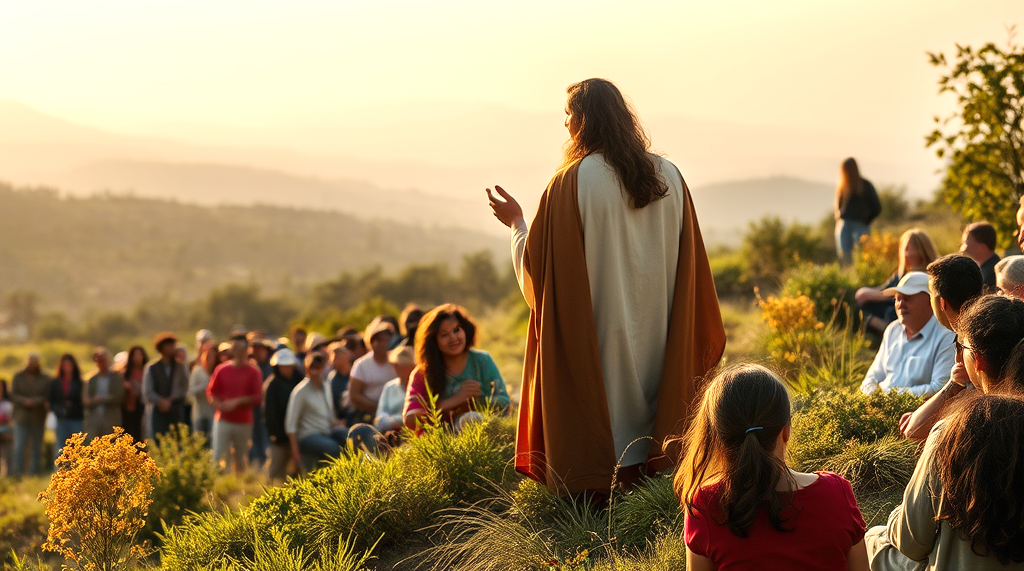
The Gospel this evening is the presentation of the Beatitudes by our Lord. It is essentially a guide toward holiness or sainthood. As Catholics we ordinarily ponder the men and women canonized by the Church. Here at Holy Family, we even celebrate a monthly saint, requesting intercession and seeking our own emulation. But in truth, there are far more saints than those few on any list that we might keep. The saints of God are listed in heaven. While we struggle with our sinfulness, how many living saints have we encountered over the years? I think of all the good Catholics that helped their fellow man and were faithful to the sacraments. There are likely some in this Church as I speak who are very close to God. Sainthood is not an unreachable goal. By God’s grace, we can all know sanctification and holiness of life. It is the one goal we have in life. Nothing else matters other than becoming holy and eventually finding ourselves with the Lord in his heavenly kingdom. Years ago, I had the opportunity to visit the mount upon which Jesus preached the Beatitudes. There was a small but beautiful chapel there. Just as our Lord instructed his apostles, today there is a seminary on that hill where men are prepared for the priesthood. What do these benedictions teach us?
“Blessed are the poor in spirit, for theirs is the kingdom of heaven.”
The word for poor here is (’anāwîm), taken from the Old Testament it refers to the destitute who have nothing but God. It came to infer the qualities of lowliness or a profound humility. The addition of the words “in spirit” are added by Matthew to clarify that being materially poor would not necessarily save anyone. We know that in our own society, poverty is often a catalyst for jealousy and crime. Hearts can be poisoned by resentment toward the rich or because of struggle. Disappointment can twist or corrupt the soul. Poor people often suffer from the rich man’s dreams. By contrast, poverty in spirit might be voluntary, as with religious who embrace poverty for the kingdom. Christian poverty also implies acceptance in whatever comes. We see ourselves as unworthy and all that we have as a gift. It also implies generosity. We would not want to be well off at the cost of a neighbor who is homeless, hungry, naked and afraid. Poverty in spirit means that we might have things, but we would not allow the things to have us. True richness is not found in material things but in standing in right relationship with God. We are all the poor man or woman, dependent upon God.
“Blessed are they who mourn, for they will be comforted.”
Many question God because of the problem of pain or suffering. This blessing would turn that around. We should not get angry or run away from God because of loss or a hard life. Rather, we should trust that God will make all things right. This implies not only that God will give comfort, but that as his stewards we should try to bring a healing presence to the pain of others. The ultimate response of God to pain is solidarity with Christ in his passion and death. God is present with us, and we must be present to one another. We are together in this. We are not alone or abandoned.
“Blessed are the meek, for they will inherit the land.”
Just as in the story of salvation, the Jewish promise of Jerusalem and a land of their own was only made possible by the power of God. Human strength of arms would always fall short. However, if we keep the covenant, God will keep us. As Christians, this land refers to the kingdom of Christ, realized in the Church and in the promise of heaven. We must acknowledge our profound dependence upon God.
“Blessed are they who hunger and thirst for righteousness, for they will be satisfied.”
This benediction gives root to the Church’s teachings on social justice. We yearn for a world where the right prevails and evil is thwarted. Unfortunately, then and now, there is so much injustice and prejudice. Good people suffer and the bad seem to flourish. Ordinarily we understand righteousness as moral conduct that conforms to divine law or God’s will. Here it means something more. Righteousness is literally the saving power of God. We cannot make ourselves good, only God can do that. Only the Lord can save us. We cannot save ourselves. We are sinners who need a Savior. We must submit to God’s plan of salvation. Jesus is faithful to this mission from the Father, unto the Cross.
“Blessed are the merciful, for they will be shown mercy.”
It is as in the Lord’s Prayer, “Forgive us our trespasses as we forgive those who trespass against us.” It is only by forgiving others that we open ourselves to divine mercy.
“Blessed are the clean of heart, for they will see God.”
Just as one had to be ritually pure to worship God in the temple, our Lord takes it one further and teaches that we must be clean of heart or pure to see God in heaven. We must become perfect as our heavenly Father is perfect. This appreciation is behind our understanding of penance, absolution and prayer for the poor souls.
“Blessed are the peacemakers, for they will be called children of God.”
Ultimately this peace is about more than avoiding hostility or violence. It means a radical imitation of Christ. Our Lord would have us joined or united with him in how we confront earthly power and injustice. The peace of Christ demands trust and sublime courage in facing the mystery of evil. This unity is in terms of adoption into the family of God.
“Blessed are they who are persecuted for the sake of righteousness, for theirs is the kingdom of heaven.”
We will know that we are on God’s side because the world will target us as signs of contradiction. If there is no tension with the world and no opposition, it means one of two things: either we have converted the world (which is unlikely) or that the world has compromised us.
“Blessed are you when they insult you and persecute you and utter every kind of evil against you falsely because of me. Rejoice and be glad, for your reward will be great in heaven.”
I suspect this last beatitude is where our Lord lost some of his disciples. Who wants to be insulted or persecuted or even murdered. We naturally turn away from such prospects. And yet, as a parable people, we are to find joy in such adversity. It is not because we love suffering or pain, that would be sadistic. No, the overriding reality in this scenario is that we walk with the Lord. Whatever the world takes away. God can give back many times over. The natural man must give way to the supernatural man. There is a crown in heaven waiting for the saints who have followed the Lamb.
Filed under: Uncategorized | Tagged: beatitudes, Bible, Faith, God, Homily, Jesus, Preaching |




















 Blogger Priest
Leave a comment