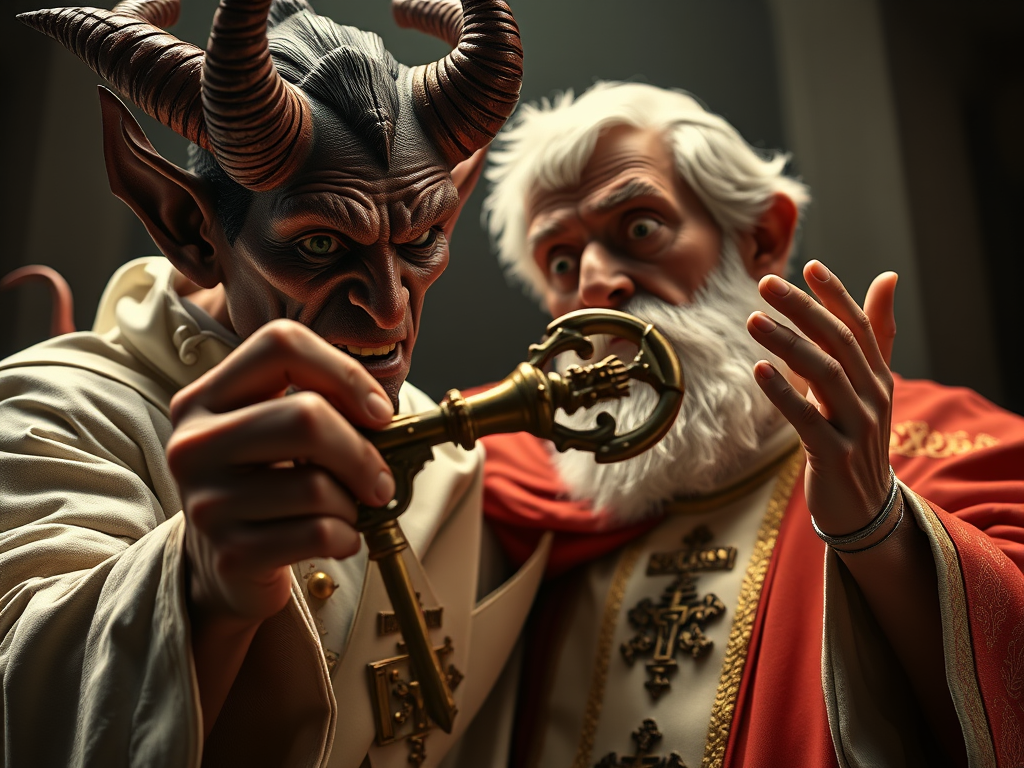
The blog header depicts an important and yet mis-understood New Testament scene, Jesus flogging the money-changers out of the temple. I selected it because the faith that gives us consolation can also make us very uncomfortable. Both Divine Mercy and Divine Justice meet in Jesus. Priests are ministers of reconciliation, but never at the cost of truth. In or out of season, we must be courageous in preaching and living out the Gospel of Life. The title of my blog is a play on words, not Flogger Priest but Blogger Priest.
My old classmate Dr. Larry Chapp summarizes in the NATIONAL CATHOLIC REGISTER (Feb. 24, 2026) the crisis with the SSPX in an article entitled, “The SSPX Rupture with Tradition.”
He spells out the situation. Father Davide Pagliarani has rejected dialogue as hopeless and has listed five reasons as to why. Dr. Chapp argues that these five reasons are “theologically deficient and ultimately expressive of a deep ecclesiological rupture with tradition.” Indeed, even the basic ground rules for any discussion among Catholics are rebuffed. Such a stance repositions this from internal Catholic discussion to a debate with defectors who reject ecumenical niceties. Dr. Chapp is correct, this sets up the SSPX as a parallel magisterium. He does not mince words, they might say they accept the Pope but are acting in a manner that subscribes to “sedevacantism.” Not trusting Rome, they treat the Pope as if he were not the Pope, stripped of any authority to compel their obedience.
I reflected at some length upon how Dr. Chapp shredded Fr. Pagliarani’s five reasons for disobedience. (1) Despite the world’s bishops, priests and laity overwhelmingly accepting Vatican II, they interpret the council as “rupture” and reject it. (2) Since the modern magisterium’s stance cannot be reconciled with the SSPX, they play the part of Martin Luther in repudiating lawful authority. (3) They question the Vatican’s motives and seek to coerce the Holy See with the threatened episcopal consecrations. (4) The SSPX inadvertently becomes a victim of modernism in setting itself up as the sole arbiter of what constitutes true and false doctrine and tradition. (5) They continue to malign Cardinal Müller’s essential 2017 ground rules: acceptance of the Holy Father’s authority and preserving a respectful presumption in favor of an ecumenical council of the Church.
Masquerading as the true Church instituted by Christ, the SSPX was founded out of rebellion, not fidelity, by the late Archbishop Marcel Lefebvre. They have ever since feigned orthodoxy and tradition regarding many tenets, all the while embracing a heretical ecclesiology that is akin to the modernism of Alfred Loisy. Dr. Chapp concludes: “So it looks as if the SSPX will once again defy Rome and incur an excommunication. . . And let us attend carefully to the recent remarks from Cardinal Müller, who contends that a true reform of the Church can only take place from within the Church.”
The CDF in 2017 gave three conditions for the SSPX to receive canonical status: (1) Adhere to Pope John Paul II’s 1988 Profession of Faith, (2) Accept the teachings of Vatican II and the post-conciliar Church, and (3) Recognize the reformed Mass and other sacraments and rituals as licit and valid. Speaking out of both sides of their mouths, they technically acknowledge the validity of sacraments in the postconciliar Church; however, the SSPX still rejects the Novus Ordo as intrinsically evil, discourages Mass participation by calling it dangerous and stamps Vatican II as heretical. Does this not deny the indefectibility of the Church? This alone is at variance with ecclesial doctrine. Will not the consecrations of new bishops against papal directives impose a new excommunication upon them as specified in canon 1397?
SSPX clergy have stated, even on their official website, that the Novus Ordo Mass is evil and dangerous to attend. This slur demands proper mental consideration. First, this assertion undermines the indefectibility of the Church under the Holy Father. It insinuates that Jesus is a liar or even impotent in keeping his words to Peter that he would be with him and sustain the Church until he comes again. It maligns Christ and undermines papal authority. Second, since the Eucharist is the very font and life-spring for the Church, the negative charge implies that the post-Vatican II Church is dried up and lifeless. There can be no fruit. But, if one rejects the true Church, then one rejects Jesus Christ. The SSPX leaders are risking their very souls. This is a grievous defamation of Christ’s Church. Third, the Mass, old and new, is the re-presentation of Calvary and makes present the body and blood of Christ as our spiritual food and drink. Any rendering of the divine mystery as evil is blasphemy against the Holy Spirit, a dire mortal sin. Lacking repentance and contrition, one cannot escape the unforgivable sin. One cannot be saved by a divine power that one rejects. The SSPX cannot take to itself the authority and power that belongs to the Church shepherded by the Pope, Christ’s visible vicar on earth. And yet, that is precisely what it is attempting to do.
I am afraid, there you have it. The SSPX response is more telling than they would readily admit, given that their subterfuge hides nothing. While the last pontificate sowed ambiguities that complicated matters, the SSPX would have had issues with any of the popes going back to John XXIII and Paul VI. Ironically, the response accuses the Holy See of a disingenuous attitude toward efforts at regularizing Marcel Lefebvre’s syndicate of discontents. As one poor priest who believes in extending freedom regarding the celebration of approved liturgies, I had hoped and prayed for full juridical reunion, not only to help preserve the Mass of the Ages, but to lend greater nuance and consistency to the Church’s tenets of faith. As it is, Pope Benedict XVI’s efforts at reunion have been thwarted, not only by the questionable antics and obscurity of the last pontificate, but by the Lefebvrites themselves in preferring a compass heading away from Rome and swinging ever closer to the sedevacantist sects. Bishop Athanasius Schneider wrote a catechism that essentially defended the Society in its repudiation of certain Vatican II tenets and accused the post-conciliar popes of false teaching, which he coined as “ambiguity.” If given a choice to mind his own business and return to his home archdiocese or to join the SSPX, what would he do? The danger exists that those sympathetic to the SSPX may join the increasingly erratic Archbishop Carlo Maria Viganò in excommunication and schism after the illicit consecrations. While Bishop Schneider is transparent in his public dialogue about doctrinal concerns, the SSPX has likely duped him that such is their core reservation. I suspect it is more about jurisdiction and power. It is unlikely they will hand over what they have to the Vatican in exchange for canonical status as a personal prelature or special ordinariate.
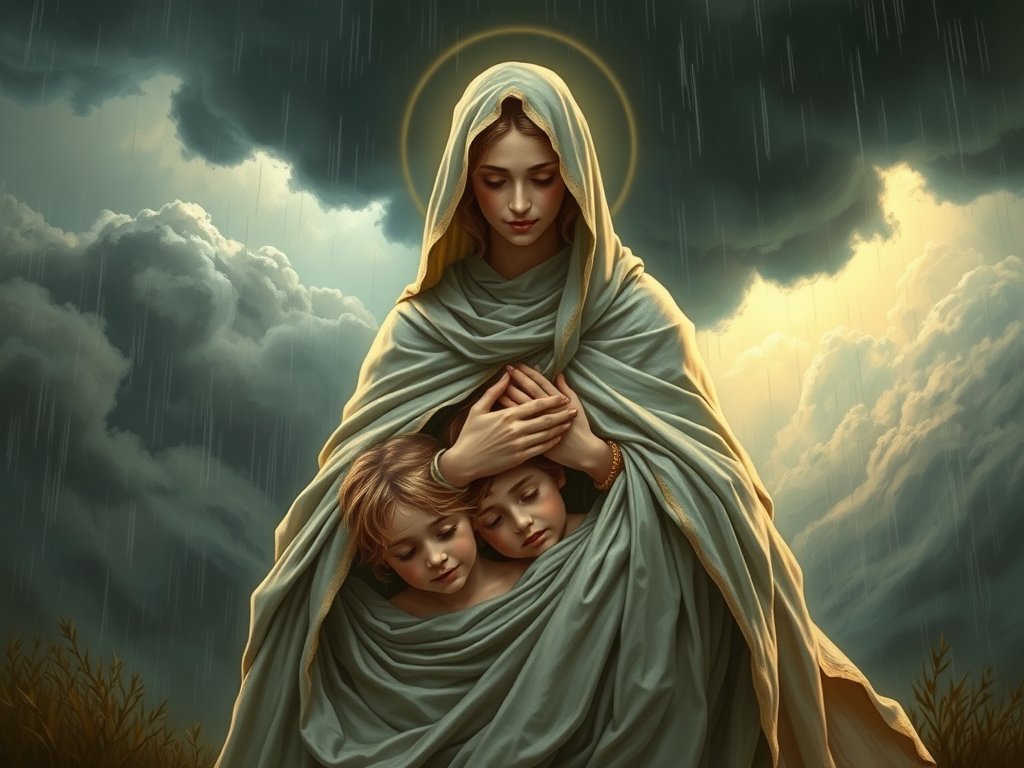
I knew a Mariologist back in 1978 who argued with us on retreat, saying that the notion of Mary holding back the wrath of Christ was heretical. However, I suspect that he needed a more nuanced appreciation of matters. The wrath of God is not divine anger but rather divine justice. Mary intercedes for her spiritual children, that they will NOT be punished as they deserve but rather saved by God’s mercy. Mary, as a special intercessor and conduit for sanctifying grace, helps to bring the forgiveness of Calvary to those for whom Jesus died. I would argue that the very substance or fabric of Mary’s protective mantle of mercy is her Son, the Divine Mercy. There is no clash between wills. The immaculate heart and the sacred heart both beat as one in love for us.
Father Maurizio Gronchi in his Vatican document, Mater Populi Fidelis, is right about doctrine, but I suspect he is too fearful about superstition in Mary’s regard. Indeed, the challenge today is not any organized heresy about the Blessed Mother, but rather an ignorance (both in and out of the Church) about what we believe regarding Christ. The recent promulgation against the Marian titles “co-redemptrix” and “mediatrix” was unnecessary. The Vatican has even walked back the document, admitting that the prohibition in using the terms was not absolute.
Father Gronchi states that Mary is not a goddess. Yes, she is a blessed creature. Jesus is our one Mediator and Redeemer. Again, the answer is yes— this is at the core of the Christian faith. The problem with the titles, which is a hurdle mostly for our Protestant friends, is that they are misunderstood or poorly defined. Mediatrix has to do with Mary’s role as the one hailed by an angel as “full of grace.” The graces of God pass from the head to the body of the mystical body through Mary. Co-redemptrix refers to Mary’s cooperative role with her Son in his saving work. As the Immaculate Conception, she says YES to God for all humanity at her annunciation. Indeed, this YES is threaded through her entire life, climaxing at the Cross on Calvary where she surrenders her Son to our heavenly Father. The final proof of her cooperation with Christ is when Jesus commends her to our emissary John, “Behold your mother!”
Most Mariologists I have read feel that the prohibition of the two titles is itself precarious given that the titles are found in tradition and in the writings of popes, including recent ones.
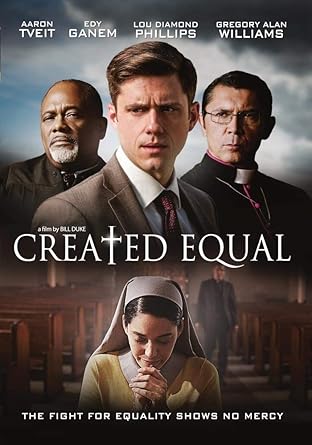
The film seems oblivious to the fact that the conflict is one-and-the-same as that of the Roman empire against the early Church. It is the question as to whether we follow Caesar or the Lord. The courts and the world of politics have no jurisdiction over the faith of the Church. That is where the story should have ended. However, the premise of the film is that the Catholic Church might be compelled to open the priesthood to women by intimidation of the civil legal system. This is not the case. Whatever the state might decide, the Church would refuse to comply, even if it meant persecution and martyrdom. One is reminded of the Church of England that sought to manipulate the Church when a king demanded a divorce. But the Church was willing to allow an entire country to evade its grasp to preserve the meaning of marital fidelity. Like holy orders, marriage is a sacrament of the Church. The Church has the right to administer her sacraments as she feels fit. The jury in the film judges a male-only priesthood as discrimination; but this is not true because priesthood is not a job or an entitlement. Yes, as a vocation it is a calling, but just like the nature of our saving faith, it is both personal and corporate. Any calling from the candidate must be affirmed by the Church, notably the bishop and those placed in charge of formation. Priesthood is a gratuity and no one can demand that gift.
The film would intimate that our religious liberty comes entirely from the state, but our founding documents merely acknowledge that such freedom comes from God, himself. No judge and jury, particularly made up of non-Catholics and/or those unsympathetic to Catholicism have any say about the Church. Indeed, even the laity that constitute the “sensus fidelium” must live and share the tenets of our holy religion. Pope John Paul II definitively answered the question about women’s ordination, explaining that the Church has no power to change the practice of ordaining only males. Short of any new miraculous revelation, the Church is bound to keep the tradition. Responding to the challenge of stereotypes, the pagan world had many priestesses and yet the new dispensation of Christ that fulfilled the promises of Judaism maintained male leadership among the apostles. Our Lord was shown to break convention as when he spoke to the Samaritan woman at the well. She would become a prophetess to her people, but not a priest. The Blessed Virgin Mary was the holiest woman to ever walk the earth and yet while she takes a priestly stance at the foot of the Cross, she is entrusted to the apostle John who was a sharer in Christ’s ministerial priesthood. While all of us participate in a baptismal priesthood (given that sacrifice defines our faith and charity), the ordained priesthood is reserved to men, and not all men, but a select few. If the state were to assume authority over our ministers, then it could just as likely demand married and divorced men and women or even overt homosexuals. But our sacraments are not subject to the fads of changing times or the capricious desires of men and women. Indeed, even if we should want to ordain women, we cannot do so.
The reasoning of the Church is clear and sound. While the Church can mitigate disciplines like celibacy in specific cases, the matter of gender is no accidental that can be brushed aside. The theology of the body focuses upon gender as being constitutive of our deepest identity and personhood. Just as only a man can be a father and only a woman can be a mother, only a man can be a priest. If we should attempt to ordain females and it should prove against the will of Christ, then we would forfeit both the sacrament of holy orders and the Mass. There would be no more Eucharistic real presence of the risen Christ. There would be no more unbloody re-presentation of the sacrifice of Calvary. The oblation and banquet that renews our covenant with Christ would disappear with the loss of apostolic succession.
A male-only priesthood is no injustice and not chauvinism. The house of the Church is that of a family with a given structure. Would you allow strangers to come into your house and tell you how to run your home? Children obey parents, not the other way around. The objective of this film would introduce dysfunction into the home of faith, the Church. Where there was a faint promise of teaching on this subject, the film gives a simplistic and one-sided view. Even the churchmen are so terribly caricatured that they are hard for knowing believers to watch. The nun in the movie might believe but she is also a rebellious daughter. Her journey will likely take her into Anglicanism where they have priestesses that go through the motions but a faith that compromises to secular modernity at every turn.
The Anglican communion has proven itself more a daughter to secular modernity than a son of ecclesial tradition. It goes through the motions but behind the show it is hollow of substance. Only the bare bone of the Gospel remains. When Pope Paul VI reminded them of the perennial and constant reservation of holy orders to men, a practice that both Catholicism and the schismatic Eastern churches maintain, he was immediately rebuffed. The demands of feminists and gays took precedence over the reservation of Jesus and the constant practice of the Church. The late Pope John Paul II would add that any effort to ordain women would threaten the validity of holy orders. Of course, Anglican orders had long since already been compromised when their prayer book denied the sacrificial nature of the Eucharist. The definition of a priest is intimately tied up with our appreciation of the Mass. When the text was corrected, apostolic succession among the Anglicans had already been lost.
1534 King Henry VIII breaks with Rome.
1552 and 1662 Thomas Cranmer removes references to the Eucharist as a propitiatory sacrifice in the BOOKS OF COMMON PRAYER.
1896 Pope Leo XIII in APOSTOLICAE CURAE declares Anglican orders “absolutely null and utterly void.”
1994 Saint John Paul II in ORDINATIO SACERDOTALIS solemnly professes priestly ordination as reserved to men alone.
Even if there should be a few valid clergy due to Catholic defections and the presence of Old Catholics and Orthodox bishops at ordinations, the intrusion of women would be the proverbial nail in the coffin to any such sacramental lineage. Pope John Paul II professed infallibly that women cannot be ordained. If they cannot be priests, then they most certainly cannot be bishops. Thus, they cannot ordain men to holy orders, either to the presbyterate or to the diaconate.
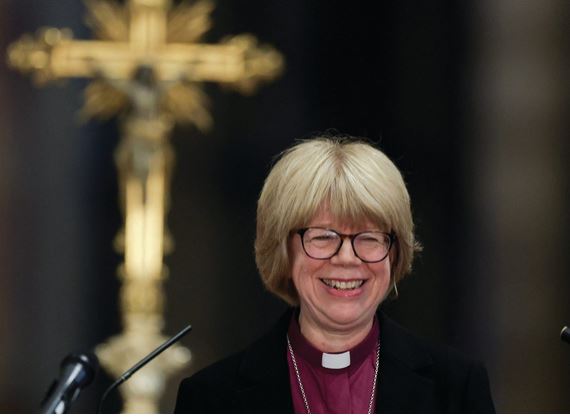
Politeness will only summon further confusion. We must be blunt with the truth. Sarah Mullally is not really the bishop of either London or Canterbury. She may be the first woman to hold the title of “Archbishop of Canterbury” in 1,400 years, but she is only the latest of a long line of pretenders to the throne. Ordained in 2002 as a part time cleric, her background is in nursing. She later got a degree in pastoral theology. She is a self-professed pro-choice feminist and favors the blessing and full inclusion of LGBT+ people. Of course, she is not alone as there are increasing numbers of wannabee women priests and bishops in the Anglican communion. Indeed, the new archbishop of Wales is Bishop Cherry Vann who is openly living in a lesbian same-sex civil union.
A female archbishop of Canterbury is problematic because of the ecumenical aspirations of the Church. Many had long sought and prayed for reunion of the churches. Now, except for those who have joined the ordinariate, it looks as if that will never happen. This also complicates matters of gathering because these women who dress up like priests and bishops give scandal to the Catholic faithful. It also fuels wrongful aspirations among women with radical agendas that include women’s ordination. Of course, with neither a valid priesthood nor Eucharist, the Anglican communion forfeits the canonical and realistic right to term itself a “church.” Error leads to error and now this faith confession tolerates divorce, adultery, fornication, abortion, and homosexuality— even among its ministers. It is sad but true that with every step forward in ecumenical dialogue, the Anglicans have taken two steps backward. Short of a revolution among the Anglican and Episcopal faith communities, it must be proclaimed that their “church” is essentially dead. Any effort to proclaim the Good News or to expand holiness is short-circuited by the advocacy of mortal sin.
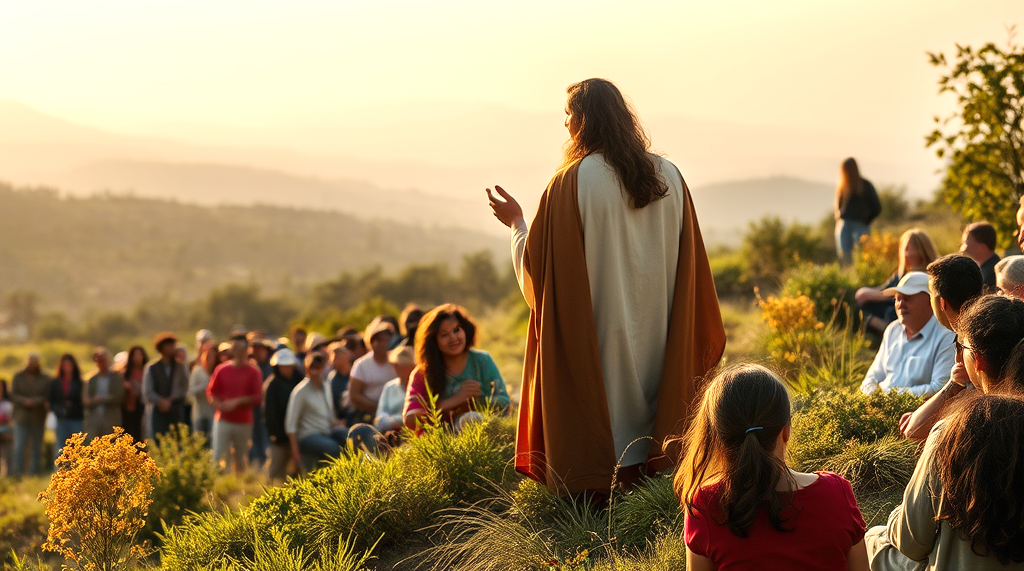
The Gospel this evening is the presentation of the Beatitudes by our Lord. It is essentially a guide toward holiness or sainthood. As Catholics we ordinarily ponder the men and women canonized by the Church. Here at Holy Family, we even celebrate a monthly saint, requesting intercession and seeking our own emulation. But in truth, there are far more saints than those few on any list that we might keep. The saints of God are listed in heaven. While we struggle with our sinfulness, how many living saints have we encountered over the years? I think of all the good Catholics that helped their fellow man and were faithful to the sacraments. There are likely some in this Church as I speak who are very close to God. Sainthood is not an unreachable goal. By God’s grace, we can all know sanctification and holiness of life. It is the one goal we have in life. Nothing else matters other than becoming holy and eventually finding ourselves with the Lord in his heavenly kingdom. Years ago, I had the opportunity to visit the mount upon which Jesus preached the Beatitudes. There was a small but beautiful chapel there. Just as our Lord instructed his apostles, today there is a seminary on that hill where men are prepared for the priesthood. What do these benedictions teach us?
“Blessed are the poor in spirit, for theirs is the kingdom of heaven.”
The word for poor here is (’anāwîm), taken from the Old Testament it refers to the destitute who have nothing but God. It came to infer the qualities of lowliness or a profound humility. The addition of the words “in spirit” are added by Matthew to clarify that being materially poor would not necessarily save anyone. We know that in our own society, poverty is often a catalyst for jealousy and crime. Hearts can be poisoned by resentment toward the rich or because of struggle. Disappointment can twist or corrupt the soul. Poor people often suffer from the rich man’s dreams. By contrast, poverty in spirit might be voluntary, as with religious who embrace poverty for the kingdom. Christian poverty also implies acceptance in whatever comes. We see ourselves as unworthy and all that we have as a gift. It also implies generosity. We would not want to be well off at the cost of a neighbor who is homeless, hungry, naked and afraid. Poverty in spirit means that we might have things, but we would not allow the things to have us. True richness is not found in material things but in standing in right relationship with God. We are all the poor man or woman, dependent upon God.
“Blessed are they who mourn, for they will be comforted.”
Many question God because of the problem of pain or suffering. This blessing would turn that around. We should not get angry or run away from God because of loss or a hard life. Rather, we should trust that God will make all things right. This implies not only that God will give comfort, but that as his stewards we should try to bring a healing presence to the pain of others. The ultimate response of God to pain is solidarity with Christ in his passion and death. God is present with us, and we must be present to one another. We are together in this. We are not alone or abandoned.
“Blessed are the meek, for they will inherit the land.”
Just as in the story of salvation, the Jewish promise of Jerusalem and a land of their own was only made possible by the power of God. Human strength of arms would always fall short. However, if we keep the covenant, God will keep us. As Christians, this land refers to the kingdom of Christ, realized in the Church and in the promise of heaven. We must acknowledge our profound dependence upon God.
“Blessed are they who hunger and thirst for righteousness, for they will be satisfied.”
This benediction gives root to the Church’s teachings on social justice. We yearn for a world where the right prevails and evil is thwarted. Unfortunately, then and now, there is so much injustice and prejudice. Good people suffer and the bad seem to flourish. Ordinarily we understand righteousness as moral conduct that conforms to divine law or God’s will. Here it means something more. Righteousness is literally the saving power of God. We cannot make ourselves good, only God can do that. Only the Lord can save us. We cannot save ourselves. We are sinners who need a Savior. We must submit to God’s plan of salvation. Jesus is faithful to this mission from the Father, unto the Cross.
“Blessed are the merciful, for they will be shown mercy.”
It is as in the Lord’s Prayer, “Forgive us our trespasses as we forgive those who trespass against us.” It is only by forgiving others that we open ourselves to divine mercy.
“Blessed are the clean of heart, for they will see God.”
Just as one had to be ritually pure to worship God in the temple, our Lord takes it one further and teaches that we must be clean of heart or pure to see God in heaven. We must become perfect as our heavenly Father is perfect. This appreciation is behind our understanding of penance, absolution and prayer for the poor souls.
“Blessed are the peacemakers, for they will be called children of God.”
Ultimately this peace is about more than avoiding hostility or violence. It means a radical imitation of Christ. Our Lord would have us joined or united with him in how we confront earthly power and injustice. The peace of Christ demands trust and sublime courage in facing the mystery of evil. This unity is in terms of adoption into the family of God.
“Blessed are they who are persecuted for the sake of righteousness, for theirs is the kingdom of heaven.”
We will know that we are on God’s side because the world will target us as signs of contradiction. If there is no tension with the world and no opposition, it means one of two things: either we have converted the world (which is unlikely) or that the world has compromised us.
“Blessed are you when they insult you and persecute you and utter every kind of evil against you falsely because of me. Rejoice and be glad, for your reward will be great in heaven.”
I suspect this last beatitude is where our Lord lost some of his disciples. Who wants to be insulted or persecuted or even murdered. We naturally turn away from such prospects. And yet, as a parable people, we are to find joy in such adversity. It is not because we love suffering or pain, that would be sadistic. No, the overriding reality in this scenario is that we walk with the Lord. Whatever the world takes away. God can give back many times over. The natural man must give way to the supernatural man. There is a crown in heaven waiting for the saints who have followed the Lamb.
This is the home of the AWALT PAPERS, the posting of various pieces of wisdom salvaged from the writings, teachings and sermons of the late Msgr. William J. Awalt.
























 Blogger Priest