



















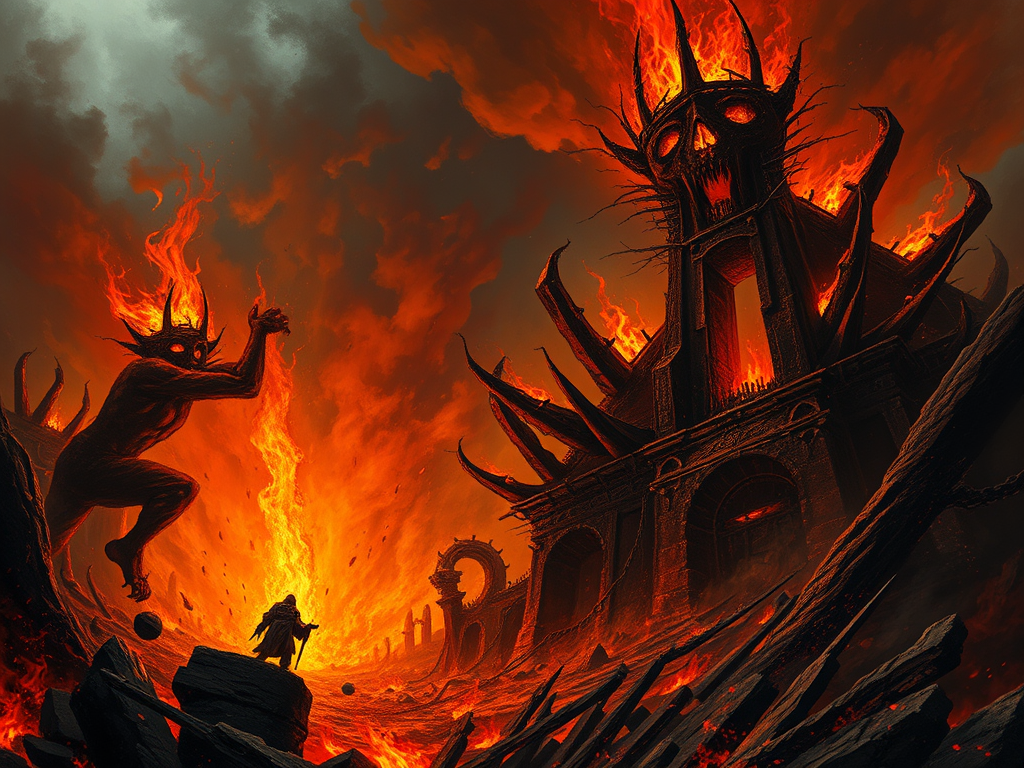
The traditional view of hell in Scripture and in Church teaching reluctantly admits that most people will suffer perdition. There is a universal call to salvation but that does not mean that everyone will be saved. Heaven is the ultimate sign of God’s love which we must share and return. Purgatory is an expression of God’s mercy for those who love the Lord but not as they should. Hell is proof of God’s justice where goodness is rewarded and evil is punished. There is a particular judgment at the end of life and a final judgment at the consummation of all things. The damned in hell are alive and conscious. They are not asleep and they have not passed out of existence. The soul is immortal. It has no parts to break down. The suffering of hell is due to their awareness. Primarily, they are alienated from the God for whom they were made. Secondarily, hell is a place where there is punishment or pain to the senses. This torment is defined as fire, both literally and spiritually. It is a fire that torments but is incapable of consuming us. Hell is forever. There is no respite or escape. The literary reflection of Dante would suggest that there are circles or variations of hell based upon one’s spiritual state at death. While God’s providence cannot be thwarted and he saves whom he wills, this is understood as an election to glory. Catholicism does not teach that any are stamped as damned from the very beginning of their life-story. Rather, we get what we want. It comes down to our cooperation or lack of it with divine grace. Our emphasis is upon human freedom or choice. Not to be confused with hell is purgatory, a temporary abode (where those in venial sin or suffering from temporal punishment due to sin) can be purified or perfected by the fire of God’s love prior to entry into heaven.
Filed under: Uncategorized | Tagged: Bible, christianity, damned, God, Heaven, Hell, Jesus, Saints | Leave a comment »




















 Blogger Priest