






















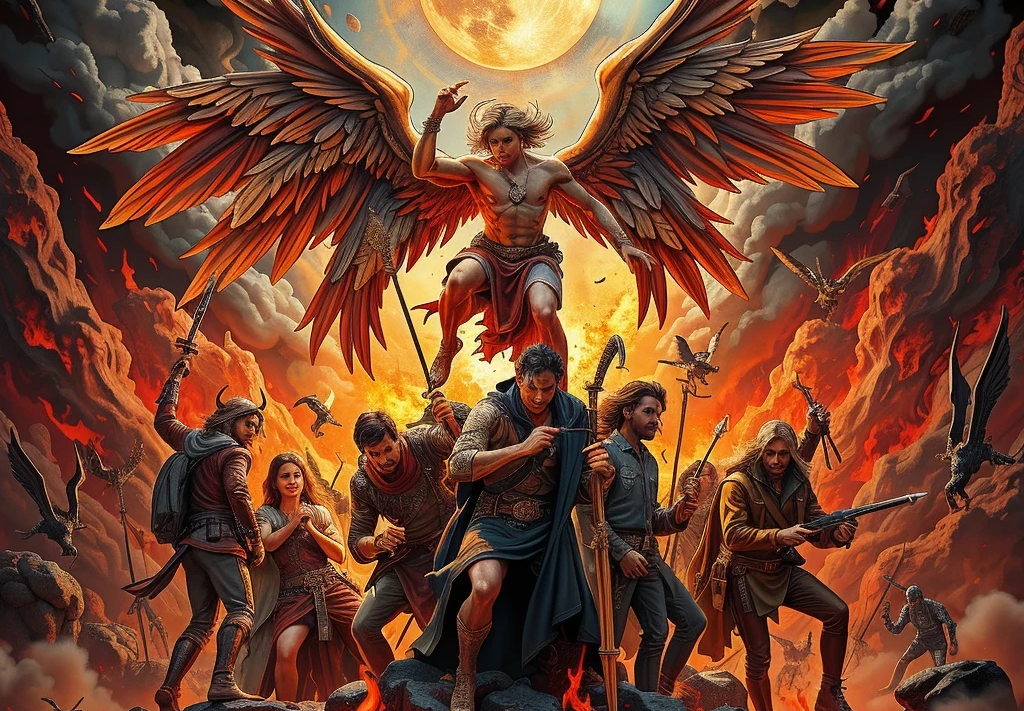
I suspect even the damned seek to run away from the truth of perdition, seeking to make some semblance of heaven in hell. What powers remain to them? They still have intellect and will. C. S. Lewis may have been on to something in his book THE GREAT DIVORCE. The damned fashioned their worlds through imagination and separated themselves ever more and more from one another. The reality would be most unpleasant. Might they seek escape through the phantasms of the mind just as mortal men turn to drugs or the bottle? Such seems to be a symptom of self-preoccupation and self-destruction.
What are the characteristics of the damned? Let us look first at the saved. At the very beginning of the catechism, we are asked about our ultimate meaning. Why did God make us? The answer is short and decisive— to know him, to love him, to serve him, and to give him glory. The damned do not want to know God and either hate or are indifferent to him. This failure to love will also show itself with an impoverishment regarding charity to our neighbor. The devil’s sin becomes that of fallen humanity. Milton’s Satan swears, “I will not serve!” We read in the epic poem, PARADISE LOST: “The mind is its own place, and in itself can make a Heav’n of Hell, a Hell of Heav’n. . . Better to reign in Hell, then serve in Heav’n.” The saints are about God’s business in the world. They worship him at Mass and take their adoration and praise with them into heaven. By contrast, a fallen humanity might go through the motions, but their love is purely for show. They might curse and throw God’s name around, but they rarely if ever pray. They miss more Masses than they attend. As I stated before, if they cannot worship God once a week for an hour, why should they want to enter heaven where the saints and angels give endless glory to God?
Many people wrongly assume that the souls of saints become angelic after death. However, this is not the teaching of the Church. When a human being dies, his body becomes a corpse, and his soul becomes a ghost. Human ghosts are regarded as helpless. They have no angelic powers. It is for this reason that after the final judgment, the righteous dead will be restored body and spirit. Like the glorified Christ, they will be reconstituted albeit like Jesus able to appear in locked rooms and no longer subject to sickness, suffering or death. By contrast, the angels were never born and are not human. They have no true bodies or physical extension. While we are born in time, the number of angels is fixed. Just like men, some angels rebelled against God. Fallen angels followed Satan and are called devils or demons. Fallen human beings are called the damned. They are not the same and fallen humanity is largely subject to the will of the demonic. While it is generally accepted that demons can sometimes evade or escape or extend hell; many if not most authorities view the fallen dead of humanity as imprisoned in hell without any possible respite. However, the Church has not given a certain answer to this query.
Filed under: Uncategorized | Tagged: Bible, christianity, Faith, God, Jesus | Leave a comment »




















 Blogger Priest