























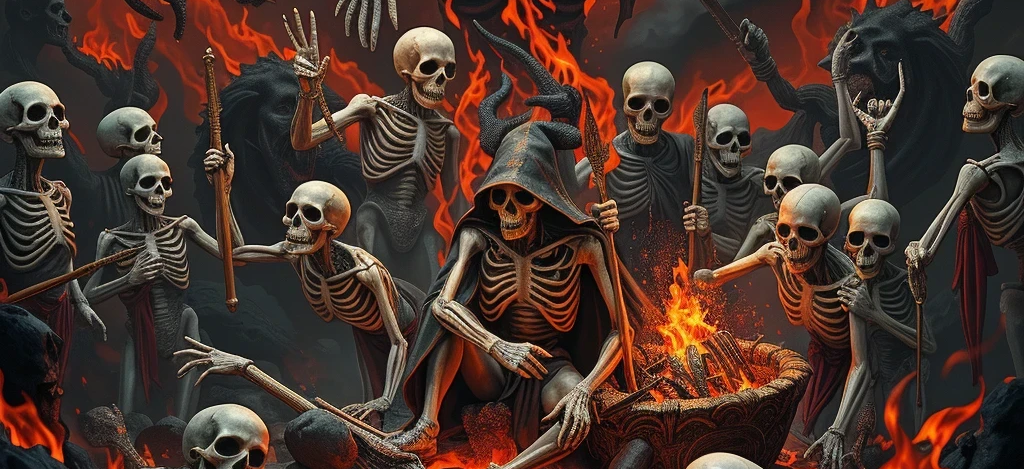
What exactly are the demons and the damned doing in hell, anyway? It is my recollection that certain demons forced from hiding in exorcisms give as their names the various capital sins. While it is speculative, might each of these devils be the chief tormentor for the select damned under the jurisdiction of its foundational sin: pride, avarice (greed), lust, envy, gluttony, wrath (anger), and sloth? It may be that in hell people become their sins. Comparable to a leprosy of flesh, their afflicted souls suffer corruption. Susceptibility to torment also suggests that the damned will be given their bodies, flesh made indestructible and yet not glorified. Just as in heaven where there is mastery over concupiscence and a spiritualization of the flesh, might the damned of hell know the antithetical where bodies are further enslaved by the passions? If heaven allows for divinization by grace, then hell likely ushers a descent backwards toward the bestial man or woman.
Hell is a real place where the damned forfeit the vision of God. The Scriptures testify to a terrifying fire and pain. It burns but does not consume. There is a material element to this fire, but it somehow impacts upon the spiritual fabric of the soul. I suspect that the tormenting fire is God’s last gift to those he wanted for his children. How is this? Does God take a sadistic satisfaction in watching the damned squirm? Would this not make God into a monster? If this were the case, the Almighty would be unworthy of our attention in worship. No, I am certain that there are other reasons for the fire. First, it signifies in justice a temporal punishment that can no longer be appeased. This must be contrasted to the souls in purgatory who will know purification and attain heaven. Such is not possible for the damned. Second, it constitutes in mercy a distraction from the loss of God for which we were made. The damned must suffer an existential frustration in that they will never be whole or fulfilled in meaning or purpose. Like a puzzle, there will always be a piece missing— and that piece is God.
We can take it for granted that hell is not a pleasant place, but the damned will likely have their pursuits. Besides wading in the corruption or waste of iniquity, I would guess that some would pursue something of the intellectual life. This is likely the case of fallen angels and I would surmise by extension that of men. The intellect and will of men and angels would remain intact. While it is doomed to fail, they may even try to make a heaven of hell. What more can they do? They wanted no part of real heaven. While associations for rational discourse are likely in hell, there can be no abiding friendships because of their failure to love. The devil’s sycophants offer an empty and misdirected worship. As on earth, the relationships of staunch sinners would be manipulative and poisoned by their selfishness. The great would take advantage of the small. If heaven celebrates redemption and freedom in Christ, hell is the ultimate prison where there is bondage to Satan.
Filed under: Uncategorized | Tagged: Bible, christianity, God, Hell, Jesus | Leave a comment »




















 Blogger Priest