The blog header depicts an important and yet mis-understood New Testament scene, Jesus flogging the money-changers out of the temple. I selected it because the faith that gives us consolation can also make us very uncomfortable. Both Divine Mercy and Divine Justice meet in Jesus. Priests are ministers of reconciliation, but never at the cost of truth. In or out of season, we must be courageous in preaching and living out the Gospel of Life. The title of my blog is a play on words, not Flogger Priest but Blogger Priest.
Everyone stands at the beginning of the Liturgy of the Eucharist. The celebrant invites the people to pray with him. There is a dialogue. The priest says, “The Lord be with you.” The congregation responds, “And with your spirit.” There is a profound unity and mutuality. The priest greets the people at various stages in the liturgy. He does so at the start of Mass. Again, he greets us with the Word prior to the Gospel. Now he greets the people at the beginning of the Eucharistic action. He will do so again at the end of Mass with the dismissal or sending forth. Next the priest says, “Lift up your hearts” and the people respond, “We lift them up to the Lord.”
The exhortation “Lift up your hearts!” constitutes the movement into the third “offering” or part of the Mass along with the penitential rite and the preparation of the gifts. We must love as the Lord loves. We need to avoid divided hearts, enmity and grudges. We must be the people we claim to be. We need to acknowledge Jesus as our great treasure. We are mindful of the warning in the Gospel of John that if we say we love God whom we cannot see while we hate our brother whom we can see, then, we are liars. The Eucharist is Jesus. The Eucharistic prayer is the center of the Mass. We put aside all the worries of the day. Everything pales in comparison to this offering or sacrifice. As we remember the Sacred Heart of Jesus, we align our hearts with the Immaculate Heart of Mary and seek to have hearts that beat in harmony with the Lord.
The priest says, “Let us give thanks to the Lord our God” and the people answer, “It is right and just.” Giving thanks is what the liturgy is about. We are forever mindful of our reliance upon the Lord. We respond to the generosity and mercy of God with unbounded and enthusiastic gratitude. If people really want to be at Mass and are disposed for Holy Communion, then this is where such faith is demonstrated or professed.
The priest-celebrant will pray the Preface alone. It is one of the longest prayers in the Mass and the wording varies with the celebration. It is selected according to the week of ordinary time or other season or type of celebration or saint in the sanctoral calendar. At the end of the Preface comes the Sanctus or “Holy, Holy, Holy.”
It is the dominate acclamation by the people in the liturgy. Our hearts are full and we cannot contain ourselves. We join the song of angels in exultation of the Lord God. The Preface has given some of the reasons for our joy. The text is divided between the three announcements of “Holy” and the Blessing (in this context, a form of high praise). Each part concludes with “Hosanna in the highest.” The benediction is taken from psalm 118:26: “Blessed is he who comes in the name of the LORD. We bless you from the house of the LORD.” Jesus uses this benediction in reference to himself as the stone rejected by the builders having become the cornerstone. We are entering into the mystery of salvation. Each utterance of “Holy” points to Almighty God as Trinity: God the Father is Holy; God the Son is Holy; and God the Holy Spirit is Holy. God comes to extend something of himself upon us, making us holy or saints.
Ours is the Lord “God of Hosts” or the king over the army of heaven. Just as Israel of old is urged to trust in divine power even as they are outnumbered and facing fantastic odds; the Church is urged to trust that this power can overcome all difficulties and even force the hand of Satan and death. There is an eschatological element. The same Lord that lays down his life will take it up again. When he comes again, he will do so with throngs of angels in the sky; the Lord Jesus will come to judge the living and dead. All will be consummated. God’s glory fills heaven and earth!
The most radical change between the old and the current missal is in the Offertory Prayers. Many notable liturgists thought that the old prayers overly anticipated the Eucharist. Indeed, commenters once spoke of it as a natural offering prefiguring the supernatural oblation. Notable was the removal of a clear invocation of the Holy Spirit that was only implied in the Roman Canon: “Come, Thou, the Sanctifier, God, almighty and everlasting: bless (+) this sacrifice which is prepared for the glory of Thy holy name.” The new Eucharistic prayers would each have a clear epiclesis making this prayer redundant. Also subtracted was a prayer addressed to the Trinity: “Receive, O holy Trinity, this oblation offered up by us to You in memory of the passion, resurrection, and ascension of Our Lord Jesus Christ, and in honor of blessed Mary, ever a virgin, of blessed John the Baptist, of the holy apostles Peter and Paul, of these, and of all the saints, that it may be available to their honor and to our salvation; and may they whose memory we celebrate on earth vouchsafe to intercede for us in heaven.”
The offertory is much simplified. Indeed, it has been relabeled the Preparation of the Gifts. The altar table is set with corporal, purificator, chalice, pall and the Roman Missal. There are already candles on either side of the altar and a visible crucifix. While the gravity is given to the Mass as a sacrifice, it is also regarded as a meal or a share in the banquet table of heaven.
A collection is taken on Sunday for the support of the parish, the priest and the works of the Church. The sacrifice of treasure signifies our self-offering. Along with the gifts of bread and wine, gift bearers and ushers bring the offertory to the altar. We enter into a special rhythm: God gives us grain and grapes— we take these gifts and transform them into bread and wine— we give or dedicate the bread and wine to God. This is the offertory. The Eucharistic prayer that follows has God giving us the gifts transformed into the body and blood of his Son— united to Christ we offer ourselves with Jesus back to the Father, that we might be sanctified and transformed. The gifts represent us and just as the bread and wine will be destroyed and consecrated into the body and blood of Christ; we want to be transformed as well into the likeness of our Lord. We must die to our old selves so as to be made brand new.
Water will also sometimes be brought forward but is not technically considered a gift. Of course, this view might be challenged in a world where many lack clean drinking water. Water is a powerful symbol of life and death.
The priest offers the bread and the wine to God, so that it might be made holy. The revised prayers are literally Jewish table blessings. Our Lord would have employed similar prayers at the Seder of the Last Supper: “Blessed are you, Lord God of all creation, for through your goodness we have received the bread we offer you: fruit of the earth and work of human hands, it will become for us the bread of life. / Blessed are you, Lord God of all creation, for through your goodness we have received the wine we offer you: fruit of the vine and work of human hands, it will become our spiritual drink.” The congregation responds each time, “Blessed be God forever.”
Prior to the blessing of the cup, a drop of water is mixed with the wine and the minister quietly prays, “By the mystery of this water and wine may we come to share in the divinity of Christ who humbled himself to share in our humanity.” The water signifies both the humanity of Christ and our incorporation into him. The gift of the Eucharist will raise up, even divinize our humanity by grace.
I suspect that the offertory is a particular section of the Mass that needs to be revisited by liturgists and upon which better catechesis should be given. Do the people in the pews really understand their role in this? Are they offering themselves with all their hopes and dreams, with all their joys and sorrows? If the Eucharist celebrates the surrender of Christ into the hands of sinful men all so that we might be redeemed; do we see this stage of the Mass as an opportunity to prayerfully surrender ourselves with him? We need to join or graft ourselves to Christ. This way the heavenly Father will receive us with his Son and give us a share in his Son’s reward.
While not a personal prayer, the priest quietly or inaudibly prays for all assembled, “With humble spirit and contrite heart may we be accepted by you, O Lord, and may our sacrifice in your sight this day be pleasing to you, Lord God.” The prayer is said quietly so as not to detract from the two-fold offerings and the Prayer Over the Gifts. Aware of his sinfulness and shortcomings, the priest washes his fingers at the Lavabo. He prays, “Wash me, O Lord, from my iniquity and cleanse me from my sin.” This is a brief but important gesture and prayer. The priest is intensely aware that he is just a man; and yet, at the altar he is another Christ, a sharer in Christ’s one High Priesthood. He is only a creature and yet he has been configured to Christ for this great sacrament. He has the authority to forgive sins. He has the power to call God down from heaven and to make him substantially present in the consecrated host and chalice. He is Christ arriving at Calvary so that we might all be present at our Lord’s redemptive sacrifice.
The “Orate Fratres” has the priest turning to the people and saying, “Brethren, pray that my sacrifice and yours may be well pleasing to God the Father almighty.” Everyone is invited to pray. The people respond, “May the Lord accept the sacrifice at your hands for the praise and glory of his name, for our good and the good of all his holy Church.” This is where we usually speak of the fruits of the Mass. The priest has his which can be offered for special intentions gathered from others. Each congregant also has his own fruits. Together, the celebration is rendered as efficacious.
Just as Jesus offers his sacrifice in love; we return this love with our own. The whole meaning behind the Lord’s command to take up the cross and follow him is not that misery loves company but that divine love in this world is inherently sacrificial. I wonder if people actually contemplate, that when they come to Mass they are to lay down their lives spiritually with Christ for others? Indeed, we are to view the Mass as a confirmation and empowerment of our discipleship outside the church doors— lives of loving service— lives of sacrifice.
During the pandemic I suggested that those attending services remember the many who were missing out of caution, sickness and fear. We are privileged to have the opportunity to come to Mass and to receive the sacraments. (Remember, the Virgin Mary, the apostle John and Mary Magdalene were our emissaries at the cross. The other apostles were in hiding.) We can come, mentally and spiritually bringing others with us, letting them know that they are not forgotten. Indeed, we can do this for those around the world, especially where Christians are persecuted and where going to Mass is either impossible or against the law.
Along with the Collect and the Prayer after Communion, the Prayer Over the Gifts is variable from week to week or even changes daily during the seasons of Advent, Christmas, Lent and Easter, as well as during the sanctoral days. There is no invitation to pray because it has already been given with the “Orate Fratres.” The priest prays over the gifts and the people respond, “Amen.” As he will do throughout the liturgy, he prays with his hands extended. This is his primary sacerdotal gesture. He prays not just for himself but for the entire gathered community.
If the Liturgy of the Word is taken from the old synagogue service, the Liturgy of the Eucharist replaces the sacrifices that were conducted in the Temple of Jerusalem. However, those oblations are merely ghosts or shadows of the sacrifice of Jesus that makes possible genuine atonement and reconciliation. The priest will imitate the pattern followed by Jesus at the Last Supper. Indeed, this re-actualization makes present both the Lord’s reformed Seder (transitioning from the old to the new covenant) and the saving mystery of Calvary’s immolation. One with the high priest Christ, four actions by the celebrant are made timeless and given an efficacy that only those with faith can appreciate.
1. Jesus took bread and the wine;
2. Jesus gave thanks;
3. Jesus broke bread; and
4. Jesus gave it to them.
We must become what we receive. We must be taken, blessed, broken and given. We must be tabernacles for the presence of Christ. We must (by grace) become the Eucharist we share, a bread broken for others. We discern in these four simple actions the ultimate meaning that too many fail to fathom. This is the source for our dedication and strength in bringing healing and peace to a wounded world. This is the mystery that motivates every act of Christian charity and distinguishes it from the good works of well-meaning but often misdirected secular humanists. The public outreach of social workers only superficially resembles Christian service and sacrifice. Our focus remains upon almighty God even as we pour ourselves out as a libation for the world around us.
Over the span of two thousand years many accidentals have come and gone in surrounding and adorning the sacramental mystery. While the saving action of Christ is complete in its effects, the human accidentals of song, gesture and language are liable to human invention and the changing whims of culture. This is realized in the many rites by which the Eucharist is conducted. No liturgy is absolutely perfect in execution. Indeed, while moving in beauty, the accidentals that should enhance or magnify the mystery we celebrate can inadvertently divert, distance or even conceal the core reality of the sacrament behind that which is extraneous. The fathers of the Second Vatican Council wanted to reform the liturgy so that there might be a more immediate understanding of what we are doing and a fuller participation in worship. We come together not as voyeurs looking for entertainment but to join with our priest in making an offering to the heavenly Father. Not everyone may be pleased with the results, but both the old and the new form of the liturgy constitute the Mass at which Christ is priest and victim. Any diminution or slander of the sacramental reality and effects of either form is a sinful blasphemy against the Holy Spirit and an arrogant repudiation of the Church’s jurisdiction over her own rites.
We read in the CONSTITUTION ON THE SACRED LITURGY:
10. Nevertheless the liturgy is the summit toward which the activity of the Church is directed; at the same time it is the font from which all her power flows. For the aim and object of apostolic works is that all who are made sons of God by faith and baptism should come together to praise God in the midst of His Church, to take part in the sacrifice, and to eat the Lord’s supper.
21. In order that the Christian people may more certainly derive an abundance of graces from the sacred liturgy, holy Mother Church desires to undertake with great care a general restoration of the liturgy itself. For the liturgy is made up of immutable elements divinely instituted, and of elements subject to change. These not only may but ought to be changed with the passage of time if they have suffered from the intrusion of anything out of harmony with the inner nature of the liturgy or have become unsuited to it. / In this restoration, both texts and rites should be drawn up so that they express more clearly the holy things which they signify; the Christian people, so far as possible, should be enabled to understand them with ease and to take part in them fully, actively, and as befits a community.
While a few critics complain about the “novelties” of Vatican II, in truth the reformed liturgy signifies the salvage of many elements from antiquity, such as: the expansion of the responsorial psalm, the restoration of the prayer of the faithful, the return of the shared sign of peace, the option to share the cup and for communion in the hand. (The value of traditional elements aside— the first Mass had the apostles recline at table with Jesus, Aramaic or Hebrew was spoken (not Latin) and our Lord neither faced the wall nor wore fiddleback vestments.)
The Prayer of the Faithful goes by various names, including the General Intercessions and the Bidding Prayers. They disappear from the liturgy around the ninth century as tropes were added to the expanded Kyrie litany at the beginning of Mass. As with the earliest liturgies, the restored Prayer of the Faithful permits a large degree of variation and extemporaneous composition.
We must be careful that we do not see the petitions as standing apart from the rest of the liturgy. These intentions are offered within the “whole” celebration of the Mass. We are bringing them into the Eucharistic celebration. The Mass is our most significant and complex form of prayer or worship as it includes every type of oration. The highest form is Adoration or praise of Almighty God. Next there is Contrition which is intimately connected to Repentance and Reparation. Sorrow for sin makes possible absolution and faith. Reparation is only possible in Christ as he makes true satisfaction for sin by his saving Cross. Thanksgiving is the name of the prayer from which we get the word, Eucharist. We acknowledge that God has been good to us and that everything is his gift. The Prayer of the Faithful, while connected to these prayer forms is properly the prayer of Supplication. It may be the first type of prayer we learn as it is appreciated even by children in their many “gimme” requests to parents and later to God. The trouble is that some adults never move away from the “ice cream God” to praise Lord for just being God. Too many get angry or fall away from the practice of faith when they do not get what they want. Petition prayer requires humility and submission of the will to divine providence.
While they provide a wonderful opportunity to target or focus our prayers, they can also become “matter-of-fact” or desultory— said without conviction. They might also be taken to the other extreme as offensively ideological or political. I have been party to liturgies where the celebrant asks, “And now for what else should we pray?” It could get quite embarrassing. “That we would move beyond the sin of patriarchy so as to better value the gifts of women and ordain them to the priesthood, we pray . . . .” Ah, nope! “That we will all stop eating our brothers and sisters in the animal kingdom and give up meat, we pray . . . .” Ah, not likely.
At a conference on penal reform promoting the release of rehabilitated criminals, a convicted murder on death row spoke to us about his conversion and desire to live and to make an effort at restitution. Handcuffed to an officer he attended the Mass that followed. The priest invited unvetted petitions and we were all shocked to hear: “For all convicted killers that they will rightly be sentenced to the death chamber, we pray to the Lord . . . .” Ah, I hope not and silence ensued instead of the response. Immediately, one of the sponsors added his supplication: “And for any senile and hard-hearted brothers that they will know when to shut their mouths!” That was over 40 years ago, not something one forgets.
Today, especially, I would urge against inviting petitions from the community. We would likely hear prayers for particular political campaigns and for favorite football teams to win their contests. Our attention should be upon that which emerges from the core of the faith, avoiding the trivial. We should also be careful of that which might be divisive, unless it is constitutive of the Good News, as with the sanctity of life.
There are recommended patterns but I have often wondered about them as the Eucharistic prayers already make clear supplications for the Pope, the local bishop, clergy and the deceased. The local church joins with the universal Church in prayer. The Roman Missal gives the following direction:
(1) For the needs of the Church;
(2) For the world;
(3) For those in need; and
(4) For the local community.
The pattern is simple. Charity would always make us mindful of the poor, the suffering, the sick, the oppressed, etc. The priest makes an invitation to prayer that is followed by brief silence. Just as at the beginning of the Mass, the congregation should summon to mind the particular needs they are prayerfully bringing to the Mass. A few pre-written intentions are vocalized with a short pause after each. The priest offers a concluding prayer. The petitions are often offered by a deacon or reader. Various responses to the petitions are recommended as with “Lord, have mercy” or “Lord, hear our prayer.”
One must also wonder about how the petitions are offered. Here in Washington, DC at St. Matthew’s and at the Shrine there are regularly liturgies that seek to reflect our diverse immigrant population. Petitions will be made in various languages. Are we trying to convey that we are one people united in the Lord who are enriched and not divided by our diversity? Does it matter whether we have a line of speakers or just one? We must remember that we are not so much talking to each other as we are addressing the Lord in prayer.
Various Eastern liturgies weave their petitions into a litany within the Eucharistic prayer or anaphora, itself. Could we take the hint and while it may remain after the Creed, formally set the petitions to music that a cantor and congregation might chant? I would not be surprised if this should happen as an effort to make the liturgy more beautiful.
The main point should never be lost in the petitions. What remains most significant is that we want our sins forgiven and we want to be saved. Everything else pales in comparison to this. A basic rule for litanies is that the petitions should not be mini-homilies but short and sweet— to the point. The petitions should remain general and not become overly particularized. Personal intentions remain silent.
Over the years a number of the archbishops of Washington have prescribed prayers for vocations, for racial and ethnic justice and for a respect for the sanctity of life. During the pandemic crisis we prayed not only for the sick and dying but also for the Church and our society, remembering the exhortation of Jesus to his friends— Be not afraid!
Creeds were formulated in the Church by her bishops coming together in council. They invoked the protection of the Holy Spirit in making statements of faith against various heresies. A succession of early councils dealt with the challenges of the day: Nicea 325 AD (Arianism), First Constantinople 381 AD (Arianism & Pneumatomachianism), Ephesus 449 AD (Nestorianism), and Chalcedon 451 AD (Nestorianism & Monophysitism). Arianism posited Christ as a creature or demiurge (assistant maker of the world) but not necessarily human and definitely not fully divine. Pneumatomachianism denied or questioned the divinity of the Holy Spirit within the Trinity. Nestorianism undermined the inner unity of the incarnation of Christ as both God and man; this debate took place in the context of the Marian title “Theotokos” or God-bearer, translated in the West as Mary, Mother of God. Monophysitism argued that Christ was solely divine in nature (really a variation of Gnosticism wherein Jesus only pretends to be human).
An early heresy has people questioning whether the merciful Father of Jesus is the same as the (apparently) harsher God of the Old Testament. The Church says YES. “I believe in one God, the Father almighty, maker of heaven and earth, of all things visible and invisible.” The Credo (I believe) or Nicene-Constantinopolitan Creed defines Christ as a divine Person (of the same stuff as the Father) with a complete human nature, including a human soul with intellect and will. “I believe in one Lord Jesus Christ, the Only Begotten Son of God, born of the Father before all ages. God from God, Light from Light, true God from true God, begotten, not made, consubstantial with the Father; through him all things were made. For us men and for our salvation he came down from heaven, and by the Holy Spirit was incarnate of the Virgin Mary, and became man.” As a man Christ could offer himself as an oblation for sin. As God, he could make an offering with infinite measure. Jesus is fully human. What is not assumed is not redeemed. Jesus is fully God because only God can save us. This is ultimately how the universal Church answers the question of Jesus, “Who do you say that I am?” The divinity of the Holy Spirit is also called into question. Some suppose it is merely the ghost of Jesus. But NO, the Church says he has risen and is whole and complete. The proof of the Holy Spirit’s divinity is found in the formula of baptism given by Jesus. Again, it would make no sense to baptize in the name of a creature because a creature cannot save you— only God. Thus, there is one God in three co-equal divine Persons: the Father, the Son and the Holy Spirit. We recite in the Creed: “I believe in the Holy Spirit, the Lord, the giver of life, who proceeds from the Father and the Son, who with the Father and the Son is adored and glorified, who has spoken through the prophets.” God in knowing himself generates from all eternity the Word. Between the Father and the Son is generated infinite Love, the Holy Spirit.
The Creed finishes by speaking about the Church’s identity as established by Christ. Peter and his successors are made the ROCK of this Church and our Lord assures us that it will endure until his return. “I believe in one, holy, catholic and apostolic Church. I confess one Baptism for the forgiveness of sins and I look forward to the resurrection of the dead and the life of the world to come. Amen.” The Church is not dispensable or just for fellowship. It is the great sacrament or vital divine mystery wherein we have a saving encounter with Christ.
Sometimes when the emphasis is catechesis, the Apostles’ Creed is substituted. It is an early baptismal creed traced to the apostles for affirmation in baptism and reception. It has 12 articles and is the creed we recite regularly in praying the Rosary.
We stand to respect the CREED much as we would in the secular respect shown the American flag when reciting the Pledge of Allegiance. Further, in both cases the oral statement pays homage to our honored dead. In regard to the pledge this refers to patriots who have died to insure our freedoms and the survival of the nation. In reference to the Creed it respects the saints and martyrs who have died for Jesus in fidelity to his eternal kingdom.
If anyone ever challenges what you believe, do not get into an argument. Simply recite the Creed. This is our faith.
The efficacy of the Word and the sacrament does not absolutely depend upon the holiness of the minister. Christ and his Church insure that the sacraments are genuine. The Word has its own compelling power. However, as the scandals have made evident, while our Lord can work through bad or even faithless priests; more so than not, the possible damage done by such clergy is incalculable. He must proclaim the Gospel with both the truth and with integrity of life. The vocation of the homilist or preacher is to transmit and translate the Gospel in such a way that the story of Jesus might fully intersect our own stories as a community and as individuals.
Pope Francis directs priests to preach in a manner that will feed souls and not put congregants to sleep. He even urges that homilies be kept to no more than ten minutes. However, I would take exception to that, especially if one is a particularly good speaker and if the message demands more time. Indeed, certain ethnic communities actively promote longer homilies. African-American congregations in particular have been heavily influenced by Protestantism in the Deep South where the intensity is upon preaching and the congregation joins in with acclamations like AMEN and ALLELUIA. Finding a balance between preaching and with ritual or sacrament is the constant challenge in these faith communities. Mixed congregations can be particularly trying, as many faith traditions and languages come into play.
Despite the various styles and length of homilies, what remains constant is the need to communicate the GOOD NEWS. While bible commentary is valuable, the reading must not be rehashed. The task is how to reach people’s hearts and assist them in becoming saints. Congregants should come to Mass having already read the assigned Scriptures. Now they are ready to hear them again and how they might make the message their own. The homilist has a duty to be prepared. Even a short homily would likely require hours of study, prayer and composition. I know one priest who spends over twelve to twenty hours a week preparing for his fifteen minute Sunday homily. He reads the Scriptures and then seeks out commentaries for his own basic understanding of the texts. Then he reviews what others have said about them. Despite the temptation, he uses pre-written sermons as a source for ideas and does not give in to the lure to use them verbatim. He spends time praying and reflecting upon the texts, particularly in front of the Blessed Sacrament during his daily Holy Hour. I know another priest who shares his thoughts and sermons with friends or parishioners during the week. He swallows his pride and humbly takes their advice and criticism to heart. He ponders what the Word means to him and then tries to draw connections with the lives of the people he serves. Some preachers will discuss ideas much as a classroom teacher. Others will tell interesting stories that amplify the Gospel story. The preacher might relate things in his own life that parallel the reading. Another priest often uses song and draws a parallel with music. Priests and deacons are urged to avoid props in their preaching. Many liturgists argue that the homilist should restrict himself to the readings of the day. This is good but sometimes there is a strain to make thematic associations when clergy string together a sequence of daily or weekly homilies on a given subject. Homilies today may signify ongoing formation or evangelization or needed catechesis. The preacher may opt to speak from the liturgical ritual of the day, referencing the Collect or another part of the Mass. The minister takes his guidance from his bishop and the teaching Church but he also requires space for personal initiative so as to understand the subject matter and the particular needs of the faith community.
While there are skills that can be developed for preaching; the homilist must always remember who he is and what he is about. The homily is not a time for complaining or telling off-topic jokes. He must be humble enough to step back and know that it is all about Jesus, not about him. If he points the finger then he should humbly make clear that he counts himself as the first among sinners. Speaking about the congregation as “you plural” detaches them from himself; he would better make the reference “we and us.” We are all dependent upon Jesus. While the homily types vary and they may have elements of a lecture or catechesis, they are primarily a means to bring the people of God into a deeper and extended conversation with the Lord. This accompaniment with each other and the Lord will hopefully culminate with the oblation of the Mass and the reception of Holy Communion. Participation in the Mass allows us as a community to walk with the Lord. Just as the preacher must do his best and then in humility hand it all over to the Lord; the congregation should be sufficiently receptive and respectful. Every man who stands at the ambo or the altar has his gifts and his limitations. There should be nothing of celebrity worship or bias. No one should expect every message to confirm prejudices or to be comforting. Indeed, the message of the Gospel is often challenging and makes us signs of contradiction to the world. I suspect this is why Jesus tells us that we must take up our crosses to follow him. The message we preach is not the prosperity gospel of millionaire ministers that pacifies the wealthy and either gives false hopes to the struggling or curses the poor as lacking divine favor. Ours is the message that there is a preferential option for the poor and many a rich man walks away sad because his belongings are many. We may have possessions but we cannot allow the possessions to have us. The doctrinal truths of the Gospel are forever entangled with the social mission of the Church and the commandment of love. We are called to imitate Jesus in going out to the oppressed, the poor, the hurting and the afraid. We are commissioned to take the message outside the church doors to the world around us. We will be given the Eucharist as food for the journey. The hunger and thirst of the world can only be satisfied by Jesus Christ.
We may hear but do we really listen? The congregation needs to be attentive. Struggling with the message is okay— at least that means we are taking it seriously. But we also have to ask to whom do we belong? Today there is a revisited tension between God and Caesar. Dissent poisons discipleship and political leaders seek to enforce allegiance to themselves as personalities and to their causes, even those that would trump the Gospel and commandments. Many priests are wary or afraid of preaching about the moral life. Nevertheless, enabling or supporting abortion constitutes the grievous sin of murder. Distortion of gender and sexual promiscuity outside of marriage damages the value of marriage and family life. Failure to attend Mass on Sunday violates both a precept of the Church and the commandment to worship Almighty God— matters that bind us under pain of mortal sin. It must be said as well that while patriotism is regarded as a virtue, recent expressions of nationalism (my country right or wrong) is regarded as terribly wrong and sinful. False freedoms are given weight over true liberties. Many of our own people buy into antagonism with the Church and instead of supporting clergy they are mocked and vilified instead. A man answers the call to holy orders out of a love for God that spills over to neighbor. He wants to be an instrument for the forgiveness of sins. But because of the misdeeds of a few and the general atmosphere of aspersion or slander, many priests and deacons approach their ambos or lecterns with trembling hands and wobbly knees. We all want to be loved and well received. But the homilist must remember our Lord’s words, “If the world hates you, realize that it hated me first. If you belonged to the world, the world would love its own; but because you do not belong to the world, and I have chosen you out of the world, the world hates you. Remember the word I spoke to you, ‘No slave is greater than his master.’ If they persecuted me, they will also persecute you. If they kept my word, they will also keep yours. And they will do all these things to you on account of my name, because they do not know the one who sent me” (John 15:18-21).
The true faithful look for insight from the weekly homilies. They are open to guidance. Preachers, especially young priests straight out of seminary, frequently use jargon that is nonsensical to those in the pews. While homilies based on lawful authority were once prevalent; today, people want reasoned positions. It is not enough to say believe or do such and such because I told you. Rather, the connection with biblical truth and common sense reasoning needs to be pursued. Good people want to understand, not just go through the motions.
I know one priest who makes me laugh despite myself. Why? He has an entirely different voice in preaching than when he ordinarily speaks. He preaches in an officious way with sermons peppered with “thee and thou.” I may be wrong but I suspect he would do much better just to use his regular conversational voice. At least that is my opinion. Pomposity turns people off; humility invites them.
Even the darkest of matters should not destroy the “goodness” of the Good News. The proclamation of the Gospel is a positive and not a negative operation. The priest or deacon must not lose sight of the fact that he is preaching Christ and what the Church believes. He should never dissent or challenge the faith from the pulpit. No matter what his personal ideas might be, the congregation is listening not for what he thinks but for what the Church teaches. There are two themes that are threaded throughout my many homilies and all of my moral exhortations: the dignity of persons and the sanctity of life. These provide the two signposts where we can extract something positive and compelling from what would otherwise be a manifesto of negativity. Remember, the Gospel is not centered upon lamentation and reproach but about a Good News that sets us free and gives us joy and hope.
If there is a deacon who will be proclaiming the Gospel, he bows before the priest and beseeches a blessing. The priest responds, gesturing the Cross, “May the Lord be in your heart and on your lips, that you may proclaim the Gospel worthily and well. In the name of the Father + and of the Son + and of the Holy Spirit +. Amen.” When there is no deacon, he bows to the altar and says, “Cleanse my heart and lips Almighty God, that I may worthily proclaim your Holy Gospel.” This is the first of a series of secret or softly spoken ministerial prayers. If the Book of the Gospels is on the altar, it is carried to the ambo. When there is great festivity it may be incensed.
Along with the congregation, when the Gospel is announced all make three small crosses— first, on the forehead, second, upon the lips and third, upon the chest. This invocation is asserting that we will have Christ and his truth in our minds (thoughts), upon our lips (proclamation and actions) and in our hearts (to love as he loves). All of us, the one proclaiming the Gospel and those who hear it must both be disposed or receptive to the truths of Christ. These truths are communicated through direct statements and actions by Christ, by his stories or parables, by the events in his life and by his interaction with those around him. The Gospel is more than a historical narrative. Just as we celebrate the real presence of Jesus in the Eucharist; the Gospel also communicates the real presence of Jesus as the Eternal Word. Both the Word and the Eucharist enable our joyous encounter with the risen Lord. The Gospel is not composed of dead letters on a page. It is a proclamation alive and transformative to those who hear or read. It is imbued with the Spirit of God making possible repentance, conversion and saving relationships with Jesus Christ.
All stand as a sign of heightened respect. The preacher is entrusted with the reading which must be communicated loudly and clearly. The weekday readings follow a two year (alternating) pattern. The Sunday Gospel readings follow a three year cycle. While there is some variation in the Old Testament, between Catholics and Protestants, the canonical book listing of the New Testament with the Gospels is the same. Indeed, a number of the mainline traditions often read the same Gospel on Sunday as in the Catholic Church. This is a meaningful sign of unity. The New Testament canon of 27 books has remained stable since 170 AD and Catholics, Protestants and Orthodox Christians all cherish the four Gospels: Matthew, Mark, Luke and John. While critics are often quick to point out differences between the Gospels; the Church asserts that the evangelists each have his own perspective or theological tradition upon the Greatest Story Ever Told.
Mark focuses on Jesus as a miracle worker and teacher. Our Lord is frequently presented as misunderstood by his followers. Matthew portrays Jesus as the long awaited Jewish Messiah, urging fidelity to the covenant given them by their fathers and to his new law of love. Luke as a Greek physician stresses Jesus as a compassionate healer, one who is intensely concerned about women, the impoverished and even Gentiles or non-Jews. John gives the gravity in his narrative to Jesus as divine and in control. The last of the Gospels, it shows an intense spiritual reflection upon the Lord’s ultimate identity and mission. All reflect differing facets of the same truth. God so loves us that he sends his only Son. Jesus takes upon himself the sins of the world and suffers our punishment in enduring the Cross. He redeems us from Satan and conquers suffering, sin and death. He offers us a share in eternal life. He commissions his apostles to go out to the entire world with the Good News and to make disciples.
The deacon and especially the priest have a love affair with the altar and ambo. As a priest I have always been deeply moved by kissing the altar at the beginning of Mass, by kissing the text of the Gospels and at the end by kissing the altar again. The minister kisses the Lectionary or Book of the Gospels after the proclamation and says quietly, “Through the words of the Gospel, may our sins be wiped away.” Every good priest ponders his unworthiness to stand at the altar and pulpit. His failure to be a saint makes him not only a notable sinner but the greatest of hypocrites before God and his holy people. He knows this uncomfortable truth but seeks to be faithful and to allow the Lord to use him as a flawed and broken instrument. It is all about the message, not the messenger. It is all about decreasing as did John the Baptizer, so that the Lord might increase. Those who would receive the Eucharist, must first encounter Christ in his Word.
After the Responsorial Psalm or Second Reading, the people in the pews stand for the recitation of the Alleluia or another chant (as in Lent) prior to the proclamation of the Gospel. While readers frequently speak it normally, there is a preference that it be chanted or sung— or else omitted entirely. As a priest I prefer to chant it. It sounds odd when offered in a monotone voice. Indeed, even a dispassionate countenance seems to betray the joy that should be present. (I am reminded of the silly children’s song, “If you’re happy and you know it, then your face will surely show it.” It is hard to lead a congregation with a joyous “Alleluia” when all the faces you see look as if someone just ran over the family dog.) By comparison, would we sing the HAPPY BIRTHDAY song as a dirge? No, I think not. The Liturgy of the Word finds its roots in the ancient synagogue service where the Jews would have chanted the Hebrew word Alleluia, calling upon the divine name, “God be praised!”
This small rite within the larger order of the Mass is a ritual verbalization of the focus upon almighty God in the first commandments of the Decalogue. We give praise to God. It is no accident that the Alleluia and verse come right before the proclamation of the Gospel. The natural faith and covenant of the Jews will be consummated by the supernatural faith and new covenant of Christians. The incarnation of Christ will make possible the full revelation of God as Trinity. Even though he looks upon us with a visible human face, Jesus is the one who shows us the face of the invisible God. He and the Father are one. The Gospel informs us that the most genuine posture of God is one of compassion and mercy, not vindictiveness and vengeance. It is through the Alleluia and verse that we celebrate or greet the Gospel.
The establishment of the Alleluia chant as a rite in the Mass goes back to the seventh century. Traditionally it accompanies the short procession of the deacon or priest with the Book of the Gospels. As soon as it ends, the minister greets the people and announces the reading.
Along with the general expansion of the Mass readings, the reforms after the Vatican II Council give greater prominence to the psalms in the liturgy. This is particularly the case with the expanded short gradual recited between the Epistle and Gospel of the Mass. While it is normative to render the psalm with intermittent responses, it is my understanding that it can also be done as in the Liturgy of the Hours or breviary, with the response or antiphon at the beginning and end of the psalm. Psalms can be recited but there is a preference, when possible, that they be sung or chanted.
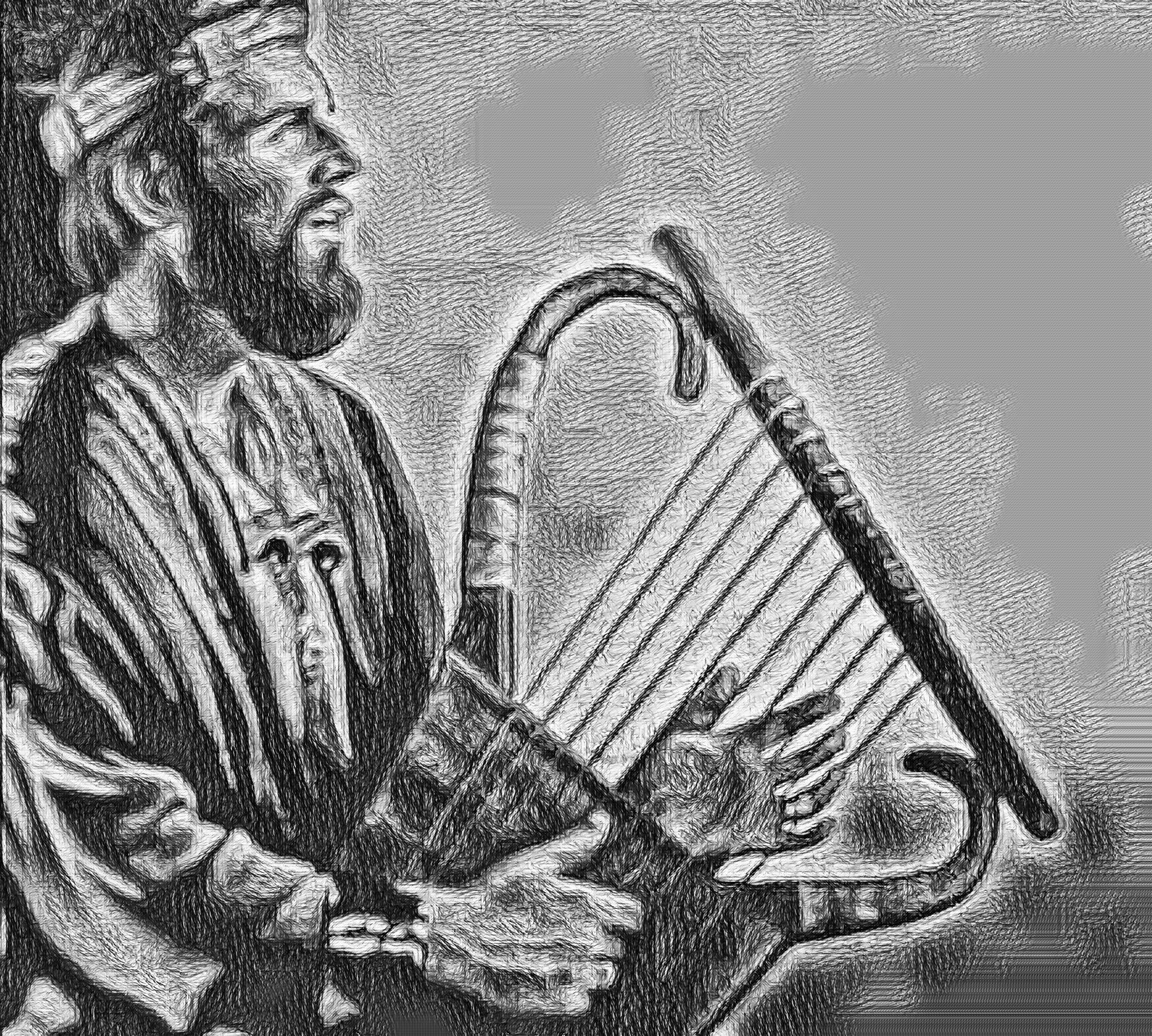
Tradition tells us that King David composed many of the 150 psalms. As in the breviary, a few psalms are missing and others are clipped in respect to the sensibilities of believers. The times may change but human nature does not. The psalms reflect the human condition with all its emotions and needs, even those that are negative and destructive. One of the missing verses from church is from Psalm 137:8-9: “Desolate Daughter Babylon, you shall be destroyed, blessed the one who pays you back what you have done us! Blessed the one who seizes your children and smashes them against the rock.” The Church would discern in this that God desires justice; however, the Hebrews received the revelation with hearts bent on revenge. The problem of such psalms is that lines like this would hijack the liturgy and compel the homilist to spend what little time he has in trying to reconcile the notion of a vengeful God with Jesus as the Divine Mercy. Again, this particular line speaks more about the human condition and our feelings than about the divine nature and the truth. While not denying the value of even the difficult passages of Scripture as divinely inspired, the Church tends to employ psalms that focus on the themes of longing, mercy, healing, restoration, respect for persons and honoring the Almighty. It should be said that there is frequently a prophetic element to the psalms, about the history of God’s people and/or about the coming of a Messiah.
(The psalms have long constituted the Jewish prayer book, albeit in the format of memorization and less so as written.) Catholicism heavily employs the psalms in the Mass and in her printed prayer book, the Liturgy of the Hours. They lend a meditative element to the liturgical movement. Often they echo the readings. The most important of the psalms may be those that point to the Messiah. Psalm 2 intimates a unique relationship of the Messiah to us as God’s Son.
Psalm 2:1-6 – “Why do the nations protest and the peoples conspire in vain? Kings on earth rise up and princes plot together against the LORD and against his anointed one: ‘Let us break their shackles and cast off their chains from us!’ The one enthroned in heaven laughs; the Lord derides them, Then he speaks to them in his anger, in his wrath he terrifies them: ‘I myself have installed my king on Zion, my holy mountain.’”
Psalm 110:4 – “You are a priest forever in the manner of Melchizedek.”
Psalm 22:2; 16-20 – “My God, my God, why have you abandoned me? . . . As dry as a potsherd is my throat; my tongue cleaves to my palate; you lay me in the dust of death. Dogs surround me; a pack of evildoers closes in on me. They have pierced my hands and my feet. I can count all my bones. They stare at me and gloat; they divide my garments among them; for my clothing they cast lots. But you, LORD, do not stay far off; my strength, come quickly to help me.”
The psalms reveal how we are naturally wired for God and for the meaning that he alone can give to human existence. As his creatures, we are utterly dependent upon the Creator. He is all good and we cry out for his forgiveness and protection.
After the Collect, the people are seated and invited to listen attentively to Sacred Scripture. The Word prepares us for the Sacrament to follow. There are many critics of missals for the people because most liturgists are of the opinion that this is the time when we “listen” and not “read.” Of course, this assumes that everyone can hear and that is not always the case. Many parishes will use interpreters for the deaf to sign the message to hard-of-hearing congregants. However, not everyone knows sign language and interpreters can be hard to come by and may strain the Church budget. Missals can be useful in such situations. Speaking for myself, I believe the value of a personal missal is that it allows the faithful to read and to begin their reflection on the assigned Scriptures prior to Mass. If at all possible, we should not engage God’s Word cold in the pews. Rather, hearing the verses and then listening to the preaching should deepen what we have already received. The lectionary insures that a good segment of the Bible is covered. Despite certain Protestant naysayers, Catholics are the original Bible-Christians. The Bible possesses saving truth and it is crucial that we make it our own. We may not always know chapter and verse, but we should each develop a familiarity with Scripture and read the Bible every day. Indeed, many who cannot make weekday Masses will follow the daily Mass readings at home or at work. That is why most parishes list the daily readings in the weekly bulletins distributed after Sunday Masses. God’s Word has the power to transform or mold us. It is a mighty bulwark against the efforts of the world to replace Christian formation with a non-theistic secular humanism.
We have three readings for weekdays: the First Reading, the Responsorial Psalm and the Gospel. There are four readings on Sundays and Holy Days, an additional reading after the Responsorial. The typical pattern on Sunday is as follows: Old Testament, Psalm, New Testament (usually an epistle) and the Gospel. An effort is made to thematically connect the first reading with the day’s Gospel.
The liturgical calendar for Sundays is divided into three cycles: A (Matthew), B (Mark) and C (Luke). The Gospel of John is used heavily during the season of Easter. The Weekday cycle is divided as I and II. We sit for the readings from the Old Testament, the Psalms and the Epistles. We stand for the proclamation of the Gospel out of respect for the life of Christ. The first reading is ordinarily from the Old Testament but we hear the Acts of the Apostles during the Easter season. The second reading is always taken from the Epistles or the Book of Revelation in the New Testament. Whenever we read or hear the Word of God, we should begin by personally invoking the Holy Spirit. There is much about the Bible we cannot begin to understand without both the direction of the Church and the help that comes from the Spirit of truth. While the homilist will likely make some connections for us, this does not excuse us from seeking how the Scriptures may speak to us as a community and individually in the here-and-now. The Scriptures present to us the story of salvation. The homily invites us to interject our stories into this great story that we might know the intervention of Christ. The Old Testament gives a promise that is fulfilled in the New. God reveals himself and his truths in the passage of human history
This is the home of the AWALT PAPERS, the posting of various pieces of wisdom salvaged from the writings, teachings and sermons of the late Msgr. William J. Awalt.
























 Blogger Priest