


• Our Blogger

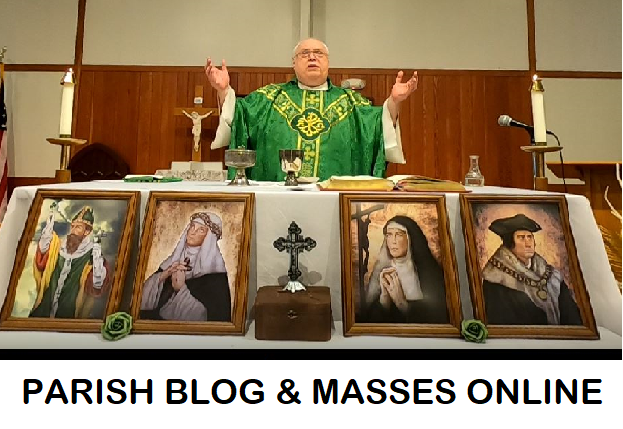
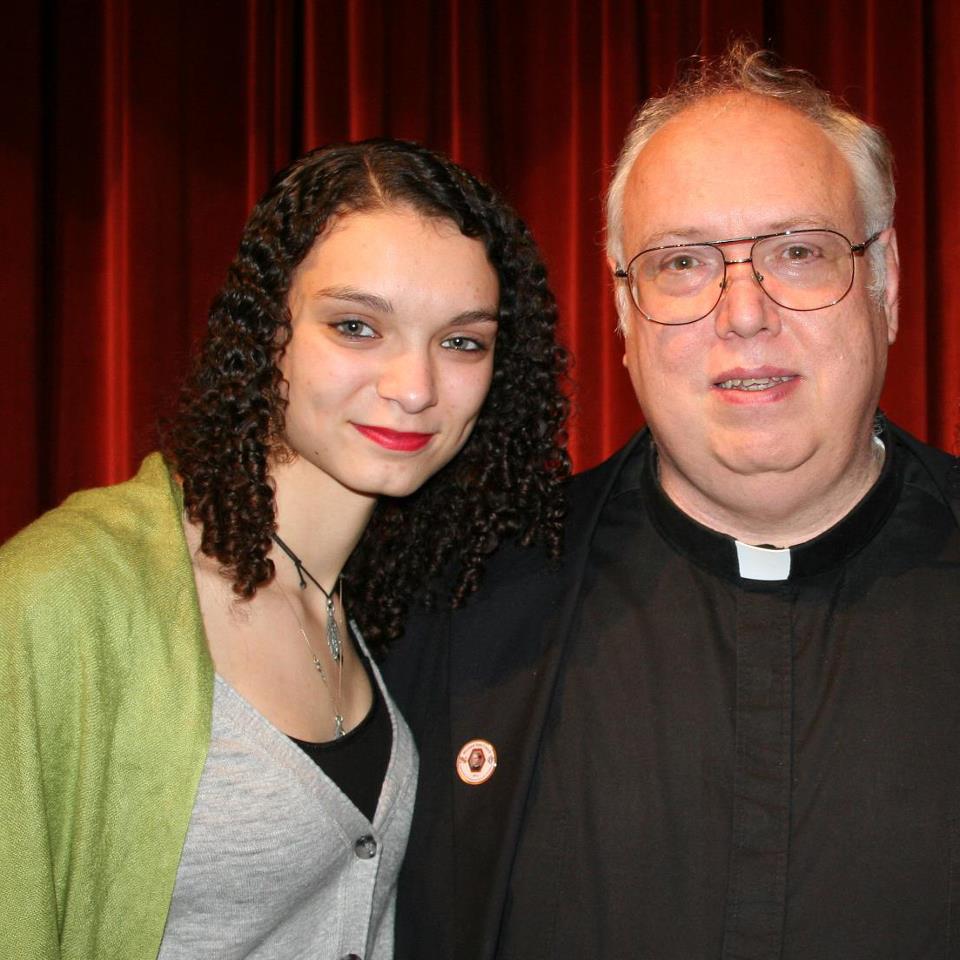
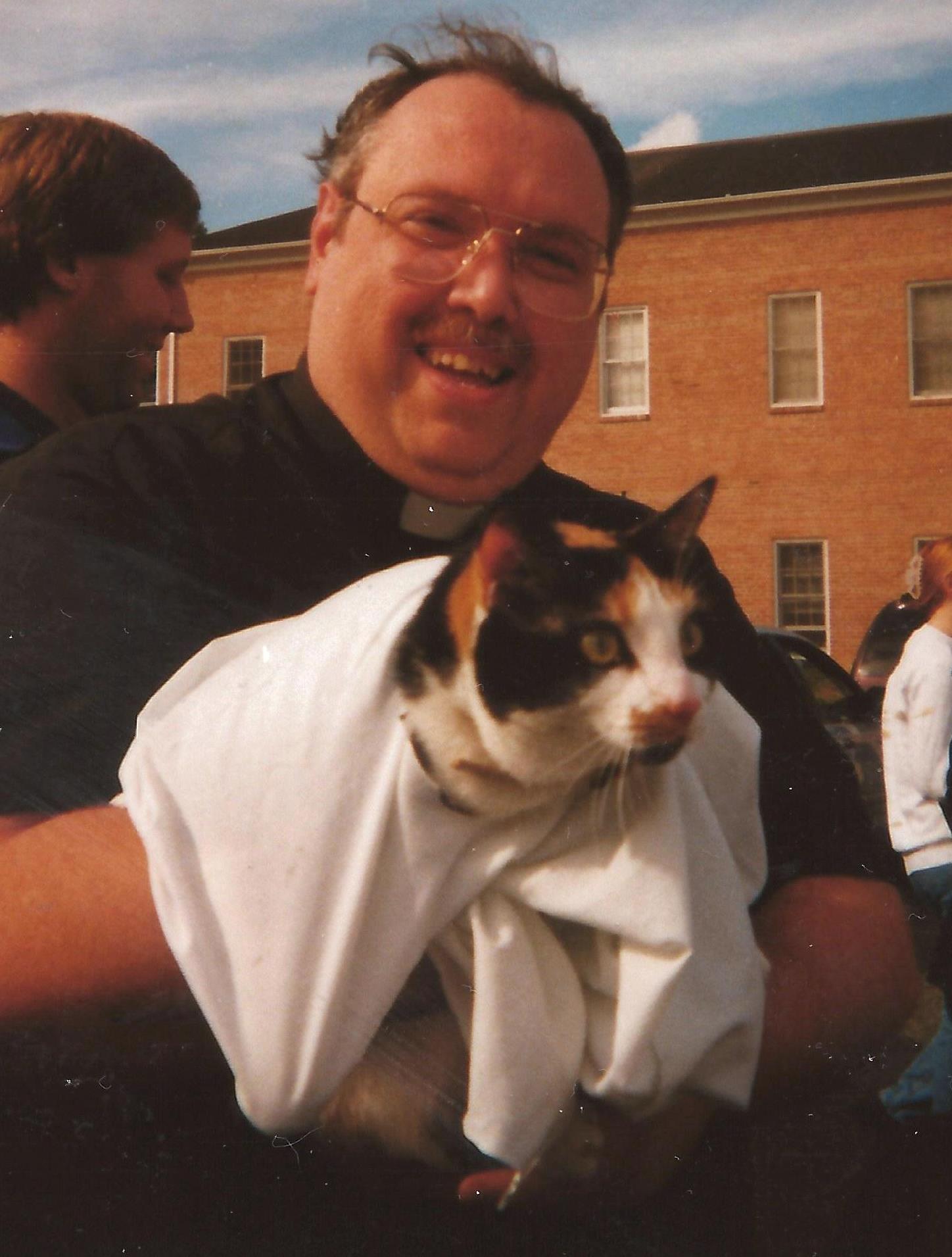
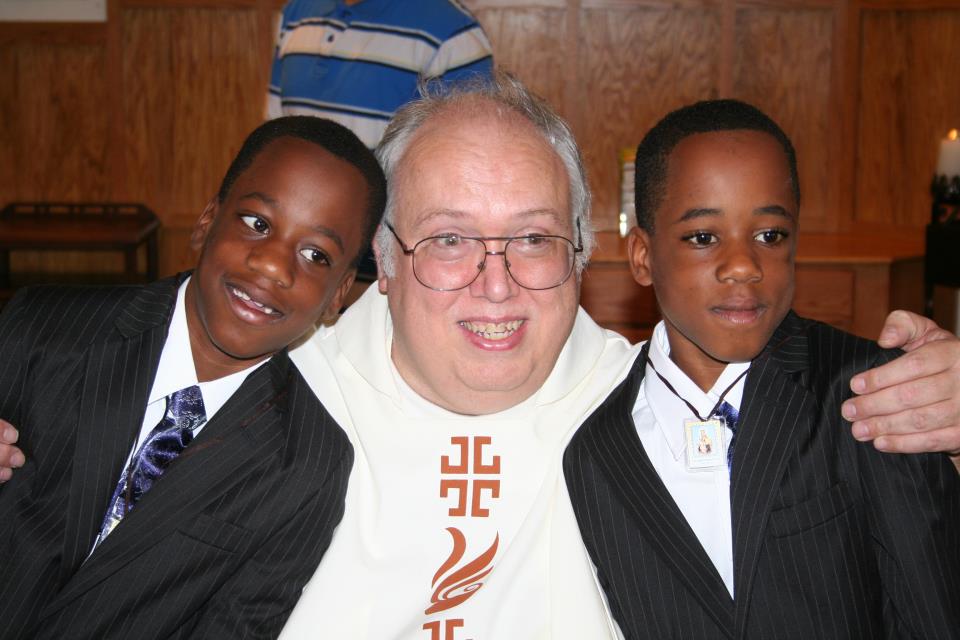
    Fr. Joseph Jenkins

  • The blog header depicts an important and yet mis-understood New Testament scene, Jesus flogging the money-changers out of the temple. I selected it because the faith that gives us consolation can also make us very uncomfortable. Both Divine Mercy and Divine Justice meet in Jesus. Priests are ministers of reconciliation, but never at the cost of truth. In or out of season, we must be courageous in preaching and living out the Gospel of Life. The title of my blog is a play on words, not Flogger Priest but Blogger Priest.

  • Archives

  • Categories

  • Recent Posts

  • Recent Comments

    Jeremy Kok's avatarJeremy Kok on Ask a Priest
    Gary Joseph's avatarGary Joseph on Old Mass or New, Does It …
    Barbara's avatarBarbara on Ask a Priest
    Anonymous's avatarAnonymous on Ask a Priest
    forsamuraimarket's avatarforsamuraimarket on Ask a Priest

Catholics Supporting Abortion & the Loss of Integrity

The universal catechism teaches a truth about which we should all be mindful as Christians [CCC 1868-69]:

“Sin is a personal act. Moreover, we have a responsibility for the sins committed by others when we cooperate in them: by participating directly and voluntarily in them; by ordering, advising, praising, or approving them; by not disclosing or not hindering them when we have an obligation to do so; and by protecting evil-doers. Thus sin makes men accomplices of one another and causes concupiscence, violence, and injustice to reign among them. Sins give rise to social situations and institutions that are contrary to the divine goodness. ‘Structures of sin’ are the expression and effect of personal sins. They lead their victims to do evil in their turn. In an analogous sense, they constitute a ‘social sin.’”

The Catholic politicians liberalizing abortion are essentially either in immediate dissent about what abortion is really about or there is a heinous hypocrisy.  Thus if a politician says that he believes that abortion is murder, and instead of inhibiting it makes possible or enables its execution, there is little left of personal integrity.  Semantics are employed because such a lack of consistency would unnerve the most radical advocates.  You will never hear this:  “Well, yes I believe that it is wrong to kill children but I would never stop you from killing children, indeed I will fight for your right to kill children.”

What Questions Flow from the Essential Question?

The conditions about cooperation touch not only the elected official but those who vote for him or her.  They should ask themselves a series of questions.  Most will not.

“Have I ever argued for the general right to abortion and/or have I ever counseled anyone to have an abortion due to the injustice of rape, the scandal attached to having relations, the need to finish school, the lack of economic resources or to preserve a standard and manner of living?”

“Have I ever catered to the false pro-life position of making exceptions to an abortion-prohibition when there were nebulous health cases or assault issues brought forward?”

“Have I ever ordered someone to get an abortion or done anything to make it hard for a woman to keep her baby as with job demands or expectations?”

(I recall a mother telling her fifteen year old daughter, pregnant by a boyfriend, “You either get rid of it or you will get the hell out of my house!”  After hiding out at friends for a few months she begged her mother to come home.  Her mother picked her up with a quick stop at the abortion clinic.  Not only was her love defective for her daughter but absent for her grandchild.)

“Have I supported politicians who promoted policies that hampered working mothers and their caring for children?”

“Have I ever given consent to abortion by withholding judgment upon such actions or by telling people that they had to do what was right for them even if it meant termination?”

(I suspect many have collaborated with this wrong by passivity and a misplaced toleration of evil.)

“Have I ever ignored or dismissed a politician’s pro-abortion stance for the sake of party solidarity or other issues?”

“Have I enticed others to abort a child through prodding or inciting them? ‘Don’t let that pack of child molesters tell you what to do!’  ‘What do those old men in the Vatican know about a woman’s needs and the trial of unwanted pregnancies?’  ‘Go for it girl and don’t let anyone tell you otherwise!’”

“Have I ever threatened or was party to the manipulation of politicians, telling them, ‘Support a woman’s right to choose or we will choose someone else?’”

“Have I ever noted a woman’s abortion as a courageous thing to do or announced that those who go forward with such actions are trailblazers for others? Have I ever defended or praised elected officials for maintaining a woman’s so-called ‘right to choose’?”

“Have I ever been a ‘good friend’ in giving a woman the money to procure an abortion?” 

(I even knew a clergyman who committed the mortal sin of driving a girl to an abortion clinic and waiting to take her home. While it is in the area of secondary agency it is an immediate participation in the crime of destroying a human being.)     

“Have I responded with SILENCE to the policy of legalized abortion and to actual terminations carried out by family and friends?” 

(Too many are quiet.  True Christians must be a voice for the voiceless!  Just because the Supreme Court says it is right does not make it so.  Not that long ago this same court ordered that runaway slaves had to be returned to their ruthless slave masters! Bad laws or the erroneous interpretation of laws must not set a precedent for men and overturn a genuine conviction for the sanctity of human life and justice.)

“Have I ever defended a right to abortion for purposes of population control, for women’s liberation from male domination and the biological bondage of motherhood— leveling the playing field between the sexes?”

Speaking to my fellow priests and to the bishops, have you ever gotten the blood of this matter on your hands through obscuration and secrecy?  This too is a sin.  I do not mean concealing that which falls under the seal of confession, but rather the public rendering of approval to a Catholic that has publicly voted for and promoted practices that violate the Gospel of Life like abortion, infanticide, embryonic stem-cell research, etc.  Well known and outspoken figures must have their wrongful acts and alliances addressed in the public forum.  This includes politicians and celebrities from movies, music, television, sports and whatever else.  There is no underestimating the dangerous scandal and negative teaching value of someone who is pro-abortion and yet hailed as “a good Catholic.”

We Need Cool Heads & Forgiving Hearts

Even after reading this article I remain somewhat confused about what happened. Theoretically speaking, both slavery and abortion involves a devaluation of human personhood and dignity. It may be that the discussion was over the heads of the children and that it became overly heated and too personal. The fact that the right to life position of the Church must be sustained in all our parishes and schools should not be interpreted as partisan or ethnically insensitive. The Gospel of Life is essential to our proclamation of the faith and our accompanying discipleship.

I would urge prayer for all the children, their families, the school teachers and administrators and the good priest.

More information was made available in DEFEND LIFE.

The Secular & the Sacred Should be in Sync about Abortion

Separation of Church and State but Not from God

We are very privileged to be Catholics and Americans.  The very first article in the Bill of Rights states:

“Congress shall make no law respecting an establishment of religion, or prohibiting the free exercise thereof; or abridging the freedom of speech, or of the press; or the right of the people peaceably to assemble, and to petition the government for a redress of grievances.”

This article repudiates any notion of a national church; however, it does not mean that people of faith have to discard their religion and values to interact in the public forum.  Too many interpret the separation of church and state as an agnostic or atheistic stance that would strip religious references, displays and opinions from the everyday lives of our people and from public institutions like our courts and schools.  Indeed, the article actually says the opposite.  While special deference is given the Judeo-Christian faith as a historical element of our origins; this is essentially a demand for toleration of our faith diversity.  Along with this religious liberty, the article protects speech and assembly and makes possible the power of the press.  It is a uniquely American trait that we earnestly spurn censorship and believe that everyone has a right to his say and to address grievances.  This runs smack against what some label as the “cancel culture” and the domination of tech companies over online social forums. It even rubs against an old European continental view of banning books and demanding official approbation of religious texts.  No matter if from the left or right, the issue is always CONTROL.

While we would be wary of error or heresy, we are Catholics and as Americans do not have to hide our religion. God forbid that any would be ashamed of Jesus Christ. We bring all that we are as believers to our practice of citizenship.  When it comes to practical decisions, policies and laws— we desire a voice even when we will not win every argument.  We do not stand with our country, right or wrong; but rather, we stand with our country when she is right and we stand correcting her when she is wrong.  There are many convictions and values that emerge from or are touched by faith:  just as we desire religious liberty, we do not go out of our way to inhibit or to condemn the faith (or lack thereof) of others; we seek to be truthful to God and to our neighbor (lies are from the evil one); we seek to be honest and forthright in our dealings with others (stealing is always a failure to love our neighbor); we are urged to be generous and giving to others; we believe marriage between a man and woman (along with family life) is a foundational building block to a healthy society; we oppose human subjugation through slavery, prostitution, pornography, illegal immigrant exploitation, and unjust job situations; we contend that promises are made to be kept, especially in contracts and in the marital covenant, and while it should go without saying, “thou shalt not kill” is not a suggestion but a divine command. While Islamic extremists might regard blasphemy as the highest crime, the Western world has evolved to give this place to violations of human life, in theory if not always in practice.  This is not to say that offenses against almighty God are not serious; but we have come to appreciate in light of the passion of Christ the infinite mercy of the Lord.

Those who demand a strict separation of church and state often oppose the values of believers and seek to undermine any arguments they might make in the public forum.  We see this frequently in contemporary debates. The impression is given that people who live their faith cannot be full citizens.  This ideology demands that Christians must disavow Christ and the values of the Gospel.  This is nonsense, but such is often the situation.  Those who would classify the wrong of abortion as thoroughly a creedal designation remote and unaffiliated with an objective assessment of the natural order, do damage both to human reasoning and undermine genuine universal moral law.  Apart from the selfish fads and whims of the times, even a more reliable secular humanism should realize that everything in the tree is first found in the acorn.  The child in the womb is a human being and, barring accident or crime, the trajectory will realize this truth at the end of nine months.

Priests are Vulnerable to Authority if They Speak Out

A Personal Story

Years ago I challenged Theodore Cardinal McCarrick on his policy of giving Holy Communion to pro-abortion politicians. Indeed, I lamented that his public friendship and collaboration with officials like the late Senator Ted Kennedy gave the impression that there had been a normalization of a sorts about abortion and the expansion of proposed rights for active homosexuals (two causes he most championed).  I tried not to pay any attention to gossip about the cardinal as no one in my small circle offered evidence of wrongdoing.  Nevertheless, while I was ignorant of any abuse of children, many of us were disturbed all the same by what filtered down regarding possible homosexuality and young clergy. The moral issue that I had focused on for much of my priesthood and even my years as a seminarian was that of the unborn and abortion. Organizations like the American Life League were making national news in challenging his policy of giving the Eucharist to pro-abortion politicians.  At a meeting of the Priests Council, he made his case and I guess he wanted our support.  But when the vote was taken by the clergy, the count fell one short of a perfect consensus, 24 to 1.  I cannot remember if this was before or after the notorious memo from Ratzinger that was falsified by him before the USCCB.  He seemed untouchable in those days.  When he first came to Washington he told us that he wanted to hear what we honestly thought.  I took him for his word.  This would cost me.  I was the holdout in the discussion about giving the sacrament to pro-abortion politicians. A couple of the guys saw what was coming down and tried to keep me quiet.  No, I said, I was going to say what I felt needed to be said.  As best as I can remember, it went like this:

“If Adolf Hitler had practiced the Catholicism into which he was baptized by his grandmother, and given that he personally never killed anyone but simply fanned the flames of antisemitism leading to the extermination of six million Jews, would you give him Holy Communion if he came up to you? I think not.  If a southern white supremacist who had never killed a person of color but nevertheless supplied the rope and the politics of hate leading to such crimes came up to you in the communion line, would you give him Holy Communion? No, in both cases I think not, but when those who have enabled the murder of fifty million or more children through abortion come up, you say YES to communion because you do not want a clash at the altar, arguing that we need such people when it comes to other issues. Speaking frankly, some of us are sick and tired of you bishops kissing up to these baby-killing bast-rds!”

I was chastised (given the vulgarity maybe rightly so) and I was charged with embarrassing the Cardinal. But I had my say and to this day I believe my argument was just before the Lord. I was off the council after that and a subsidy for my poor struggling parish was rescinded.  Not anticipating that my little parish would be hurt for my sounding off, I would use my small salary to defray the help I forfeited to the church.  Punishing me was one thing, but it pained me that he would take it out on my struggling faith community.   Never did I feel so alone.

WITH Friends like These, WHO Needs Enemies?

Beware of Deception

The clash between the Gospel of Life and the culture of death has never been as intense as it is today.  Throughout there is a great deception.  Many of those who give a helping hand to the poor and to immigrants are also quick to hand out contraceptives and abortion services. What they give with one hand they take away with the other. Look at the numbers of abortions in minority communities.  The hypocrisy is tangible and yet often denied. Many minority populations play into the hands of clandestine racists and their use of abortion and contraception as part of their eugenics plan.  Yes, many of those who are counted as advocates for these communities are actively seeking ways to minimize their growth and to control or to manipulate them.  Immediate needs might be met but the future is stolen from them through the absence of children that might have been born.

This group would also take offense at pro-abortion politicians being denied the Eucharist.  Indeed, they would readily vote for such candidates.  I can still hear in my mind their hackneyed response to challenges: “I would never have an abortion but I would not want to make that decision for someone else. Politician (so-and-so) is a practicing Catholic or a good wife and mother or a faithful husband and father— why should we blame them for what others do?”

WHERE Do WE Stand before God on the Issue of Abortion?

While the issue has been with us for a number of years, the controversy of giving Holy Communion to pro-abortion politicians has escalated with the election of President Joe Biden.  Tension has arisen, not merely between elected officials and the Church leadership, but also among the bishops and with heavily partisan congregants.  The situation is perplexing as believers often approach the question from discordant moral grounds, have varying blind spots and suffer a spiritual formation weighted more toward society’s secular-humanism than to Christian faith with its perennial values.

Where Do People Stand?

First, there are those who are utterly convinced that abortion is the abuse and murder of human beings; any who would enable or be party to such grave objective evils would be logically disqualified for the reception of the Eucharist (that is until there is repentance, absolution, possible public reparation, and the removal of the censure of automatic excommunication). A permissive attitude to giving Holy Communion in this regard seems to water down the severity of violations to human life, causes an egregious scandal before the faithful, dishonors the Lord of life and violates charity against the communicant as sacrilege is a mortal sin and further endangers one’s soul.   

Second, there are dissenters that side-step or deny the personhood of the unborn and argue that abortion is entirely a free decision between a woman and her doctor that does not concern anyone else.  It is argued that a woman has full jurisdiction over her own body, including the fate of a pregnancy. No distinction is made between a first trimester abortion and the infanticide of children ready to be born.  Christians who hold such views seem to suffer from a spiritual or moral amnesia about what both Scripture and the Church teaches.  But even more, this perspective is befuddling as it stands against reason and any genuine ethical sense.  I suppose it signifies a new and terrible ethics where persons and things only have value if we (in our selfishness) should determine to give them value.  As one woman argued to me about the unborn child, “it is only a baby if you want it.”  This flies in the face against any objective evaluation of the human person, especially in viewing the entire trajectory from the womb to birth.

I have readily assumed this mentality is new but it may be that we were here before.  Is this not the same devaluation of human beings that we experienced in American slavery?  Blacks were devalued as less than whole persons or as mere property or as animals.  Even clergy, the suppressed Jesuits, owned human beings!  Note that the papacy by this time had come out against slavery (in various parts of the world) and especially condemned the bondage of fellow Christians as an evil that could no longer be tolerated. What the Church came to understand about slavery in the development of doctrine, she had always known about the unborn and abortion going back to the Didache (50-120 AD).  Abortion had always been condemned by the Church as the crime of murder.

Just as in slavery, the unborn embryo or fetus is reduced by proponents to a thing but is not considered a child unless the mother claims “it.”  Indeed, even then the gymnastics that many women pursue to get pregnant, especially with the sampling and freezing of embryos, still illustrates this attitude of treating the unborn as commodities and not as persons with their own distinctive destiny and rights.  Disconnects with this perspective make debate or discussion with pro-life Christians very difficult or perplexing.  What we hear from such advocates for abortion are assertions like these:  “It is my body and no one can tell me what I should do with my body.”  “I am too young to be a mother and it would be cruel to adopt a child out to strangers.”  “This cannot be happening— I just got a scholarship to a good college and a pregnancy now would ruin my life!”  “All I want is good sex, not a baby!”  “No girl should be forced to carry a child resulting from rape or abuse.”  “This child is a boy and my girlfriend and I only want female babies.”  “I already have two and that’s enough!”  This mentality smacks of the demonic in that there are now actual advocates for abortion from this camp that would similarly argue for what they label as “retroactive abortion,” not just infanticide but the termination of unwanted children up to three years of age. I have heard a number of priests I respect contend that this group is not really Catholic, despite baptism, and thus should not be offered the great Catholic sacrament.  I would agree that those with such hardened hearts are not in true communion with the living Church.   

Third, there are those who would not generally approve of abortion but equate it and any pro-life status with other issues like capital punishment, assisting the poor, welcoming immigrants, racial and ethnic justice, etc.  We find in some circles a point system so that pro-abortion advocates might merit an overall pro-life rating.  As with terminology, never referring to the embryo, zygote or fetus as a baby, this view is just another form of deception— the singular importance of a child’s life is filed away and lost amid a series of other issues.

It is true that there are many issues within a genuine pro-life agenda; however, as the Holy Father and the USCCB has taught, the matter of the unborn is singularly serious and fundamental.  The unborn has no voice of its own so we must be that voice.  If he or she could talk, the child would likely argue, “Take away the gift of life and for ‘me’ there are no other issues!”  The evolution or development in our appreciation of the sanctity of life begins with the premise that both abortion and infanticide constitute murder.  The first Christians were urged to put aside such bloodlust. Over the centuries we have often compromised ourselves in regard to violence, finding it easier to hate and to kill enemies than to love, to forgive and to live with them in peace. Slavery which was long tolerated is today largely repudiated although such a hardness of heart to life and justice continues to raise its ugly head in workers paid non-livable wages and in human trafficking and the pornography industry.  As I have mentioned before, the long-held right of the state to capital punishment has come under recent revision and rightly so because authorities who would condemn the innocent within a culture of death have relinquished their right to judge the guilty.

There may be a fourth position as well, or just a subdivision of what I have already detailed.  There are advocates for a more aggressive feminist agenda of women’s (and possibly LGBTQ) rights that view everything through this revisionist prism, denouncing as bigotry any opposition and/or prohibitions against terminations (regardless of both natural law and Scriptural teaching). This camp would wrongly say that opposition to abortion is the same as being anti-woman.  My quick return would be that the pro-life position is the only true pro-woman perspective.  The power of motherhood is the highest gift given to women as it is an intimate participation with almighty God in the act of creation.  Further, why are we so quick to forget that at least half of the unborn babies are also women called forth into the world and to an eternal destiny?  While radical feminists have largely abandoned the faith and thus would be unlikely to come up for Holy Communion, at least until there are women priests (which will never happen); we need to provide sufficient correctives for the continued participation in the sacramental life for a pro-life Christian feminism. 

WHO are the Single Issue Voters?

Abortion, a Single Issue or Litmus Test

There is a terrible cop-out when arguments are made against single issue voters.  Almost always the issue in question is abortion and the right to life.  Would the left be willing to concede if the one issue were abortion and a woman’s so-called right to choose?  No, I am certain they would not!  Would the left be willing to compromise if the issue should be the rights of women to hold public office and to receive equal pay with male counterparts?  Of course not! Would the left be willing to cease the promulgation of transitional gender identification and same-sex unions?  Never going to happen!  And while the left has come lately to the issue of racial justice as defended by the right from Lincoln to Eisenhower, would either table efforts for a more ethnically just society for all?  I would hope not!  We all have our issues and for some, there is one issue that trumps all the rest.  Of course, we should be angry that we are being forced to choose between one good or evil and another.  Maybe we need as a Church to be more hands on, not less?

Maybe we need to encourage loyal Catholics to step forward and to take positions that are not problematical for people of faith?  Instead of one or the other, we can add to the cause of life so much else. We should be . . .

  • decisively pro-life and pro-dignity in terms of safeguarding children,
  • helping mothers, supporting families,
  • opposing the death penalty,
  • welcoming immigrants, giving charity to the poor,
  • defending marriage and traditional family,
  • protecting the rights of the gay community from bigotry,
  • urging chaste same-sex unions,
  • respecting religious plurality and our own liberty as people of faith,
  • defending freedom of speech and the rights of the press,
  • investing at home in energy independence while working toward greener policies that are protective of the environment,
  • insuring the proper rights of women,
  • mandating a livable wage for workers,
  • pursuing creative ways to make available healthcare for all,
  • investing in a strong defense while expanding Project Hope,
  • negotiating both peace and financial agreements around the globe,
  • and making real the dream of Martin Luther King for an end to racism, etc.

WHO do we encounter in Holy Communion?

A big deal is being made about the bishops who want to take a strong position against pro-abortion politicians receiving Holy Communion. Maybe we should return to an emphasis about WHOM we are receiving?

Every time we come up for Holy Communion, we encounter the risen Lord, present and alive in his undivided divinity and humanity, body and soul.  The sacrament is the chief manner by which Jesus Christ abides with us.  While he ascends to the Father, he refuses to abandon us or to leave us orphaned.  He gives us himself as food for the journey.  If one reflects long and hard about it, it is an event that can be likened to the particular and final judgment.  Then too, we will stand before the Lord and if properly disposed will know eternal grace and welcoming.  However, if ill-disposed in mortal sin, then we will stand convicted, knowing only despair and being cast into perdition.  The Eucharist feeds and heals.  The Eucharist, if properly received, transforms us ever more and more into the likeness of God’s Son.  The Eucharist can also bring down judgment when it is received as a terrible sacrilege.

While we live in this world, repentance is possible.  Earthly pilgrims can know conversion, renewed faith and abide in the hope of ultimate salvation. It is the prospect of a negative judgment before the Eucharist that drives many clergy forward in wanting to withhold the sacrament from dreadful public sinners and supporters of wrongs like abortion. I will repeat myself once more— any who would deny the hidden but real presence of the child in the womb is ill-disposed to receive the hidden REAL PRESENCE of Christ in the Eucharist.

Giving the sacrament to those who would enable the abortion of children would be like directing the murderous soldiers of old Herod to where they might slay the Christ Child.  Any who would receive the Eucharist should be in a state of grace and spiritually prepared.  After death, the posture or orientation we have forged with God becomes permanent. It is lamentable that the healing food or medicine for contrite sinners might also be desecrated as a poison to those ill-disposed to grace, manifesting them as devils without saving love in their hearts.

WHEN are Shepherds NO LONGER Shepherds?

What Would St. Joseph Do?   

I did not know whether to laugh or cry when I read an assertion from Bishop Robert McElroy that abortion “pre-eminence” is the language of politics, not of doctrinal teaching. The context for my negative reaction is the spiritual paternity of clergy. The theme of “fatherhood” is acknowledged throughout all the levels of holy orders.  The Pope is the Holy Father.  Each priest is called “Father” as an appreciation of his spiritual fatherhood.  The bishop is a father to his priests and the larger flock.  This fatherly role and intimate love must be like that of good St. Joseph who safeguards Mary the Mother of God and protects the unborn Christ Child. What would St. Joseph do if someone threatened the invisible but real presence of Christ in the womb?  What would he tell us to do in regard to those in the womb who are flesh-and-blood reflections of the Christ Child?  Would he argue that we casually hand him over?  There is an important link involved here. I cannot understand why any churchman does not see the prominent importance of his charge to safeguard before all else the lives of the unborn and the innocent.  We can say we are pro-life but here is one of the many practical applications of that assertion.  Turning the tables somewhat, this is far more critical than politicizing the matter so as to stay on the right side of certain elected officials or to avoid upsetting the most partisan among us.     

Conscience & Right and Wrong

When it comes to right and wrong, the Church has always distinguished the greater from the lesser, as with mortal and venial sins.  The tension between legal and illegal aliens, between work programs for the poor and welfare, between competitive health plans and socialized medicine and— all these are matters of politics and policy to benefit people; however, the tension between healthy infants and dead babies plucked from the womb is explosive in importance— it is about a universal moral law and the commandment against murder.

While we can distinguish between formal cooperation (definitely accountable) and material cooperation (possibly not accountable); in practice such delineation of evil acts is difficult and does little to alleviate one’s conscience or sense of guilt.  We might see this with those involved with gun-making.  While guns can be used for both good and bad purposes, such material cooperation does little to appease regret and sorrow when guns are used against the innocent or in violent crimes.  While the analogy is upsetting or offensive and admittedly strained, one critic suggested that voting for a politician who is on the record as a backer for “abortion rights” is like selling a gun to a self-professed terrorist.  It is not a matter of “if” but “when” he will do the damage he is pledged to do.

The periphery issue of giving Holy Communion to public dissenters and enablers of abortion is whether such an act gives tacit approval to their stance and serves as a commendation of their witness before other believers?

SHOULD we read Hyperbole as a Ranking of Sins?

During this public debate, mention was made of Pope Francis’ GAUDETE ET EXSULTATE and a passage that the American bishops voted not to include in their document: “equally sacred [as the innocent unborn] . . . are the lives of the poor, those already born, the destitute, the abandoned and the underprivileged, the vulnerable infirm and elderly exposed to covert euthanasia, the victims of human trafficking, new forms of slavery, and every form of rejection” (No. 101). I suspect that the worry was that this rhetorical emphasis of the Pope might be wrongly interpreted as a grocery list from which one might pick-and-choose. While one might delineate a hierarchy of sins; the great injustices often include within themselves the lesser ones. There may be many issues such as the death penalty, infanticide, euthanasia, insufficient welfare for the poor, a lack of welcome for immigrants, unjust wages, human trafficking, etc.; but in abortion we find the penalty of death imposed upon the innocent— we find both infanticide and the wrongful compassion of euthanasia— we find bigotry against the poorest of the poor— we find a lack of welcome to a tiny visitor— we find one stripped of rights and value— we find a person reduced to a commodity, etc. We should not listen to the voices who oppose the tyrants of the right so that they might impose the tyranny of the left.