














The anti-Catholic bigot Laurence states:
Pope Boniface VIII maintained his position through lavish distribution of stolen money. He was quoted saying, “to enjoy oneself and lie carnally with women or with boys is no more a sin than rubbing one’s hands together.”
My response:
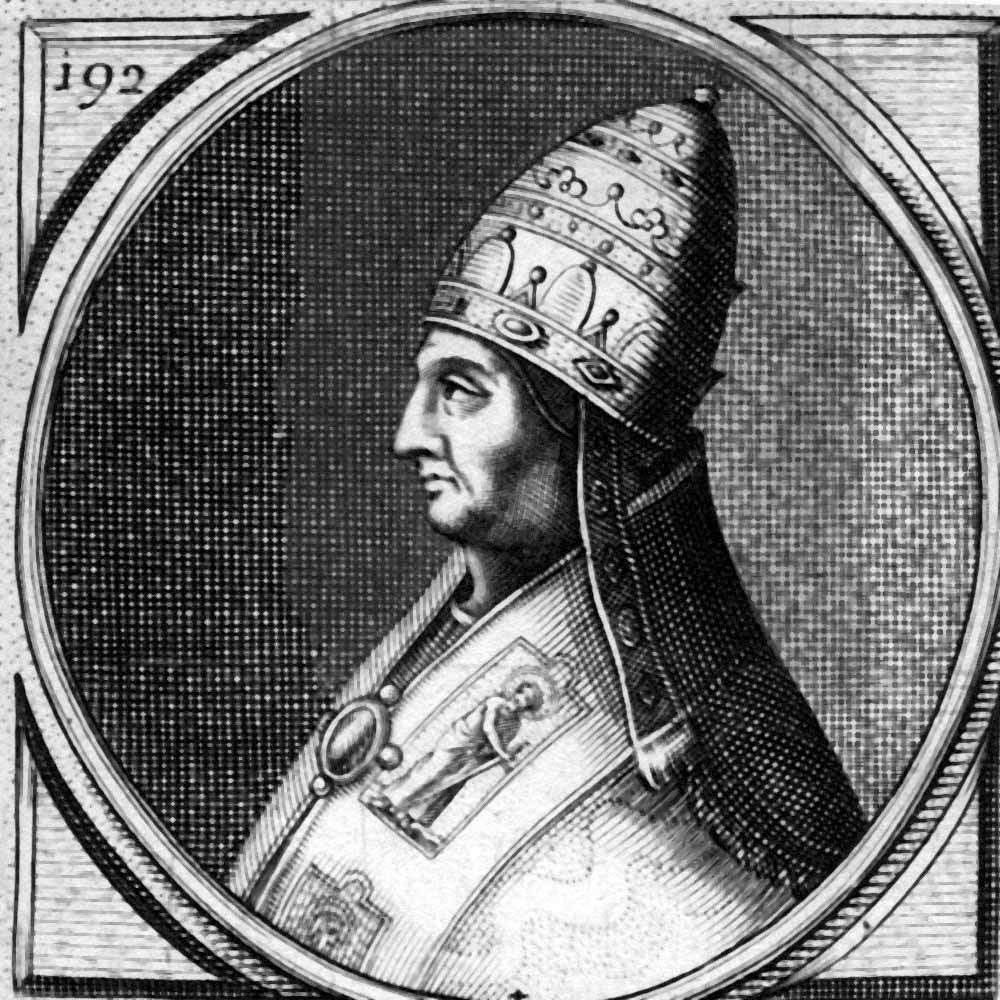
I can well appreciate that you are citing bigoted and ignorant sources. However, in doing so, you commit the sin of false witness against a dead brother Christian. There are bad popes, but the most for which one might fault Pope Boniface would be his tact and temper. You are like the old lecherous men lying and bring condemnation to the pure Susanna (Daniel 13).
This citation is a calumnious slander of a Pope who was wholly orthodox, albeit with a quick temper and an emphasis upon papal temporal authority that would cause an escalation of tensions with ambitious kings and princes. He hoped that the papacy might become a source for European unity. King Philip of France instead saw him instead as an obstacle to his influence and the finances required for waging war. The words quoted here are those of his enemies, seeking to belittle the Pope, in order to justify their disobedience and later the attack upon his person which would no doubt speed his death. After his death (1303), the French would have their way with the wrongful relocation of the papacy to Avignon (1309).
The French Council of State was called to an extraordinary session (12 March, 1303) and Guillaume de Nogaret appealed to Philip, declaring Pope Boniface an intruder, false pope, a simonist, robber, and heretic. The Pope had insisted that the clergy could not be taxed without his approval. He had also promulgated the papal bull (1302) Unam Sanctam, where the Pope stipulated that it “is absolutely necessary for salvation that every human creature be subject to the Roman pontiff.” Lies were made up to discredit the Pope and to undermine his authority. When an assembly was called on June 13 at the Louvre in Paris to investigate the charges, the papal legate was imprisoned to prevent a response. It was a packed court. Aligned with Philip, Guillaume de Plaisians asked for a General Council and made 29 charges against the Pope. No credible historian today takes the charges seriously. It was loaded with every sin that could be imagined: infidelity, heresy, simony, gross and unnatural immorality, idolatry, magic, loss of the Holy Land, death of Celestine V, etc. That August, Boniface cleared himself by his solemn oath of the charges brought against him at Paris. He saw it for what it was, an attempt to erode his Apostolic authority.
In 1303, King Philip sent an army led by Nogaret and Sciarra Colonna to arrest Pope Boniface while on retreat Anagni. The Pope refused to resign. They sought to drag him back to France to face a council and trial on the trumped charges. The Pope responded with great courage and faith: “Since I am betrayed like the Savior, and my end is nigh, at least I shall die as Pope.” Thereupon he ascended his throne, clad in the pontifical ornaments, the tiara on his head, the keys in one hand, a cross in the other, held close to his breast. Confronting the angry men-at-arms, he looked down upon the Colonnas, saying, “Here is my head, here is my neck; I will patiently bear that I, a Catholic and lawful pontiff and Vicar of Christ, be condemned and deposed by the Paterini [heretics]; I desire to die for Christ’s faith and His Church.” While the story was spread that he killed himself by “gnawing through his own arm” and “bashing his skull into a wall,” the exhumation of the body showed no signs of such treatment. He went three days without food or water. Those who allowed the Pope’s capture regretted it. And the invaders were repelled and the Pope returned to Rome (September 13). But his spirit and health had been compromised. He died on October 11 after taking the sacraments and making the profession of faith.
Filed under: Uncategorized | Leave a comment »













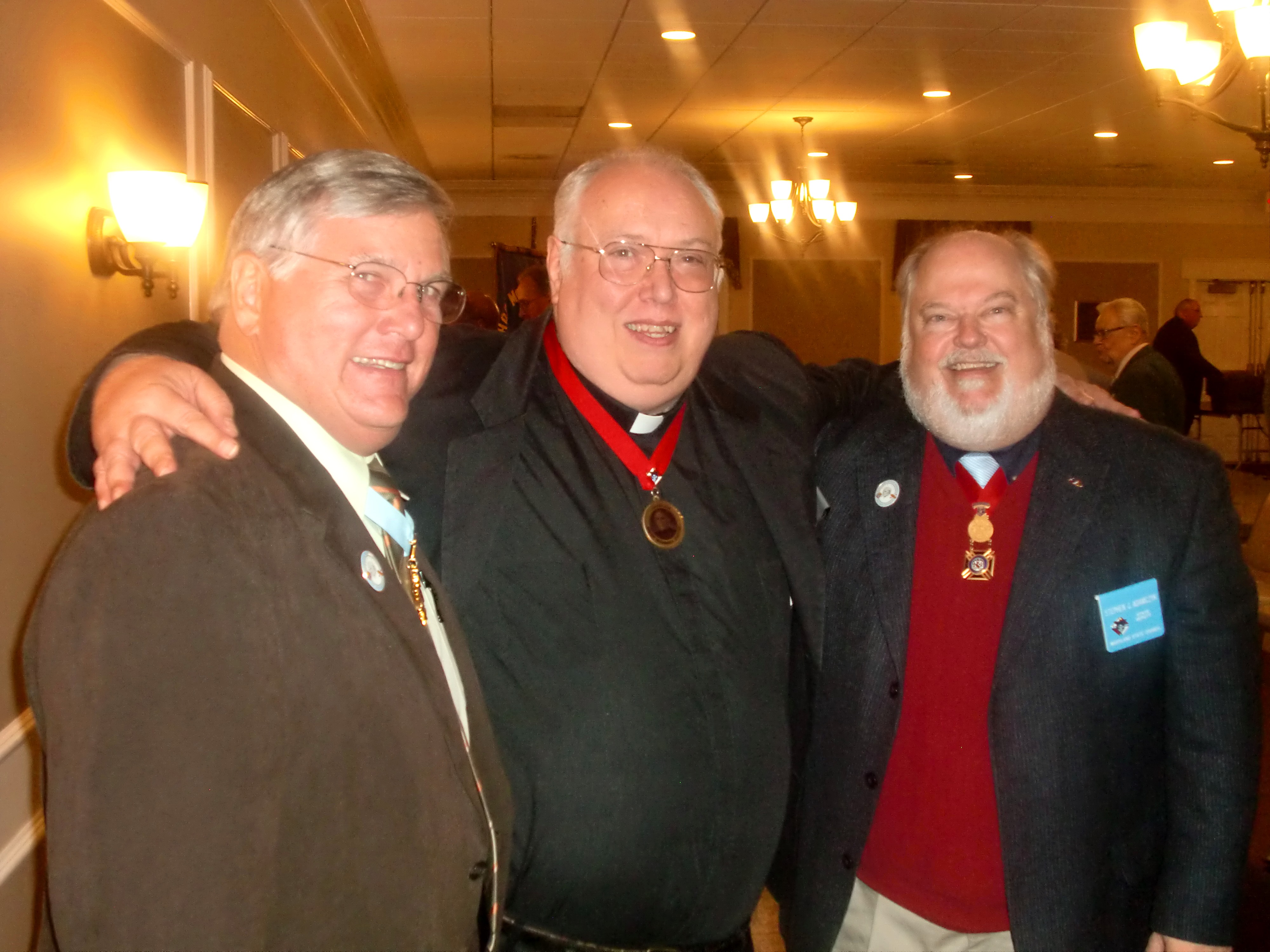
 Blogger Priest