















Good Intent, No Morally Licit Solution
 DIGNITATIS PERSONAE was released from the Congregation for the Doctrine of the Faith (September 2008) and the verdict about embryonic adoption was negative, making any satisfactory or positive solution dubious for these children in frozen limbo. A strict reading of the few words said about the matter would imply that it still falls under the same prohibition as regular IVF. The instruction states:
It has also been proposed, solely in order to allow human beings to be born who are otherwise condemned to destruction, that there could be a form of “prenatal adoption”. This proposal, praiseworthy with regard to the intention of respecting and defending human life, presents however various problems not dissimilar to those mentioned above (in regard to IVF).
If these problems are deal-breakers, then my initial sympathies on the issue, as were those of Professor May are wrong and Msgr. Smith was right. There is nothing we can do.
-
Propagation outside of the conjugal act is immoral.
-
The IVF process (the intervention of a technician) and the destruction of excess embryos is immoral.
-
The freezing of embryos is immoral.
All this is granted, but where do we go from here? The instruction goes on to say:
All things considered, it needs to be recognized that the thousands of abandoned embryos represent a situation of injustice which in fact cannot be resolved. Therefore John Paul II made an “appeal to the conscience of the world’s scientific authorities and in particular to doctors, that the production of human embryos be halted, taking into account that there seems to be no morally licit solution regarding the human destiny of the thousands and thousands of ‘frozen’ embryos which are and remain the subjects of essential rights and should therefore be protected by law as human persons.”
I guess that pretty much takes orthodox Catholics out of the embryonic adoption business. The prohibition may not be absolute, but it certainly weighs against it.
DISCUSSION
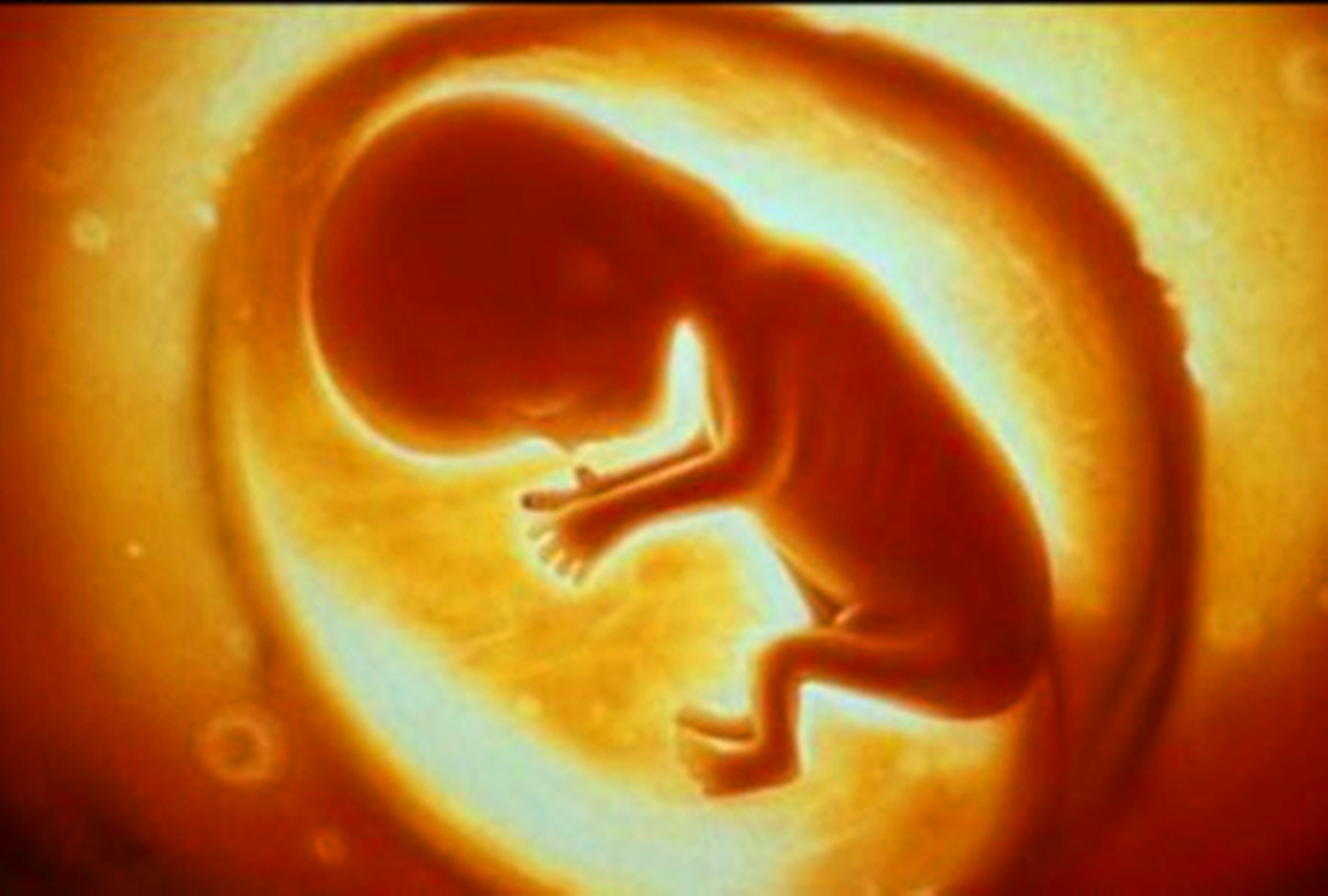
ROBERT: Speaking from a purely biological perspective, the static or frozen human embryo is not technically alive. There are certain biological prerequisites that it would need to possess in order to meet that definition. There must be (and is no) movement (or ability to detect and respond to internal or external stimulus), capacity for reproduction or heredity, growth or development, metabolism, or ability for that person to maintain homeostasis while frozen. The frozen person is cellular and highly organized – and therefore exhibits only one criterion of living things, but unfortunately it is impossible to differentiate that particular trait of the frozen embryo from a fully grown, and then deceased and frozen person. The difference between a frozen embryo and a corpse lies in a potential for life – a potential which is – even under the best of conditions for the embryo – both certainly uncertain and unable to be predicted.
FATHER JOE: Taking the question of the soul aside, the Church and many moral philosophers and various scientists regard the embryo as a human life from the first moment of conception. Any subsequent stasis or slowing down of the metabolic processes does not make a life suddenly cease and then reappear after a thawing or quickening process. If at any time it is permitted to continue its developmental trajectory, and survives the freezing, thawing and implantation, it will reveal that it was a certain type of living organism all along. If any of this species do not survive, the few that do will illuminate their identity as well. The biological traits of life must be viewed not from any one temporal moment but from the entity’s entire chronology. Children for instance cannot reproduce; but after puberty and sexual development, this deficit is usually overcome. However, this trait of a living organism is not present in every individual. Some living and true human beings are defective in their natural powers. However, it should be admitted, that the freezing of either embryos or fully developed human beings can result in the death of these entities. If the moral concerns of IVF apply to embryonic adoption, then there is no viable moral recourse to reanimate the embryos and to allow them to mature into full-term babies.
ROBERT: A frozen embryo, therefore, is a real person who is not really alive – the frozen embryo, while not a “potential person” is only potentially alive.
FATHER JOE: I cannot see how one who is alive can become “potentially alive.” There is life and there is death. In between are various levels of health or viability.
ROBERT: The post-IVF implantation of the embryonic person into a surrogate mother is in and of itself both against natural law and intrinsically evil. Just as with contraception, (but in the opposite direction) it separates the two-fold purpose of the conjugal act. Because the cart is truly before the horse here, the frozen person has already been created – a person who is, however, only potentially alive.
FATHER JOE: Where do you get this notion of “potentiality” in living? Did I miss it in any papal clarification or in the definition from the Congregation for the Faith? Is freezing really a limbo between life and death? Is that what you mean? A sperm and an egg signify potential personhood and a potential particular life. But can a person only be potentially alive? I cannot fathom how it could be so. We might regard persons as living composites of body and soul. If life is lost, the soul flies to its Maker and the body is reduced to an inanimate corpse. While the freezing process certainly affects animation, the embryo still suffers a continuing degradation. That is a type of movement I suppose. After only a few years, it is difficult to reclaim many of the embryos in implantation. Although there is currently no viable technology, would you argue that any futuristic cryogenics whereby adult human beings could be suspended for decades or centuries and then revived would only constitute “potential” life? They are not really dead. They would not be akin to reanimated vampires or walking zombies if permitted to be resuscitated.
ROBERT: The implantation of the IVF-created embryo carries forward the task of bringing about his or her actual life.
FATHER JOE: Here again I am troubled by a phrase, this time that of “actual” life. I am not convinced one can make such distinctions. It may simply be a case, as the Pope seems to be saying, that there are some living embryonic human beings (although frozen) that we cannot save.
ROBERT: It fulfills this necessary step at the cost of the self-donative intimacy intrinsic to the conjugal act itself and is thus innately disordered.
FATHER JOE: Yes, that seems to be the Vatican position and was held by the late Msgr. Smith of Dunwoodie.
ROBERT:
No person can participate in such an act without sin – a sin that is not diminished by arguing from a position of utilitarianism or consequentialism.
From a more theological perspective, although we esteem Mary, Virgin and Mother, as a perfect model for Christian life, this does not mean that we should ourselves deign to overshadow the conjugal nature of the procreative act, for in so doing we deign to establish ourselves as God and hold ourselves above the natural law that He established.
Again, in order for a valid Sacrifice of the Mass, there is a necessary form and substance. It would not be acceptable to start with the Eucharistic Person prior to the act of consecration. Nor could a priest place bread and wine in the tabernacle and have it be God without first consecrating the Transubstantiative Sacrifice on the altar. Just so, it is out of place for those of the married vocation to approach the procreative altar of their marriage bed, not with bread and wine (sperm and ova), but with the preconceived presence of a person who was brought about without the necessary and donative sacrifice of self. A non-spousal participation (the technician effecting the implantation of the embryo that the surrogate parents bought) adds further to the disorder wreaked by not having the donative and free gift come from within the sacramental bounds of the marriage.
FATHER JOE: Although Dr. William May argued for embryonic adoption as an act of sacrifice and heroism, what you say here, he taught me over 25 years ago.
ROBERT: As was stated in Dignitas Personae, this is a true moral quandry, one which presents no possible solution. Those who act on the supposition that the adoption and implantation of embryos is a morally good or heroic act should know that they do so at the peril of their souls.
See comments for a follow-up.
Filed under: Marriage, Morality, Pro-Life, Right to Life, Sexuality |

















 Blogger Priest
Addressed to Robert
When I speak of children unable to reproduce, I am talking not about human intervention and cloning. Rather, I am speaking about the natural course of things and how our abilities are situated in time. While the definition of a living organism includes the potential to reproduce, this does not mean that all individuals of a species would possess the ability. This matter of activity was raised because you contend that frozen embryos are only potentially living due to the fact that they are not currently exercising activities you would recognize as associated with living creatures. My argument would be that they possess all the components for human life and that they are truly living until irrevocably destroyed. The organic processes are slowed, but not stopped, even if all they can expect is putrification.
I am not able to accept the notion that “the activity of living” somehow stops for frozen embryos. While I might use the term “stasis,” this does not mean that there is no movement or degradation. This is substituted for the growth or maturation that should normally take place. After five years, the viability of frozen embryos for implantation drops off remarkably. Eventually, they would no longer be salvageable. While the organism’s development is stunted, natural processes continue to impact upon it. As a human person (not a rock), his or her developmental trajectory will be affected by these processes. The stress is placed upon existence, not the abundance of activity. Some proponents argue that people in comas are not sufficiently alive to be worthy of life-sustaining technologies. They would narrow their focus upon active self-awareness, communication and interaction with others. The frozen embryo has been stripped of even more factors which we associate with life and humanity. However, in both cases, we are still dealing with living human beings who have a right to life. I doubt that the Holy See or those moral theologians in good favor would speak of such embryos as “only potentially living.” If you have a citation to the contrary, I would be very appreciative to read it. I suspect the Church would make no distinction here between the biological and philosophical. We are corporeal creatures. This is expressive of our identity and personhood. We either are physically alive or we are dead. This is beside the question of the soul and giving up the ghost.
The embryo might be preserved by liquid nitrogen, but it is not a stone. The development is arrested, but not the fact that it is human and exists in time. It exists as a creature and forfeits nothing of its dependence upon the Creator. Human persons are alive. There is no artificially induced third state. The only possibility for such a development which comes to mind would be the utter abandonment of organic systems for the technological; i.e. human consciousness downloaded into computers or robot bodies. However, such might very well be impossible without killing the alpha person and creating either a new beta person or something entirely different and probably monstrous. But that, at least for right now, remains in the domain of science fiction.
There are some embryos that do not seem to survive the freezing process, or else they are so handicapped that they cannot mature any further if implanted. It is difficult if not impossible to distinguish these embryos from those which are still viable. The recent Vatican clarification is a serious impasse to those pro-life voices who argued for saving the frozen embryos. As I said previously, “If the moral concerns of IVF apply to embryonic adoption, then there is no viable moral recourse to reanimate the embryos and to allow them to mature into full term babies.” Proponents had hoped that there was a sufficient separation from the initial parties involved in the IVF process and from their selfish motives to allow implantation in the womb. The difficulties were many: the technical or medical similarity of IVF (already judged as immoral) with embryonic adoption; gauging the “unselfish” motives of volunteers for implantation; the intervention of third-party technicians in the process of human generation as a substitution to the marital act (the unitive dimension of “proles” and “fides”); and the significant peril faced by the embryos in the thawing process. I think you would agree about this ethical problem. The Holy Father sees no way around it. We are obliged to accept this decision as Catholics.
Before closing these comments I asked around about anyone who might be speaking of frozen embryos in terms as only “potentially” living. While you would not want to be associated with them, the only references to this phraseology came from those who deny the personhood and life of such embryos. Usage of such a term could be confusing and I would urge you to reconsider, finding other language to avoid association with the dissenters and their anti-life propaganda.
We both regard the embryo as a human life from the first moment of conception.
You are correct insofar as the LIFE itself does not (necessarily) cease to exist… disappear and then reappear. However, the activity of living does indeed cease to be while in stasis. This is a biological and not philosophical point. The action of living potentially remains in the creature (unless of course it has already been lost to death) – but that activity of living is only potential, not actual. Because we cannot tell whether the activity of living can return or not, I argue that the embryo is only potentially living.
I agree that the organism would be found to have been alive – but not living – while static. Because we lack omniscience, we would be limited to describing the static life form as potentially, not actually living. Again, this is a biological point.
The being’s very chronology of living has been arrested with antifreeze and liquid nitrogen. Ergo the chronology of the embryo’s existing in and of itself is also interrupted. The embryo exists (as does a stone) but is not existing as does a creature. The co-possession of existing and immutability is a trait of God, not man.
As for children not able to reproduce, it is not so in the case of asexual cloning. But we can leave twinning of the 64 cell or less stage embryo alone for the purpose of this discussion…
So we agree that the absence of achieving a teleologic reproductive capacity does not negate the status of a creature as a living being. But then this is not an discussion about natural evils resulting in injuries to a creature, but about an unnatural evil that raises the question of whether a creature is actually alive or not in the first place. The already-dead frozen embryo (if such a thing exists) is not living. The not-already-dead frozen embryo is not carrying on ANY activities of a living creature, and while static, will never do so. As such, it is not living, though it may be alive (here, I say “potentially”).
As for freezing destroying the embryos, we must ask if perhaps it is the THAWING of the frozen embryo may be what results in its death? Death, like life, has likely been arrested by the stasis. Lethal injury may have been inflicted, death may not (yet) have ensued. There are many unknowns here.
How can the moral concerns of IVF not apply? The IVF itself is a means to an end of implantating an embryo. The implantation is part and parcel of the action separating the procreative from the unative….
You write, “I cannot see how one who is alive can become ‘potentially alive.’ There is life and there is death. In between are various levels of health or viability.”
Touche on the philosophy. But then, aren’t you arguing from a natural law perspective about a process created by man that is entirely unnatural? Man has, with IVF, created a new status for a human being in my opinion. Neither living, nor dead.
Nope, you did not miss anyting in the pope’s argument, the view of the frozen embryo as potentially alive is my argument. this is my argument.
Yes, freezing really is a limbo. That was my intention and the reason why I was using the word “potential.”
You write, “A sperm and an egg signify potential personhood and a potential particular life. But can a person only be potentially alive? I cannot fathom how it could be so.” I don’t know. I’m with you on this one.
Good point about movement. But is it the movement of the embryo itself or of the freezing process that is at play here? Much like a river erodes a rock, does progressive ice crystallization erode viability?
As for supending adult human beings, that would be tough to do quickly enough with a larger organism, but who knows?
The “zombie effect” can be seen today with IVF: one embryo can be “split” at the blastomere stage into 8 separate “blastocysts”… if those blastocysts survive the DNA methylation-unzipping process, you can have 8 separate embryos asexually cloned. (This is already practiced.) Eight separate IVF cycles could be carried out to yield 8 separate identical twins of different ages with the same mother.}
As was stated in Dignitas Personae, this is a true moral quandry, one which presents no possible solution. Those who act on the supposition that the adoption and implantation of embryos is a morally good or heroic act should know that they do so at the peril of their souls.
I argue that adoption is for the living, not the static. Embryo adoption involves the adopters in an IVF implantaion procedure, which is illicit. Such action would appear not to be ‘heroic’ but sinful.