














Good Intent, No Morally Licit Solution
 DIGNITATIS PERSONAE was released from the Congregation for the Doctrine of the Faith (September 2008) and the verdict about embryonic adoption was negative, making any satisfactory or positive solution dubious for these children in frozen limbo. A strict reading of the few words said about the matter would imply that it still falls under the same prohibition as regular IVF. The instruction states:
It has also been proposed, solely in order to allow human beings to be born who are otherwise condemned to destruction, that there could be a form of “prenatal adoption”. This proposal, praiseworthy with regard to the intention of respecting and defending human life, presents however various problems not dissimilar to those mentioned above (in regard to IVF).
If these problems are deal-breakers, then my initial sympathies on the issue, as were those of Professor May are wrong and Msgr. Smith was right. There is nothing we can do.
-
Propagation outside of the conjugal act is immoral.
-
The IVF process (the intervention of a technician) and the destruction of excess embryos is immoral.
-
The freezing of embryos is immoral.
All this is granted, but where do we go from here? The instruction goes on to say:
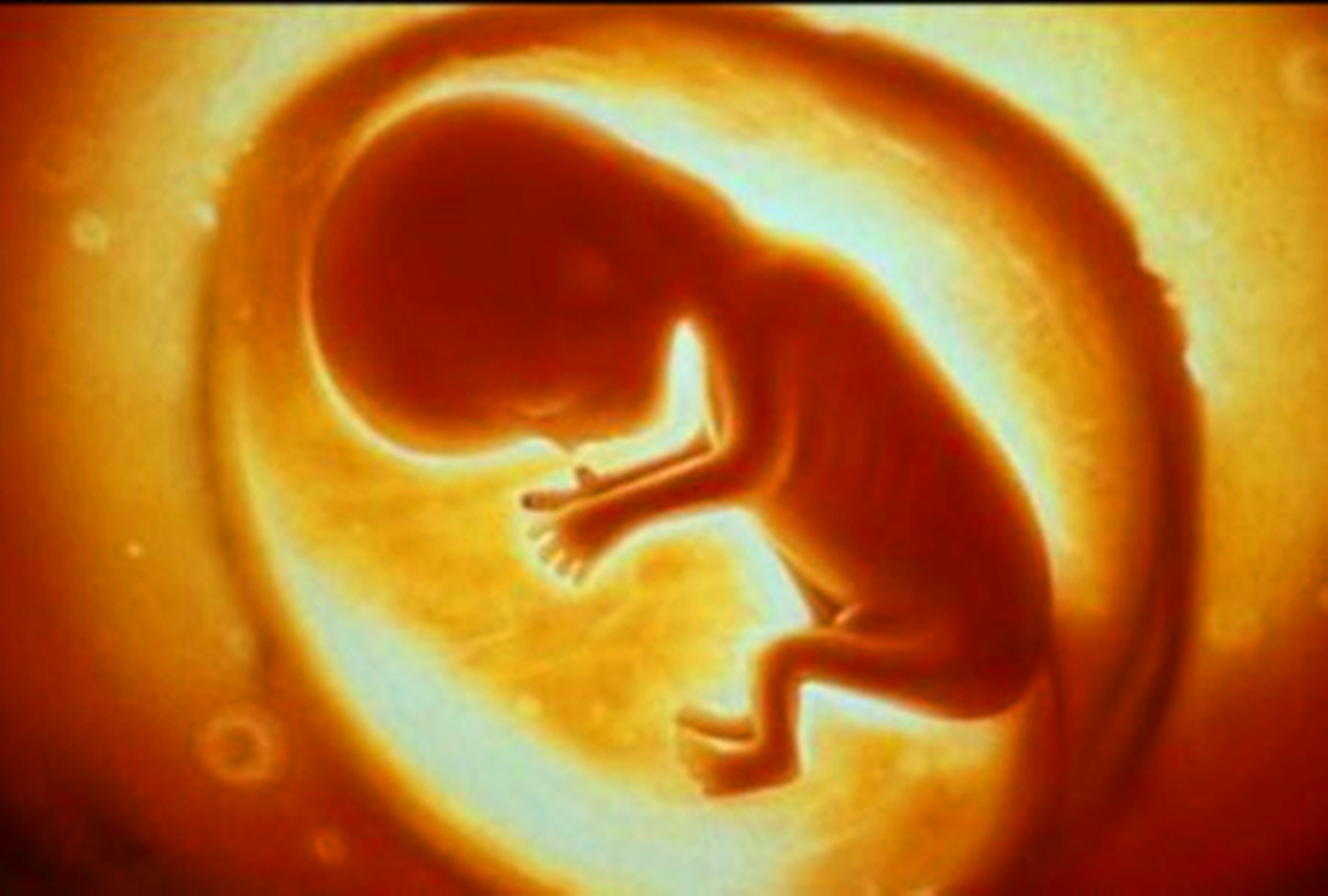
All things considered, it needs to be recognized that the thousands of abandoned embryos represent a situation of injustice which in fact cannot be resolved. Therefore John Paul II made an “appeal to the conscience of the world’s scientific authorities and in particular to doctors, that the production of human embryos be halted, taking into account that there seems to be no morally licit solution regarding the human destiny of the thousands and thousands of ‘frozen’ embryos which are and remain the subjects of essential rights and should therefore be protected by law as human persons.”
I guess that pretty much takes orthodox Catholics out of the embryonic adoption business. The prohibition may not be absolute, but it certainly weighs against it.
DISCUSSION
ROBERT: Speaking from a purely biological perspective, the static or frozen human embryo is not technically alive. There are certain biological prerequisites that it would need to possess in order to meet that definition. There must be (and is no) movement (or ability to detect and respond to internal or external stimulus), capacity for reproduction or heredity, growth or development, metabolism, or ability for that person to maintain homeostasis while frozen. The frozen person is cellular and highly organized – and therefore exhibits only one criterion of living things, but unfortunately it is impossible to differentiate that particular trait of the frozen embryo from a fully grown, and then deceased and frozen person. The difference between a frozen embryo and a corpse lies in a potential for life – a potential which is – even under the best of conditions for the embryo – both certainly uncertain and unable to be predicted.
FATHER JOE: Taking the question of the soul aside, the Church and many moral philosophers and various scientists regard the embryo as a human life from the first moment of conception. Any subsequent stasis or slowing down of the metabolic processes does not make a life suddenly cease and then reappear after a thawing or quickening process. If at any time it is permitted to continue its developmental trajectory, and survives the freezing, thawing and implantation, it will reveal that it was a certain type of living organism all along. If any of this species do not survive, the few that do will illuminate their identity as well. The biological traits of life must be viewed not from any one temporal moment but from the entity’s entire chronology. Children for instance cannot reproduce; but after puberty and sexual development, this deficit is usually overcome. However, this trait of a living organism is not present in every individual. Some living and true human beings are defective in their natural powers. However, it should be admitted, that the freezing of either embryos or fully developed human beings can result in the death of these entities. If the moral concerns of IVF apply to embryonic adoption, then there is no viable moral recourse to reanimate the embryos and to allow them to mature into full-term babies.
ROBERT: A frozen embryo, therefore, is a real person who is not really alive – the frozen embryo, while not a “potential person” is only potentially alive.
FATHER JOE: I cannot see how one who is alive can become “potentially alive.” There is life and there is death. In between are various levels of health or viability.
ROBERT: The post-IVF implantation of the embryonic person into a surrogate mother is in and of itself both against natural law and intrinsically evil. Just as with contraception, (but in the opposite direction) it separates the two-fold purpose of the conjugal act. Because the cart is truly before the horse here, the frozen person has already been created – a person who is, however, only potentially alive.
FATHER JOE: Where do you get this notion of “potentiality” in living? Did I miss it in any papal clarification or in the definition from the Congregation for the Faith? Is freezing really a limbo between life and death? Is that what you mean? A sperm and an egg signify potential personhood and a potential particular life. But can a person only be potentially alive? I cannot fathom how it could be so. We might regard persons as living composites of body and soul. If life is lost, the soul flies to its Maker and the body is reduced to an inanimate corpse. While the freezing process certainly affects animation, the embryo still suffers a continuing degradation. That is a type of movement I suppose. After only a few years, it is difficult to reclaim many of the embryos in implantation. Although there is currently no viable technology, would you argue that any futuristic cryogenics whereby adult human beings could be suspended for decades or centuries and then revived would only constitute “potential” life? They are not really dead. They would not be akin to reanimated vampires or walking zombies if permitted to be resuscitated.
ROBERT: The implantation of the IVF-created embryo carries forward the task of bringing about his or her actual life.
FATHER JOE: Here again I am troubled by a phrase, this time that of “actual” life. I am not convinced one can make such distinctions. It may simply be a case, as the Pope seems to be saying, that there are some living embryonic human beings (although frozen) that we cannot save.
ROBERT: It fulfills this necessary step at the cost of the self-donative intimacy intrinsic to the conjugal act itself and is thus innately disordered.
FATHER JOE: Yes, that seems to be the Vatican position and was held by the late Msgr. Smith of Dunwoodie.
ROBERT:
No person can participate in such an act without sin – a sin that is not diminished by arguing from a position of utilitarianism or consequentialism.
From a more theological perspective, although we esteem Mary, Virgin and Mother, as a perfect model for Christian life, this does not mean that we should ourselves deign to overshadow the conjugal nature of the procreative act, for in so doing we deign to establish ourselves as God and hold ourselves above the natural law that He established.
Again, in order for a valid Sacrifice of the Mass, there is a necessary form and substance. It would not be acceptable to start with the Eucharistic Person prior to the act of consecration. Nor could a priest place bread and wine in the tabernacle and have it be God without first consecrating the Transubstantiative Sacrifice on the altar. Just so, it is out of place for those of the married vocation to approach the procreative altar of their marriage bed, not with bread and wine (sperm and ova), but with the preconceived presence of a person who was brought about without the necessary and donative sacrifice of self. A non-spousal participation (the technician effecting the implantation of the embryo that the surrogate parents bought) adds further to the disorder wreaked by not having the donative and free gift come from within the sacramental bounds of the marriage.
FATHER JOE: Although Dr. William May argued for embryonic adoption as an act of sacrifice and heroism, what you say here, he taught me over 25 years ago.
ROBERT: As was stated in Dignitas Personae, this is a true moral quandry, one which presents no possible solution. Those who act on the supposition that the adoption and implantation of embryos is a morally good or heroic act should know that they do so at the peril of their souls.
See comments for a follow-up.
Filed under: Marriage, Morality, Pro-Life, Right to Life, Sexuality | 2 Comments »
















 Blogger Priest