
• Our Blogger

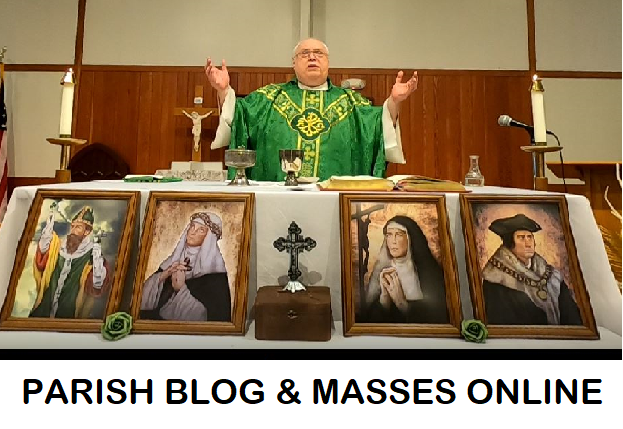
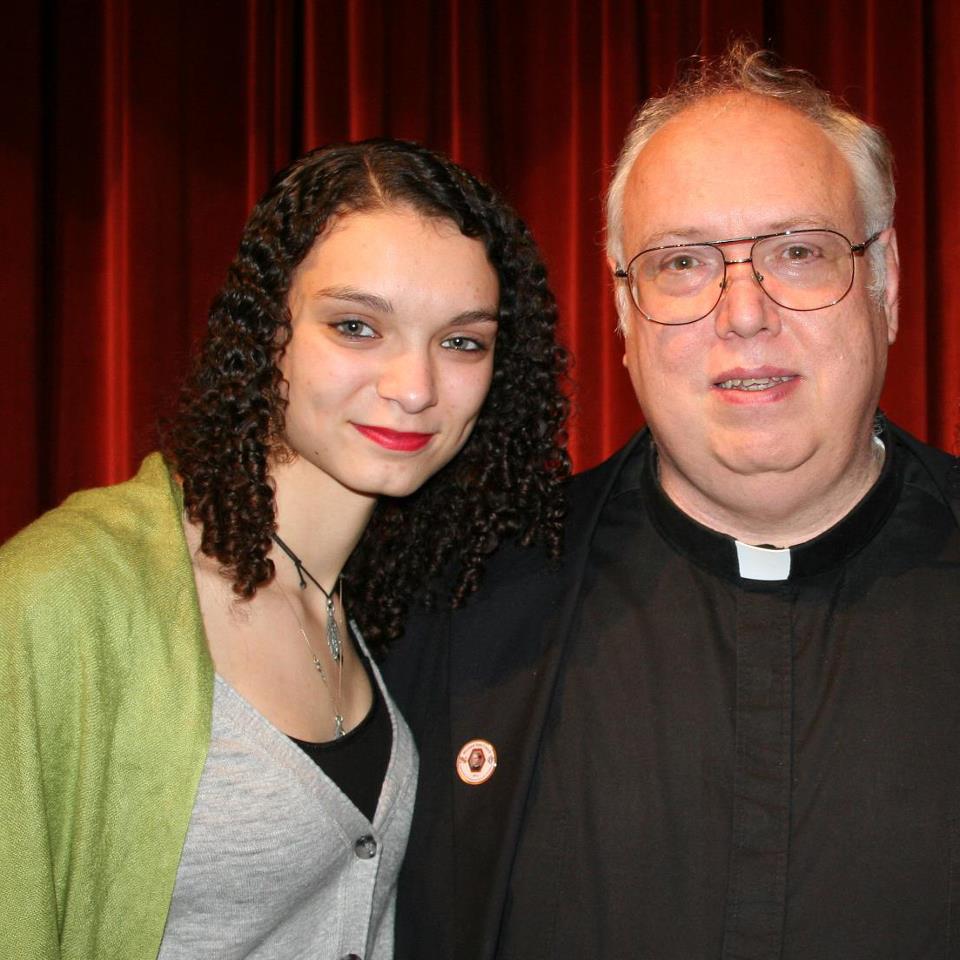
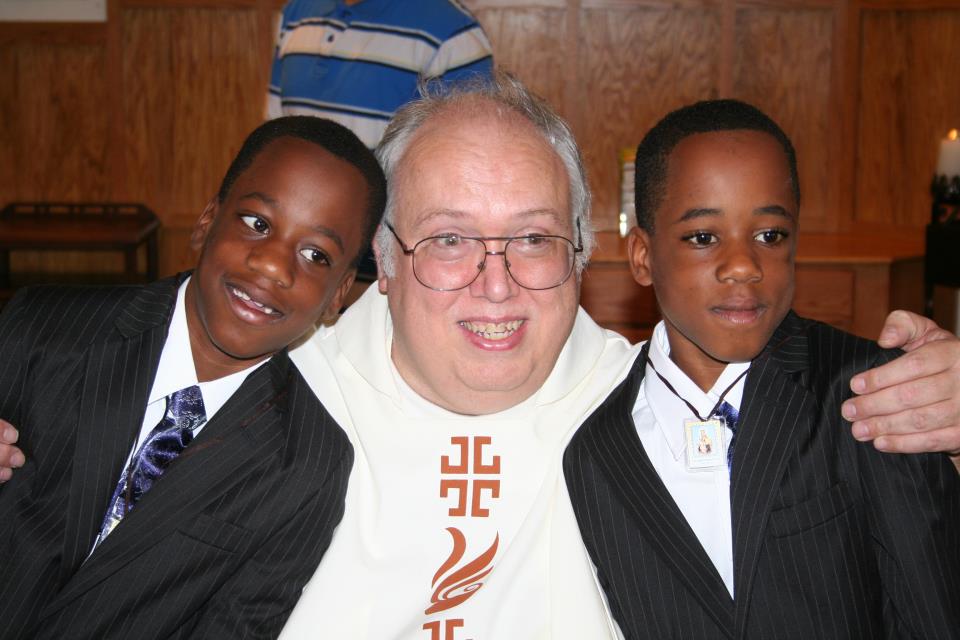
    Fr. Joseph Jenkins

  • The blog header depicts an important and yet mis-understood New Testament scene, Jesus flogging the money-changers out of the temple. I selected it because the faith that gives us consolation can also make us very uncomfortable. Both Divine Mercy and Divine Justice meet in Jesus. Priests are ministers of reconciliation, but never at the cost of truth. In or out of season, we must be courageous in preaching and living out the Gospel of Life. The title of my blog is a play on words, not Flogger Priest but Blogger Priest.

  • Archives

  • Categories

  • Recent Posts

  • Recent Comments

    Barbara King's avatarBarbara King on Ask a Priest
    Ben Kirk's avatarBen Kirk on Ask a Priest
    Jeremy Kok's avatarJeremy Kok on Ask a Priest
    Barbara's avatarBarbara on Ask a Priest
    forsamuraimarket's avatarforsamuraimarket on Ask a Priest

A Quick Summary of Catholic Teaching on Mary

mary.mother.of.jesus.01While I will no doubt repeat myself, I would like to give a brief summation of Marian teaching, to help the reader in grasping these truths and to fill-in any holes in my reflections. Vatican II spoke about Mary in greater depth than any previous council. The council fathers discussed Mary in the document on the Church.

Catholicism would insist that if we are to follow Jesus, we must also love Mary. How does one begin to speak about Mary’s union with her Son? She shares with other women two qualities which are usually mutually exclusive, maidenhood (virginity) and motherhood. The mystery of her perpetual virginity and her exceptional motherhood (as the work of the Holy Spirit) give a heightened transcendence and meaning to her relationship with Christ. Because her Son is unique, the God-Man come among us, her identity and union with him also takes upon itself an extraordinary character. She is the Mother of God. The Mother of the Redeemer is given to us by Jesus as the Mother of the Redeemed. The Second Vatican Council concludes the Dogmatic Constitution on the Church by calling Mary the Model and Prototype of the Church who “occupies in the holy Church the place which is highest after Christ and yet very close to us” (Lumen Gentium, 54). Separated from a comprehensive appreciation of this bond between the Mother and Son, the Church would be hindered in understanding her own union with the Lord. It is for this reason that an absence of Marian piety and affection can be quite serious. She continues to give us her Son and to beckon us to his service.

Mary’s trust and faith in God makes her the first disciple of her Son. Salvation history comes to fruition in her. God’s dealings with humanity were taking a most personal and intimate turn with this young girl who accepted her role as “the handmaid of the Lord.” Before she was to give birth to Jesus in the flesh, she had already received him into her heart and soul. “At the message of the angel, the Virgin Mary received the Word of God in her heart and in her body, and gave life to the world. Hence, she is acknowledged and honored as being truly the Mother of God and Mother of the Redeemer” (Lumen Gentium, 53).

Although Mary has been given the title, Mother of God, she was conceived in the normal course to Saints Ann and Joachim. Because of the role she would play as the Mother of the Lord, she was preserved from any trace of original sin. This state of grace which she received from the first moment of her conception in the womb was never blemished by personal sin. This teaching is called her Immaculate Conception. Despite the faulty argumentation of certain critics outside the Church, Mary needed Christ as her Redeemer just like the rest of us. The only difference was that we were washed from our sins forward in time by faith and baptism while she was preserved from sin backward in time by a singular divine intervention. In both cases, the shadow of the Cross brings salvation. Jesus died for us all. The one who was the source of all holiness had to come through a pure vessel. Mary was blessed or sanctified to protect the dignity of Christ as the Son of God.

Before, during, and after the birth of Jesus her Son, Mary remained a virgin. When her life was accomplished, she was assumed body and soul into heaven. This teaching is called her Assumption. It reminds us that the new life earned by Christ was not a one-time event. One of our numbers has followed Jesus and has been transformed in body and spirit. We will also share in the bodily resurrection and restoration.

In baptism and faith, we are invited to live the life of Christ. Jesus looked down from his Cross and gave Mary to John as his Mother. John represents us on Calvary. Mary sees her Son alive in us by grace, both as individuals and as a community of faith. Mary is the Mother of the Church. The council called her “a preeminent and altogether singular member of the Church, and as the Church’s model . . . in faith and charity. Taught by the Holy Spirit, the Catholic Church honors her with filial affection and piety as a most beloved Mother” (Lumen Gentium, 53).

While on earth, she cooperated with the redemptive work of her Son. “She conceived, brought forth, and nourished Christ. She presented him to the Father in the Temple, and was united with him in suffering as he died on the Cross. . . . for this reason she is a Mother to us in the order of grace” (Lumen Gentium, 61). Crowned as the Queen of the Saints, she ceaselessly intercedes for her children. She wants us to mature and to come home. This role is never in competition with her Son as they are of one heart and mind regarding our salvation. Indeed, this is a good definition of sainthood— to think as God thinks and to love as God loves. “By her maternal charity, Mary cares for the brethren of her Son, who still journey on earth surrounded by dangers and difficulties, until they are led to their blessed home” (Lumen Gentium, 62).

Mary was with the Lord at Bethlehem and Calvary, at the beginning and at the end of his mortal life in this world. He was her Lord and yet he was also her own flesh-and-blood. She saw him die for her new children. Now, like any good mother, she waits and makes preparations for us in our true home which is heaven. She is our “sign of sure hope and solace” (Lumen Gentium, 68). Catholics render honor and reverence to Mary because she was the Mother of Christ and because she was the perfect disciple of her Son. Many critics fail to understand this, no matter what amount of explanation is given. Making the matter blunt, why do we love and speak to Mary with devotion? It is because we imitate Jesus. Did he not obey the fourth commandment? Did he not love and respect his Mother? As a child did he listen to her closely? Sure he did. All we are doing is the same.

The Council of Ephesus (431 AD) clarified that Mary was truly the Mother of God (Theotokos, God-bearer in Greek) according to the flesh. Mothers bear persons, not just bodies. The person whom Mary bore was truly the eternal Son of God, one in divinity with the Father.

Mary’s role for Catholic Christians cannot be reduced to her physical maternity. She continues to participate in the salvation of the adoptive sons and daughters of God the Father. Her presence at the beginning and at the end of Jesus’ public life reveals her complete dedication to the work of her Son. Her Son honors her in return. Luke sets her in the long line of great women in Israel who were integral to salvation history. Mary is viewed as the most significant woman of all, believing in God’s saving promise. Mary’s faith earns for her a unique place, not only in human history but in human hearts. Her humility sets the pattern for our own discipleship and prayer.

Compare Mary to Jephthah’s Daughter?

mary.mother.of.jesus.01My mind races back to the days when as a young seminarian I studied theology at Catholic University. There were several ladies also taking classes and studying for degrees. When we studied the story of Jephthah’s daughter, my friend Theresa became agitated. She found the story in Judges 11:29-40 to be deeply disturbing. She wondered aloud if there might be some Scriptures that cannot be salvaged for Christian believers, today. In thanksgiving for his victory in battle, the Hebrew general pledges that the first who steps out the door of his home, he will sacrifice. He immediately laments his pledge because out steps his young daughter. She requests a short time to mourn her virginity and then we are told he did as he promised. Unlike the story of Abraham and Isaac, it appears that God does not stay his hand. It is arguably a remnant story that betrays the fact that human sacrifice, while later regarded as offensive, had at one time been practiced by the Chosen People. As with a few other passages from the Bible, there was a debate during the formulation of the Lectionary for Mass that this story should be skipped. Nevertheless, while the Scriptures are edited and censored for polite sensibilities in the Lectionary, this reading is still included. It is terribly hard to preach upon. The young girl had courage and her father kept his promise to God; but as Christians, we are aware that some promises should not be made. The child mourns that she will never know the joys of being a wife and mother. It is a poignant and terrible story. Mary was probably not much older. Tradition has it that she had embraced celibacy and/or virginity as a servant of the Temple. This fuels the assumption by some authorities that Joseph was a much older man, betrothed to protect Mary in a male-oriented society. A friend of mine uses the story of the slaughtered girl to talk about the low premium placed on virginity by Jewish society in ancient days. We also see how virginity is embraced to honor God, either in a death to self (as with Mary) or in a physical death (as with Jephthah’s daughter). But I am of the mind that the story is too emotionally evocative for a level-headed analysis. It makes us very angry. How can the murder of the innocent ever please God?

Jephthah was a great Jewish general. He was successful against great odds. He was victorious not because of his oath, but in spite of it. As St. John Chrysostom would tell us, his repugnant act would move the Jews to renounce all such blood-oaths from that time forward. We read:

“For if after that vow and promise He had forbidden the sacrifice, many also who were subsequent to Jephthah, in the expectation that God would not receive their vows, would have increased the number of such vows, and proceeding on their way would have fallen into child-murder. But now, by suffering this vow to be actually fulfilled, He put a stop to all such cases in the future. And to show that this is true, after Jephthah’s daughter had been slain, in order that the calamity might be always remembered, and that her fate might not be consigned to oblivion, it became a law among the Jews, that the virgins assembling at the same season should bewail during forty days the sacrifice which had taken place; in order that renewing the memory of it by lamentation, they should make all men wiser for the future; and that they might learn that it was not after the mind of God that this should be done, for in that case He would not have permitted the virgins to bewail and lament her. And that what I have said is not conjectural, the event demonstrated; for after this sacrifice, no one vowed such a vow unto God. Therefore also He did not indeed forbid this; but what He had expressly enjoined in the case of Isaac, that He directly prohibited; plainly showing through both cases, that He doth not delight in such sacrifices” (Homily 14:7).

There is a minority view that the girl was not put to death but that she lived as if dead and embraced a life-long virginity. It may be along these lines that some would make a clearer connection to Mary. However, St. John Chrysostom would be the greater authority in this matter of the Jewish general and his act.

The Significance of the Assumption

mary.mother.of.jesus.01The doctrine is simply explained. Mary was assumed, body and soul, into heaven. She deserved this honor because she was free from sin and from its consequences. Mary is seen as the beginning of those first fruits promised in Christ. We see in Mary that the resurrection and new life of Jesus is not a onetime event but is the real hope held out to those who believe and follow the Gospel. We too will be restored to life. We will also be reconstituted body and soul— glorified, changed— and yet still the same persons, finding our identities fulfilled in Christ. There are various traditions about the Assumption, but the truth they teach is the same. The Eastern churches speak of this mystery as the “falling asleep” or the DORMITION of the “Mother of God” or the BLESSED THEOTOKOS (God-bearer). This reference to “sleep” was due to a hesitance in the tradition to speak about Mary’s death. The end of her life was so singular, calling it death seemed inadequate. The West often portrays Mary in art as being raised into heaven by the efforts of small cherubs at her feet— a sign that her elevation is not by her own power but by God’s. (Note that with images of the Ascension of Jesus there are no such little helpers; he rises by his own power.) There is also the tradition that Mary clearly did die, just as her Son had died. However, the grave did not consume her. She remained uncorrupted. Legend has it that when the apostolic community came to care for the body, Mary’s tomb was empty and filled with blooming flowers. Like her Son, she had entered into eternal life. She represents our hope and is an image for the Church as the New Jerusalem.

Pope Pius XII defined this dogma in 1950:

(Munificentissimus Deus)

“By the authority of our Lord Jesus Christ, of the Blessed Apostles Peter and Paul, and by our own authority, we pronounce, declare, and define it to be a divinely revealed dogma: that the Immaculate Mother of God, the ever Virgin Mary, having completed the course of her earthly life, was assumed body and soul into heavenly glory.”

The Devil Hates Mary

mary.mother.of.jesus.01While no one would claim that Mel Gibson is a theologian, he did follow sacred tradition closely in his movie, THE PASSION. Note that the devil or demonic entity in the film is constantly looking at Mary and even mocks the Nativity in one shocking scene as Jesus is scourged. The devil hates Mary. He was the great angel of light. He was a prince among the heavenly hosts. But he tarried to God’s summons and turned away. His pride made him forget his place before the Almighty. Obviously one who would compare himself to the deity would have a particular disgust for human creation. The devil looked at mankind as if we were just ants to stomp under foot. The possibility that God might join himself to such of his creatures was repugnant to him. Indeed, again looking at the film, the demon screams at the moment of Christ’s redemptive death because he realizes that this is precisely what God has done and he has lost his hold on the race of Adam and Eve, forever. Satan sees mankind merely as animated sacks of blood covered in meat. He hates us. Mary is the new Eve. He reserves a special hatred for her. If he could, he would have her despair; but failing in this, he will do all he can to hurt her. Like himself, she is purely a creature; unlike him, she still has in abundance what he has utterly lost, divine grace.


The Intercessory Power of Mary

mary.mother.of.jesus.01The marriage feast of Cana is also demonstrative of Mary’s powerful solicitation or intercession with her Son. We often concentrate on the miraculous change of water into wine. Certainly, this was a sign that would start people wondering about Jesus and what his mission among them might be. But, more immediately, the witnesses would have every reason to ponder about Mary’s role. It was at her urging that Jesus worked his first miracle. Who was this woman who brought this wonder-worker to them and could compel him to do such things? As always, Mary’s involvement would draw disciples to her Son and precipitate faith in him.

Catholicism both emphasizes the unique and essential role of Jesus as the Mediator and acknowledges that there are various lesser and dependent or secondary forms of mediation. For instance, ordained priests and the sacraments access the primary salvific act of Christ but through men configured to the great high priest and through elements or mysteries instituted by our Lord for these purposes. We pray for one another and beseech the intercession of the saints. We add our crosses to that of Christ and seek to make reparation for offenses against the loving heart of Jesus. Mary’s involvement is considered so important that she has been given a devotional title that seems to mirror her Son’s as the Mediator. Mary is called the Mediatrix of Graces. Her function is entirely secondary, contingent and subordinate to her Son. She is of the same mind and heart with him. She offers us Christ in Bethlehem and will extend her arms to hold him when he is taken down from the Cross, offering him again to us. She only wants what her Son wants, the forgiveness of sins and the redemption of a people. Mary cooperates with her Son in building up his kingdom. We all are called to imitate Mary in bringing others into an encounter and unity with Jesus Christ. How can believers possibly say they love their neighbor if they are passive or disinterested in facilitating such meetings with Christ? It is no wonder that a sterilized non-Catholic form of Christianity tends on one hand to dismiss Mary and on the other to so internalize or privatize religion that ignorance of Christ in others is tolerated and no move is made to introduce them to our saving God. The failure to cooperate with God and to evangelize is a failure to love. No one comes to the truth alone. Everything is mediated. We pass on what we have because what we have matters. Nothing compares to the acquisition of the Greatest Good. We can gain money, fame, power and possessions; but if we do not have God, then we really have nothing. Speaking personally, this is why I became a priest: for the forgiveness of sins and the salvation of souls. All those who focus on these objectives will remain in union with Christ and rightly have a devotion to Mary. The particular difference between Mary’s mediation and that of others is based upon her maternal identity.

The Witness of Mary

mary.mother.of.jesus.01It is quite natural at Christmas time to reflect upon the role and motherhood of Mary. Unlike certain critics, Catholics would likewise bring her to mind at the crucifixion, to which she and a few others were direct witnesses. While some exegetes would argue that an appreciable amount of time passed between the actual Nativity and the Epiphany, Mary was also a witness to that somewhat peculiar event. Wise men follow a star and come as witnesses for the Gentiles. Shepherds answer the hymn of angels and come to pay reverence as fellow Jews. In other words, the whole world will pay homage to this newborn king, because he will bring about a new kingdom and a new people. Mary is already a citizen of this new order. The one who would go out to the world has the world coming to him. Nothing is said about Mary’s response, even when the astrologers give her Son gifts of gold, frankincense and myrrh (Matthew 2:1-12). Having already received the greatest gift of all, her Son, she welcomes the visitors to encounter him and to be stirred by a new faith. She places no hindrance to their access and like John the Baptizer some thirty plus years hence, recedes to the background. She will always bring others to her Son. Mary never gets in the way but spiritually facilitates our access to Jesus and submits to his authority and power.

Given the holocaust of the holy innocents, the year Jesus was brought to the temple for the presentation probably saw a scarcity of male children. This is not to deny the supernatural agency behind the prophecy of Simeon, only to acknowledge the possible natural surprise. John the Baptizer, himself, was purportedly hidden in a well when the soldiers came seeking the lives of boy children up to two years of age. This legend is interesting because it creates a wonderful parallel with the next time we encounter John, again in water, not hidden to save his life but visible to foster repentance and the saving of souls. John would have caused a similar surprise as a child and many years later as the great voice crying out in the wilderness, some would mistake him for the coming Messiah. The prophet Simeon addresses himself to Mary, recognizing her role as the one who brought Jesus to the temple. Jewish children were dedicated to the Lord. However, in Jesus, the Lord is being dedicated to their redemption, as an expression of God’s will— and from the arms of Mary. He will draw them into a more wondrous intimacy and life in him.

Rest in Peace, Fr. Don Worch

Worch_Donald_P

Rev. Donald P. Worch, 75, a Catholic priest who worked at ten Washington area parishes over the course of his 49 years with the church, died August 27 at University of Pennsylvania Hospital. Beloved brother and spiritual leader of Rudolph Christian Worch (Vivian), Robert Dennis Worch (Mary) and Richard Reynolds Worch (Ann).  Also survived by 8 nieces and nephews and 22 grand nieces and nephews.

Friends may call at Our Lady of Mercy Catholic Church, 9200 Kentsdale Drive, Potomac, MD on Wednesday, August 31, 2016 from 3:30 P.M. to 7:00 P.M. where a Vigil Mass will be held at 7:30 P.M.  A Mass of Christian Burial will be offered on Thursday September 1, 2016 at 10:30 A.M.

Interment will take place at Gate of Heaven Cemetery.

We have lost a saintly priest. Earth’s loss is heaven’s gain. Fr. Donald P. Worch died on August 27, 2016. He was 75 years old. Every time I saw him he would ask about my mother “Lena.” He was our Associate Pastor at Mount Calvary in Forestville, MD from 1971-1977. He came back in 1978 to bury my grandmother. She was interred with his Rosary in her hands. He was the first priest I called when Mom died recently. There was no answer and so I left a message. Now we know why we did not see him. He suffered from a bad heart much of his life. When I was a boy all the ladies thought he was quite handsome, yes, literally a “father-what-a-waste.” He was a good and holy man. A true priest of God.

Rest in Peace.

In lieu of flowers contributions may be made in his name to Catholic Charities.  www.catholiccharitiesdc.org/

Mary, First Disciple of Her Son

mary.mother.of.jesus.01Mary is the first disciple of her Son. When Mary and the family are seeking him, Jesus tells the crowd and his many disciples that they are also his family (see Mark 3:31-35). When a woman shouts out a blessing for the womb that bore him and the breasts that nursed him, he adds that better still is the one who hears the Word of God and keeps it. There is nothing here of a slight against Mary. Indeed, he is raising her up. Mary not only received the Word but she would give it birth into the human family. She will always be the handmaid of the Lord.

Luke 2:19 claims Mary as a source and says that she “pondered all these things in her heart,” the events of salvation history revolving around Jesus and in which she had a part. Prophecy is fulfilled about the seed of the woman crushing the serpent. The Messiah redeems his people. A prophecy is also accomplished about Mary’s continuing role in the Church, even after her assumption. We invoke her maternal intercession and honor her as both the Mother of Christ and our Mother, those redeemed by her Son. Simeon told her at the temple when they came for the presentation, “Your own soul a sword shall pierce so that thoughts out of many hearts might be revealed” (Luke 2:35). Mary was obviously and necessarily present at the conception and birth of her Son, God come to live among us. Similarly, she is with the early Church and the apostles at Pentecost when the Church is born through the infusion of the Holy Spirit (see Acts 1:13-14). This Spirit makes it so that Christ will be present still through his living Word, the sacraments, and the mystical body or the Church. The Church becomes what Mary was before it, the Ark of the Covenant. Now the great divine mystery will not be hidden in her womb but shall come forth from the womb of the Church. We come to the baptismal font and receive our share of the Holy Spirit, being born again, made into new Christs.

While each of us should be conscious of our response to the great commission of Christ; Mary was the first to hear the summons and she goes out as a missionary to the house of Elizabeth and at the end of the Gospel narrative, having treasured the presence of our Lord in her own home, she testifies to the house of God or the Church. She models for us the posture of a disciple. She is also our special advocate and intercessor. Of course, she never eclipses the role of mediation that is unique to her Son (1 Timothy 2:5-65). If almighty God wanted to exclude the divinization of humanity by grace and disqualify any earthly participation in his mediation, then he could have saved us in another way. Instead, he is conceived and born of Mary, one of his creatures. It was part of divine providence from the very beginning that Mary would have a continuing role to play. Jesus is the saving name. Jesus is God come down from heaven. Jesus is the Savior of the world and makes infinite atonement through his Cross. All this is true. However, Mary’s participation in the saving work is also made possible by the power and intervention of God. God can do as he pleases and he desired to grant a special privilege to this Jewish maiden.

God’s Only Son, Mary’s Only Son

mary.mother.of.jesus.01Certain Protestant critics will point to Luke 2:7 as a proof that Mary had other children: “And Mary; brought forth her FIRST BORN Son.” However, this designation “first born son” is a peculiarity of translation. The expression in ancient times merely meant that this was the first child to open the womb or that was born. The expression was used even when no other children were born to a woman. There was also the Mosaic command that every first child had to be presented to the Lord after forty days. Many other women in the history of salvation had singular births. Here too, with Mary, God demonstrates his power and favor in the birth of Jesus. He is God’s only Son. He is also Mary’s only Son.

I am reminded of Moses who removed his sandals when he approached the burning bush. God was present and Moses trod upon holy ground. Mary is the living holy ground of God. Joseph most of all appreciated this reality. He was the faithful guardian and protector of both Mary, the Ark of the New Covenant, and Jesus, who was God come among us. Would we have a picnic and use the chalice from Mass to hold our soda pop? Would we use the paten to serve cupcakes? No, of course we would not! They are reserved for the precious body and blood of Jesus Christ. Similarly, Mary was a vessel reserved for the presence of our Lord.

I have often preferred the use of the term “brethren” over that of brothers in the texts which speak about the kin to Christ: Matthew 13:55, Mark 6:3, 7:10 and Galatians 1:19. If not true brothers, who were James, Joseph, Simon, and Jude? The word for brother in Hebrew was inexact and meant all sorts of familial relations. Of course, today too we give a wide definition to brothers and sisters beyond a definition of siblings with the same parents. The liturgy uses the address of brothers and sisters in prayers. Secular society uses the terms for close friends or affiliated representatives of the African-American community. The Gospels of Matthew and Mark designate two of the brethren, James and Joseph, as sons of the “other” Mary, who accompanied Mary Magdalene. She is the mother of the sons of Zebedee (see Matthew 27:56 and Mark 15:40). This Mary was related to the Virgin Mary (John 19:25). James who was called the brother of the Lord (Galatians 1:19) was actually the son of the “other” Mary, the wife of Clopas (Luke 24:10). The apostle Jude Thaddaeus (Matthew 13:55) announces himself a brother of Jesus (Jude 1:1) but we know that he is the son of Mary, the wife of Clopas. There are also intimations that Jesus is an only child by how he is addressed. When he goes home, people are taken aback by his public ministry and new popularity. It is remarked, “Is this not the carpenter’s son?” Notice, the speaker does NOT say, “Is this not ONE OF the carpenter’s sons?”

Mystical Spouse of the Holy Spirit

mary.mother.of.jesus.01Given that Mary is understood as a mystical spouse of the Holy Spirit, it is fitting that there is no physical consummation of the marriage between Joseph and Mary. While they will share love and a common life, in many ways their bond was more that of father and daughter than the usual husband and wife. We live in such an over-sexed world that this relationship seems absurd or impossible. This makes it all the more valuable. While physicality can be a legitimate and wonderful component to spousal love, too often it eclipses the chaste sacrificial love which should also exist between lovers. By stripping away the physical element, the Holy Family gives witness to the greater love which should be present in every nuptial union. Their celibate love is also a testimony to a discipline which is so sorely absent in many relationships, today. People want everything and they want it now. Pleasure is pursued and worshiped. People think that their lives are enriched by seeking as many experiences and relationships as possible. Our culture laments and feels sorry for the person who dies a virgin. Sexual activity is regarded as a rite of becoming an adult, even if as a pretense during the teen years. Couples use sex as a form of recreation. Later they cohabitate with the excuse that it makes financial sense; the truth is that it makes fornication easier. When they finally get married, there are often problems. Why? Their actions already demonstrate that they see no vital link between the marital act and marriage. They get married for the ceremony or to make parents happy, not because they repent from sin and want the graces of the sacrament. Where is sacrificial love in all this? Where is their high regard for purity and virginity? Where is the discipline and reverence that will sustain them? Ask such people about Joseph and Mary and they will laugh at you. They cannot believe that there was no sexual intimacy between the spouses of the Holy Family. Their mindset and values are very far removed from those of the Gospel.