The blog header depicts an important and yet mis-understood New Testament scene, Jesus flogging the money-changers out of the temple. I selected it because the faith that gives us consolation can also make us very uncomfortable. Both Divine Mercy and Divine Justice meet in Jesus. Priests are ministers of reconciliation, but never at the cost of truth. In or out of season, we must be courageous in preaching and living out the Gospel of Life. The title of my blog is a play on words, not Flogger Priest but Blogger Priest.
The catalyst that facilitated the violation of the Capitol was not simply the agitation of a few gathered at one minor rally; rather, it was a disordered and chaotic reaction from a small contingent representative of millions of voters suffering angry disbelief at the election results. Yes, this shock went to the top of the ticket, motivating charges of election fraud. Instead of transparency throughout, and a lack of graciousness from the winners, President Trump and all who supported him were maligned as fools and racists. Instead, there should have been caution in speech and action without partisan rancor. Trump lost the election with more votes than had Obama when he won. Our nation was still deeply divided and the President’s supporters remained energized by the populism of a leader that gave voice to millions of Americans who thought they were not being heard, or worse, villainized by critics on the left. Indeed, even many moderate and conservative Republicans felt their party had been hijacked, creating tension between the executive and legislative branches. After the loss it was evident that both parties were being manipulated by opportunists.
Just look at the debates where ideas were shunted aside and every calumny and name-calling was employed to destroy the other side. While President Trump was an expert at such combative jargon, both sides were reduced to this style of debate that attacks persons to the detriment of ideas and policies. During the Obama and Trump and now the Biden administrations, instead of working with each other as fellow Americans, those in opposition are caricatured as dishonest, abusive and traitors. Today, business is done by presidential edict and not through congressional deliberation and consensus. The real danger to American democracy is not to be found in a crowd of crazies and drunks that trespassed upon the Capitol, but by an atmosphere of perpetual partisanship where voices are not heard and little to nothing of substance gets done. President Biden may have won the election with 81,268,924 million votes; but we cannot reunite a nation while smearing the 74,216,154 million that voted for President Trump. January 6 will be remembered as reprehensible but not as a genuine threat to American democracy; our country is too resilient to be taken down by such foolishness. But, having said this, there are far more dangerous problems that professional politicians either ignore or reinterpret for their own benefit. No one in his or her right mind would compare what happened to D-Day or 9-11, or so I thought. Let us stop being silly and get serious. We need statesmen that govern and not politicians who are engaged in perpetual campaigning. We need sober dialogue, a respect for persons and a renewed regard for the truth. We need to get control over national debt, resolve the pandemic, devise a sustainable policy about immigration, ensure the security of our nation and our allies from military aggression and terrorism, and put America back to work. We also have to face the hard truth that government cannot solve every problem by throwing money at it.
It is joked that we have the best politicians “that money can buy” but the joke is on us and it is not funny. We need men and women with personal integrity and corporate responsibility to govern wisely.
As with most Christian prayer, the Mass really begins with the priest and people making the sign of the cross. Indeed, congregants have likely already blessed themselves with holy water in the saving sign by invoking the Trinity and recalling their baptism at the entry to the church. At the end of Mass they do the same by remembering their commission as prescribed in Matthew 28:18-20 where Jesus says: “All power in heaven and on earth has been given to me. Go, therefore, and make disciples of all nations, baptizing them in the name of the Father, and of the Son, and of the holy Spirit, teaching them to observe all that I have commanded you. And behold, I am with you always, until the end of the age.” Two essential truths of Christianity are invoked— the Cross by which we are redeemed and the chief revelation given to us of God as one but also as a Trinity of persons. The signing in the cross serves as a dedication. We are saved by the Cross and we belong to Christ. All that we are about to do (this saving work and collaboration between the priest and people) belongs and is directed to the Lord.
The celebrant greets the faithful with the words, “The Lord be with you.” The congregants respond, “And with your spirit.” Priest and people alike are welcomed into an encounter with the Lord. Jesus Christ will lead us in the perfect worship of the Father. We acknowledge the God we cannot see and yet invite him into our souls. This signifies something of our corporate faith and that we need to be in right relationship with each other and in a state of grace before our heavenly Father. At this point the celebrant may speak to the congregation in his own words regarding the specificity of the given liturgy.
A prescribed antiphon (Introit) may be said or sung at the beginning of Mass. If the priest recites it then it is moved to after the sign of the cross and greeting. On Sundays a religious hymn is frequently substituted to accompany an Entrance Procession. There is an antiphon for Holy Communion that can similarly be replaced by a sung hymn. Although not in the Roman Missal, an antiphon might be chanted during the Offertory; but usually it is either omitted or replaced with a hymn. While not strictly mandated by the rubrics, solemn Masses as on Holy Days and Sundays, most often in practice conclude with a recessional hymn.
After the Last Supper the Scriptures tell us that the apostles go singing to the Garden of Gethsemane (Matthew 26:30). That which was celebrated in Passover celebration is now to be realized in time. The time of their redemption is at hand. They joyfully sing hymns of thanksgiving. What do they sing? No doubt they chant the great “Hallel” psalms of praise (113-118). The Lord would bring light from the darkness. Our Lord would endure betrayal by Judas and his arrest by the high priest’s guard. He enters into his prophesied passion and death. The Mass begins.
The hymn can induce an atmosphere conducive to worship, unifying in song the congregated people of faith. Too often the lyrics of religious songs stray from the parameters of sacred music. I often thought this was the case with much of the folk song (but not all) that we regularly sang in the days immediately after the transition to Mass in the vernacular. All secular songs and many religious compositions work better on the radio and around the campfire than in the church. The old Mass faced a similar dilemma, albeit when classical pieces became so elaborate that they overwhelmed the worship itself. Pope Pius X favored a restoration of simplified Gregorian chant over the polyphony and orchestration that would be more at home in a concert hall. Somewhat in contradiction, I read Pope Benedict XVI lamented that the works of Mozart, Bach and others fell from use in the liturgy given that the compositions so powerfully raised hearts and minds to God and represented the highest expressions of human genius and creativity to honor almighty God in music. Nevertheless, liturgical music should find its home in the Mass, not as a disjointed entertainment but as an integrated prayer. Appropriate liturgical song reflects its particular placement and functionality in the liturgy as well as the theme (in the readings) or season in the liturgical calendar.
When the processional reaches the altar, the priest and servers bow. Given that the tabernacle may be situated behind the main altar, they might genuflect instead. There are many genuflections during Mass, directed to either the altar or tabernacle. Sometimes it is wondered why some priests only bow. Most of the time this deviation from the norm simply has to do with aging ministers with bad knees and aching backs. But the clergy do what they can, trusting that both God and the Church understand accommodations for age and fragility. (A traveling female friend tells me of a priest who is pushed in a wheelchair to a small table in front of the main altar of his church. Two men assist him at Mass by raising his arms and manipulating his frail hands. The parish is poor and lacks professional musicians but as soon as he begins to sing with his weak and wavering voice he is immediately accompanied by the congregation. My friend shares with a congregant after Mass, “It is too bad you do not have a healthy priest.” The parishioner sharply responds, “What do you mean? We have our priest and the Mass, what more could we want?” The solidarity with the old sick priest and the underlying truth of what she says brings me to tears. At a time when the liturgy wars in the Church fight over accidentals, here is a community that knows what it is really all about.) Returning to the procession, if there is a deacon he may carry the Book of the Gospels, placing it on the altar. At the time for the Gospel he will process with it from the Altar to the Ambo, visually illustrating the link between the table of the Eucharist and the table of the Word. The priest (and the deacon) venerate the altar with a kiss. The altar is symbolic of Christ. A server places the processional cross in its holder, facing the people. Today it is mandated that there is a crucifix on the altar facing the priest. Incense may be offered toward the altar. If so it will later be used at the Ambo prior to the proclamation of the Gospel. Later it will be offered over the gifts upon the altar and may include an incensing of the priest, other ministers and the assembled worshippers. The meaning is always the same. We desire our prayers to rise like the smoke of the incense to almighty God (see Psalm 141:2).
The Mass is primarily the work of Christ on Calvary and by extension the work of the Church in its sacramental re-presentation. The word “liturgy” literally means work of the people. Our Lord reveals his infinite and sacrificial love for us. We are called forth to enter into this love and to offer ourselves with Christ as an oblation or gift to our heavenly Father. We obey the commandments about keeping the Sabbath and worshipping the one true God. We keep the most fundamental precept of the Church. Everything that the Church is, flows from the Eucharist. It is said that where ever we find Peter, we find the true Church. It could also be said, that where ever we find the Eucharist, we also find the Church. The narrative of the Last Supper given by St. Paul is the manner by which he celebrates the Eucharist. The Mass finds it roots in the sacrifice of Christ on the Cross and the Lord’s Supper which intimately signifies or makes this mystery present for all generations in remembrance of him. It is a meal and a sacrifice. Jesus is made present in the mystical body of God’s people, in the ordained priest at the altar, in the Word proclaimed and in the Eucharist that is shared.
Our appreciation of the redemptive work of Christ is found within Christian anthropology in terms of the Creator to the creature dynamic. Catholicism would speak less of wrath and more about the honor of God and divine justice. Jesus makes satisfaction for the infinite dishonor shown to almighty God by our sin. It is a debt in justice that we owe but could not pay as finite creatures. God so loves us that he sends his only Son as a member of the human family. As one of us he could render the propitiation or oblation that is demanded. As a divine Person he could do so with infinite satisfaction, something we could not do. It goes back to the biblical maxim that only God can forgive sins. We cannot save ourselves. Only God can save us. He does so from our side of the equation. It is as if our names are upon the nails of the Cross. As a mortal man he is vulnerable to the passion and crucifixion. As God he could surrender his life for each and every one of us and then take it up again in the resurrection. He did not have to do this. No one and nothing could compel him. He does so freely. Jesus dies for the accumulative sins of all humanity throughout all time. The Mass allows us to be present at the saving mystery and to offer ourselves as grafted to him as an acceptable sacrifice to the Father. His act of love conquers suffering, sin and death.
The recent statement (2021) and document being prepared by the USCCB on the Eucharist is part of a three year program to emphasize the meaning of the great sacrament for Catholics. The whole business of dissenting politicians and Eucharistic reception is entirely a side-note on the periphery of this initiative. We should all be properly disposed to receive Holy Communion. What must be a major concern is that the sacrament that feeds and heals the soul of one in a state of grace can literally bring down judgment and conviction to the soul of another in mortal sin or lacking sufficient supernatural faith.
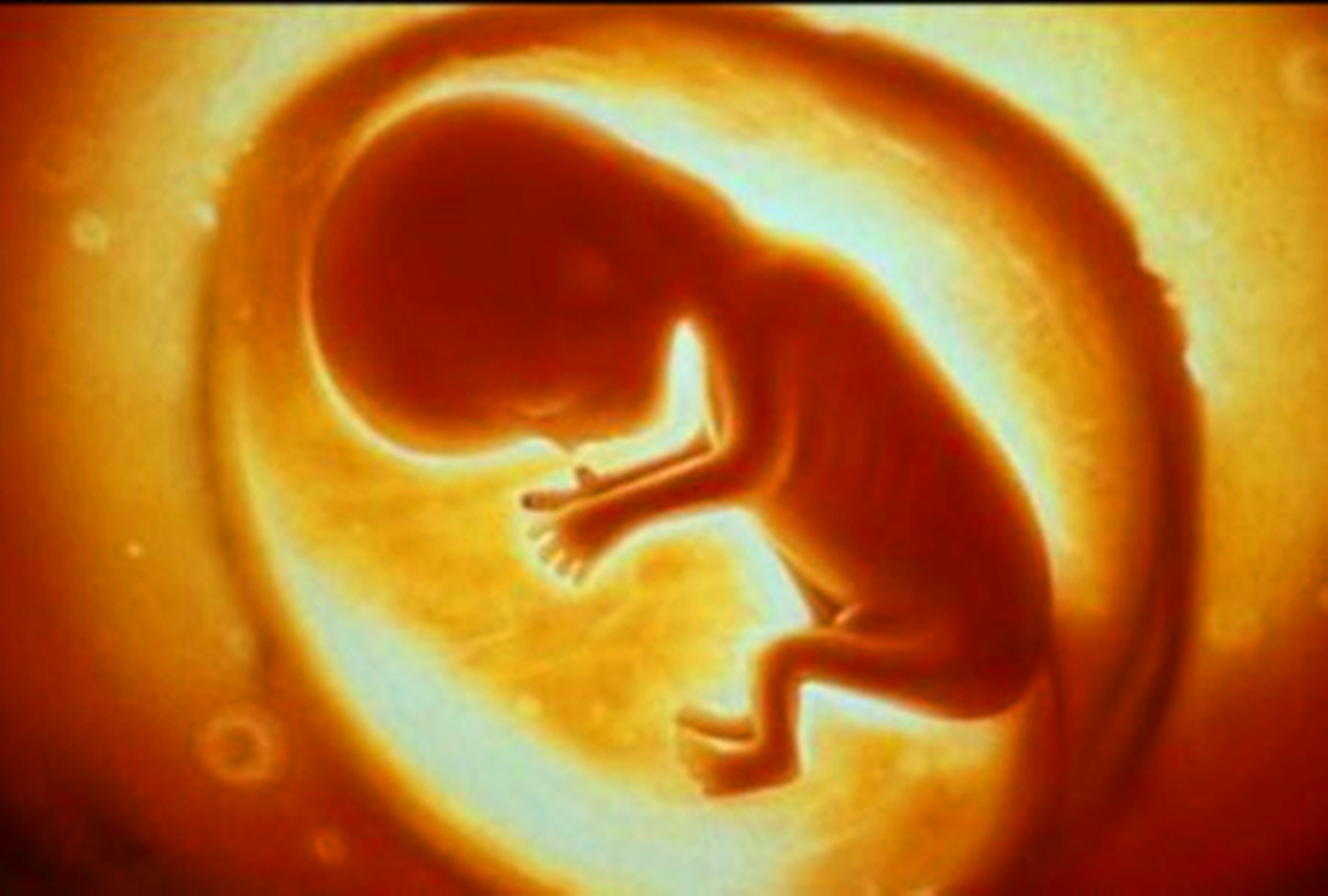
I will state something that is at the heart of the current debate about Eucharistic reception: You cannot credibly say AMEN to the invisible but REAL presence of Christ in the host while saying NO to the invisible but REAL presence of one made in his image hidden in the womb. The mystery of the incarnation makes every child a reflection of the Christ Child. While on the archdiocesan priest council I asked, how would we respond to one presenting himself for Holy Communion who was a known Nazi favorable to Jewish genocide or a powerful white supremacist enabling black lynching? Are the unborn in the womb any less human and persons of incommensurate value? No answer was forthcoming except a vote that I would decidedly lose. Afterwards, I was censured for my bluntness on this matter by the now discredited Cardinal McCarrick. Nevertheless, this is a truth that I will repeat again and again. This teaching is intimately connected to the proclamation of the Good News or what Pope John Paul II calls the Gospel of Life.
We are hearing a cry of timidity today not to weaponize the Eucharist. But did we not once regard the pilgrim church as the Church Militant, campaigning not only against men but powers and principalities? The Eucharist has always been regarded as the most effective weapon in our arsenal. Indeed, it may be all that really stands between us and the legions that oppose the sanctity of life and devalue the dignity of persons. The fuse is lit. Instead of passivity and accommodation, we need a taste of the ancient faith that is courageous and sure of itself. All true people of faith must bravely proclaim and commit themselves to the Gospel of Life, no matter what the cost. The battle with modernity is real but we opt for the path of nonviolence even if it should demand that we mix our blood with Christ’s. The Eucharist signifies unity with the Lord and one another in the great peace of Christ. “A thief comes only to steal and slaughter and destroy; I came so that they might have life and have it more abundantly” (John 10:10). It is this Lord that comes to us in Holy Communion. It is this Lord that cannot be reconciled with those who would promote or enable the killing of children in the womb— those who would steal the gift of life; slaughter the innocent; and destroy or usurp what God has made.
Jesus means what he says about the Eucharist:
John 6:52-58: The Jews then disputed among themselves, saying, “How can this man give us his flesh to eat?” So Jesus said to them, “Truly, truly, I say to you, unless you eat the flesh of the Son of man and drink his blood, you have no life in you; he who eats my flesh and drinks my blood has eternal life, and I will raise him up at the last day. For my flesh is food [meat] indeed, and my blood is drink indeed. He who eats my flesh and drinks my blood abides in me, and I in him. As the living Father sent me, and I live because of the Father; so he who eats me will live because of me. This is that bread which came down from heaven, not such as the fathers ate and died; he who eats this bread will live forever.”
John 6:60: Many of his disciples, when they had heard it, said, “This is a hard saying; who can listen to it?”
John 6:66-69: After this many of his disciples drew back and no longer went about with him. Jesus said to the twelve, “Will you also go away?” Simon Peter answered him, “Lord, to whom shall we go? You have the words of eternal life; and we have believed, and have come to know, that you are the Holy One of God.”
The Jews murmur (John 6:41) and abandon Jesus just as certain so-called Christians reject the Eucharist today. Do they even believe that Jesus is God, given that God can do all things? Jesus does not compromise or explain away his teaching in any manner. He insists upon a literal understanding of the real presence in the Eucharist. There is no misunderstanding. Jesus allows the murmuring Jews among his disciples to abandon him. Peter responds correctly. Like his many successors, Peter steers the Church toward the truth of Christ. Jesus is God and whatever God says is true, no matter how fantastic and deep a mystery.
A PRAYER BEFORE MASS
Any of a number of prayers might be offered before the start of Mass. Unfortunately, many either do not pray prior to Mass or just come without spiritual preparation after Mass has already begun.
A Prayer before Mass by St. Thomas Aquinas – Almighty and everlasting God, behold I come to the Sacrament of Thine only-begotten Son, our Lord Jesus Christ: I come as one infirm to the physician of life, as one unclean to the fountain of mercy, as one blind to the light of everlasting brightness, as one poor and needy to the Lord of heaven and earth. Therefore, I implore the abundance of Thy measureless bounty that Thou wouldst vouchsafe to heal my infirmity, wash my uncleanness, enlighten my blindness, enrich my poverty and clothe my nakedness, that I may receive the Bread of Angels, the King of kings, the Lord of lords, with such reverence and humility, with such sorrow and devotion, with such purity and faith, with such purpose and intention as may be profitable to my soul’s salvation. Grant unto me, I pray, the grace of receiving not only the Sacrament of our Lord’s Body and Blood, but also the grace and power of the Sacrament. O most gracious God, grant me so to receive the Body of Thine only begotten Son, our Lord Jesus Christ, which He took from the Virgin Mary, as to merit to be incorporated into His mystical Body, and to be numbered amongst His members. O most loving Father, give me grace to behold forever Thy Beloved Son with His face at last unveiled, whom I now purpose to receive under the sacramental veil here below. Amen.
The celebration of the Lord’s Supper or the Mass is by divine command from Christ. Our Lord tells the apostles, “Do this in memory of me.” The priesthood and the Eucharist remains to this day a marker for the presence of the Church. Any Christian affiliation that lacks these elements may be an ecclesial community but is not a “church” in the true or full sense. The Eucharist is the re-presentation of Calvary and the one form of worship that truly honors God and is received by the Father. It makes possible the remission of sins. It allows us to offer ourselves with Christ. It makes the risen Christ accessible as a real and saving food— his body and blood— present in his humanity, body and soul as well as in his divinity. The one-time offering is repeated so that we can take advantage of the great mystery for the good of souls around the world and throughout the centuries. Participation at Mass signifies fidelity to the commandments in keeping the Lord’s Day as well as obedience towards the precepts of the Church. Such laws are given us, not to threaten our people with hell but because Mother Church desperately desires her children to be in a state of grace and to be fed with the saving food of the sacrament. Every Mass brings us to the paschal mystery: the passion, death, resurrection and ascension of Christ. The early Christians found themselves expelled from the synagogues. They would gather on the eighth day or Sunday or the Lord’s Day to celebrate the ritual given by Christ. The Scriptures were read, including the letters or testimonials of the apostles. The oral tradition would eventually be composed and we would have the various Gospels to share. The Church was ministering and worshipping before the canon of the New Testament came into existence. The first Christians took fellowship with one another, were formed in the truth and broke bread together. While the sacrament in the weekly agape feast was joined to a regular meal; in time it would be separated out. The emphasis would become entirely fixed on the Eucharist and the bread of life and the chalice of salvation.
Usually omitted on weekdays, a distinctive feature of the Mass on Sundays and other holy days is the Profession of Faith or the Creed. All stand to profess the central truths of the Catholic faith. These elements of faith did not come easy for the Church. The formulations came with intense theological reflection, the refutation of heresy and the consensus of bishops at councils. They invoked the protection of the Holy Spirit and trusted that God would protect the Church he had instituted from doctrinal error.
There is no secrecy about the revelations of God although we are fortunate to be living after the death of the last apostle, the end to public revelation and at a time when the saints have had centuries to ponder the truths of God. Revelation has ended but there is growth or organic development in our appreciation for the tenets of belief. This is in part due to exploration of the past but also because of dialogue with the world and/or modernity. Catholic truths are timeless but they are never stagnant. Ours is a living faith, not a dead one.
We say “I believe” and join not only our fellow congregants but all those at Mass around the world, East and West, and throughout two millennia of history. At Christmas the bow becomes a bended knee at the words that recall the overshadowing of the Holy Spirit upon Mary and the moment of the incarnation when God becomes man. He comes to make a home with us so that one day we might have a home with him in heaven. The All Holy one makes himself a helpless child and thirty-three years later he would fully realize this vulnerability on the cross so that sins might be forgiven. The Mass is a sacramental re-presentation of this mystery. The altar is both manger and cross. The Christ Child is placed into a feedbox for animals. The altar is our source of spiritual food for men and women— the REAL presence of the risen Christ. We receive his body and blood in Holy Communion. The risen Christ miraculously offers himself to the Father as an acceptable sacrifice. He makes himself into the rations from heaven for a pilgrim people. It is upon the altar that we will have the clean or unbloody re-presentation of the oblation of Calvary. The saving work of Christ cannot be restricted to any time or place. It breaks through the boundaries of a temporal world and touches in the sacraments all who would believe in the family of God.
When an effort is made to explain why Catholic priests do not marry, it is often simply asserted that celibacy is a traditional discipline in the Western Church. Quickly it is added that married priests are permitted in the Eastern rites as long as they get married prior to ordination. The bishops of the East and West do not marry.
Many questioners as well as disgruntled clergy question the discipline or contend that it is both arbitrary and unnecessary or that it sours the ministry of clergy and inadvertently it attracts large numbers of homosexuals into the ranks so as to disguise their disorientation. Despite such bias or qualifying criticism, it would be a serious mistake to minimize or to forsake the positive value of priestly celibacy.
Lest anyone fall for the sob-stories, celibacy is not inflicted or demanded of anyone. No man is forced into the priesthood. Indeed, most practicing Catholics will likely pursue marriage and families as lay persons. The demand of celibacy should not be seen as a capricious add-on to priesthood but rather as a distinctive and important element of the sacerdotal calling. God will not give a calling to the one without the gift and grace of the other. The exception in favor of marriage for a few (as with the Episcopalian clergy into the Anglican Ordinariate) should not be evaluated as preferable for the entire priesthood. While celibacy is indeed a discipline associated with priesthood, it needs to be interpreted as something more— integral to the life and work of priests. The early Church discerned this fact and soon after the institution of the Church there was a move away from married to celibate clergy. Indeed, many married priests upon ordination were urged to live lives of perpetual continence.
A man contemplating a vocation to priesthood must discern whether he has the accompanying charism of celibacy. Experience has shown us that God does not magically prevent men unworthy of Holy Orders from being ordained. That is why there is the tragedy of men having to be laicized or attempting marriage and being excommunicated by the Church. The scandal with active homosexual and pederast clergy is even more scandalous. Throughout the process of formation there should be a deep and abiding respect for the truth and diligent avoidance of manipulation or compulsion. Assessments for worthiness must be taken seriously no matter how severe the vocational shortage. Deception or a lack of transparency should be avoided at all costs.
The Roman Catholic Church does not require celibacy of anyone. However, if a person desires to enter religious life or priesthood, then he is asked to discern first if he has received the gift of celibacy. This is because celibacy frees that person to fully live his vocation. If a man chooses one then he must also freely choose the other. The discipline is not imposed as an inflicting ailment; rather celibacy is a promise for a special single-hearted manner of selfless loving. It should not be judged as negative or as repressive but rather as positive and liberating. One truly becomes an eschatological sign of Christ’s kingdom breaking into the world. It is the polar opposite of the rich man going away sad because his possessions are many. It is an apostle embracing poverty so as to be rich in the kingdom and free to follow Christ in serving the People of God.
Secondary to the question would be matters of overall availability and the expenses that would accompany a shift or metamorphosis to married clergy. More perilously a change in the discipline in favor of optional celibacy or a prejudice in favor of married clergy would signify a transition in the priestly character and identity. No one is saying that a married clergy could not serve well; but it would not be the same. It is sufficient that deacons and Church volunteers might be married. The counsel and guidance of a priest is informed and quantified by his association with others and with his listening as an instrument for the forgiveness of sins. He may not be married but he knows well the good and the bad that challenges his couples and their children. Indeed, his celibacy gives him a valuable distance and discretion in his counsel and determinations on the behalf of his flock. The priest as “another Christ” should be a spiritual father to his people and a spouse only to the Church, herself.
Does celibacy deny certain important joys to priests? Most admittedly so, but there is also happiness and satisfaction to be found in celibate love— a priest may not have his own family but he is, in a sense, an important member of his many parish families. A good priest is not miserable about what he is missing. Every vocation has its consolations and challenges. No one will escape the Cross and the priest is ideally one who does not try. He hears and immediately answers the summons from Christ to take up his cross and to follow the Lord.
Matthew 19:9-12 – “I say to you, whoever divorces his wife (unless the marriage is unlawful) and marries another commits adultery.” His disciples said to him, “If that is the case of a man with his wife, it is better not to marry.” He answered, “Not all can accept this word, but only those to whom that is granted. Some are incapable of marriage because they were born so; some, because they were made so by others; some, because they have renounced marriage for the sake of the kingdom of heaven. Whoever can accept this ought to accept it.”
Matthew 19:29 – And everyone who has given up houses or brothers or sisters or father or mother or children or lands for the sake of my name will receive a hundred times more, and will inherit eternal life.
Mark 10:29-30 – Jesus said, “Amen, I say to you, there is no one who has given up house or brothers or sisters or mother or father or children or lands for my sake and for the sake of the gospel who will not receive a hundred times more now in this present age: houses and brothers and sisters and mothers and children and lands, with persecutions, and eternal life in the age to come.
1 Corinthians 7:1,7 – Now in regard to the matters about which you wrote: “It is a good thing for a man not to touch a woman,” . . . Indeed, I wish everyone to be as I am, but each has a particular gift from God, one of one kind and one of another.
1 Corinthians 7:32-34 – I should like you to be free of anxieties. An unmarried man is anxious about the things of the Lord, how he may please the Lord. But a married man is anxious about the things of the world, how he may please his wife, and he is divided.
It makes me weep that the ministry of mercy might be distorted into the “weapon of silence” against those who have had their innocence assailed and their bodies violated.
Given the recent revelations of priestly abuse in France, some of the critics are targeting the sacrament of confession, notably the seal that binds a priest to silence under the pain of mortal sin and excommunication. It is not a new question, “Must the priest remain silent when the sins confessed are also legally crimes?” The Church’s response remains the same and cannot be compromised— the seal must be kept no matter what. The legal establishment in many if not most places respects this silence. Indeed, when ministers, lawyers, doctors and psychologists demanded confidentiality for their clients, they were given the lesser protection of professional secrecy. However, even in the United States there have been a number of challenges to the seal as well as threats to fine or jail clergy.
I am not sure what the evidence might be, but supposedly an independent commission in France found that in rare instances, the sacrament was used to conceal misdeeds. It would seem to me that any who would advise going to confession to suppress the truth would make themselves accomplices in their sins. I suppose that sexual criminals themselves might confess to a priest in order to silence his voice. This can be true about many wrongs, from abuse of children and adults to infidelity and murder. The priest confessor can hope that the penitent employs the sacrament for the proper reason and has a contrite heart; but few priests can read souls. A priest might even seek to avoid hearing a person’s confession when the rumor mill would give him a heads up. Nevertheless, most of the time, he must make himself available and he must give the penitent the benefit of a doubt. Even if absolution were denied, he would still be required to keep silent. The seal is absolute and means that he cannot divulge what he hears by word or by intimation. The priest is aware of the many dirty secrets and the terrible darkness that infects souls, even those who seem observant and pious.
“The report recommended that priests who heard of abuse during confession should be required to report evidence to state authorities.” Given that France is a secular country I suspect that the Church will soon know more than lawsuits, but that good priests will join the bad in jails. The laws of God take precedence over those of men. Remove the seal and the sacrament of penance would be destroyed. Everyone would be afraid what a priest might tell others. The sacrament is literally understood as from the penitent’s mouth to God’s ears. The priest is the instrument used by Christ to extend his saving ministry. Jesus did not forgive souls and then turn them over to the authorities. Now, having said that, priests should and likely already do urge penitents who confess abuse to turn themselves in for treatment and for justice. Such may be understood as a sign of true contrition and wanting to change. Forgiveness requires a disposition open to mercy.
It may also happen that a victim of abuse confesses what has happened in the sacrament of penance. I would disagree with the authority in the article who suggested telling the penitent that this element is not part of the confession protected by the seal. This constitutes a serious and impractical effort at demarcation that will likely get the priest excommunicated. The seal must apply to every delicate detail the priest hears from the sign of the cross to the dismissal. The priest should urge the person to report the abuse or to bring it up with another priest or person on the parish staff outside of confession. Any instance of child abuse reported outside the sacrament (and is thus not under the seal) must be reported to the police and then to the local bishop.
The analogy of a person drowning is a false one. If you find yourself in the water and cannot swim then you shout for help— in other words go public and to the police. The parallel with confession would be like a drowning person whispering too low for anyone to hear. See a priest outside the sacrament and he will likely go to the police with you, yes even if the culprit is another priest. At least this is the case if he puts the youthful victim first (as he should).
The article, “Are There Limits to Papal Power?” by John A. Monaco does a good job of giving the accepted view of papal authority that is further explicated in the universal catechism. It is really nothing new although I know many critics are worried that the timing of the article is to question statements and the direction of the Church under Pope Francis. Monaco is certainly concerned, as are many of us, about the recent restrictions placed upon the old order of the Latin Mass. While some version or rite of the Mass must be promoted as constitutive of our worship and faith; I would question whether this would demand that every rite or reformation of the liturgy (old or new) must be permitted. While St. Pope John Paul II gave a restricted freedom to the practice of the old liturgy; it was Pope Benedict XVI that really opened it up as a gesture of freedom and in the hope of reconciliation with traditionalists. But despite the language used implying there had never been a strict suppression; most of us know that in practice there had been. This in itself demonstrates something of the scope of papal authority, no matter if we agree with it or not.
I take it that the consternation some have expressed is not about the first part of the article which simply teaches what the church understands by papal authority and infallibility, but rather about the adjoined “thought experiments.” Actually, the latter part is familiar to me as such proposed scenarios, even questionable ones, were often posed when I was in seminary some four decades ago. How far can a pope go? While I do not believe the author wanted to insinuate that the rosary will be the next item on the pope’s agenda to forbid— I suspect he selected the topic of the rosary because any possibility of suppression is technically nil. However, there was a commotion in 2002 when St. Pope John Paul II enriched the rosary by adding the wonderful Mysteries of Light. Some people just do not like change, either in private devotions or in the liturgies of the Church.
The author rightly affirms: “And while it is true that most papal pronouncements and writings do not fall within this narrow scope of papal infallibility, they should generally be received with docility and ‘religious respect.’” Yes, and this is a fact that many on the left and today too many of the right seem to be dismissing. No matter whether the Pope is Benedict XVI or Pope Francis, the author is correct that papal power is “limited by natural and divine law.” The pope is the servant of the Word, not its master.
I cannot speak to the overall intent of the article. I suspect that many of the clashes today signify a failure to trust the Holy Spirit in the life of the Church. The fact that must be accepted is that popes have jurisdiction over the worship and prayer forms available in the Church. Just a few years ago, Eucharistic Adoration, which was a long-standing devotion in the Church, was raised to a formal liturgy. This was done to avoid abuses and to insure certain uniformity. The late St. John Paul II was criticized by certain traditionalists for raising the host over the chalice (instead of the paten) at the Ecce Agnus Dei. What they forgot was that the Pope “is” the ROMAN RITE. Historically other local churches imitated the liturgy of Rome even before there were official mandates. Today, in the Roman Missal (English Translation) used since 2012, the rubrics give the priest the option of raising the host over the chalice instead of the paten— a change rooted in the papal practice.
While I might prefer freedom in regards to the old or newer form of the liturgy, it is my conviction that the Holy Father has authority over such matters. We can pray that the shepherds of the Church will exert proper discretion along with compassion. We can pray that the flock will embrace both humility and obedience in living the faith and in participating in whatever form of worship available to them in the Church. As a warning, let none disparage the reformed ritual of the Mass as the Spirit is efficacious in the sacrament. The Mass is the Mass, despite the various accidentals and languages. It is an unbloody re-presentation of the one-time sacrifice of Christ on Calvary. The man at the altar, either looking toward us or away, is a sharer in the high priesthood of Christ. The Eucharist given while we kneel or stand, either on the tongue or in the hand is the real presence of the Risen Christ, body, soul and divinity.
I have not really said much about this issue because, to be frank, it befuddles me. As a whole it seems to me that the accommodation made possible by Pope Benedict XVI was working. Given the many challenges facing the Church, I really have not discerned any pressing need as did Pope Francis to restrict the old liturgical form. Those who are sowing the seeds of disharmony are largely not among our priests or in the parishes where the traditional and reformed order of the Mass are offered.
I would urge the Holy See to set its sights on the SSPX that has consistently spurned overtures for reunion and gives its own spin on what it can and cannot legitimately do. I suspect that come the next illicit episcopal ordination, they will return to their status as an excommunicated schismatic group. They might wrongly malign Vatican II for the excesses of a few but they are arrogantly blind to their own growing heresy against ecclesial communion given both papal and conciliar authority.
The current papal measure is needlessly hurtful to good people and places organizations like the Fraternity of St. Peter into a precarious and painful position given that they are faithful both to the old form and to the successors of St. Peter.
The permissive stance of Pope Benedict XVI actually reflected a toleration that existed prior to Trent where there were a great many local or national adaptations of the Western or Roman liturgy. This FREEDOM or liberality gave richness to the liturgical tradition. Given the ravages of the Protestant reformation, the Church literally circled the wagons to defend herself. The reforms after the council permitted a few adaptations in local churches or among orders, but generally through dropping and combining elements sought a liturgy that would apply to the whole Church.
Vatican II sought ways in which to better share the faith and the worship of the Church with the modern world. Signs of the coming apostasy and defection were already in the air prior to the council and the reforms. We can argue as to whether or not Vatican II was effective to deal with modern challenges but it was not the absolute catalyst for the problems faced in the 1960’s and 70’s.
Certain traditionalist critics stamp the reforms as heretical or as a type of Modernism. What they seem to forget is that the heresy of Modernism infected the Church and clergy back when the Mass was offered in Latin and according to the old form. Indeed, it was admitted by the Modernist founder Alfred Loisy that he was rigidly faithful to the rubrics of the old Latin Mass even after he had long since stopped believing.
While the accidentals vary, the heart or meaning of the old and the new form of the Mass as true divine worship is the same— a sacramental re-presentation of our Lord’s sacrifice on Calvary in an unbloody manner; an oblation in which we offer ourselves grafted to our high priest Christ as an acceptable gift to the Father; and as a sacred meal through which we receive and are transformed by the “real presence” of the risen Christ (whole and complete) in Holy Communion.
The first Mass was offered in Aramaic and Hebrew as were the Jewish liturgies in Jerusalem. Later the Mass was largely offered in the Greek of the Hellenic gentiles. The witness of Peter and Paul, along with the many martyrs to follow, would lead by God’s grace to the conversion of an empire. The language of Rome became the voice of the Church. Latin became the mother tongue of the Church and the Mass. The languages of men were subject to change but the Latin remained the same. Just as Latin was the vernacular for the Romans, the Church after Vatican II wanted to make room in the liturgy for the vernacular of the many peoples who populate the Church today. Latin will always be the sacred language of the Church; but any and all languages that give praise to God can become holy vehicles for the divine.
This whole business about women forbidden to serve in the Catholic Church is a lot about nothing. Women have served in many ways over the last two thousand years and as daughters to the Blessed Mother they have imitated her as handmaids of the Lord. The problem is not a lack of opportunity but the wrong mindset that is amplified by contemporary society. Service today is increasing equated with headship and power. Such a mentality is even problematical for men called to holy orders as they should first see themselves as servants of the Lord and slaves for their people. Christ turns the worldly notion of power on its head; such is the witness of the Holy Thursday foot washing.
Like celibate clergy, our religious sisters and nuns have certainly signified (in an official manner) the presence of Christ and the activity of his Church. The problem with Ms. Casey Stanton (co-founder of Discerning Deacons) and those laywomen like her is that they want clerical standing for a part-time commitment or job in the Church. As a lay chaplain she could still work for the Church; indeed, given recent changes by Pope Francis, those like her in the future might serve as official Readers, Acolytes and now Catechists. Her lack of clerical standing is no barrier to personal overtures of “encouragement, love and healing.” Any argument to the contrary is deceptive nonsense.
Just because North Carolina requires chaplains in state prisons to be ordained is no concern of the Catholic Church. The state cannot dictate to us who we should or should not ordain. In any case, we would grant no official standing to the ordinations of Protestant ministers. The issue here is apples and oranges. We do not ordain women as priests because our Lord has not clearly established such jurisdiction for the Church. The diaconate is intimately connected to the priesthood and is not comparable to the deaconesses in the early Church. Indeed, women religious are likely their successors and the label or name was dropped to avoid confusion. Stanton, like many other laypeople might have degrees in religion, but this does not qualify her for ordination in any capacity.
The article states, “Up until the 12th century, the Catholic Church ordained women deacons, although by then their service was mostly restricted to women’s monasteries.” This is not strictly true. There was a ceremony of installation but there was no ordination into holy orders or one of the seven sacraments. The Council of Nicea directly forbade the laying on of hands or the ordination of women. This is an unbroken tradition from the earliest days of the Church. We might research the matter, as the Pope has suggested, but the matter of ordination is fixed and will not change. There is no evidence that New Testament deaconesses were ever ordained. Ecclesial nomenclature was still evolving and the term “deaconess” was simply applied to women who out of propriety assisted with female neophytes prior to baptism or in some cases were the spouses of deacons. Despite the arguments of authorities like Phyllis Zagano, many of us would see efforts to ordain women as deacons as a break from our tradition and the beginning of a severance from apostolic succession.
This is the home of the AWALT PAPERS, the posting of various pieces of wisdom salvaged from the writings, teachings and sermons of the late Msgr. William J. Awalt.























 Blogger Priest