• Our Blogger

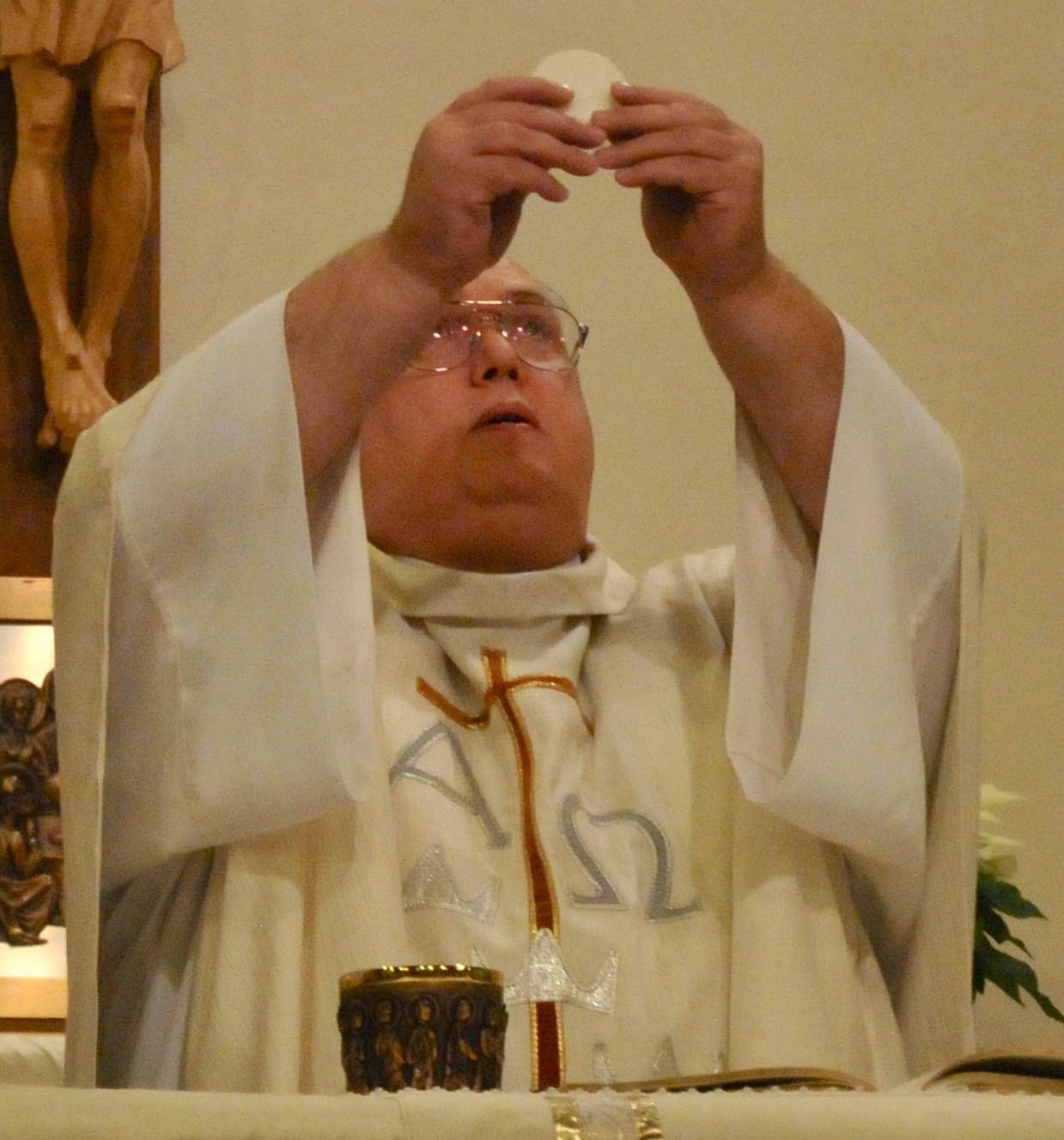
    Fr. Joseph Jenkins

  • The blog header depicts an important and yet mis-understood New Testament scene, Jesus flogging the money-changers out of the temple. I selected it because the faith that gives us consolation can also make us very uncomfortable. Both Divine Mercy and Divine Justice meet in Jesus. Priests are ministers of reconciliation, but never at the cost of truth. In or out of season, we must be courageous in preaching and living out the Gospel of Life. The title of my blog is a play on words, not Flogger Priest but Blogger Priest.

  • Archives

  • Categories

  • Recent Posts

  • Recent Comments

    Josh's avatarJosh on Mixed Signals about Homosexual…
    gjmc90249's avatargjmc90249 on Marian Titles & the Mantle…
    Jeremy Kok's avatarJeremy Kok on Ask a Priest
    Anonymous's avatarAnonymous on Ask a Priest
    forsamuraimarket's avatarforsamuraimarket on Ask a Priest

PROFESSION OF FAITH

Creeds were formulated in the Church by her bishops coming together in council. They invoked the protection of the Holy Spirit in making statements of faith against various heresies. A succession of early councils dealt with the challenges of the day: Nicea 325 AD (Arianism), First Constantinople 381 AD (Arianism & Pneumatomachianism), Ephesus 449 AD (Nestorianism), and Chalcedon 451 AD (Nestorianism & Monophysitism). Arianism posited Christ as a creature or demiurge (assistant maker of the world) but not necessarily human and definitely not fully divine. Pneumatomachianism denied or questioned the divinity of the Holy Spirit within the Trinity. Nestorianism undermined the inner unity of the incarnation of Christ as both God and man; this debate took place in the context of the Marian title “Theotokos” or God-bearer, translated in the West as Mary, Mother of God. Monophysitism argued that Christ was solely divine in nature (really a variation of Gnosticism wherein Jesus only pretends to be human).

An early heresy has people questioning whether the merciful Father of Jesus is the same as the (apparently) harsher God of the Old Testament. The Church says YES. “I believe in one God, the Father almighty, maker of heaven and earth, of all things visible and invisible.” The Credo (I believe) or Nicene-Constantinopolitan Creed defines Christ as a divine Person (of the same stuff as the Father) with a complete human nature, including a human soul with intellect and will. “I believe in one Lord Jesus Christ, the Only Begotten Son of God, born of the Father before all ages. God from God, Light from Light, true God from true God, begotten, not made, consubstantial with the Father; through him all things were made. For us men and for our salvation he came down from heaven, and by the Holy Spirit was incarnate of the Virgin Mary, and became man.” As a man Christ could offer himself as an oblation for sin. As God, he could make an offering with infinite measure. Jesus is fully human. What is not assumed is not redeemed. Jesus is fully God because only God can save us. This is ultimately how the universal Church answers the question of Jesus, “Who do you say that I am?” The divinity of the Holy Spirit is also called into question. Some suppose it is merely the ghost of Jesus. But NO, the Church says he has risen and is whole and complete. The proof of the Holy Spirit’s divinity is found in the formula of baptism given by Jesus. Again, it would make no sense to baptize in the name of a creature because a creature cannot save you— only God. Thus, there is one God in three co-equal divine Persons: the Father, the Son and the Holy Spirit. We recite in the Creed: “I believe in the Holy Spirit, the Lord, the giver of life, who proceeds from the Father and the Son, who with the Father and the Son is adored and glorified, who has spoken through the prophets.” God in knowing himself generates from all eternity the Word. Between the Father and the Son is generated infinite Love, the Holy Spirit.

The Creed finishes by speaking about the Church’s identity as established by Christ. Peter and his successors are made the ROCK of this Church and our Lord assures us that it will endure until his return. “I believe in one, holy, catholic and apostolic Church. I confess one Baptism for the forgiveness of sins and I look forward to the resurrection of the dead and the life of the world to come. Amen.” The Church is not dispensable or just for fellowship. It is the great sacrament or vital divine mystery wherein we have a saving encounter with Christ.

Sometimes when the emphasis is catechesis, the Apostles’ Creed is substituted. It is an early baptismal creed traced to the apostles for affirmation in baptism and reception. It has 12 articles and is the creed we recite regularly in praying the Rosary.

We stand to respect the CREED much as we would in the secular respect shown the American flag when reciting the Pledge of Allegiance. Further, in both cases the oral statement pays homage to our honored dead. In regard to the pledge this refers to patriots who have died to insure our freedoms and the survival of the nation. In reference to the Creed it respects the saints and martyrs who have died for Jesus in fidelity to his eternal kingdom.

If anyone ever challenges what you believe, do not get into an argument. Simply recite the Creed. This is our faith.

HOMILY

The efficacy of the Word and the sacrament does not absolutely depend upon the holiness of the minister.  Christ and his Church insure that the sacraments are genuine.  The Word has its own compelling power. However, as the scandals have made evident, while our Lord can work through bad or even faithless priests; more so than not, the possible damage done by such clergy is incalculable. He must proclaim the Gospel with both the truth and with integrity of life.  The vocation of the homilist or preacher is to transmit and translate the Gospel in such a way that the story of Jesus might fully intersect our own stories as a community and as individuals. 

Pope Francis directs priests to preach in a manner that will feed souls and not put congregants to sleep.  He even urges that homilies be kept to no more than ten minutes.  However, I would take exception to that, especially if one is a particularly good speaker and if the message demands more time.  Indeed, certain ethnic communities actively promote longer homilies. African-American congregations in particular have been heavily influenced by Protestantism in the Deep South where the intensity is upon preaching and the congregation joins in with acclamations like AMEN and ALLELUIA.  Finding a balance between preaching and with ritual or sacrament is the constant challenge in these faith communities. Mixed congregations can be particularly trying, as many faith traditions and languages come into play. 

Despite the various styles and length of homilies, what remains constant is the need to communicate the GOOD NEWS.  While bible commentary is valuable, the reading must not be rehashed.  The task is how to reach people’s hearts and assist them in becoming saints. Congregants should come to Mass having already read the assigned Scriptures.  Now they are ready to hear them again and how they might make the message their own. The homilist has a duty to be prepared.  Even a short homily would likely require hours of study, prayer and composition.  I know one priest who spends over twelve to twenty hours a week preparing for his fifteen minute Sunday homily.  He reads the Scriptures and then seeks out commentaries for his own basic understanding of the texts.  Then he reviews what others have said about them.  Despite the temptation, he uses pre-written sermons as a source for ideas and does not give in to the lure to use them verbatim.  He spends time praying and reflecting upon the texts, particularly in front of the Blessed Sacrament during his daily Holy Hour.  I know another priest who shares his thoughts and sermons with friends or parishioners during the week.  He swallows his pride and humbly takes their advice and criticism to heart.  He ponders what the Word means to him and then tries to draw connections with the lives of the people he serves.  Some preachers will discuss ideas much as a classroom teacher. Others will tell interesting stories that amplify the Gospel story.  The preacher might relate things in his own life that parallel the reading.  Another priest often uses song and draws a parallel with music.  Priests and deacons are urged to avoid props in their preaching. Many liturgists argue that the homilist should restrict himself to the readings of the day.  This is good but sometimes there is a strain to make thematic associations when clergy string together a sequence of daily or weekly homilies on a given subject. Homilies today may signify ongoing formation or evangelization or needed catechesis.  The preacher may opt to speak from the liturgical ritual of the day, referencing the Collect or another part of the Mass.  The minister takes his guidance from his bishop and the teaching Church but he also requires space for personal initiative so as to understand the subject matter and the particular needs of the faith community. 

While there are skills that can be developed for preaching; the homilist must always remember who he is and what he is about.  The homily is not a time for complaining or telling off-topic jokes.  He must be humble enough to step back and know that it is all about Jesus, not about him.  If he points the finger then he should humbly make clear that he counts himself as the first among sinners.  Speaking about the congregation as “you plural” detaches them from himself; he would better make the reference “we and us.” We are all dependent upon Jesus.  While the homily types vary and they may have elements of a lecture or catechesis, they are primarily a means to bring the people of God into a deeper and extended conversation with the Lord.  This accompaniment with each other and the Lord will hopefully culminate with the oblation of the Mass and the reception of Holy Communion. Participation in the Mass allows us as a community to walk with the Lord.  Just as the preacher must do his best and then in humility hand it all over to the Lord; the congregation should be sufficiently receptive and respectful.  Every man who stands at the ambo or the altar has his gifts and his limitations. There should be nothing of celebrity worship or bias. No one should expect every message to confirm prejudices or to be comforting. Indeed, the message of the Gospel is often challenging and makes us signs of contradiction to the world.  I suspect this is why Jesus tells us that we must take up our crosses to follow him. The message we preach is not the prosperity gospel of millionaire ministers that pacifies the wealthy and either gives false hopes to the struggling or curses the poor as lacking divine favor.  Ours is the message that there is a preferential option for the poor and many a rich man walks away sad because his belongings are many. We may have possessions but we cannot allow the possessions to have us.  The doctrinal truths of the Gospel are forever entangled with the social mission of the Church and the commandment of love. We are called to imitate Jesus in going out to the oppressed, the poor, the hurting and the afraid.  We are commissioned to take the message outside the church doors to the world around us.  We will be given the Eucharist as food for the journey.  The hunger and thirst of the world can only be satisfied by Jesus Christ.

We may hear but do we really listen?  The congregation needs to be attentive.  Struggling with the message is okay— at least that means we are taking it seriously. But we also have to ask to whom do we belong?  Today there is a revisited tension between God and Caesar. Dissent poisons discipleship and political leaders seek to enforce allegiance to themselves as personalities and to their causes, even those that would trump the Gospel and commandments. Many priests are wary or afraid of preaching about the moral life. Nevertheless, enabling or supporting abortion constitutes the grievous sin of murder.  Distortion of gender and sexual promiscuity outside of marriage damages the value of marriage and family life.  Failure to attend Mass on Sunday violates both a precept of the Church and the commandment to worship Almighty God— matters that bind us under pain of mortal sin.  It must be said as well that while patriotism is regarded as a virtue, recent expressions of nationalism (my country right or wrong) is regarded as terribly wrong and sinful. False freedoms are given weight over true liberties. Many of our own people buy into antagonism with the Church and instead of supporting clergy they are mocked and vilified instead.  A man answers the call to holy orders out of a love for God that spills over to neighbor.  He wants to be an instrument for the forgiveness of sins.  But because of the misdeeds of a few and the general atmosphere of aspersion or slander, many priests and deacons approach their ambos or lecterns with trembling hands and wobbly knees. We all want to be loved and well received. But the homilist must remember our Lord’s words, “If the world hates you, realize that it hated me first. If you belonged to the world, the world would love its own; but because you do not belong to the world, and I have chosen you out of the world, the world hates you. Remember the word I spoke to you, ‘No slave is greater than his master.’ If they persecuted me, they will also persecute you. If they kept my word, they will also keep yours. And they will do all these things to you on account of my name, because they do not know the one who sent me” (John 15:18-21).

The true faithful look for insight from the weekly homilies.  They are open to guidance. Preachers, especially young priests straight out of seminary, frequently use jargon that is nonsensical to those in the pews.  While homilies based on lawful authority were once prevalent; today, people want reasoned positions.  It is not enough to say believe or do such and such because I told you. Rather, the connection with biblical truth and common sense reasoning needs to be pursued. Good people want to understand, not just go through the motions. 

I know one priest who makes me laugh despite myself.  Why?  He has an entirely different voice in preaching than when he ordinarily speaks.  He preaches in an officious way with sermons peppered with “thee and thou.” I may be wrong but I suspect he would do much better just to use his regular conversational voice.  At least that is my opinion. Pomposity turns people off; humility invites them.

Even the darkest of matters should not destroy the “goodness” of the Good News. The proclamation of the Gospel is a positive and not a negative operation.  The priest or deacon must not lose sight of the fact that he is preaching Christ and what the Church believes. He should never dissent or challenge the faith from the pulpit.  No matter what his personal ideas might be, the congregation is listening not for what he thinks but for what the Church teaches.  There are two themes that are threaded throughout my many homilies and all of my moral exhortations: the dignity of persons and the sanctity of life.  These provide the two signposts where we can extract something positive and compelling from what would otherwise be a manifesto of negativity. Remember, the Gospel is not centered upon lamentation and reproach but about a Good News that sets us free and gives us joy and hope.  

GOSPEL

If there is a deacon who will be proclaiming the Gospel, he bows before the priest and beseeches a blessing.  The priest responds, gesturing the Cross, “May the Lord be in your heart and on your lips, that you may proclaim the Gospel worthily and well.  In the name of the Father + and of the Son + and of the Holy Spirit +. Amen.” When there is no deacon, he bows to the altar and says, “Cleanse my heart and lips Almighty God, that I may worthily proclaim your Holy Gospel.”  This is the first of a series of secret or softly spoken ministerial prayers.  If the Book of the Gospels is on the altar, it is carried to the ambo.  When there is great festivity it may be incensed. 

Along with the congregation, when the Gospel is announced all make three small crosses— first, on the forehead, second, upon the lips and third, upon the chest.  This invocation is asserting that we will have Christ and his truth in our minds (thoughts), upon our lips (proclamation and actions) and in our hearts (to love as he loves). All of us, the one proclaiming the Gospel and those who hear it must both be disposed or receptive to the truths of Christ. These truths are communicated through direct statements and actions by Christ, by his stories or parables, by the events in his life and by his interaction with those around him. The Gospel is more than a historical narrative.  Just as we celebrate the real presence of Jesus in the Eucharist; the Gospel also communicates the real presence of Jesus as the Eternal Word.  Both the Word and the Eucharist enable our joyous encounter with the risen Lord. The Gospel is not composed of dead letters on a page. It is a proclamation alive and transformative to those who hear or read.  It is imbued with the Spirit of God making possible repentance, conversion and saving relationships with Jesus Christ.  

All stand as a sign of heightened respect. The preacher is entrusted with the reading which must be communicated loudly and clearly. The weekday readings follow a two year (alternating) pattern.  The Sunday Gospel readings follow a three year cycle.  While there is some variation in the Old Testament, between Catholics and Protestants, the canonical book listing of the New Testament with the Gospels is the same. Indeed, a number of the mainline traditions often read the same Gospel on Sunday as in the Catholic Church.  This is a meaningful sign of unity.  The New Testament canon of 27 books has remained stable since 170 AD and Catholics, Protestants and Orthodox Christians all cherish the four Gospels:  Matthew, Mark, Luke and John.  While critics are often quick to point out differences between the Gospels; the Church asserts that the evangelists each have his own perspective or theological tradition upon the Greatest Story Ever Told. 

Mark focuses on Jesus as a miracle worker and teacher.  Our Lord is frequently presented as misunderstood by his followers. Matthew portrays Jesus as the long awaited Jewish Messiah, urging fidelity to the covenant given them by their fathers and to his new law of love. Luke as a Greek physician stresses Jesus as a compassionate healer, one who is intensely concerned about women, the impoverished and even Gentiles or non-Jews.  John gives the gravity in his narrative to Jesus as divine and in control. The last of the Gospels, it shows an intense spiritual reflection upon the Lord’s ultimate identity and mission. All reflect differing facets of the same truth.  God so loves us that he sends his only Son.  Jesus takes upon himself the sins of the world and suffers our punishment in enduring the Cross.  He redeems us from Satan and conquers suffering, sin and death.  He offers us a share in eternal life.  He commissions his apostles to go out to the entire world with the Good News and to make disciples. 

The deacon and especially the priest have a love affair with the altar and ambo.  As a priest I have always been deeply moved by kissing the altar at the beginning of Mass, by kissing the text of the Gospels and at the end by kissing the altar again.  The minister kisses the Lectionary or Book of the Gospels after the proclamation and says quietly, “Through the words of the Gospel, may our sins be wiped away.” Every good priest ponders his unworthiness to stand at the altar and pulpit.  His failure to be a saint makes him not only a notable sinner but the greatest of hypocrites before God and his holy people. He knows this uncomfortable truth but seeks to be faithful and to allow the Lord to use him as a flawed and broken instrument.  It is all about the message, not the messenger.  It is all about decreasing as did John the Baptizer, so that the Lord might increase. Those who would receive the Eucharist, must first encounter Christ in his Word.

ALLELUIA

After the Responsorial Psalm or Second Reading, the people in the pews stand for the recitation of the Alleluia or another chant (as in Lent) prior to the proclamation of the Gospel. While readers frequently speak it normally, there is a preference that it be chanted or sung— or else omitted entirely. As a priest I prefer to chant it. It sounds odd when offered in a monotone voice. Indeed, even a dispassionate countenance seems to betray the joy that should be present. (I am reminded of the silly children’s song, “If you’re happy and you know it, then your face will surely show it.” It is hard to lead a congregation with a joyous “Alleluia” when all the faces you see look as if someone just ran over the family dog.)  By comparison, would we sing the HAPPY BIRTHDAY song as a dirge?  No, I think not. The Liturgy of the Word finds its roots in the ancient synagogue service where the Jews would have chanted the Hebrew word Alleluia, calling upon the divine name, “God be praised!”

This small rite within the larger order of the Mass is a ritual verbalization of the focus upon almighty God in the first  commandments of the Decalogue.  We give praise to God.  It is no accident that the Alleluia and verse come right before the proclamation of the Gospel.  The natural faith and covenant of the Jews will be consummated by the supernatural faith and new covenant of Christians. The incarnation of Christ will make possible the full revelation of God as Trinity.  Even though he looks upon us with a visible human face, Jesus is the one who shows us the face of the invisible God.  He and the Father are one.  The Gospel informs us that the most genuine posture of God is one of compassion and mercy, not vindictiveness and vengeance.  It is through the Alleluia and verse that we celebrate or greet the Gospel. 

The establishment of the Alleluia chant as a rite in the Mass goes back to the seventh century. Traditionally it accompanies the short procession of the deacon or priest with the Book of the Gospels.  As soon as it ends, the minister greets the people and announces the reading.

RESPONSORIAL PSALM

Along with the general expansion of the Mass readings, the reforms after the Vatican II Council give greater prominence to the psalms in the liturgy. This is particularly the case with the expanded short gradual recited between the Epistle and Gospel of the Mass.  While it is normative to render the psalm with intermittent responses, it is my understanding that it can also be done as in the Liturgy of the Hours or breviary, with the response or antiphon at the beginning and end of the psalm.  Psalms can be recited but there is a preference, when possible, that they be sung or chanted. 

Tradition tells us that King David composed many of the 150 psalms. As in the breviary, a few psalms are missing and others are clipped in respect to the sensibilities of believers.  The times may change but human nature does not. The psalms reflect the human condition with all its emotions and needs, even those that are negative and destructive.  One of the missing verses from church is from Psalm 137:8-9: “Desolate Daughter Babylon, you shall be destroyed, blessed the one who pays you back what you have done us! Blessed the one who seizes your children and smashes them against the rock.” The Church would discern in this that God desires justice; however, the Hebrews received the revelation with hearts bent on revenge.  The problem of such psalms is that lines like this would hijack the liturgy and compel the homilist to spend what little time he has in trying to reconcile the notion of a vengeful God with Jesus as the Divine Mercy.  Again, this particular line speaks more about the human condition and our feelings than about the divine nature and the truth. While not denying the value of even the difficult passages of Scripture as divinely inspired, the Church tends to employ psalms that focus on the themes of longing, mercy, healing, restoration, respect for persons and honoring the Almighty. It should be said that there is frequently a prophetic element to the psalms, about the history of God’s people and/or about the coming of a Messiah. 

(The psalms have long constituted the Jewish prayer book, albeit in the format of memorization and less so as written.)  Catholicism heavily employs the psalms in the Mass and in her printed prayer book, the Liturgy of the Hours.  They lend a meditative element to the liturgical movement. Often they echo the readings. The most important of the psalms may be those that point to the Messiah. Psalm 2 intimates a unique relationship of the Messiah to us as God’s Son. 

Psalm 2:1-6 – “Why do the nations protest and the peoples conspire in vain? Kings on earth rise up and princes plot together against the LORD and against his anointed one: ‘Let us break their shackles and cast off their chains from us!’ The one enthroned in heaven laughs; the Lord derides them, Then he speaks to them in his anger, in his wrath he terrifies them: ‘I myself have installed my king on Zion, my holy mountain.’”

Psalm 110:4 – “You are a priest forever in the manner of Melchizedek.”   

Psalm 22:2; 16-20 – “My God, my God, why have you abandoned me? . . . As dry as a potsherd is my throat; my tongue cleaves to my palate; you lay me in the dust of death. Dogs surround me; a pack of evildoers closes in on me. They have pierced my hands and my feet. I can count all my bones. They stare at me and gloat; they divide my garments among them; for my clothing they cast lots. But you, LORD, do not stay far off; my strength, come quickly to help me.”

The psalms reveal how we are naturally wired for God and for the meaning that he alone can give to human existence.  As his creatures, we are utterly dependent upon the Creator.  He is all good and we cry out for his forgiveness and protection.

READINGS

After the Collect, the people are seated and invited to listen attentively to Sacred Scripture. The Word prepares us for the Sacrament to follow. There are many critics of missals for the people because most liturgists are of the opinion that this is the time when we “listen” and not “read.”  Of course, this assumes that everyone can hear and that is not always the case.  Many parishes will use interpreters for the deaf to sign the message to hard-of-hearing congregants. However, not everyone knows sign language and interpreters can be hard to come by and may strain the Church budget.  Missals can be useful in such situations.  Speaking for myself, I believe the value of a personal missal is that it allows the faithful to read and to begin their reflection on the assigned Scriptures prior to Mass.  If at all possible, we should not engage God’s Word cold in the pews.  Rather, hearing the verses and then listening to the preaching should deepen what we have already received. The lectionary insures that a good segment of the Bible is covered. Despite certain Protestant naysayers, Catholics are the original Bible-Christians. The Bible possesses saving truth and it is crucial that we make it our own.  We may not always know chapter and verse, but we should each develop a familiarity with Scripture and read the Bible every day.  Indeed, many who cannot make weekday Masses will follow the daily Mass readings at home or at work.  That is why most parishes list the daily readings in the weekly bulletins distributed after Sunday Masses.  God’s Word has the power to transform or mold us. It is a mighty bulwark against the efforts of the world to replace Christian formation with a non-theistic secular humanism.     

We have three readings for weekdays: the First Reading, the Responsorial Psalm and the Gospel.  There are four readings on Sundays and Holy Days, an additional reading after the Responsorial.  The typical pattern on Sunday is as follows:  Old Testament, Psalm, New Testament (usually an epistle) and the Gospel. An effort is made to thematically connect the first reading with the day’s Gospel. 

The liturgical calendar for Sundays is divided into three cycles: A (Matthew), B (Mark) and C (Luke).  The Gospel of John is used heavily during the season of Easter. The Weekday cycle is divided as I and II.  We sit for the readings from the Old Testament, the Psalms and the Epistles.  We stand for the proclamation of the Gospel out of respect for the life of Christ.  The first reading is ordinarily from the Old Testament but we hear the Acts of the Apostles during the Easter season. The second reading is always taken from the Epistles or the Book of Revelation in the New Testament.  Whenever we read or hear the Word of God, we should begin by personally invoking the Holy Spirit.  There is much about the Bible we cannot begin to understand without both the direction of the Church and the help that comes from the Spirit of truth.  While the homilist will likely make some connections for us, this does not excuse us from seeking how the Scriptures may speak to us as a community and individually in the here-and-now.  The Scriptures present to us the story of salvation. The homily invites us to interject our stories into this great story that we might know the intervention of Christ.  The Old Testament gives a promise that is fulfilled in the New. God reveals himself and his truths in the passage of human history      

COLLECT or OPENING PRAYER

After the Gloria hymn, the priest says to the congregation, “Let us pray.” Too often the celebrant, myself included, speeds immediately to the opening prayer itself.  Ideally, he places his hands together and pauses.  It is during this time that everyone should maintain sacred silence and call to mind all the needs and intentions we bring to the celebration.  Indeed, the name of the opening prayer signifies how the priest “collects” the entire gathered community with all their personal intentions into his prayer that is prescribed by the Church. Congregants should reflect and compose these intentions either before coming to Mass or during a quiet time of preparation before the liturgy begins.  Just as the priest can apply the fruits of the Mass that come to him for others; those in the pews should remember their needs and those for whom they have promised to pray. The Mass is our most effective prayer and should not be neglected in its power to bring grace and healing.  The Mass is not just the sacerdotal work of the priest but belongs to all who join themselves to his prayer and offering of Jesus to the Father.  Our worship has rubrics but it should not be done in a robotic or mindless manner.  While too many people miss Mass, many more in the pews fail to “collect” their thoughts and to appreciate what they are doing. If not announced at Mass, parish bulletins usually publish the various priest-intentions for Masses on Sunday and during the week.  However, the worshipper is not obliged to restrict his prayers to the public intention of the priests. Various fruits or spiritual benefits come to all who conscientiously participate at Mass. Later in the liturgy, particularly in the bidding prayers and the Eucharistic prayer there will again be opportunities to recall our secret petitions and the general intentions for the Church, for the living and for the dead.  

We can mentally bring almost anything to the Mass. When a Catholic tells others that he will pray for them, this applies not just to bedtime prayer but to our dialogue with God at Mass.  Like all prayer, it should come from the heart.  If the love of God brings us to worship him, then it is this same love that spills over in our prayers for family, friends and yes, even enemies.  We pray for the sick and for those who have died.  We pray to discern our vocation.  We pray for employment so as to keep a home and provide for loved ones.  We pray for the Church in general or maybe the local priest in particular.  (This may in part be the antidote to so much calumny in the modern Church.)  The list goes on and on.  Given that there is no limit to the graces available in the Eucharist, a family might even write out a private list to recall when going to Mass.  This does not mean that we can go to Mass once and be done with prayer.  While the graces of the Mass are infinite, our capacity to receive grace is limited by our disposition for divine help.  Just like eating— we need to eat a little each day— not eat a month’s worth of food at one sitting. 

The opening prayers vary from Sunday to Sunday, although there are special prayers for saints, special occasions, particular liturgies as in weddings and funerals, and daily seasonal prayers as during Advent, Christmas, Lent and Easter.  The Collect regularly gives us the theme of the liturgy. The priest extends his hands and prays.  After the priest has spoken the prayer, the people respond, “Amen.”  They have joined their prayers as one. They have affirmed the prayer of the Church.

Disposition is crucially important if we are to avail ourselves of the riches that come from the liturgy.  Each part is linked to the rest as a whole: Introit or Entrance Son, Sign of the Cross, Greeting, Confiteor, Kyrie, Gloria and Collect. All together the introductory rites have prepared us for the Word of God.

GLORIA or GLORY TO GOD

The Gloria uses five words in sequence as synonyms for each other:  “We praise you, we bless you, we adore you, we glorify you,” and then a fifth closely aligned word, “we give you thanks for your great glory.”  Certainly there is a matter here of emphasis that comes with repetition.  But there are also nuances of meaning that expand upon our response to God’s majesty.  

We “praise” God for just being God.  Even if we were given nothing in return, it is the posture of the creature to praise the Creator.  Men and women as the stewards of creation do this in a conscious and active manner. The lesser acknowledges the greater.

As in the psalms, all of creation just by its existence “blesses” God who is the source of all blessings.  Something of the divine spark that breathes life into things and gives them order and purpose is reflected back.  “Bless the LORD, my soul; all my being, bless his holy name! Bless the LORD, my soul” (Psalm 103:1-2). This form of blessing and praise is spontaneous, akin to a necessary reflex.  We see this in Psalm 148.  God is blessed or praised “in the heights,” by “all his angels,” by “sun and moon,” by “shining stars,” by “highest heavens,” by “waters above the heavens,” by “sea monsters,” by “lightning and hail, snow and thick clouds,” by “storm wind,” by “mountains and hills,” by “fruit trees and cedars,” by “animals wild and tame,”  by “creatures that crawl and birds that fly,” by “kings and all peoples,” by “young men and women too,” and by “old and young alike.”

When we “adore” or offer adoration to almighty God we are literally praising God on the level of worship.  Catholics also use the word adoration for devotion to Jesus Christ in the Eucharist.  This is a testimony to his divinity as divine worship is restricted to God.  Such praise offered directly to anything less would constitute false worship and the sin of idolatry. We may offer special devotion to Mary and veneration to the saints but true worship is always directed to God.  Indeed, the proper object for all Christian prayer is almighty God, even when we beseech intercessory prayer from one another and the saints in glory.  We are asking them to pray with and for us to almighty God.  The highest or most important prayer of adoration or worship is the Mass.  Giving “glory” to God is literally to join the angels in what is the eternal operation of heaven, glorifying God.  There is nothing lacking in God that we can give him.  Giving glory really reflects a movement in the creature.  All eyes in paradise share the beatific vision in seeing God.  The creatures of heaven, angels and men, find themselves in glorifying God. It is at the heart for which we are made. As the old catechism relates, God made us so that we might know him, love him and serve him in this world and give glory to him forever in the next. Our spiritual penetration of the Trinity will allow us as finite creatures to enter ever deeper and deeper into the divine mystery.  We will know God and share in divine love but such glorification of God can never exhaust who he is. Rather, beginning now, we are the ones transformed and graced by such worship, first at the Mass and later at the heavenly banquet table.        

We also give “thanks” to God, yes for his glory but also for how this glory has been expressed or realized in his revelation and many gifts to us. God gives us life and those things necessary for sustaining and enriching life.  He also gives us his Son, Jesus Christ as our Lord and Savior.  Indeed, this is why the word Thanksgiving or Eucharist becomes a sacred name for this holy sacrament.  The whole Church around the world and throughout all human history joins with the hosts of heaven in giving thanks to God.  The Gloria concludes almost as if it were a creed.  We profess both the divine unity (the natural revelation and faith that God is one) and the supernatural understanding of God as a Trinity of persons.

The hymn of the angels on the night of the first Christmas becomes our own.  The incarnation realizes God coming down from heaven so as to enter the family of men.  Similarly the Mass will allow this same Christ to be present in bread and wine as our saving food.  Nothing and no one could force God’s hand.  The Word becomes flesh purely because God so loved us that he sends his beloved Son, the second Person of the Blessed Trinity.  He would lay down his life and then take it up again.  Nothing would ever be the same.

KYRIE ELEISON or LORD HAVE MERCY (Penitential Act)

Back in the Christmas of 1985 the song “Kyrie” by the rock band Mr. Mister was all over the radio waves.  Religious people were surprised to hear the Greek words that are sometimes chanted at Mass:  Kyrie Eleison or Lord, have mercy. While I cannot speak for what was in the mind of the composer, one should take note that the image of wind to which it refers is often associated with the mysterious movement of the Holy Spirit.  After a cry for divine mercy, the song begins: “The wind blows hard against this mountainside, across the sea into my soul. It reaches into where I cannot hide, setting my feet upon the road. My heart is old, it holds my memories. My body burns a gem-like flame. Somewhere between the soul and soft machine is where I find myself again.”  We are composites of body and spirit.  While we live in the present, each of us is haunted by the past.  Our memories are a part of us.  We are pilgrims in this world, seeking to find ourselves and meaning. Nothing is hidden from God. His providence mysteriously guides our footsteps.  Crying out Kyrie Eleison over and over, the singer is saying Lord, have mercy “down the road that I must travel— through the darkness of the night.” This would not make a bad prayer. Next, the singer reflects upon the dreams of youth and wonders about the path he has taken.  How many times have we regretted some wrong choices or just different turns and thought about how our lives could have been very different? Ultimately we are all pilgrims and as Christians we are called to take up our crosses so as to follow Jesus. As fishers of men we are commissioned to take others with us into the boat of the Church, companions for the journey.  This too is referenced in the song: “Kyrie Eleison where I’m going, will you follow? Will you follow? Kyrie Eleison on a highway in the night. . . . Kyrie Eleison on a highway in the light. Kyrie Eleison down the road that I must travel.”

While we may live in a society that distorts virtue and vice, the Church has seen the emergence of the Divine Mercy devotion.  We admit we are sinners and that we desperately need forgiveness and healing. This mercy is linked to reconciliation with others, a truth proposed in Mark 11:25 prior to prayer and worship.  It is also the admonition of the Lord’s prayer, “Forgive us our trespasses as we forgive those who trespass against us.” This is the meaningful backdrop to the Confiteor as well.  The Kyrie at Mass will often include tropes or insertions to focus where we need assistance: healing the contrite, calling sinners and intercession.  Note that in the New Testament the forgiveness of sin and the liberation of the possessed is often associated with physical healings— the lame walk— the blind see— the deaf hear— the mute speak— the lepers are cleansed.  There is an intimate connection between the body and the soul. Indeed, the justified and glorified dead in Christ will be restored body and soul.  We will not be disembodied ghosts forever.  Our bodies will not remain corpses or dust. We will be made brand new and imperishable. The identity of each of us as a complete composite must be reassembled and healed. I have often thought that should we find ourselves facing eminent death, the cry we should make is precisely Kyrie Eleison or Lord, have mercy on me, a sinner.  If this prayer should come from the heart and in true faith, we are assured that it will be heard.  The Mass celebrates both a saving death and resurrection.  The Mass is the incursion of eternity into our immediate time and space.  Thus it makes sense that we chant Lord, have mercy as we enter into the great mystery.

The Kyrie switches from “Lord, have mercy” to “Christ, have mercy” and back again to “Lord, have mercy.”  Our worship is directed to the Father, but it is Jesus, the second Person of the Trinity, that makes possible our approach to God.  We struggle with our sins and our tendency to sin or concupiscence.  St. Paul speaks of this in Romans 7:19: “For I do not do the good I want, but I do the evil I do not want.” We begin our worship as realists who know we are undeserving.  We are culpable for the passion and death of Jesus— the terrible price of our sins.  But we seek to take the Lord up on his offer of mercy.  As with the disciples, the devil has sought to claim us but Jesus snatches us from his hand. “Simon, Simon, behold Satan has demanded to sift all of you like wheat, but I have prayed that your own faith may not fail; and once you have turned back, you must strengthen your brothers” (Luke 22:31-32).  Jesus vocalizes this prayer from the Cross: “Father, forgive them, they know not what they do” (Luke 23:34).

Toward the end of the penitential act there is what we might call a conditional or subjunctive “absolution” prayer. It is the remnant of a two-part oration from the former version of the Roman rite.  The Mass prayer (the Indulgentiam) was thought redundant and overly resembling the formula from confession: “May the Almighty and merciful God grant us + pardon, absolution, and remission of our sins.” Particularly given the use of the vernacular, its omission helps to avoid confusion with the sacrament of penance. The Misereatur is now said once by the priest: “May almighty God have mercy on us, forgive us our sins, and bring us to everlasting life.”

The penitential rite can be replaced by a sprinkling rite, especially during the Easter season.  We are reminded of our baptism when we became adopted sons and daughters of the Father, members of the Church, gifted with sanctifying grace and forgiven of sin. What we were can be restored by the gift of the Lord’s mercy. We are all Zacchaeus up a tree, and only Jesus can get us down (Luke 19:1-10).

CONFITEOR or I CONFESS (Penitential Act)

The admonition found in Scripture and echoed in the mission of the Church is “repent and believe.” We must make room for saving faith by contrition, penance and amendment of life. We acknowledge at the very beginning of the liturgy that Jesus’ fundamental mission which he shares with the Church is the forgiveness of sins. We admit that we are unworthy of divine mercy and yet we implore it as a gift that the Lord has promised to grant.  Left to ourselves, we cannot save ourselves.  The elect must be washed in the blood of the unblemished Lamb.  We must be one with Jesus who as man can offer an oblation and as a divine person can make it efficacious.  This posture is vital for those who desire to render pleasing worship to God.  Jesus is the All Holy One with whom we must be joined or grafted.  We admit from the start that we have fallen short and yet in Christ we can know absolution, transformation and unity with our great High Priest. 

Priest and people say this prayer together and yet for each it is deeply personal.  “I confess to Almighty God . . . .”  We confess our dependence upon God.  We are honest about our sinfulness.  This prayer runs against the grain of an arrogant world where too many rebel and literally shout in their dissent, “No one, not even God, can tell me what to do!”  Our confession is not of particular sins as in the sacrament of penance but rather of a sinful or spiritually wounded condition. Our approach to God is viewed through the immaculate prism of Mary’s Magnificat as “the handmaid of the Lord.” We can only truly please and worship the Lord if we (like her) are free of grievous sin.  She spoke her “fiat” for the whole human race; now we must speak for ourselves. Genuine humility will allow nothing of narcissism or hubris.  Literally we are asking the Lord to dispose us to grace.  The Confiteor is a surrender of the self to God and to the truth that God already knows about each and every one of us. It is also a corporate admission of fault and dependence before the believing community. As in the parable of the king who discovers someone improperly dressed for his banquet and has him thrown out, the Confiteor is an effort to put on the wedding garment of the Lamb— to put on Christ— so as to be properly prepared for the bounty that comes from the liturgy. One commenter has compared it to taking off one’s dirty shoes so as not to spoil the clean carpet of a neighbor’s home.  We want to leave our sins at the steps outside the doors to God’s house. But we must be careful.  My corrective is that we do not want to be Sunday saints and weekday sinners. It is more pressing that we should go out different from how we come in.  Maybe a better analogy would be to see the liturgy as a carwash? Made clean by grace we are to shine as brand new; praising God with the saints at Mass and reflecting Christ on the highways of the world outside the church. 

We cry out “through my fault, through my fault, through my most grievous fault or “mea culpa, mea culpa, mea maxima culpa.”  The revised or dare I say “corrected” translation has us repeat these words three times.  Why?  It respects human nature and the fact that  notwithstanding our best intentions, we endure a constant struggle with concupiscence and sin.  We return to the confessional again and again, despite making the resolution to avoid sin and to change our lives. It acknowledges that we are a work in progress. The Mass itself is a re-presentation to which we return again and again even though the oblation is accomplished in time once and for all on Calvary. We repeatedly return so that the work that Christ has started in us will be accomplished.

As sinners we readily discern how we fall short in being Christ’s disciples in our thoughts, words and deeds.  While confession is good for the soul, many conceal secret selves where thoughts are tainted and hearts are corrupted.  We are each to some degree Stevenson’s Dr. Jekyll concealing the darkness of Mister Hyde, coveting what does not belong to us, hating what we should love— all the time fearful of any exposure of the truth. We are ashamed or at least we should be.  If there should be no remorse or sorrow or contrition then we would assuredly become what Dr. Scott Peck calls “the people of the lie.” As for the sin of the lips, we live in a time of dire dysfunction in communication.  Calumny and mockery poisons discourse in the public forum, in Church dialogue and in family communion.  We seem to posit everyone as the enemy and the curse displaces the blessing.  This needs to change and there is no better place to start than at Mass.  We are called to love those who are hard to love, including those who hate us. When it comes to our deeds, we live in an age when every commandment is broken, often without concern. Indeed, some celebrate the deadly sins. Meanwhile, many who claim a high ground to Catholic discipleship either dissent quietly on matters of faith and morals or are culpable for failing to do the things we should do.  Such is the hypocrisy of those arguing for human rights and dignity while pandering to the exploitation of women, deriding unwanted immigrants as drug-dealing mongrels and rapists, promoting capital punishment as if it were a personal vendetta, and enabling the abortion of millions of children.  If we are to be like Jesus, we must not ignore the rights and needs of the poor, the forgotten and the oppressed.  Good or bad, the penitential rite demands that we face the truth about our sinfulness and brokenness. 

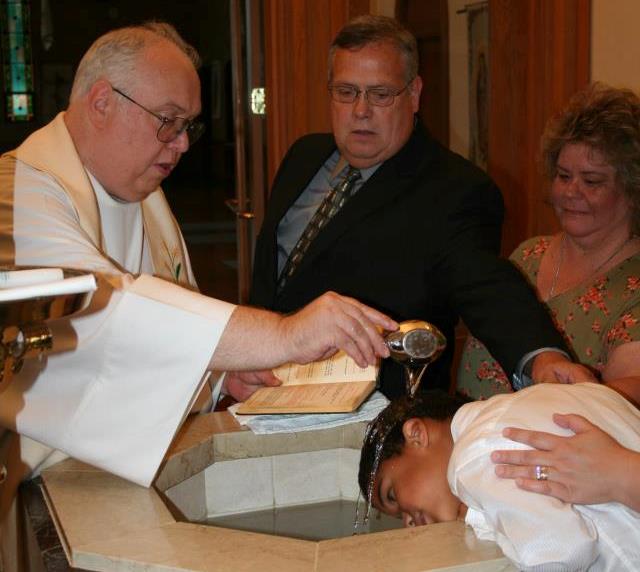
We invoke our brothers and sisters, as well as the Blessed Mother, because we know that none of us come to the Lord alone. This truth is so from the very beginning as most of us first come to be disciples as babies in the arms of our parents and godparents at the baptismal font, the womb of the Church. The Mass is a command performance where we come together as sinners hoping to become saints. We are called to avoid evil and to do good.  But we have all been found wanting. Especially today given Western materialism, we are the rich man who goes away sad because his possessions are many (Matthew 5:23-26). The focus is not upon particular sins but our general sinfulness and how we will always need Jesus as the Divine Mercy.  Christ must be our abiding treasure. Our Lord would have us love as he loves, beginning with God and then with ourselves and finally with others in the human family.