• Our Blogger

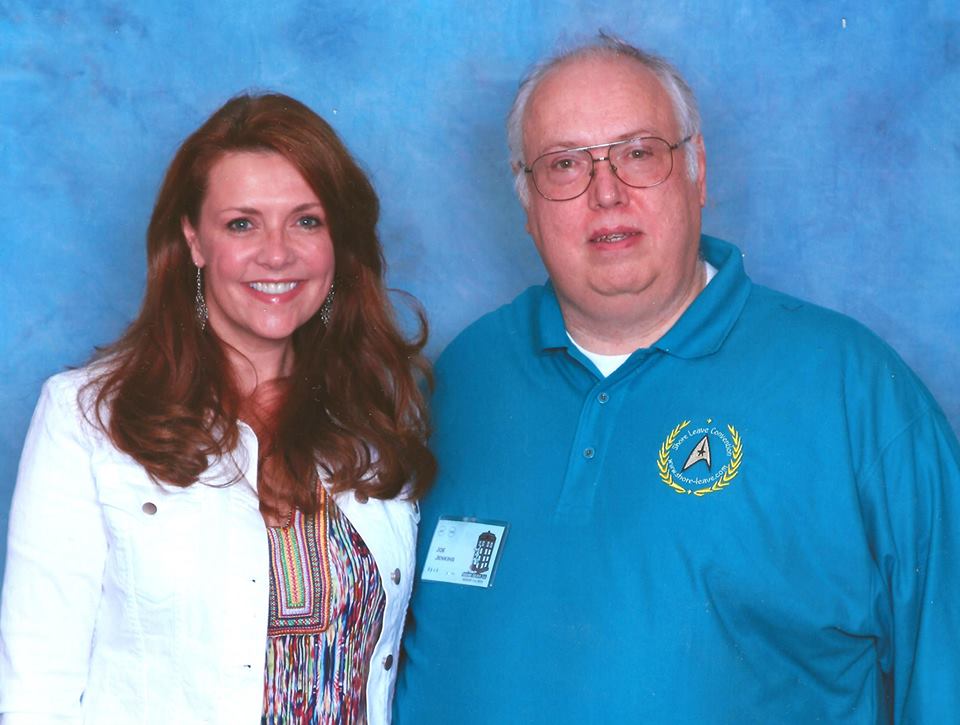
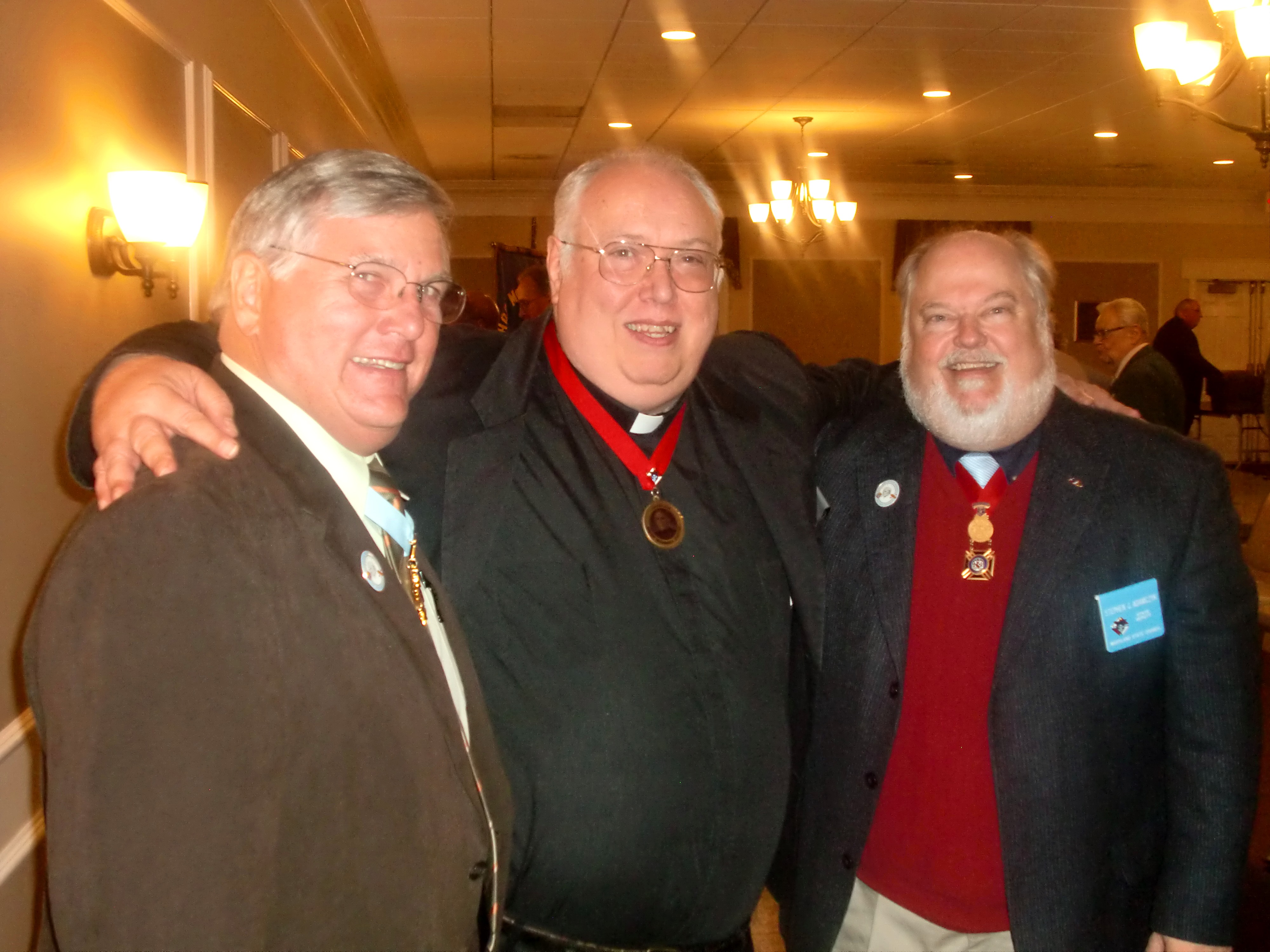
    Fr. Joseph Jenkins

  • The blog header depicts an important and yet mis-understood New Testament scene, Jesus flogging the money-changers out of the temple. I selected it because the faith that gives us consolation can also make us very uncomfortable. Both Divine Mercy and Divine Justice meet in Jesus. Priests are ministers of reconciliation, but never at the cost of truth. In or out of season, we must be courageous in preaching and living out the Gospel of Life. The title of my blog is a play on words, not Flogger Priest but Blogger Priest.

  • Archives

  • Categories

  • Recent Posts

  • Recent Comments

    Josh's avatarJosh on Mixed Signals about Homosexual…
    gjmc90249's avatargjmc90249 on Marian Titles & the Mantle…
    Jeremy Kok's avatarJeremy Kok on Ask a Priest
    Anonymous's avatarAnonymous on Ask a Priest
    forsamuraimarket's avatarforsamuraimarket on Ask a Priest

No Deficiency in the Holy Spirit Regarding Women Priests

OBJECTION

It takes a lot of nerve for the men in the Church to invalidate the sense of calling to the priesthood that many women maintain.  Little girls see women taking their rightful places in so many occupations today, and numerous women serve as protestant ministers and as Anglican priests.  It should not surprise us that increasing numbers of Catholic women leave the Church of Rome so that they might be faithful to God.  If their calling is demonstrative of the will of God and the movement of the Holy Spirit then the prohibition is blasphemy.

RESPONSE

No faithful shepherd of souls would deliberately want to hurt the faith of his people, especially the feminine sex that constitutes over half of the human race.  Further, one would have to be a monster to callously shatter the vocational dreams of young girls.  But the Church must abide by the example given us by Christ and the apostles.  It would “take some nerve” to invalidate 2,000 years of tradition and to do something that might compromise the priesthood, the Eucharist and the absolution of sins. Women were never ordained as priests and we do not feel we have the authority to make a change. Speaking for myself, I would very much want to affirm the stirrings of a vocational call in all our young women and men.  However, while men may know a call to priesthood, the religious call given to women is strictly to a life consecrated to the Lord as a sister or nun.  They are not summoned forward to act at the altar as grooms to the Church. Instead, they are beckoned to be brides of Christ and given the opportunity to serve in a myriad of other ways.  Women religious can work and pray in cloister like the monks.  They can function as nurses or even doctors. Many traditionally teach in the parochial schools. Some like Mother Teresa’s sisters work with the poor, the sick and the dying. Women’s vocations are rich and rewarding. Most men and women will make a difference within the laity.  The calling to be a spouse and parent should not be dismissed.  It is a high calling to witness the love of Christ in the family. 

It is true that many women serve as Episcopal clergy and Protestant ministers.  This has been the case for some time now. When I was a seminarian back in the early 1980’s, I participated in consortium classes and many of my classmates were women studying for Methodist ministry. Despite the good they do, one cannot compare such ministry with the Catholic priesthood.       

Upset by the Catholic Church’s intransigence on this matter, the rhetoric of certain critics seems to fault the Holy Spirit in not being more arduous in moving the Church toward women priests. We trust the role of the Holy Spirit in the life of the Church and in the teachings that come down to us from the Magisterium.  The call to ministry is not a private affair but is precisely the business of the Church and her shepherds. The Church has the right to regulate her own ministries and sacraments. One does not have a religious vocation in the Catholic Church unless that calling is ultimately verified and commended by a lawful bishop in union with the Holy See.  The Spirit of God cannot battle with itself.  There is no deficiency in God and the misdirection belongs to those who dissent on this important matter. The truths of Christ and the mystery of the Church are unfolding precisely as the Holy Spirit intends. Having disagreed with the Magisterium, are critics going to argue with God now?

No Organic Development of Doctrine for Women Priests

OBJECTION

There are many seeds that Jesus planted that must be allowed to grow and to come to fruition.  Slavery is tolerated and yet over time it becomes clear that any such institution of bondage is incompatible with our immeasurable worth as human beings. It stands in stark contradiction to our dignity as brothers and sisters for whom Christ died that we might be free.  The death penalty is tolerated for centuries and yet today popes reject it as a form of complicity with the culture of death and as an assault by revenge upon the mercy that we are commanded to share.  We may be experiencing a similar evolution or paradigm shift regarding sexuality and gender.  The Church’s fear of women imposes both priestly celibacy and outlaws women priests.  We need to allow the seeds planted to sprout!  

RESPONSE

The practice of slavery among the Jews was time-sensitive. After seven years a person in bondage was freed. There was no assertion that the person enslaved was less a person than others or that he or she did not have rights. Arguably slavery under the Roman Empire and later in Christian Europe offered many protections against the abuse of those in bondage that were later missing in the American colonies. The Portuguese slave trade financed by American landowners corrupted the sordid business further by making it a perpetual institution, destroying families and reducing human beings to commodities.  (We see something of this same evil devaluation today with abortion and human trafficking.) Given that we fought for our independence in 1776, the irony was that the English would abolish slavery in 1834. The Confederate States of America would fight a civil war over slavery and states’ rights that would last until 1865. The suppressed Jesuits and other wealthy Catholics were landowners in Maryland who utilized black slaves— a mark of shame upon our legacy of faith in this land. Dissent was tragic then and it remains so today. Saint Thomas Aquinas argued back in the thirteen century that slavery was sinful.  Slavery was often tolerated as a means to bring both the faith and the values of Western civilization to primitive peoples.  But the price could be terrible, particularly given the mortality from European diseases and mistreatment. Largely because of abuses, Pope Benedict IV in 1741 promulgated Immensa Pastorum Principis against the enslavement of the indigenous peoples of the Americas and other countries. Pope Gregory XVI in In supremo apostolatus (1839) condemned slavery as contrary to human dignity. The development of doctrine on this subject was organic and emerged from the heart of the Gospel. Nothing of the kind can be said about women’s ordination. 

The issue of the death penalty is much more recent and far more problematical.  But even here there are obvious signs to its abolition in the early pacifism professed by believers in the apostolic community. It is only after three centuries of martyrdom that Christians step forward to fight with Constantine to seize what is left the Roman Empire.  Our ideas about the death penalty are closely aligned to our sentiments about war and the right to self-defense.  A people have a right to protect themselves from enemies within and without. While Pope Francis would make absolute the prohibition against capital punishment, Pope John Paul II taught that a society in the throes of a culture of death forfeited its right to take human life through judicial execution. Similarly, the Church today is often the lone voice crying out for peace among nations.  While there is early evident of Christian pacifism and an aversion to taking human life; there is no apostolic record for the ordination of women as priests.

As for what is going on with sexuality and gender, much of that is in conflict with our basic views about men, women and the family. Recent developments signify no movement or development in the Church but the digression of our society away from Christianity into a militant secular humanism. Selfish humanity and not God is made the measure of all things. Association with such a momentum would constitute betrayal to the Catholic faith.  Indeed, women’s ordination would constitute a repudiation of the revelation given us in Sacred Scripture and Sacred Tradition.    

The selection of male priests in New Testament times constituted a repudiation of the surrounding religious paganism. Reserved to men, the priesthood was counter-cultural in the Gentile world. Nevertheless, there was a healthy tension between the sexes with the learning and teaching responsibilities of women in domestic life.

While is argued that seeds are planted for a female priesthood, such development cannot in itself violate truths that are more firmly entrenched. So, the answer is ultimately, no. There is no such organic development in favor of women priests. Such would signify a hermeneutic of rupture. Looking back upon history, I am mindful of Irenaeus and his condemnation toward ordaining women as priests. The Church is not silent on this issue. It is taken for granted that a female priesthood is wrong and impossible.  Irenaeus condemns it alongside sorcery. He is quite right.  The sorcery of witches often deals with abortifacient potions. Many of the advocates for women priests are also proponents for abortion, as can be seen by the women who minister in the Episcopal churches.  Many of their churches will no longer officially participate in pro-life efforts.  Error builds upon error.  The ordination of women represents the beginning of a new and false religion.

Priesthood & a Devotion to the Manhood of Christ

OBJECTION

Just as there is no devotion or spirituality focused upon the masculinity of the Lord, we should not make gender demands for candidates to Holy Orders. Other than the pattern of selecting only men for priestly ministry, the Church’s focus is errantly placed upon a physical affinity to Jesus as a man. Instead, our center of attention should be upon Christ in his general humanity as redeemer and savior.  

RESPONSE

There is no devotion overtly centered on the maleness of Christ; however, neither would we dissect this element from our Lord’s identity. I am mindful of every masculine pronoun referencing the mystery of the incarnation of Christ as a male human being.  Note the prayer associated with the Sacred Heart devotion:

“I give myself and consecrate to the Sacred Heart of our Lord Jesus Christ, my person and my life, my actions, pains and sufferings, so that I may be unwilling to make use of any part of my being other than to honor, love and glorify the Sacred Heart. This is my unchanging purpose, namely, to be all HIS, and to do all things for the love of HIM, at the same time renouncing with all my heart whatever is displeasing to HIM. I therefore take you, O Sacred Heart, to be the only object of my love, the guardian of my life, my assurance of salvation, the remedy of my weakness and inconstancy, the atonement for all the faults of my life and my sure refuge at the hour of death. / Be then, O Heart of goodness, my justification before God the FATHER, and turn away from me the strokes of HIS righteous anger. O Heart of love, I put all my confidence in you, for I fear everything from my own wickedness and frailty, but I hope for all things from your goodness and bounty. / Remove from me all that can displease you or resist your holy will; let your pure love imprint your image so deeply upon my heart, that I shall never be able to forget you or to be separated from you. / May I obtain from all your loving kindness the grace of having my name written in your heart, for in you I desire to place all my happiness and glory, living and dying in bondage to you” (Act of Consecration to the Sacred Heart by St. Margaret Mary Alacoque).

I bet there are very few radical feminists who have a devotion to the Sacred Heart and say this prayer! The Sacred Heart of Jesus is a male heart that beats in the chest of the God-Man. The loving heart of God is made human and vulnerable so that it might be pierced by a crown of thorns, the sins of all humanity. 

I have subscribed to the view that the problem is not that we have stressed manhood too much but rather that we have done so too little. Men must not surrender their identity in the face of aggressive women who judge all males as addicts to sex and aggression. I suspect that just as women are wrongly stereotyped as weak and needy, men also often excuse or idolize the ruffians in their brotherhood who lack sensitivity and compassion. We allow ourselves to be defined by the worst among us while we should find our model in the best.  When it comes to Christians, we can find no better exemplars in our tradition than Joseph the dutiful foster father of our Lord and Jesus, himself.  The priest, in particular, should reflect these witnesses of manhood.  

Jesus does not cower but faces head on what he sees as wrong. Too many shepherds are worried about their purses at the money tables unlike Jesus who overturns them.  When many turn their eyes away from the poor and the hurting, Jesus is hands on in reaching out to sinners and the sick.  Jesus breaks our crude stereotypes of manhood to show us the truth of what it means to be a man.  A real man is not a beast and he is not quick to violence.  He is strong and yet compassionate.  He is no one’s fool but he does not run away from a fight that must be fought.  He stands up to power and is a voice for the voiceless.  He looks upon women as co-workers in the vineyard of the kingdom. The roles are different, as he calls men alone to be his apostles and future priests. But women are among the many disciples and are also regarded as prophets of the Good News.  He defends women from the exploitation of divorce and forgives a sinner woman from the stoning of self-righteous voyeurs.  If the first Adam is a wimp, Jesus is the new Adam who stands up to the devil’s temptations, endures his passion and carries his Cross to Calvary. 

The devotion to the Divine Mercy focuses upon his humility and gentleness. Yes, he is Divine Justice as well, but it is mercy that is center stage. Like the great apostle to the Gentiles, men must imitate Christ. “Now I myself, Paul, urge you through the gentleness and clemency of Christ, I who am humble when face to face with you, but brave toward you when absent . . . .” Looking to heroes from Westerns, a true man is not necessarily a hard and distant John Wayne and neither is he a more vulgar and exploitive Clint Eastwood— Jesus is more like Gary Cooper’s lawman in High Noon.  He is a man of peace but he will not shirk from a fight even if he is abandoned.  Jesus is a man who is meek and humble or lowly of heart. 

Christian manhood and womanhood for that matter find its demarcation in 1 Peter 2:21-24: 

“For to this you have been called, because Christ also suffered for you, leaving you an example that you should follow in his footsteps. He committed no sin, and no deceit was found in his mouth. When he was insulted, he returned no insult; when he suffered, he did not threaten; instead, he handed himself over to the one who judges justly. He himself bore our sins in his body upon the cross, so that, free from sin, we might live for righteousness. By his wounds you have been healed.”

Our priests must be men of truth and willing to pay a price for proclaiming the Gospel.  Unlike what we are seeing in politics and even in some Church circles, we should not be insulting one another but judging right from wrong and admonishing holiness instead of shouting curses.

Jesus would sometimes display righteous indignation, as before the hypocrisy of the Pharisees and outside the tomb of Lazarus at the prospect of our mortality. He urges the leaders to repent, to believe and to imitate his outreach to the outcasts and poor.  He weeps at the death of Lazarus, not only at the cost of sin which is death but because his show of power requires that he bring his friend back into this veil of tears.

Another trait of his manhood is patience, especially in regard to Peter and the apostles. Along with his sacrificial love, he would have us draw into our faith something of his courage.  The saintly affection between Christ and the apostles is a guide for men in their relations with one another— neither to be disoriented in a sinful effeminacy nor to be distorted by a distant and cruel masculinity. 

When it comes to the priest he must come across as a strong and yet kind spiritual father.  He must love the Church as Christ loves his bride.  Just as a husband is the head of a home and his wife is its heart, the priest must shepherd his flock by loving and protecting his own. Any form of sinful effeminacy in how he lives or projects himself is poison to the priesthood.  Further, if he becomes merely a cynical and angry old bachelor, he also fails in his charge as a man and as a priest. He is married to the Church.  He must have a spousal love for her.  Anything less is the start of a spiritual adultery.

The Rancor of Radical Feminists for Women Priests

OBJECTION

Men have messed up everything. They have caused scandals and have tried to hide their sins.  Women could do a better job.  We need to open up the priesthood now.  We demand it! The new woman can do anything the man can do.  That includes serving as priests!

RESPONSE

This befuddles me. There is nothing that the handful of women clamoring for priesthood can do to demonstrate that such a change in the structures instituted by Christ is warranted. Convoluted arguments that distort Scripture and Tradition are of no avail. The Magisterium has determined that it has no power to change it.

Viewing priests and bishops in terms of power, they hope to wrestle it away. Anger and hatred are forces that have long moved human history. There is no arguing with them, but that is okay. As long as they frantically deride the leadership in the Church as an oppressive patriarchy, they will not get far. Already many women normally sympathetic to their cause are themselves steering clear of these fanatics. Many of them will burn themselves out. Biologically speaking this is also true since their ranks include many avowed lesbians. Of course, it is admitted that even some of them want children. Many could not understand why there were so many lesbians and homosexuals at the NOW rally in Washington, D.C. a couple of decades ago. For the lesbians, the answer was simple. They wanted to insure that after the use of a stud service or artificial insemination, that if the child conceived was male, they could abort it and try again. What was it one woman said? Oh yes, “To have sex with any man, even your husband is rape, to give birth to a male child is to be raped a second time.”

When the bishops’ pastoral on women and sexism was being discussed, I attended workshops and encountered many of these angry women demanding the priesthood. They were insulted by my presence. Normal, happy women, stayed away. Where were holy women who desired priesthood? They were nowhere to be seen. This phenomenon was repeated throughout the nation. What kind of priests would they make? If they want to overthrow men whom they interpret as oppressors, it is only so that they can oppress us for real. These people sicken me.

Those who try to be less impassioned usually dialogue in utilitarian terms. They see the priest shortage as a danger to the Church. Little is said about the fact that encouragement has been lacking for men to consider priesthood. Families have fewer kids and then want grandchildren. Immediate self-gratification, including promiscuity, and driving ambition for the good life is a potent force in our society. These are things we are told to deny ourselves in seminary.

Priests display their discontent, and then wonder why there are so few to follow in their footsteps. The reputation of priests in general has been denigrated by the foul actions of a few and the news media hungry for gossip. Religious education has been abysmal, giving us several generations of baptized Catholics illiterate of their faith and/or taught heresy. Vocations directors turn down men for being too conservative and bishops either close seminaries or fail to sponsor candidates.

No, women priests are not the answer. We will get as many priests as we want; we just don’t want any. The West falters while the third world in places like Eastern Europe, Asia, and Africa, is exploding with vocations. Some of those who pose the utilitarian need may be acting in good faith, but they fail to see the manipulation of that need. Secular considerations must not force an unwarranted alteration of the theological obstacles to women’s ordination. No natural argument suffices because the priesthood touches the supernatural. “Be on your guard; do not let your minds be captured by hollow and divisive speculations, based on traditions of man-made teaching and centered on the elemental spirits of the world and not on Christ” (Colossians 2:8). We are to follow the traditions established by Christ and the teachings of the Church, instead. Do we listen to a logic inspired by the spirit of the world or by that guarded and nurtured by the Holy Spirit?

The Impossibility of Women Priests: A Response to Clare

A Letter from Clare

After reading a series of blog posts that I had written against women’s ordination, Clare composed the following letter:

Dear Father Joe,

I have a lot of respect for God’s Catholic Church. I see all of you as devoted, loving brothers and sisters. However, I cried a lot when I read your argument against the ordination of women to the priesthood. I felt that your arguments were good and well expressed and you show that you know far more than many of us could hope to know. I felt that something was missing, though, and that is God’s calling. I cannot and will not ignore God’s calling despite however many references and arguments there are against it.

I appreciate that I have little experience in theology, but I don’t believe it comes down to that entirely. I know God is calling me by my name and telling me to help and to serve his people through work in the clergy. I am not going to push God out. After your years in the Church, my approach probably sounds a little childish.  But I am one of God’s daughters, called to serve— called to the priesthood. I know you will never change your mind on the matter, but please just think about the calling that made you give up everything you loved— so that you might accept this new role.

I and thousands of women like me (and, indeed, men) live in that calling every day. There is not a minute of a day that it is not on my mind and in my heart. Call me a heretic. Call me a Satanist. Call me a witch. I am one of God’s children— and a priestess-to-be.

My love and prayers to you all,

Clare

“Amen, I say to you, whoever does not accept the kingdom of God like a child will not enter it” (Mark 10:15).

My Response to Clare

Dear Clare,

My posts on women’s ordination were composed some years ago, and so you will have to forgive me the fact that the arguments are not fresh in my mind. Originally they were written responses to a series of letters (in my pre-email days) to various advocates of women’s ordination. I am sorry if they made you cry. Nevertheless, the Holy Father himself has reiterated the impossibility of such a move. Lawful authority and obedience are essential ingredients to the faith of every Catholic; dissent leads to alienation from the Church and the loss of the sacraments. Ultimately, it is the usurpation of the truth by human whim and pride.

It is true that I possess a lot of book learning, but do not short-change yourself in exploring the serious questions of life and faith. In any case, what is more important is holiness of life. The devil himself has a brilliant intellect, but without divine grace, he really has nothing that matters. What is important is how we respond to what we know. I am convinced that God created us; sent his Son to redeem us; and has bestowed the Holy Spirit to safeguard the teaching Church with his truths and to empower the divine mysteries or sacraments. The posture of a disciple is always humility to the will of God as expressed by the shepherds given us by Christ. These shepherds, in turn, while not always the best of men, in union with the See of Peter, teach the faith without corruption and govern the family of God.

The matter at hand is a serious one. Disagreement, while academic or theoretical, is one thing— outright dissent means a dismissal of the very ecclesial structure instituted by Christ. Men called as priests pledge absolute obedience to this Church and to their direct superior or bishop. The bishop should express the will of God in a priest’s life. He goes where he is sent and he does the ministry that is given him. One could argue that it is the attitude of serious dissent, apart from the issue at hand, that invalidates the calling of one to any significant ministry in the Church.

Admittedly, in practice, churchmen sometimes soft-pedal certain teachings, or avoid them all together, to keep certain souls in the Church, at least in a juridical sense. I recall a young woman who used to run a youth group for me. She was good at the work and I did not want to lose her. I never went into great depth upon the topic of women’s ordination, as I knew her sentiments. The priest who followed me (when I was reassigned) got into a heated argument with her. She ended up leaving the Church. Last I heard, she attends an Episcopal faith community. Her anger is such that she will not talk to any Catholic priest, even one who counted himself her friend.

You may think I have some nerve to say what I must say. God may indeed be calling you to special service, but not within the ranks of holy orders. The former only you can know, the latter is the voice of the Church, herself. You might look outside Catholicism for ordination to priesthood; however, you would only be embracing a caricature of the truth without substance. There are many counterfeit churches today and impotent ministers without the priestly authority to forgive sins and to confect the Eucharist.

You need to listen to your head and to your heart. If you are a Catholic, then you need to understand the sacraments as the Church, herself, defines them. Do not let emotion get the best of you. What we feel can be very deceptive. Couples often become too intimate before marriage because on some level they feel it is right despite what the Church and the bible teaches. It still constitutes sin, endangers the relationship and brings spiritual harm to one another. Similarly, just as true marriage is undermined by such liaisons, so is a calling to priesthood by a sentiment that lacks validation from the true Church. I sensed a calling to priesthood as a young boy. However, I could not attest that it was authentic until the bishop called me by name. Many men with whom I studied, and despite their initial yearnings, discerned or were informed, that God was calling them to something else. The formation process depends upon humility and honesty from the candidate as well as good will and competence in the faith from those given charge of vocations.

Are you being childish? Perhaps, but I can appreciate your sincerity and faith.  Catholicism by its very definition is a corporate religion. Protestantism tends more to an individualistic approach to faith, placing one’s particular relationship and personal inspiration above the tenets of any teaching Church. Put bluntly, those churches that would presume to ordain women as priests usurp the authority of the Pope. Indeed, they go further as the Pope acknowledges that he does not have the authority to effect such a change in ministries. Women who would fashion themselves as priests have taken on the mantle of God, allowing that for which there is no divine approbation or mandate.

Yes, be like a child obedient to her parents, not childish. Your namesake did many great things for the Church, and yet, neither Clare nor Francis was ever a priest. Could God be calling you to the Poor Clares? Think about it, and pray for a submission of will.

As we all should, I have often thought about my calling. If the Church had said that I was not worthy for priesthood, I would have accepted it as the will of God. This is the Catholic way. I did not deserve to be a priest. No one does. It is a gracious gift from God and from the Church. Most men will never be priests. No women will ever be priests. Nevertheless, the greatest human being, next to our Incarnate Lord, was the Virgin Mary. Priesthood is no guarantee of greater holiness. Seek holiness and practice humility. This is your great calling. The latter is sorely being tempted.

Did I call you a heretic or a Satanist? You have said nothing about the practice of Wicca, so why would I label you a witch? As for a priestess-to-be, I cannot fathom how you will make it a reality. A label will not make it real. Who will ordain you? What creed and Church will you confess? Think over carefully what you plan to do. I will be praying for you.

As I review your letter, did I presume incorrectly in our discussion that we were both within the Catholic camp? If you are Anglican, then the specifications of your ecclesiastical communion might allow you entrance into its clergy. However, note that Catholics differ with the definition of “priesthood” and the substance of its transmission. In other words, except for the Anglo-Catholics, we would be talking at cross-purposes, about two distinct and different things.

Catholics view the priest as an “alter christus” or another Christ who makes present the sacrifice of Calvary in a real though unbloody way. Many Anglicans would permit the notion of sacrifice, but as a prayer of praise, not as an actual prayer of propitiation or satisfaction. Catholics believe that priests have the personal power to apply Christ’s saving act of a forgiveness of sins in an immediate way. Episcopal theology, as usually professed, stipulates that the priest merely gives an avenue by which the forgiveness of Christ already accomplished in a general manner is acknowledged or externalized by ritual. Catholics believe that for a genuine ordination, the subject must be valid (a man of faith), the bishop must lay hands upon the man, and the bishop’s intention must be in conformity with the Church in consecrating a priest to re-present the oblation of Christ. Because of a historical breach with Cranmer’s initial Book of Common Prayer, the Anglican Communion forfeited apostolic succession. Thus, except for a possible few ordained by Old Catholics and Orthodox Bishops, even the male clergy of the Anglican Church (called Episcopal in the U.S.) are not valid priests. Women’s ordination would finish what Cranmer started, the abolishment of a genuine Anglican priesthood. 

I recall a preaching seminar I attended in 1986. The somewhat liberal coordinator invited a female Presbyterian minister and an Episcopal priest to celebrate Mass with the Catholics. Out of a group of thirty, I was the lone holdout. The word came the next day from the bishop that they had to cease or face censure. The other priests told me that they knew it was wrong, but were afraid to speak out. The female Episcopalian priest wept in my arms. I tried to console her, but not at the expense of what I knew to be true. We prayed together, as all Christians should. But, the concelebrating of the Mass— the ultimate sign of unity— was out of the question. The Episcopal Church has an open table with little regard about variant beliefs in the real presence. The Catholic Church retains the ancient practice of the closed table so that we might hunger for true unity.

Hope this helps in your reflection.

Peace,

Fr. Joe

Final Impenitence

While we can speak about the deadly effects of even one mortal sin, the Church has long recognized the danger even among venial sins as a spiritual cancer of the soul. I am reminded of the late moral theologian Bernhard Häring and his speculation about what he called “the fundamental option.” While I could appreciate such as one’s overall direction in terms of goodness and openness to salvation, I disagreed with its nod to process theology and disconnect from the categories of mortal and venial sin, as well as divine law. I would define it for myself as an honest appreciation of the human condition. We all begin as innocent babies, from the likes of Mother Teresa and Pope John Paul II to Adolf Hitler and Joseph Stalin.  What is it that happens that propels the trajectory of one to holiness and another to villainy?  Yes, we can damn ourselves with a single act and the vilest sinner can repent in the last moments of life and find divine mercy.  This is a real possibility but in all honesty it does not seem to regularly occur.  Like the old dog failing to learn new tricks, we are formed by a life of virtue or vice.  Some may dig such a deep hole with their sins that they find it difficult if not impossible to climb out.  We are impacted by the world with many factors beyond our control.  However, there is still freedom to either resist evil or to succumb to it.  Similarly, virtuous people are so driven by grace and the habit of goodness that while they can stumble, it goes against their practical nature.  When they do something wrong they almost immediately feel guilty. 

Those who turn toward the darkness often excuse their sins and become numb to their wrong-doing.  Note political leaders recently in the news laughing and celebrating the local legalization of abortion rights for the entire term of women’s pregnancies. Those with a contrasting spiritual orientation weep over children fully formed in the womb snuffed out just before they might see the light of day.  Sin brings blindness.  Grace brings the light.  The blindness of sin damages one’s conscience about right and wrong.  That is why even professed Christians and Catholics can wrongly promote a culture of death, ethnic and racial discrimination, the diminution of women’s rights and gifts, political unrest and violence, the dismissal of the needs of the poor and the oppressed, and the evil of reducing persons to commodities in sweat shops and in human trafficking.  While our leaders may publicly take sides about these problems of our day, a symptom of a sinful condition among the rank-and-file is realized by not caring about anyone else’s need, pain or cry for justice.                

As I said, I never fully subscribed to the fundamental option notion.  I would always acknowledge the place of a single act (mortal sin) to sabotage our movement to God.  The subject of final impenitence must take into consideration freedom, the objective reality of sin and human culpability. At the same time I would acknowledge that a person has a core where he finds his identity, values and motivations for what he does, bad and good.  I have often thought about this in terms of the “accompaniment” that Pope Francis wants clergy to undertake with those in irregular unions and others estranged from the Church.  My one objection has been about direction as we should all be on “the way” of Christ.  I would not want to follow another on the road to hell.  Should we not urge sinners to turn around?  It could also happen that those suffering invincible ignorance might still go to heaven but as a priest traveling with them (who knows better) I might be cast into hell for failing to preach the hard truth to them. 

While I do not believe any fundamental option trumps moral and spiritual culpability for sin, I definitely view a fundamental spiritual orientation in the many to whom I have ministered over the years. Selfishness is hard to hide as it is the kind of sin that cries out for attention.  Look at me!  An orientation of love to God and neighbor looks outward.

Good people sometimes do bad things and bad people sometimes to good things. Our free choices impact upon what kind of person we are but sometimes they go against the grain of our identity. Confessors understand this within the discussion of the “matter” of a sin and the “subjective culpability.”  Qualifying circumstances may not absolve one of all responsibility, but they can sometimes make a difference between being spiritually wounded (venial sin) and being spiritually dead (mortal sin).    

Pope John Paul II takes up the notion of a fundamental option or rather “choice” in Veritatis Splendor.  He writes that Scripture

“. . . sees the fundamental option as a genuine choice of freedom and links that choice profoundly to particular acts. By his fundamental choice, man is capable of giving his life direction and of progressing, with the help of grace, towards his end, following God’s call. But this capacity is actually exercised in the particular choices of specific actions, through which man deliberately conforms himself to God’s will, wisdom and law. It thus needs to be stated that the so-called fundamental option, to the extent that it is distinct from a generic intention and hence one not yet determined in such a way that freedom is obligated, is always brought into play through conscious and free decisions. Precisely for this reason, it is revoked when man engages his freedom in conscious decisions to the contrary, with regard to morally grave matter” (67).

Along these lines aforementioned by the Holy Father, we are obliged to obey the Lord when he tells us to follow him.  Final impenitence is the fundamental choice to turn away and to reject God and his sovereignty over us.  It is the misdirection of one’s entire life.  Such a person is obstinate in his sinful status and error.  I am reminded of Satan in Paradise Lost. When cast into darkness, he cries out, “Better to reign in hell, than serve in heaven.” Once death overtakes us, like the angels, our orientation becomes permanent.  There can be no repentance.  We are what we have made ourselves.  If saints are made by obedient love and divine grace, then the damned are fashioned by persistent disobedience and the forfeiture of grace.  The reason this is counted as a sin against the Holy Spirit is because the gift of grace is rejected.  Friendship with God is broken. Instead of realizing our consecration as adopted sons and daughters of the heavenly Father, remade into the likeness of our elder brother Christ; the damned imitate and are brought back into the bondage of the devil. We speak about them being cast into hell, but in a sense they fashion and bring this hell with them into eternity.  Again I am reminded of John Milton’s epic poem.  Accepting his fate, Satan says, “Which way shall I fly infinite wrath and infinite despair? Which way I fly is hell; myself am hell . . . .”

We are called to be saints.  But God will not force his love upon us.  Some choose to be hell-spirits, instead. How many times have we heard clergy preach that “now” is the acceptable time— that our Lord comes as a thief in the night— we do not know the day or the hour?  A few might be given and will take a final opportunity to repent and be saved even as they breathe their last breath. But will we be given that opportunity? I remember being cursed and forced from a hospital room by a man for whom I came to give the last rites. He told me bluntly where I could take my prayers and sacraments. My very presence in the hall drove him to a mad tirade. I prayed for him all the same. What became of him? He died alone. I leave judgment to God. Many years later I must accept what happened. It would not be the last such encounter.  He has been followed by others who also formally rejected the Lord’s mercy. 

What does it mean when we cannot find the humility to come to our loving Father at the end of mortal life? What causes such people to turn away from the love of God? Were they betrayed?  Did someone hurt them? Had they always fought with God? Did they not even fear of the loss of heaven and the pains of hell?

There is a terrible lesson to learn with all of this. We should never allow the faults or sins of others to drive us to despair. We trust in God, not men.  We should seek strength from God in facing temptations and disappointments. No matter what, each of us should seek to remain a living temple of the Holy Spirit.  If such is the case then when we close our eyes for the last time in this world, we will open them to eternity in the next.      

Obstinacy in Sin

Confessors will frequently urge penitents to make an earnest resolution to avoid sin.  That is why a person pledges in the act of contrition prayer, “I firmly resolve with the help of your grace to sin no more and to avoid the near occasions of sin.”  Note, that even while it is liable that the penitent will sin again, he or she does not say “try” but must rather fully intend to carry through their resolution with firmness of will.  The fictional green alien Yoda in the Star Wars franchise says it best, “Do or do not— there is no try.”

This assertion made to the Lord tears away at any obstinacy in sin. The fact that many believers no longer say this prayer and/or go to confession is symptomatic of such obstinacy. Many are no longer contrite or sorry for their transgressions.  They have become comfortable with their sins, even those that are most deadly.  Indeed, the expanding sexual revolution which includes various shades of gender dysphoria is increasing demanding not only tolerance from Christians but their compliance and approbation.  In other words, these recalcitrant sinners are seeking to bring others into their circle of disobedience.       

Obstinacy in sin is a refusal to change or to repent even after receiving the illumination and assistance of the Holy Spirit.  The Gospel and the living Church has made it abundantly clear what is right and wrong, but such sinners do not care.  They will not budge.  They may even celebrate their sins.  They continue in error by corrupting moral truths as relative and purely subjective.  God commands one thing and they do another.  They are literally saying to God with each transgression, “I will NOT obey!  I will do as I will, not as you will!”  While the Blessed Mother said YES to God for all humanity at her annunciation; these obstinate sinners cry out a damning, “No!” 

While there is mortal life there remains hope.  But little room is given to knock down the wall between such sinners and the Lord.  Our Lord would give them the medicine of his sacraments and grace but they would prefer to remain in their spiritual sickness— addicted to all that will destroy them. 

There can be a terrible irrationality contaminating the minds of such fallen believers.  They adopt twisted criteria for their moral judgments.  A number of these have become cliché. “If it feels good, do it.” “Do whatever you will.”  “Everyone is doing it so it must be okay.”  “Who are you to tell me what to do?”  “I am not a slave to my biology!”  Sin drives a wedge between the person and God as well as with his Church.  Justification for evil results in attacks against the Church as hypocritical or the teachings as antiquated and not reasonable for so-called “enlightened” modern people.  Pastors and others seeking to live by traditional values often have both their credulity and patience strained by such dissenters.  While the Church has often debated against competing values and ethical standards, it is almost impossible to wage a constructive dialogue with those who have no moral system at all.  What is at stake in this conflict is more than how one behaves but the very question of salvation.  If anyone should doubt this then we should be mindful of what the Lord has revealed through his apostle, St. Paul:

“Do you not know that the unjust will not inherit the kingdom of God? Do not be deceived; neither fornicators nor idolaters nor adulterers nor boy prostitutes nor sodomites nor thieves nor the greedy nor drunkards nor slanderers nor robbers will inherit the kingdom of God. That is what some of you used to be; but now you have had yourselves washed, you were sanctified, you were justified in the name of the Lord Jesus Christ and in the Spirit of our God” (1 Corinthians 6:9-11).

Envying Another’s Gift of Grace

This sin against the Holy Spirit might seem odd, especially to the ears of those who put little value in spiritual goods.  It is literally envy and resentment to another’s good standing before the Lord. We hear something of this in the derision of others as “holier than thou,” not because of pretense but because they emanate something of God’s presence and holiness.  The greater the grace, the more it seems to precipitate criticism from those who are lacking.  I recall witnessing something of this when Mother Teresa and her sisters were at a service.  A religious sister of another order (who was known for her dissent and had long since abandoned the habit) mumbled despairingly under her breath about Mother and the spectacle of humility and poverty they exhibited.  I suspect the very grace for which we loved Mother Teresa was simultaneously what brought out the venom against her from those who fell short of her radical discipleship.  Do not underestimate the involvement of the devil as spiritual forces are particularly agitated by the presence of divine grace.  Beyond the issue of envy, this grace probably had a part to play in those who questioned her motives and decisions from the non-believing world. The whole message about believers as signs of contradiction or as a witness opposed is intricately linked to a saving faith that invokes grace.  The more this faith is made real through loving obedience, the more abundant this grace becomes. 

It may be true that certain people have a greater inclination to the Lord and a capacity for his grace than others.  However, the opportunity for holiness is not denied any of us.  Such requires an open disposition to God for both saving and actual (helping) grace.  Instead of resentment, we should find inspiration in the witness of others.         

Whenever we are jealous or envious of others there is a loss of contentment or satisfaction in what we possess. We want what someone else has. Of course, when it comes to spiritual gifts it may be that some prefer cheap grace over that which requires devotion and merit to receive.  While all grace is a gift, it is acquired through faith, the sacraments and virtuous living. Obviously if a person is complacent or lazy in his discipleship, then the measure of grace is seriously limited.  Just as repentance makes room for faith, faith makes room for grace.  Some are satisfied with living in the mud of their venial sins.  They might be saved but it will be by the skin of their teeth.  Others suffer from mortal sin and thus they become the living dead— envying those who are alive in Christ by grace— but hesitant to repent and find this life for themselves.

This form of envy toward another’s spiritual good can and often does create enmity, not only with a particular person or group of people, but also with almighty God.  I actually recall a lady upset because she thought that God liked someone better than her.  During Bible Study she entered a tirade about John being the beloved apostle.  She argued that it was not right that God should love one over another.  Of course, the Scriptures were speaking about the human affection between our Lord and John.  It must be said that God loves us all with an infinite love.  The problem is that for some, even this is not enough.  He dies on the Cross for each and every one of us— not as one lost in the crowd— but personally, for each of us by name.  I suspect the envy of another’s spiritual wealth comes along with one’s own regret for spiritual impoverishment and a reluctance to appreciate what our redeemer does for each of us. 

If one is in God’s good graces, it may seem a puzzle to a number of us as to why a person would resent another’s good fortune with the Lord.  Does it matter if we should find ourselves in the basement or penthouse of heaven as long as we find ourselves in paradise with God? I recall a funny story about this.  An elderly woman was always complaining with her husband of many years about going to Mass.  She nagged him constantly about his bad habits and failure to attend church with her.  When her husband became sick, the priest came to the house and gave him absolution and the last rites. Soon thereafter he died.  The following Sunday, his wife was leaving church looking more miserable than normal. The pastor said to her, “I am so sorry about the loss of your husband.” Then she angrily responded, “That’s not what I am upset about.  For years I told him that unless he changed his ways then he was going straight to hell.  Then you come over and made a liar of me!”  Ouch.

Connected to the sin of presumption and despair, this transgression looks outside of ourselves and not only envies the good grace of another but might prefer their damnation.  It comes from the same root of thinking about ourselves too much and about our neighbor too little.  It constitutes a usurpation of divine judgment.  It violates the principal law given by Christ to love God and to love our neighbor.  Love would rejoice in the good fortune of another. 

Denial of Revealed Truth

When we speak about pervasive sins against the Holy Spirit that infect modern society, at the top of the list is a resistance to the truths of both revelation (divine positive law) and creation (natural law).  While this rejection can include doctrinal truths about God, frequently the subject matter is in the area of morality.  It is for this reason that I have sometimes thought we need a council to revise the Creed, not to deny any truths already defined, but to add to the section on the Trinity, Christ and the Church a series of clarifications on what constitutes the human being, the sanctity of life and proper behavior.   

While we as Catholics need to assent to the dogmatic truths promulgated by the Holy Father and the Magisterium (those bishops who teach in union with the Pope), such is not absolute.  The private opinions and many pragmatic decisions of the Pope would not necessarily incur the charism of infallibility.  However, given his position, we should give a general religious assent or respect to whatever the Pope teaches in his ordinary Magisterium.  Solemn definitions as with the Assumption and the Immaculate Conception of Mary are regarded as certain.  Pope Benedict XVI has made clear that his predecessor Pope John Paul II’s declaration on a male-only priesthood is also infallible.  Most things the Church teaches that compel assent are found in the Creed and catechism, as long as the Church herself regards the matters settled.  While we give them religious respect or assent, there are few items in flux like the extent of just war theory or the constantly edited teaching against the death penalty.  Sometimes the Church, herself, may grapple with the words to express something she believes. 

We posit the Bible with teaching all necessary salvation truths.  Christian doctrine is formed against the background of Sacred Tradition and the living witness of the faith in history.  While we have a healthy appreciation for mystery, we do believe that faith consists of object truths that we can come to rationally know and appreciate.  Unlike some of the Protestant churches, we do not subscribe to any faith versus reason mentality.  Rather, we hold to the notion of a reasoned faith and the complementarity of truth (in science, theology and philosophy).  Ours is not the God of chaos but of order.       

If a person after adequate religious formation still refuses to believe dogmatic truths then they can fall into heresy— especially if they are teaching falsehoods to others.  Catholics need to trust both the guiding role of the Holy Spirit in the Church and God’s inspiration over Scripture.  Some critics may fall so far that they deny the existence of God entirely through the sin of apostasy.  The conundrum today is how well do Catholics actually know their faith and did they fully cooperate with the catechesis originally given them.  I often regret that adults go through their lives with a grade-school appreciation of their holy religion.  Modern Catholics are notorious for allowing dust to build up on their bibles and for sporadic church attendance.  Formed more by a materialistic and secular society, should we be surprised by their defection and adoption of false views about God and the moral life?

Many Catholics pick-and-choose what they want to believe, and given the scandals, few give any significant respect to the learning and status of their priests.  Certain priests bear responsibility for this, either due to their poor witness or questionable preaching.  The issues are so numerous that they would defy any effort at an exhaustive list.  When it comes to the dogmatic questions, there is a poor appreciation of the Trinity, misconceptions about the incarnation of Christ as God and man, a frightful dismissal of the Holy Spirit in piety, ridicule of the necessity of the Church and her reduction to a purely human institution, the denial of Mary’s virginity, misconceptions about the afterlife and the heresy of universal salvation, etc.  When it comes to moral questions, every commandment is under assault.  Catholics rationalize away the genuine meaning of marriage as a holy sacrament— celebrating instead (without shame) the sins of fornication, adultery, homosexuality, artificial contraception and abortion.  A political and legally enforced gender dysphoria undermines the Church’s basic Christian anthropology— despite biblical mandates and the clear boundaries of natural law.  The saving value of baptism and the need for the sacraments is impugned by so-called believers who do not bring either themselves or their children to the Church and Christ. 

Dissenters now outnumber faithful believers.  No matter how ignorant a person might be, many place their personal understanding over that of the Church that is guided in the truth by the Holy Spirit. This is tragic and is a problem that will not be fixed overnight.  What can we do?

Here are some ideas to pursue:

1. Encourage the faithful remnant to practice their faith and insure that there is sound religious education.

2. Encourage the faithful to pray at home and that there is no witness from parents contrary to our faith and morals.

3. Encourage couples to pursue chaste courtship over the current dating practices that encourage promiscuity.

4. Remind believers about the danger of calumny in regard to what they say about the clergy and the Holy Father.

5. Offer religious festivals, novenas and other parish activities that will firm up the connection to local churches.

6. Offer Catholic Bible Study and Book Study Groups, share informative faith videos and promote other efforts at adult religious formation.

7. Offer Teen and Young Adult Programs as an antidote or challenge to society’s formational efforts.  

8. Offer Sunday homilies that truly inspire and feed souls.

9. Make available suitable times for the sacrament of penance.

10. Make every parish into a “Catholic Information Center” with bibles, catechisms and other books and pamphlets.

11. While being compassionate and welcoming to those who come to worship with us, encourage dialogue and reconciliation with those disturbed or estranged by irregular unions, sexual orientation and gender identity.

12.  Encourage parishioners to become more involved with efforts for racial and ethnic justice, care for the poor, and to promote the sanctity of life.  

Despair of Salvation

I have already briefly mentioned Despair of Salvation within a reflection about the sin of Presumption.  Both sins are serious assaults against truth.  Just as we must acknowledge our dependence as creatures upon God; we should not question his power to save his children, even those most burdened by weakness and sin.  Jesus gives us a direct command against this sin. He tells us, “Be not afraid!”  If presumption signifies a misdirection of love then despair is a symptom of inadequate love.  There was a popular cliché from a few years ago that bears remembering, “God doesn’t make junk!”  We are broken or wounded as a consequence of sin but what God creates is good.  We have to see ourselves as God sees us. 

If God could send his only Son to suffer the indignity of the Cross out of love for us, then who are we to spurn his sacrifice as impotent to save us?  We are loved and prized by God.  The Lord would have us return this love and embrace the solidarity we have with Christ in carrying our crosses.  The truth uttered in every baptism that permeates the Christian life is that if we die with Christ then we will live with him.

The sin of despair often leaves people despondent and possibly even suicidal. While it often engages the emotions, it is deeper than feelings— it poisons the will.  Often it is brought on by past disobedience and unforgiven sin.  It hampers faith because a necessary pre-requisite is repentance.  Sorrow for sin is rooted in love of God and a desire to share the happiness of heaven.  Imperfect contrition becomes short-circuited if the person feels there is no way to escape the pains of hell and the loss of heaven.  The person hates himself.  It could also happen that others enable such a mentality.  When a person is belittled, the one who is targeted for the ridicule might become convinced that he is no good.  The sin of cursing or damning someone fuels such a sin. 

Note that in the ministry of Jesus he usually forgave sins, even when people came to him for physical healing.  Our posture as believers is to help bring God’s mercy to others.  As long as there is breath in our bodies and we are alive there remains HOPE.  However, if one should blaspheme the Holy Spirit and then depart this mortal world, then our state becomes fixed.  There is no hope for the denizens of hell.  All they have is despair and loss.  Coincidentally, there is no hope for the saints of heaven either; all their hopes have been realized with the beatific vision.  Indeed, even the souls of purgatory have the joyful certainty of their trajectory toward heaven after their final purification. 

Returning to the matter of the curse, we should also avoid any presumption that this or that particular person is in hell.  We pray for the poor souls and leave judgment to God.  It would be a terrible sin to hate someone so much that we damned him only to find that we brought judgment upon ourselves by condemning one of God’s saints.  The verdict is still out for each of us in this world but we should take confidence in the promises of Christ.  We are not an orphaned or abandoned people.  We are loved.  God has given us everything we need to be saved. We should keep faith in Christ and live in a manner that pleases God.  If we walk with the Lord then we have no cause for fear.