
• Our Blogger

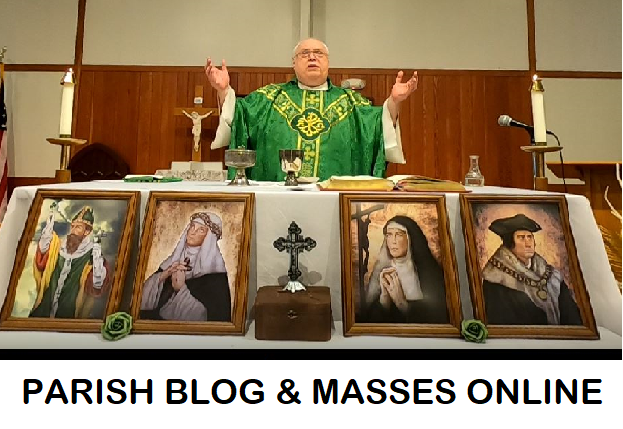
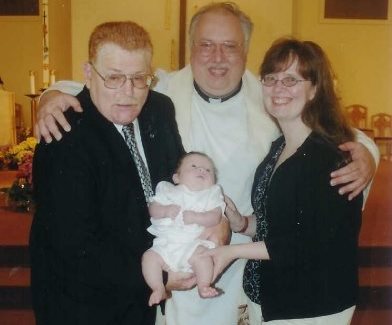
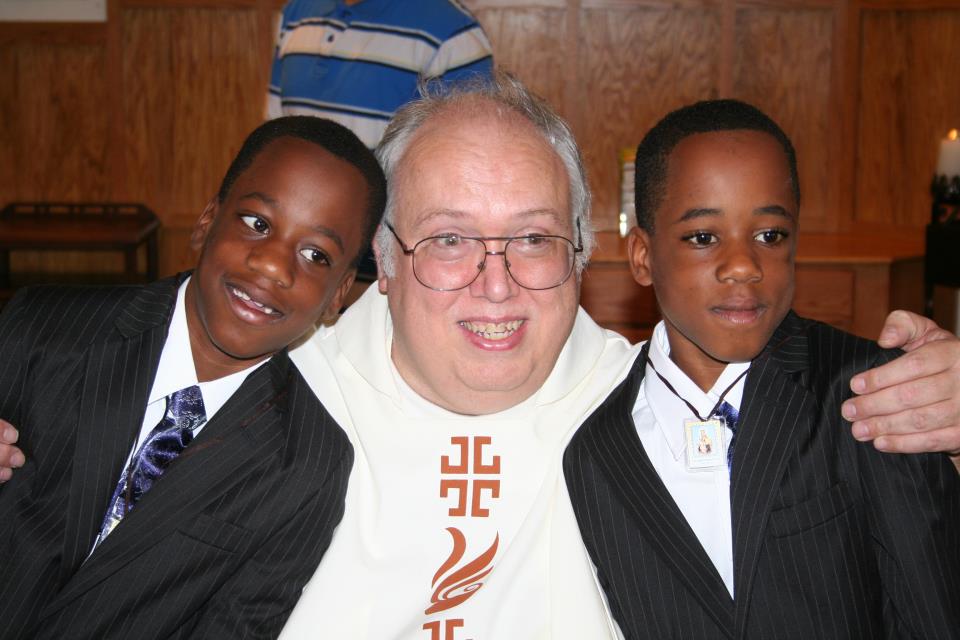
    Fr. Joseph Jenkins

  • The blog header depicts an important and yet mis-understood New Testament scene, Jesus flogging the money-changers out of the temple. I selected it because the faith that gives us consolation can also make us very uncomfortable. Both Divine Mercy and Divine Justice meet in Jesus. Priests are ministers of reconciliation, but never at the cost of truth. In or out of season, we must be courageous in preaching and living out the Gospel of Life. The title of my blog is a play on words, not Flogger Priest but Blogger Priest.

  • Archives

  • Categories

  • Recent Posts

  • Recent Comments

    Barbara King's avatarBarbara King on Ask a Priest
    Ben Kirk's avatarBen Kirk on Ask a Priest
    Jeremy Kok's avatarJeremy Kok on Ask a Priest
    Barbara's avatarBarbara on Ask a Priest
    forsamuraimarket's avatarforsamuraimarket on Ask a Priest

The Paschal Candle

At the risk of being repetitious, I would like to say a few more words about the Paschal Candle. We greet it in song as it is brought into the darkness of the church on Holy Saturday night, the vigil of Easter. A new fire is blessed first, and from that fire we ignite the Paschal Candle. Carried in procession and raised high in the church, it is a sign to us of the resurrected Christ who dispels the darkness of sin and ignorance. The deacon (or celebrant) sings the beautiful Exultet after it is placed in the sanctuary for the vigil service. It is immersed in the Easter water as a sign that Christ gives his life to us through the waters of Baptism. It is on this night that those who are coming into the Church are baptized at the ceremony. During the year, perhaps we miss sight of it since it is kept by the Baptismal font and not by the altar (as during the fifty days of the Easter season)? Each person baptized has his or her individual candle lit from the Pascal Candle. The candle is also placed at the head of the coffin in funeral Masses, as an expression of our belief in the resurrection of Christ who said, “I am the resurrection and the life.” It is the silent witness to our belief that those who die with Christ will rise with Christ. In the Pascal Candle are imbedded grains of incense in five places, reminding us of the five wounds that our Lord bore for our salvation— pierced hands, feet and side. At his death, blood and water flowed from the side of Christ. The doctors of the Church saw in this— symbols of Baptism and the Eucharist. This candle is also incensed at Easter and at funerals; in so doing we honor the resurrected Christ. As the candle is consumed by burning, so our lives should give off the light of Christ in our conduct; indeed, we should also be consumed in our service to the Lord.

Stations of the Cross

A distinctive feature in Catholic churches is the Stations of the Cross. We see them along the side walls and there are images depicting our Lord’s suffering on his journey to Calvary to die for us. The Franciscans, largely in charge of maintaining the religious sites in the Holy Land, are responsible for selecting fourteen episodes from Christ’s Way of the Cross. These scenes depict and help us to enter into the saving events of Christ’s journey from outside the city to his place of crucifixion and entombment. While art can be a distraction, it can also help us to focus on the realism and pain that our Lord suffered out of love for us. We can make the Way of the Cross privately or in groups by pausing in front of each station and reflecting upon Christ’s suffering for us. We can use a book or suggested prayers or rely on our own thoughts as we gaze at the particular scenes. Hopefully, the Way of the Cross will stir up our sorrow for the part we played by our sins in Christ’s suffering. We might also rejoice in how he manifested such great love for us by making this journey. In Jerusalem, there are certain places marked as stations in the inner city, even though the ground walked upon is separated by about 20 feet of soil above the actual ground Christ walked upon. It is the same kind of journey we make with him in our parish churches. These depictions of the Stations of the Cross allow us to prayerfully walk the walk with Jesus on the path of our redemption.

The Sacramental of Oil

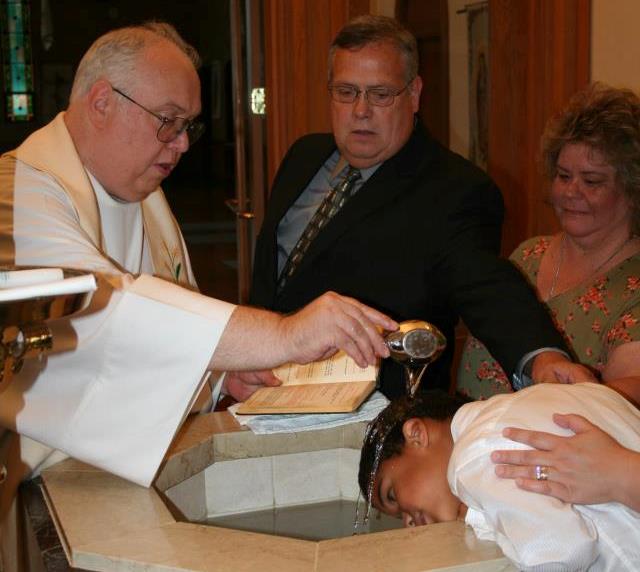
Another important Catholic sacramental is oil. Either in the back or in an upper corner of the church sanctuary there is a small cabinet (modern ones often have glass doors or windows, but they can also be solid wood or metal) called an ambry. This cabinet contains the holy oils used in the administration of the sacraments. These oils are blessed during Holy Week by the archbishop (or bishop) and distributed to parish priests to be kept in a special place until needed for the sacraments. The oils are used in Baptism, Confirmation, Holy Orders and the Anointing of the Sick. The first three are one-time sacraments; the fourth can be administered repeatedly as long as the infirmed person is alive. One is called the Oil of Catechumens or the Oil of Baptism. Small infants and converts receive this oil before being washed in the waters of Baptism. As of old, athletes would receive oil on their bodies to keep opponents from securing a grip on them in a contest. Our struggle as Christians is not merely against enemies of flesh-and-blood, but Satan. This anointing with the Oil of Catechumens is to prevent Satan from getting a grip on us. The Oil of Chrism in its spelling looks like the Oil of Christ. It is used in Baptism after the pouring of the water and it expresses that we are bonded to Christ and must act like Christians. It also reminds us that we are by our Baptism made members of God’s family and we should act accordingly. Children are anointed as priest, prophet and king. Following Baptism or Reception, adults are usually Confirmed with the Chrism and given a more full share of the Holy Spirit. Chrism is also used in ordinations. The Oil of the Sick or Infirmed is used in grave illness or accident to bring healing and to join our crosses to that of Christ. We are reminded that we do not suffer alone. Rather, we make up in ourselves that suffering wanting in Christ’s suffering. It is not that he did not suffer enough; rather, we suffer some things that Christ did not suffer and join those pains to the sufferings of Christ. The ambry containing these oils may be near the baptismal font although it is traditionally close to the altar where the re-presentation of the death and resurrection of Christ takes place at Mass.

More on the Importance of Candles

Continuing my reflection upon candles, the offering of a burning candle before altars and shrines is an act of prayer to God, our Blessed Mother, or the saints. Because the candle signifies our watchfulness, we call it a vigil light. It is also called a votive light because it is our silent intercessor and a prolonging of our prayer. We light a candle to show honor to God. It is a mark of our dedication, of our confidence in his presence and promises. Through our vigil light, we give outward evidence of our spiritual desires. Consequently, as we go about our daily tasks, the candles’ flame continues to express our worship, praise and petition. The lighted candle is not more important than the Mass, the sacraments and our prayers. We do not light candles on the way back from Holy Communion. We do not come into the church, and by dropping coins into the votive rack, seek to be an annoyance to the congregation who are saying public prayers. Neither do we do anything to distract from the Readings that are a part of the Church’s liturgy. The votive candle is not magic. The lighted candle will not take the place of our personal prayer but is a token of our wanting to be in the presence of God while still going about our daily tasks.

Why Do We Use Candles?

Why do we use candles? Perhaps the most familiar object in our worship is the candle. It is expressive of that familiar phrase in the Canon of the Mass, “All creation gives you praise.” The bee helped contribute to the wax. The wax is also the work of human hands as it is fashioned, given shape and a wick. The candle is presented early on in our life. As a light burning brightly, it is presented to our godparents and through them to us. We are exhorted to keep our faith burning as the flame of the candle. Thus, we become a reflection of the Light of the World. The candle is found on the altar, too. There may only be two but sometimes as many as six. Long ago it was necessary so that we could see. Now with electricity, it is largely symbolic as it is consumed while giving off light, representative of our expending ourselves for the work of Christ. The lighted candle marks the real presence in our churches by the tabernacle as it stands as a silent sentinel or witness to the real presence in the Eucharist. The candle dispels the darkness as it is greeted as symbolic of the risen Christ, the Light of the World, during the Easter Vigil service. All light their individual candles and spread the light— candle to candle— indicating that we are to spread the Word of God. The Easter or Paschal candle is greeted in song as it signifies the risen Christ, bearing the sign of our crucified and risen Christ’s sacred wounds.

Use of Water at Mass

How important is a little drop of water? I have already mentioned blessing yourself with water as you enter the church. Sometimes the Penitential Rite is conducted with the sprinkling of water on the congregation, again reminding them to ask for mercy and forgiveness. Mercy does not mean just forgiveness but asking for God’s help and presence in our lives, in our living out the vocation he has given us. There is another drop of water that is placed in the chalice of wine, just before offering it. As with the bread that is prepared at the offertory, this is done prior to the consecration of the elements into the body and blood of Christ. The drop of water can refer to us uniting ourselves to Christ’s presence, symbolic of our uniting ourselves with the person of Jesus as we approach the Father at Mass. The prayer used at that gesture is pregnant with meaning. “Through the mystery of this water and wine may we share in the divinity of Christ who humbles himself to share in our humanity.” What a journey for a little drop of water… what a journey for us as we approach the Father through Christ!

Sweet Fragrance of Incense

Incense is composed of granules that when ignited by fire from burning charcoal give off a pleasant odor, along with smoke. When it is used on solemn occasions, the prayer said gives insight into why it is used. “May our prayer arise to you (God) with a pleasing fragrance.” Our prayer expresses our desire to lift up our minds and hearts to God. The rising smoke reminds us of this. The sweet fragrance tells us of God’s acceptance of our prayer as pleasing. The incense takes on the added honor of that which is incensed. It may be the corpse at a funeral, the Gospel book at Mass, the altar gifts and/or the Blessed Sacrament, or the celebrant and people at the liturgy. Incensing reminds us of the honor and dignity of those to whom it is directed. “You are a chosen race, a people set apart, a royal priesthood.” Incense brings to mind who we are, the delight we give the Lord with our prayer rising to his throne, and the honor due to all and everything that is incensed.

Three Crosses at the Gospel

Notice at the beginning of the Gospel reading that the priest (or deacon) along with the congregation make gestures on the face and chest. The gesturing is a Sign of the Cross made with the thumb on the forehead, lips and the heart. The gestures are preceded by the Gospel announcement and the people’s response, “Glory to You, O Lord.” We are recognizing God’s presence in the reading of the Scriptures. We then make the first gesture thoughtfully on the forehead. This means that we want to know the Word of God. The second motion is upon the lips. We are indicating our intention to proclaim the Word of God. Upon the chest, the final gesture expresses our desire that the Good News of Christ may be implanted lovingly in our hearts. The gesture each time is in the form of a small cross. The Cross reminds us that sometimes to know, to proclaim and to love that which we believe may entail the Cross. The Cross also reminds us of the enduring triumph of Christ. It would benefit us to look over the readings before Mass; and of course, to be on time to listen so that we can truly know, proclaim and love what we hear.

Crossing Ourselves with Holy Water

One of the first gestures we should make on entering a church is to dip a hand into the holy water and to reverently bless ourselves with the appropriate words. This is to remind us of our Baptism as we, moved by the Holy Spirit, enter our Father’s house; we come to sing his praises in the Eucharist through his Son, Jesus Christ. Our Baptism is the gateway to the Eucharist. We receive Christ himself so that he may strengthen the grace we received in Baptism. He provides us with his help and the companionship we need on our journey to our Father’s eternal house in heaven.

Fake Priests for Show in Japan

marriedstiffs.jpg

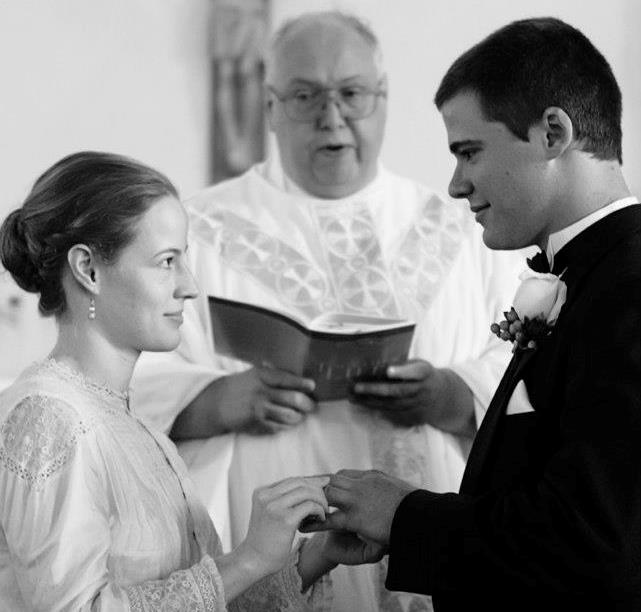
I find this story somewhat difficult to figure out. Christian-style weddings are all the vogue in Japan and Westerners are making lots of money pretending to be priests at these services.

Mark Kelly from the UK explained,

“I was living in Sapporo, studying Japanese, and I needed the money. It’s far better paid than teaching in a language school. Being a fake priest is big business in Japan – I’ve done a TV commercial for one company. In Sapporo, there are five agencies employing about 20 fake priests. In a city like Tokyo, there must be hundreds.”

Read more in the article at BBC News:
http://news.bbc.co.uk/2/hi/middle_east/6067002.stm

Since the weddings have no legal force, the couples must also go to civil magistrates. It is truly bizarre because while only about 1% of the Japanese are Christian, 90% of weddings are performed in a Christian way. I am not talking about the content of the prayers, but rather the borrowed ritual and festivities. Prayers are often perloined from many sources. The old Shinto chapels are gathering dust and Christian ones are doing a booming business!

Of course, it is all about externals. These wedding chapels have flowing fountains, plastic cherub angels, flowers and special lighting. They are popping up everywhere, even in shopping malls.

The article says that the Japanese priests are not happy, but the problem is that there are not enough priests to satisfy the demand. The article and the Japanese are both missing the point.

The real priests in Japan have every right to be angry. It is admitted that many people do not know that fake priests are performing the ceremonies. Impostering a cleric is illegal in many nations and such should be the case in the Orient, too.

Is no one using this fascination with Christian marriage ceremonials for evangelistic and catechetical purposes? It is a tragedy that people are attracted to the externals and yet unable to appreciate the meat-and-potatoes of what Christian faith and the sacraments are about.

Does not the presence of fake priests pose a real danger that a few actual believers might get conned by them and think they are married when really they are not?

Real Catholic priests are generally forbidden to marry couples where neither is a member of the Church. Thus, the dilemma is more than a priest shortage.

Are there any ex-priests or laicized priests among these so-called fake priests? It all reminds me of the local problem with Rent-a-Priests. There are no checks on their abuses. If you pay, they will pray.

This story might seem like only a harmless oddity, but I would disagree. A fake priest and a ceremony for show, empty of substantial meaning or faith constitutes a deceit or fraud. Marriage implies promises being made where honesty and truth are paramount. A counterfeit priest and service undermines the truth with lies.