• Our Blogger

    Fr. Joseph Jenkins

  • The blog header depicts an important and yet mis-understood New Testament scene, Jesus flogging the money-changers out of the temple. I selected it because the faith that gives us consolation can also make us very uncomfortable. Both Divine Mercy and Divine Justice meet in Jesus. Priests are ministers of reconciliation, but never at the cost of truth. In or out of season, we must be courageous in preaching and living out the Gospel of Life. The title of my blog is a play on words, not Flogger Priest but Blogger Priest.

  • Archives

  • Categories

  • Recent Posts

  • Recent Comments

    Barbara King's avatarBarbara King on Ask a Priest
    Ben Kirk's avatarBen Kirk on Ask a Priest
    Jeremy Kok's avatarJeremy Kok on Ask a Priest
    Barbara's avatarBarbara on Ask a Priest
    forsamuraimarket's avatarforsamuraimarket on Ask a Priest

Tuesday of Easter Week: Readings & Message

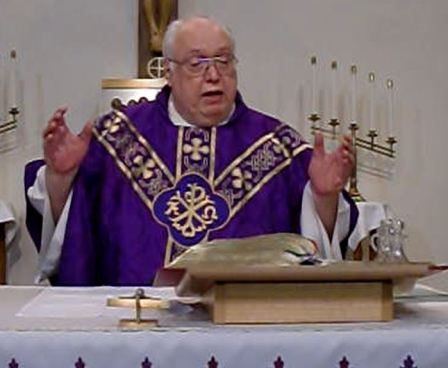
DSC00572

April 14, 2020

First Reading:  Acts 2:36-41
Responsorial:  Psalm 33:4-5,18-19,20 & 22
Second Reading:  John 20:11-18

The Lord appears to Mary Magdalene, consoles her, and sends her off with the news, “I have seen the Lord!” The insistence upon the witness of women in the Scriptures reveals to us just how much both men and women were called to be Christ’s disciples. Mary Magdalene proclaims the Good News to Jesus’ other followers, the men with whom he had entrusted his apostolic authority and power. Notice his words to her. She is so thrilled to see him that he must immediately tell her not to cling to him. He exclaims that he is “ascending to my Father and your Father, to my God and your God!” This is one of the clearest statements by Christ that his particular Easter event will also be ours. The words also echo the time when he taught his friends to call God, “Our Father,” in the Lord’s Prayer. We, who belong to Christ, belong also to the one who sent and raised him up. We who are now identified with Christ can appropriately call God our adopted Father. He keeps us in existence and in baptism refashions us into the likeness of his Son.

Likewise, the disciples in Acts take this message and make it the cornerstone of their ministry. We have put Christ to death by our sins; however, we can repent and be baptized into Christ Jesus. Peter said, “It was to you and your children that the promise was made, and to all those still far off whom the Lord our God calls.” I would love to etch those words near the main doors of the church. The message of Christ was not simply for the Jewish people, nor was it for the Gentiles alone who lived two-thousand years ago. His has been a message for every age. We are many miles and many years separated from the period when Jesus walked the earth; however, no matter how far off we have been from him, his message is just as important and alive today as it was yesterday. We are still called to repent and believe. No political order, no philosophy, no educational program, no, none of these have been able to make man one iota better than he was in ancient Palestine. “Save yourselves from this generation which has gone astray.” Yesterday and today our hope remains in Christ and in his forgiveness. Just as our sins in this age contributed to his crucifixion; so too does his grace and forgiveness contribute to our redemption.

Supplication Prayer

Lord, we beseech you to guide medical researchers to find a cure and treatments for the coronavirus. Give strength and compassion to those who are placing their own lives on the line to care for the sick and to save lives. Give acceptance and grace to your ministers and faithful that we will witness to you during this crisis. Console the grieving and give a share in eternal life to those called from this world. Amen.

Monday of Easter Week: Readings & Message

DSC00572

April 13, 2020

First Reading:  Acts 2:14,22-33
Responsorial:  Psalm 16:1-2 & 5,7-8,9-10,11
Second Reading:  Matthew 28:8-15

Two of the verses in today’s Gospel are the same as read at the Easter Vigil. The women have been directed by an angel to tell the disciples that Jesus has risen as he said. On their way they encounter Christ who tells them not to be afraid and then echoes the angel is sending them off to the disciples, whom he calls his brothers. The guards were terrified at the earthquake and the appearance of an angel. However, they run, not to the disciples but to the chief priests— the very ones who had plotted against the life of Christ. Just as with Judas and the crowd, their answer is again to offer a large sum of money to pay people off. Just as they denied the goodness and presence of God in Christ’s good works and miracles, here too they show their opposition to the truth. Their rejection of Christ and the accompanying guilt is ratified. The guards are bribed to lie. They are told to say, “His disciples came by night and stole him while we were asleep.”

We as believers are to share the great truth that Jesus rose from the dead and redeemed for himself a people. How do we testify to this truth? Do we seek to proclaim the Gospel by our words and charity? Have we been faithful to the religious formation of children, called to carry the banner of truth with us and after we leave this world? Often we think of evangelization and catechesis when pondering how to pass on the truth of Christ. I would suggest that just as important is the healing that comes through charity. It is this that makes any proclamation sound authentic or real. Sometimes it seems that we might be drowning in a sea of empty words. Too many say what they do not mean. Instead of healing and empowering— words and strategies are devised for manipulation. “How can we force more money out of people? How can we pacify them or make them follow blindly? How might we use them?” These questions expose not the light of truth but the darkness that deceives. This must not be the way with us. When we say “we are family” or that “we care” or that “we will be praying for you” or that “we love you,” it must be a conviction from the heart— it must be real— or it is from the evil one.

Our imitation of Jesus, if it is to be authentic, must be a ministry of love and healing. Believe in the power of prayer, not because we are especially holy, but because Christ is powerful. One who can raise himself from the dead can do anything!

Supplication Prayer

Lord, we beseech you to guide medical researchers to find a cure and treatments for the coronavirus. Give strength and compassion to those who are placing their own lives on the line to care for the sick and to save lives. Give acceptance and grace to your ministers and faithful that we will witness to you during this crisis. Console the grieving and give a share in eternal life to those called from this world. Amen.

Holy Saturday Easter Vigil

Veneration Service for Good Friday

Mass for Holy Thursday 2020

Message for Wednesday of Holy Week 2020

purpriest

April 8, 2020

First Reading: Isaiah 50:4-9
Responsorial: Psalm 69:8-10,21-22,31 & 33-34
Gospel: Matthew 26:14-25

Homily:

Today’s Gospel reading is from Matthew 26:14-25. The scene of the Passover Supper is broken by an aside where Judas appears before the chief priests. While the religious leaders have looked for a man such as him, the Scriptures have him initiating the encounter: “What are you willing to give me if I hand him over to you?” Given thirty pieces of silver, he begins to look for an opportunity to betray Christ.

Jesus tells his apostles during the meal that one of their numbers would betray him. While John’s Gospel speaks of Jesus’ distress, this passage from Matthew refers to the Twelve as “deeply distressed.” They know their weakness. They have a profound sense of their unworthiness and guilt. That is why they question, “Surely it is not I, Lord?” Jesus offers no answer but in an effort to ease their consciences, says that the one who dips into the dish with him is the betrayer. Singled out, Judas echoes what the others have already asked, “Surely it is not I, Rabbi?” The response is a literary form called a “half-affirmative.” Jesus answers, “You have said so.” The deception or lie of Judas collapses. Rather than an outright condemnation from Jesus, the admission of guilt is placed upon Judas’ own lips. The question itself consequently implies guilt. What he does, he does to himself. This is the last we hear about Judas at the meal. Absent is the dialogue in John’s Gospel where Jesus dismisses him. However, we can assume that Judas has left their company after this engagement. Notice that Judas is identified as the betrayer prior to the words of Eucharistic institution. The Gospel of Mark follows a similar chronology and we can presume the exit of Judas. It is unclear in John. Luke seems to make him present. Regardless, one in their small fraternity (priest or not) proves to be faithless and unlike Peter, will not repent and seek Christ’s merciful love.

What is sometimes regarded as a divine curse is really just an observation made by Christ. While providence may be hidden from us, such is not the case with God’s Son: “The Son of Man indeed goes, as it is written of him, but woe to that man by whom the Son of Man is betrayed. It would be better for that man if he had never been born.” The apostle John speaks of an evil spirit entering Judas, but the aside here shows premeditation. Judas has substituted for his Lord the spirit of the antichrist. St. Paul teaches that such people are seduced by the deception of the evil one. Jesus will tell Pilate that he has come to testify to the truth and as a stoic, the procurator will ask, “What is truth?” Those cast as Judas do not even ask such a question. One must love and receive the truth so as to be saved. The devil exudes a deceiving power so that we might embrace the lie. Did Judas lose faith in Christ? Did he seek to force his hand? Similarly today, there are many who say they are Christian but is there any real evidence to convict them as such? The faith is a gift given to us and the truth is what it is. However, too many renounce the truths of Scripture and Sacred Tradition, both about the identity of God and the dictates of the moral life. The light of Christ seeks to break through this veil that numbs consciences to the most basic truths about God and about right and wrong. Some are blind even to the basics of nature. There is unbridled greed, human trafficking, and oppression. Senseless violence culminates in crime, war and the destruction of children in the womb. We experience hatred of minorities and those who are different. Marriage and family is ridiculed while we normalize gender dysphoria, sexual disorientation, depravity, excess and infidelity. There is a spiritual blindness where a false caricature of Christ is worshipped in idolatry to the fads and fashion of men. Instead, we need to proclaim the truth not with rigidity but compassion. When Judas awakens to what he has done, he despairs. What happens to him is a wakeup call for you and me. We still have time to change our moral trajectory. Many are now sick and we know some who have died from the pandemic. We do not know the day or the hour that God will call us home. Do not waste this time. We can change. Walk with Christ. Stay safe. Keep the faith.


Message for Tuesday of Holy Week 2020

purpriest

April 7, 2020

First Reading: Isaiah 49:1-6
Responsorial: Psalm 71:1-2,3-4,5-6,15 & 17
Gospel: John 13:21-33,36-38

Homily:

Today’s Gospel reading is John 13:21-33, 36-38. The scene is the Last Supper. Reclining at table, we are told that Jesus is “deeply troubled.” This would seem understandable as Jesus knows the religious leaders are plotting his death and he has prophesied about what is coming. But is this the only reason he is troubled. What he next says probably indicates the true source for his emotional discomfort. He says, “Amen, amen, I say to you, one of you will betray me.” Remember, this is Jesus— he always puts others before himself. We see this in the garden when he tells the guards to leave his apostles alone, that he is the one they want. It is the coming betrayal that immediately distresses him. While the assembly will question, he knows full well who it is. He quietly points out the betrayer by taking a morsel of the bread, dipping it and handing it to Judas. Is the bread consecrated? Is this Holy Communion through intinction? Our Lord tells his friends, “Amen, amen, I say to you, whoever receives the one I send receives me, and whoever receives me receives the one who sent me” (John 13:20). Christ is generous with his saving gifts and yet we must be disposed to his presence. The Church tells us that while the Eucharist can bring a share in the mercy and life of Christ, if a person is ill-disposed then it can convict us before God. No matter if it is the sacrament or not, the Lord is still extending himself to Judas and his response is betrayal.

Simon Peter nods to “the beloved disciple” who is generally known to be John and he leans against the chest or heart of Jesus, asking the identity of the betrayer. Note that it is Peter who really wants to know or maybe who has to know. He is well aware of his own weakness. Such will be realized when in fear he will deny Christ three times. The posture of John is one who shares the Lord’s sorrow. He will be the one apostle to follow Jesus to the hill of Calvary. While Judas will flee the scene, John is drawn to Christ in love. This scene may be more poignant than many realize. It has been theorized that John was not originally the “beloved disciple.” Our Lord is particularly drawn to the weak, the poor, the suffering, the afflicted, and to sinners. Who among them is the most broken and vulnerable? We are told in yesterday’s reading about the supper in Bethany that Judas is a thief. This truth would be fully realized when he would trade the Savior’s life for the price of silver. Why is Jesus troubled? Could it be that Judas is among the most loved of his apostles? He knows he is dishonest and wants to force his hand. We are not privy to all their conversations and all the times of bonding and fellowship. Judas is one of the twelve. How difficult it must have been to allow Satan to enter him when he has delivered so many others. While the providence of God is what it is, Judas makes his choices and closes himself to the intervention of our Lord. He could have repented as Peter would; instead he is on the course to despair and death. Our Lord weeps in the garden but I suspect the weeping begins here. He loves Judas but Judas does not love him enough in return.

Our Lord leaves little in the way of hope for Judas saying that it would have been better had he never been born. The providence of God has never been so mysterious. And yet, with his prophecy of the passion and death, there is a glimmer of hope for Peter who would deny him three times. Jesus says, “Where I am going, you cannot follow me now, though you will follow later.”

The tragedy of sin would have us all play the part of traitor. But let us be like Peter and not Judas. Peter is swayed by fear but love would bring him back to Jesus and merit for him a share in eternal life. During this coronavirus we are also tempted by fear. Maybe it has caused us to be selfish or angry or afraid? Like Peter, we can come back to the Lord and affirm the one who has conquered sin and the grave. Stay safe. Keep the faith.

Message for Monday of Holy Week 2020

purpriest

April 6, 2020

First Reading: Isaiah 42:1-7
Responsorial: Psalm 27:1,2,3,13-14
Gospel: John 12:1-11

Homily:

Today’s Gospel is John 12:1-11. The setting is six days before the Passover. It is the calm before the storm. A dinner is held in Bethany, no doubt to thank the Lord for raising Lazarus from the dead. Reclining with him at table is Lazarus while his sister Martha serves the meal and his sister Mary anoints his feet and dries them with her hair. A crowd gathers to see both Jesus and Lazarus. Many are coming to believe in Jesus because of the miracle he has worked. Meanwhile, the chief priests are out to get Jesus and to kill Lazarus, too. Lazarus is a walking-talking billboard that Jesus has such divine power.

Given the insincere question of Judas, the weight of interpretation for this reading is usually placed upon the costly value of the aromatic nard: “Why was this oil not sold for three hundred days’ wages and given to the poor?” A literary aside already tells the reader that Judas will betray Jesus and that as the holder of their common purse, he was a thief. Jesus immediately comes to Mary’s defense: “Leave her alone. Let her keep this for the day of my burial. You always have the poor with you, but you do not always have me.” Between the lines Jesus is measuring out the value of her humility and sacrifice against Judas’ pride and selfish desires feigning charity.

I would prefer to emphasize the status of the women. Theirs is an utter humility, harkening to when our Lord at table would wash the feet of his apostles as a sign of their service. Lazarus and his temporary restoration to life would point to Christ’s resurrection where he would never suffer or die again. But, notice that Lazarus is most often peripheral to the witness of these women. Previously Mary takes the posture of a disciple sitting at the feet of Jesus and listening to his words. Then too Martha is engaged in the things of hospitality. When she complains, Jesus says that she worries about too much and that Mary has chosen the better portion and would not be deprived of it. Here we find the women similarly engaged, although Mary has moved from listening to honoring or even worshipping Christ. Indeed, the word “Christ” means the anointed one. Kings are anointed, as are those who have died. The oil she uses to anoint Jesus may have been taken from the same source that had previously anointed the body of Lazarus.

Recall the role of the two sisters when Lazarus dies. Martha runs out to Jesus and literally makes an intercessory prayer for her dead brother. Jesus is affirmed as the Messiah and Lord. Mary will also meet him at the tomb. The power of faith is realized when Jesus calls for Lazarus to arise from the tomb and a man four day dead emerges.

The details here are important. After Mary anoints the feet of Jesus, she dries them with her hair and “the house was filled with the fragrance of the oil.” There is a lesson in this. His fragrance is now hers. If we honor the Lord then he will honor us. This is a message crucial for us, especially when we are separated from the Mass and our churches. The family is the “little church” and we are called to invite the Sacred Heart of Jesus and the Immaculate Heart of Mary into our homes. Allow Christ and the fragrance of holiness to imbue us and our families. Honor God and take to heart the witness of Lazarus’ sisters to know, to serve and to adore or love the Lord. Stay safe. Keep the faith.

Mass for Palm Sunday 2020

Mass for Friday in the Fifth Week of Lent