

Filed under: Uncategorized | Leave a comment »

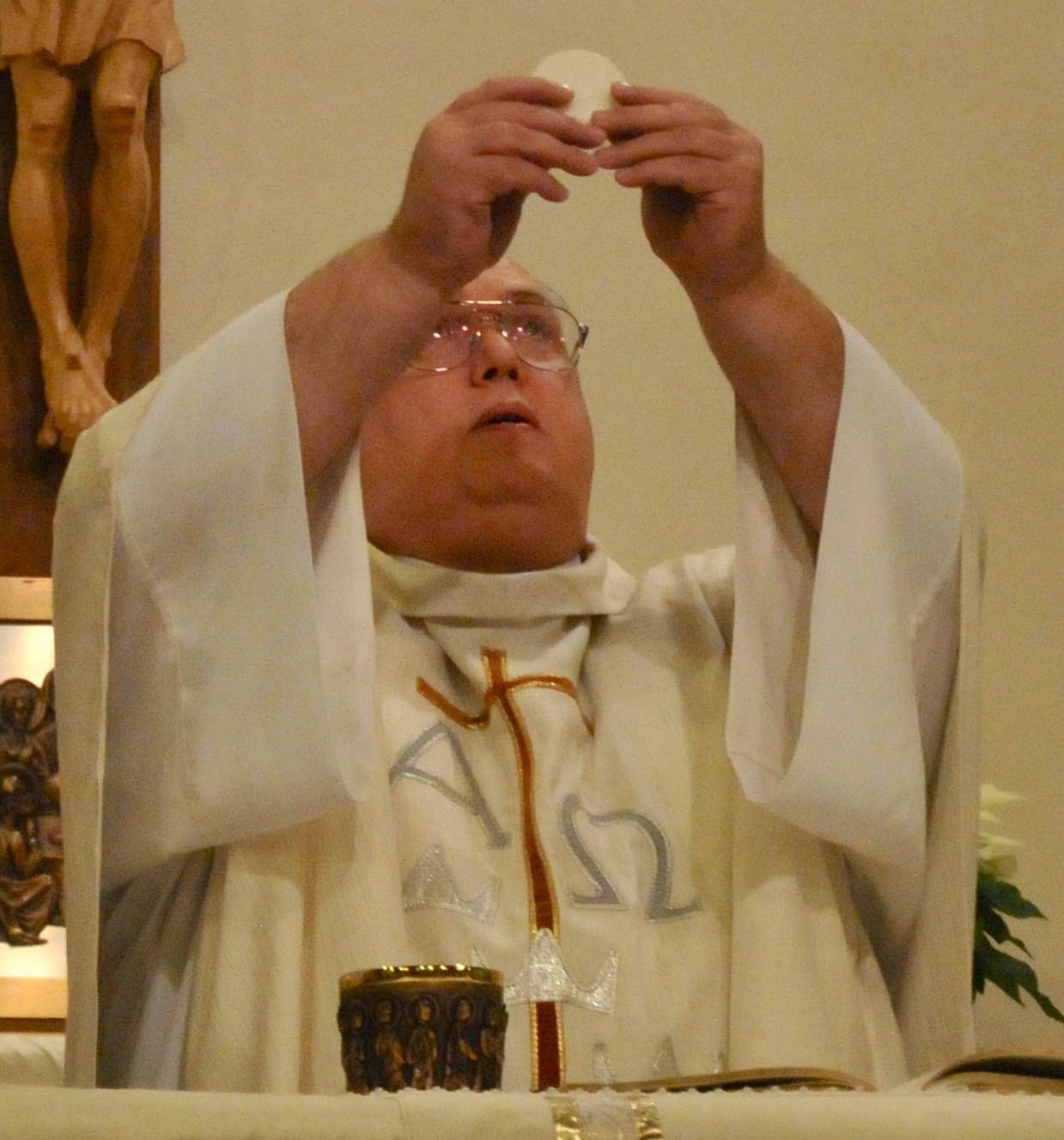
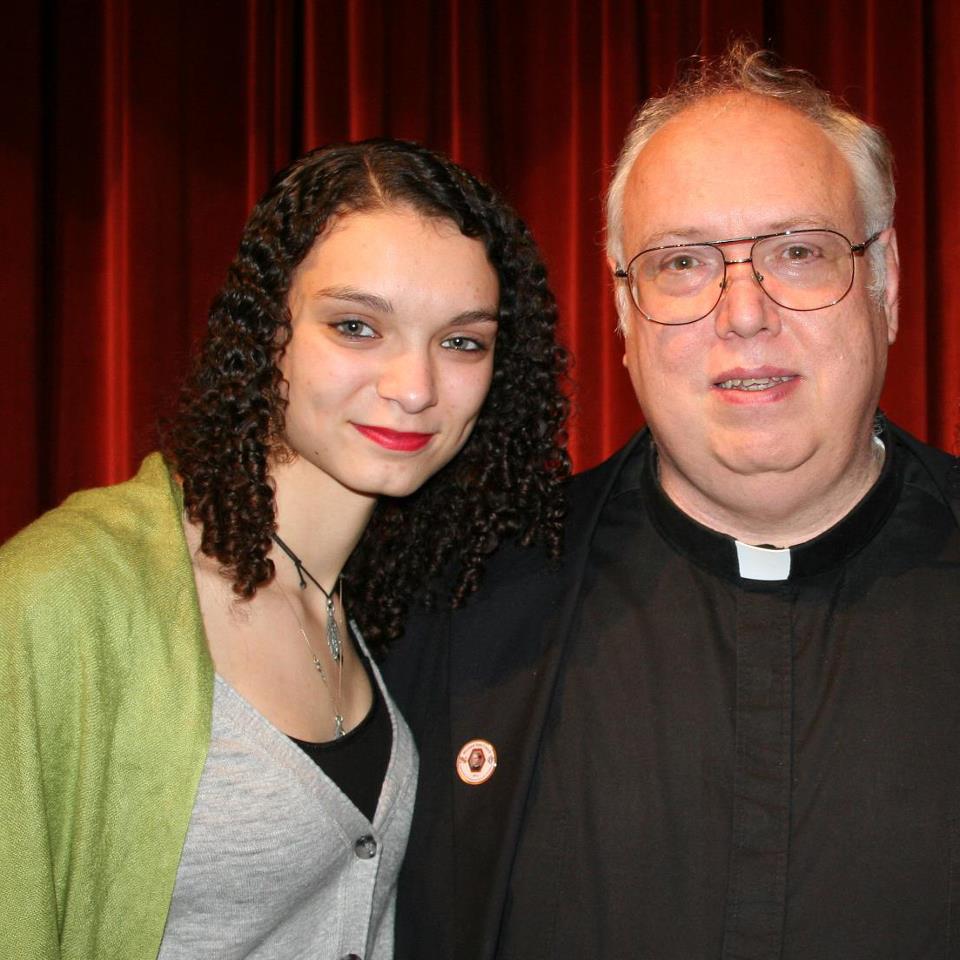
Fr. Joseph Jenkins
 | Barbara King on Ask a Priest |
 | Ben Kirk on Ask a Priest |
 | Jeremy Kok on Ask a Priest |
 | Barbara on Ask a Priest |
 | forsamuraimarket on Ask a Priest |









Filed under: Uncategorized | Leave a comment »
Filed under: Uncategorized | Leave a comment »
Filed under: Uncategorized | Leave a comment »
Filed under: Uncategorized | Leave a comment »
Filed under: Uncategorized | Leave a comment »
Filed under: Uncategorized | Leave a comment »
Filed under: Uncategorized | Leave a comment »
USCCB Audio of Today’s Readings
The Pastor’s Daily Message
April 17, 2020
First Reading: Acts 4:1-12
Responsorial: Psalm 118:1-2 & 4,22-24,25-27
Second Reading: John 21:1-14
You may have noticed how often the resurrection appearances are linked with meals. I have already mentioned the story of the two men on the road to Emmaus who recognized Jesus in the breaking of the bread. Jesus also took and ate a fish to demonstrate that he had actually risen from the dead.
In John 21:1-14, he directs his disciples to throw their net into the sea and there is a miraculous catch. When some of it is cooked, he “came over, took the bread and gave it to them, and did the same with the fish.”
The Eucharistic themes are unavoidable. He makes himself present to us when we gather in his name and eat the bread of life. The symbol of the fish, because of its recurrent use, has also become a signature of sorts for the presence of the risen Lord. Indeed, in the midst of persecution, Christians would often draw a fish upon the ground as a secret sign that it was safe to speak, that they were all among friends.
It is no accident that the Lord uses the occasion of the meal to repeatedly reveal himself to his friends. It is an ancient maxim that to share food is to share life. What better sign could there be then for the resurrection to be seen for what it is, real and glorious? The disciples recall all the past times when they would gather with their master and share nourishment. We can imagine that these were occasions of great intimacy and bonding. When the Christian community is exiled from the synagogues, and we can see such friction as this in Acts 4:1-12, the meal they celebrate in common upon the following day increases in importance. Christianity takes root and grows from the seed of Judaism. Those who thought the issue of Jesus would be resolved by his death find that his disciples continue to work in his name, gathering new adherents and working miracles.
In the early days of the Church, the agape or love feast celebrated by Christians included a regular banquet where they recalled the stories of Jesus and commemorated the Lord’s Last Supper with his friends — the Eucharist. As time passed, and the first meal became unwieldy, it was dropped and the celebration of the sacrament became the principal meal that Christians celebrated as a family. It is still in this spiritual food that the risen Jesus is made present in our midst. He gives it to us and it is Jesus, himself. Just as we need food for physical nourishment; so too do we need the Eucharist to nurture us and to keep us spiritually alive in faith.
I pray that our good people who are usually faithful to the weekly Mass are not spiritually starving. Just because you are currently exempt of the juridical obligation to attend does not mean that you are released from your moral and faith obligation to worship God and to benefit from his graces. That is why the spiritual communion is important, even if is somewhat difficult because of its intangibility. As true believers in the incarnation, Christ entering his creation, we as Catholics trust and rely on the sacraments— how material things, words and gestures can convey the presence and saving activity of the Lord. Because of this— it is a very trying time for us. Again, watch the Mass when it is offered online or on television. Listen to the daily messages from your pastor. Stay connected, both to the faith and to your parish. Stay safe. Keep the faith.
Supplication Prayer
Lord, we beseech you to guide medical researchers to find a cure and treatments for the coronavirus. Give strength and compassion to those who are placing their own lives on the line to care for the sick and to save lives. Give acceptance and grace to your ministers and faithful that we will witness to you during this crisis. Console the grieving and give a share in eternal life to those called from this world. Amen.
Filed under: Uncategorized | Leave a comment »
April 16, 2020
First Reading: Acts 3:11-26
Responsorial: Psalm 8:2 & 5,6-7,8-9
Second Reading: Luke 24:35-48
After hearing the testimony of how the risen Jesus made himself known in the breaking of the bread to the two men on the road to Emmaus, he appears to his apostles. When his friends doubt it is him, or fear that it might be a ghost, he tells them to look, to see, and to touch. He shows them his wounds and says, “. . . a ghost does not have flesh and bones as I do.” Then he accepts and eats a piece of fish with them. St. Luke is adamant in having us understand that Jesus is really in this scene and not a mere ghostly apparition or simply an internal feeling that he is present, as we sometimes sense at prayer. He is much more.
It is this stress upon his risen bodily presence which, I believe, offers us much consolation. The human person is not a disembodied spirit; nor is it angelic. We are created with both bodies and souls and together they constitute who and what we are. That is why the Church is so insistent that on the final Judgment Day, we will be restored body and soul. Although this mystery goes beyond the comprehension of our feeble minds, we see hints as to how it might be in Christ. Notice that he is both the same and different; at first they do not recognize him. This is no wonder. Could any of us recognize a human countenance where all the wrinkles of age, the scars of disease, the marks of pain, and where all tears have been wiped away? Think what such a person might look like. However, after a while, especially in the breaking of the bread and here with the eating of a piece of baked fish, they come to see him for who he really is. Indeed, he still carries the marks of the crucifixion which are his badges of honor in his victorious fight against sin and death.
Looking at today’s epistle from Acts, the curing of the lame man signifies how the power of Jesus realized in his paschal mystery can touch each and every one of us who believe in him. As a sign of this belief, we need to respect our bodies as his temples and extensions in the world. Our bodies are who we are and therefore we need to take care of them. We are our bodies! This message emerges in our celebration of both Christmas and Easter where our humanity is elevated and then restored. This message touches all the doctrines and feasts of the Church. Yes, it embraces moral theology, too. After all, in the various arguments about abortion, euthanasia, artificial contraception, etc. we are speaking not so much about the body as a shell or robot which we can manipulate as we wish; but rather, we are talking about our very selves and our personhood. People who see the issues of the Church disjointed do not realize that to allow selfishness to rewrite our moral principles would ultimately destroy the meaning of the coming of Christ into our world and his resurrection.
Supplication Prayer
Lord, we beseech you to guide medical researchers to find a cure and treatments for the coronavirus. Give strength and compassion to those who are placing their own lives on the line to care for the sick and to save lives. Give acceptance and grace to your ministers and faithful that we will witness to you during this crisis. Console the grieving and give a share in eternal life to those called from this world. Amen.
Filed under: Uncategorized | Leave a comment »
April 15, 2020
First Reading: Acts 3:1-10
Responsorial: Psalm 105:1-2,3-4,6-7,8-9
Second Reading: Luke 24:13-35
The story of Jesus appearing to two men on the road to Emmaus is one of the most famous of our resurrection accounts. The last phrase, “. . . they had come to know him in the breaking of the bread,” speaks to us about how we encounter the risen Lord in our Eucharist. The Eucharist is Christ’s living legacy to us. No matter what age it might be, he does not abandon us. After his ascension, the Lord continues to abide in his early disciples as well. He sends them his Spirit and works his ministry through them.
To protect myself, no Scripture scholar of whom I am aware would say that the story of the appearance of Christ to the two men on the road to Emmaus is a strict catechesis of the Mass. However, if we look at it closely, we might get a better understanding of the movement of the liturgy. Taking a mild liberty, we see the following elements:
1. They are PROCESSING to their destination. We are reminded of the Entrance Rite. Just as it symbolizes in the priest Jesus’ entry into Jerusalem to die; the congregation is understood as a pilgrim people summoned to the risen Lord.
2. Jesus comes and explains the SCRIPTURES to them. This parallels the Liturgy of the Word where we encounter our Lord through the proclamation.
3. Then they come to the place where they are headed, and Jesus is moving on. The men ask Jesus to stay with them. Sharing a meal, we find the code word for the Eucharist, “THE BREAKING OF THE BREAD.” Notice the words he uses:
. . . he TOOK BREAD and GAVE THANKS (Eucharist),
he BROKE IT, and
GAVE IT TO THEM (Communion).
They recognize him in the breaking of the bread. What do they do afterwards? We read in St. Paul a few days back that we must also discern the presence and saving activity of Christ in the bread of life and the chalice of salvation. Otherwise, the sacrament that makes possible justification and mercy can bring judgment upon us instead.
Finally, the men go out upon their MISSION to spread the Word. They return to Jerusalem to announce before the apostles that Jesus is truly risen (Dismissal).
Can you see the broad outline to what we call the Mass today? We are all processing to our final destiny. We proclaim the Scriptures in the Liturgy of the Word. We participate in the breaking of the bread and then go about our mission as disciples. A priest friend of mine has joked that the only similarity between the people of the Gospel and the people of the Church today is that “they got up immediately and left.” Many now lament our separation from our churches because of the coronavirus and yet when we were free to participate at the altar, how many of our Catholics would come late and leave early. It is unfortunate. The final words of the Mass send us upon a mission; it is not simply “the end” or a dismissal. Go tell the Good News! Go tell what you have learned! Give what you have received!
There is a reciprocal action going on here. In the bible passage cited, Jesus explains the Scriptures (likened to a HOMILY) to the travelers on the road and in turn they recognize him in the breaking of the bread. “Didn’t our hearts burn within us as he explained the Scriptures?” So too must our hearts burn with yearning. This is all by way of introducing the Mass so that you will not simply look upon it as a lot of individual parts. There is a whole here. The Scriptures prepare us for the Eucharist. In return, the Eucharist helps us to see Christ in the Scriptures and to better know his message for us. Before the bread and wine is transformed into Christ, the Scriptures are to configure us in such a way that we might be fitting vessels for the bread of life. It is my hope that as tragic as our current separation from the sacrament is, that God’s Word will give us a greater yearning and passion for the Eucharist when it is restored to the laity. But now we must be satisfied with Scripture and spiritual communion.
We see one incident of this transformation and mission in Acts. Peter and John are going up to the temple to pray. Outside the edifice, at the temple gate, is a beggar who for years has been at the practice of begging from those who come to worship. It is interesting that he is outside the temple because as a cripple he is also outside the hearts and lives of many of his own people. He is tolerated, but looked down upon. He must beg for his sustenance. He is a man whose dignity has been tarnished by a situation beyond his control. Peter is poor in worldly riches; but, he has already begun to save up for himself, treasure from heaven. He possesses Christ and he gives Christ. The apostles who were weak and confused are now much changed. In the name of Jesus, he heals the crippled man and orders him to walk. In that single incident, the poor man’s dignity is restored. He would no longer be a castoff from society. He is whole again. This is the meaning of Easter. We may be weighed down by our sins, be of ill health, be lonely, or sad; and yet, Jesus offers us healing and forgiveness. We had cut ourselves off from God and from the family of faith by our rebellion; now we can be reconciled and be aliens no longer. Our shame from the rebellion in the Garden of Eden is no longer imputed against us and our hearts can be turned around — making Christ our greatest treasure — living only to serve and love God.
Notice what the first act of the lame man is once he is healed. No longer merely at the gate of the temple, he walks inside the temple with them. Through the suffering, death, and resurrection of Christ, the gates of our heavenly Jerusalem are now open to us. May we be filled with the same joy as this healed lame man, entering heaven by “walking, jumping about, and praising” the Lord God.”
Supplication Prayer
Lord, we beseech you to guide medical researchers to find a cure and treatments for the coronavirus. Give strength and compassion to those who are placing their own lives on the line to care for the sick and to save lives. Give acceptance and grace to your ministers and faithful that we will witness to you during this crisis. Console the grieving and give a share in eternal life to those called from this world. Amen.
Filed under: Uncategorized | Leave a comment »
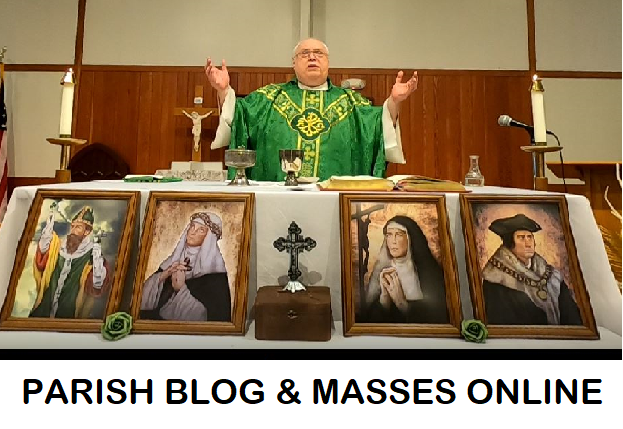













 Blogger Priest