• Our Blogger

    Fr. Joseph Jenkins

  • The blog header depicts an important and yet mis-understood New Testament scene, Jesus flogging the money-changers out of the temple. I selected it because the faith that gives us consolation can also make us very uncomfortable. Both Divine Mercy and Divine Justice meet in Jesus. Priests are ministers of reconciliation, but never at the cost of truth. In or out of season, we must be courageous in preaching and living out the Gospel of Life. The title of my blog is a play on words, not Flogger Priest but Blogger Priest.

  • Archives

  • Categories

  • Recent Posts

  • Recent Comments

    Barbara King's avatarBarbara King on Ask a Priest
    Ben Kirk's avatarBen Kirk on Ask a Priest
    Jeremy Kok's avatarJeremy Kok on Ask a Priest
    Barbara's avatarBarbara on Ask a Priest
    forsamuraimarket's avatarforsamuraimarket on Ask a Priest

Is the Magisterium Infallible or Not?

We should be straightforward and transparent about all this: “Can the Magisterium promulgate errors that contradict the deposit of faith?” I suspect that part of the problem is that the Church finds herself in an ever-changing world. While teachings about the nature of God, the sacraments, the basic appreciation of the marks of the Church, the saving works of God, etc. are generally fixed; certain moral truths and their practical or subjective application are more fluid given the messiness of human existence and changing culture. Note that except for the Western clarification of the Filioque, the Creed has remained unchanged since the Councils of Nicea (325) and Constantinople (381). The Council of Chalcedon (451) pretty much settled the Christological debates: Jesus is a divine Person with a complete divine and human nature. 
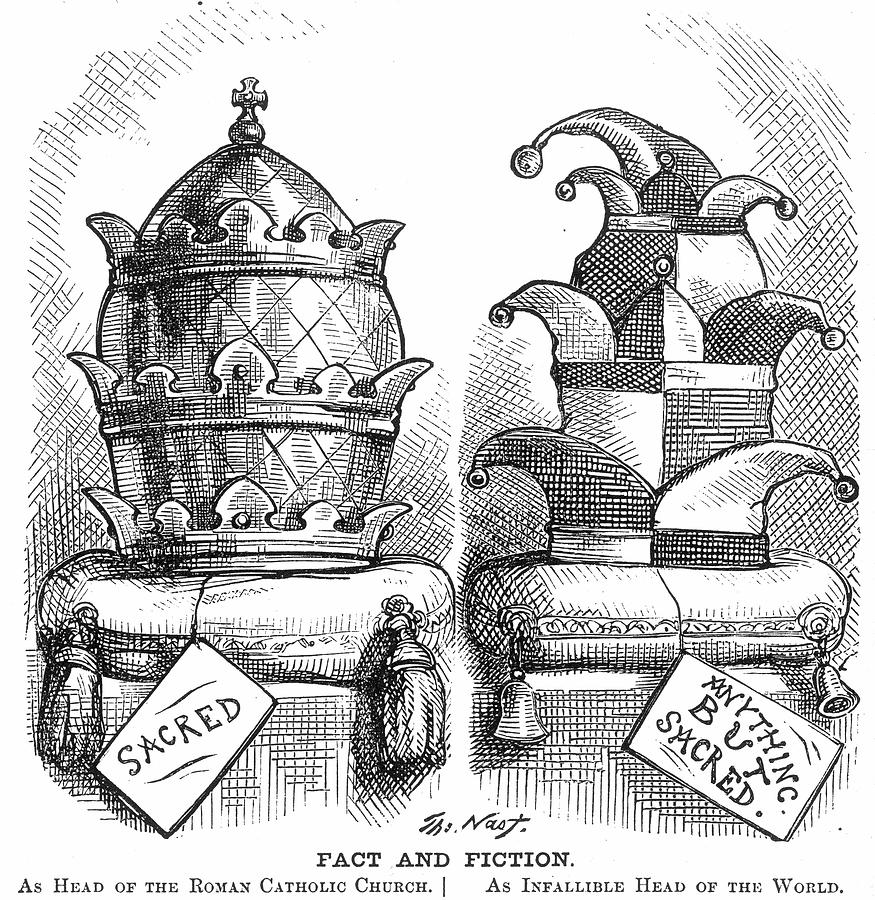
When we think of the role of the papacy what immediately comes to mind is the declaration of papal infallibility at the First Vatican Council (1869–1870) and the solemn pronouncements that fully fulfill its defined criteria: the definition of the Immaculate Conception (1854), the Assumption of Mary into heaven (1950), and the exclusion of the priesthood to men (1994).  Development on all these themes is evident in the history of the Church and in the piety and faith of believers. The Pope essentially clarifies what is the Church’s long-standing belief. Some wrongly refer exclusively to the two Marian dogmas when speaking about the gift of infallibility given the Church. Most of what the Church believes is not solemnly defined but also irreformable. As proof of this, anyone who would deny that Jesus is a divine Person or that he rose from the dead would commit apostasy against the Christian faith. Jesus is God because we cannot save ourselves; only God can save us.  Jesus is risen or else he is a failed prophet and we will one day merely be the food for worms. The Magisterium is defined as the Pope and all those bishops who teach in union with him.  We are obliged to receive the teachings of the Pope since he is the Vicar of Christ made the visible ROCK of the Church by our Lord. The invisible head of the Church is Jesus. We are even required to give filial assent or respect to the religious views of the Pope that are not solemnly defined. Thus, while we are not required to give a slavish intellectual assent to every opinion of the Pope, this religious assent can be challenging because it requires that we would treat as true even those matters which remain dubious. It is in the grey area that theologians faithful to the Holy See would assist in determining the truth.  This is made problematical when dissenting theologians contradict settled doctrine and take an adversarial stance to both the historical and the living Magisterium. There must always be a profound respect to the sources of Christian doctrine that make possible the deposit of faith.  The Church has long taught that public revelation ends with the death of the last apostle, John.    

Does the Church have all the answers? No, even though all that we need to know for salvation subsists in the Church. Sometimes theories or “our best guess” are taught by theologians as certain. Later, we have to roll statements back. For instance, there is a catechetical inconsistency in the Church’s teaching about the state of children who die before the age of reason or the sacrament of baptism. While many lament the subtraction from the universal catechism of the medieval concept of limbo with its imposed ignorance and natural happiness; we often forget that this theory arose because of an aversion to the earlier patristic claim that unbaptized children were sentenced to hell. Today, while we are hopeful or even optimistic about the Lord’s mercy, there remains an uncertainty on this question.  Thus, the Church still encourages the speedy initiation of the little ones into the Christian dispensation. Along with this, the Church has further engaged in debates about baptism by desire and by blood.  Some of these conflicts have reached into modern times, as in the American crisis with Fr. Leonard Feeney.

The matter of doctrinal development, especially when there seems to be a reversal, is indeed problematical and in need of honest investigation.  We cannot merely resort to the hackneyed qualification “that the Church has always taught such and such” when this is clearly not the case. All this might sound controversial but religious thinkers on the right also find themselves engaged with developing or changing teachings.  We need to ask what must stay the same (definitive) and what is privy to legitimate expansion (not definitive).

The Development of Doctrine & Unchanging Truths

Has such a teaching as on capital punishment truly changed or is it the backdrop that frames it and thus changes the question? Those who are politically more liberal seem to give little to no concern about ecclesial precedents. Their agenda is formed more by the fads of the day than by the sources of Christian doctrine.  Voices on the right would place greater weight in the testimony of Sacred Scripture and Sacred Tradition. Both groups can inadvertently undermine the Magisterium, but only the conservatives feel bad about it. 

It is imperative that there be historical and intellectual integrity. Capricious statements that would require clarification or retraction as well as any subsequent duplicity or subterfuge undermines the authority of the Magisterium to demand assent. Essential to this discussion is the notion of doctrinal development championed by Cardinal John Henry Newman and yet poorly or incorrectly defined by many. As a basic premise, the shift in doctrinal understanding must necessarily be “organic” in its development even if the historical progression is sporadic.  Complicating matters, it has to be admitted that sometimes Church teachings are poorly formulated or complicated by a preponderance of anathemas. It is always important to appreciate the actual core teaching and that which might only be hyperbole. While we can all admit that men make mistakes, what is at stake in the discussion is the protective and guiding movement of the Holy Spirit in the life and preaching of the faith by the shepherds of the Church. I am no great theologian or philosopher, despite the thousands of books I have read. As a simple parish priest, my theological insights are those of a hack. Nevertheless, I place great confidence in my trust of two essential themes:  the dignity of persons and the sanctity of life.  I would also add the qualification that God’s gift of life to us has an incommensurate value— despite our many practical efforts to stick a price tag to it.

The Church’s Vacillating View on Capital Punishment

I have long insisted that the matter of the Church’s teaching on the death penalty, past and present, will divulge a sensitive point of contention and vulnerability to critics of the Church’s charism of infallibility. Prior to the contemporary debates, the crisis point was arguably the Church’s diminishing toleration for the institution of slavery.  I suspect the answer to understanding the one will come with insights at how the Gospel of Life was played out for the other.

Politically conservative Catholics are at odds with Pope Francis on a number of matters, especially his heightened concern about the environment and his absolute stand against the death penalty. The text upon the latter subject in the universal catechism has been revised three times, first by Pope John Paul II. Of course, the late Pope arguably urged putting aside capital punishment given that those who enable abortion and further a culture of death against the innocent forfeit any moral and civil authority to take the lives of the guilty.  While I have no problem with a moratorium on executions, at some point we need a clear and thorough rationale for such a doctrinal shift that conflicts with the rendering of scholastic or Thomistic theology and previous magisterial statements.

Look at the trajectory of this teaching in the Church: 

The Catechism of the Council of Trent (1566 AD) asserts:

Another kind of lawful slaying belongs to the civil authorities, to whom is entrusted power of life and death, by the legal and judicious exercise of which they punish the guilty and protect the innocent. The just use of this power, far from involving the crime of murder, is an act of paramount obedience to this Commandment which prohibits murder. The end of the Commandment is the preservation and security of human life. Now the punishments inflicted by the civil authority, which is the legitimate avenger of crime, naturally tend to this end, since they give security to life by repressing outrage and violence. Hence these words of David: In the morning I put to death all the wicked of the land, that I might cut off all the workers of iniquity from the city of the Lord (Psalm 101:8).

 It would imply that mercy to the guilty would inflict harm or risk the lives of the innocent. 

The first draft of the Catechism of the Catholic Church (1992 AD) would affirm the traditional teaching (section 2266):

Legitimate public authority has the right and the duty to inflict punishment proportionate to the gravity of the crime, not excluding, in cases of extreme gravity, the death penalty.

The Holy See was becoming increasingly uncomfortable with this teaching and sought to restrict this power of the state with a revision in 1997:

Today, in fact, as a consequence of the possibilities which the state has for effectively preventing crime, by rendering one who has committed an offense incapable of doing harm – without definitely taking away from him the possibility of redeeming himself – the cases in which the execution of the offender is an absolute necessity “are very rare, if not practically non-existent.

Pope John Paul II had known civil oppression inflicted first by Nazi occupation and later by the Communists. Such no doubt made him wary of giving the state the authority to take human life.  Just as certain people centuries ago suffered death for heresy, he had known political dissidents who have been imprisoned and executed as political enemies of the state. How does one rein in such terrible authority? Again in 1997, Pope John Paul II, in light of his encyclical, Evangelium Vitae, would clarify section 2267:

If bloodless means are sufficient to defend human lives against an aggressor and to protect public order and the safety of persons, public authority should limit itself to such means, because they better correspond to the concrete conditions of the common good and are more in conformity to the dignity of the human person.

As we can see the door to any possibility of capital punishment was left open a crack by the Holy Father’s prudential qualification of Church teaching on this matter. There was no way to evade the evidence of support from the Church found in Scripture and in natural law. There were four clear rationales for such punishment: (1) the harsh and irrevocable nature of an impending death would likely move the condemned to repentance and conversion; (2) the absence of this person would protect society and the innocent from any further harm from him; (3) the terrible punishment would instill fear and act as a deterrent to others contemplating similar crimes; and (4) just as with temporal punishment due to sin, all faults cry out for retribution or punishment. Given that the Christian’s spiritual compass is more attracted to the Divine Mercy than to the Divine Justice, social retribution would likely be the weakest of the four grounds.  Traditionalist critics would heavily lay claim to the second in arguing that the death penalty best protects the innocent from the guilty.

The writing seemed on the wall for some time.  The American bishops protested the use of the death penalty long before Vatican II, distressed at the discrepancy between the rich and the poor in mounting a legal defense. Pope Francis seems to have closed the door with his revision of section 2267 to the universal catechism:

Recourse to the death penalty on the part of legitimate authority, following a fair trial, was long considered an appropriate response to the gravity of certain crimes and an acceptable, albeit extreme, means of safeguarding the common good. Today, however, there is an increasing awareness that the dignity of the person is not lost even after the commission of very serious crimes. In addition, a new understanding has emerged of the significance of penal sanctions imposed by the state. Lastly, more effective systems of detention have been developed, which ensure the due protection of citizens but, at the same time, do not definitively deprive the guilty of the possibility of redemption. Consequently, the Church teaches, in the light of the Gospel, that ‘the death penalty is inadmissible because it is an attack on the inviolability and dignity of the person,’ and she works with determination for its abolition worldwide.

This caused controversy in some circles because while there was a qualification of “more effective systems of detention,” it implied that the Church was previously wrong on the matter at hand. Remember these words were published not just in any catechism but in the official compilation of the teachings of the Catholic faith.  Pope John Paul stated upon its initial release that it was “a sure norm for teaching the faith and thus a valid and legitimate instrument for ecclesial communion.” If there were vacillation in any part of it, what else might be up for grabs?

While I cannot speak to what is in the mind of the current pope, we may still be dealing with a prudential opinion. Can civil officials and their judgment be trusted in life or death determinations over criminals when their support for abortion and now legalized euthanasia undermines the sanctity of life and “the inviolability and dignity of the person”? I suspect that even many of the pre-Vatican II popes might say no. 

Reading the Transcripts to Catholic Confessions

A message from Louise . . .

There is a book that compiles transcripts of confessions recorded with a hidden microphone and without the confessor’s or the penitent’s knowledge. It is from the 1960’s and the people confessing are left anonymous. I am awfully curious about it but it feels wrong to read it. Would it be sinful to read such a book?

My response . . .

I am appalled that such a book was ever written and published. While I do not know the work in question, I can answer your question quite bluntly— do not purchase it, do not read it and if by accident you own it, throw it where it belongs— into the trash.  Regardless that the names of penitents remain anonymous, the fact remains that both priest and penitent were unaware of the recording and did not give permission. The one who made the recordings and the subsequent book committed a grievous sin. Those with a prurient interest in the sins of others would better be concerned about their own failings and need for mercy.  Not only are we talking about a violation of the seal of confession but what is arguably a criminal act. Would it be sinful for you to read such a book? Really, you have to ask? You would make yourself party to the sinful acts of others.    

An Article So Stupid It Made My Brain Hurt

Trying to compare the efforts to change Catholic doctrine under Pope Francis with Pope Benedict XVI’s devaluation of Limbo is absolutely ridiculous. While Limbo was taught in many catechisms, it was always at most a scholastic theory and our best guess to keep unbaptized babies out of hell.  We must remember, that many early churchmen, including St. Augustine thought that children who died with original sin on their souls went to hell (even if it should be the luxury suite in perdition).  Indeed, Limbo which is defined by ignorance of God and natural happiness, is still arguably a type of hell because we are made for God and his absence for all eternity is an essential component of hell even if minus the pain to the senses or hellfire. 

The shift against the theory began under Pope John Paul II and the promulgation of the universal catechism (1993), long before the publication of the International Theological Commission’s report in 2007. Further, if one looks closely, the possibility of Limbo is not utterly taken off the table, just arguably unlikely.  We must accept that we have no certitude on this question, even if we are optimistic that a compassionate and loving God might make some special provision for the little ones.  Many other theories have been put forward, even when Limbo was the reigning presumption. All of them are somewhat problematical. Some argued that the unbaptized children might be given a moment of enlightenment to make a judgment about their eternal orientation. Others would suggest that the desire of parents or of the Church for their salvation might suffice to save them as they have never committed personal sin. It was along these lines that the late Archbishop Fulton J. Sheen penned a prayer of spiritual adoption for children in danger of abortion.  

The article also confuses the teaching about the Limbo of the Innocents with the Limbo of the Fathers. It is wholly different from the certain abode where the righteous dead await the coming of Christ. After the descent of our Lord into hell or unto the quick or to the dead, he would translate the just, including all the patriarchs and prophets into heaven. This likely included good St. Joseph.  This place for the dead no longer exists. However, this is not the hypothetical Limbo of the Innocents or Children.  Despite the article’s assertions to the contrary, most old popular catechisms suggested that it was eternal— sharing a natural happiness as in the primordial garden but knowing nothing of supernatural happiness and seeing God.

The teaching of Limbo made it into the catechisms because given mortality rates, the Church felt the need to say something to calm the fears of parents. Indeed, even the current universal catechism counsels urgency in getting newly born children baptized. Failure to do so endangers their salvation. While the prospect may be unlikely, Catholics are still free to hold a view in favor of Limbo.

The report of the commission echoes the catechism that we have “strong grounds for hope” that infants might be saved— but this hope is not absolutely certain.  We may have shifted away from Limbo, but we are unwilling to dismiss the need for faith in Jesus Christ and for baptism. The Church teaches that baptism with water and in the name of the Trinity brings spiritual regeneration. Original sin is washed away. We are given sanctifying grace. We are made adopted sons and daughters of the heavenly Father and inheritors of the kingdom of heaven. We become temples for the Holy Spirit. We are made members of the Church or mystical body of Christ. All this is the core doctrine involved and it is here that nothing has changed.  The assumption otherwise in the article is a lie and is propaganda for revisionists who care nothing about babies— as they are frequently the same voices that place the selfish and fearful whims of women over the right to life of their children.  There has been absolutely no movement on moral teachings like the indissolubility of marriage or the evil of sexual activity outside of heterosexual marriage or the heinous wrong of abortion.  The article is comparing apples and oranges.

The author goes so far as to make a comparison of the slow death of Limbo as a theory to the fate of the traditional Latin Mass.  Again, there is no comparison as a medieval theory to save a few cannot be compared to a liturgy with apostolic roots where we have certitude of its efficacy in terms of the re-presentation of Calvary and the real presence of the Eucharist. 

The Bible says we should not call our brother a fool and so I will not speak further about the article’s author.

Can a Gay or Bi-sexual Person Be Close to God?

A message from Lucinda . . .

Father,

I am a young girl who wishes to be closer to God, but I am unsure if I can be because of my sexuality. I am bisexual. I feel attraction to both men and women. Many say this is a sin, but I would like to ask a priest for an opinion. I do not wish to sacrifice my happiness, but I want to be closer to the Lord. Is being gay a sin?

If being bisexual is a sin, what shall I do? How can I repent from this? What do I do to stop myself from being attracted to women? I’m unsure if it is possible, as being bisexual is more than a label; it is a part of who I am. Perhaps God has made me this way – does he accept that I am gay? Or does the Lord wish for me to repent and reject these feelings?

I would really appreciate some help. Thank you.   

My response . . .

First, we need to be aware that we live in an eroticized culture where we are saturated with immodest images and fed the lie that only those who are sexually active can be happy and fulfilled. 

Second, only you can get into your head and heart as to how you know yourself and in how you feel about people and the world around you.  Are you truly bisexual or just conflicted as a youth? It is not for me to say. However, so as to respond to your inquiry, I will take what you say at face value.

Third, both the Scriptures and the Church teach that sexual activity (the marital act) is reserved to married men and women. The sexual powers are directed to the unity of spouses with the accompanying goods of fidelity and procreation. Same-sex relationships are not capable of a sexual act that is open to the generation of new human life. 

Fourth, while the catechism will speak of same-sex attraction as disordered, it is not in itself sinful. However, the acting out of same-sex intimacy would constitute serious sin. It should be noted that heterosexual sexual relations outside of marriage also constitute sin. Men and women are made for each other but relations should be within the covenant or sacrament of holy matrimony.    

Now, how do I respond? It is crucial that you do not simply identify yourself by the single characteristic of sexual attraction. You are so much more than this. I have known heterosexual men and women deeply wounded in spirit and personality because they narrowly define themselves and their happiness by the exuberance of their carnal lives. One poor woman I counseled decades ago was deceived into thinking she only had worth when men wanted her and were regularly taking her to bed.  Behind the lust and fleeting excitement, she was very unhappy and frustrated. She told me that she felt as if she was being pulled apart and in different directions. Such a lifestyle made it impossible for her to be whole. The fruit of such a life was not a family and a home but a long string of abortions and a sense of abandonment. 

There is a deception that many buy when preparing for marriage. We often hear spouses say such silly things as, “I am only half a person without him or her.” The truth says different— married or single— we must be whole and complete in ourselves.  It is this appreciation that allows a celibate priest or brother or nun to be happy. We can have many friends but we do not need sex to be complete or to know joy.  If you are truly bi-sexual then it is possible that you might find a young man to marry and to have a family. If not, you can still be rich with love and friendship, albeit without sexual congress. Do not buy the lie that love must always be expressed sexually or genitally.  I know many men and women who love each other in an intense but brotherly or sisterly manner. 

However you feel about your identity, if you are serious about being holy, then God will give you the grace to do so. The Gospel of Christ promises us the Lord’s friendship and a share in his risen life.  However, there is also the command to take up our crosses and follow him.  We cannot have everything or everyone we want in this world.  The love that Christ would have us know is inherently sacrificial. We seek to be good and holy while trying to bring others along with us in the pilgrimage of faith. God forbid that we should turn away from the Lord or lead others into sin because of our selfishness.

Who are you? While gender and attraction are part of the equation, you are so much more. Look beyond it. Make an assessment of your gifts. Discern your calling and move forward as a child of God.   

The Ethical Treatment of Animals

A message from Al . . .

Father,

Could you please answer a question for me . . . I don’t understand why God hates animals. I know he gave man free will. Animals depend on humans to take care of them. But humans do such horrible things to them and they can’t take care of themselves. Please help me understand. Thank You.

My response . . .

God loves his creation.  Genesis tells us that God gave the stewardship and subjugation of material creation into the hands of humanity.  Pope Francis and others would remind us that sometimes we have failed in this sacred charge, trashing the environment and either abusing the animals with which we share the good earth or even speeding certain species toward extinction.  The fault as with all sin is a misuse of human freedom.  The problem is not God but the callous way that we as men and women treat what God has made.  Humanity stands between the two created realms— the spiritual and the material.  Our souls possess a kinship with the angels while our bodies make us a part of the mortal and physical world.  Certain animals like dogs have developed a shared affinity and friendship with the human race.  Others are used as beasts of burden and as food.  This might seem harsh, but it is all part of the nature of things. Even if animals should not have immortal souls, nothing is lost in God. We can have certitude that all things continue to exist as eternal paradigms in the divine mind.  If people fail to show compassion to other human persons, should we be surprised when animals are mistreated?  Maybe God has given you this keen appreciation of the status of animals so that you might become an advocate for their ethical treatment?    

Settling Accounts Before Approaching the Altar

A message from Cali . . .

Seeing as you are a priest I’d like to get your opinion on something. I am currently not on speaking terms with my sister. A couple of weeks back her daughter went with me on an egg hunt and she was acting up in the car so I disciplined her. My sister didn’t like what was said. A few days later I gave my niece a warning to quit disrespecting me because she kept pushing my buttons and my sister took it as a threat. I’ve read in the Bible that Jesus said if a brother has anything against you, to put down your gift at the altar and make amends with your brother first. Does this mean that I am not able to receive Holy Communion since my sister will not talk to me and is holding a grudge? Thanks for your time.

My response . . .

How old is the child? Little kids can be annoying but we as adults need to do what we can to be patient. As they get older, the need for discipline becomes more crucial. However, some people are very sensitive about others trying to correct their children. Does your sibling not see the need for her child to treat others with respect? Does she discipline her children? There is too much I do not know about the particular situation to give a satisfactory answer. If you want to make amends with your sister and she has closed the door to you then there is not much you can do. Unburden your soul in confession, keep them in prayer and humbly approach the sacraments. Peace! 

Jesuit Priest Says the Damnedest Things!

It amazes me that Pavone can be laicized for his pragmatic lack of tact and impertinence toward lawful authority while Martin not only gets away unscathed but is praised by the highest authorities despite outright dissent regarding homosexuality and our teaching on marriage. Bill Donohue and the laity of the Catholic League battle to defend marriage and Father James Martin literally cuts of their legs by arguing that Transportation Secretary Pete Buttigieg is truly “married” to his boyfriend. But the League is right, such a same-sex union is only a marriage in legal fiction. The wayward priest can quantify matters all he wants; the fact that the state and a particular “Episcopal” church consider it marriage has no standing with either natural or divine positive law.

Father Philip Bochanski of COURAGE is correct that Father Martin’s published stance is “irresponsible” as it might water down moral teaching and lead those struggling into grievous sin.  Father Martin should remember that his first obligation is not to pamper those in irregular unions but to teach the truth and save souls. Referencing Amoris Laetitia, Father Bochanski quoted the Congregation for the Doctrine of the Faith: “. . . as for proposals to place unions between homosexual persons on the same level as marriage, there are absolutely no grounds for considering homosexual unions to be in any way similar or even remotely analogous to God’s plan for marriage and family.” This was the whole point with the Marriage Matters campaign that was orchestrated by the Maryland Catholic Conference. The notion that same-sex unions might be regarded as marriages damages our understanding of matrimony and the family, a cornerstone to a healthy society. These unions and their children are the cells that keep the body of our society healthy and growing. No fault divorce and multiple marriages, cohabitation and fornication, contraception and abortion, and now same-sex promiscuity and bonds serve as a kind of cancer destroying the cells or basic building blocks to our civilization.    

Lauretta Brown reports in her article for the NATIONAL CATHOLIC REGISTER that Father Philip Bochanski also cited the 2003 document, “Considerations Regarding Proposals to Give Legal Recognition to Unions Between Homosexual Persons,” that “in those situations where homosexual unions have been legally recognized or have been given the legal status and rights belonging to marriage, clear and emphatic opposition is a duty.” Father Martin has clearly failed in his priestly duty on this matter.  I say this with the deepest sadness as his recent book on prayer and Christian spirituality is a real gem.

What is right and wrong is not determined by the media, public opinion or by dictate of law and politics. God forbid that a shepherd of the Church should through obfuscation lead God’s people to doubt the teachings of faith or to reduce them to one opinion among many.  Such an action only fuels the relativism of our age.   

Living a chaste and holy life should be promoted and witnessed as a fulfilled and joyful discipleship. Just as men and women in holy marriages give witness of Christ in the world, so too do those who have embraced a life of virginal love and service. Given that those who are sexually disordered will remain so, then they can take confidence that their vocation is one of celibacy, prayer and service.  One does not need a sexual partner to be complete.  One can still have God’s friendship and the spiritual family of many loving brothers and sisters.  This is the message that Father Martin should put forward as a priest who is himself pledged to celibacy.    

Is there struggle in such a life?  Let us be honest, married or single or consecrated religious or priest, every life has its ups and downs. There are challenges and difficulties.  The believer faces it all with hope in the Lord. 

How are we to deal with people who disagree with us and the Church? First, we must not compromise the message? Second, we must respond to anti-Catholic bigotry and anger over the issue with compassion and reason. Third, we must make it abundantly clear that ours is not hate-speech but that we really love them and want them to be happy and in right relationship with God. We do not look down them as defective persons but as God’s precious and beloved children.  We want them in the Church and as companions on the journey. Fourth, any rejection of same-sex unions and promiscuity must be accompanied with the true Christian alternative— loving relationships of brothers and sisters albeit without sexual misbehavior.  It must be clear that while the Church opposes sexual activity outside the union of man and woman in marriage, she urges a real and sacrificial love as witnessed by Jesus in his ministry and on the Cross.

Toward the end of the article, mention is made of Cardinal Ratzinger’s 1986 letter, “On the Pastoral Care of Homosexual Persons,” that admonished bishops against “any programs which may seek to pressure the Church to change her teaching, even while claiming not to do so.” This is something that Father Martin’s superiors should consider, as well as a host of German bishops in their mad dash to an out-of-control synodality.   

The Confusion of Colors in the Rainbow

When it comes to gender dysphoria and the alphabet soup that describes various degrees and types of same-sex attraction, there is an ever-increasing complexity or dare I say fragmentation. The current nomenclature is summarized with this designation: LGBTQIA+. Please do not ask me to decipher it! Instead of challenging those with mental illness and disorientation, we are authorizing and enabling them to identify themselves by the fiction they have embraced. Every effort to check this movement has either failed or given them fodder to ridicule their critics as mean and prejudiced.  It has been joked that if we cannot beat them, then maybe we should join them? I have always wanted to be a green Martian and have decided to claim such and treat as bigots any who would deny me my non-terrestrial self-designation. I reject your reality and have decided to impose my own. I breathe carbon dioxide and eat glass.  Who are you to object and tell me what I can do with my body? My intent is not to ridicule but to expose absurdity. I suspect that many who are fearfully silent concur that this whole business is rather silly.            

Many have swallowed the notion that human respect demands total and complete acceptance even if such would contradict our most fundamental values and basic reasoning.  Gone is any wiggle space that would permit debate or even silent toleration. As politicians, progressive advocates, the media and educators seek to transform the consensus of the public forum, those with traditional views on morality and relationships are coming under the brunt of “payback” discrimination.  Christians who focus on the Bible as the Word of God are finding themselves marginalized and the proclamation of the Gospel is condemned by extremists as hate-speech.  Contemporary secular values are supplanting those of traditional faith and the Decalogue. 

The gender designations leave us scratching our heads: gay, lesbian, bisexual, transgender, queer, asexual and intersexual.  Really, what does this all mean?

  • Indoctrination without debate or questioning is demanded.
  • Blatant advocates are deemed as level headed and right thinking.
  • Sitting on the fence is interpreted as either cowardice or latent bigotry.
  • A failure to render support or promotion for the cause is judged as injustice.

There is a not so subtle threat connected to all of this— accept a plurality of subjective genders and an ever expensive field of sexual expression— or else!  Give in or you will be sued. You will be stripped of your livelihood. A baker lost his home and business because he refused to bake a cake to celebrate a same-sex union. Win or lose, the court costs are astronomical. The ridiculous has become serious and real. Indeed, even liberals and feminists who fail to toe the line are being vilified.   The author of the popular Harry Potter books, J. K. Rowling, has been mocked and black-listed because she wants to make a case for the rights of women who were “born with vaginas.”

What becomes of the voice of the Church for justice and peace when she is increasing regarded (albeit falsely) as an organization that promotes injustice and discrimination? Many would undermine the efforts of Christians for ethnic and civil rights because they are unwilling to include sexual orientation along with demands for racial equality. We have already seen the women’s rights movement hijacked by greedy abortion providers and now by LGBTQIA+ proponents. They argue that you cannot have one without the other.  What is the real status of feminism and women’s rights when men as transgendered females can compete with ordinary women in swimming, track-and-field and kick boxing? Women’s records are falling right and left, and biological women are being shut out. Notice that there is no “S” in the alphabet soup for straight men and women. That which was once regarded as normal merits no celebration but is reckoned as the enemy or as a prospect for conversion. 

The targeting of children is real in this confrontation over gender. The idiocy would have teachers planting the seeds for confusion in curriculums that target youth as young as five years of age. If the proponents cannot effect change with their parents then they will focus on the upcoming generations. There is no more celebration of Mothers’ and Fathers’ Day because it is hurtful to those with a missing parent or same-sex parents. Valentine cards are forbidden because no one can be excluded. Condoms are given away by school nurses because it is expected that teens cannot control themselves and even many of the teachers have failed to wait until marriage.  We have eroticized childhood. Notice the direction taken with children’s television programming. Kids are breaking into romantic couples even prior to puberty. Further, today there is always the gay or lesbian in the mix, too.  

Those who oppose the stance of orthodox churchmen on the sexuality and gender questions are quick to charge them with unwarranted bias, ignorance and insensitivity. However, the last thing that any good shepherd wants to do is to inflict pain upon others.  They desperately want reconciliation and communion with all of God’s people. But tough love mandates that there are some concessions that can never be made.  A number of gay advocates, but not all, contend that monogamy and fidelity should count for something, even if bonds are judged as disordered.  However, just as with heterosexual sin and cohabitation, evils are not necessarily all violent or rude— there can be tremendous tenderness and intimate sharing in fornication and/or even adultery.  Same-sex unions may include real affection and love— but such elements cannot justify what is wrong. Indeed, such adds an insidious catalyst to the misbehavior, excusing harm caused to the beloved under a deceptive veil of caring and romantic love.  While sexual expression, both natural and unnatural, outside the covenant of heterosexual marriage may be consensual, it damages the soul and psyche as abusive behavior.    

We hear from gays, lesbians and others that the stance of the Church makes them feel unwanted and unloved. Indeed, some turn this anger against God for making them disordered or broken. This I can well understand as I often had tense prayers as a youth before God because of a struggle with asthma and breathing. I was always sick and often could not run and play with other children. Like Pinocchio, I prayed that I might be a real boy. Returning to the crisis at hand, those suffering gender dysphoria and disordered attraction would sometimes turn matters around and assert that their sexuality was okay and a gift to be celebrated, not scorned. The Church would affirm persons but that is all.  The Church could not pretend that a sexual disorder was normative. Certainly the shepherds of faith would never bless sinful acts as this would constitute blasphemy. 

A refusal to acknowledge the many subjective designations of gender and deviant sexual acts signifies no disrespect to personhood and our common humanity.  The Holy Father would have us accompany these souls in their faith journey. We can lament and cry with them. We can hear them out as our brothers and sisters.  But any dialogue will always find itself directed and restrained by the values and truths extracted from the sources of Christian doctrine. Jesus associated with tax collectors and sinners and yet he also called them to repentance and conversion. We must do the same.

While many churchmen have placed an emphasis upon fixing homosexuals, I suspect the better approach is in finding lawful and valid ways for them to move forward as they are. Further, if the rest of the Church is to learn anything from this, it may be not to soft-pedal heterosexual sin by comparison. Regardless of orientation, we should all focus on virtue and avoiding serious sin. Anyone who would “love” another into mortal sin is practicing a false or self-seeking love.  We should pursue grace and holiness for the beloved.  Here are a few propositions that might lead us out of the moral quandary where we find ourselves:     

  • Affirmation of chaste loving familial relationships or special friendships;
  • Dedication to celibate “brotherly” and “sisterly” bonds;
  • Encouraging a vigorous spirituality of prayer and the sacramental life;
  • Dedication to the faith in ongoing study, catechesis and evangelization; &
  • Focusing on an apostolate of charity and service.