














Lou writes:
“Of the Apostle Barnabas, nothing is known, except what is recorded in the Acts. There we have an honorable encomium of his character, and a particular description of his joint labors with St. Paul. It is a great injury to him, to apprehend the Epistle which goes by his name to be his.” (Vol. I., p. 126, Church History. Boston, 1809.)
Father Joe responds:
This is becoming monotonous! It does not matter to Roman Catholics if the author is or is not St. Barnabas! Authorship concerns have been conceded for centuries! Get a life! The important matter is the reception give the document by the Church and its antiquity. It gives us an accurate depiction of the mind of the early Church.
Lou writes:
“The so-called Epistle of Barnabas, a forgery of the second century.” (Cyclopedia Biblical Literature, article Lord’s-day.)
Father Joe responds:
Sorry, fragments and references have pushed the date back to 100 to 131 AD. You must be using out-of-date archaeological sources! (Of course 131 AD would make it EARLY second century– VERY EARLY!)
Lou writes:
“But the Epistle was not written by Bamabas; it is not merely ‘unworthy of him,’ it would be a disgrace to him, and, what is of much more consequence, it would be a disgrace to the Christian religion, as being the production of one of the authorized teachers of that religion in the time of the apostles, which circumstance would seriously damage the evidence of its divine origin.” (An Examination of the Six Texts, p. 233.)
Father Joe writes:
Read what I wrote before, it still holds! As for the content, the methods of rhetoric change over the centuries. It must be appreciated as a work of its time and not according to more modern standards. Many of the Church Fathers implemented allegorical interpretation. The greatest fault of the document is not the content but that the style is a bit boring.
Lou writes:
“The tract known as the Epistle of Barnabas was probably composed in A.D. 135. It is the production, apparently, of a convert from Judaism, who took special pleasure in allegorical interpretation of Scripture.” (History of the Ancient Church, p. 367. New York, 1859. See also The Old Catholic Church, pp. 8, 13. T. & T. Clark, 1871.)
Father Joe responds:
Yes, this is quite plausible. Here at least is one intelligent quotation that adds something new to the discussion.
Lou writes:
“The Epistle of Barnabas, bearing the honored name of the companion of Paul in his missionary labors, is evidently spurious. It abounds in fabulous narratives, mystic allegorical interpretations of the Old Testament, and fanciful conceits; and is generally agreed by the learned to be of no authority. Neander supposes it to have originated in the Alexandrian school; but at what particular time he does not define” (Ancient Christianity Exemplified. chap. 2, sec. 2, p. 47. Philadelphia, 1852).
Father Joe responds:
Given that the author of the commentary was probably not thinking about its use in the Sunday observance debate, the comments here are fairly to the point.
Lou writes:
“The author was probably a converted Jew from Alexandria (perhaps by the name Barnabas, which would easily explain the confusion), to judge from his familiarity with Jewish literature, and, apparently, with Philo, and his allegorical method in handling the Old Testament. In Egypt his Epistle was first known and most esteemed, and the Sinaitic Bible which contains it was probably written in Alexandria or Caesarea in Palestine. The readers were chiefly Jewish Christians in Egypt, and the East, who overestimated the Mosaic traditions and ceremonies” (History Christian Church, Vol. II., p. 677. New York, 1883.)
Father Joe responds:
Yes, this is not bad either. Although more modern scholarship suggests that he was a Gentile convert who was quite familiar with Judaism.
Lou writes:
“He could not be the author of a work so full of forced allegories, extravagant and unwarrantable explications of Scripture, together with stories concerning beasts, and such like conceits, as make up the first part of this Epistle.”
Father Joe responds:
Who is this by? Oh no, it is just like the epistle under discussion— ANONYMOUS! And yet, do you not consider it a comment possessing some weight? Alas, such is the same with TRUE Christians and the EPISTLE OF BARNABAS.
Lou writes:
The preceding historical evidence brings only one conclusion. The Epistle of Barnabas is a vague, fanciful production of some unknown author, forged at an uncertain date in the second century. I can’t base my faith on forged and faulty works when I have the option of by faith believing in the inerrant Word of God.
Father Joe responds:
Here you come out with it. You would not accept any testimony outside of the Scriptures. If such is the case then why did you demand a response from Cathy on Sunday observance before 100 AD? You underestimated her, didn’t you? Yes, you did! Boy, am I proud of Cathy! (See previous postings in this debate.)
As I said before, there is nothing FORGED about the epistle. The early texts do not claim to be written by Barnabas. He is simply an early Christian who wanted to be known, not by his given name but by his cherished faith in Jesus Christ.
The litany of anti-Catholic books listed by Lou, some going back as much as two centuries are hardly credible and objective critiques of the EPISTLE OF BARNABAS. Does he actually have all these books? Some of them are classics of backward and prejudiced thinking. The quotations themselves show that many of them disregarded the value of the epistle because it conflicted with evangelical thinking and their watered-down doctrines. This is hardly the criterion for judging the historicity and value of a work. No doubt Lou sees them as his spiritual kin in religious bigotry and dancing around the difficulty of Catholic truths.
Here are some links to aid Lou in his education:
- The Epistle of Barnabas (MIT)
- text/ipb-e/epl-07/barnaba1.txt
- text/ipb-e/epl-07/barnaba2.txt
- Apostolic Fathers at Christian Classics
- The Epistle of Barnabas (New Advent)
As for the DIDACHE:
I think it is appropriate at this point to restore all the citations Cathy made with the hope that Lou will read them with openness to the ancient testimony of Christian faith and Sunday observance.
Lou writes:
In conclusion, you have failed to prove that Christians BEFORE the second century AD were Sunday keepers. You are relying on false, forged, works.
Father Joe responds:
In conclusion— nothing— quite the opposite is the testimony.
Lou writes:
And I might add this. Even if there were some that it could be proven did in fact keep Sunday before 100 AD – it still wouldn’t prove your position that there was a Divine COMMAND to substantiate it. There isn’t any. As for me, I’ll stick with the Word of God and shun the false forgeries of the Didache and the so-called letters of Barnabas.
Father Joe responds:
There you have it folks. Just as I said, this has been a wasted exercise over a counterfeit question. The one additive I would make to Lou’s remarks is that he DOES NOT stick with the Word of God, but his own private (mis)interpretations of Scripture. It is a BIG DIFFERENCE.
Lou writes:
You quote [speaking to Cathy] Colossians 2:16 to prove that the Sabbath has *passed away*. This is not discussing the Sabbath. It’s discussing the shadow ordinances that met their fulfillment in Christ.
Father Joe responds:
“Shadow ordinances?” But you said NOTHING would pass away. Ah, excuses, excuses!
Lou writes:
“Let no man therefore judge you in meat, or in drink, or in respect of an holyday, or of the new moon, or of the sabbath days: Which are a shadow of things to come; but the body is of Christ” (Colossians 2:16-17).
The Sabbath day of the moral law is different from the “sabbath days” of the ceremonial shadows that pointed to Christ. The Bible makes the distinction. So should all of us.
Father Joe responds:
Absolute bunk! Do you make this up as you go along or does someone feed it to you?
Lou writes:
“These are the feasts of the LORD, which ye shall proclaim to be holy convocations, to offer an offering made by fire unto the LORD, a burnt offering, and a meat offering, a sacrifice, and drink offerings, everything upon his day: Beside the sabbaths of the LORD, and beside your gifts, and beside all your vows, and beside all your freewill offerings, which ye give unto the LORD” (Leviticus 23:37-38).
God set aside certain feast days that were also sabbaths and were holy days of convocation. And God makes the distinction between those sabbaths and the Sabbath of the Lord. It’s the ceremonial sabbaths that Colossians 2:16-17 is discussing, not the Sabbath of God’s great moral law of ten commandments.
Father Joe responds:
Lou, if you are not willing to study the languages of the original texts then you really must purchase for yourself some parallel bible translations. Note the rendering from the RSV:
“Therefore let no one pass judgment on you in questions of food and drink or with regard to a festival or a new moon or a sabbath. These are only a shadow of what is to come; but the substance belongs to Christ” (Colossians 2:16-17).
It is true that a distinction is being made about the various festivals, however, the SABBATH IS THE SABBATH. The text is referring to a hierarchy of holy days: the YEARLY festivals, the MONTHLY new moon, and the WEEKLY Sabbath. Your contention is preposterous that the Sabbath here is not the one of the Decalogue. It is made manifest that you know neither the history nor the Scriptures of God’s people. Cathy is again proven astute and correct. She is one smart young woman! If all college girls were like her, we would have few problems to worry about.
Lou writes:
And again, Cathy, the catholic church doesn’t look to the Bible for support of Sunday keeping. They cite THEIR OWN AUTHORITY for the change in Gods Sabbath. It really is a major exercise in futility to try and prove that Sunday is a Divine institution. Your misuse of the Scriptures proves you wrong. Your citation of forged writings proves you wrong, and even your church who fully admits that Sunday keeping is THEIR MARK of authority proves you wrong in attempting to do something that she herself does not do, and that is try to defend Sunday keeping as Scriptural. In this instance, Cathy, you are deviating from your church that cites THEMSELVES, not Scripture, in validating Sunday keeping. Based on these truths, I do hope you prayerfully reconsider your position. Peace!
Father Joe responds:
Reconsider her position? I hope not. Despite your protestations otherwise, she shot you down on every point. Just because the Catholic Church claims the power of the keys regarding Sunday observance does not nullify the salvation truth and utility of the Scriptures. Catholics do not believe in Church authority alone or Tradition alone or Scripture alone. Your faulty commentary shows that you really do not believe in Scripture alone. Rather, you believe in LOU ALONE.
Some of the books you cite against the EPISTLE OF BARNABAS are from the Anglican and Presbyterian (Low Church) tradition. I suspect all of them support Sunday observance.HERE IS MY CHALLENGE TO YOU:
Do any of the books you quote against the EPISTLE OF BARNABAS promote the Hebrew Saturday Sabbath over the observance of the Christian Sunday? I suspect not. Perhaps I am cynical, but I suspect that you have never even read those books and only know them second-hand? Prove me wrong, if you can. I would be pleasantly surprised. Peace.
Filed under: Anti-Catholicism, Apologetics, Sabbath | Leave a comment »














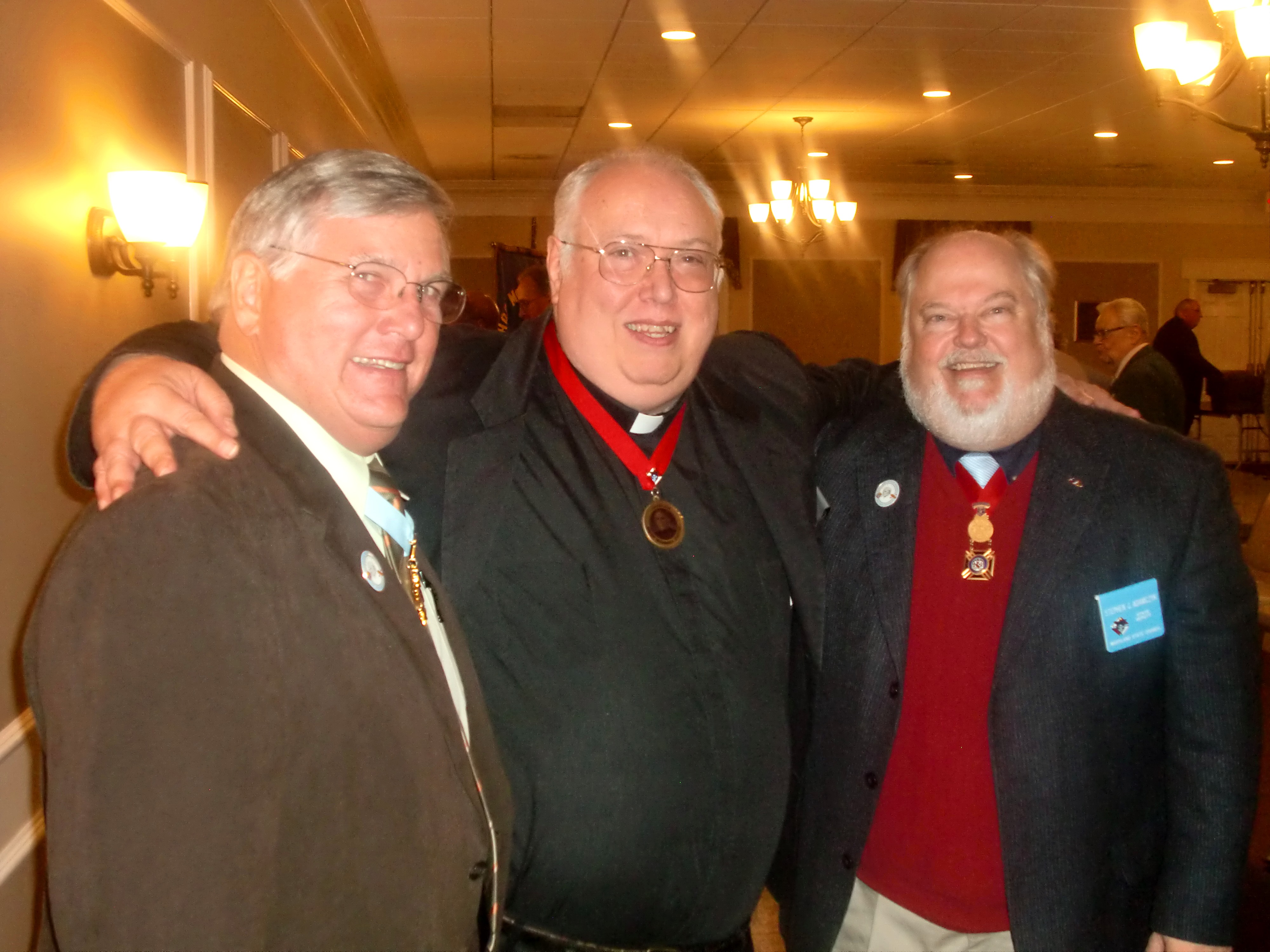
 Blogger Priest