 Acts 2:1-11 gives us the scene of that first Pentecost. There are some interesting elements. First, the day “found the brethren gathered in one place.” There is an unexpectancy to the movement of the Spirit who FINDS them and acts SUDDENLY. On what would be the birthday of the Church, the Spirit finds the brethren watchful and awake. The believers are gathered, no doubt for fellowship and prayer. Since Christ had already instituted the priesthood and Eucharist, they might have been celebrating the “breaking of the bread.” Second, we read that “Suddenly from up in the sky there came a noise like a strong driving wind . . . .” All hear it in the house. Behind the symbolism of the wind, the Holy Spirit literally breaks from the celestial house of heaven and reverberates in the house of the Church. Third, the Holy Spirit is imaged as “tongues of fire” over the assembled. Fire gives off light. The Holy Spirit would illumine their minds and make them sharers in the Light of the World, Jesus Christ. Fire warms the flesh, and again like Jesus, the Church would bring the healing and forgiveness of the Lord to a cold world. Fire also burns and so does the Holy Spirit in that it destroys the old way of sin and builds new with the firm foundation of Christ Jesus. Fourth, the assembled speak in many tongues, a recognition that the Gospel proclamation is meant for all peoples and nations.
The kerygma of salvation can only be understood in terms of configuration to Christ and the movement of the Holy Spirit. “And this is his commandment, that we should believe in the name of the Son Jesus Christ and love one another, just as he has commanded us. All who keep his commandments abide in him, and he in them. And by this we know that he abides in us, by the Spirit which he has given us” (1 John 3:23-24). Faith and obedience is only possible if the Holy Spirit animates us (see also 1 John 4:13). Faith itself is a gift of the Spirit. This is the message of Paul. “Therefore I want you to understand that no one speaking by the Spirit of God ever says ‘Jesus be cursed!’ and no one can say ‘Jesus is Lord’ except by the Holy Spirit” (1 Corinthians 12:3). See also Acts 5:29-32. The posture of the believer to the Holy Spirit is one of humble openness and acceptance.
The Gospel gives the essential elements of the Church’s mission. The disciples are afraid and hiding behind locked doors. However, like Jonah who could not run away from God or his call as a prophet, so too can the disciples not hide. The risen Lord breaks upon them and proclaims, “As the Father has sent me, so I send you” (John 20:21). Breathing upon them, another image for the Holy Spirit, he gives them a great commission: “Receive the Holy Spirit. If you forgive men’s sins, they are forgiven them; if you hold them bound, they are held bound” (John 20:21-23). This legitimates the Church’s ministry of forgiveness and the power given to priests to absolve sins. Never before had God given such authority to men.
What more do the Scriptures say about the Holy Spirit? As the principle of creation, we read that “the Spirit of God was moving over the face of the waters” (Genesis 1:2). A harmony existed between the Creator and creation. When mankind fell from grace, something of this Spirit was taken from us: “Then the Lord said, ‘My spirit shall not abide in man for ever, for he is flesh . . .’” (Genesis 6:3). The Holy Spirit gives both physical and supernatural life. The gulf created by sin ushered in our mortality as well as forfeiting our likeness to God in grace. God, himself, would not allow this sad separation to remain forever. The Gospel of John has Jesus explicitly speaking of the divinity of the Holy Spirit: “‘God is spirit, and those who worship him must worship in spirit and truth’” (John 4:24). This truth is confirmed by Peter when speaking about the deceit of Ananias: “But Peter said, ‘Ananias, why has Satan filled your heart to lie to the Holy Spirit . . . ? You have not lied to men but to God’” (Acts 5:3,4). The Spirit maintains truth and convicts us if we stray away from the path marked by our Lord.
The Holy Spirit is God. He is the power of God that created us and keeps us in existence. The Spirit of God is absolutely dynamic and working. Otherwise, we would cease to exist. The Spirit of God is not fickle. What God has created has a purpose. God does not make mistakes. God respects our tremendous freedom in assenting to his grace or in rebelling against it. The Holy Spirit moves us to faith in the mysterious divine election. He guides human history and ensures the providence of God. He makes possible the miracles of Jesus. He makes real the forgiveness of sins. He is the force behind the resurrection, one with Christ, allowing him to rise by his own power. Showered upon the followers of Jesus at Pentecost, he gives efficacy to the sacraments of the Church and grants the assurance of truth to those appointed as sharers in Christ’s priesthood. That which was lost because of our sin is restored by the intervention of God in human history. The resurrection of Jesus overcomes the stigma of death and allows us to be reborn in the likeness of God as sons and daughters to the Father.
The Holy Spirit makes faith possible and assures those in the Church established by Jesus of knowing saving truth without error. It is a truth different from that offered by the world. “If you love me, you will keep my commandments. And I will pray the Father, and he will give you another Counselor, to be with you for ever, even the Spirit of truth, whom the world cannot receive, because it neither sees him nor knows him; you know him, for he dwells with you, and will be in you” (John 14:15-17). The Spirit of God is given to us both individually and as a new community fashioned by God, himself.
Just as the Holy Spirit lives in us, so too does he live in the house that is the Church, the community of faith. It has been said that the Holy Spirit is the soul of the Church. We would do well to reflect upon what the Spirit of God offers us. He gives us wisdom, understanding, counsel, fortitude, knowledge, piety, and fear of the Lord [reverence] (Isaiah 11:2,3). Besides the seven gifts, there are also twelve traditional fruits: charity, joy, peace, patience, kindness, goodness, long-suffering, humility, fidelity, modesty, continence, and chastity (Galatians 5:22,23,24). These catechetical listings are quite worthy of mention and annotation at a time when many good Catholics need a booster shot to their Christian formation. We live in the age of the Holy Spirit. Every day we should pray the words, “Come, Holy Spirit, fill the hearts of your faithful; and kindle in them the fire of your love.”
For more such reflections, contact me about getting my book, CHRISTIAN REFLECTIONS.
Filed under: Bible, Catholic, Discipleship, God, Holy Spirit, Pentecost, Reflection | Leave a comment »














 A central theme of Christianity is reconciliation with our neighbor and with God. In Matthew 5:20-26, Christ exhorts us to nurture a holiness which goes beyond external appearances and which emanates essentially from within. Our hearts need to be forgiving and willing to accept forgiveness. Our minds need to elevate good thoughts about our brothers and sisters, and not be centered upon how we might get even with those who hurt us. This is what Christ would do for us who murdered him by our sins. Instead of utterly destroying us with thunderbolt and fire, he offers us a share in his victory over death. He died, loving and forgiving his murderers. When we come together to celebrate this great gift offered by Christ, the Lord desires us to respond in kind. He says, “If you bring your gift to the altar and there recall that your brother has anything against you, leave your gift at the altar, go first to be reconciled with your brother, and then come and offer your gift” (Matthew 5:23-24). With the bread and wine which comes up to the altar, we have to offer ourselves for transformation, so that Christ may live more fully in us. This is the essential meaning behind the sign of peace. This becomes even more essential when we recognize that Christ identifies himself with the persons in our lives whom we least love. Here is the kind of love which grants blessings upon another and not curses, even when we find it difficult to like someone. It is this kind of love which is quick to forgive and which makes one willing to admit his or her sinfulness, and need for forgiveness. The Old Testament was not silent about such a disposition. Ezekiel 18:21-28 challenges us to forgive as God forgives. Ezekiel said, “None of the crimes he committed shall be remembered against him; he shall live because of the virtue he has practiced.” When God forgives, it is as if he forgets. We are made as white as snow. For this reason, let us forgive as God forgives, without resentment and backstabbing. Let us forgive ourselves, recognizing that we have no right to hold bound what Christ in the Church has loosed.
 Sometimes the Church is falsely charged with the wrongful coercion of people into guilt-trips and/or with brain-washing the young through religious indoctrination. This allegation is unfair. What the Church wants people to know is that while we are guilty as sinners, we can know the forgiveness of sins in Christ. Religious formation in the truths of faith respects human freedom and conscience; but, objective truth remains what it is. Others skip condemnation of the Church and directly charge the Judeo-Christian God with intimidation and harshness, especially in regard to hell and judgment. Believers would argue that the critics have it backwards; intimidation and/or manipulation are precisely the tools of sin and the relationship of devils. If there is no genuine love, what other cohesive force is there for control? C. S. Lewis paints an image in his writings of big devils that literally eat the lesser ones– in other words, they use them to their own advantage without regard to their personhood and rights. Sometimes we might paint a picture of God’s justice that falsely falls into such a category. Hellfire images that threaten damnation from a wrathful God are a case in point. Do not get me wrong. Fearing the loss of heaven and suffering the fires of hell have their place. These are real tragedies. But people choose this fate for themselves, more so than by divine imposition. The prophets and our Lord were willing to endure any hardship for the saving message they delivered. Did they do this out of fear of almighty God or out of love? The answer is love. A true parent does not abuse or lie or callously manipulate children. Rather, he or she speaks the truth, even when it is unpopular, and makes every sacrifice to insure the well being of the family. May we all be imitators of God and speak with his voice.

 Isaiah 66:10-14 gives us the image of Jerusalem as a loving and nurturing mother. Similarly, the Church would be viewed as the New Jerusalem, the first glimmerings of Christ’s kingdom breaking into our world. While we find security and comfort in the maternal analogy, verses 15 to 17 speak of the Lord coming in fire to judge all mankind. He shall wave a sword “and many shall be slain by the Lord” (verse 16). It was this messianic vision that many sought in Jesus but he surrendered his life on the Cross and told us to forgive one another. However, the Second Coming of Christ retains the full force of this passage. If we are members of Mother Zion, we can be saved; if we reject her, and here we really mean Mother Church, then we will be subject to fire and the sword. Here we find a serious imperative for the mission activity of the Church. Similarly, the great apostle tells us, “Peace and mercy on all who follow this rule of life (never boasting of anything but the Cross), and on the Israel of God” (Galatians 6:16). Luke 10:1-12,17-20 has Jesus sending out the seventy-two to proclaim the Good News. The urgency of the proclamation is illustrated by Christ’s instruction against a walking staff and traveling bag and against wearing sandals or greeting people along the way. He gives them something of his power but warns them not to be proud, just content that their names “are inscribed in heaven.”
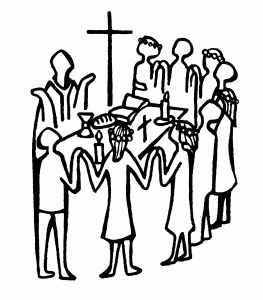 The message about the Church as a New Jerusalem and the analogy of a wedding banquet has serious doctrinal implications that are not always considered by believers in Jesus outside of Catholicism. While there is certainly an individual component to our ultimate salvation, the institution of the Church reminds us that there are vital corporate components as well. Jesus calls to himself disciples and appoints Apostles who will pass their authority down to the bishops who themselves will ordain priests and deacons. Jesus institutes a new covenant in his blood and commands it be repeated “in memory” of him, not in an empty nostalgic way but in a manner that makes present and available that which is recalled. He gives his message and divine mysteries, not to individuals, but to the Church, and appoints Peter and his successors as the visible head. It is the Church that assembles and declares inspired the Bible. Jesus sends his Spirit upon the Church at Pentecost to empower its leadership and to give efficacy to the sacraments. More wondrous than Isaiah could have ever imagined are the splendors given to the People of God.
 The Old Testament prophet speaks about the restoration of Zion and Jerusalem (see Isaiah 62:1-5). His words are quite eloquent and filled with hope. Remember that the people of God had been dispossessed and their nation and its temple destroyed. Such a testimony would seem like foolishness to many. It is no wonder that at the end of their exile, if not of their subjugation, they rebuilt the temple and expected the eminent coming of the Messiah. However, a few years after the crucifixion of Christ, Jews and Christians alike found themselves persecuted with vigor by Rome and the temple was destroyed. Along with it the Jewish priesthood and their ritual sacrifices came to an end. Non-Catholic Protestant fundamentalists and certain Jewish authorities view the political restoration of Israel today as the beginning of a more complete fulfillment of the ancient prophecy. Indeed, the Scriptures were publicly cited when the United Nations recognized the re-establishment of Israel. “You are to be a crown of splendor in the hand of the Lord, a princely diadem in the hand of your God; no longer are you to be named ‘Forsaken,’ nor your land ‘Abandoned,’ but you shall be called ‘My Delight’ and your land ‘The Wedded,’ for the Lord takes delight in you and your land will have its wedding” (Isaiah 62:3-6).
 Peter stands before us in Acts 4:8-12 much transformed from the miserable figure we knew who denied our Lord three times. We are told that he is filled with the Holy Spirit and proclaims the Gospel without qualification or self-aggrandizing. A cripple is healed as a sign that his words ring with the truth. It is all realized in the name of Jesus Christ. He explains that Jesus, the stone rejected, has become the cornerstone: “There is no salvation in anyone else, for there is no other name in the whole world given to men by which we are to be saved” (verse 12).
 It is sometimes complained that Christians of the West seem apt to neglect the role of the Holy Spirit in their prayer, worship, and reflection. The Catholic emphasis often centers upon Jesus, his mother Mary, and the saints. However, the Holy Spirit is not utterly forgotten and is implicitly invoked every time we make the sign of the cross. The early Church discerned the power of the Holy Spirit in their midst as a personal encounter with God.


















 Blogger Priest