
• Our Blogger

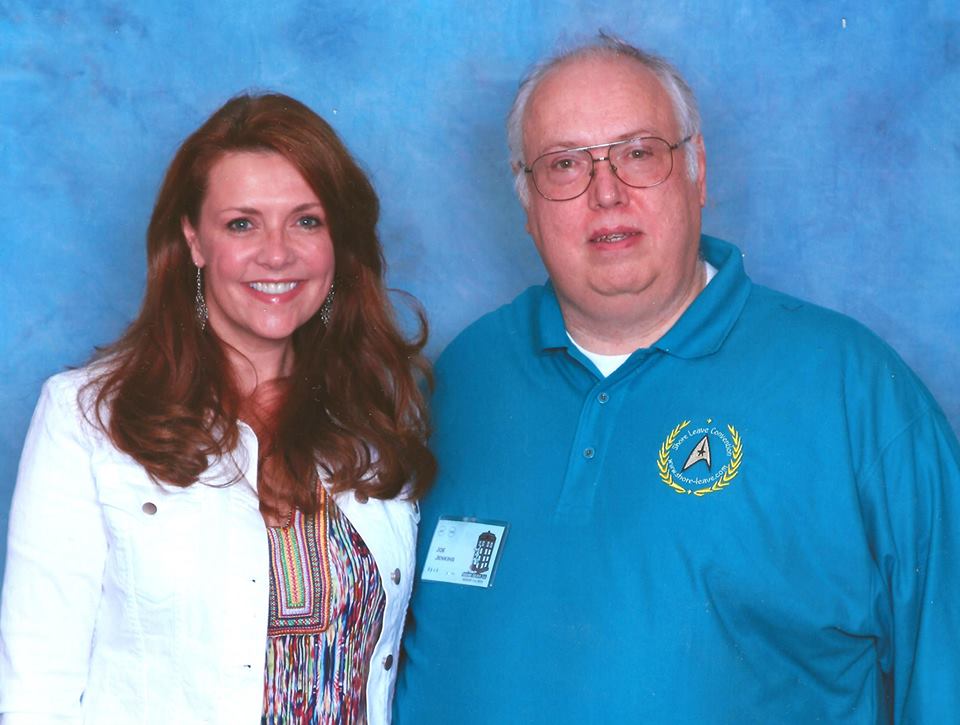
    Fr. Joseph Jenkins

  • The blog header depicts an important and yet mis-understood New Testament scene, Jesus flogging the money-changers out of the temple. I selected it because the faith that gives us consolation can also make us very uncomfortable. Both Divine Mercy and Divine Justice meet in Jesus. Priests are ministers of reconciliation, but never at the cost of truth. In or out of season, we must be courageous in preaching and living out the Gospel of Life. The title of my blog is a play on words, not Flogger Priest but Blogger Priest.

  • Archives

  • Categories

  • Recent Posts

  • Recent Comments

    Jeremy Kok's avatarJeremy Kok on Ask a Priest
    Gary Joseph's avatarGary Joseph on Old Mass or New, Does It …
    Barbara's avatarBarbara on Ask a Priest
    Anonymous's avatarAnonymous on Ask a Priest
    forsamuraimarket's avatarforsamuraimarket on Ask a Priest

Incident Spurs Reflection on Holy Communion

Given the importance of this matter, and how it is a special teaching moment, here is an article from the archdiocesan newspaper . . .

Incident at St. John Neumann spurs reflection on significance of Holy Communion

Special to the Standard

Recent news accounts have reported an incident at St. John Neumann Parish in Gaithersburg, where a woman was initially denied Communion at her mother’s funeral Mass (she did, however, receive Communion from a Eucharistic minister) and the celebrant did not attend the burial. (Another priest did preside at the graveside service.) In response, the Archdiocese of Washington issued a statement (below) and Auxiliary Bishop Barry Knestout, vicar general, personally contacted members of the family.

This is the statement issued by the archdiocese on February 27:

“In matters of faith and morals, the Church has the responsibility of teaching and of bringing the light of the Gospel message to the circumstances of our day. When questions arise about whether or not individuals should present themselves for Communion, it is not the policy of the Archdiocese of Washington to publicly reprimand the person. Any issues regarding the suitability of an individual to receive Communion should be addressed by the priest with that person in a private, pastoral setting.

“The archdiocese is looking into the incident at a funeral Mass that was celebrated by Father Marcel Guarnizo and will handle this as a personnel issue.”

This situation provides an opportunity to refresh our understanding of the Eucharist, its importance and the guidelines on how it is to be administered and received.

For Catholics, the Eucharist is the most important of the seven sacraments because we believe that through this mystery, we literally receive the Body and Blood of Christ. It is not just a symbol. Jesus is truly present Body, Blood, Soul and Divinity. It is an intimate encounter with Christ, in which we sacramentally receive Christ into our bodies, and become more completely assimilated into his.

Therefore, because the Eucharist is Christ himself, who is the center of all Christian life, the Church teaches that Catholics must be properly disposed to receive the Eucharist worthily. Catholics should examine their conscience and make use of the Sacrament of Reconciliation if they have committed grave sin before receiving the Body and Blood of Christ.

The following guidelines, issued by the United States Conference of Catholic Bishops, clarify how Catholics should prepare prior to receiving the Eucharist:

“As Catholics, we fully participate in the celebration of the Eucharist when we receive Holy Communion. We are encouraged to receive Communion devoutly and frequently. In order to be properly disposed to receive Communion, participants should not be conscious of grave sin and normally should have fasted for one hour. A person who is conscious of grave sin is not to receive the Body and Blood of the Lord without prior sacramental Confession except for a grave reason where there is no opportunity for Confession. In this case, the person is to be mindful of the obligation to make an act of perfect contrition, including the intention of confessing as soon as possible (canon 916). A frequent reception of the sacrament of penance is encouraged for all.”

The priest has an obligation to make sure that the sacraments are respected. Since it is difficult to know what is in a person’s heart, it is also important that when doubt arises regarding whether a person is properly disposed to receive the Eucharist, it is handled in a pastoral and compassionate manner, privately between the priest and the communicant.

The reception of the Eucharist is a blessing and a grace. We should receive Jesus with the intention of becoming more like him. No one is entitled to the Eucharist. It is a free gift that should be received with humility and reverence. It is also a sign of unity with the Church’s teaching on faith and morals.

CLICK for Guidelines for the Communion Line

NEWS ALERT:  Ms Johnson is Buddhist and Gay Rights Activist!

Priestesses & a Flawed Interpretation of Galatians

There is much confusion in the argument for women’s ordination around the hackneyed use of St. Paul’s Letter to the Galatians. The passage in question is in reference to a baptismal formula and is not a justification for priestesses. It regards the universal offer of salvation in Christ, not the makeup of the sacrament of holy orders. Arguing that “there is neither male nor female; for you are all one in Christ Jesus” (Galatians 3:28) as a qualification for priestesses is nothing more than a cheap classical reductionism. What is the statement actually saying? The phrase, “neither male nor female” is not focused on biology or psychology, just as “nether slave nor free” is not a statement of sociology and “neither Jew nor Greek” fails to center on anthropological realities. Moving away from fundamentalism or literalism, the statement in Galatians is heavenly, even apocalyptic language. This particular unity does not emanate from a common humanity but rather from God’s election. It is similar to that for which Jesus appealed: “I pray not only for them, but also for those who will believe in me through their word, so that they may be one, as you, Father, are in me and I in you, that they may also be in us, that the world may believe that you sent me. And I have given them the glory you gave me, so that they may be one, as we are one, I in them and you in me, that they may be brought to perfection as one, that the world may know that you sent me, and that you loved them even as you loved me” (John 18:20-23).

This unity for which Christ prays is not yet fully realized. During our earthly pilgrimage, the Church must be sufficiently sacramental so as to perceive the current realities of sex, position, culture, etc., raising up that which is of value in each and discarding that which profanes both God and men. Fr. George Rutler writes:

Secular exploitation of sexual differences in fields which theoretically have no sexual restrictions violate the Christian mind but that is a far different matter from the divine discrimination which merely states the reality of different sexes. St. Paul’s statement about male and female eradicates the fact of maleness and femaleness no more than his statement about bond and free or Jew and Greek denies the reality of Onesimus and Philemon or the fundamentals of geography. Certainly his readers know this; that is the source of one of the great ironies of the ordinal controversy: proponents of priestesses quickly label St. Paul an anti-feminist on the grounds of his abiding awareness of the different order of men and women yet they simultaneously use his own writing in Galatians 3:28 as a proof text for the indistinguishability which he himself found so grim. Having sighted the careful line between representation and misrepresentation, these exegetes have approached it with all the temerity of Caesar at the Rubicon. (Priest and Priestess, pp. 21-23).

Mass as Sacrifice & Eucharist as Really Jesus

ANTI-CATHOLIC ASSERTION

Jesus, once and for all, died for sins. This saving act is never to be repeated. He now sits at the right hand of God and does not reappear to us in the Mass as a corpse’s blood and flesh.

Jesus dies once:

But this one [Jesus] offered one sacrifice for sins, and took his seat forever at the right hand of God; now he waits until his enemies are made his footstool. For by one offering he has made perfect forever those who are being consecrated. The holy Spirit also testifies to us, for after saying: “This is the covenant I will establish with them after those days, says the Lord: ‘I will put my laws in their hearts, and I will write them upon their minds,’” he also says: “Their sins and their evildoing I will remember no more.” Where there is forgiveness of these, there is no longer offering for sin (Hebrews 10:12-18).

Christ upon the Cross:

Therefore, when Jesus had taken the wine, he said, “It is consummated (finished)!” And bowing his head, he gave up his spirit (John 19:30).

Remembrance, not the forgiveness of sins:

For I received from the Lord what I also handed on to you, that the Lord Jesus, on the night he was handed over, took bread, and after he had given thanks, broke it and said, “This is my body that is for you. Do this in remembrance of me.” In the same way also the cup, after supper, saying, “This cup is the new covenant in my blood. Do this, as often as you drink it, in remembrance of me.” For as often as you eat this bread and drink the cup, you proclaim the death of the Lord until he comes (1 Corinthians 11:23-26).

CATHOLIC TRUTH

The Mass is a sacrifice and Holy Communion (through transubstantiation) is the actual body and blood of Jesus Christ.

It is true that Jesus died once and for all. His saving death is unique and the risen Lord will never die again. This is also Catholic doctrine. Further, the Catholic Church also agrees that Holy Communion is not the flesh and blood of a dead Christ. However, everything else is misunderstood by the anti-Catholic critic. The Mass is a real sacrifice in that it resonates in perfect harmony with Calvary. Each celebration of the Mass is not a new slaughter of Christ Jesus. Sometimes, when spoken about as a repetition of the Cross, this confusion arises. The Mass is a sacramental (use of sacred signs) and unbloody re-presentation of the sacrifice of Christ. Like a time machine, we are transported to Calvary and are present at the one saving act of all history. The only thing missing at the Cross was our own self-offering with and in Jesus. The appearances of bread remain, but the sacred elements constitute the risen Lord— body and soul, humanity and divinity– without division or diminishment. There is but one high priesthood in Christianity, that of Jesus Christ. Every ordained priest allows his very self to be appropriated by Christ in a participation in the one priesthood which offers true worship. If the Mass and Calvary are one and the same, then of course it is a sacrifice of propitiation, one which forgives sins. The covenant of Christ is not a stagnant affair locked in past history, the remembrance of the Eucharist makes present what it celebrates. It is a renewal of the new covenant in Christ’s body and blood. The Hebrew notion of “anamnesis” is not like our impoverished nostalgia-type of remembrance. The words of institution said by the priest at Mass, recall the saving supper of the Lamb and make him present— both in his person (his identity) and in his saving activity. The sacrifice of Calvary, re-presented to us throughout time and place, calls us all to unity in the Lord. The Lord himself tells us that unless we eat his body and blood, we can have no part of him. Paul’s words from 1 Corinthians are not merely an academic exercise in studying the institution narrative of the Lord’s Supper. These words were familiar to St. Paul because they constituted the liturgical tradition he had received. These are the words with which St. Paul, an apostle and priest of the new dispensation, offered the Eucharist. Note that after mentioning the Lord’s command to repeat his new ritual, St. Paul talks about our need to be worthy in its reception. Otherwise, we would be held accountable. Unless there is a “real presence” of Christ in the consecrated bread and cup, such a warning would be incoherent. He forewarns them against any further abuse at the Lord’s Supper, including overeating. (Remember, in the early Eucharist, the Lord’s Supper was attached to a regular meal.) It is precisely because of the efficacy of the Eucharist in regard to the forgiveness of sins, (the realization of divine mercy), that St. Paul talks immediately about judgment if we neglect or abuse the privilege.

We must properly understand 1 Corinthians 11:23-27. Look at the last verse; it only makes sense if the Eucharist really is the risen Christ:

Therefore whoever eats the bread or drinks the cup of the Lord unworthily will have to answer for the body and blood of the Lord (1 Corinthians 11:27).

Self-examination is necessary if we are to appreciate the command to unity which flows from Jesus’ giving of himself and our requirement to repeat his sacrifice with the same spirit of self-donation:

For anyone who eats and drinks without discerning the body, eats and drinks judgment on himself (1 Corinthians 11: 29).

Priests & Sacrifices

ANTI-CATHOLIC ASSERTION

There is no need of Catholic priests or of the sacrifice of the Mass, we have Christ and all is accomplished on the Cross already.

Hebrews 7:27: He has no need, like those high priests, to offer sacrifices daily, first for his own sins and then for those of the people; he did this once for those of the people; he did this once for all when he offered up himself.

CATHOLIC TRUTH

While there was no requirement for daily sacrifice in the law of Moses, such a feature was prescribed for the Day of Atonement. Of course, what we can readily contrast are the repeated sacrifices of the Hebrews and the singular oblation of Jesus. True atonement could not be achieved by their sacrifices, and yet, such was expected between the fallen creature and his Creator. Indeed, the practice of making sacrifices, even in pagan religions, shows that there is an innate awareness of this responsibility imprinted upon nature itself. The sacrifices of the Old Testament are in preparation for and point to the redemptive Cross. Chosen by God, the Jewish people were made righteous by their faith and fidelity to the covenant; and yet, even their beloved dead, preserved from the fires of hell, would have to await the descent of our crucified Lord before entering into paradise. As the catechisms explain, Christ took upon his shoulders the death we deserved and the heavy burden of sin. He conquers them, but they have yet to be undone in human history. The gates of heaven are opened and as our Mediator, Jesus makes possible our entry into the heavenly home.

Apart from Christ, any human sacrifice was only of a finite measure and could not make full reparation for the infinite dishonor against God caused by the primordial sin and our subsequent collaboration through personal sin.

The Eucharist or Mass is the Christian’s sacramental way of making himself present to the great mystery of Calvary. Christ dies ONCE and FOR ALL; however, this saving mystery is extended through space and time by the Eucharist. Christ has died and will never die again. We do not have Christ killed upon our altars again and again. The Mass makes time travelers of us all, albeit through sacred signs. We see the image of a cross or crucifix, but it is the altar-table which most resonates with the Cross of Christ. We see a priest at the altar and yet he acts in the person of Christ, the head of the Church. The cultic language of the Last Supper links it with his saving death. We see many different men function as priests, and yet their priesthood participates in the ONE PRIESTHOOD of Jesus Christ. He is the high priest of the Catholic Christian faith. The only difference from the initial historical death of Christ and its actual re-presentation in the Mass is our ability now to join ourselves to him. We can surrender ourselves along with Christ, joined inextricably to him, as one perfect sacrifice to the heavenly Father. We are faithful, generation after generation, in keeping his great command: “Do this in remembrance of me” (see Luke 22:19; 1 Corinthians 11:23-25). This “anamnesis” is a living memory, making present that which is recalled and signified.

Catholic Worship

Malachi 1:11: For from the rising of the sun to its setting my name is great among the nations, and in every place incense is offered to my name, and a pure offering; for my name is great among the nations, says the Lord of hosts.

Hebrews 13:10: We have an altar from which those who serve the tent [the tabernacle of the Jewish temple] have no right to eat.

The Bible tells us that there is a priesthood and sacrifice under the new covenant of Christ. There is no way that a service of the Word or a Protestant communion service can be considered the sacrificial act that prophecy and St. Paul speaks about. However, we do find such elements in the teaching and practice of the Catholic Church. We have an altar of sacrifice and a pure offering, nothing other than the body and blood of Christ in the sacramental species.

For more such reading, contact me about getting my book, DEFENDING THE CATHOLIC FAITH.

Only the Real Presence Demands Worthy Reception

1 Corinthians 11:27-29: Whoever, therefore, eats the bread or drinks the cup of the Lord in an unworthy manner will be guilty of profaning the body and blood of the Lord. Let a man examine himself, and so eat of the bread and drink of the cup. For anyone who eats and drinks without discerning the body eats and drinks judgment upon himself.

St. Paul tells us that the unworthy reception of Holy Communion is a sacrilege; indeed, it desecrates the real body and blood of Christ. It is the ultimate in hypocrisy and blasphemy. Such an assertion that the sacrament might bring damnation instead of salvation must be seriously considered. Catholics in mortal sin should not receive the sacrament until that time that they have repented and the sin is absolved. If Holy Communion were no more than bread and wine, this assertion from St. Paul would make NO sense. How can a piece of bread or a sip of wine damn you for all eternity? How could such an empty symbolic gesture desecrate Christ, himself? They could not, unless Catholics are right and the bread and wine are truly transformed into the body and blood of Christ.

Jesus Meant What He Said About Eucharist

John 6:52-58: The Jews then disputed among themselves, saying, “How can this man give us his flesh to eat?” So Jesus said to them, “Truly, truly, I say to you, unless you eat the flesh of the Son of man and drink his blood, you have no life in you; he who eats my flesh and drinks my blood has eternal life, and I will raise him up at the last day. For my flesh is food [meat] indeed, and my blood is drink indeed. He who eats my flesh and drinks my blood abides in me, and I in him. As the living Father sent me, and I live because of the Father; so he who eats me will live because of me. This is that bread which came down from heaven, not such as the fathers ate and died; he who eats this bread will live forever.”

John 6:60: Many of his disciples, when they had heard it, said, “This is an hard saying; who can listen to it?”

John 6:66-69: After this many of his disciples drew back and no longer went about with him. Jesus said to the twelve, “Will you also go away?” Simon Peter answered him, “Lord, to whom shall we go? You have the words of eternal life; and we have believed, and have come to know, that you are the Holy One of God.”

The Jews murmured (John 6:41) and abandoned Jesus just as certain so-called Christians (Protestants) reject the Eucharist today. They did not believe that Jesus was God; obviously God could do all things.

Nevertheless, Jesus did not compromise or explain away his teaching in any manner. He insisted upon a literal understanding of the real presence in the Eucharist. There was no misunderstanding. Jesus allowed the Jews (who would prefer a Protestant view of Eucharist) to abandon him. It is bizarre that Protestants can assail the Eucharist and claim that certain disciples misunderstood him when Jesus acted and spoke this way. The truth is that Jesus would even have allowed the twelve apostles to forsake him rather than to give the impoverished Protestant type of Eucharist. Peter responds correctly. Like his many successors, Peter steers the Church toward the truth of Christ. Jesus is God and whatever God says is true, no matter how fantastic and deep a mystery.

For more such reading, contact me about getting my book, DEFENDING THE CATHOLIC FAITH.

A True Bread from Heaven

John 6:33-35: “For the bread of God is that which comes down from heaven, and gives life to the world.” They said to him, “Lord give us this bread always.” Jesus said to them, “I am the bread of life; he who comes to me shall not hunger, and he who believes in me shall never thirst.”

John 6:38: “For I have come down from heaven, not to do my own will, but the will of him who sent me; . . . .”

John 6:41: The Jews then murmured at him, because he said, “I am the bread which came down from heaven.”

John 6:48-51: “I am that bread of life. Your fathers ate the manna in the wilderness, and they died. This is the bread which comes down from heaven, that a man may eat of it and not die. I am the living bread which came down from heaven; if any one eats of this bread, he will live forever; and the bread which I shall give for the life of the world is my flesh.”

The Eucharist that our Lord gives can only be “bread from heaven” if it is truly himself. Jesus is God; he is the one who has come down from heaven. The principle of concomitance is also affirmed here: Jesus is totally present— alive and complete— in every fragment and drop of the Blessed Sacrament. He is not dissected in the Eucharist; rather, he is present and acting on our behalf. He grants us a share in eternal life.

For more such reading, contact me about getting my book, DEFENDING THE CATHOLIC FAITH.

The Greatest Food of All

John 6:26-32: Jesus answered them, “Truly, truly, I say to you, you seek me, not because you saw signs, but because you ate your fill of the loaves. Do not labor for the food [meat] which perishes, but for the food [meat] which endures to eternal life, which the Son of man will give to you; for on him has God the Father set his seal.” Then they said to him, “What must we do, to be doing the works of God?” Jesus answered them, “This is the work of God, that you believe in him whom he has sent.” So they said to him, “Then what sign do you do, that we may see, and believe you? What work do you perform? Our fathers ate the manna in the wilderness; as it is written, ‘He gave them bread from heaven to eat.'” Jesus then said to them, “Truly, truly, I say to you, it was not Moses who gave you the bread from heaven; my Father gives you the true bread from heaven.”

More important than any miraculous food (John 6:11 to 13) or the manna in the desert (Exodus 16:31), the Eucharist is highlighted as our saving food. If there were no change in the elements of bread and wine into the real body and blood of Christ, then our Lord has played us for fools. Such is not the case. There is no deception on Christ’s part. A rejection of the Eucharist, by both liberal modernists and by fundamentalist Christians signifies a lack of faith; indeed, it is the intrusion of a sometimes-subtle atheism.

For more such reading, contact me about getting my book, DEFENDING THE CATHOLIC FAITH.

The Real Presence in the Eucharist: Our Inheritance

Mark 14:22-24: And as they were eating, he took bread and blessed, and broke it, and gave it to them, and said, “Take; this is my body.” And he took a cup, and when he had given thanks he gave it to them, and they all drank of it. And he said to them, “This is my blood of the covenant, which is poured out for many.”

The Eucharist was Christ’s parting gift to us. It is literally the New Testament itself— making it present and ratifying it again and again. Jesus gives us his body and blood as the bread of life and our spiritual drink. There is nothing of figurative language about this. If Christ is God and speaks the truth, who are we to call him a liar? Catholics take Jesus at his word.