














Feel free to submit a new question or concern in the comment box below. Various topics and questions are archived here for easy retrieval. Please be courteous. Comments are moderated so please be patient in waiting for them to appear and for any responses. God bless you!
NEW MESSAGES/HOMILIES CHRISTIAN REFLECTIONS DEFENDING THE FAITH
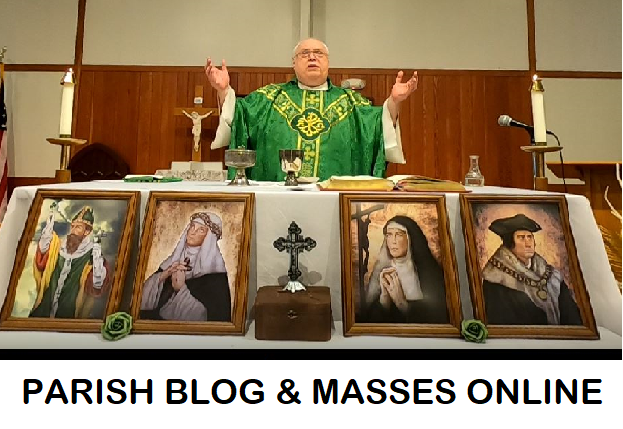
















 Blogger Priest
What does it mean to deny Jesus?
what does it mean when you light a candle on each side of a statue such as the miraculous infant Jesus of prauge or any kind of catholc
statue
My view is that of the Church.
http://www.vatican.va/archive/ENG0015/_INDEX.HTM
Here are the appropriate sections of the Catechism of the Catholic Church [CCC]. We read:
[CCC 977] Our Lord tied the forgiveness of sins to faith and Baptism: “Go into all the world and preach the gospel to the whole creation. He who believes and is baptized will be saved” (Mk 16:15-16). Baptism is the first and chief sacrament of forgiveness of sins because it unites us with Christ, who died for our sins and rose for our justification, so that “we too might walk in newness of life” (Rom 6:4).
[CCC 978] “When we made our first profession of faith while receiving the holy Baptism that cleansed us, the forgiveness we received then was so full and complete that there remained in us absolutely nothing left to efface, neither original sin nor offenses committed by our own will, nor was there left any penalty to suffer in order to expiate them…. Yet the grace of Baptism delivers no one from all the weakness of nature. On the contrary, we must still combat the movements of concupiscence that never cease leading us into evil” (Roman Catechism I, 11,3).
[CCC 979] In this battle against our inclination towards evil, who could be brave and watchful enough to escape every wound of sin? “If the Church has the power to forgive sins, then Baptism cannot be her only means of using the keys of the Kingdom of heaven received from Jesus Christ. The Church must be able to forgive all penitents their offenses, even if they should sin until the last moment of their lives” (Roman Catechism I, 11,4).
[CCC 980] It is through the sacrament of Penance that the baptized can be reconciled with God and with the Church: Penance has rightly been called by the holy Fathers “a laborious kind of baptism.” This sacrament of Penance is necessary for salvation for those who have fallen after Baptism, just as Baptism is necessary for salvation for those who have not yet been reborn. (St. Gregory of Nazianzus, Oratio 39,17)
Later the universal catechism teaches (upon death):
[CCC 1006] “It is in regard to death that man’s condition is most shrouded in doubt” (GS 18). In a sense bodily death is natural, but for faith it is in fact “the wages of sin” (Rom 6:23). For those who die in Christ’s grace it is a participation in the death of the Lord, so that they can also share his Resurrection. (Rom 6:3-9).
It says this about grace and human freedom:
[CCC 1742] Freedom and grace. the grace of Christ is not in the slightest way a rival of our freedom when this freedom accords with the sense of the true and the good that God has put in the human heart. On the contrary, as Christian experience attests especially in prayer, the more docile we are to the promptings of grace, the more we grow in inner freedom and confidence during trials, such as those we face in the pressures and constraints of the outer world. By the working of grace the Holy Spirit educates us in spiritual freedom in order to make us free collaborators in his work in the Church and in the world.
The universal catechism also directly speaks to grace and justification:
[CCC 1987] The grace of the Holy Spirit has the power to justify us, that is, to cleanse us from our sins and to communicate to us “the righteousness of God through faith in Jesus Christ” and through Baptism (Rom 3:22):
“But if we have died with Christ, we believe that we shall also live with him. For we know that Christ being raised from the dead will never die again; death no longer has dominion over him. the death he died he died to sin, once for all, but the life he lives he lives to God. So you also must consider yourselves as dead to sin and alive to God in Christ Jesus” (Rom 6:8-11).
[CCC 1988] Through the power of the Holy Spirit we take part in Christ’s Passion by dying to sin, and in his Resurrection by being born to a new life; we are members of his Body which is the Church, branches grafted onto the vine which is himself (1 Cor 12):
“(God) gave himself to us through his Spirit. By the participation of the Spirit, we become communicants in the divine nature…. For this reason, those in whom the Spirit dwells are divinized” (St. Athanasius, Ep. Serap. 1, 24).
[CCC 1989] The first work of the grace of the Holy Spirit is conversion, effecting justification in accordance with Jesus’ proclamation at the beginning of the Gospel: “Repent, for the kingdom of heaven is at hand” (Mt 4:17). Moved by grace, man turns toward God and away from sin, thus accepting forgiveness and righteousness from on high. “Justification is not only the remission of sins, but also the sanctification and renewal of the interior man” (Mt 4:17).
[CCC 1990] Justification detaches man from sin which contradicts the love of God, and purifies his heart of sin. Justification follows upon God’s merciful initiative of offering forgiveness. It reconciles man with God. It frees from the enslavement to sin, and it heals.
[CCC 1991] Justification is at the same time the acceptance of God’s righteousness through faith in Jesus Christ. Righteousness (or “justice”) here means the rectitude of divine love. With justification, faith, hope, and charity are poured into our hearts, and obedience to the divine will is granted us.
[CCC 1992] Justification has been merited for us by the Passion of Christ who offered himself on the cross as a living victim, holy and pleasing to God, and whose blood has become the instrument of atonement for the sins of all men. Justification is conferred in Baptism, the sacrament of faith. It conforms us to the righteousness of God, who makes us inwardly just by the power of his mercy. Its purpose is the glory of God and of Christ, and the gift of eternal life (Council of Trent -1547):
“But now the righteousness of God has been manifested apart from law, although the law and the prophets bear witness to it, the righteousness of God through faith in Jesus Christ for all who believe. For there is no distinction: since all have sinned and fall short of the glory of God, they are justified by his grace as a gift, through the redemption which is in Christ Jesus, whom God put forward as an expiation by his blood, to be received by faith. This was to show God’s righteousness, because in his divine forbearance he had passed over former sins; it was to prove at the present time that he himself is righteous and that he justifies him who has faith in Jesus. (Rom 3:21-26)
[CCC 1993] Justification establishes cooperation between God’s grace and man’s freedom. On man’s part it is expressed by the assent of faith to the Word of God, which invites him to conversion, and in the cooperation of charity with the prompting of the Holy Spirit who precedes and preserves his assent:
When God touches man’s heart through the illumination of the Holy Spirit, man himself is not inactive while receiving that inspiration, since he could reject it; and yet, without God’s grace, he cannot by his own free will move himself toward justice in God’s sight. (Council of Trent -1547)
[CCC 1994] Justification is the most excellent work of God’s love made manifest in Christ Jesus and granted by the Holy Spirit. It is the opinion of St. Augustine that “the justification of the wicked is a greater work than the creation of heaven and earth,” because “heaven and earth will pass away but the salvation and justification of the elect . . . will not pass away” (St. Augustine, In Jo. ev. 72, 3) holds also that the justification of sinners surpasses the creation of the angels in justice, in that it bears witness to a greater mercy.
[CCC 1995 ] The Holy Spirit is the master of the interior life. By giving birth to the “inner man,” (Rom 7:22 44) justification entails the sanctification of his whole being:
Just as you once yielded your members to impurity and to greater and greater iniquity, so now yield your members to righteousness for sanctification…. But now that you have been set free from sin and have become slaves of God, the return you get is sanctification and its end, eternal life. (Rom 6:19, 22)
Here is the catechism on grace:
[CCC 1996] Our justification comes from the grace of God. Grace is favor, the free and undeserved help that God gives us to respond to his call to become children of God, adoptive sons, partakers of the divine nature and of eternal life. (Jn 1:12-18).
[CCC 1997] Grace is a participation in the life of God. It introduces us into the intimacy of Trinitarian life: by Baptism the Christian participates in the grace of Christ, the Head of his Body. As an “adopted son” he can henceforth call God “Father,” in union with the only Son. He receives the life of the Spirit who breathes charity into him and who forms the Church.
[CCC 1998] This vocation to eternal life is supernatural. It depends entirely on God’s gratuitous initiative, for he alone can reveal and give himself. It surpasses the power of human intellect and will, as that of every other creature. (1 Cor 2:7-9)
[CCC 1999 The grace of Christ is the gratuitous gift that God makes to us of his own life, infused by the Holy Spirit into our soul to heal it of sin and to sanctify it. It is the sanctifying or deifying grace received in Baptism. It is in us the source of the work of sanctification(Jn 4:14):
“Therefore if any one is in Christ, he is a new creation; the old has passed away, behold, the new has come. All this is from God, who through Christ reconciled us to himself” (2 Cor 5:17-18).
[CCC 2000] Sanctifying grace is an habitual gift, a stable and supernatural disposition that perfects the soul itself to enable it to live with God, to act by his love. Habitual grace, the permanent disposition to live and act in keeping with God’s call, is distinguished from actual graces which refer to God’s interventions, whether at the beginning of conversion or in the course of the work of sanctification.
[CCC 2001] The preparation of man for the reception of grace is already a work of grace. This latter is needed to arouse and sustain our collaboration in justification through faith, and in sanctification through charity. God brings to completion in us what he has begun, “since he who completes his work by cooperating with our will began by working so that we might will it” (St. Augustine, De gratia et libero arbitrio, 17):
“Indeed we also work, but we are only collaborating with God who works, for his mercy has gone before us. It has gone before us so that we may be healed, and follows us so that once healed, we may be given life; it goes before us so that we may be called, and follows us so that we may be glorified; it goes before us so that we may live devoutly, and follows us so that we may always live with God: for without him we can do nothing” (St. Augustine, De natura et gratia, 31).
[CCC 2002] God’s free initiative demands man’s free response, for God has created man in his image by conferring on him, along with freedom, the power to know him and love him. the soul only enters freely into the communion of love. God immediately touches and directly moves the heart of man. He has placed in man a longing for truth and goodness that only he can satisfy. the promises of “eternal life” respond, beyond all hope, to this desire:
“If at the end of your very good works . . ., you rested on the seventh day, it was to foretell by the voice of your book that at the end of our works, which are indeed “very good” since you have given them to us, we shall also rest in you on the sabbath of eternal life” (St. Augustine, Conf. 13, 36, 51).
[CCC 2003] Grace is first and foremost the gift of the Spirit who justifies and sanctifies us. But grace also includes the gifts that the Spirit grants us to associate us with his work, to enable us to collaborate in the salvation of others and in the growth of the Body of Christ, the Church. There are sacramental graces, gifts proper to the different sacraments. There are furthermore special graces, also called charisms after the Greek term used by St. Paul and meaning “favor,” “gratuitous gift,” “benefit.” (LG 12). Whatever their character – sometimes it is extraordinary, such as the gift of miracles or of tongues – charisms are oriented toward sanctifying grace and are intended for the common good of the Church. They are at the service of charity which builds up the Church. (1 Cor 12)
[CCC 2004] Among the special graces ought to be mentioned the graces of state that accompany the exercise of the responsibilities of the Christian life and of the ministries within the Church:
“Having gifts that differ according to the grace given to us, let us use them: if prophecy, in proportion to our faith; if service, in our serving; he who teaches, in his teaching; he who exhorts, in his exhortation; he who contributes, in liberality; he who gives aid, with zeal; he who does acts of mercy, with cheerfulness” (Rom 12:6-8).
[CCC 2005] Since it belongs to the supernatural order, grace escapes our experience and cannot be known except by faith. We cannot therefore rely on our feelings or our works to conclude that we are justified and saved. (Council of Trent -1547) However, according to the Lord’s words “Thus you will know them by their fruits” (Council of Trent -1547). – reflection on God’s blessings in our life and in the lives of the saints offers us a guarantee that grace is at work in us and spurs us on to an ever greater faith and an attitude of trustful poverty.
Father Joe
Greetings: I have a college paper to write that is due tomorrow, and after not getting any feedback from the local priests in my area, I am seeking out your assistance in answering a question for me. The question is as follows:
Can you give me a description of your understanding of the doctrine of justification by grace through faith?
Thank you so much for your assistance. It is greatly appreciated.
Dear Father! I have few questions. You as a priest could may be explain me some things about becoming a priest:
1) How to become a priest in a country where there is no seminary? Should I finance my studies myself to study abroad?
2) Are requirements the same as becoming a member of religious order (for example – can not have any financial depts – for example student loan to pay back to the bank).
3)What if my parents are completely against that plan of me becoming a priest (if they are not baptised and irreligious), although I’m a grown man and live alone? I should still respect my parents …
4) Is 27 too old to start the journey?
5) I used to be involved in politics (nothing serious, just a supporting and inactive member) but I’m not anymore -does it affect my plan to become a priest?
6) I’m a catholic convert. (Baptised as adult in Lutheran church, later became a Catholic and was confirmed) Are there any obstacles?
7) and many more….
I’ve been praying a lot for this but now I would need answers to those rational everyday questions as well.
Thank you Father! Thank you for that blog as well, it’s been very encouraging to read your answers.
Hello,
Can you explain the following article to me? Is Cardinal Burke disagreeing with the Pope? Is he or any priest or Catholic allowed to do that by Catholic law? Aren’t the Pope’s decisions supposed to be infallible?
From Catholic News Agency:
Cardinal Raymond Burke has clarified comments about Pope Francis and Catholic doctrine saying that he was talking about a hypothetical situation.
The outspoken cardinal said on Monday that he would resist any move by Pope Francis to deviate from Catholic doctrine but has since said that he was talking about a “hypothetical situation”.
Cardinal Burke told Catholic News Agency yesterday, “I simply affirmed that it is always my sacred duty to defend the truth of the Church’s teaching and discipline regarding marriage.”
He added: “No authority can absolve me from that responsibility, and, therefore, if any authority, even the highest authority, were to deny that truth or act contrary to it, I would be obliged to resist, in fidelity to my responsibility before God.”
In an interview with the television channel France 2 on Sunday, according to a translation on the Rorate Caeli website, Cardinal Burke said that papal power was “at the service of the doctrine of the faith,” he explained, “and thus the Pope does not have the power to change teaching, doctrine.”
He was then asked: “In a somewhat provocative way, can we say that the true guardian of doctrine is you, and not Pope Francis?”
The cardinal replied: “We must, let us leave aside the matter of the Pope. In our faith, it is the truth of doctrine that guides us.”
When asked: “If Pope Francis insists on this path, what will you do?”
He said: “I will resist. I cannot do anything else.”
Father,
My wife and I are getting our feet wet in apologetics (more her than me). I was raised as a Baptist and she was raised as an Episcopalian. We keep coming back to the fact that Catholicism is the truest form of Christianity. However, being the stubborn dirty Protestant that I am, I’m having a hard time getting past the praying to the saints and Mary thing.
I’m hoping that you could possibly point me in the direction of a good, easy to read resource that will explain these practices to me. I want to see my family in the same Church and I hope this will truly push me through the door into the right one.
Thanks!
I hope this question isn’t too small or too personal, but I wondered, do you have a favourite saint?
Father,
I am Catholic, married 37 years, grown children. My 65 year old brother is gay and wants to marry his partner in March. My wife and I feel that attendance is approval. It is a civil ceremony but we believe marriage is between a man and a woman. We were of course stunned when PA legalized gay marriage and my brother and partner seem to want to flaunt this new found law; which we believe was a knee-jerk reaction. Our sense of family is strong and we believe in a “live and let live” world; but our faith is just as strong. His lifestyle has not affected ours and the partner was always welcome at family events. However we are now being asked to witness an event which goes against everything we believe in. To not attend would be seen hateful and judgemental in his eyes. My mother, in her 90’s will not attend, my sister has said she will. Sounds like a no win situation.
I would appreciate your thoughts on how a Catholic can balance his beliefs, family and faith.
Thank you.
Annika,
It has always seemed to me that agnosticism is the most honest form of atheism. It leaves the question open. However, ultimately I feel that even that fails to suffice in that it does not satisfy our search for meaning. We really don’t want to think that everything is random and that there is no God who cares.
As a Catholic, I am taught that sin brought suffering and death into the world. God desires our redemption and that we might know healing and eternal life in him. My faith is drawn more deeply to his love for me than as a reaction to the demonic, as experienced in real life or in exorcism movies. Often the latter gives too much glamor to evil and fails to appreciate any real spiritual message for good.
There is much seen and unseen that might make us fearful, and it is here that the believer finds confidence in God and the message of Christ. We discern something of this courage in Catholics and other Christians who would rather suffer beheading at the hands of ISIS than to betray their faith. We hold on to Christ as the one treasure that moth, rust or evil men cannot steal from us.
If there is anything to be learned from exorcism it is that the rituals of the Church are often effective. The deck is fixed. The true power rests with God. If we remain close to him then we need not fear.
I will keep you in prayer. Faith is a gift. It is my hope that it might be yours.
Father Joe
Hi there!
Okay I’m guessing this will become a long rambling thingy, but hey, at least I asked. Anycase, I’m a young adult living in Scandinavia, and I think I have the same problem many my aged people might have; I just feel absolutely distanced by faith whatsoever. I don’t know how to approach it, how to “have” it in my life, how to really — feel it.
I’m almost 22 now, and I’ve thought about these things once in a while throughout my life, and now I’ve contemplated them more and more. All of this started from movies regarding exorcism – might seem ridiculous I know, but still. I started looking up things, and I realised I really am scared of that world, and somehow seemed to really consider it as real. But the thing is, if that’s real, then God must be, and christianity in general (I’ll just say christianity without wanting to exclude or anything with this). Because if there’s evil there must be good. But that’s where I get lost. I’ve always considered myself an agnostic, and a very private one – it’s scary how hateful atheists can be in northern Europe at least, and I don’t want that, I consider these matters really personal.
But, despite actually considering exorcism and all of that real, I feel like “religion” as a whole seems a bit… much? I’m not saying I believe in evil, absolute contrary, but if I accept both of them to exist, I feel like my whole life is wrong and it just, yeah, seems a bit much. I don’t see myself as the kind of person who reads the bible regularly and abides by all of the rules and so on. Now I have no idea how to deal with this, I’m just really confused.
Hope you get something out of this, and that this might help someone who can relate to my issues. Thanks for your time.
Is saint Augustine Novena the same as Saint Augustine of Hippo?
Father Joe,
My husband and I are currently enrolled in the RCIA classes. We both come form prior marriages/divorced. Neither one of us is baptized, marriages were in courts and exes are not baptized either. Would that present a problem for our baptism.
Good Day Father,
I have A question about Deacons. I am a married Catholic man and feel called to become a Deacon once I retire from the Navy. Is there any classes I can take while I’m still on active duty to make it easier once I’m retired? I am already learning to become a Eucharistic Minister and Lector for my church. WI’ll this be helpful? Thank you and God bless!!
Because I wanted to be a priest & it just pisses me the hell off how I can’t be like my role model who is Father Tom and I think it’s cool how he celebrated mass but all because I don’t understand a few subjects I can’t do my dream job. Thanks a lot Catholic Church
I have a serious question, why does a deacon have to go to school up to 5 years and why must a single guy that wants to be a deacon but must take a vow of celibacy when other deacons can be married?
I know it’s my email bc I kept receiving notifications of when you answered
What is going on? Idk but that’s my email and not me someone has hacked me again and using my email on every website that I’m not interested in
Hello,
Thanks for taking the time to answer all these questions people ask.
I wanted to ask about the concept of “Liberation Theology.” Perhaps I don’t understand it properly, but it sounds like it is concerned with the rights of the poor and disadvantaged.
That being the case, why would St. Pope Paul John II, who was so kind, caring and compassionate, have been so against it?
Thank you,
D, Strauss
So your saying because I’m not smart enough I can’t be a priest?
All my friends say I would make a great priest because of the amazing person I am which is kind, caring and always be there for others.
Doesn’t jesus accept everyone?
I wanna celebrate mass, I wanna read the gospel and preach a homily and that shouldn’t be that hard but no I don’t understand philosophy which has nothing to do with me being a priest which I want to be but because I failed it twice and math 4 times , I can’t be a priest? Wow…..
But you seem to avoid everyone questions on this topic…
We have to learn philosophy but where in the bible does Jesus talk about the philosophers Aristotle, Socrates and Plato!
I’ve been to mass so many times and I have never heard a priest once talk about any of the philosophers
JOE: I’m surprised people like you as a priest because you are honestly rude and judgemental but I guess you’re qualified to be a priest since you are smart and not holy
Good evening Father! Praise be Jesus and Mary! How’s it going? I hope you’re doing great! I am really really really begging of your help. I hope that you may read this one, and I pray too! Hehe, it’s not really that a big deal but, it’s for our research. This page is only our last hope. We have our thesis defense and we need interviews of priests. It’s about exorcism, because teenagers nowadays, especially in my place, are fond of gimmicks in ghost hunting and stuff which is alarming, and we decided to be brave to have our research hehe. It’s all about the Past and Present though. We don’t have plans in opening the spirit world, no way! Haha. We just conducted a research of some notable incidents of the Catholic Church from past and present. We thought of asking you father, and I hope you may read this. We got only a few questions though. I have no time tomorrow, for this is only our last last hope! If you don’t mind, I’ll just post the questions now, and if you may have time in answering it! Just three questions!
1) Do you personally experienced exorcising? If not yet, do you know any cases that occur near you? And tell us briefly?
2) Do you think that there is a relevance of the past and present exorcism? Is there any changes of the performance?
3) What would be your advise to people who do this divinations, occults and ghost huntings? I thank you Father for sharing your time with us! We are deeply sorry if we disturbed you though! May God bless and reward you Always!!!!
Hello again, earlier I submitted a question on my son dating someone who doesn’t believe in God , I appreciate your answer , but you refer to someone named Paul ? That’s not my sons name and I don’t know any “Paul” . Thanks again !
Yea lets have a very smart priest that’s unholy and we wonder why we’ve had priests touch little boys
So you are saying that it’s ok that in my philosophy class , my professor is aunt athiest and we had a debate on whether God was real or not