• Our Blogger

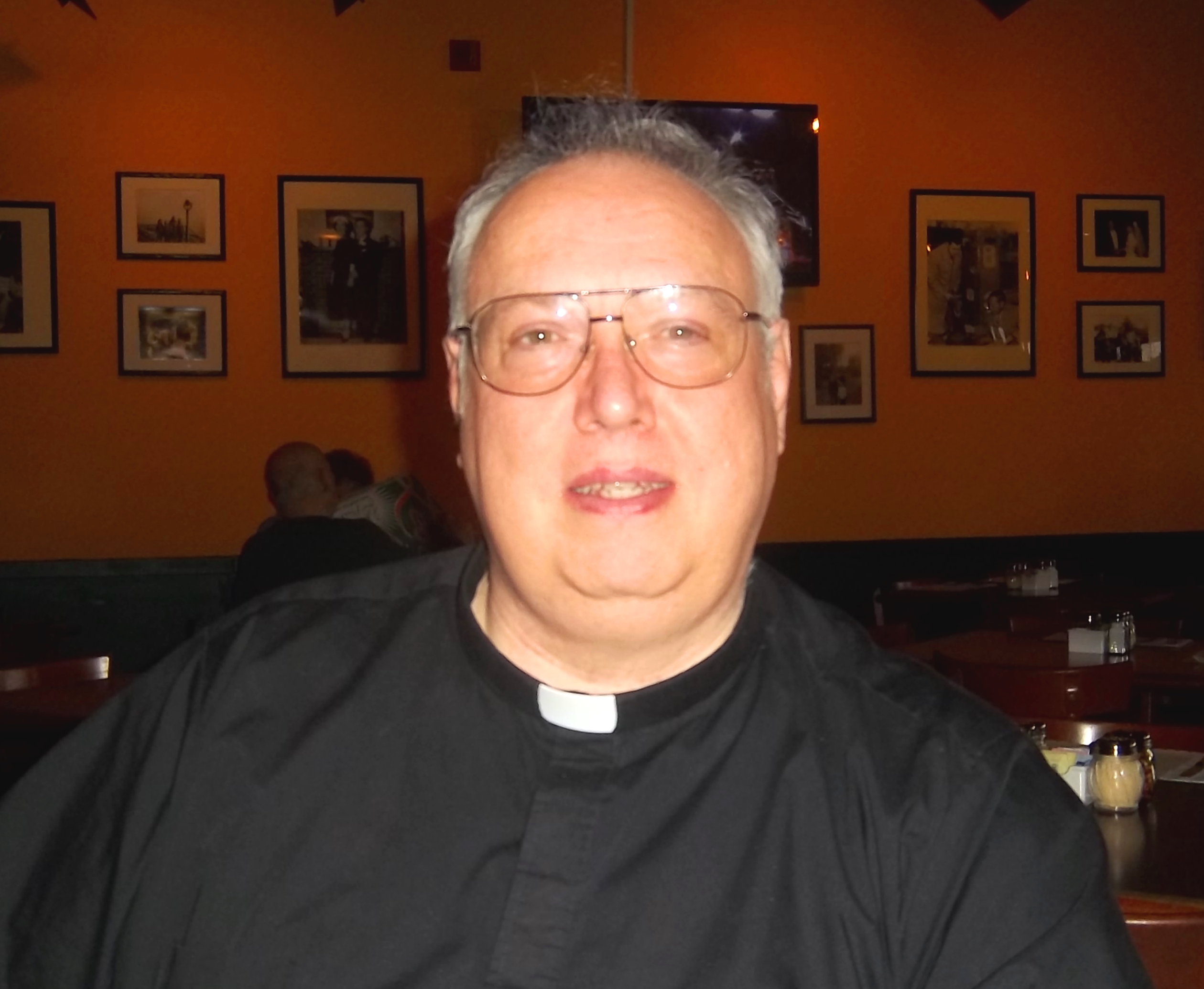
    Fr. Joseph Jenkins

  • The blog header depicts an important and yet mis-understood New Testament scene, Jesus flogging the money-changers out of the temple. I selected it because the faith that gives us consolation can also make us very uncomfortable. Both Divine Mercy and Divine Justice meet in Jesus. Priests are ministers of reconciliation, but never at the cost of truth. In or out of season, we must be courageous in preaching and living out the Gospel of Life. The title of my blog is a play on words, not Flogger Priest but Blogger Priest.

  • Archives

  • Categories

  • Recent Posts

  • Recent Comments

    Barbara King's avatarBarbara King on Ask a Priest
    Ben Kirk's avatarBen Kirk on Ask a Priest
    Jeremy Kok's avatarJeremy Kok on Ask a Priest
    Barbara's avatarBarbara on Ask a Priest
    forsamuraimarket's avatarforsamuraimarket on Ask a Priest

Ask a Priest

Feel free to submit a new question or concern in the comment box below.  Various topics and questions are archived here for easy retrieval.  Please be courteous.  Comments are moderated so please be patient in waiting for them to appear and for any responses.  God bless you!
aboutfrjoe

NEW MESSAGES/HOMILIES   CHRISTIAN REFLECTIONS   DEFENDING THE FAITH
QUESTIONS & ANSWERS   MARY OUR MOTHER

NEWMAN COLLEGE OUTLINES

5,442 Responses

  1. Dear Father;

    I have just one more question for you. If married by proxy, does the marriage still need to be consummated to count?

    Thank you for all your help I really appreciate it.

    FATHER JOE: Consummation is crucial to indissolubility. Marriage by proxy is very weak, allowing for recantation.

  2. Father I have a question. I think my brother in law is possessed. He’s got a lot of control over my sister and the kids. He beats them, drinks and does drugs. He has had a lot of affairs. He was in an accident and survived without a scratch; the passenger had to have the jaws of life to get out. He has had many dreams that the devil has came to him; he wakes up laughing about it. I don’t know if I am crazy or is he just evil or is he really got a demon in him. We are Catholic. My sister won’t walk into any church since she’s been with him. Can you please let me know your option? Thank you.

    FATHER JOE: What you describe does not sound like possession. While we might be influenced by the devil, there is also the agency of evil men.

  3. Dear Father Joe,

    Thank you for your reply it was very helpful. What I would like to know now is why would somebody have a wedding by proxy? Why would it be permitted if many dioceses do not allow it? Personally I don’t think standing at the alter and speaking your vows to anyone other then your spouse to be would feel the same, sense you are making a promise to them, as well as God.

    FATHER JOE: The couple marry themselves. Obviously, there can be no consummation by proxy, just in the external ceremony. It is very rare. It was probably used in cases of illness or because of separation as with military deployment. Cancellation of the ceremony might mean great financial hardship. Also, in the past there was a greater scandal with having children outside of wedlock.

  4. Dear Father Joe, I was just wondering if it’s possible in the Roman Catholic Church for a couple to get married if one of them is not present for the ceremony? I was recently reading some silly young adult novel where this
    happened, and the groom who was off on some private business had another man stand in his place. The bride spoke her vows to this man and he spoke what would be the grooms vows to her. The girl in the story was concerned about whether or not this was considered a legitimate marriage in the eyes of God and was reassured that it was. Now the couple in this story are not Catholic, but their supposed to be some form of Christian. I just wanted to know what the Catholic Church teaches and whether or not this had ever been allowed before in church history. Thanks!

    FATHER JOE:

    Yes, it is permitted but many dioceses do not allow it.

    Can. 1104 §1. To contract a marriage validly the contracting parties must be present together, either in person or by proxy.

    §2. Those being married are to express matrimonial consent in words or, if they cannot speak, through equivalent signs.

    Can. 1105 §1. To enter into a marriage validly by proxy it is required that:

    1/ there is a special mandate to contract with a specific person;

    2/ the proxy is designated by the one mandating and fulfills this function personally.

    §2. To be valid the mandate must be signed by the one mandating and by the pastor or ordinary of the place where the mandate is given, or by a priest delegated by either of them, or at least by two witnesses, or it must be made by means of a document which is authentic according to the norm of civil law.

    §3. If the one mandating cannot write, this is to be noted in the mandate itself and another witness is to be added who also signs the document; otherwise, the mandate is invalid.

    §4. If the one mandating revokes the mandate or develops amentia before the proxy contracts in his or her name, the marriage is invalid even if the proxy or the other contracting party does not know this.

  5. Is it a sin to confess something that is no sin at all or a too small sin? For example if I have something similar or near to a psychic disorder and can’t really controll my behaviour, I behave too unconscious with people, too spontaneously, impulsively. If my thoughts are changing fast and I have no inner discipline but can’t controll this all because I’m psychically unstable? (For example if I am impulsiv and make nonsense things, and others are bothered by this or if I get unfriendly too fast, without meaning this, or if I talk about secrets I shouldn’t because I stop thinking and then just make such mistakes without bad conscious, or if I’m not in healthy mood and talk with a too loud voice without beeing able to control it)
    Is it a sin to confess my own weak sides of my personality? Is it a sin or am I just like I am? What about bad thoughts, sinful thoughts, which appear seemingly because of my disorders and which I immeadetly recognize as NOT MY THOUGHTS but they just appear, and all I can do ist say Jesus Christ forgive me. But they come again and again. Can I confess ist to get rid of it?
    I have made the experience if you confess something, and even if it is only your weakness, God takes this away from you and you suddenly are free and healthy again. But you should only confess sins, right? And if you have grave sins to confess but you confess small sins, too, is this a sin?
    I don’t even know if it’s MY SIN to be like this or if I’m just psychically ill…. I’m not sure about every thought and feeling and not sure about wether I really did something wrong or my behaviour is too impulsive, too spontaneous, so I’m not guilty, just ill… I don’t know.
    I don’t want to say something in confession you should not do, because God can get angry if you talk nonsens to him and ignore grave sins. Can I confess my weakness or is it only allowed to talk about sins?
    Could the fact of praying too rarely lead to such lack of discipline in behaviour and feelings/thoughts? Is it my sin because I don’t pray a lot? Maybe thats the result of not praying, my psychic disorder?

    (German version: Ist es Sünde etwas zu beichten was keine (oder eine zu kleine) Sünde ist? Z.B. wenn ich psychisch labil bin und meine Gedanken viel zu sprunghaft sind und ich keine innere Disziplin habe (z.B. wenn ich zu impulsiv bin und dummheiten mache, bei anderen dadurch anecke oder Geheimnisse zu locker ausplaudere, oder einfach nicht ausgeglichen bin und dadurch zu leuten unabsichtlich unfreundlich werde oder sogar mit zu lauter Stimme rede ohne es kontrollieren zu können) aber das alles nicht kontrollieren kann weil ich psychisch unstabil bin? Ist es dann Sünde seine Schwächen zu beichten? Ich habe die Erfahrung gemacht, alles was man beichtet nimmt Gott einem und man ist dann frei davon. Aber ich weiß nicht ob man solche Kleinigkeiten beichten darf, und ich weiß nicht mal ob ich psychisch krank oder selbst dran schuld bin. Und ich will nicht etwas sagen was man bei einer Beichte nicht sagen darf, weil es da um Sünden geht, nicht um seine Krankheiten und Schwächen. )

    FATHER JOE: If there is a legitimate psychological disorder or a chronic addiction, then yes, culpability for a sin would be mitigated. But we should also be careful not to simply make excuses for personality defects and/or bad behavior. Even venial sins should be confessed. Human weaknesses can also know healing through the grace of the sacrament. Remember the conditions for sin: the act itself must be wrong; we must know it is wrong; and we must freely will it.

  6. Father Joe: I am a practicing Catholic about to finish a PhD in History, and I am looking for a job. Recently I read about a position at New Church school, Bryan Athyn College. I do not mind teaching with folks from other faith tradition, but I worry when they ask the following: “We seek applicants who are committed to the College’s mission and values, and who are interested in contributing to a curriculum shaped by New Church concepts. For information about Bryn Athyn College and its mission, see http://www.brynathyn.edu.”

    As an intellectual exercise, perhaps, I could see it, but I do not want to take a job under false pretenses or betray my Catholic convictions. Can I consider this job or does the New Church theology cast it beyond the pale?

    FATHER JOE: The school has a Lutheran background. Under mission the school website states: “The New Church is a form a Christianity that respects all faiths that acknowledge God and a life of charity toward the neighbor. At Bryn Athyn College we uphold those values, and we encourage our students in developing their individual faiths. We will ask you to think critically and deeply about spiritual concepts and their application to your life; then we will encourage you to live according to your beliefs—to be a person of integrity, honor, and compassion.” If true the you should have no issue in honestly saying that you are a Catholic, but share a faith and love in the Lord, as well as charity toward neighbor: the two-fold commandments of Christ.

  7. Alexander, just my 4 cents worth. You’re not as lost as you think. I feel that you’re on a journey and this is just one of the many stops or detours. You cannot not come to this point if you’re to go forwards. So, I would advise that you keep pondering. But don’t let your past or lack of family support deter you. Also, don’t let fear take you off course. Sometimes, we fail to move when we should simply because we think too much. Although we do not mean to, it could be that there is a secret inner fear of what lies ahead which makes us think and think and think – too much.

    I get this feeling that you need to quiten your heart. It’s tough but you could try offer up your thoughts, fears, whatever to Jesus every time it comes up. Over time, you will begin to feel that a lot of questions, though unanswered, do not mean that much as they used to.

    I hope Ive helped you in some way. God bless you.

  8. Father, as a responce I’d like to apolagize. I should’ve said that I am now 23 years old to put things in prespective.

    You are right. It’s not a mere formality why people call priests ‘Father’, or like they do here, ‘Padre’, deriving from the original Latin form. It does takes a dose of Parenthood to take those paths, which sadly, I was not blessed with.

    But sadly, I stand at one of those crossroads in which one really doesen’t knows what to do.

    Counceling broght me no fruition in the past, as the counceler so gently told me that I’d go to hell if I didn’t had children, or turned to religious life. He gave the same answer to her, though, which was one of the things that brought us toguether.

    Sadly, I am not a man of vision, and I often fear missinterpreting God’s messages to me. The absence of a supporting, religious family [My parents are atheists, and my own sister is an anti-religion extremist] doesen’t helps much, and the fact that my house is situated in such a village in which there is no church, to the point in which I don’t even know which parish I belong to, doesen’t helps at all.

    Anyways, may you be blessed with peace, health and a long life as well, and you will be in my prayers. Thank you for all the advice, and I hope that you won’t be bothered in the future if I ask you more things.

    ~ Alexander

    FATHER JOE: You have said nothing for which to apologize.

  9. Father, in response to your response, I was merely a child, following my friend’s grandmother’s advice. With 11 year of age, people tend to do what the older people tell us to. That promise was the only one I did in my life for non pious reasons, as I made those vows of following the Rule, first because I saw it as a way to perfect myself to better serve God, and secound, because I was hoping to enter a Third Order by now, but the fact that I don’t stay more than a year living in the same location prevents me to do so. If there was any way, I would not have taken this path. If you know of any Monastary that acepts oblates over the internet or at a distance, please tell me so.

    As for marriage, I do not beleave I am what it’s called ‘parent material’. For a reason me and this woman never took any step in our relationship that is meant to be taken only after the marriage, unlike many of our age.

    Please, don’t see me as a vain and shallow creature based upon past sins and actions taken when I was in an age in which I didn’t even had taken my first communion.

    Wishing you well,
    ~ Alexander

    FATHER JOE:

    It can happen that when questions are asked, some might not like the answers they receive. Questions can also contain many preconceptions that must be considered, altered and disposed. A problem I face is that many of the details are not shared when queries are made. I try my best to fill in the gaps but I am not clairvoyant. For instance, here I do not know how old you are. Unless you are elderly, there are many monasteries that might take you. The Cistercians take many good men. However, if you desire to enter the order of the dead then you must truly die to self. You will be told what to do. You will work hard. You will live a regimented life. You will know silence. The mere notion of becoming an oblate “at a distance” or over the “internet” is an absolute absurdity. I am no fan of halfway measures toward religious life. Either do it as it should be done or do not.

    If you are not “parent material” then you should not enter into any romantic relationship at all. Such would not be fair to the woman. Indeed, I would suggest counseling if that is how you actually feel because many of the attributes of fatherhood are essential to both religious life and holy orders. The Christian celibate lives out his fatherhood or her motherhood in a spiritual but real way. While the fruit of biological offspring is denied, one often knows the fruit of spiritual children. Every time I baptize a child I am filled with awe that through water and the invocation of the Trinity that a new Christian is born who is a child of God and an inheritor of the kingdom of heaven.

    How I see you is unimportant. The question is really how do you see yourself and how does God see you? What is the life to which God is calling you?

    Peace!

  10. Look at two of the Catholic speakers at the 50th anniversary of the civil rights march:

    Tom Perez (Secretary of Labor) – a long time exponent of illegal immigration and who functions as the Obama administration’s hit man toward any who get in the way of their agenda. A so-called good Catholic, he has boasted of prosecuting pro-life advocates.

    Ralph McCloud (USCCB CCHD Director) – who was the treasurer of a pro-abortion candidate in Texas and admits that CCHD funds sometimes go to organizations which oppose Catholic teaching. Why is it that a man strongly backed by Planned Parenthood should be working for the U.S. bishops? We talk about morality clauses for teachers in Catholic schools, but this is a teaching moment, too. Failing to kick him out says that we are not serious about abortion. We oppose it with a few gestures in January and then it is back to business as usual— nothing!

  11. Father,

    I really lament that you have softened your tone of late. You used to call a spade, a spade. Now, you seem to be just another apologist for the status quo. For instance, before the emergence of blogs, I first encountered your fire in The Catholic Standard. You wrote a couple of great letters to the editor. Many of us laity did the same. Now the paper is just a puppet for the administration. It comes out bi-weekly and the Letters to the Editor section has disappeared. The old editor, God bless him, has gone to heaven.

    However, even without space in the paper, you fail to say a word on your blog about tragic compromises from the local church. A week or so ago we had the anniversary of the Dream March on Washington. Our local shepherds were falling over themselves in joining the pro-abortion, pro-homosexual crowd in the commemoration of Martin Luther King. Does the fight against racism trump the murder of millions of children? Now that we have lost the legal battle against same-sex marriage, are we just going to move on, admit defeat, and jump in bed with egregious sinners? The editor of The Catholic Standard praised the politically partisan commemoration. Must we assist self-serving Democrats and shore-up the Obama administration because we are afraid of alienating black Catholics who place party affiliation over the Gospel? As far as I can tell, there were no conservative and pro-life organizations involved. Catholic groups were purely those of dissenters.

    President Obama cited “unfinished business” at the fiftieth anniversary of the march. He associates that business with abortion on demand, with a contraceptive culture, with traditional marriage’s demolition, with the mainstreaming of homosexuality, with the eclipse of American dominance and with the end of the Church Militant as we knew her. Our churchmen, despite the rhetoric, are handing over the keys to our churches to him. The moral authority of our shepherds is now the joke of Washington. The politicians own the bishops.

    This is the stuff about which I would write as a reader of The Catholic Standard, but it no longer provides space for the voice of the Sensus Fidelium. All we get are a few well-chosen words from on high, censored by bureaucrats and examined by attorneys. We strip the faith of fire and play it safe.

    Jesus did not play it safe. The Church should be ashamed. And so should you if you say nothing. Will you publish my words? The Church has been infiltrated by her enemies. Passivity is capitulation.

    Patrick Thomas

    FATHER JOE:

    Are letters to editors really necessary in the age of the blog? I believe that the Catholic Standard allows respectful online comments. There is Facebook and the archdiocesan blog, too. There are more avenues for discussion and debate today than ever before.

    My values are what they always were and I hope my passion for the faith never diminishes. But along with age there comes the appreciation that we must pick our battles and that there needs to be a certain tact. Coming across as too harsh can alienate good Catholics and make new enemies. Many people are conflicted by their loyalties and others suffer from poor religious formation. I hope that with time, much in this regard can be repaired.

    We can give advice to churchmen without name-calling or derision. The bishops are pro-life and believe in traditional marriage. They carry a tremendous responsibility or burden that neither you nor I know. We do not walk in their shoes. If we speak in an adversarial way against orthodox bishops and priests, then we create a situation where the Church is fighting herself. We do not need this.

    Do not give up the fight; but make sure you are fighting the right enemy. And remember, we do not simply want to win political referendums and court cases. We are all about the conversion of hearts and minds, as well as forgiveness.

  12. Father,
    First of all, thank you for the swift reply to my friend’s question. Secound, I have two questions which I was trying to find an answer, but sadly, the internet has no answer and as such, I must bother you again.

    When I was 11, I was aflicted by a severe fever that almost claimed my life, caused me to halucinate [I saw what I used to beleave to be my Guardian Angel] and lasted over two weeks. Since my family was very poor at the time, we could not afford a medic, so I was, apart from a few tradictional remedies, left in God’s hands. Fearing for my life, and after the council of an elderly lady [my friend’s grandmother], and following the example of a portuguise saint, I made the promise that I’d make a pilgrimage to Santiago de Compostela, using the habit of the benedictine monks [Which she offered me shortly before her passing], if God would spare me. Time went by and now I’m 22 years old, and everything seems to be pushing me to fulfill my oath now, from the book a total stranger gave me on the Pilgrimage of Santiago, to the invitation I had gotten in June to go there with a youth group from Colegio Pio XII [A catholic student residence near my univercity].
    The issue here is: Making such pilgrimage with that habit in the top of the summer is next to impossible [the fever left me side effects such as the inability to properly endure the heat], so I would like to know if using a S. Benedict medal instead of the habit during the path, and then attending the pilgrin’s mass with said habit would count the same as the original vow, or is there something that I may wear that can replace it during the walk?

    Secound question: Since the event listed above, I vowed to live my life acording to the Rule of St Benedict [Not as an Oblate, though, since my father’s job required us to move arround a lot, changing city after a year or two, making any chanse of a long term, stable relationship with a community, simply impossible], living and following the Rule alone. But now I’ve fallen in love with a woman, who would have no problems in adopting the same rule, but I do not know if our love breaks the private vow I took. Father, can you help me?

    FATHER JOE:

    If you make a general promise to God then it is best to keep it. However, promises like you describe are an expression of our devotion and appreciation for divine favor. You cannot bargain with the Lord. Divine providence is not capricious. As for substituting another sacramental, there should be no issue. A medal or scapular would suffice.

    Beware of promises and oaths. You are quick to make promises you should not make. Some promises, even regarding religious themes, can constitute sinful matter. In any case, a profession to follow the Rule of Benedict must be validated by a religious community and the Church, either in consecrated life or within a third order. I do not recommend that the laity adopt it. Frivolous promises are not binding. Stop making them. Promises regarding one’s state of life need to be made with the approbation of the Church and before legitimate pastors. They are not strictly private or personal affairs.

    If you have fallen in love with a woman who loves you then get married and have children. The only promises that should be concerning you right now are the marriage vows and the duties of husbands and wives.

  13. Father,

    I was wondering if it is wrong to mention the names of those passed on in prayers as if we are asking them for help or guidance.

    I had heard and always thought this was wrong because we only need God. I have recently read in a book that to speak to those passed on as if in remembrance, that this will make our own passing easier.

    Now, of course my instincts say there is One God and I only need Him. I just wondered if anyone ever addressed this topic before.

    FATHER JOE:

    Catholics are not supposed to seek out two-way communication with the dead, as at séances. However, the whole basis of the communion of the saints is the unity of the Church in pilgrimage with those in heavenly glory. The dead are still a part of us. Protestants generally do not call upon deceased loved ones for intercession; but such is an important element of Catholic prayer and devotion. Answering as a priest, I see no issue with beseeching loved ones who have passed on to pray for you and to stand in solidarity with you before the Lord.

  14. Fr, I have a question.

    Since the Nativity of our Blessed Mother falls on a Sunday this year, are we prohibited from celebrating her Feast thus year or is it moved to Saturday?

    I appreciate your response.

    Tony

    FATHER JOE: This year the commemoration of the Nativity of Mary is omitted entirely. The Sunday takes preference.

  15. Thank you Father, God bless you and everyone.

  16. Hi, I am new to Catholicism and would like to understand more on the Mass and its constituents. First of all, I’d like to know what the Mass is all about. Is Christ being offered on the altar, wherein he actually is present in the bread and wine being offered (can see this on the Vatican website)? Could you shed some light on it?

    Also, I’d like to know more on the consecration and transubstantiation portions of the Mass.

    Kindly let me know.

    Thanks in advance for your reply.

    FATHER JOE:

    The Eucharist was instituted by Christ at the Last Supper where he made his apostles into priests and told them to perpetuate this ritual “in memory of him.” This living memory is known by a word, “anamnesis,” and means that what is remembered is made present. Our Lord took bread and said that this is his body. He took the cup of wine and said that this is the chalice of his blood, of a new and everlasting covenant. This is the consecration. Covenants are more than contracts. They demand a sacrifice and one places his life on the line. One cannot make a covenant with fake blood, only a real oblation will suffice. Jesus connects his supper, which transformed elements of the Hebrew Seder or Passover, to his subsequent passion and death on the Cross. The Eucharist or Mass is regarded as a re-presentation of the one-time offering of Christ on Calvary. The Mass is a genuine sacrifice, albeit clean or unbloody. Jesus is present in the Mass, both in his personal presence and in his saving activity. The Mass is like a time machine. Jesus dies for you and me. The Mass allows us to offer ourselves as grafted to the Lord as an acceptable gift to the Father. Holy Communion is also known as the real presence. We receive in every drop of the precious blood and in every particle of the host, the complete and total Jesus Christ, risen from the dead. We hope for a share in Christ’s life. That is why Jesus feeds us. We immediately associate life with food and drink. Jesus does not want us to spiritually starve and die.

    Only the priest has the apostolic authority to consecrate the sacred species. After the consecration, our Lord is sacramentally present. The appearances or accidents of bread and wine are left unchanged. However, the substance and underlying meaning are transformed into the Lord Jesus Christ. This is not a spiritual or figurative presence. It is regarded as absolutely real. God has come down from heaven and has made himself a man and into our food. We keep a vigil light beside the tabernacle as a sentinel of this real presence of the God-man in our churches. After the consecration, we do not have bread and wine, just Jesus Christ. Our senses cannot detect this mystery. We know it by faith. Jesus said to his disciples that his flesh is real food and his blood is real drink. Many Jews murmured and abandoned Jesus, because they could not accept this teaching.

  17. I think I’ve gone about the sacraments wrong and I want to get things straightened out, but I don’t really know where to start. I was baptized Catholic as an infant but before I took my first communion, my parents had a falling out with our parish. We attended an Episcopal church for a while (at least I think it was an Episcopal church) and there was no rite associated with first communion, you just took it so I took it. This lasted for about a year and then we stopped going to church altogether until I was in high school when we returned to the Catholic church. At this point my father reasoned that so long as you’re baptized, there’s no cannon law requirement to go through any rite for first communion and I wasn’t really a candidate for RICA because I was baptized and I didn’t feel spiritually ready for confirmation.

    Now I’m in my 30’s, I attend mass almost every week, I’m about ready to take my daughter through her first communion and it’s making me really want to get things in order, but I don’t know where to begin. Because of the haphazard way I went about things, I’ve never actually made a confession and I’ve been afraid to because…well because I feel ridiculous having let things get to this point. And I know that’s stupid, but there you are.

    How deep is this hole I’ve dug myself and how do I get out?

    FATHER JOE:

    It can be fixed so do not worry. Baptized in the Church, you are a Catholic, but like so many these days, you were not catechized or instructed. You must contact your Catholic parish. They may have special instructions or it might indeed be a part of RCIA. I invite Catholics missing sacraments into the program at my parish.

    You need to be prepared for First Confession and be properly instructed about Holy Communion. You would also need Confirmation. Because you are already Catholic, the Confirmation would probably be done by the bishop, although priests can get delegation to do so.

    The other complication is your Marriage. (If you are married.) Marriage is also a sacrament. You and your wife would have to take instructions, fill out some forms and be married by the priest or deacon. We do not ordinarily recognize civil unions or marriages in non-Catholic churches when one of the parties is a baptized Catholic. This Church marriage does not have to be a complicated affair; it is sometimes called a “convalidation.” All that is required for the ceremony is the Catholic clergy and two witnesses.

    The only real problem would be if either you or your spouse were married before to someone else.

    Hope this all helps. Call your priest right away. RCIA programs are starting this week!

  18. Hello Father, what did you think of the pictures? Have you seen anything familiar or know anyone who has seen those before? Thanks.

    FATHER JOE: It looks like a defect on the film or something on the lens. I would not worry about it. The mind can easily play tricks. God bless!

  19. I read something about how some calvinists believe that Jesus had died to pay for the sins for only those that God had elected, instead of Jesus
    Dying to pay for the sins of all Humanity, are the calvinists belief correct?

    FATHER JOE: The Catholic notion of divine election is not the same as purportedly taught be certain strains of Calvinism. We believe in the universal call to salvation but this does not mean that all will be saved. Further, we do not accept the prosperity gospel, that God rewards his friends in this world and inflicts poverty and suffering on the damned. Rather, we embrace the poor as a treasure of the Church and as beloved by our Lord. St. Augustine emphasized that we were predestined to glory. While God knows who will and will not accept his offer of salvation; it is not for us to know until we enter into the fullness of the kingdom. There is a difference between saying that Jesus died for all and speaking about the salvation “of the many.” God’s election is mysterious. His predestination works in concert with human free will.

  20. I have a weird question.. I went to another country last summer for a vacation and went swimming on this place that used to be a hospital for military troops, and now it’s a private place for government officials and celebrities. As I finished swimming, I walked around the building. As I walked through hallways and corridors, I happened to look at the salon on the vleft and was astonished for what I’ve seen. I saw a white marble ish humanoid looking thing with huge black eyes. At first it baffled me yet petrified me, so I just continued along thinking it was just a mannequin. But then the next day I went with my cousin at the same place and she ran away crying. I asked her what happened and she said she saw something white, with big black eyes, no face, sitting down at the end of the hallway glaring at her. I did not see the “thing” but her description matches the same thing I saw the other day. That creeped me out. A few days passed we went to a trip somewhere near the jungle. We arrived at a friend’s house who used to be a mayor. We stayed at their place for a bit and relaxed. But when my cousin snapped a photo of me flexing, it appears that the same “thing” we saw was at the place we were staying at. Does this mean it has followed us? I have the picture my cousin took, I was all black, yet my entire face was white. We checked the camera lense for a fog or mist but it didn’t have anything. Well it won’t since it was warm outside. This entity has really baffled me and I’m not sure what it is or what it wants. Can you please help me? Is it also dangerous to be lucid dreaming knowing the fact that this thing knows me?

    FATHER JOE: I suspect that you are imagining things. You are welcome to email the photo evidence to frjoe2000@yahoo.com. Peace!

  21. Yes, that’s the passage, was Jesus praying so that someone else would be crucified in his place?

    FATHER JOE: No, it is merely an expression of the “angst” of Christ. No one else could pay the price that we owed because of sin. His incarnation and humanity is real. Only a masochist would want to suffer and die. Jesus is normal. His humanity is repulsed at the prospect. His gives voice to this struggle but immediately affirms to the Father, not my will (the human desire to flee pain and death), but Thy will be done (fidelity to his mission). There is no despair in Christ. God has come to save his people, as one of us. His sacrifice would be real. The price he would pay, would be terrible.

  22. If there’s anywhere in the Bible where Jesus gets as human as any of us, for me this passage has to be it. In most of my trials, I always bleat that the cup passeth me; yet I seldom have the guts or the humility to pray, Not my will but Yours be done.

  23. Providentissimus deus, art 20

    Inspiration Incompatible with Error

    20. The principles here laid down will apply cognate sciences, and especially to History….Hence, because the Holy Ghost employed men as His instruments, we cannot therefore say that it was these inspired instruments who, perchance, have fallen into error, and not the primary author. For, by supernatural power, He so moved and impelled them to write-He was so present to them-that the things which He ordered, and those only, they, first, rightly understood, then willed faithfully to write down, and finally expressed in apt words and with infallible truth.

    If we are to say that Matthew and Luke’s birth narratives are not without error, we have to discount Matthew’ series of prophecies Jesus was said to have fulfilled since Luke’s date of Jesus birth make these impossible Herod having been dead for ten years by 6 AD.. And of course, later gospel’s dating of the beginning of John’s and Jesus’ ministry become chronologically impossible too.

    FATHER JOE:

    I am not sure about what point you are trying to make? The Church does not contest that the entire Bible is the inspired Word of God. While we must understand the Scriptures in a contextual manner and in accordance with the literary style employed and the culture from which they emerged— the primary authorship remains God. The Bible teaches us salvation truth. Catholicism understands the Scriptures, both Old and New Testament in light of Jesus Christ. It does not mean that the Catholic appreciation of inerrancy is the same as that embraced by Fundamentalist Protestantism.

    Herod was given his rule by the Roman Senate, to which he held for more than thirty years. He died in 4 BC. There was some mix-up with the numbers in the revised calendar. Our Lord’s birth was probably between 7 and 4 BC. The Pope acknowledges as much in his book on Christ. This is nothing new for Catholic exegetes. You really should not get too flustered with the dating.

    Here is the entire paragraph from Pope Leo XIII:

    20. The principles here laid down will apply cognate sciences, and especially to History. It is a lamentable fact that there are many who with great labour carry out and publish investigations on the monuments of antiquity, the manners and institutions of nations and other illustrative subjects, and whose chief purpose in all this is too often to find mistakes in the sacred writings and so to shake and weaken their authority. Some of these writers display not only extreme hostility, but the greatest unfairness; in their eyes a profane book or ancient document is accepted without hesitation, whilst the Scripture, if they only find in it a suspicion of error, is set down with the slightest possible discussion as quite untrustworthy. It is true, no doubt, that copyists have made mistakes in the text of the Bible; this question, when it arises, should be carefully considered on its merits, and the fact not too easily admitted, but only in those passages where the proof is clear. It may also happen that the sense of a passage remains ambiguous, and in this case good hermeneutical methods will greatly assist in clearing up the obscurity. But it is absolutely wrong and forbidden, either to narrow inspiration to certain parts only of Holy Scripture, or to admit that the sacred writer has erred. For the system of those who, in order to rid themselves of these difficulties, do not hesitate to concede that divine inspiration regards the things of faith and morals, and nothing beyond, because (as they wrongly think) in a question of the truth or falsehood of a passage, we should consider not so much what God has said as the reason and purpose which He had in mind in saying it-this system cannot be tolerated. For all the books which the Church receives as sacred and canonical, are written wholly and entirely, with all their parts, at the dictation of the Holy Ghost; and so far is it from being possible that any error can co-exist with inspiration, that inspiration not only is essentially incompatible with error, but excludes and rejects it as absolutely and necessarily as it is impossible that God Himself, the supreme Truth, can utter that which is not true. This is the ancient and unchanging faith of the Church, solemnly defined in the Councils of Florence and of Trent, and finally confirmed and more expressly formulated by the Council of the Vatican. These are the words of the last: “The Books of the Old and New Testament, whole and entire, with all their parts, as enumerated in the decree of the same Council (Trent) and in the ancient Latin Vulgate, are to be received as sacred and canonical. And the Church holds them as sacred and canonical, not because, having been composed by human industry, they were afterwards approved by her authority; nor only because they contain revelation without error; but because, having been written under the inspiration of the Holy Ghost, they have God for their author.”(57) Hence, because the Holy Ghost employed men as His instruments, we cannot therefore say that it was these inspired instruments who, perchance, have fallen into error, and not the primary author. For, by supernatural power, He so moved and impelled them to write-He was so present to them-that the things which He ordered, and those only, they, first, rightly understood, then willed faithfully to write down, and finally expressed in apt words and with infallible truth. Otherwise, it could not be said that He was the Author of the entire Scripture. Such has always been the persuasion of the Fathers. “Therefore,” says St. Augustine, “since they wrote the things which He showed and uttered to them, it cannot be pretended that He is not the writer; for His members executed what their Head dictated.”(58) And St. Gregory the Great thus pronounces: “Most superfluous it is to inquire who wrote these things-we loyally believe the Holy Ghost to be the Author of the book. He wrote it Who dictated it for writing; He wrote it Who inspired its execution. “(59)

  24. I was looking for verification on when in the bible before Jesus was crucified was he praying for his life to be spared, i’m sorry I can’t really remember whether he did or not, i’m not trying to be blasphemous either. Thanks!

    FATHER JOE: It is not quite the way you think but this is probably the passage you mean:

    Then Jesus came with them to a place called Gethsemane, and he said to his disciples, “Sit here while I go over there and pray.” He took along Peter and the two sons of Zebedee, and began to feel sorrow and distress. Then he said to them, “My soul is sorrowful even to death. Remain here and keep watch with me.” He advanced a little and fell prostrate in prayer, saying, “My Father, if it is possible, let this cup pass from me; yet, not as I will, but as you will” (Mathew 26:36-39).

  25. Father, I have several questions and I hope you can find the time to answer them:

    Could you explain why you believe in the Lord? What has proved his existence to you? Have you had any personal religious experiences?

    FATHER JOE:

    I learned proofs for God’s existence in philosophy, (particularly in terms of motion, causality, contingency, etc.). But I believed in God long before I learned about the various arguments. I took for granted, as far back as I can remember, that there was a God and that he was the source of creation and that he cared about me. As I got older, I listened to the arguments of people like Carl Sagan but was not attracted to either atheism or agnosticism. God might create from nothing, but the notion of “something” from “nothing” without God made no sense to me. Infinite regressions and progressions also seemed absurd. I am sympathetic to people who are agnostic, but those who militantly reject intelligent design “doth protest too much, methinks.”

    I cannot recall any eureka moment or conversion experience. My parents gave me my faith. I was a sickly child and so I read a lot, and prayed a lot. I would talk with God late into the night. My poor health might have been the catalyst for my spirituality and later sense of a calling to ministry. It forced me to spend time with the Lord.

    Were you brought up a Christian, and if not, what converted you and compelled you to devote your life to Him?

    FATHER JOE: I was baptized as an infant. The priest placed me on the altar and prayed that I might become a priest.

    How does your knowledge God’s love, and your faith in Him, make you feel?

    FATHER JOE: I have purpose and know that I am not alone. Faithfulness to God means caring for others. My relationship with the Lord assures me that it is not in vain.

    Finally, what are your views on homosexuality? Would it be a problem for a homosexual to try to join the Catholic Church? Would you disapprove?

    FATHER JOE: My view is that of the Church. Homosexuality is sexual disorientation. If this is how they will remain, I think it would be best for them to embrace a life of prayer and celibate service. My cousin, the late Fr. John Harvey established the organization COURAGE to assist them in living just such a life. There are many homosexuals in the Church already. I encourage them to be chaste. If they struggle with their friendships, I urge them to regularly go to confession. If they respect and love the Church then this is not too much to ask.

    Many thanks!

Leave a comment