












• Our Blogger

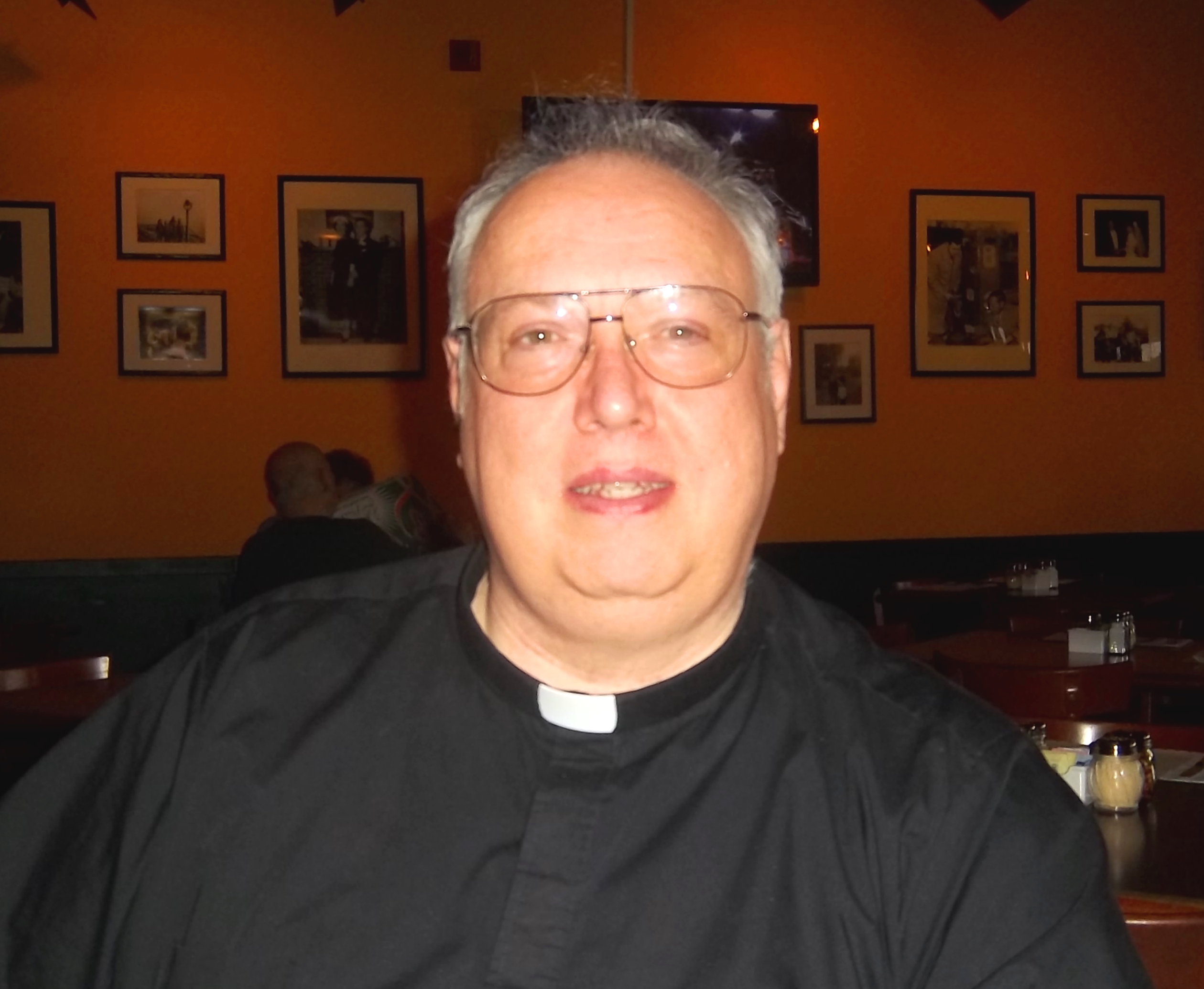
    Fr. Joseph Jenkins

  • The blog header depicts an important and yet mis-understood New Testament scene, Jesus flogging the money-changers out of the temple. I selected it because the faith that gives us consolation can also make us very uncomfortable. Both Divine Mercy and Divine Justice meet in Jesus. Priests are ministers of reconciliation, but never at the cost of truth. In or out of season, we must be courageous in preaching and living out the Gospel of Life. The title of my blog is a play on words, not Flogger Priest but Blogger Priest.

  • Archives

  • Categories

  • Recent Posts

  • Recent Comments

    Jeremy Kok's avatarJeremy Kok on Ask a Priest
    Gary Joseph's avatarGary Joseph on Old Mass or New, Does It …
    Barbara's avatarBarbara on Ask a Priest
    Anonymous's avatarAnonymous on Ask a Priest
    forsamuraimarket's avatarforsamuraimarket on Ask a Priest

Ask a Priest

Feel free to submit a new question or concern in the comment box below.  Various topics and questions are archived here for easy retrieval.  Please be courteous.  Comments are moderated so please be patient in waiting for them to appear and for any responses.  God bless you!
aboutfrjoe

NEW MESSAGES/HOMILIES   CHRISTIAN REFLECTIONS   DEFENDING THE FAITH

QUESTIONS & ANSWERS   MARY OUR MOTHER

NEWMAN COLLEGE OUTLINES

5,417 Responses

  1. What is the role of conscience in sin?

    Hello Father Joe,

    If a person really believes they have the right to act in a fashion the Church would call a sin, how guilty are they? Is the punishment after death diminished or non-existent? A couple examples to consider: a terrorist will kill those we consider innocent with a feeling of accomplishment. In our own Church communion is given to those who strongly support abortion, an act that Pope Francis called murder and yet he himself authorized communion to the likes of Pelosi and Biden, apparently no confession needed?

    FATHER JOE:

    It is likely that many have committed what would objectively be labeled as mortal sins; but because of failings in conscience, they were subjectively convicted of venial trespasses. A properly formed conscience must be in sync with objective moral law. Right judgment requires formation in the truth. While ignorance and error can mitigate responsibility, Catholics have an obligation to assent to revealed truths and to embrace the values of the Gospel. A failure to do so is a reluctance to accept the saving faith of Christ. It must be lived out in loving “obedience.” We have both the Scriptures and the teaching Church to ensure proper formation. Believers are not free to believe whatever they want.  Christians are realists in their acceptance of objective truths or natural law. We also receive divine positive law through God’s supernatural revelation. We assent as well to the authority instituted by Christ over his Church. While we are obliged to follow conscience, right and wrong remain what they are, despite the subjectivity of sin and its gravity for the soul. Further, certain sins or evil acts have an inherent capacity for corrupting or deadening the soul (regardless as to whether we know the acts are right or wrong). Placing molasses in the fuel tank of a car will damage the vehicle as it is made to run on gasoline. It is what it is. No dissenting insistence that it is right, or overall ignorance, will not save the car from harm. Given the ontic gravity of an act, the subjective limitations cannot always fully mitigate fault or exonerate the person from culpability. Ignorance will not always make up for the grave wrong committed. Neither will it necessarily save the person or his soul.  There are certain sins that are poisoned with malice and cry out to heaven.   

    Once we reach the age of reason, there will always and everywhere be soteriological consequences attached to our acts. The commission of wrongs or definite sins will be ranked as mortal or venial. The temporal punishment due to sin remains even with absolution.    

    The terrorist may feel accomplishment for killing the innocent, but such an act is an obvious violation of the commandment. Apart from Christ he cannot be saved anyway. If he is baptized, then his culpability is compounded, and he will no doubt know a more grievous circle of hell.  That is where matters stand, unless there is a last-minute repentance and conversion. But such is unlikely. While we cannot know for sure, I am fairly certain that the 9-11 militants were rewarded, not with 72 virgins to violate in heaven but with the eternal torments of hell.    

    My personal stance may agree with canon law, but not with the policy of my archdiocese. I feel very deeply that Holy Communion should be withheld from those who publicly promote or enable the destruction of children in the womb. This stance has cost me much in my ministry but “in conscience” I have never shied in sharing it with lawful authority.

    Pope Francis promoted frequent confession for all the disciples of Christ. The problem with pro-abortion politicians and celebrities is the public scandal they cause to others. The law of the Church would have pastors confidentially dialogue with such dissenters. Most of those in the pews do not have such a high profile. The one distributing communion would generally not know their stance on issues like abortion. Further, the priest cannot withhold the Eucharist if his actions would violate the seal of confession. His presumption is that all or most are in a state of grace, even if this is unlikely.  Preachers would be hard-pressed, including the Pope, to argue that those complicit in murder should forsake confession or take the Eucharist with impunity. Our late pontiff was often unclear but if one drew lines between the dots, there was orthodoxy, nonetheless. 

  2. Hello, Father Joe, this is a follow up question to the Nestorian heresy, apparently, the priest whom I mentioned did not separate the terms Church of the East which is actually the Nestorian Church (Assyrian Church of the East) not in communion with Rome and the Chaldeans who are former Nestorians but have achieved full communion with Rome. He literally asserted that the original Nestorians were Catholics and made no mention of heresy in his book. Although, he did state the Council of Ephesus and gave some notes on it but other than that he did not clarify the main points of the council which was to address the Nestorian heresy. In addition, when I try to correct some of the obvious errors, he refused to accept the facts which I posted to him and were acquired from legitimate Catholic sources and the Holy See.

    Therefore, Father Joe, how should this matter be resolved?

    FATHER JOE: I would simply leave him alone.

  3. I have a collection of nonfiction books on the study of ghosts in my library. Plus I have a book on Electronic Voice Phenomenon by Konstantin Raudive. This is where a tape recorder is left on and voices of spirits etc are found on the tape. In the book there are quite a number of Catholic priests that endorse the book as well. I do not do these things myself and will never do these things but I am interested in reading for knowledge sake. I even read articles by Father Brune a Catholic priest in France, who wrote books about his EVP experiences. Is that wrong of me to read these book for knowledge.

    Should I remove these books from my library?

    E.T

    FATHER JOE: It is one thing to find delight in the things that go bump in the night; it is entirely another to become obsessive over them. This you must judge for yourself. I am unaware of the priests involved with these things. Indeed, I approach much of it as a skeptic. I find that people often hear and see what they are already inclined to experience. Most EVPS I have heard just sound like static or white noise to me. Further, given the saturation of the airwaves with all sorts of signals, such is likely the result of earthly transmitters and not disembodied phantoms. Your library is your own to deal with, I can make no judgment.

  4. Hi I have struggled on and off throughout my life with alcohol, even recently I’ve been drinking heavily and really working to cut it out of my life. Today after work I had 3 shots of alcohol over like a 4 hr span, I didn’t feel intoxicated from it but it left me feeling guilty about it as I was doing my night prayers. Just wondering if this is a sin and what level of sin if it is that it would fall under. I know I shouldn’t have touched it at all but I wonder if I should be going to confession about this as soon as I can?

    FATHER JOE: Intoxication is sinful as it gives in to addiction and compromises faculties. Even if you stop yourself from becoming drunk or from being under the influence, the sacraments grant grace to help us in such matters. Not to take care of one’s health would also constitute the wrong of self-harm or abuse.

  5. fr,is it possible for an elderly couple to use Viagra prescribed by the doctor to achieve intercourse ?

    FATHER JOE: What you are asking is not whether it is possible but rather is it morally permissible. The answer to that is YES for married couples. As an effort to further marital fidelity and unity, a couple have a right to the marital act even when there is no longer fertility.

  6. My 10-year-old niece is starting to…gain adult features. It’s very self-conscious and humiliating for her. The same thing happened to me, and to this day at 39 years old having been an “early bloomer” is one of the major reasons I require anti-depressants and other similar medications, and go to mental health therapy. I’m worried my niece will be affected in similar ways.

    I remember being taught that God creates us how we are, everything works out according to His plan, and nothing happens unless He allows it. Any idea why God creates or allows children to “grow up” too fast, despite the negative effects it has on them?

    FATHER JOE:

    I cannot address the medical issues regarding hormones and growth patterns, but the issue here is really about the attention given to such children. This is not a unique situation, and it affects children who blossom early as well as those who develop late or hardly at all. The moral issue is the wrong of “body shaming.”   

    The real problem here is not that the young girl is an “early bloomer” because each of us matures and grows older as the Lord intends. We are all different and this diversity should enrich, not impoverish us. The problem is the immaturity of those around her who might joke and ridicule. Family and true friends should insist that all our children be respected and treated with the dignity that belongs to them as sons and daughters of God. Let her know that there is nothing wrong with her.

  7. I have some rather scrupulous questions that are all related. Either there’s a big complex moral dilemma here or I’m just overthinking things. Let me give the backstory: I am a 19 year old college student. My Dad and I both work at a company that is also a government contractor; I’m working there to earn money for college. This company recently replaced my dad’s 8-year-old laptop with a shiny new one. My dad asked an inferior member (not a boss or manager) of the IT department if he could transfer the hard drive from my own personal laptop, which is broken and can’t charge anymore, to his old work laptop. At this company, the hard drives of old computers are shredded to remove any chance of non-employees seeing classified information, but then the computers themselves are tossed in the garbage, even if they are still functional. The IT guy told my dad something to the effect of “it’s not a big deal” or “or won’t be a problem” and he replaced the work hard drive with my personal one, shredding the old one. Now the old work laptop, which no longer contains classified information, is in my possession, with all the apps, files, etc. of my broken laptop. Obviously, this costs us nothing, since the laptop was free. However, there is a rule (I can’t remember if it is an actual POLICY or not) that says that the company cannot give discarded items to one employee and not another, since that would be “discriminatory” and “favoritism”; also, it seems to imply that these items are still considered property of the company despite their status as trash. This raises a question: am I morally permitted to keep this laptop, if I am bound in conscience to obey the aforementioned rule insofar as it is enforced by my employer, and my employer considers this laptop theirs despite its discarded status, and I am being given a benefit (free laptop) that no other employees usually receive? Most people would not give this a second thought — as soon as they learn that the laptop would otherwise be e-waste, and that the part of the laptop which could pose a problem to the company (the classified hard drive) is gone, they would consider it theirs for the taking like raccoons in a dumpster. Similarly, people regularly disobey what seem to be minor rules and laws, despite the fact that they are instituted by legitimate authorities. For example: going 75 mph on a 65 mph highway. To me, it seems like an authority problem. The Catechism says in paragraph 1903, “Authority is exercised legitimately only when it seeks the common good of the group concerned and if it employs morally licit means to attain it. If rulers were to enact unjust laws or take measures contrary to the moral order, such arrangements would not be binding in conscience.” Obviously, there’s nothing inherently UNJUST about enforcing a speed limit or having a rule that states that company trash can’t be taken by random employees willy nilly. However, if in a particular circumstance, a law or rule is not per se helping the common good of the group concerned, then it doesn’t seem like we need to view it as “legitimate” in said circumstance. I could be fundamentally wrong in this interpretation. In my case, it seems debatable that the rule saying that employees shouldn’t obtain discarded items from the company is doing anything for the common good. My dad is already getting annoyed at what he calls my “over-scrupulosity” on this matter — he doesn’t want me to spend a ton of money trying to fix my defunct laptop for college, and he thinks this is the perfect solution and that he’s doing me a favor. In reality, I can’t help thinking that as long as I have this laptop, I’m commiting a sin, despite the utter uselessness and unimportance of this laptop showing that this is not an instance of grave matter.I was wondering if the concept of probabilism would be helpful in my circumstance, but it’s just making everything way more confusing. My personal interpretation, which I think could be harmonized with the Church’s, is that there are some laws from legitimate authorities that are neither just nor unjust, and therefore obedience to these laws is up to one’s own personal prudence depending on their certain circumstances. Returning to the speed limit: if one is driving on an empty road and the speed limit is 45 mph, why shouldn’t he speed? The circumstances that justify the law (the protection of other drivers and pedestrians) are not present — the only thing that might require his obedience is the fact that the law came from a government whose jurisdiction he belongs to.

    FATHER JOE:

    Discard computers with the hard drives removed are considered trash. Placing your old hard drive into the machine gave it a second life. I see no issue with refurbishing the machine for your usage.

  8. Hello, Father Joe, I would like to ask what is the Nestorian heresy because I have a priest at my church who is apparently saying that Nestorian is not heresy and the term Nestorian is referring to Eastern Christians or Catholics. He also said that the decision of the Council of Ephesus is open for individual interpretation.

    FATHER JOE:

    I suspect that the Bishop Nestorius, himself, would be at odds with such an interpretation given that his views were condemned and he was deposed by the Council of Ephesus in 431.  The Council of Chalcedon in 451 anathematize him. While the conflict was largely between two Eastern schools, Antioch and Alexandria, the negative verdict against Nestorius was affirmed by Rome.

    It is true that the conflict was between two schools of the East, but ultimately Rome would side with Cyril of Alexandria against Nestorius. It may be that a distinction is in order between the fidelity of the man and the heresy of which he was accused.  It is unlikely that Nestorius was guilty of the caricature of his position as one that opposed the divinity of Jesus or the unique motherhood of Mary.  He preferred the titles “Christotokos” (Bearer of Christ) or “Anthropotokos” (Bearer of the Man) to Theotokos (Bearer of God) that is translated in the Latin West as Mater Dei (Mother of God). His concern was the possible reversion back to pagan goddess worship. Many of the devout had literally taken old idols to goddesses and had recycled them as statues of Mary and baby Jesus. While this was a legitimate concern, the impression was that he was denying the divinity of Christ.

    All this was part of a larger theological argument in the East over the union of the two natures of Jesus. The School of Antioch spoke of a “prosopon” or mask and the School of Alexandria set the groundwork for what we understand as the “hypostatic union.” The latter seemed to better preserve the union and identity of Christ.

    There is a branch of the Eastern church that to this day has sided with Nestorius. This is labeled as the Nestorian Church.  Such would not include the Orthodox churches of Greece and Russia nor the Coptic of the Middle East or Africa.  They are found in the Middle East, Central Asia, Far East, and India. Indeed, a couple of these so-called Nestorian churches are today part of the Catholic Church: the Chaldeans of Iraq and the Syro-Malabar Church of India. (That is likely what your priest was trying to explain.)

  9. Hello, Father Joe, I would like ask to what are the meanings behind the priestly vestments of both Western and Eastern Catholic priests?

    FATHER JOE:

    I can only speak about the Western tradition. The vestments of clergy speak to the spiritual demand that we put on the wedding garment of the Lamb, literally that we become a new Christ. The articles of clothing have various symbolic meanings.  The colors of the stole and chasuble speak to the liturgical seasons.

    The Amice once worn over the head but now around the neck and over the shoulders, symbolizes armor or resistance to temptation. The Alb resonates with the purity of the baptismal garment. The Cincture is connected to chastity and celibacy. The Stole designates the authority that comes with Holy Orders. The Chasuble relates back to the seamless garment of Christ at the Cross. Jesus is stripped naked in love to save us. Every priest goes to the altar as an “alterchristus” or another Christ to offer the saving re-presentation of the sacrifice of the Cross.

  10. Hello, Father Joe I would like to ask what is the difference between the Western Crucifix and the Eastern Cross in terms of symbolism, meaning and tradition?

    Thank you

    FATHER JOE:

    The Western crucifix employs less symbolism and is usually more realistic in appearance. Thus, we will see the Suffering Christ. The East tends to image Christ Triumphant. A statue of the corpus or body tends to be affixed in the Latin rite while the Eastern or Oriental churches prefer an iconic figure painted or etched upon the cross itself. The West has one crossbeam upon which the hands of Jesus are nailed. This is present in both versions.

    The East adds crossbeams for symbolic reasons. Above the main crossbar is a shorter one sometimes associated with the parchment upon which Pilate wrote, “Jesus of Nazareth, King of the Jews.” Below the main crossbeam there is a slanted one indicating the footrest. This lower crossbeam is also said to signify the good thief (higher side) and the bad thief (lower side). Other reasons are sometimes given for the slant, as well.

    The Eastern cross or crucifix also adds shorter horizontal beams to the crossbeam upon which the hands are nailed. Along with the three crossbars, the Three Persons of the Trinity are symbolized.  The single vertical beam is linked to the one God or divine nature.


  11. Dear Father,

    I would like to share something that has been weighing on my heart during my journey of faith.

    I have accepted Jesus Christ as my Savior and truly believe in His saving love. But I don’t understand why I keep changing so often. There are days when I’m filled with passion—I want to delete Facebook, give up social media, study for 12 hours a day, live a disciplined life, and make everything in me perfect.

    But then, after just one night, I feel like a completely different person—weak, unmotivated, falling back into using my phone, social media, and all the unhealthy habits I try so hard to escape.

    I’ve heard many testimonies of people who were completely transformed after believing in Jesus. But I feel like I’m constantly struggling, unable to change in a whole and lasting way.

    I sometimes wonder if I’m chasing perfection too much. My thoughts keep shifting. I read and learn many things, but none of them feel stable or certain in my mind.

    I truly want to live better, study more diligently, and let go of these bad habits—but I keep falling back into the same cycle.

    Father, is it because my faith is still weak? Or am I trying to control everything on my own strength without fully surrendering to God? How can I truly be transformed in Jesus and stay spiritually strong day after day?

    I humbly ask for your guidance and prayers.

    Thank you, Father.

    FATHER JOE:

    While there are problems for sure with social media, there are also opportunities for sharing and learning. I suspect the answer is deeper than simply what you give up.

    Each of us must regulate our time between work, play, worship or prayer, study, and service. We can consecrate it all to the Lord by the values that we bring to all that we do. Reading religious books or opening the Scriptures is invaluable in coming to better understand the Lord and his will for us.  Prayer is also vital as two-way communication with the Lord. Service is the way that we demonstrate that our love and faith is real.  We take each day as it comes. Sometimes we will stumble. But then again, we ask the Lord for his helping grace and then get up and continue with our pilgrimage of faith. Finding people who also love the Lord is important. Discipleship is a gift shared. Brothers and sisters can pray together and support each other.  Peace!

  12. If your wife has trouble having sex due to pain is it OK for her to help her husband ejaculate without vaginal intercourse?

    FATHER JOE: No, it is not okay. Sexual expression is reserved to spouses and directed to the marital act, not simply self-gratification.

  13. Hello father Joe, scenario:

    Someone approaches communion in sin with enough knowledge and then on top of that mistreats the host with contempt, disregard and bad intention (dolus) while consuming it (with tongue and teeth). The subject is aware enough that such actions are irreverent and can incur in penalties in church law.

    Could this person incur in excommunication (automatic)?

    FATHER JOE: It is wrong for anyone to receive the sacrament while in mortal sin but that is not immediate grounds for excommunication. The sin of sacrilege is also a mortal sin and only makes one’s spiritual state more precarious or desperate before almighty God.

  14. Fr. Joe: if my venial sins are forgiven at the penitential rite/Holy Communion at my daily Mass, then what “matter” would I have to make a valid confession? Or would I still use those venial sins that were forgiven at daily Mass as”matter” for confession even though they have already been forgiven at Mass?

    FATHER JOE: While one is not obliged to confess all venial sins, it is a good practice to forestall more serious transgressions. Even if you feel that God has forgiven a lesser sin because of the penitential rite or because of a good act of contrition and penance; those sins can still be confessed in the sacrament of reconciliation so as to receive the graces that come with absolution. Many penitents focus on the “forgiveness” aspect and forget about the graces that can heal and transform us.

  15. Is it a sin to share a bed with your mother to watch a movie? My mother is very keen on it, but I read that it is a sin in a sermon by St. John Vianney and I really don’t know what to do.

    FATHER JOE: What is the problem if boundaries are kept and chastity preserved? Not knowing you, I cannot answer this question. Do you have a fetish problem or suffer from a problematical sexual deviancy?

  16. Hi Father. Can Catholics go on ghost tours, not the ghost hunting ones but the more historical ones where you see sights and hear stories and maybe get spooked by an actor or two?

    FATHER JOE: Yes, as they are meant for fun and not taken too seriously. More so than not, they make for good local history tours. At Halloween time they are quite popular. Boo!

  17. Good evening,

    I have a son outside of marriage. I was with his father for 5 years, and it was an abusive relationship.

    I left him 7 years ago, and I gave been on my own with my son ever since.

    I’m concerned for the state of his soul. If I were to marry someone who is not the biological father, would that make him legitimate? What if my son wanted to enter the Religious life when he’s older? Would he be permitted if he was born out of wedlock?

    And finally, what if I took a vow of celibacy in order to make reparation for my past sins and continued to live out the single life – would that have any impact?

    Thank you 🙏🏻

    FATHER JOE: Legitimacy is a legal concept and it is no longer an impediment to religious life or holy orders. There is nothing you can do to change his status after he is born.

  18. Dear Father, My 16-year-old son recently had a horrible confession experience in which the priest (whom he had never gone to before) was angry and belittling toward him. He began by saying he wouldn’t absolve my son. He told my son he had never made a good confession because his phone was an occasion of sin and he hadn’t gotten rid of it. The priest told him “Say you’re going to get rid of it or you’re feminine.” He also told him he would go to hell. Also: “Join a different religion if this is too hard.” Basically, he bullied my son into saying he would get rid of his phone, then apparently the priest absolved him. My son was understandably distraught after this shocking experience and while we will do our best to address any problems with the phone/internet, he’s not getting rid of the phone. He will never return to this priest, but how does he go on from here? Does he go ahead to his next confession as if this one didn’t occur, because there was so much wrong with it and he didn’t give up his phone, which was a condition imposed on him. Also, for my part, within my kids’ hearing I called this priest creepy and said that he appears to be like a cult leader. Is that a grave sin on my part for speaking about a priest this way? This whole situation has caused so much distress for me and my family. Thank you for any guidance you can give.

    FATHER JOE: How old is your son? Did the priest know about his age? Sometimes confessors speak differently to certain age groups. But if it is as you say, this was a peculiar encounter. I would suggest having him go to a different priest. Most clergy are compassionate and would not deliberately brow-beat or shame a youth. Complaining to others about what the confessor said is problematical because the priest is under the seal and cannot address his side of what transpired.

  19. Fr ,

    In the Catechism it says we cooperate in the sins of others by not hindering them if WE HAVE THE OBLIGATION TO DO SO .

    Can you explain this to me ? Thank you.

    FATHER JOE: Being passive or silent about evil makes us an accomplice.

  20. Hello Father Joe, I would like ask to ask what can a Abbess do and cannot do? And are there any good Catholic websites where I can read more about this topic?

    Thank you

    FATHER JOE:

    Here role is parallel to that of an abbot. She leads the religious community.

    https://www.thoughtco.com/abbesses-in-womens-religious-history-3529693

    https://www.newadvent.org/cathen/01007e.htm

  21. I don’t feel God’s presence anymore. I feel as if he has just left me. When I pray, I’m talking to myself. I know that God would never leave me, but I’m just telling you that this is what I feel.

    I’ve just given up at this point.

    FATHER JOE: While God sometimes withdraws a sense of his presence that we might love him for himself and not for his gifts (satisfaction in prayer), I suspect your issue is not a spiritual weaning but despondency. What has happened to cause you to lose courage and hope?  Worship God, receive absolution, open the Gospels. Divine grace can restore what was lost or misplaced. It may be that you and not the Lord has done the moving. I will keep you in prayer.     

  22. Hello dear Father Joe, I have a question that disturbs me a lot, why does God let children die in war, when they die does He relieve their pain? Does He intervene somehow and they leave their physical body without pain, or I can’t rely on this theory and a child’s death can be excruciating and painful?

    FATHER JOE: Suffering and death are traced back to human rebellion and sin. Our Lord has placed himself in solidarity with us in his passion and Cross. This gives us hope for a share in his healing and life. But the consequences of sin have yet to be unraveled. Sin brings suffering upon the whole of material creation. The harmony of the world is broken. It brings suffering upon those who are innocent and upon the guilty. The mystery is why one suffers more or differently than another. Sometimes the wicked seem happy and flourish while the good are in dire distress and suffer greatly. We believe that Jesus as the Divine Mercy and the Divine Justice will bring balance, but such often comes in the next world and not to this veil of tears. As believers we are called to offer up our hardships and pain in union with the suffering of Christ on the Cross. Joined to the Lord, this becomes an element of our prayer and self-offering with Jesus to the heavenly Father. This offering or oblation is rendered for the good of souls.   

  23. As a person who was baptized Catholic as an infant but who wants nothing to do with this institution as an adult for a variety of reasons (including its superstitions and horrible moral behavior in covering up its abuse worldwide abuse of children), how does one formally leave the church as an organization? For example, can someone officially renounce the baptism, or is there some other means of formally severing times with this organization? (I won’t be surprised if you feel compelled to say this is a wrong move, but I’m interested only in the formalities of leaving the organization in a way that is consistent with its own rules, so there is no doubt on the part of that parish/church records, or any other considerations.)

    FATHER JOE:

    Several years ago, it was speculated by liturgists that one might formally disassociate from the Church by getting a letter of separation signed by one’s pastor and having it sent to the bishop. However, priests refused to sign such letters and chanceries did not process them. The dogmatic theologians argued that the documents were not worth the paper they were written upon because there could be no such separation in truth. Liturgists were concerned about annulments and the number of baptized (but not practicing) Catholics married outside the Church. If there was a formal separation, then these marriages would be valid. However, as things stand, these unions are judged by the Church as both illicit and invalid.

    Returning to your question, how can one formally leave the Church? The answer is simple, you cannot. Once Catholic, you are always Catholic. Remember what baptism is about. You become a member of the Church established by Christ. You become an adopted son or daughter to the heavenly Father, a child to Mary and kin to Christ. You are washed clean of original sin. You are granted actual and sanctifying grace. You become a member and an inheritor of the kingdom of Christ. You become a temple of the Holy Spirit.

    Catholicism is not superstition but true religion. One may seek excommunication but that is a censure for a grievous sin or ecclesial crime. However, it does not negate baptism. Just as with mortal sin, most censures can be removed by a priest in confession. Indeed, absolution would immediately restore one to the good graces of God and of his Church. God will judge you as a Catholic, no matter what you do.

  24.  If I tell multiple people separately my blasphemy thoughts I had to see if I get the same answer is it blasphemy? Or not. I’m just seeking clarification I’m not trying to be blasphemy or be disrespectful when I ask about my thoughts.

    FATHER JOE: You should look into your soul to figure out why you have blasphemous thoughts. Some people struggle with dark thoughts and compulsions due to mental illness. Others are angry, either with God or with others. Unless you are seeking therapy or spiritual counsel, there is no need to share them with others. Do you take delight in shocking others? I hope not. Brush passing thoughts from your mind and contemplate the good, the true and the beautiful.

  25. I understand the standing of the church on the use of pornography and masturbation.

    My wife and I are in our 70’s and still like to be intimate. The problem is that it is becoming much more difficult for me to get aroused (whether it is caused by ED or some meds that I am taking, and I cannot take Viagra). Past experience shows that if I use porn to help me get aroused it helps when we are intimate.

    Is this a mortal sin?

    FATHER JOE: Yes, it is seriously sinful. You also make yourself an accomplice in the sin of others by your voyeurism. You should be praying for those in the immoral sex industry, not patronizing it.

Leave a comment









