












• Our Blogger

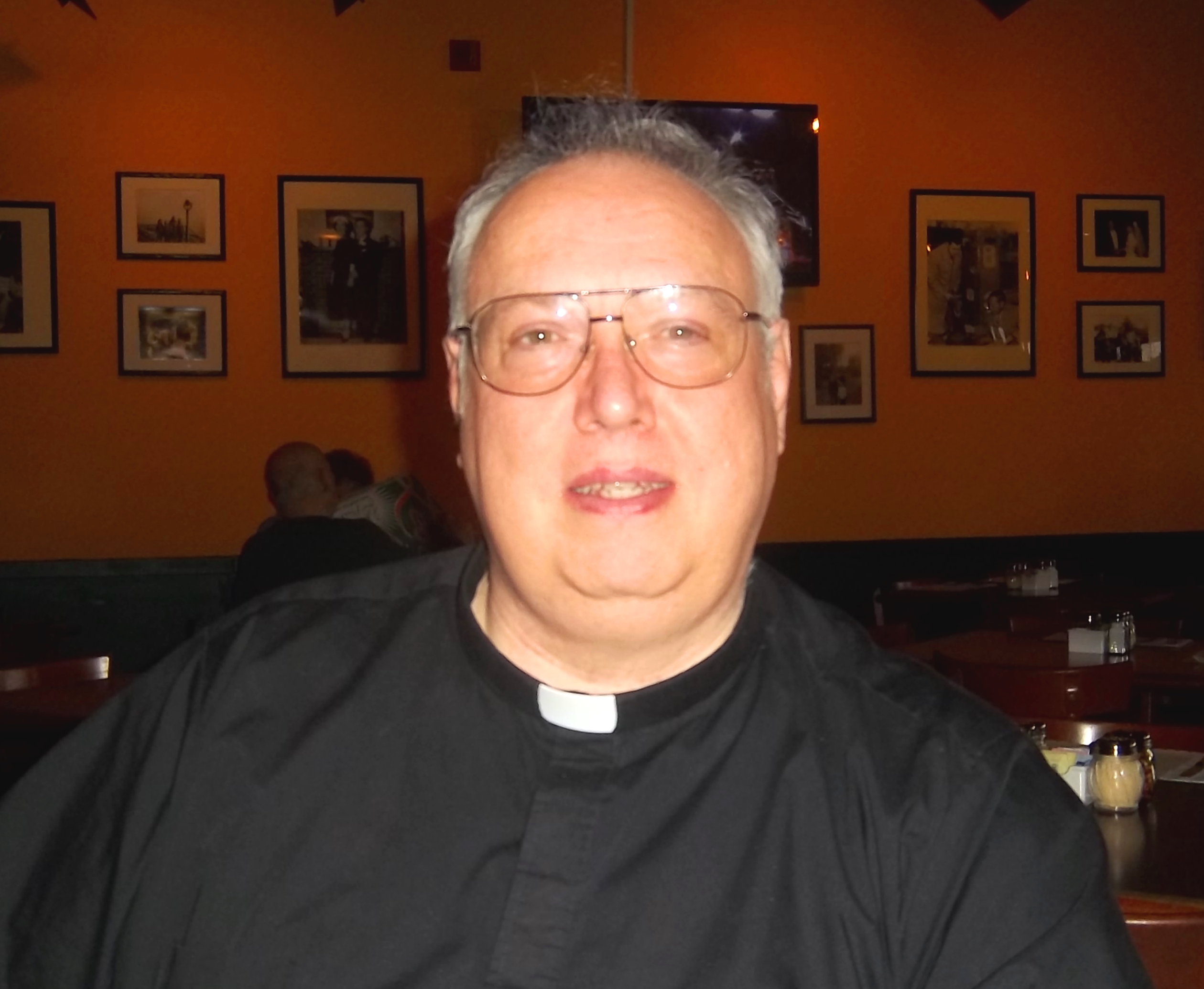
    Fr. Joseph Jenkins

  • The blog header depicts an important and yet mis-understood New Testament scene, Jesus flogging the money-changers out of the temple. I selected it because the faith that gives us consolation can also make us very uncomfortable. Both Divine Mercy and Divine Justice meet in Jesus. Priests are ministers of reconciliation, but never at the cost of truth. In or out of season, we must be courageous in preaching and living out the Gospel of Life. The title of my blog is a play on words, not Flogger Priest but Blogger Priest.

  • Archives

  • Categories

  • Recent Posts

  • Recent Comments

    Barbara King's avatarBarbara King on Ask a Priest
    Ben Kirk's avatarBen Kirk on Ask a Priest
    Jeremy Kok's avatarJeremy Kok on Ask a Priest
    Barbara's avatarBarbara on Ask a Priest
    forsamuraimarket's avatarforsamuraimarket on Ask a Priest

Ask a Priest

Feel free to submit a new question or concern in the comment box below.  Various topics and questions are archived here for easy retrieval.  Please be courteous.  Comments are moderated so please be patient in waiting for them to appear and for any responses.  God bless you!
aboutfrjoe

NEW MESSAGES/HOMILIES   CHRISTIAN REFLECTIONS   DEFENDING THE FAITH

QUESTIONS & ANSWERS   MARY OUR MOTHER

NEWMAN COLLEGE OUTLINES

5,442 Responses

  1. If a man is divorced after 35 years, at his wife’s request, she says “all spark or want to be together is gone,” and although they have raised 5 children & 35 grandchildren in Catholic Church, is there a point in his life that he may seek to have a relationship in his life again with a widow of Catholic faith, that would be acceptable in the eyes of the Church?

    FATHER JOE: The Church does not recognize divorce thus in the eyes of the Church, the couple is still regarded as husband and wife. This means that he is not free to have a romantic relationship with someone else. It sounds to me that an annulment would be difficult.

  2. Dear Father Joe, because I was awake too early for a Sunday morning, and because I could, I attended Mass before going to my own Methodist church. I love Mass, even if I do not completely understand, nor agree with, some of the theology. Although there are Catholic churches much closer to where I live, I prefer the Cathedral of the Madeleine in SLC. It is so beautiful! Because I attended two church services, two very different church services, today, I made some observations that I hope you will comment on.

    1. Catholics are bigger slobs than Methodists. Whatever happened to respecting God and his house of worship? I don’t think we need to dress in our “Sunday best” as the Mormons do, but please — shorts and t-shirts, spaghetti straps with tattoos showing?

    FATHER JOE: Yes, it does seem that Catholics have become increasingly casual in God’s house. I suppose this reflects that believers feel very much at home there. However, I agree with you in thinking that believers should dress up for God. In any case, dress should always be clean and modest.

    2. There were so many people who showed up just for Communion. In my Methodist church, we would never be so rude as to arrive as late as the Catholics did this morning. Granted, for Protestants the important element of the church service is the Word and the sermon that goes along with that. But, really, isn’t the entire service important, from beginning to end? Every time I attend Mass, there are many, many people who arrive late. This is not an isolated case.

    FATHER JOE: I brought this issue up at my 12 Noon Mass this last Sunday. It seemed that half the church showed up twenty to thirty minutes late! I explained that if they missed the reading of the Gospel then they should consider attending an evening Mass at a church in Laurel so as to fulfill their duty to the ecclesial precept. Catholics are obliged to participate at Sunday Mass under pain of mortal sin. I think some wrongly think that if they receive Holy Communion then they are in compliance. Such is not the case. Indeed, if they are in serious sin, they should attend but refrain from reception. Encountering the Lord in the Word of God prepares us for receiving him in the Eucharist. This preparation is shortchanged by latecomers.

    3. I wish we had Communion every week or, at least, more than once a month. 😦

    FATHER JOE: Frequent communion makes sense, especially if we do not want to spiritually starve.

    4. Our sermons are a whole heck of a lot more interesting. Today’s Catholic homily wasn’t bad, but it wasn’t great. The only time I was wowed by a Catholic homily was when I attended Mass at the Newman Center — those Dominicans can preach! The rest of you? EWTN priests are probably the worst! If I am awake, I do watch Mass on EWTN — at 6 a.m. — and they put me right back to sleep!

    FATHER JOE: Yes, preaching is both a gift and a skill. So much attention and energy is directed toward the altar that we sometimes neglect the transformative power of God’s Word and effective proclamation.

    5. I love the symbolism of the Catholic Mass and I wish we had more of it.

    FATHER JOE: There is a lot to be said about ritual. Of course, Catholicism argues for the efficacy of liturgy and sacrament. That which is signified is made present: Christ’s real presence and his saving sacrifice.

    Thanks for your comments, Father Joe. I love your blog — without having to ask; you answer many of my questions. 🙂
    God bless,
    Dayna

    FATHER JOE: You are very kind. God bless!

  3. Father, I have always tried my best to attend Sunday Mass while traveling, even in Europe. But now am planning a cruise that leaves on a Sunday and returns the next Sunday. We must fly (four hours) the night before to be sure we make the sailing, and, for various reasons, this is the only time we can go (although I had wanted to go on a different cruise). I wanted to stay in a hotel in the city (Seattle) within walking distance of a church, but my husband wants to stay at the airport and take a cab or shuttle directly to the ship the next morning. Although he is Catholic, too, he is not at all concerned about missing Mass. Our travel companions (his brother and wife) are not Catholic. I also have doubts I can get to Mass at the end of the cruise, as we will go directly from there to the airport. This is all especially difficult for me as I have some serious surgery scheduled eight days after our return, and I don’t want any mortal sins on my conscience. Please give me some direction. Thank you.

    FATHER JOE: You certainly want to maintain harmony with your husband and that places you in difficult straits regarding Mass. It sounds to me that you would go if you could, but there are many serious obstacles before you. If it proves impossible or too arduous, God would understand. I would recommend taking a missalette or missal with you so that you might at least be able to keep up with the Sunday readings if Mass is not possible. Keep your ears and eyes open, too. I have known several retired priests who are actually contracted to take cruises so that Catholics can participate at Mass while on ship and/or go to Confession. It may not be true anymore, but many years ago I recall Cincinnati and Chicago had Mass chapels among the Airport stores and restaurants. Are any of these still operating? Susan, enjoy your vacation and I will pray for a successful and safe surgery. Peace!

  4. Father, as a teenager I stole a lot of music (digitally). My friends would let me have their music, and some of it they got illegally. I confessed and received forgiveness. In restitution, I tithed what I guessed the amount of money the music would have cost. (I remember something about around $256). I don’t think it occurred to me, however, to simply buy all the music. I still own it. Lately there were some songs I thought of that I realized where in the group I stole. I told myself I should probably buy the album to make up for it. But I’m confused because I did indeed make restitution. But at the time it did not occur to me to make restitution by actually buying the music. A lot of the music I don’t want any more so I thought I should just delete it, though I know my family members have many of the songs on their iPods. The songs I do want I thought I should just buy. But is that necessary to so since at the time I made restitution, though perhaps not correctly? (I don’t know why I tithed instead of buying the songs… can’t remember). Any advice on what to do would be great. My feeling is that I should delete what I don’t want since it was stolen and buy what I do want to keep. I tend to be scrupulous so I’m looking for sound advice. Thanks!

    FATHER JOE:

    The issue of digital rights is very confusing to me. I suspect you can listen for free to most if not all of the songs on a forum like YouTube. Now the situation is even more complex given the demise of video rental centers and downloading movies. Supposedly you can buy (instead of rent) these from Amazon or Verizon or whatever; and yet, without a connection, there would be no access. Is that stealing on their part? I have not kept up with this matter. Tested legally, Napster took a big hit but the problem did not go away. I guess I would just urge caution for the future.

    Personally, I have very strong negative feelings about digital music. I was a faithful member of the BMG Classical Club for several decades. Digital music and theft destroyed the effort. Eventually it did the same against Tower Records and many smaller music stores. It was a joy building up my collection and I still love the “physical” media, no matter whether it is a CD or an old vinyl record. Pop songs are easily downloaded. But classical music requires complete orchestrations to properly enjoy. A three to five minute sound-byte is not enough. I want to hear the complete symphony or musical piece, not mutilations of great music for easy digital purchase and download.

    The dilemma we had with radio (rejecting classical music because of the need for commercials) has now spread to distribution itself. Purists don’t want their music compressed. They don’t want to listen on the computer or some gadget the size of a matchbox plugged into their ear. They want the sound on a real stereo, with big speakers and bass. They want to hear the soft and the loud. Sorry to harp so, but this matter touches a sensitive chord with me. The kids download and share without a thought the trash they call music these days. It is so easy, too easy; it is as if the music companies expect it. It really makes me feel like a dinosaur. As a boy I used to listen to 78’ records on a wind-up Victrola. I would place my ear up to the horn and I was both entertained and taken to other worlds. Later I moved up to an electric mono-phonograph. I wore out my 48’s and LPs, always preferring the older music, particular classical and jazz. Eventually I got a stereo which included a radio as well as the capacity to play records, cassettes and eight-tracks. (Okay, eight-tracks were a mistake, but it was my pride-and-joy.) Later I missed album covers but loved the sound quality of CDs. I have yet to really move on from there. Orchestras throughout the nation are shutting down. Without the record and/or CD sales, they cannot make enough money to sustain themselves. Not everything about our brave new world is worth bragging about.

  5. Father, I was wondering how to confess lying? Do you have to go into detail or do you just need to say I told ‘x’ number of grave lies? Or can you cover lies of all types (serious or venial) with just saying “I have lied ‘a lot’ or ‘many’ or ‘x’ number of times you can remember?” Also, I had told serious lies to someone and then I had confessed them. Yet, later on I ran into that same person and made a ‘comment’ that affirmed or made seem truthful the lies I told without specifically telling the original lies again. Do you follow me? Do I need to re-confess the original lies again? Or do I just confess the fact that I reaffirmed lies I had told but confessed before? This is confusing to me so I would appreciate your help.

    FATHER JOE: Lies can come back to bite us. When caught in a lie, sometimes people add to the deception to preserve their reputation and/or out of fear. We even make rationalizations, distinguishing “white” lies (like “he’s not in right now” when you are next to the phone) to “black” lies (like “she’s a trashy girl” when you know full well she’s virtuous). There should be more specificity with mortal sin than venial. The number would aid the confessor in knowing whether a lie was an aberration in your life or an addictive pattern. If you purposely led someone to believe a lie, and the matter is serious, then it should be confessed again. However, remember that while encouraged, you are not obliged by the Church to confess all venial sins. They are still healed by the absolution and by God’s daily mercy when we make a sincere act of contrition.

  6. Father Joe, I have a major problem. What does the Bible teach about a Catholic man marrying a non-Catholic/Christian woman? I am deeply in love with a Muslim girl and we both respect each other’s religions and traditions and all of that. But is it a sin to marry a non-Catholic? Will we have an afterlife with God? Will I be punished? What will happen? I really, really, need your help.

    FATHER JOE: Dear Martin, while interfaith marriages are possible, they represent serious challenges. Moslem marriages are particularly problematical and you would have to check with a local priest and your diocese on any particular rules. It is my understanding that in the Archdiocese of Washington they have a high divorce rate. You are dealing with both cultural and religious clashes. The marriage must be witnessed by a priest or deacon in a church. There is a six month waiting period and required Pre-Cana classes. The dispensation includes a promise from the Catholic party that he or she will do everything possible to share the faith with any children. If there is major opposition to this, as there usually is, then there can be no dispensation and thus no marriage. If you marry outside the Church then it will not be recognized. Such would place you in serious sin. If you cannot resolve the hurdles, and if you really love her, then you should let her go. I will keep the both of you in prayer.

  7. Father, I was wondering about marriage and divorce. I understand the Bible repeatedly references that God hates divorce and I did not feel that I entered into my marriage lightly. To give some background, I was an active Protestant all of my life until the last four years and have joined the Catholic Church. At the time of our marriage, my husband was also an active Protestant, but never baptized. About five years into the marriage, he fell away and has been an atheist since that time. Unfortunately, our marriage is very unhappy and he has been physically and emotionally abusive. I have been seriously thinking about leaving and eventually requesting a divorce. Where does the Church view my marriage? Is it considered valid? Would I be denied the sacraments, if I were ever to remarry? Would I need to request an annulment or does that only apply if one of us was Catholic when we were married (neither of us were, at that time.) I will continue praying for God’s guidance and intercession. Thank you.

    FATHER JOE:

    When you and your husband married neither of you were Catholics. You were a Protestant and your husband was not baptized. Given that neither of you were Catholics at the time of the marriage, you were not obliged to follow the Church’s marriage laws. The bond is regarded as a “natural” bond. A sacrament requires two baptized Christians. Nevertheless, the bond is regarded as genuine and binding. If you divorced, you could not remarry in the Church without an annulment.

    There are two forms of dissolution permitted in natural bonds:

    PAULINE PRIVILEGE – Dissolution of the natural bond between two non-baptized persons is possible when one of the spouses seeks baptism and the other spouse walks away from the marriage. It does not apply in your case because you were already a baptized Christian at the time of the marriage.

    PETRINE PRIVILEGE – Dissolution of the natural bond may be possible if only one spouse was baptized at the time of marriage. An appeal is made to the Pope. If the petitioner is a baptized Catholic at the time of the marriage, he or she must intend to marry a baptized Christian. If not baptized or baptized in a Protestant “church,” he or she must intend either to be baptized or formally received into the Catholic Church or to marry a baptized practicing Catholic.

    I would recommend marriage counseling and trying to salvage your marriage.

  8. Hello, I’m a Roman Catholic and my girlfriend is a Pentecostal Christian. She is extremely devoted to her faith. Although we are both Christians we recognize there are some minor differences. We’d like to now get married and she was baptized at 16. She would like her pastor to marry us, and we want to know if this is okay? Thanks.

    FATHER JOE:

    First, the differences are not minor: the role of the Pope, a Priesthood, the Mass, Confessional absolution, Confirmation, Anointing of the Sick, the role of the Holy Spirit, the Doctrine of Salvation, Purgatory, the intercession of the Saints, etc. Second, not all Pentecostals are the same. If her denomination baptizes in the name of the Trinity then we would probably recognize it. However, some Pentecostal ministers only baptize in the name of Christ. This would compromise her identity as a traditional Christian.

    With all this said, can you marry her and have her pastor officiate? I am not sure of your diocese and the local rules, but generally speaking, it is possible. What would you have to do?

    1. In addition to making plans with her pastor you would have to contact your parish priest. This must be done six months before the intended marriage.

    2. Even though the marriage would not be in a Catholic setting (church), the two of you would have to attend Pre-Cana and any other instructions, just as if you were getting married in your parish church.

    3. The priest might be able to get permission in being present at the service. You cannot mix rituals but the priest could then witness the vows for the Catholic Church. Couples marry themselves. Church law generally requires the presence of a priest or deacon.

    4. You could apply for a dispensation from canonical form. The form is the regulation of being married in a Catholic church before a priest or deacon.

    5. You would also have to apply for a dispensation for disparity of cult (with an unbaptized person) or for mixed religion (for a baptized non-Catholic). This is absolutely required because the law forbids Catholics to marry non-Catholics. [Please note that dispensations require that the Catholic party make a promise to do all in his or her power to raise any children in the Catholic faith. She must be aware and amenable to this.]

    6. The priest will need copies of your baptismal certificates. The Catholic should be fully initiated (Confirmed).

    I take it for granted that neither of you were married before.

  9. Thanks Fr. Joe for the clarifications! I appreciate it. 🙂

  10. So many stories are told of priests engaging in sexual [misconduct] with little children and stuff. My question is why does God allow this, or the pope, or bishops? I’m thinking of becoming a priest when I’m out of highschool, but I don’t know if I want to be in that kind of crowd. Is it rare to have a “bad priest?” Are a lot of priests like this?

    FATHER JOE: I revised the comment with the substitution word [misconduct] because the abuse takes many forms. Why does God allow it? This is the old question about evil. The answer is connected to human freedom. However, a mystery still remains. Why was the leadership sometimes passive about it? Here too I have to scratch my head. I was not privy to what deliberations took place. I suspect that some were afraid and wanted to avoid scandal. Others saw the issue as a moral fault, taking the priests for their word that it would not happen again after confession, a retreat (or visit to a psychiatric facility) and repentance. But the children come first. They should never have been allowed to return to parish ministry. Matters are much improved today. Most priests have always been good and holy men, faithful to their promises. I will pray for your vocation. God bless!

  11. Hi Father Joe,

    I love my new found appreciation for the Catholic faith. But I still have so many questions. One question is how do you make a Spiritual Communion?

    FATHER JOE: Spiritual Communion can be understood in various ways. First, it is traditionally an act of love and faith in the Eucharist by one who is unable to receive the sacrament; although, the same movement of the soul might accompany a person who receives the sacrament (here it has to do with a heightened disposition of grace). Such a person would be in good standing with God. Here I think about soldiers overseas, or elderly and sick shut-ins, or people who suffer because of the lack of priests. They would go to Mass and receive the sacrament if they could. The prayer of St. Alphonsus Ligouri is recommended: “My Jesus, I believe that you are in the Blessed Sacrament. I love you above all things, and I long for you in my soul. Since I cannot now receive you sacramentally, come at least spiritually into my heart. As though you have already come, I embrace you and unite myself entirely to you; never permit me to be separated from you. Amen.” Second, it has increasingly been applied to cases where there is a defective faith or moral life but a longing to receive Jesus in the Blessed Sacrament. Protestants and Catechumens might pray for a Spiritual Communion. Those who are aware of serious sin might also excuse themselves from Holy Communion but pray with contrite hearts for a Spiritual Communion at Mass.

    The second question is if you had something like the miraculous medal blessed by the bishop… can you get it blessed by your favorite priest too?

    FATHER JOE: Once a religious article is blessed, it is blessed. However, your priest might offer a blessing as a sign of his prayer on your behalf. Remember, a religious medal functions neither as a magical charm nor as an occult talisman. The blessing is that the person of faith wearing or using the sacramental will know God’s protection and grow in holiness and grace.

    Third, can you help me understand the concept of crossing yourself with Holy Water? I am wondering if it gives extra graces to those who us? Is it just as okay to kneel and genuflect without the use of Holy Water? Thank you for your help and your service!

    FATHER JOE: Holy Water is a sacramental symbolizing purification and our initiation into the Christian community. It is used for blessings, consecrations, exorcisms, and the sacrament of Baptism. When we cross ourselves using Holy Water, we are recalling our Baptism and who we are as Christians. The signing brings to mind both the mystery of the Cross and of the Trinity. Holy Water fonts should be cleaned regularly to insure that nothing has polluted them. Salt is sometimes added to Holy Water to assist in this regard. Such is part of the blessing prayer over water.

  12. When I disobey, or lie or do something bad, do I have do confess to the person being lied to, or who I’m disobeying? Or can I just confess and confession at church?

    FATHER JOE: The sacrament takes precedence in terms of spiritual healing. The rest depends upon the nature or gravity of the wrong or deception committed. Was someone’s good name harmed? Is there a need for restitution? When it comes to certain sins, once forgiven by God, it is best to put them behind us.

  13. Thanks Father for your response as to my alcoholic friend and sharing Christ with him…yes he knows we are Catholic and he said he was indeed molested by a priest. I’ll have to get more details to know more than that though….more to the point though..I wanted to ask you another question..my wife and I do a jail ministry which is just a simple witness to those incarcerated of Christ’s love and healing power. We invite men and women inmates to hear our story of a saved marriage by God and try to plant seeds of faith in Christ. If they ask specifically what faith we are we tell them we go to the Catholic Church and fellowship with another Christian church (Assembly of God) as well. We used to be active participants in this church before our conversion to the Catholic church. We will also speak to things specially Catholic if asked. Sometimes my wife will say something that may be incompatible with the Catholic faith but she is not as dyed in the wool Catholic as I am and her knowledge of the faith is not as extensive as my own, God bless her heart. We get all faith traditions in there…Protestants of all denominations, Catholic, Native American, agnostic, you name it. Our goal is to plant seeds for Jesus in these people and give them a ray of hope. My question is: is this in any way wrong or sinful what we are doing? I had another priest tell me no it was not, but he just encouraged me to move towards a more Catholic affiliated ministry.

    FATHER JOE: It sounds like a worthwhile ministry although there would be fewer complications with a Catholic outreach.

  14. Father Joe, I’ve recently taken more of an interest in religion and have occasionally been reading Scripture and studying Catholicism. Naturally, I have many questions, but one has particularly nagged me. Heaven often seems to be described as a place where suffering does not exist in any form (physical, emotional, etc.). However, let’s look at a scenario. Let’s say that somebody of the Catholic faith went to Heaven after death. But somebody whom he or she loved and was very close to was not Christian, and as a result went to Hell. The person who went to Heaven would realize that their loved one cannot be with them, but instead is living in Hell. Wouldn’t this cause suffering on an emotional level for the person in Heaven? Thank you for your time!

    FATHER JOE: This question came up a few years ago on the EWTN question-answer forum. The priest answered that the blessed of heaven no longer remember those who are damned. That would certainly seem to resolve the conundrum; however, it is not an answer to which I subscribe. Just as the saints remember and pray for us in the world; I cannot imagine them developing partial amnesia every time a soul suffers perdition. I may stand to be corrected, but I think the resolution of the problem is much more sophisticated. First, the saints have acquired “the greatest good” which is the beatific vision and participation in the divine life, the very life of heaven. Such fills the soul with an immeasurable joy that cannot be quenched by past shortcomings or the tragic plight of others. There is no space or vacuum in the saints for the presence of sadness. Second, the saints put on the mind and heart of Christ. Our Lord suffered for sinners and yet he knew that some would reject the fruits of his sacrifice. Just as this does not destroy the happiness he knows in his resurrected life and victory; so too does it sustain us in his joy. Third, what we know and feel now is through our fragile and broken mortality. We are often manipulated by fears and suffer all sorts of disappointments and personal struggles. The saints no longer struggle with disproportionate appetites or uncontrolled emotions. The divine order has perfected them and will allow no more suffering or pain. Fourth, the saints find consolation in knowing that God is both just and merciful. No one who loves God will be cast outside the kingdom. Even the damned will receive what they wanted; such is the terrible price of freedom. We can rejoice in such an allowance by divine providence even if we must intellectually (not emotionally) lament the turning away of the damned. God wants us to be his friends but he will not force his friendship upon us. God wants us to return his love; however, he wants it returned freely and not in a robotic fashion. Everyone gets what they want: the saints with eternal happiness and life in the Trinity; and the damned who turn in on themselves and reject God’s invitation.

  15. Father, I have an alcoholic friend who is in dire need of Christ but says was molested by a priest neighbor of his years ago and, as a result, is very anti-Catholic. He has expressed interest in Jesus and God. My wife and I have prayed for him to accept and believe in Jesus without trying to nudge him in the direction of the Catholic faith, at least not as of yet. We have even invited him to a church we still attend. We used to be fully involved in this church before our conversion to the Catholic faith and fellowship with these Christians in accord with the norms set down by church teaching on ecumenism regarding participating in other churches worship services— no communion or participation in the beliefs, practices, and ordinances, etc., that set us apart and the like. We have accompanied him there so as to try in a number of ways bring him to Jesus. It seems a long ways away for him being open to anything Catholic; so is it okay to evangelize him to Christ even though it is a long time away from him being open to the Catholic faith?

    FATHER JOE: I think it is quite appropriate to encourage him to know Jesus and to have a relationship with the Lord. Of course, whatever you do, he still knows that you are Catholic Christians. In that sense, the witness is not complete. Was he baptized as a Catholic or raised in the Church? I am not clear about what is meant by “a priest neighbor.” Priests usually live in rectories. How did he come into contact with this priest? Are we sure he was Catholic and a priest? If it is as he has says, then he would be doing everyone a service by contacting the authorities. If this man is still alive and active then others may be in jeopardy.

  16. Father I think I’m asking you too many questions; I thought I was done, but I need your advice and an answer on this.

    So I asked a question on a forum, but I knew if I were truthful I’d never get any help. As a result, I lied, I needed an answer and I couldn’t wait to get one. I hate lying and as I was typing a reply, I realized that what I did was wrong. I feel almost compelled to go on their and apologize, but it has become a valuable resource for me, and any chance for help in the future will be lost. That would be a really hard decision for me to make. Could I just let the topic die; that would happen in a couple of days. What would you suggest I do? I know it was done anonamously, but still it bothers me. Maybe this sounds like I’m taking it to seriously, but I’ve been on there long enough that people know me, at least by my screen name. Granted I’m likely viewed more as an annoyance. Still I care about honesty,

    Also, I want to know, am I committing a mortal sin by leaving it up? From what I know such a lie would be venial, but I don’t know it just feels wrong. And maybe if I don’t try to correct it, that adds to the gravity. I guess this kind of sounds like I’m sidestepping doing the right thing. It’s hard, if it would be venial I’d almost want to ignore the thread; maybe even ask a moderator to delete it and then forget about the incident.

    Thanks father. I appreciate your help and after this I’ll stop bothering you. You really have helped me through a period of my life that has been rough spiritually. It may sound like I’m still strugglinh, but honestly, it has improved quite a bit.

    FATHER JOE: You anguish about too many things. I would let it go and not worry about it. The information may have value in itself.

  17. My best friend is a non-practicing Catholic who is getting married outside of the Church. She has asked me to be her Maid of Honor. Am I allowed to participate without committing a sin against God?

    FATHER JOE: This question, along with many variations, comes up again and again. I have friends and family who have participated in such weddings, but none of them have ever asked me what the Church would have them do? Why is this? I think it is because they already have a suspicion that there would be a prohibition. As a Catholic priest, I am forbidden to be present or witness any such marriages. I am a witness for the Church, in my very person as an ordained priest, and can only witness those bonds that are valid and licit in the eyes of God and his Church. But what about the laity, can they attend? I know many parents, siblings and friends who have attended the weddings for (lapsed) Catholics out of the Church, both in civil ceremonies and in other churches. They do so to preserve harmony and friendship. There is no Church law they prevents them; however, that is a separate question as to whether or not they should go. I often leave such matters of personal witness to individual consciences. There are many details even in your question about which I am not privy. For instance, did your friend ever make a formal profession in another church? Although Pope Benedict XVI may have closed this loophole, there were canonists who argued that such defection released one from the ecclesial precept. Was she or her fiancée married before? The canonical question aside, a prior bond would make even a natural bond impossible. Your question is more complicated given that you were asked to be a member of the bridal party. It would seem to me that if the marriage will be invalid, and thus the couple will be living in a state of sin, that you should not participate in the ceremony. Your involvement as a Catholic might cause scandal and intimate acceptance of the attempted marriage. Would your friend understand? Would she see you as judging her and get angry? It is a tough call because of the emotions involved. My refusal to attend the wedding for a young man in the Episcopal Church cost me dearly. His parents were dear friends and upset with me, they have not spoken to me in over twenty years. As a priest, I had no choice… but it haunts me and pains me every day. I will keep you in prayer. Whatever you do, stay close to the Church yourself and know that the Confessional forgives sins of both malice and weakness.

  18. Fr Joe. I would like to share this web site which deals with some of the issues I see in your blog. I hope it helps. http://mission.liguori.org/newsletters/scrupanon.htm

    Sent from my iPhone

  19. Hi again Father. So I’ve been thinking about mortal sin and scrupulosity and came up with some rules to help get over it. I was wondering if you thought these would be good.

    The first one is that if you can’t classify it as a specific sin (for example the sin of lust), but instead have the desire to explain the situation because you believe something may have come close to a certain sin or sins, but not close enough to warrant calling it that sin, than it probably isn’t worth mentioning. Also, if you feel inclined to give the whole situation because you feel that it was sinning, but you can’t identify the particular sin, than it likely wasn’t mortal.

    The second one would be: If you do something on the spur of the moment (no prior though given to the possible sinfulness of the action) and then realize that you shouldn’t have done it (after the action has been completed) than it wasn’t mortal. The only problem I see would be with detraction that severely damaged someone’s reputation, but I’m not sure about gossip that does no harm or detraction that only harms the reputation of someone. But I’d think sever harm would mortal no matter what.

    So what do you think of these?

    FATHER JOE: Just ask for God’s grace to be good and trust in his mercy. There is no obligation to confess doubtful sins. However, if confessed, tell the priest about the uncertainty.

  20. Meth addiction might have some overlap with the super-strength aspect of demonic possession, as does “angel dust” (PCP). But that does not explain several other characteristics of possession: levitation, sudden fluency in foreign languages, the ability to dialogue with theologians on recondite matters, welts appearing as words on the skin, welts w/o words on the skin, the shape and color of the demoniac’s eyes changing when the possessing entity changes, discernment of the sins of those nearby.

    These effects have been witnessed and sworn to since the Bible, but especially from 1500 – 1680 in southern France and southern Germany (Holy Roman Empire then). Exorcisms at Laon, Soissons, Aix, Loudun, Louviers, and others drew crowds from across Europe. Many newly apostate Protestants quickly reverted to Catholicism after these events. The phenomena showed how effete the Protestants’ diminished faith was. Indeed, the demon Verrine openly mocked the Protestants. For “authentication” he levitated the novice nun 12 ft above the altar, upended her, and rather primly kept her skirt from falling down lest he offend the Holy Trinity and the Virgin in that sacred space, while letting her hair fall down, to show that he could “turn gravity on and off” when the demon chose to. While doing these “marvels” and “prodigies” he had the full attention of the SRO crowd, and would lecture on God’s love, as he’d been directed to do by God, he said. (The other novice was possessed by Beezelbub, who was always hateful during the exorcisms, even making sexual remarks about the altar boys. He and Verrine often argued.)

    A few of the best books are “Demonic Possession and Exorcism in Early Modern France” by Sarah Ferber, “The Devils of Loudun” by Aldous Huxley, and “The Possession at Loudun,” by Michel de Certeau.

  21. Father Joe: I just lost a former Army buddy and I was thinking not only of my own mortality, 1 sec to 25 years, but my family and friends. I’ve mentioned this before that I had a near death experience while in full cardiac arrest and that I lost both of my parents with in 4 months of each other last year. What I don’t want is the morning of a lengthy funeral or that once I pass that everyone has to view me lying in a casket and the horrible expense of a funeral. I’d like to keep it as simple as possible and be cremated I think this would be easier on the living after all that is what a funeral is for, “The Living.” Just cleanse my soul with a mass and put my ashes in the ground. This is a subject we all have to deal with, because its part of life. The thing is I’m I wrong in thinking this way?

    FATHER JOE: It’s your funeral… but make the arrangements with the funeral parlor and have them recorded while you are still living. It is pretty difficult to do so afterwards. I even know parishes that keep files of such wishes. Hopefully kids or trustees will not object to your plans when you’re gone. Too often fallen-away family bury their folks without the Mass or a priest at the grave! (You could insure your wishes are met by a will specification. That would scare some people. “My assets go to my heirs as long as they memorialize me properly. If I am NOT given a Mass and Church funeral, then all my worldly goods will revert to the Church instead of my children.” I think they would very quickly find religion!

  22. Is it sinful to watch youtube music, television shows, fan videos that use copyrighted music, clips from news programs, or movies that were not uploaded by the copyright owner?

    FATHER JOE: Copyrights should be respected, but I really do not know the specifics about youtube usage. I heard the other day that news programs were sometimes encouraging clips as free advertisements for their programs. Various musicians said similar things. I suppose that programs that are not generally repeated or syndicated would be more approving of such efforts.

  23. Recently I went to confession and I said something that makes me worry about the validity. Normally I’d bring this back up in confession, but typically such questions lead my confessor to believe that I’m done and then proceed to give me absolution. At these points I don’t have the courage to speak up and so leave without confessing all of my sins. Since I have a hard time contacting my priest outside of confession, I thought asking here would be best.

    So for my questions: in confession I was mentioning a sin that I had previously confessed, but I had remembered new information about it that I believed may change the gravity. I was embarrassed to mention this new information, and as a result, I believe I may have said “I think I committed this sin” instead of “this is what I did.” There is the possibility that I noticed this and tried to rephrase it, so that it more accurately reflected what I had done; but I’m unsure if I did. As a result, I’m curious if what I had done constitutes lying in confession and if I should consider my confession invalid?

    FATHER JOE: I think you are over-analyzing. You confessed your sins and received absolution. As long as you were contrite and did your penance, you should move on. Take care!

  24. I agree with Catholics that Mary and the Saints pray for us in heaven. However, I do not understand where they get the idea that Mary and the Saints have the power to hear our prayers. Yes, their works were great, but there is no Biblical basis for suggesting that Mary or the Saints have official intercessory roles for communicating with God the Father. Each member of the Trinity has a specific and Biblical role for a reason. The Triune God is the only being in existence to have omnipotent and omnipresent abilities. To try and add these abilities to another soul other than God is heresy in itself.

    FATHER JOE: Revelation 5:8 supports the Catholic contention that the saints must hear and bring our petitions to God. The “golden bowls full of incense” are understood as the prayers of the saints. Unless they can hear us, such an offering would be impossible. Just as our Lord could make Moses and Elijah present in his transfiguration, Christ can make our prayers present to the saints. The term for this communication is Christ. He is the pontifex or bridge. As God and man, crucified and raised, he makes our access to heaven possible. The saints have no power of their own. You are right that only God is omnipotent. But if God has such authority then he can make possible the efficacy of our petitions to the saints. God is present in all things, sustaining his creation; however, there is no divine pantheism. The defective teaching is yours. We do not say that saints are present everywhere, only that God permits or enables them to receive our prayers. Such is a hallmark of the communion of the saints. While we might need face-to-face encounters in the flesh or letters or email to dialogue; the saints in glory are not so restrained. Why would we grant ourselves a level of communication while still in our mortality and sins that we would deny the saints and those perfected by grace? It is sufficient that they see God’s face and God allows them to know all that they need to know. We are members of the Mystical Body of Christ, the Church. This is a very real connection. The saints are not severed from the Church in Pilgrimage or the Church in Purgation. They see clearly what we encounter through the Word and Sacred Signs. You deny this truth because you have an extremely reductionist and defective notion of the Church’s nature.

    The idea of the Petrine theory is flawed. Jesus said Peter was to be the “rock upon which I build my Church.” This was in reference to Peter’s evangelistic missions to save a lost world, not to build a Church system based on hierarchy. If one is to look at the life of Christ, he can see that Christ did not focus his messages on building a hierarchy called the “Catholic church.” Christ focused on preaching truth to the multitudes. The true goal of a Christian is to make sure that as many people as possible hear the Gospel— speaking to the multitudes as Jesus did. Not all will hear and believe but we must still preach.

    FATHER JOE:

    Given the witness of St. Paul to the Gentile world, we could hardly argue that this view of “rock” referred only to an exclusive evangelistic ministry by St. Peter.

    You suffer from certain very basic misconceptions about the Church from which other errors flow. First, much of the New Testament is directed to prospective converts or to those newly initiated into the believing community. Due to this, critics of Catholicism live out a stunted Christianity, strong on repentance and evangelism but weak regarding genuine divine worship and sacraments. While the basic structures of the Church are rooted in Christ, they do not begin full-grown. Second, the Church is rooted in time and just as elements of her structure develop, so necessarily does the nomenclature (labels) we use. What we call the Mass was also known as the Lord’s Supper or Agape or the Breaking of the Bread or the Eucharist. The Apostles extended their authority to the Bishops of the Church. Simon was named ROCK by Christ, and the Bible uses the Aramaic Kelphas or the Greek Petros (Peter) for this name, signifying papal primacy over the Church. Priests were also known as elders, presbyters, shepherds and ministers. The divine mysteries or spiritual gifts were also known as sacraments. Many names were used for the same reality.

    When the curtain in the Temple ripped after Jesus died, it signified that the there was no longer a need for a Priest to communicate between us and God. We have all become priests through Jesus’ blood. We can now be in communion with God. The word Christian means “little Christ”. We are to emulate Christ’s actions as recorded in the Bible. The focus should not be to build a “visible” Church theoretically facilitated by a mere man guilty of sin –Peter.

    FATHER JOE: There are no Christians without a Church. You are tragically wrong. The veil was placed before the Jewish Holy of Holies. The symbolism of the torn veil is in regard to the promise of God fulfilled in Jesus Christ. He was the long-awaited Messiah. The gravity is his saving action on the Cross. We are redeemed. Our breeched relationship with God is healed. The Hebrew covenant is fulfilled with a new dispensation. The ritual offerings and sacrifices of old have come to an end. We now have one true High Priest who makes atonement for all. The apostles of Christ become sharers in this one priesthood (and their successors) who will offer the only oblation that matters: the unbloody re-presentation of Calvary and the presence of the Lord as the new Holy of Holies or the Eucharist. The wonder of the Gospel is that our Lord called sinners and empowered them to become saints. It saddens me that you do not understand this. I will pray for you.

  25. I am getting a feeling that Catholics think that God needs a bureaucracy as human governments do. That is why He needs all these Saints to help Him. My premise is, He does not, He is omnipresent. Furthermore, I think it cheapens Jesus’s sacrifice when you have to add all these mediums, including Mary, between us and him. It is pretty much saying that Jesus’s death and resurrection was not enough, therefore more is needed. The reason the veil was torn in half in the temple between us and the holy of holies when he died was, we no longer needed any one or anything between us and God, except Jesus. Putting back obstacles between us and God is like trying to mend the veil again.

    FATHER JOE: The Church established by Christ follows the pattern of the Incarnation: divine and human. You miss the point about the saints. God does not need the saints; we need the saints. God called us as a community of faith. Both in nature and spiritually, we are called to support and love each other. The saints in heaven do not stop loving and praying for us in the world. Your premise is confused by a false assumption. The fact that God is everywhere present, keeping his creation in existence, does not in any way detract from the need for human solidarity. While the Church does not encourage recourse to occult “mediums,” (is English a second-language for you?), our Lord did grant a certain authority to men to govern, teach and exercise the sacraments in his Church. Christ is made present in his Word, his Sacraments, his Church, and in his Priesthood. Your assertion that Catholics displace Christ’s saving death and resurrection is misplaced either by ignorance (on your part) or (as is more likely) by your bigotry. Catholicism teaches that Christ died once and for all for sinners. The saving work is his. The only thing missing was our offering ourselves with him, grafted to him, as one perfect oblation to the Father. The Eucharist that Jesus instituted makes this possible. While our sins placed him on the Cross; now we can get unto the other side of that Cross. While we were not alive 2,000 years ago, we can encounter Christ and know him. The torn veil symbolizes many things but especially the fulfillment of the covenant and the beginning of the new dispensation in Christ. The ministry and proclamation of the Church does not block or hide the redemptive work of Christ; rather, it actualizes it in the lives of believers. The Word is proclaimed. The Bread of Life is broken. Repent and believe. Souls are converted. People of faith are baptized into a new life. This is the work of Christ in his holy Church!

Leave a comment









