












• Our Blogger

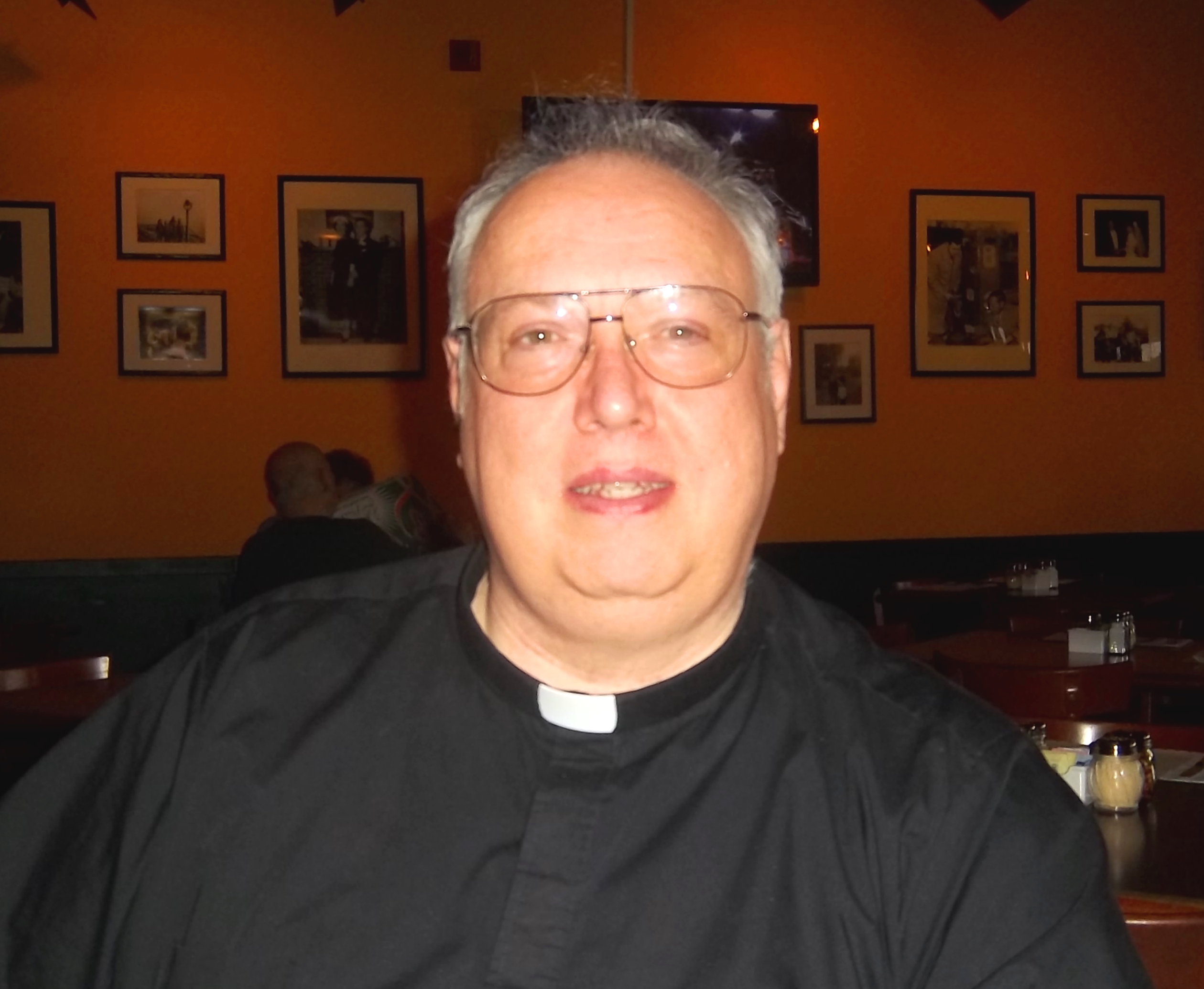
    Fr. Joseph Jenkins

  • The blog header depicts an important and yet mis-understood New Testament scene, Jesus flogging the money-changers out of the temple. I selected it because the faith that gives us consolation can also make us very uncomfortable. Both Divine Mercy and Divine Justice meet in Jesus. Priests are ministers of reconciliation, but never at the cost of truth. In or out of season, we must be courageous in preaching and living out the Gospel of Life. The title of my blog is a play on words, not Flogger Priest but Blogger Priest.

  • Archives

  • Categories

  • Recent Posts

  • Recent Comments

    Barbara King's avatarBarbara King on Ask a Priest
    Ben Kirk's avatarBen Kirk on Ask a Priest
    Jeremy Kok's avatarJeremy Kok on Ask a Priest
    Barbara's avatarBarbara on Ask a Priest
    forsamuraimarket's avatarforsamuraimarket on Ask a Priest

Ask a Priest

Feel free to submit a new question or concern in the comment box below.  Various topics and questions are archived here for easy retrieval.  Please be courteous.  Comments are moderated so please be patient in waiting for them to appear and for any responses.  God bless you!
aboutfrjoe

NEW MESSAGES/HOMILIES   CHRISTIAN REFLECTIONS   DEFENDING THE FAITH

QUESTIONS & ANSWERS   MARY OUR MOTHER

NEWMAN COLLEGE OUTLINES

5,442 Responses

  1. Hello Father,
    I believe I posted this question before, but I don’t know if it went through. Years back, when I was young and ignorant, I watched a video on YouTube that was aimed at bashing depressed people. I even left a comment on this video, saying some very hurtful things about people with depression. Recently, another user replied to my comment, saying that someone they knew had killed themselves after watching the video. I don’t know whether or not this was true, but I assume it was. I was immediately overcome by guilt, feeling as though I had contributed to this person’s suicide due to my comment. I have sincerely apologized to the user, praying for them and for the individual who took their own life. I’ve repented by confessing my sin to God, and turning away from it, staying away from aggression and ignorance both online and in the real world. I’ve taken steps to change my attitude. But despite all this, I’ve been plagued with fear that God will not forgive me. I’ve been told a part of repentance is punishment. In this case, I’ve assumed that to be jail time. But I have contacted several lawyers, who have all told me that they didn’t believe I’ve done anything against the law. But I feel that if I don’t find a way to get behind bars for what I’ve done, then I’ll be damned to Hell. Does God expect me to keep seeking out a way to be punished for my sin? Or is confessing to Him and turning away from it enough?

    FATHER JOE:

    You know you did something wrong. It may not be illegal but many evils and sins are outside the scope of civil law. You sought God’s mercy. He is always prepared to forgive repentant souls. You can have confidence in the compassion of God. I suspect what you feel is the weight of divine justice upon your conscience. You want to make right something you know now was tragically wrong. We cannot always know the consequences of our acts; indeed, as we get older we become more circumspect about our actions and remorseful when things go awry. Catholicism often speaks about this as the temporal punishment due to sin. Catholics will receive absolution in Confession but they are also urged to do penance to help make satisfaction for the temporal cost of sin. Catholics believe that if we should die with temporal punishment still due upon our souls then we will have to pass through purgation before entering heaven. Something of this punishment can be resolved on earth through prayer, mortification and good works.

    The notion of making reparation falls into this effort to appease justice and to help remit temporal punishment. When direct reparation is impossible, the believer seeks to make a difference for the good in other ways. What one does is based upon his state of life and his means. A person might select a special apostolate like spending a few nights helping at a shelter, or feeding the hungry at a soup kitchen, or tutoring children with their reading, or getting involved with inclusion work for people with special needs, or manning the station at a suicide hotline phone bank, etc. The list goes on and on. Such work as a volunteer softens the hardened heart. It can restore joy and hope where before there was only sorrow and guilt.

    Another element that I would recommend is prayer. Catholics pray for the living and the dead. Many years ago there was a young teenager that I had to ban from my youth group. I can still remember him begging me to stay in the school gym. But he was high on drugs and belligerent. I had the other youths to consider. Soon afterwards he and another child I knew were shot by police while attempting to rob a convenience store. The alcohol in his system poisoned him after the shooting and he died. Could I have done something differently? I do not know. Three decades later I still pray for him by name each night. None of us get out of this world unwounded. We can only hope and pray that we might leave the world a little better for our having passed through it.

  2. Is Judas in Heaven? After the betrayal of Christ and being so burnt with guilt that he committed suicide, was he punished in Hell or forgiven?

    FATHER JOE:

    While the Church canonizes saints, she guards against official presumption in respect to any possible negative judgment; in other words, when it comes to poor Judas, only God knows. Less charitable authorities would argue that he keeps company with Satan in hell. They would rightly point to the verse in the Gospels that states: “Woe to that man by whom the son of man is betrayed!” (Matthew 26:24).

    Much depends upon his motive in betraying Christ. Did he despair and lose faith in Christ as the Messiah? Did he become impatient and seek to force his hand to act? He is sometimes imaged as a zealot. Was there some personal weakness that allowed Satan to take possession of him? The apostles more than implied that he made personal use of their common purse. The Gospel of John tells us that “the devil had already put it into the heart of Judas Iscariot, Simon’s son, to betray him” (John 13:2). Similarly, Luke asserts: “Satan entered into Judas called Iscariot, who was of the number of the twelve” (Luke 22:3).

    The wrinkle that really complicates the status of his eternal destiny is how he finishes life. We are told in the Gospel of Matthew that Judas “repented and brought back the 30 pieces of silver to the chief priests and the elders, saying ‘I have sinned in betraying innocent blood’” (Matthew 27:3-4). Had he not subsequently hanged himself we might have had a story of mercy and healing to match Peter’s encounter of the risen Christ on the beach. But the story of Judas ends abruptly, signifying a man filled with anxiety and unable to forgive himself or to seek mercy from the Lord. Nevertheless, while suicide is often regarded as the unforgivable sin; in truth we cannot know the emotional distress and weariness of mind that afflicts such desperate people. It may be they come to regret their extreme decision at a moment when it is too late. There may be some window to our merciful and just God’s outstretched hand.

    I will share something that I have imagined at prayer. I cannot say that it absolutely attests to the truth. It simply reflects my hope…

    If not in hell then I have imagined Judas as the last soul in purgatory. He stands where the furnace of purgation has the most intense fire, the dark silhouette of a lone man, watching as millennia after millennia of sinners pass through as saints. The Day of Judgment comes and the damned crowd into hell while “the many” that constitute the saints populate heaven. The gates of hell are closing and locking. The door to heaven begins to shut. The fire that ever consumed him seems to go out. Judas is now hidden in the darkness. Has he been forgotten? Cursed by generations of Christians, was there no one to pray for him? Was he even unworthy of hell? Then there is a voice that he remembers from ever so long ago. It calls to him in the darkness. There is a sliver of light from where heaven’s door has almost closed. The voice beckons, “Judas.” He struggles to respond. He has wept since the kiss in the garden. His shame suffocates him. The most he can muster is a weak whisper, “Lord, it is I.” The Master then asks the only question that has ever mattered, “Do you love me?”

  3. Amen!

  4. Hello Father,

    I have been dating this girl for about a year and both her and I have really good self control and both have a strong faith and do not want lust to be part of relationship. We are always honest with each other. The reason I am commenting is because I would like to know if it is sinful to make out briefly as an experiment to see if we can defeat lust.

    We have both agreed to pull back immediately if it goes wry.

    Are all sexual actions before marriage sinful if we have self control?

    Will this action be allowed as an experiment to see if we can handle it?

    FATHER JOE:

    You two must really be young. Everything you have been doing is already a testing of the waters and growing up. The experience of Christian dating, or better yet, courtship, is an effort to love someone and to do so in a manner that shows respect to persons and one’s current state of life. I am told that the term “making out” has changed since when I was a teenager. Today it might simply mean kissing and hugging. Years ago it implied having sexual relations. The marital act is reserved to married couples. There are certain acts that can weaken restraint and quickly lead to “going all the way.” These would include passionate or “French” kissing and touching intimate parts of the body. If this is what you mean by experimentation then you are playing with fire and naïve about your abilities to arrest or reverse developments. The Church would contend that such acts as anticipatory to intercourse should be avoided by single people as sinful.

    What is legitimate behavior in Christian courtship? While couples may experience some sexual satisfaction, they are certainly permitted to embrace, hold hands, chastely kiss, go to movies and concerts together, share dinners and dances, and hang out with each other. Those in love often hold each other close and talk about each other and their hopes and dreams. They speak of love and make it real through acts of generosity and caring. Men and women are not machines. The passions can flare at any moment. Because of this it is also important that you forgive each other and seek God’s mercy and strength. Pray as a couple. If you are both Catholic, attend Mass together. One of the most beautiful sights in the world is a young couple kneeling and praying in church together. Yes, this even means encouraging each other to receive the sacrament of penance. God loves you and he understands human weakness. If it is within his providence, he will desire one day to bless your love and grant you a family.

    Do not tempt sin but open as many doors as you can to holy love and friendship. Respect and trust each other. Be willing to practice sacrificial love for one another.

  5. Father Joe,

    Hi, I have a question about venial sin. I saw that on the internet it said that if we willingly do venial sin we are more likely to do mortal sins. Does that mean if someone commits venial sins willingly a lot of times they are likely to do murder or something else like that?

    FATHER JOE: Smaller sins can lead to bigger ones… that is all that is meant. Acts of meanness can certainly escalate: self-preoccupation… demeaning others… cursing others… jealous of others… hurting others… hating others… killing others. Greed can quickly move to stealing. Lust can lead to sins like masturbation, pornography, prostitution and rape. The danger with sin is that it hardens hearts and wounds the soul.

  6. Good day Father,

    I am currently in the Navy and am thinking about life after the Navy when I retire in a few years. I have always had a strong desire to serve the church in some capacity. I am married with children and have thought about becoming a permanent Deacon. I was wondering if you could provide some guidance as to who and how to start the process. I assume I’ll have to speak with my priest but not sure how to broach the subject. Also My wife is Baptist and was wondering if that would affect the discussion. (My marriage is recognized by the church)

    I am currently stationed in California, but this will not be my final destination once I’m retired. Should I wait to persuade this once I’m in a permanent location? Also is there any reading or studying I can do now? Any education I can get while I have access to tuition assistance from the Navy?

    Lastly, in my own research I have seen that my wife will have to agree to this as well. How does this affect my family life? Not that I would do this without her blessing, but wanted to be able to speak to her about with with my facts straight.

    Thank you!

    FATHER JOE:

    The conditions for diaconate formation vary from diocese to diocese: i.e. length of education programs, age of candidates, required degrees, etc. Indeed, some dioceses do not have any such programs or permanent deacons at all.

    I can only speak to the Archdiocese of Washington and we do not start a formation program every year. Persons interested in becoming a permanent deacon of the Archdiocese of Washington should meet the following qualifications:

    https://adw.org/vocations/deacons/

    • Be a baptized and confirmed Catholic man at least thirty years old but not older than sixty by the time formation begins.
    • Be a registered and active member of a parish of the Archdiocese of Washington.
    • Be a citizen or permanent resident (holding a “green card”) of the United States of America.
    • If a recent convert, be a practicing Catholic for at least five years.
    • If married, be in a healthy, valid Catholic marriage for at least five years.
    • If married, have the approval of one’s wife and family.
    • If unmarried, be freely willing to embrace celibacy at ordination.
    • Be in good health and financially independent.
    • Have the support of one’s parish pastor.
    • Be proficient in writing and speaking English.
    • Have a legacy of service to Church and community.
    • Exhibit concern for social justice.
    • Be able to relate well with others.
    • Have completed a bachelor’s degree (exceptions may be made for those with some college or suitable professional experience).
    • Be open to discern one’s vocation and willing to accept that one may not be called to the diaconate.

    The formation program to become a permanent deacon lasts 4.5 years: a half year of discernment and four years of pastoral, spiritual and academic formation. The formation program is free with the exception of books and other related fees, and is administered by the Archdiocese of Washington.

    During the final four years of formation, candidates meet two evenings a week for classes and have responsibilities during the summer and on occasional weekends. Classes are held at the Pastoral Center of the Archdiocese of Washington and are video-conferenced to locations in Montgomery County and Southern Maryland.

    Given that you are in the Navy I would suggest that you speak to your Catholic chaplain and ask if there is a local program for deacon formation affiliated with the Military Ordinariate. I know that in Washington the Ordinariate works closely with our Archdiocese.

  7. Thanks for the answer Father. When I said there are things that could be described as sexual but that don’t really cause sexual pleasure I mostly just meant slight bodily reactions. I guess this would fall under the your answers though. Also, I assume you meant ”Given that it is not pursued…”

    Thanks

  8. Hello Father,

    I’ve got two strange questions. The first one is: what’s the catholic teaching on one doing something that they know could cause harm to the body? The reason I ask is that I’ve got to do some reading for school and recently, after reading, my vision is a little blurred when looking at something far away. I think it’s just eye fatigue and I’m not sure if reading actually greatly affects the eyes. I’d also just consider this a wear and tear type thing not intentional body mutilation.

    The second question is a little embarrassing but I’m not trying to be inappropriate. It is: What’s the catholic teaching on one doing something they know could cause sexual stimulation of some sort. I read something to the affect that if the there is no real danger of consenting to the pleasure aroused and if the thing is entirely innocent in itself and if the person has just reason, one can do something that will cause sexual pleasure. My question then becomes: What’s a just reason? Would studying biology be a just reason? I ask because of the sexual things in biology. Also, I read something to a similar affect but that used the word stimulation. Sometimes there things that could be described as sexual but that don’t really cause pleasure.

    Thanks.

    FATHER JOE:

    Eyes can certainly get tired after a lot of reading. As one who once read dozens of books weekly, I suspect that major readers will one day wear glasses if they do not initially. However, there is no intentional damage to the body. Indeed, the stimulation of the mind justifies study and reading. Aside from this peculiar example, there are certain occupations that may be dangerous to life and limb. However, the public safety and value of the service would make the risks acceptable. One should seek to preserve life and health.

    Deliberate mutilation of the body is wrong. Similarly, taking unnecessary and serious risks for capricious reasons would also be questionable or even immoral.

    Yes, the study of the anatomy as in art or biology as in medicine would be just, even though a passing sexual satisfaction might be derived. The intention here is key.

    Exercise and cleanliness are important. Therefore there is nothing wrong with swimming or with taking a shower, even though there may be some small degree of passing carnal pleasure. Given that it is pursued, then no sin is committed or if there is some small willfulness then it is venial. If that is what you mean then the case can be made. However, one must be careful about self-deception and playing games. One might rationalize that he does not desire to arouse sexual pleasure when in truth he really does.

    As for sexual matters that do not move a person’s passions, there are obviously many matters. I recall as a schoolboy doing a class presentation on the sex life of earthworms. Everyone was amused but I doubt anyone was so disturbed as to be aroused.

  9. Hello Father,

    I am in a relationship and it seems like I’m trying to do the impossible. Although we have both agreed to not co-habitate (thank God) we have had sexual relations. Feeling conflicted and like a hypocrite, I am attempting to start anew and to recommit. I have broached this with her and she understands but does say that to backtrack and try to be celibate after what we have done is ‘unfair’ to her (she is not Catholic).

    I am unsure how to continue while not losing her. It’s so tough! To put it plainly, it is my fault but I want to try to put it right. Any help and wisdom will be greatly appreciated.

    Wholeheartedly,
    Oscar

    FATHER JOE: Not really knowing about what you have in common, it is hard to give advice. If you are not on the same page about sexual expression, then how about matters like the practice of your faith, the matter of marriage and children— in general terms, as to where this relationship is headed. I suspect you do fun things together outside of sexual relations; but have you invited her to Mass with you? Have you ever prayed together? You are right about not cohabitating. Hopefully, you have taken your sexual indiscretions to confession. Have you tried to share your values? Are you respecting her or using her? If it is the latter then you should break it off. If there is genuine love, then you should be seriously concerned about her moral status. Given that you really love her then you would want her to be in God’s good graces.

  10. Good day Father,

    I work in an area with a lot of people who identify as a Protestant or as atheist. They constantly point out the sexual and financial misconducts from clergy as defense as to why I should just give up being a Catholic. I am from West Virginia and our Bishop recently resigned due to misconduct and was replaced by the Pope. People have asked me how I can still associate with a church that allows this to happen. I believe in the teaching of the church, but find I am lost as to how I can defend it. Could you please offer some advice. Thank you!

    FATHER JOE: There are many non-Catholics who have also done terrible things. Jesus called sinners to himself and the Catholic Church continues to do the same. While we are called to be saints, the Church realizes that we cannot save ourselves and that we come to the Lord as sinners needing mercy. As Catholics we have confidence that Jesus will not abandon his Church. Ultimately our faith is not placed in weak and vulnerable men but in almighty God. We believe that Jesus is present in his saving Word and in the real presence of the Eucharist. Atheism cannot resolve the ultimate questions of meaning and existence. Protestantism only has part of the answer as it has broken away from Catholic unity. We are called to both a personal and corporate faith in the Lord. The Catholic Church is the house Jesus built. Spiritually there is really nowhere else to go.

  11. Hi Fr. Joe,
    Can a priest talk with his spiritual director or his own confessor about something that he himself heard in Confession?

    FATHER JOE: He can speak in generalities as long as there is no chance that the sharing would give away the penitent’s identity. The seal is absolute and the identity of the penitent and his or her sins cannot be divulged.

  12. Hello Father, I would like to ask your advice on premarital relationship…I met a Lutheran guy, he came from a good Christian family and he asserts that the Biblical rules on premarital physical relationship are obsolete and not commensurate with the present, and that there is nothing wrong with having romance and physical relationship before marriage…is he right ?

    FATHER JOE: The times may change but human nature has not. He is speaking not as a Christian but as one where faith itself is treated as obsolete. Catholics and practicing Lutherans would both urge purity before marriage. Catholicism regards marriage as a sacrament. Only married couples are entitled to the marital act. Sexual relationships outside of marriage are not only sins but they are devoid of the graces to help build up lasting and stable relationships. Too often casual sexual relationships collapse. This leaves the person wounded by sin and by memory. Even if you find someone else, the fact will remain that you gave something of yourself to another. Sexual activity is not intended as simply recreation. It bonds the man and woman together. They become the biblical one flesh. If fornication is okay and the Church is backward for condemning it, then how about adultery? Both are cases where he has argued that you do not have to be married to have sex. Is he more interested in YOU or in having your body? This is a serious question that must be asked and answered. I firmly believe that true love waits. If it cannot, then maybe it is not really love at all? Avoiding responsibility is popular these days. Most cases of fornication accompany both contraception and can result in high numbers of abortions. Sin is compounded upon sin. Your boyfriend has rejected the Bible; I suspect that he would also renounce the Church. Do not be fooled. The values of the Gospel have a lasting value because they come from God and not from fickle men.

  13. Hi Fr.,

    My question is on idolatry. Is it wrong to teach children to kiss statues/images of Our Lady or the Infant King?.. usually after we say our family rosary, the children would race to blow out the candle, after which they would kiss the statue of the Infant King. Or on Sunday’s as we enter the gate of our church, a life-size statue of St. Joseph greets us, and we would touch the foot of the statue, with a short prayer… Are our gestures bordering on idolatry?

    FATHER JOE: It sounds to me that these are just notable acts of reverence, not idolatry or worship. When we kiss a statue it is like kissing a picture of your spouse or child— the affection is not for the image but for the one signified there. We love Mary and we show special devotion to Jesus. St. Joseph is the powerful patron of the Church and the family. We ask for his prayerful defense of our families just as he once guarded the Holy Family.

  14. My wife and I are both Catholic. I guess what I’m trying to ask is, when we practice natural family planning, how sexually intimate does the Church allow a husband and wife to be without actually having intercourse? Can a couple engage in foreplay/ oral sex for the woman without having intercourse. we understand that a man can not orgasm outside of intercourse. During times of fertility, should a husband and wife abstain from all sexual activity?
    Sorry this is detailed, but we have been struggling with what is allowed and not allowed and want a straight answer and follow the Church’s teachings.
    Thank you Father

    Response

    I was reading this morning how NFP social media sites are often experienced as mean-spirited. Instead of supporting one another, couples accuse one another of having a contraceptive mentality and/or compromising upon what NFP requires. I preface with this because in no way would I want my response taken in the wrong way. I commend you for trying to be a good and responsible Catholic couple. First, Natural Family Planning, as pursued by Catholic couples is a means by which the generation of children might be spaced for the safety of the mother and to respect the current resources of the family. It should never be pursued because of selfishness and/or an abiding disregard for children. The openness to new human life is a hallmark of Christian matrimony. Second, while panned by the leaders of Planned Parenthood as ineffective; this is only because of their commercial involvement with the sales of contraceptives and the tragic recourse to abortion. NFP is just as successful as artificial contraceptives in preventing unwanted births; however, the statistic is often lowered given that many employ NFP for the opposite reason— to have a child. Third, unlike ordinary contraception, there is no contraceptive matter to NFP, only knowledge about female fertility. Fourth, there are various types of NFP, some which emphasize temperature, others mucus and along with these a monthly calendar. Fifth and here is where something of the answer to your question emerges, all NFP requires that there be periods of abstention from sexual congress.

    Young couples often find NFP to be somewhat difficult. While married couples will share intimacy into their senior years; no one denies the truth that youth is a time when the hormones are raging. This is nature’s way to insure the continuance of the human race. The marital act is the manner by which the covenant between a man and woman is consummated; however, it is not an act that can be so rationalized that it is devoid of passion. Notice that I use the word “passion” and not “lust.” This is also important toward answering your question. Sexual pleasure pursued for its own sake is regarded as lust and the late Pope John Paul II explained that lust, even in marriage, is a sin. While passion may be erotic, it is geared to a particular human person. You want more than “a” body; you want “that particular” body or person. Lust reduces the beloved to an object. Passion respects the person. Certain types of behavior are more directed to lust than holy passion. Oral sex, except as a possible foreplay or resolution to vaginal intercourse, would be regarded as such. Anal intercourse popularized by homosexual men would also be regarded as immoral as it only feigns the marital act. Further, it is no secret that various lesser sexual acts often lead to intercourse. If you and your spouse should regularly pursue these then either the NFP is going to be compromised or you are going to commit sin. Turn sex into a plaything and you will likely forfeit control. The man in particular cannot control his erection when he gets sexually excited. While the effects may not be as clearly manifested; the woman’s body is also excited and by nature everything targets intercourse.

    Finally, it is important that husbands and wives preserve close proximity in their marriage— particularly in bed. On this account, the practice of NFP is not a perfect science. Husbands and wives like to cling to one another. This is as it should be, even if it means that by God’s providence you might welcome a child that you did not expect. Couples that are trying to do what is right are very different from those who do not care. In this regard a sin that might be mortal to others might only be venial for the two of you. The matter remains serious, but the subjective element would be quite different. I often encourage couples using NFP to rediscover elements of their courtship— walking holding hands, eating out, going to a movie, dancing, etc. Abstaining from the marital act may only be required a few days each month; but every day is an occasion to share your love for each other.

    Finally, be courageous and countercultural in having your family. Far more important than money or position or things, your babies will be your true treasure. NFP has its place, but always to facilitate a house filled with love.

  15. Hello Father:
    I receive many solicitations from charities to give money. After discarding the ones that are very large and really don’t need my money, I prefer to be very selective and help those that have much less money, are more local, and to whom I am profoundly drawn. Jesus told us to give all to the poor and follow him. But he also told us to be wise as serpents. Is my approach a good one? I want to give but I don’t want to waste. Secondly, I plan to give away most of my life savings to charity when I die. I will give a good amount to my children, but the bulk will go to charities to which God has drawn me. I don’t want to take the money out now as the bloated Federal and state governments will just essentially steal a large portion and the money won’t go to the poor. The question that bothers me is: Christ told us to give it all. Is it OK to wait until the end of my life to do so?

    FATHER JOE: It sounds to me that your approach is measured and sober. You are within your rights to do what you want with your money and resources.

  16. i’d rather lose my job than my soul, but i’d rather not have to make that choice if possible

  17. Dear Father,

    My previous job was as a cashier at Wal-Mart, but I had to quit because I was told it was a mortal sin to be a cashier at a place that sold abortion pills. It took me a long time to find my current cashier job at Circle K where I made sure nothing bad was being sold, or so I thought. I just found out tonight that Circle K apparently stocks condoms among its over the counter medicines. I don’t know how I missed it before, but now I’m worried that I’m gonna have to go into unemployment again. Is it really a sin to be a cashier in a transaction involving condoms, even though they don’t exactly kill like abortion pills do? If so, could you please list any other items that are un-sell-able for Catholics so I won’t have worry over these questions anymore?

    FATHER JOE:

    Obviously you would not want to work at an abortion clinic or in a pornography store. You would also not want yourself physically exploited by dress or by indecent activity.

    You are correct that Catholics should not be involved with filling prescriptions and selling abortifacients. I wrote a letter for a pharmacist who needed proof for her union that such was a violation of her religion. As for other items, the issue becomes more convoluted. Much has to be measured by your need for employment and your lack of control over what people purchase. Cigarettes are bad for people’s health and yet you would be permitted to sell them at the store. Certain types of clothes might be immodest and yet at a regular clothing or department store you could sell them, too. Even mom and pop stores sometimes carry questionable magazines. These days even dollar stores and service stations sell condoms. Maybe you could say a silent prayer to yourself when someone buys a questionable item? Unless you own the store there is not much more you can do. You need a job to take care of yourself and maybe others. You may even be required to work on certain Sundays.

  18. My husband was raised Catholic. He went to mass up until 2 years ago. He was okay with our older 5 children to receive the sacraments. He is emotionally abusive and has over the course of the last 2 years threatened me with divorce many times because of my faith. He has not wanted the children to continue going to mass. My youngest child finished preparations for 1st Communion and confirmation this past year. Because of the length of the mass I was too afraid to bring my son. Can I just bring him forward during a regular mass to have him receive?

    FATHER JOE: While it is proper that you want to insure the sacraments for all your children, your primary issue is an abusive husband. The notion of threatening you because of your faith is bizarre and needs a serious investigation. Why has he become this way? It seems to me that he needs special help and the family itself needs professional counseling. Neither you nor children should be abused or intimidated. You need to take some power in this situation even though there is no guarantee that it will end well. Certainly the current situation cannot be sustained. About this and the sacraments, I would urge you to contact your pastor. He may have some constructive ideas and may want to speak with you and your husband. As for sacraments, he will need to arrange the Mass so that a record can be made and a Certificate of Holy Communion given the family.

  19. What is the difference between spiritual direction and counseling? I was recently talking to a num about possibly being my spiritual director and she asked if I knew the difference. My knee jerk response was yes, but now I am wondering if if I do.

    I suffer (rightly so) because of choices we made in our marriage. I am a cradle catholic who had mo idea that using birth control was mortally sinful. Now I am 50 and my husband has a vasectomy. He is southern baptist and still does not think we dis anything wrong, while I am tormented daily, though I have confessed our use of artificial birth control and believe I am forgiven. It is a huge, weighty regret on mu soul, and I bear it alone. My priest told me he didn’t think I did anything so very wrong, though he acknowledges that is the teaching of the church.

    I feel like my whole life is a failure (I am a pharmacist who has dispensed birth control, too, for years) and I have been told to be kind to myself, but honestly…. I feel like I don’t deserve kindness. My life has been easy. We have always had enough, even extra. Maybe that is because we were selfish and didn’t trust God with the size of our family.

    Anyway… I need some help, and I don’t know where to go or what to ask for.

    FATHER JOE:

    Counseling tends to deal with problems or challenges people face in life. Spiritual direction is to assist in prayer life and general discipleship. I would direct people to good books on faith and spiritual exercises. Given what you describe, you are probably asking for counseling.

    Were you married in the Catholic Church? If so you should have received moral instruction about the need to be open to the generation of new human life. There is nothing you can do about the past, find comfort in the sacrament of reconciliation. Trust the mercy of the Lord.

    As for being a failure, yes, you are a failure. We are all failures. Everyone is a sinner and a hypocrite. We all fall short of the glory of God. But God is not done with you yet. If God forgives our sins and gives us grace then everything is turned around. The point of our existence is to leave this world in good standing with God. The victory is not so much ours but as won by Christ. He is the one who has paid the terrible price of sin. This is his measure of love for you and me. If you want spiritual direction, then I would urge a strong prayer life. Try to get your husband to pray with you. Good Baptists are supposed to love Jesus. You should pray whenever possible as a couple, yes, even if you disagree upon certain points of right and wrong. Love the Lord, love each other and love the community, especially the hurting and the poor. Remember, love covers a multitude of sins.

  20. Dear Father,

    Is kissing a sin? Say one we’re to kiss on the forehead, head, hand, cheek, ear, and possibly the neck. Never the lips. Would these kisses be a sin? If so would they be vinual? We don’t want to offend God. Which is why we’re scrupulous on the matter.
    God bless,
    Filumena

    FATHER JOE: I am troubled that any answer I might give would reinforce scrupulosity on your part. Kissing can be beautiful and it can be terrible. Judas betrayed our Lord in the garden with a kiss. Kisses should always signify love and caring and affection— not treachery or infidelity or manipulation. The sign of peace at Mass, usually a handshake, is sometimes called the kiss of peace. Note that the priest kisses the altar as he celebrates the Mass and greets Christ. A parent gives a gentle kiss to a child. A child kisses his aging grandparents. A young boy kisses his favorite girl on the cheek. All these are modest. Kisses can be sacred and sweet. You can probably judge for yourself if a kiss becomes something more. It is natural that young men and women should want to kiss, and this includes upon the lips. There is no sin in this. It is an expression of affection and love. Couples that are courting or that are looking to get married may struggle with more than kissing. I would only suggest that they do the best they can to remain chaste and to respect each other. If a line is slightly crossed, ask for God’s strength and each other’s forgiveness. Heavy petting and French kissing is discouraged as it breaks down the will and can lead to sexual intimacy. Note also that the more a couple loves each other the more intense becomes the longing for unity. This means that even the kissing of the hand or the neck may reflect an inner struggle to keep self-control. As I have counseled before, do not be afraid of each other but exhibit respect and forgiveness. God understands.

  21. Hi for a long month now, I have had the same recurring nightmare over and over. The main subjects of it are the things that terrorize me the most, the things I am most afraid of, any help on how to end this cycle?

    FATHER JOE: This is probably a question more for a professional counselor than for a priest. You are more than vague about details. I suspect there is something giving you serious anxiety, something that you need to resolve while awake so that it will not plague you while sleeping.

  22. Hello. Can a Catholic funeral be specified for family only? Family situation might be better due to health (physical and emotional) in a private setting.

    Response

    It is up to the family and the priest. The matter may also rest upon any pre-funeral plans designated by the deceased. An option for a private service is sometimes upsetting to friends and colleagues of the faithful departed. Segregation of the mourners might be interpreted by those excluded as spiteful or vindictive. While Protestantism tends to interpret funerals as directed to the spiritual and emotional consolation of those left behind who are grieving; Catholicism also appreciates that the Mass and the intercessory prayers of mourners can benefit the dead, i.e. the souls in purgatory.

  23. Hello Fr,

    Hope you are well.

    FATHER JOE: So so… mostly busy.

  24. Good evening, Father.

    I would like to ask (as I do not have a parish priest whom to ask) if, in the case of living in an area without any churches or possibility of attending Mass or even Eucharistic Adoration, I can do the later with a medallion with a drop of Communion Wine. I lived in Portugal a few years ago and was gifted such a medallion (it is a traditional Agnus Dei locket, but the local practice was to place a drop of consecrated communion wine inside and seal it with resin as the orginal wax medalions rarely reached so far from Rome)

    I am constantly on the move and now will relocate to an area without Catholic Churches. Can I use this medallion for Adoration?

    Thank you in advance and God Bless you for keeping this site.
    Greetings from Europe,
    Ann

    Response

    Whoever told you about the Agnus Dei medallion was in grievous error. No longer created, the Agnus Dei wax medallion was blessed by new popes (within their first year) and distributed to those wanting a special sacramental for spiritual protection. However, while it might function as a reliquary, it would be a blasphemous liturgical crime to enclose a drop of the consecrated blood (not wine). It is associated with the passion of Christ it is not a pyx or monstrance of any sort for the Eucharist. Adoration or worship of the sacramental would constitute the mortal sin of idolatry. Sacramentals can be venerated but not worshipped.

    Where are you that there are no Catholic churches… Saudi Arabia?

  25. my wife has left and says shes unhappy. I have tried to reconcile but she says she sees no way of us being a couple. we were not married in a church. 14 years of marrage and she says she’s miserable. am I allowed to divorce her under gods law

    FATHER JOE:

    Given that a marriage is real and sacramental then it is as Jesus taught— lasting until death. Jesus was clear about God’s plan and that he hates divorce, associating it closely with adultery. Was either of you Catholic? The Church only recognizes the matrimonial bonds of Catholics witnessed before a qualified priest or deacon. If neither of you were Catholic, then no matter if before a minister or civil magistrate, we would regard the bond as lasting and real unless proven otherwise. Catholicism has an annulment process for her own believers or for those previously married non-Catholics who desire to marry a Catholic.

    Why is your wife miserable? Have the two of you pursued marriage counseling? You should fight for your marriage. Are there any issues of abuse? Has there been infidelity? There are too many unanswered questions for me to give a definite answer.

Leave a comment









