
• Our Blogger

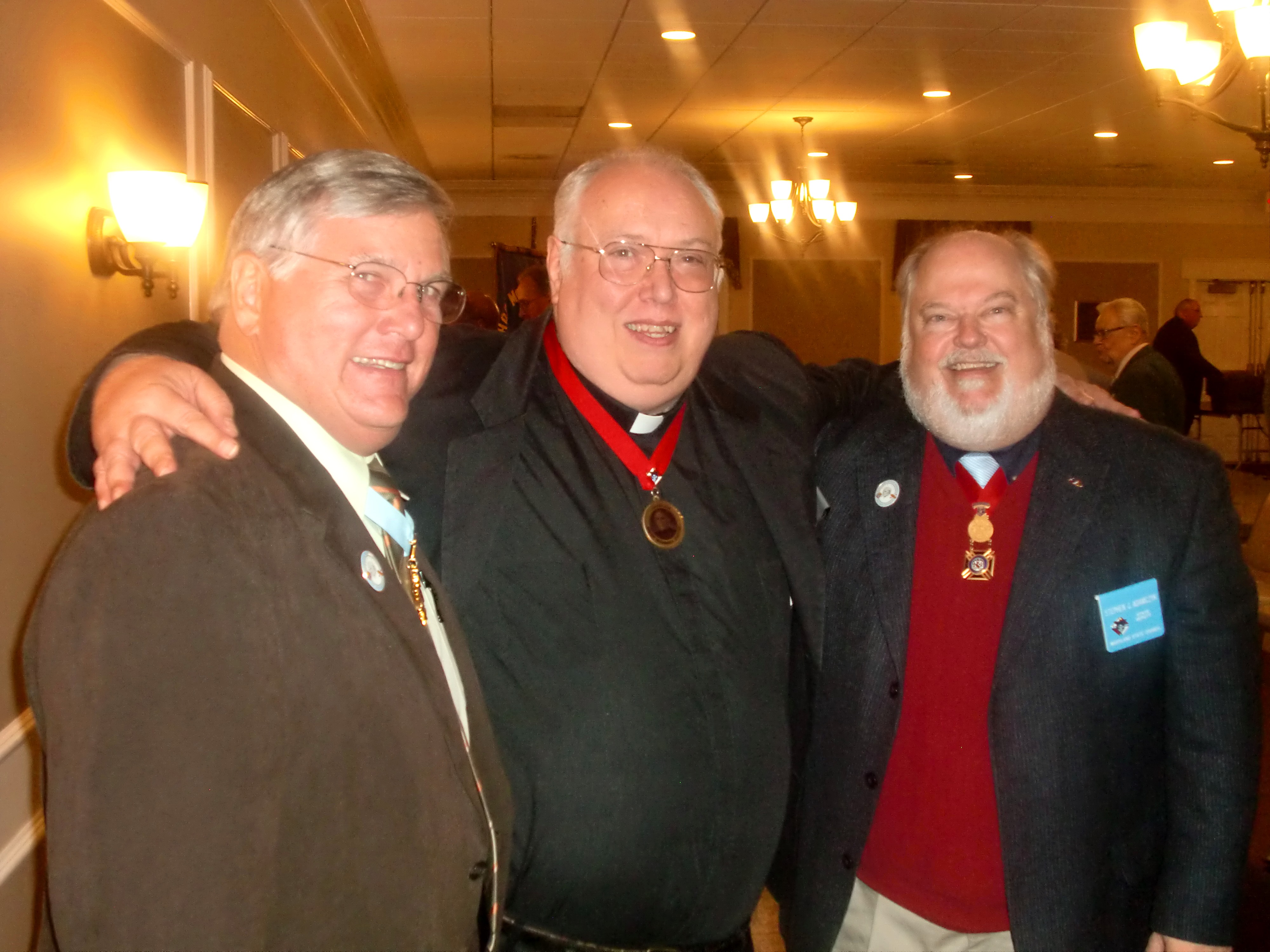
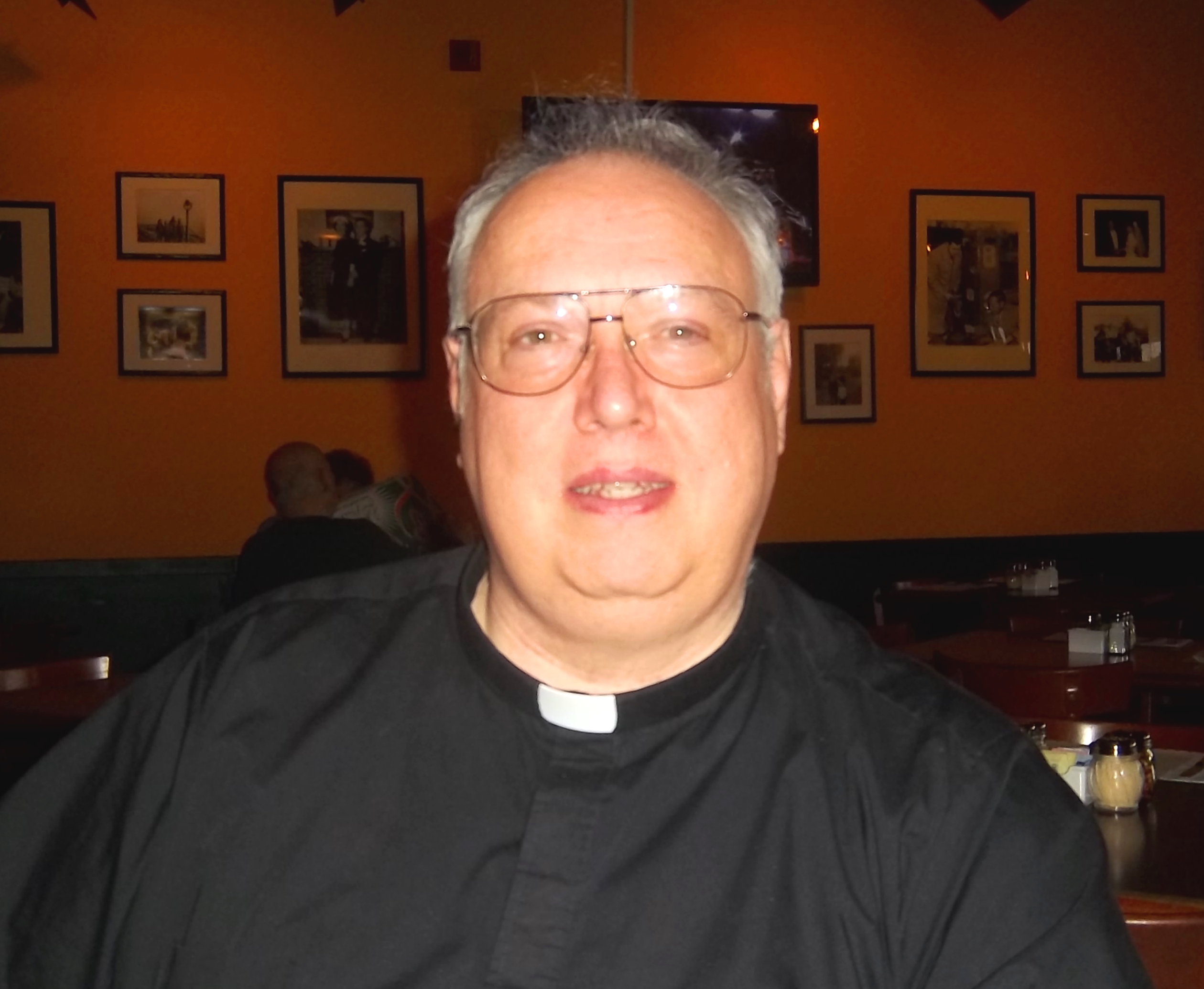
    Fr. Joseph Jenkins

  • The blog header depicts an important and yet mis-understood New Testament scene, Jesus flogging the money-changers out of the temple. I selected it because the faith that gives us consolation can also make us very uncomfortable. Both Divine Mercy and Divine Justice meet in Jesus. Priests are ministers of reconciliation, but never at the cost of truth. In or out of season, we must be courageous in preaching and living out the Gospel of Life. The title of my blog is a play on words, not Flogger Priest but Blogger Priest.

  • Archives

  • Categories

  • Recent Posts

  • Recent Comments

    Barbara King's avatarBarbara King on Ask a Priest
    Ben Kirk's avatarBen Kirk on Ask a Priest
    Jeremy Kok's avatarJeremy Kok on Ask a Priest
    Barbara's avatarBarbara on Ask a Priest
    forsamuraimarket's avatarforsamuraimarket on Ask a Priest

Ask a Priest

Feel free to submit a new question or concern in the comment box below.  Various topics and questions are archived here for easy retrieval.  Please be courteous.  Comments are moderated so please be patient in waiting for them to appear and for any responses.  God bless you!
aboutfrjoe

NEW MESSAGES/HOMILIES   CHRISTIAN REFLECTIONS   DEFENDING THE FAITH
QUESTIONS & ANSWERS   MARY OUR MOTHER

NEWMAN COLLEGE OUTLINES

5,442 Responses

  1. Since it’s Lent, is it ok to have a birthday celebration with cake and treats?

    FATHER JOE: Birthdays are birthdays… yes, and congratulations!

  2. Dear Fr. Joe,

    Please suggest to me a sacrifice I can do to offer so that my wife will have the grace and correspond to that grace (of submissiveness, docility, dutifulness and respect). She is supposed to be a traditional Catholic but it seems that spiritual pride has gotten the better of her and she would act as if she knows better than me, her husband, most of the time. She would insist on doing what she wants despite my contrary decision. If I would point this out to her, she would only get more angry and try to get the children to be against me. That is why I try to be quiet.

    I realize only prayer and sacrifice can rectify this. I am hurting inside. That is why I am asking for your suggestion on what sacrifice I can do so that she will change for the better.

    Thank you very much in advance.

    FATHER JOE: Prayer is not magic and there is no sacrifice that you can perform to necessarily improve the situation. You may ask her to see your parish priest (with you) for counseling. He may remind her that she is pledged to regard you as the Christian head of the home and that your authority is analogous to that of Christ over the Church. She is the heart of the home and you should be partners in holiness, not rivals. Peace.

  3. I totally agree, David. A lot should be brought back and a lot needs to go. For example, the hand-holding during the Our Father needs to be totally banned. Also, (and more importantly), the tabernacle should be on the altar and in the center. In some churches, you can’t even find it. So much needs to be fixed.

  4. Just interesting.

    Judy S. Tilly

    Sent from my iPhone

    >

  5. P.S. please add this to my reply. For me it’s not a simple case of English vs. Latin or traditional vs modern. For me the main thing is I wish I could experience a Mass where the congregation was at least as respectful as what I experienced c. 1980. It seems to me that many things have changed since then, both in the Mass and in the attitude of people.

    For example, what happened to incense, ringing of bells, etc. What happened to asking people to remain in their seats at the end of Mass instead of rushing out during the final hymn? What about some kind of basic dress code? We are going to Mass, not to a movie or to the shopping mall.

    I attended guitar masses in the early 1980s that were very beautiful and there was a great mood of reverence. So I’m not asking for a Gregorian chant service all the time, although that would be wonderful sometimes.

    Perhaps some of us think if we revert to older forms, some of the old atmosphere of reverence would return? I’m not sure if it would.

    I would just add one more thing. When I go to Mass, I would like to see a prominent statue of the Blessed Virgin Mary, instead of having a small statue in the back where it is hard see. I believe that Mary is the way to Jesus, just as Jesus is the way to the Father. When I pray to Mary to banish sinful thoughts from my mind, they go away!

    Thank you.

  6. Dear Fr. Joe,

    I trust your judgment. Since you have posted my question, I would like to make a follow-up statement. I would just like to add that I have decided to pay no attention to these SSPX churches and to stay within my parish church. There is only one true Church, and in my heart I know it is our Holy Catholic and Apostolic Church, led by the Pope. I think I should stay at my parish and pray for our priests and our bishop, and resist any temptation to schism.

    I can go to the parish in my city that does offer the Tridentine Latin Mass on occasion if I want to. Even though it is across town, it is hardly a great sacrifice to go there if I really want to. But ordinarily I will attend Mass at my own parish, even if I am uncomfortable with some things that go on.

    For example, I can never get used to seeing grown men walk into the Mass wearing shorts instead of long pants. This is so disrespectful. I believe this would never have been allowed prior to Vatican II.

    I can only speak for myself, based on my own conscience, but I believe it is my duty as a Roman Catholic to resist any temptation to join a schismatic group. The Holy Father is Peter.

    Thank You,

    David

  7. [While you had some misgivings about these questions, what you bring up is important. I have taken the liberty of editing your questions and making a response. I hope this is okay.]

    Dear Fr. Joe,

    I would strongly prefer to attend the traditional Mass, even though the Holy Father has criticized those of us who have that preference. Frankly, I think his criticism is unjustified.

    Here is what the Holy Father says:

    “I always try to understand what’s behind people who are too young to have experienced the pre-conciliar liturgy and yet still they want it. Sometimes I found myself confronted with a very strict person, with an attitude of rigidity. And I ask myself: Why so much rigidity? Dig, dig, this rigidity always hides something, insecurity or even something else. Rigidity is defensive. True love is not rigid.”

    There is one official parish church in my rather large city that currently offers the traditional Mass on Sunday, but it is difficult for me to reach due to transportation issues. On the other hand, there is a SSPX church almost within walking distance. But on the diocese website it says that SSPX church is schismatic, and attending Mass there does not fulfill the Sunday obligation.

    In fact I wish to support my local parish, but I also wish to support the authorized church that still maintains the traditional Mass. So I’m considering attending the traditional Mass on Sundays, in spite of transportation difficulties, and then attending my parish church on a weekday.

    But I would also like the option to attend Mass at the SSPX church. So any clarification on this issue would be appreciated. Thank you.

    FATHER JOE:

    I was taken aback by the Holy Father’s words as well. I am hopeful, however, that the freedom that Pope Benedict XVI gave the Church will continue well into the future. Note that Pope Francis says, “I try to understand.” It may be the Pope is simply being honest that he (personally) does not understand the attachment to the older “extraordinary” form. Rather than interpreting this as an assault, I would urge patrons of the traditional liturgy or ritual to courteously express why they feel their attachment. Note that he says that he “sometimes” finds himself confronted with rigid or strict apologists, but such is obviously not always the case. Young people, especially, who are fond of the older ritual need to express or share with civility and clarity their “true love” of the liturgy and the Church. They should also show gratitude for the latitude that seeks to restore and to make it available. Such a sentiment will help insure its free continuance. Many have come to know the Lord in the solemn beauty of the traditional Latin Mass. The chant, sacred silence and piety resonate with many; especially to those who have been victimized by abuses in the celebration of the “ordinary” form. Devotion to the liturgy, whatever the rite, is not purely an intellectual affair but one that deeply engages the emotions— indeed the whole person.

    The Masses offered by the SSPX priests are valid (real) but are viewed by the Church as illicit (lacking legal jurisdiction). In cases of serious hardship, you could attend their liturgies but it is not recommended because over time you may develop a schismatic mentality. There are also, according to Pope Benedict XVI, certain doctrinal concerns that have yet to be resolved. While you might on rare occasion be able to satisfy your Sunday obligation at such a chapel, it may not be wise to do so. While the Pope made a concession during the year of mercy, they would not ordinarily have faculties to hear Confessions. Indeed, their marriages would probably have to be convalidated by a priest in good standing. It should be added that there are also independent chapels associated with the SSPX which would be completely off bounds because of sedevacantist leanings (rejecting the validity of the current pope). The SSPX routinely condemns as a danger to souls what they term the “New Mass” of Pope Paul VI. Popes have special charge of the liturgy. Such a malicious allegation is heinous and grievously sinful. While it may not be the ritual of one’s preference, the Roman Missal is approved. The Mass, of whatever approved ritual, participates in the sacrifice of Jesus on Calvary. Graces are granted, sins are forgiven and bread and wine become the living REAL PRESENCE of Christ. An attack upon the liturgy (even the second anaphora) amounts to an offense against almighty God. While one might argue about abuses in how Mass is offered; this is different from an attack upon the Roman Missal itself. Peace!

  8. Thank you Fr. Joe for your response to my question on salvation on February 27, 2018 at 10:12 pm.

  9. Thank you Helen and Father Joe.

  10. Hi Father,

    My question was on the same line as Helenl and you have answered it.

    thank you so much.

  11. Concerning the question from Talei about Lent. I, too, find this confusing. Are Sundays during Lent fast days (because they are in Lent), feast days (because we celebrate the Christ’s Resurrection), or both in that joyful Catholic both/and way? Do we abstain form the things we have “given up” on Sundays? I understand moderation. And I understand Lent is not just about giving up physical things but about growing closer to the Lord in so doing, giving to the poor, thinking or others more than self, etc.. I also know Lent isn’t about “doing it right,” but Church teaching on Sundays in Lent is confusing at best and mostly nonexistent.

    FATHER JOE: Sundays of Lent are certainly part of Lent, however, a distinction must be made between the liturgical season and the penitential discipline. Sundays are by nature festive given their connection to the resurrection. Thus, the Lenten fast (and associated mortifications) do not include Sundays.

  12. Your story so represents the hateful unkind abuse from members in my own family. Not sure if the father sees my reply here but here goes.Coming from a background of long and deep standing abuse in my older age of 69 I find myself unable to ‘weather’ the mean spiritedness that vents towards me. Charity and prayer is always ongoing but I am unable to sustain the blows. What would Father Joe advice be where I am unable to reach out with charity kindness and sustain an ongoing relationship as the continued harassment antagonism continues. Thank you.

    FATHER JOE: Christine, I am confused by your comment and am unsure what you are referencing. What story did I tell that seems to reflect the abuse you have received from family? I am sorry that people are mean to you and I will pray that they will have a conversion of heart and that God will give you the strength of endurance. No one should have to endure harassment and abuse. God bless you.

  13. Hi Father,

    Not sure if i’m asking this question correctly; but i’ll give it a try. Is Sunday included in Lent?

    FATHER JOE: Not sure what you mean to ask, of course there are Sundays during Lent.

  14. shalom.Actually,the one who said “No, if they leave the Church and convert to another religion they are no longer Catholic, but they are still validly baptized” is the priest.i wonder why some of the priest contradict catholic teaching.

    FATHER JOE: Not all priests are as well informed as others.

  15. Hello Father, Thank you for your blog. I work with the homeless and would like to be able to offer them a blessing. Could you please tell me a good general blessing that would help lift the homeless out of their despair? Thank you, Ian C.

    FATHER JOE:

    Who is Jesus to me?
    Jesus is the Word made Flesh.
    Jesus is the Bread of Life.
    Jesus is the Victim offered for our sins on the Cross.
    Jesus is the Sacrifice at Holy Mass for the sins of the world and mine.
    Jesus is the Word – to be spoken.
    Jesus is the Truth – to be told.
    Jesus is the Way – to be walked.
    Jesus is the Light – to be lit.
    Jesus is the Life – to be loved.
    Jesus is the Joy – to be shared.
    Jesus is the Sacrifice – to be given.
    Jesus is the Bread of Life – to be eaten.
    Jesus is the Hungry – to be fed.
    Jesus is the Thirsty – to be satiated.
    Jesus is the Naked – to be clothed.
    Jesus is the Homeless – to be taken in.
    Jesus is the Sick – to be healed.
    Jesus is the Lonely – to be loved.
    Jesus is the Unwanted – to be wanted.
    Jesus is the Leper – to wash his wounds.
    Jesus is the Beggar – to give him a smile.
    Jesus is the Drunkard – to listen to him.
    Jesus is the Little One – to embrace him.
    Jesus is the Dumb – to speak to him.
    Jesus is the Crippled – to walk with him.
    Jesus is the Drug Addict – to befriend him.
    Jesus is the Prostitute – to remove from danger and befriend her.
    Jesus is the Prisoner – to be visited.
    Jesus is the Old – to be served.

    To me Jesus is my God, Jesus is my Spouse, Jesus is my Life, Jesus is my only Love, Jesus is my All in All, Jesus is my Everything. Amen.

    (Mother Teresa of Calcutta.)

    Because of Christ I make all your concerns and struggles my own.

    Because of my love in Christ I am with yοu in your efforts to secure a worthy future for yourselves and your children.

    Because of Christ’s supreme love for yοu I preach to you an uplifting Gospel of eternal life.

    I pray for you, for each one of yοu, for yοur families, for yοur children, fοr the young and the old, for the sick and the suffering. I pray that the strength of Jesus may be in your hearts as you work together to improve your lives, to be good Christians and good citizens. I pray that yοu will find Jesus in each other and in every fellow human being. And I pray that together you will find him and adore him —the eternal Son of God—in the arms of his Mother, Mary.

    Αnd may Our Lady of Peace be a loving Mother to you all!

    (Pope John Paul II)

  16. I realize that I must go to confession if I have committed a mortal (vs. venial) sin. I believe that I am a good person. I do my very best to avoid temptation and follow God’s will. However, the reality is that I fall into sinful thoughts and actions because I am weak, even though I pray fervently for God’s help. With all this being said, I must admit that I likely commit mortal sins a few times each week. So how often must I go to confession? I would like to participate in Communion as often as I can. However, most priests are unavailable every day. Usually just once a week.

    FATHER JOE: When confession is impossible or impractical, make a good act of contrition, receive the Eucharist and later receive the sacrament of penance when possible.

  17. shalom.thanks for the answer.I’ve asked that question to the other priest n cathechist n they said “Yes,they are still catholic even though the convert to another religion” but some of them said “No, if they leave the Church and convert to another religion they are no longer Catholic, but they are still validly baptized”.Honestly I’m a little bit confuse which one is the correct answer.

    FATHER JOE: There was an attempt in the Code of Canon Law to allow for a formal act of defection so as to avoid juridical effects. One was still Catholic but no longer under our laws. However, the 2010 Code makes no mention of it. Once a person is baptized a Catholic, it is how God will judge him or her. One can defect and even join another religion; however, they would remain in truth a Catholic, albeit a bad one. Whoever told you that such a person was no longer a Catholic did not know what he was talking about.

  18. Good morning and thank you for your response Fr. Joe.

  19. Dear Fr. Joe,

    I have a question about delectatio morosa. If one has had impure thoughts, must he tell the priest in confession which sins he committed in his imagination (example: sodomy rather than simple fornication etc.)? I have made a bit of research about it on Google Books, and it seems to me that old moral theology texts hold sometimes contrasting opinions. Some even hold that delectatio morosa of a given sin is a sin of the same species as the sin imagined (although I find it difficult to believe that, for example, having fun thinking about killing someone can be considered substantially the same as homicide itself), others seems to hold more moderate opinions, and several books say something about theologians who believe it’s not necessary to tell the priest about the circumstances of the imagined sin.
    I’m quite confused, and I would like to have precise knowledge of how specific one has to be in confession about sins of delectatio morosa.

    FATHER JOE:

    Taking pleasure in sinful thoughts or within the imagination may be either venial or mortal. You would have to discern their severity. You should probably mention “impure thoughts” in confession; however, I doubt the priest needs much in the way of details. It is true that such ruminations may not be directly desired, but they can over time break down the will and lead to evil actions. While often associated with sexuality, such internal sins may be about other matters as well. These acts are willful and are not the same as fleeting temptations or feelings over which we have no immediate control.

    While “wishing” someone were dead might not always be a mortal sin, just like the person with an “intent” to kill or the one who actually “commits” the act of murder (which is mortal sin)— the fifth commandment is violated nonetheless. Unless confessed, thought crimes against the kingdom of Christ are only known between the penitent and God. The counsel and absolution of the confessor is invaluable because the believer wants to be transformed ever more and more into the likeness of Christ. Repentance makes possible conversion. Unless there is a real internal change or movement, then we will never have the mind and heart of Christ.

  20. Shalom.I have a question.Once people are baptized Catholic, are they Catholic forever?If someone leave catholic faith for another religion or convert to another religion (etc. Islam) because of marriage ,is he or she still catholic?

    FATHER JOE:

    Yes, he is still Catholic and will be judged as such. The Christian who joins a non-Christian religion has denounced Christ.

    “Everyone who acknowledges me before others I will acknowledge before my heavenly Father. But whoever denies me before others, I will deny before my heavenly Father” (Matthew 10:32-33).

  21. I am in RCIA and learned that though this is my first and only marriage, I married a divorced woman whose former husband was not faithful and was abusive both mentally and somewhat physically to her and their children. Am I not going to be able to partake of the sacrament of Eucharist when initiated?

    FATHER JOE:

    You should talk with your parish priest about this. The issue of your wife’s prior bond could be an issue.

    If she and/or the first spouse were Catholic and the marriage took place before a Catholic priest, then she would need an annulment so that the two of you could validly marry.

    If she and the first spouse were non-Catholics then she would need an annulment so that the two of you could validly marry.

    If she and/or the first spouse were Catholic and the first marriage did not take place before a Catholic priest, then you would need a simple declaration of nullity because of a lack of canonical form.

  22. Good morning Fr.

    Thank you for your response to my question on Salvation. If I may add in a few more questions. What of those outside the Church? Those from other Christian denominations? They believe in Christ but I don’t think they would believe that Christ and the Catholic Church is THE WAY? And what about non-Christians; say a Hindu man who grew up in the interior regions of India who (through no fault of his own) has never seen an image of Christ or the Bible or even heard of Christ at all; and yet the man lives an almost holy life? what if the man dies; is he granted Salvation?

    My Pa, who grew up in the Vatican I times; used to tell us; that good people who are not Catholics would go to a place called Limbo; is Limbo really another state of life? Are there any biblical backing to this theory? Does the Church still even teach this?

    Oh and what about those who commit suicide; I understand that taking a life is a mortal sin which includes suicide; but say in a situation where a young catholic girl who has heard about heaven; that heaven is a good place; but you must die first before you get there; now this little girl only knows Jesus, Heaven and how to care for her wounds from the abuse she receives everyday; and at some point in her life; the abuse becomes too much; there is no one to turn to; everyone either thinks she’s a liar or an attention seeker; the pain is too much to bear; she is lonely; only one person can help her: Jesus, but Jesus is in Heaven; and to Heaven she must go. what happens in this situation? Will she be allowed a proper burial; does “Mass for the Dead” apply to her as well?

    FATHER JOE:

    As a clarification, the theory of limbo was in regard to unbaptized children who died before the age of reason. It did not refer to adults. There was what we call the limbo of the fathers, but it ceased to exist after Jesus descended to the dead.

    Rephrased, your two questions are these:

    (1) What about the salvation of people outside the Church like those in other Christian denominations and those who are not Christian at all?

    (2) What about those who commit suicide which is regarded as a mortal sin?

    I actually answered the first question on January 28, 2018. This is a portion of my response:

    Published in 1908, THE CATECHISM OF POPE PIUS X does a good job in explaining the Catholic stance. It is the person who knows that the Catholic Church is the “true” Church and still refuses assent and incorporation that faces perdition.

    Can one be saved outside the Catholic, Apostolic and Roman Church?

    No, no one can be saved outside the Catholic, Apostolic Roman Church, just as no one could be saved from the flood outside the Ark of Noah, which was a figure of the Church.

    But if a man through no fault of his own is outside the Church, can he be saved?

    If he is outside the Church through no fault of his, that is, if he is in good faith, and if he has received Baptism, or at least has the implicit desire of Baptism; and if, moreover, he sincerely seeks the truth and does God’s will as best he can such a man is indeed separated from the body of the Church, but is united to the soul of the Church and consequently is on the way of salvation.

    My response of May 3, 2017 addressed the situation of non-Christians:

    Vatican II made reference to the plight of non-Christians (Jews, Muslims and seekers of “the unknown God.” Lumen Gentium 16: “Those who, through no fault of their own, do not know the Gospel of Christ or His Church, but who nevertheless seek God with a sincere heart, and moved by grace, try in their actions to do His will as they know it through the dictates of their conscience those too may achieve eternal salvation.”

    March 20, 2016, I wrote in reference to suicide:

    Since the mid-1980’s, the Church has been more lenient in regard to prayers and funeral services for those who commit suicide. We have come to a heightened appreciation of diseases of the mind. The effects of anguish and pain upon human psychology can become overwhelming for some. However, while elements can mitigate the subjective gravity, the objective matter of the sin is still serious.

    Unless your neighbor committed suicide as an expressed act to repudiate God’s love and to cause scandal among the faithful, it is likely the Church would both pray for him and give him Christian burial. Those who would entrust him into God’s hands and the Lord’s mercy are making the proper response. It is God (not us) who ultimately judges souls. There may be many who die from natural causes who will become citizens of hell. We still pray for them because this is our posture before God and we do not know about the particular soul. When we pray for the dead by name and that person is either a saint of heaven or a damned soul of hell, the graces merited by our prayer will be applied to another poor soul (in purgatory) who is disposed toward such help.

    Judas is reckoned as damned because he betrayed Christ and failed to repent like Peter. Instead of finding hope, he despaired and committed suicide. Our Lord says that it would have been better had he never been born. That judgment does not leave much room for salvation. His despair was not merely an emotional response but a moral rejection of divine mercy. Death makes these sins permanent, hence why suicide is often reckoned as the unforgiveable sin. If we die in mortal sin, we are damned to hell. Thus there is no tradition of praying for Judas. Other suicides may not be so cut-and-dry. “Grave psychological disturbances, anguish, or grave fear of hardship, suffering, or torture can diminish the responsibility of the one committing suicide.”

  23. Dear Fr Joe,
    Thanks alot for sparing your valuable time to give a detailed response to my question.
    May the Sacred Heart of Jesus, in the most Blessed Sacrament, be praised, adored, and loved with grateful affection, in all the tabernacles of the world, and in the hearts of all men, even to the end of time. Amen
    God bless you father and mother Mary protect you. Peace

  24. Dear Fr Joe, Thanks for your blog. My question is whether a priest can deny someone communion for coming late to Mass. Today at a week day Mass it happened to a parishioner. Yes she was late I think she walked in at the beginning of the Eucharistic prayer. I just felt sad. I thought the most important thing is to receive holy communion in a state of grace. Also i think communion is sometimes given outside the celebration of Mass.
    Please help me understand. Thanks. I appreciate your blog very much I am able to get spiritual enlightenment when I read your answers. God bless you Fr Joe. Much love and prayers.

    FATHER JOE:

    Can you come to Mass too late to receive Holy Communion?

    I have had people pop into church on weekdays after communion and then ask if they could receive the Eucharist as we were putting everything away. Unless they are ill, my response is usually no. Many priests would insist that if one missed the Gospel then you should not take Holy Communion. Indeed, you have not fulfilled your obligation to attend Sunday Mass. Many people confuse attendance with reception.

    It does irk me that some come in during the Lord’s Prayer and then rush down the aisle to receive the Eucharist. They cannot possibly be properly disposed and it reduces the Eucharist to something akin to fast food at a restaurant window. Note that even when Holy Communion is taken to the sick, there is a ritual to situate the sacrament and to help prepare the recipient.

    Increasing numbers do not give sufficient reflection upon their readiness for the sacrament. Indeed, many break the one hour fast before reception by eating in church. Having said this, I am unaware of any stipulated minimum that would render a person technically ineligible for Holy Communion while Mass is still ongoing. It may be that the Church just presumes that certain things are obvious and need not be spelled out. About this, we may be wrong.

    While you might sympathize with the person denied Holy Communion because he or she came late, we should also remember the honor due to our Lord and that the priest is the steward and guardian of the sacrament. He is uniquely concerned about anything or anyone that might dishonor the Eucharist and the rites of the Church. A basic principle is this: “whatever is received is received according to the mode of the recipient.” The Eucharist is not magic. It can only benefit us if we are open to the spiritual nourishment and healing that God wants to grant us. This means that we must be disposed to receive the sacrament, not in a minimalistic and robotic way, but in a manner that is truly human and aware.

    The entire liturgy, Penitential Rite, Liturgy of the Word, Offertory, and Liturgy of the Eucharist prepares us for the Communion Rite. I would argue that if a person comes late, then he or she should remain in place and invoke a spiritual communion. The whole Mass should be regarded as essential. It must be quickly added, the policies in many dioceses stipulate that the priest must give the Eucharist to all who come up to receive. The only exception might be someone wearing a pro-abortion shirt or a “death to priests” cap. I am unsure how giving Holy Communion to all who present themselves jives with the canon law that would have the priest discriminate in reference to scandalous sinners, as with those who are public and political enablers for the murder of unborn children.

  25. Dear Fr. Joe, Thank you for the very discerning manner in which you assembled my three posts with questions about marriage and turned them into a single good post. You even left out something I said that was incorrect and was concerned about. Your answers were very helpful!

    Even though I stated earlier that I would not post so often, I can’t help but respond to a post about the Holy Father. Some things the Holy Father has said recently about the Last Judgment have helped me very much. It has made me realize that I make life too complicated. All I need to do is to remain always faithful to Jesus Christ and live as the Church teaches me. I don’t recall if the Holy Father used this term but it helps me recall what Jesus said about the “pearl of great price.”

    Thanks again Fr. Joe, and God Bless Our Pope!

Leave a comment