• Our Blogger

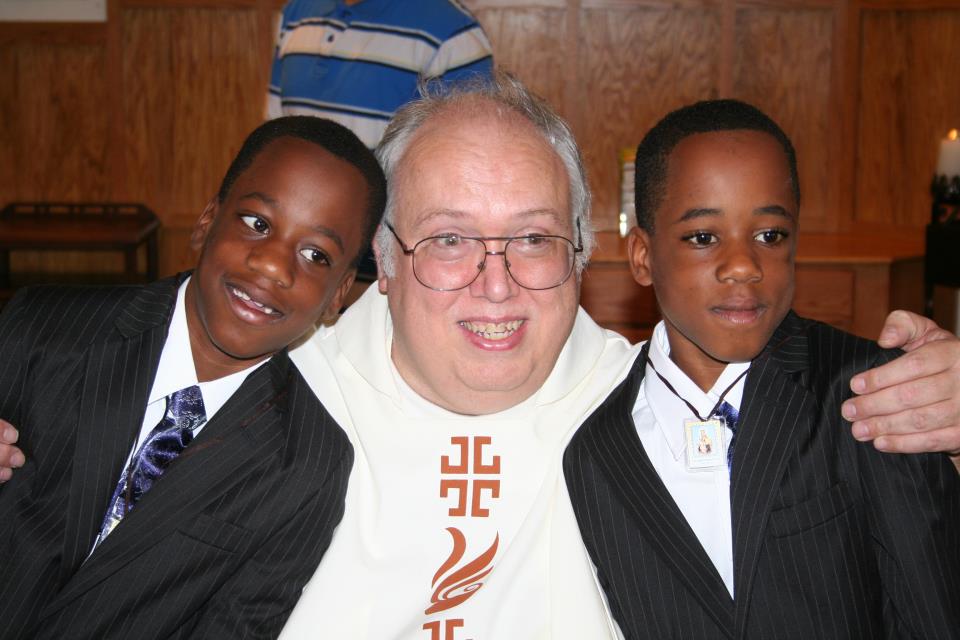
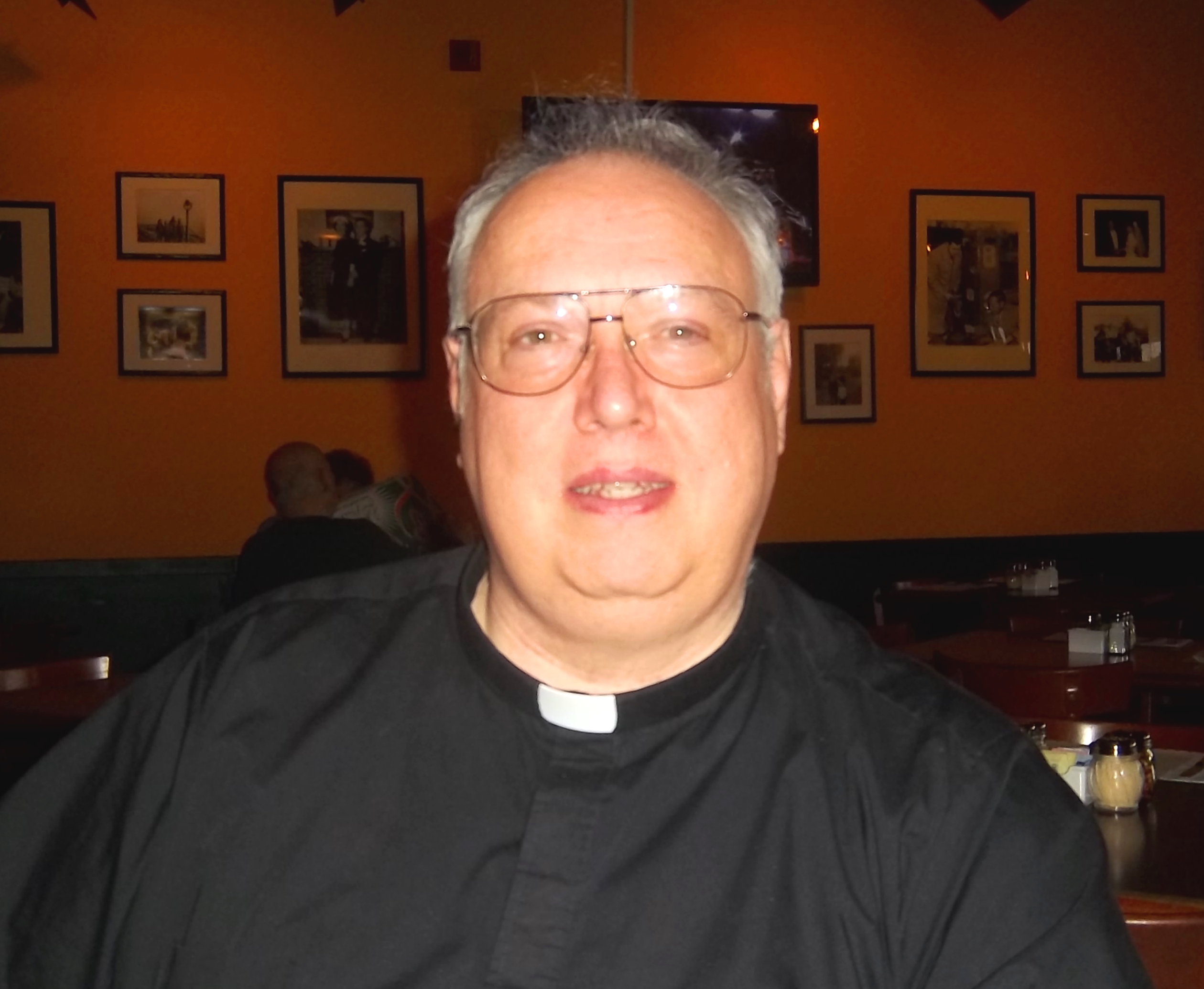
    Fr. Joseph Jenkins

  • The blog header depicts an important and yet mis-understood New Testament scene, Jesus flogging the money-changers out of the temple. I selected it because the faith that gives us consolation can also make us very uncomfortable. Both Divine Mercy and Divine Justice meet in Jesus. Priests are ministers of reconciliation, but never at the cost of truth. In or out of season, we must be courageous in preaching and living out the Gospel of Life. The title of my blog is a play on words, not Flogger Priest but Blogger Priest.

  • Archives

  • Categories

  • Recent Posts

  • Recent Comments

    Anonymous's avatarAnonymous on Ask a Priest
    Michael J's avatarMichael J on Ask a Priest
    Jeremy Kok's avatarJeremy Kok on Ask a Priest
    Mike Zias's avatarMike Zias on Ask a Priest
    Jeremy Kok's avatarJeremy Kok on Ask a Priest

Ask a Priest

Feel free to submit a new question or concern in the comment box below.  Various topics and questions are archived here for easy retrieval.  Please be courteous.  Comments are moderated so please be patient in waiting for them to appear and for any responses.  God bless you!
aboutfrjoe

NEW MESSAGES/HOMILIES   CHRISTIAN REFLECTIONS   DEFENDING THE FAITH
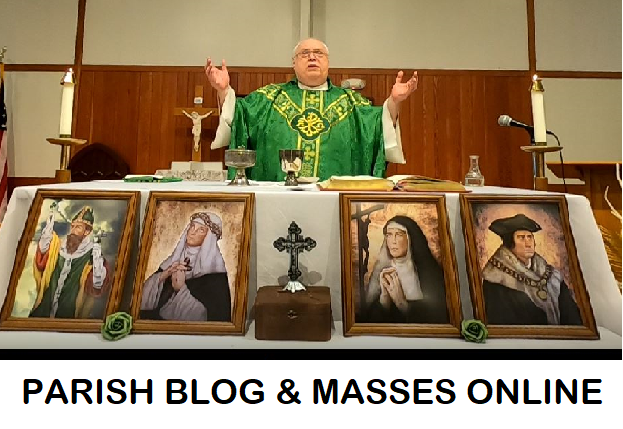
QUESTIONS & ANSWERS   MARY OUR MOTHER

NEWMAN COLLEGE OUTLINES

5,433 Responses

  1. Father, kindly explain, what is Holy Orders? Thank you Father.

    FATHER JOE: Holy Orders is one of the seven sacraments of the Church. Along with Marriage, it is categorized as a sacrament of service or vocation. It is regarded as a participation in the apostolic ministry. At the Last Supper our Lord told his apostles to “do this in remembrance of me.” With these words the apostles became the first bishop-priests. As bishops they ordained (through the laying on of hands) others to the order of bishops, priests and deacons. Deacons preach the Word and originally assisted with outreach to the poor. Stephen was a deacon and the first martyr of the Church, stoned for his efforts at evangelization. Bishops and priests offer Mass, hear confessions, and anoint the sick. Bishops and priests (presbyters) participate in the one high priesthood of Jesus Christ. Bishops have the fullness of priesthood (juridical) and can ordain others. While all benefit from this sacrament, it is reserved to men given that our Lord and all the apostles were men. The Church is not free to depart from this pattern.

  2. The only reason that praying to Jesus is not blasphemy is because Jesus IS GOD. The same does NOT apply to Saints, so praying to them is blasphemy and idol worship. I know you’ll say you don’t “worship” them, but only “venerate,” but that kind of wordplay is what the Devil engages in!

    FATHER JOE:

    No, the devil relishes closed-minded ignorance where the Church is attacked by bigots who think they know something about Jesus. Jesus kept the commandments. One of those commandments requires honoring parents. Mary was the Mother of Jesus. Jesus honored and loved Mary. The prayers of the Church simply imitate Jesus in loving and honoring her. Her role is singular and yet she also sets the pattern of love that we feel for all the saints. They were faithful to Christ, sometimes in the face of terrible hardships. As spiritual fathers and mothers in faith, the saints give us inspiration and remain in communion with the pilgrim Church. Word distinctions are important here, and religious terminology should be understood as the Church uses it.

    The proper object of all prayer, even intercessory prayer, is Almighty God.

    Veneration is literally praising God for how the Gospel was realized in the life of Mary and the saints. You would reject or ignore them. Catholics feel that this would both insult God and repudiate their continued solidarity in faith with us. The saints are more than good examples locked in history books. They are alive and witnesses still of God’s power and goodness. Just as with a denial of the Eucharist, the repudiation of the continued intervention of the saints is a subtle form of atheism. You refuse to believe that Jesus would make himself present in bread and wine. You refuse to believe that the Lord perpetuates his saving ministry and shares his life with the saints. Yours is a watered-down Christianity battling itself and unable to accept the full ramifications of the Good News.

    We do not give divine worship to saints or to Mary or to idols of stone. However, you refuse to accept the Church’s word about this because you reject the communion of the saints. Yours is a sanitized, privatized and passionless faith. The more you attack Catholicism and define your religion by what you oppose, the further away you will find yourself from Jesus and real Christianity. We give special honor to Mary. We render a unique veneration to the Cross, as the sacred sign of our redemption. And we offer genuine worship to the Eucharist as the real presence and saving activity of Jesus Christ. Those with no faith in the sacrament might indeed judge this as idolatry, even as their souls starve for this heavenly food.

    My hope is that ignorance will save you from your own blasphemy. God is much more forgiving of fools than he is of those who hate. Peace!

  3. Do you deny the book of Matthew where it says that Christ is the “Sole Intercessor”? Yet on and on, I see you defending the “intercession of saints.” How do you deny the Bible’s ban on praying to the dead in Deuteronomy 18:11?

    FATHER JOE:

    Speaking in the context of true prophecy, the teaching in Deuteronomy forbids participation in the occult. We read: “When you come into the land which the LORD, your God, is giving you, you shall not learn to imitate the abominations of the nations there. Let there not be found among you anyone who causes their son or daughter to pass through the fire, or practices divination, or is a soothsayer, augur, or sorcerer, or who casts spells, consults ghosts and spirits, or seeks oracles from the dead. Anyone who does such things is an abomination to the LORD, and because of such abominations the LORD, your God, is dispossessing them before you.”

    Honoring saints and asking them to pray for and with us is outside the parameters of the Old Testament prohibition. If you are an Adventist, the real reason you object to this teaching is because you espouse soul-sleep and deny the immortal nature of a soul. Adventists thus also reject the notion of hell because the damned are simply not restored to life and consciousness. The Bible cannot sustain such false ideas. The Church exists in pilgrimage (on earth), in purgation and in heaven. There is solidarity of all the members with each other and with Christ. You would deny the importance of a Church, entirely, and the corporate nature of faith. Jesus is not simply MY Savior but also OUR Savior.

    Despite how you mischaracterize Catholicism, the Church teaches that we are forbidden to offer false worship or to seek secret knowledge from the dead. Séances and fortune-telling are frowned upon and are regarded as seriously wrong. Witchcraft of any sort is sinful. The use of Ouija boards is the matter of mortal sin and has been associated with demonic obsession and even possession. Such business violates the commandments. Ours is a jealous God. This dabbling in the occult displays a lack of trust in the Lord and is an affront to divine providence.

    Catholics are encouraged to pray for each other. Because we REALLY believe in the resurrection, we ask our friends on earth and our family in heaven to intercede and pray for us. Look at Revelation 5:8: “When he took it, the four living creatures and the twenty-four elders fell down before the Lamb. Each of the elders held a harp and gold bowls filled with incense, which are the prayers of the holy ones.” The incense signifies the prayers of the saints. God makes it possible for them to be aware of us.

    Why pray to a Saint when God is omnipresent and hears all prayers?

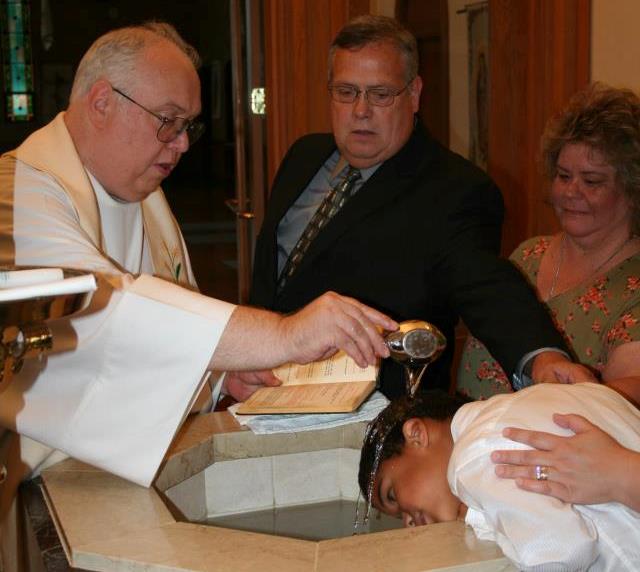
    FATHER JOE: While God is indeed omnipresent, he has saved us in human history by becoming one of us. He institutes a Church and reveals the face of God through the incarnation. After his saving work, he sends the Holy Spirit upon the Church. Christ is the head; the Church is his mystical body. Since there is no other way to the Father except through Christ, then the Church becomes the sacrament of salvation. We encounter Christ in the Church. It is true that we can speak to Christ directly and the Mass prayers are offered to the Father through the Son and in the Holy Spirit. But God, himself, wants us to relate to him, not just individually, but as a new nation, a family of faith. Just as a child is brought to the baptismal font in the arms of parents and godparents or an adult is instructed and inspired to faith by friends, we have a role to play in the continuing story of salvation. It is true that faith is God’s gift and that we can merit nothing apart from Christ. And yet, just as parents participate with God in the great work of creation, so too are we called to cooperate with God in the re-creation and redemption of others. Our role might be very small, and certainly dependent upon Christ, but still it is very important. If it were not for translators and printers, you would not even have a Bible to cite. The mystery of the incarnation is that God wants us involved with his saving intervention. God wants the saints to love and to pray for us. He wants his children to care about each other and to celebrate the goodness of God.

    Why not pray to Jesus the SOLE intercessor and the ONLY “bridge” as you said yourself, to God?

    FATHER JOE: The unique mediation of Christ as the pontifex or bridge is not compromised by human solidarity and cooperation. As I said in another comment, some of our brothers might need carrying or a helping hand in crossing the bridge. We are not alone. As for why this way and not another, the answer is simple; this is what God wanted. Those who dismiss the Church and the need for human participation are in denial about reality and the nature of men as social creatures. The love of God can never be detached from the love of neighbor. If you love someone, you will pray for them for as long as hope or the need permits. The saints are alive and love us. Thus, they pray for us. You do not stop praying for friends and family after you die. There is no amnesia or callousness in heaven.

  4. Father Joe, I beg you to open your eyes.

    FATHER JOE: The eyes that need opening are yours. Your fight is not so much with me but with our Lord’s Church, the Catholic Church. Indeed, given that the Protestant world substantially follows Sunday Observance, your only real allies among those who acknowledge the New Testament are certain cults and the Seventh-day Adventists.

    Ask a Jewish person or a Muslim, and they will tell you the Sabbath is on Saturday for example.

    FATHER JOE:

    The Sabbath Observance is discussed by the late Pope John Paul II in his apostolic letter, DIES DOMINI (Day of the Lord).

    [1] “The Lord’s Day — as Sunday was called from Apostolic times — has always been accorded special attention in the history of the Church because of its close connection with the very core of the Christian mystery. In fact, in the weekly reckoning of time Sunday recalls the day of Christ’s Resurrection. It is Easter which returns week by week, celebrating Christ’s victory over sin and death, the fulfillment in him of the first creation and the dawn of ‘the new creation’ (cf. 2 Cor. 5:17). It is the day which recalls in grateful adoration the world’s first day and looks forward in active hope to ‘the last day,’ when Christ will come in glory (cf. Acts 1:11; 1 Thess. 4:13-17) and all things will be made new (cf. Rev. 21:5).”

    Obviously, given that Jews and Moslems reject the understanding of Jesus as God, Messiah and Christ, the significance of his redemptive work and resurrection would not play a major part in their faith and ritual. The new creation in Christ takes the center stage and the early Christians, particularly after the expulsion from the synagogues and in light of many Gentile converts, very naturally placed the emphasis on the Lord’s Day (Sunday).

    [18] “Because the Third Commandment depends upon the remembrance of God’s saving works and because Christians saw the definitive time inaugurated by Christ as a new beginning, they made the first day after the Sabbath a festive day, for that was the day on which the Lord rose from the dead. The Paschal Mystery of Christ is the full revelation of the mystery of the world’s origin, the climax of the history of salvation and the anticipation of the eschatological fulfillment of the world. What God accomplished in Creation and wrought for his People in the Exodus has found its fullest expression in Christ’s Death and Resurrection, though its definitive fulfillment will not come until the Parousia, when Christ returns in glory. In him, the ‘spiritual’ meaning of the Sabbath is fully realized, as Saint Gregory the Great declares: ‘For us, the true Sabbath is the person of our Redeemer, our Lord Jesus Christ.’ This is why the joy with which God, on humanity’s first Sabbath, contemplates all that was created from nothing, is now expressed in the joy with which Christ, on Easter Sunday, appeared to his disciples, bringing the gift of peace and the gift of the Spirit (cf. John 20:19-23). It was in the Paschal Mystery that humanity, and with it the whole creation, ‘groaning in birth-pangs until now’ (Romans 8:22), came to know its new ‘exodus’ into the freedom of God’s children who can cry out with Christ, ‘Abba, Father!’ (Romans 8:15; Galatians 4:6). In the light of this mystery, the meaning of the Old Testament precept concerning the Lord’s Day is recovered, perfected and fully revealed in the glory which shines on the face of the Risen Christ (cf. 2 Cor. 4:6). We move from the ‘Sabbath’ to the ‘first day after the Sabbath,’ from the seventh day to the first day: the dies Domini becomes the dies Christi!”

    The Catholic Church itself ADMITS to changing God’s holy day to Sunday, the Roman Pagan Day of Worship. In Spanish, saturday still is pronounced “sabado” because it USED to be the Sabbath in Spain. In Italian, saturday is pronounced “sabbato” because it USED to be the Sabbath.

    FATHER JOE: You resort to a ploy common with many anti-Catholics, making associations with pagan worship that played no part in the life, teachings and development of the Church. The transition was made within the Catholic Church because this was the true Church established by Christ. There was no other. If you are an Adventist, your false version of Christianity was not invented until 1863. It began, not in the Holy Land, but in the United States.

  5. As Catholics, we have lost our way! Jesus did not come for everyone, but rather “for the many.” We are to profess our faith and proclaim that Jesus Christ is Lord! He came to separate! Not to create ecumenism!!! We are not to hate, but we are to reject the lie!!! We are not to kill, but we are to offer the message of salvation! For only God is to be given All the Glory, Honor & Power!!! Amen! God Help us all!!

    FATHER JOE:

    I suspect the distinction between “for the many” and “for all” is in reference to the revised and corrected translation of the Mass. But you make too much of a small point that was only changed in the Mass for clarification. Here is the current text with biblical citations:

    TAKE THIS, ALL OF YOU, AND DRINK FROM IT,
    FOR THIS IS THE CHALICE OF MY BLOOD,
    THE BLOOD OF THE NEW AND ETERNAL COVENANT,
    WHICH WILL BE POURED OUT FOR YOU AND FOR MANY
    FOR THE FORGIVENESS OF SINS.
    DO THIS IN MEMORY OF ME.

    “Drink from it, all of you, for this is the blood of my covenant, which will be shed on behalf of many for the forgiveness of sins” (Mt 26:27-28); “This is the blood of my covenant, which will be shed for many” (Mk 14:24); see also Is 52:13-53:12, especially 53:12: “[he] bore the sins of many, and interceded for the transgressors.”

    Your “exclamation marks” hint at a lot of anger or excitement, but your criticisms require some elaboration. While permitted as a colloquialism, some people got the wrong impression in the defunct “for all” translation that “all people are saved.” Such universalism was always condemned and has never been the teaching of the Church. It would open the door to religious indifferentism and ultimately make a mockery of Christ’s essential salvific role and our dependence upon him. However, the Church does teach, as a hallmark of Christianity, the “universal call to salvation.” Obviously, in God’s providence, he knows who will and who will not embrace this calling. That is where human freedom enters the picture and the sweet prospect for both merit and grace or for the tragedy of sin. We hope to be counted among “the many” or the elect of God’s kingdom.

    The division about which you speak is found in Luke 12:51-53: “Do you think that I have come to establish peace on the earth? No, I tell you, but rather division. From now on a household of five will be divided, three against two and two against three; father will be divided against his son and a son against his father, a mother against her daughter and a daughter against her mother, a mother-in-law against her daughter-in-law and a daughter-in-law against her mother-in-law.” The Gospel proclamation in itself brings division between those who accept it and those who do not. However, in another sense, Christ came not so much to separate but to call us into union with God and to draw us into the divine life. But the question remains, when the final judgment comes, will we be counted among the goats on the left or the lambs on the right? We read the words of Jesus in John 17, “I pray for them. I do not pray for the world but for the ones you have given me, because they are yours, and everything of mine is yours and everything of yours is mine, and I have been glorified in them” (verses 9 & 10). Later, he says, “I pray not only for them, but also for those who will believe in me through their word, so that they may all be one, as you, Father, are in me and I in you, that they also may be in us, that the world may believe that you sent me” (20 & 21).

    Ecumenism is a teaching of an ecumenical council, Vatican II. Received teachings from councils are regarded as magisterial and as protected by the Holy Spirit. You and others may have a false or defective notion of ecumenism, but it cannot be dismissed with such impunity. Pope John XXIII taught not capitulation of the Church’s claims but that we should clarify them and couch them in welcoming dialogue. Anathemas often make others more resistant to further discussion and reason. He explained it as a “reapproachment” where the Church made the first step in trying to heal the wound of a divided Christianity. This would imply understanding and cooperation in areas of agreement, like a shared love for Jesus and caring for others. He never meant it as any retraction of immutable doctrine. Pope Benedict XVI has often remarked about confusion in this regard because of a tension between the nebulous and false “spirit” of the council and the “actual” teachings of Vatican II. The application was sometimes misguided. Many who condemn the council have never even read the documents, but simply parrot closed-minded bigots. Be careful not to join their number.

  6. Dear Father Joseph, what is commonly worn under the Cassock? Is it simply black pants and a Tab-Collar Clergy Shirt or something else?

    FATHER JOE: Yes, that is about right. The priest will wear a rabat or clergy vest with collar.

  7. We are pregnant with our 6th child. I love my children, and while pregnancy isn’t always a walk in the park, I really REALLY want to leave God completely in charge of how many children we have. My husband isn’t Catholic and while he ultimately has yielded to my wishes in regard to the necessity of remaining open to life, it has always been a fight and a source of great division between us. He has wanted a vasectomy for years.

    I tend to suffer from hormonal-related depression. Post-partum depression, pregnancy related depression, and may just be the poster child for PMDD. When I’m not pregnant or post-partum, I’m a happy and healthy woman. But bouts of depression during this particular pregnancy have been HORRENDOUS. I’m talking, violent and suicidal urges so strong and frightening. I’m talking deep, deep psychological pain and fear. Fear for our lives. This is the real deal.

    After a particularly HORRIBLE night, when my husband came home late, I gave him an inkling as to how bad it was, and how I was truly terrified that we may not survive another post-partum time after this and that maybe he was right and should go have a vasectomy. Not so that we wouldn’t have any more babies, but so that we wouldn’t have any more bouts of life-threatening (seriously!) PPD. I was in a terribly emotional and frightened state of mind when I told him this.

    He said ok, but that we’d revisit the matter in a little while to make sure this is really what we want. But time had passed, and we never revisited the matter. I just found out last night that he has already scheduled the procedure for the upcoming week. I don’t know what to do or to say to him.

    I’m gravely aware that another bout with PPD might cause me to take my life, a mortal sin that will leave my 6 children motherless. I’m gravely aware that if I go along with the vasectomy, that itself is a mortal sin, and I desire so much that both myself and my husband go to heaven. (My husband doesn’t understand any of that.) I know that if I yank my husband around and tell him I want to change our mind again, there will be serious and lasting consequences for our marriage and family.

    I can’t believe how tangled everything has gotten so quickly and am feeling so desperate and weak. Please help me; I don’t know what to do. And please pray for me! And for my husband! Please!

    FATHER JOE: I will keep you, and your husband and family in my prayers. There are often no easy answers in this life. All we can do is ask for God’s grace and do the best we can. However, not talking about the situation is not the answer, regardless of what is or is not done. Silence now will only be putting off to later things that need to be said and shared. God bless you.

  8. Thank you for your help Father. I have put the necassary steps for my re-conversion into action. Thank you so much for including us in your prayers, that means a lot to us.

  9. Hello Father Joe,

    Thank you so very much for the reply.

    Christ as Pontifex…The canyon/bridge analogy really makes sense and pieces a lot of things together. I’ve learned my lesson – Not to trust dictionaries for theological insight 🙂

    Also, I apologize. When quoting paragraph 956 of the Catechism, I disregarded the reference to Lumen Gentium 49. “…through Him and with Him and in Him…”. Christ – Our Pontifex.

    “However, in a participatory or dependent way, the saints are our advocates who pray and intercede for us. They pray both FOR and WITH us. They want us to be where they are. There is no competition with Christ, only solidarity with him.” Thank you very much for this. The role of the Saints has been something that I’ve struggled with for quite a while, and this explanation really helps.

    Thank you Father Joe. God Bless you.
    Sincerely,
    Eric

  10. Hello Father. Long story short, I was baptized Catholic. I became agnostic around the age of 14 or so. I returned to Christianity at the age of 26 or so, and just recently at the age of 32 have come back around full swing to Catholicism. I have been attending Catholic Mass weekly with my wife. Should I need to undergo any rituals or take any steps of any sort in order to make my reconversion to Catholicism “official” so to speak? Thank you, God Bless.

    FATHER JOE: Were you catechized and did you formally receive other sacraments besides baptism? If you received first penance, first communion and confirmation, then the process for a full return is simple: go to a priest for the convalidation of your marriage and for confession. Am I right that you were married outside the Church? You make no mention of prior bonds. Otherwise, you will also need religious instruction for any missing sacraments. I wish you well and will be praying for you and your wife. God bless!

  11. Hello Father Joe,

    Recently I’ve been going through passages and doctrines to learn more about The Blessed Virgin Mary and the Communion of Saints. I came back to the Church about 3 years ago and it’s been quite a learning experience. Studying has been very, very fruitful, but I seem to have hit a small snag and am a little confused.

    Paragraph 956 of the Catechism…
    “The intercession of the saints. “Being more closely united to Christ, those who dwell in heaven fix the whole Church more firmly in holiness. . . . They do not cease to intercede with the Father for us, as they proffer the merits which they acquired on earth through the one mediator between God and men, Christ Jesus . . . . So by their fraternal concern is our weakness greatly helped.”

    Please correct me if I’m wrong. I understand paragraph 956 to mean….

    Christ is the one mediator between God and Man. Jesus has reconciled the world to God The Father and has brought us to be adopted sons and daughters of The Father. Without Christ we would have no Reconciliation and no Salvation.

    Saints continually intercede with God – Father, Son and Holy Spirit. Their intercessory prayer is an act of fraternal love, which strengthens us on our journey and brings us all closer to God.

    The confusion for me is with defining the distinct difference between Mediator and Intercessor. In the context above I would think it would mean Mediator = Reconciler, and Intercessor = Advocate. But, in the dictionary these words are synonymous, and I think this makes a bit of an obstacle for many non-Catholics. As Catholics we could sincerely, honestly and convincingly describe our beliefs to someone, but they may still get hung up on the words used. How does the Church literally define these words or the treatment of these words?

    Thank you Father Joe. I apologize for my question, especially if it’s already been addressed. Again, thank you very much. God Bless you.

    Sincerely,
    Eric

    FATHER JOE: The role of Jesus as Mediator is also known as Pontifex. Imagine the damage caused by sin as a great ravine or canyon. The word “pontifex” here means BRIDGE. Christ as “the Way” is literally the bridge that makes possible our passage from this veil of tears to the Father in heaven. This role is unique to Christ. There is no other way to the Father. However, none of us come to God alone. We pray and intercede for each other. The intercession of the saints is particularly important and their merits are shared with us. A child comes to the baptismal font in someone’s arms. Often we have had a role to play in encouraging someone to explore the Catholic faith. Some are sponsors for people entering the Church or seeking Confirmation. Some need encouragment in crossing THE BRIDGE. Others need help or even to be carried. Our Lord establishes not just personal relationships but a corporate one in the Church as the family of God. We help each other across the bridge but apart from Christ, there is no bridge. Christ is the Mediator. Christ is the one who RECONCILES us to the Father. Christ is the source for the forgiveness of sin. However, in a participatory or dependent way, the saints are our advocates who pray and intercede for us. They pray both FOR and WITH us. They want us to be where they are. There is no competition with Christ, only solidarity with him. The dictionary might give good profane definitions, but I would not trust such sources for theological concepts. God bless!

  12. Hi Father, I was woundering if you could help me? I’m looking to get my daughter christened in February. I have already chosen my godparents which are my brother and sister as they are both baptised, made their holy communion and are practising Catholics. I have two witnesses but they are both women as they are my sister-in-laws. Is it still possible to have them as witnesses?

    FATHER JOE: Godparents must be Catholics in good standing. It is also policy that one should be selected from each gender. Strictly speaking, the role of Christian Witness is less formal and most pastors do not even place their names in the registry books or on certificates. You only need one Godparent but there is a preference for two. You would have to speak to your priest, but I suspect he would not be all that much concerned about extra witnesses. Please note, though, that a Christian witness should be a Christian with an abiding faith in the Lord and living a moral life. Fallen-away Catholics can neither be Godparents nor Christian Witnesses.

  13. Father, thank you for responding to my claims; I feel such a relief now. I bumped into these sedevacantist sites while searching for something else. Looking at the site, I first thought it was an authentic Catholic Site, but now I see them for what they are, “liars.” I will put my trust in Christ and his Vicar, Pope Benedict XVI.
    Sedevacantism never made much sense anyway. Sedevacantists make God a liar. They say there is no salvation outside the Church. But how can this be? 1.) Not all people will ever hear the promises of Christ; and 2.) God desires all to be saved (1 Timothy 2:4 & 3). I cannot imagine a righteous judge condemning someone who through no fault of his/her own never knew Christ. By the standard by which Sedevacantists judge, God is essentially predestining people to hell, which is a lie. The choice is set and clear for me, and perhaps others in my position: 1.) Sedevacantism, a deception and yet another lie or 2.) Christ the author of truth who cannot deceive nor ever be deceived, his Church, and his current vicar Pope Benedict XVI. I choose the latter. Thanks Father, I’m so happy, you got rid of my doubts.

    FATHER JOE: Actually, the teaching that there is no salvation outside the Church is a doctrinal statement found both in Vatican II and in the Fourth Lateran Council. The problem with certain traditionalists is the interpretation of this teaching. We leave ultimate judgment to God. The Catholic Church is the great sacrament or mystery of salvation. The Church prays, as in the Good Friday liturgy, for fellow Catholics, Protestants, Jews, Moslems, those in false religions and those with no formal religion. There is no salvation apart from Christ. He is the Way and the Truth and the Life. There is no other way to the Father. Jesus is the Savior and Redeemer. The necessity of the Church stems from her intimacy with Christ as the Mystical Body of Christ. We are called to unity with both the head and the body of our Lord. We encounter Christ through the mystery of the Church.

  14. Father, knowing a little bit of church history, if Constantine and Church scholars decided what Christians would read and the writings were to fit his philosophy of Christian thought, can we as Catholics use the Coptic text as a valid writing of what was told to the disciples? [Can we use them] to understand more of that time and the thought of Christians of the time, or are these writings considered blasphemous? Let’s face it; we know that much was written well after the fact and the stories were word of mouth before written. I have found the Gospels of Mary, Thomas and the Sophia of Jesus interesting and confusing. Thank you.

    FATHER JOE: Ancient documents are useful but they are no substitute for Sacred Scripture. Note also that what you are talking about here would include Gnostic writings and they were always regarded as containing false teachings. If you are confused by them then stick with the Bible. The Gnostics stressed secret knowledge and elevated the spirit over matter, to the extent that they denied the incarnation and the passion of Christ.

  15. Please tell me the Mission Statement of the Roman Catholic Church…I have one from our Church, Saint Joseph in Rayne LA. I have the Diocese of Lafayette, LA. I have one from the USCCB. I wish to have one from Rome to add to a talk I will gige to our Ultreya…Thank You…Deacon Daniel Besse

    FATHER JOE: I would sugggest looking at Vatican II’s Lumen Gentium, the Nicene Creed and the great commission at the end of Matthew’s Gospel.

  16. Father, are there any biblical references to the rosary and the mystery of assumption of the blessed virgin mary?

    FATHER JOE: The Rosary is a grouping of prayers and Scriptural meditations. In ancient days, prayer stones were used by various monks and in the East. Tradition has it that the Rosary was revealed to St. Dominic in 1215 AD. The focus of the Gospels is upon the life of Jesus and his teachings, not upon Mary. The Eastern tradition about Mary’s Assumption is regarded as the Dormition (Falling Asleep) of the Theotokos (God-Bearer). This teaching about Mary was well-known during the early Patristic period and passed down through Sacred Tradition. Some authorities see a reference to Mary in Revelation 12.

  17. I have a question; it is serious to me and perhaps to others: Is there a possibility that freemasons and communists have infiltrated the Church? I do not say this blindly but simply in light of the evidence.

    FATHER JOE: No, I do not feel that there is any possibility. Indeed, given tension with the Red Chinese, the Church is still very much in conflict with communism. The efforts of Pope John Paul II and solidarity brought down European communism. And yet, certain traditionalists have a special venom for him.

    St. Francis of Assisi: “The devils will have unusual power, the immaculate purity of our Order, and of others, will be so much obscured that there will be very few Christians who will obey the true Sovereign Pontiff and the Roman Church with loyal hearts and perfect charity. At the time of this tribulation a man, NOT CANONICALLY ELECTED, will be raised to the Pontificate, who, by his cunning, will endeavour to draw many into error and death.” How can this be without the gates of hell prevailing? Or did this great saint just say stuff to say it?

    FATHER JOE: St. Francis was a great saint of the 13th century, but Popes and not saints in general are given the gift of infallibility. He was neither a priest nor a bishop. Private revelation is not always regarded as certain and often hard to interpret. The quote is taken from a book entitled The Works of the Seraphic Father St. Francis of Assisi by Washbourne (1882). If an authentic quote from the saint, it may refer to the trials of the Church under Pope Urban VI in 1378. One of the critics who circulates this silly business is Fr. Nicholas Gruner of THE FATIMA CRUSADER. He does not have faculties to function in either the U.S. or Canada and yet he pretends to be a priest in good standing. He is disobedient and under censure. He is allowed neither to say Mass nor to hear confessions; but he does both. Look at the sources for these quotes in your comment. Do not give reprobates the same credence as you would bishops and priests in good standing.

    Bella Dodd an ex-communist testified to congress that, “In the 1930’s, we put eleven hundred men into the priesthood in order to destroy the Church from within.”

    FATHER JOE: She left communism and testified during the days of McCarthy. While there was a real danger from Soviet communism, there was also a witch hunt that hurt many good people. We know that many of their agents entered the Orthodox churches in the Eastern bloc. However, even many of these offered only feigned allegiance to the communists and were actually believers (double-agents for the churches?). In any case, did she surrender even one name of a communist infiltrator into the ranks of clergy? Again, the trouble that the Church is having with the patriotic church in China shows that the Catholic leadership is not sympathetic to communism or to those who would compromise with it. Conspiracy theorists within the traditionalism movement have engaged in a campaign of calumny against the post-Vatican II Church. Do not swallow it.

    Freemason Eliph Levi said in 1862: “A day will come when the pope… will declare that all the excommunications are lifted and all the anathemas are retracted, when all the Christians will be united within the Church, when the Jews and Moslems will be blessed and called back to her . . . she will permit all sects to approach her by degrees and will embrace all mankind in the communion of her love and prayers. Then, Protestants will no longer exist. Against what will they be able to protest? The sovereign pontiff will then be truly king of the religious world, and he will do whatever he wishes with all the nations of the earth.”

    FATHER JOE: This citation is actually an instance of anti-Catholicism, not anti-Vatican II sentiment. Why would you embrace the deception of the Church’s enemies as truth. They would love to see the Church destroy herself from within. Catholicism will not embrace religious indifferentism. Ecumenism is not capitulation of our unique claims. We simply respect that many believers outside the ranks of Catholicism have faith in Jesus and love him and their fellow men and women. We leave judgment to God. The Jews were the first people called by Christ. The Moslems believe in one deity however tensions with them are as high as they have ever been. There is no way that their errors can or ever will be reconciled with Christian faith. When the Pope suggested that they abandon the concept of holy war, crowds chanted, “Death to the Pope!” The Church will seek to co-exist with any people of good will, but the modern Church is still solidly Catholic. Those who attack the current Pope are in league with the enemies of the true Church.

    The Luciferian secret society, the Carbonari, known as the Alta Vendita, wrote a set of Permanent Instructions, or Code of Rules, which appeared in Italy in 1818. Pope Pius IX and Pope Leo the XIII asked for this document to be published (I really believe they did this because they saw Freemasons as a threat).

    FATHER JOE: They may have been a real threat two centuries ago, but much has changed. The greatest dangers to the faith today come from those who think they know better than the Church: from a Latin traditionalist form of Protestantism (false ecclesiology), from a materialistic secular humanism, and from worldwide militant Islam.

    The document said: “…It becomes the duty of the secret societies to make the first advance to the Church, and to the pope, with the object of conquering both. The work for which we gird ourselves is not the work of a day, nor of a month, nor a year. It may last for many years, perhaps a century… What we must ask for, what we should look for and wait for, as the Jews wait for the Messiah, is a pope according to our wants. We require a pope for ourselves, if such a pope were possible. With such a one we shall march more securely to the storming of the Church, than with all the little books of our French and English brothers.”

    FATHER JOE: The Freemasons never got such a leader over the minds of believers. Old documents misconstrued and misapplied do not speak to the current situation. You would do better to stop parroting their venom, say your prayers, go to Mass and trust the Church established by Christ and protected by the Holy Spirit.

    The same freemasonic document said: “In a hundred years’ time… bishops and priests will think they are marching behind the banner of the keys of Peter, when in fact they will be following our flag… The reforms will have to be brought about in the name of obedience.”

    FATHER JOE: Certain traditionalists who oppose Vatican II reforms circulate this old 19th century document purportedly from the Freemasons. It really has no weight in the current situation and Church officials do not take the accusation of a connection seriously. Catholicism, (reformed or not), is not freemasonry.

    On April 3, 1844, a leader of the Alta Vendita named Nubius wrote a letter to another highly- placed mason. The letter said “Now then, in order to ensure a pope in the required proportions, we must first of all prepare a generation worthy of the kingdom of which we dream… Let the clergy move forward under your banner (the masonic banner) always believing they are advancing under the banner of the apostolic keys. Cast your net like Simon Bar Jonas; spread it to the bottom of sacristies, seminaries, and convents … You will have finished a revolution dressed in the pope’s triple crown and cape, carrying the cross and the flag, a revolution that will need only a small stimulus to set fire to the four corners of the earth.”

    FATHER JOE: While there may have been an active conspiracy against the Church at one time, freemasonry today is not what it once was and many in the membership are unaware of the history or that certain ritualistic prayers are incompatible with Catholic faith. Because it functions as a secret society, Catholics are still canonically prohibited from membership. This was reaffirmed by Cardinal Ratzinger, now Pope Benedict XVI. These quotes are a “cut-and-paste” from one of several traditionalist web sites. They will grab at any straw to assault the reforms or the authority of the living Magisterium. It is not a credible critique.

    These are honest concerns from a Catholic. I do believe our popes warned us against these dangers for a reason.

    FATHER JOE: Concerns change over time. Place your trust in the true Pope, Benedict XVI, and not in the sedevacantists who already function as antipopes in rejecting his authority and making slurs from dated documents. They might like Latin and the old Mass, but they hide their heretical ecclesiology behind traditional rituals and condemnations of others. They see conspiracies everywhere. Do not get caught up in their moral and spiritual sickness.

  18. As I understand it a just war is a war that is justifiable right? For example, “a country with no militia is being invaded for no apparent reason but to deprived the country of its resources. In the process many innocent people are murdered.” And hence this would be a good excuse for a just war.” Could not the same criteria be applied to abortion clinics. How can we stand knowing this is happening in our country. What can one do?

    FATHER JOE: There are various requirements connected with just war theory and with legitimate self-defense. This is a different situation. Along the lines given us in EVANGELIUM VITAE by Pope John Paul II, pro-life advocates in a civil society feel that violence would be both counterproductive and contradictory to the Gospel of Life. We can pursue legislative and judicial ground in this battle. We can embrace non-violent protest, as with prayer vigils outside abortion clinics. However, we should not take the law into our own hands. Murder, even if one feels the cause is righteous, still promotes the culture of death. We need to pray for those involved in this dirty business. Many abortionists and workers at such clinics have been converted to the Right to Life cause. That is the route we are supposed to follow.

  19. But what could I do if I did?

    FATHER JOE: Really not sure what you are asking. What argument are you trying to refute?

  20. I was wondering what I should do because i’m going to smoke marijuana but my mom doesn’t know and she told me she trusts me but I can’t tell her because I could never worry her like that, what should I do?

    FATHER JOE: Don’t do it.

  21. Dear Father Joe, I’m catholic and went to a catholic website called scripture Catholic and it was great but then I bumped into this paper regarding Vatican II written by a catholic apologist by the name of John Salza. Now he is not a sedevancantist, but if you could please read this and clarify a few points, it would be great. I’m a little confused and shocked. Now I’m not a sedevancantist and I do acknowledge Pope Benedict as a legit pope but this is bothering me. How true is it, if there is any truth to it.

    Click to access Presentation%20-%20Fatima%20Rome%202011%20-%20transcript.pdf

    FATHER JOE:

    First, the conference was held under the auspices of the breakaway Fatima Crusader, a magazine and an operation that is not endorsed either by any diocese or by the Holy See. Indeed, the priest in charge (Father Nicholas Gruner) has no faculties to function as a priest, that includes hearing Confessions or celebrating Mass. He has never been released by his original bishop.

    Second, disobedient to his own bishop and the Pope, Father Gruner has graviated toward the Latin traditionalists. This is where the convert John Salza now finds himself. He essentially rejects the revised rites, even with the new translations.

    Third, while he has been on the record against sedevacantism, his statements about Vatican II and the modern Popes seems to lean in that direction. His books are no longer published by Our Sunday Visitor and his programs on EWTN have been permanently shelved. Parishes are no longer authorized to invite him for talks or retreats.

    John Salza has been seduced by the people against whom he once engaged in apologetics. I would not be surprised that he follow the convert to Catholic to breakaway traditionalist pattern that we saw with Matatics. The latter has been in my prayers for some time. He tended to transfer his Protestant biblical fundamentalism to Catholic questions, as in his book about proving Catholicism from the Bible. Scott Hahn got beyond this short-sightedness. Personal interpretations and literalism fits well with breakaway movements but not with a living Magisterium.

    The situation with John Salza is very disturbing as I enjoyed his books. Indeed, four of them are sitting on my desk as I write this comment: THE BIBLICAL BASIS FOR THE CATHOLIC FAITH (OSV 2005), THE BIBLICAL BASIS FOR THE PAPACY (OSV 2006), THE BIBLICAL BASIS FOR THE EUCHARIST (OSV 2008), and THE BIBLICAL BASIS FOR PURGATORY (St. Benedict Press 2009). Given his disintergrating standing with the Church, the final book in this list has no Imprimatur.

  22. “The question that really oppresses us is why it is necessary … to practice the Christian Faith … when there are so many other ways that lead to heaven and salvation” (Cardinal Ratzinger, Co-Workers of the Truth, 1990, p. 217).

    “[W]e are in agreement that a Jew, and this is true for believers of other religions, [Islam] does not need to know or acknowledge Christ as the Son of God in order to be saved…” (Zenit News, Sept. 5, 2000).

    Does Pope Benedict XVI really believe this? Why did Christ come then? Wouldn’t this render the Catholic Church useless and unnecessary?

    “And every spirit that dissolveth Jesus, is not of God: and this is Antichrist, of whom you have heard that he cometh, and he is now already in the world” (1 John 4:3 Douay-Rheims Catholic Bible).

    FATHER JOE:

    CORRECTED TEXT: “The question that really concerns us, the question that really oppresses us, is why it is necessary for us in particular to practice the Christian Faith in its totality; why, when there are so many other ways that lead to heaven and salvation, it should be required of us to bear a day after day the whole burden of ecclesial dogmas and of the ecclesial ethos. And so we come again to the question: What exactly is Christian reality? What is the specific element in Christianity that not merely justifies it, but makes it compulsorily necessary for us?”

    This daily meditation for July 7 in his popular book merely takes a general presumption in a pluralistic society and tries to move people away from a dismissal of the Church to an awareness of her importance— the very opposite from the charge of religious relativism made against the Holy Father. Many pastors have heard this same question: why be Catholic? A similar query is in regard to those who play the part of the good thief, coming to repentance and faith late in life. Some complain that this is not fair because the rest of us as faithful Catholics have struggled to “keep the rules.” It is this rigidity and lack of compassion for others that fuels the attack against the Pope and Vatican II ecumenism. The recent anti-Semitic remarks of the renegade SSPX Bishops Williamson and now Fellay are a case-in-point. Jews are viewed as the “enemies” of the Church, murderers of Christ, and outside the framework of salvation. The Holy Father would contend that ALL are called to Christ and that his fulfillment of the covenant is precisely God keeping his promise to the Jewish people. We are all sinners and fall short. None of us can be saved apart from divine grace. A couple of years ago there was confusion in the Jewish quarter when Pope Benedict XVI reaffirmed that none are saved apart from Christ who is the Way and the Truth and the Life. He also emphasized the intimacy of Christ (the head) with his Mystical Body, the Church. The Pope’s critics have conveniently forgotten this because it contradicts their efforts of calumny and deceit against him. Thus, if a Protestant, Jew, Moslem, or anyone else should find himself in heaven, it will be through the mediation of Jesus Christ. That should not upset anyone; it is just Christianity 101.

    Notice what is omitted in your citation. The eventual Pope writes in defense of Catholic membership and faith, “What is the specific element in Christianity that not merely JUSTIFIES IT, but makes it COMPULSORILY NECCESSARY for us?” He then goes on to explain, “When we raise the question about the foundation and meaning of our Christian existence, there slips in a certain FALSE HANKERING for the APPARENTLY more comfortable life of other people who are also going to heaven. We are too much like the laborers of the first hour in the parable of the workers in the vineyard (Mt 20:1-16). Once they discovered that they could have earned their day’s pay of one denarius in a much easier way, they could not understand why they had had to labor the whole day. But what a strange attitude it is to find the duties of our Christian life unrewarding just because the denarius of salvation can be gained without them! It would seem that we – like the workers of the first hour – want to be paid not only with our own salvation, but more particularly with other’s lack of salvation. That is at once very human and profoundly un-Christian.”

    As for the ZENIT quote, this was during the time while Pope John Paul II was alive. What was the context? Who actually said it? When you go to the ZENIT website, the link for September 5, 2000 shows that there was NO NEWS reported for that date:

    http://www.zenit.org/date2000-09-05

    You probably do not know because you simply cut-and-pasted this quote from another site that shared your ignorance and bigotry. I say bigotry, because your almost Protestant-fundamentalist use of a bible verse, slamming the Pope as the anti-Christ, is neither subtle nor smart. In any case, I will try to educate you. The misleading reference is to the DECLARATION “DOMINUS IESUS” ON THE UNICITY AND SALVIFIC UNIVERSALITY OF JESUS CHRIST AND THE CHURCH. It ends up stating the every opposite from your insinuations. Beware that such attacks against the teaching office of the Church are a matter of mortal sin if they arise from hubris and not just stupidity. Here is the important link (EDUCATE YOURSELF):

    http://www.vatican.va/roman_curia/congregations/cfaith/documents/rc_con_cfaith_doc_20000806_dominus-iesus_en.html

    (The declaration received heat from the secular press and non-Catholic religious figures for emphasizing both Christ and the Catholic Church in regards to the question of salvation.)

    We read:

    [2:11] The Church’s Magisterium, faithful to divine revelation, reasserts that Jesus Christ is the mediator and the universal redeemer: “The Word of God, through whom all things were made, was made flesh, so that as perfect man he could save all men and sum up all things in himself. The Lord…is he whom the Father raised from the dead, exalted and placed at his right hand, constituting him judge of the living and the dead”. This salvific mediation implies also the unicity of the redemptive sacrifice of Christ, eternal high priest (cf. Heb 6:20; 9:11; 10:12-14).

    [3:14] It must therefore be firmly believed as a truth of Catholic faith that the universal salvific will of the One and Triune God is offered and accomplished once for all in the mystery of the incarnation, death, and resurrection of the Son of God.

    [3:15] In this sense, one can and must say that Jesus Christ has a significance and a value for the human race and its history, which are unique and singular, proper to him alone, exclusive, universal, and absolute. Jesus is, in fact, the Word of God made man for the salvation of all. In expressing this consciousness of faith, the Second Vatican Council teaches: “The Word of God, through whom all things were made, was made flesh, so that as perfect man he could save all men and sum up all things in himself. The Lord is the goal of human history, the focal point of the desires of history and civilization, the center of mankind, the joy of all hearts, and the fulfillment of all aspirations. It is he whom the Father raised from the dead, exalted and placed at his right hand, constituting him judge of the living and the dead”. “It is precisely this uniqueness of Christ which gives him an absolute and universal significance whereby, while belonging to history, he remains history’s center and goal: ‘I am the Alpha and the Omega, the first and the last, the beginning and the end’ (Rev 22:13)”.

    [4:16] The Lord Jesus, the only Savior, did not only establish a simple community of disciples, but constituted the Church as a salvific mystery: he himself is in the Church and the Church is in him (cf. Jn 15:1ff.; Gal 3:28; Eph 4:15-16; Acts 9:5). Therefore, the fullness of Christ’s salvific mystery belongs also to the Church, inseparably united to her Lord. Indeed, Jesus Christ continues his presence and his work of salvation in the Church and by means of the Church (cf. Col 1:24-27), which is his body (cf. 1 Cor 12:12-13, 27; Col 1:18). And thus, just as the head and members of a living body, though not identical, are inseparable, so too Christ and the Church can neither be confused nor separated, and constitute a single “whole Christ”. This same inseparability is also expressed in the New Testament by the analogy of the Church as the Bride of Christ (cf. 2 Cor 11:2; Eph 5:25-29; Rev 21:2,9).

    Therefore, in connection with the unicity and universality of the salvific mediation of Jesus Christ, the unicity of the Church founded by him must be firmly believed as a truth of Catholic faith. Just as there is one Christ, so there exists a single body of Christ, a single Bride of Christ: “a single Catholic and apostolic Church”. Furthermore, the promises of the Lord that he would not abandon his Church (cf. Mt 16:18; 28:20) and that he would guide her by his Spirit (cf. Jn 16:13) mean, according to Catholic faith, that the unicity and the unity of the Church — like everything that belongs to the Church’s integrity — will never be lacking.

    [6:20] Above all else, it must be firmly believed that “the Church, a pilgrim now on earth, is necessary for salvation: the one Christ is the mediator and the way of salvation; he is present to us in his body which is the Church. He himself explicitly asserted the necessity of faith and baptism (cf. Mk 16:16; Jn 3:5), and thereby affirmed at the same time the necessity of the Church which men enter through baptism as through a door”. This doctrine must not be set against the universal salvific will of God (cf. 1 Tim 2:4); “it is necessary to keep these two truths together, namely, the real possibility of salvation in Christ for all mankind and the necessity of the Church for this salvation”.

    [6:21] However, from what has been stated above about the mediation of Jesus Christ and the “unique and special relationship” which the Church has with the kingdom of God among men — which in substance is the universal kingdom of Christ the Savior — it is clear that it would be contrary to the faith to consider the Church as one way of salvation alongside those constituted by the other religions, seen as complementary to the Church or substantially equivalent to her, even if these are said to be converging with the Church toward the eschatological kingdom of God.

    [6:22] With the coming of the Savior Jesus Christ, God has willed that the Church founded by him be the instrument for the salvation of all humanity (cf. Acts 17:30-31). This truth of faith does not lessen the sincere respect which the Church has for the religions of the world, but at the same time, it rules out, in a radical way, that mentality of indifferentism “characterized by a religious relativism which leads to the belief that ‘one religion is as good as another’”. If it is true that the followers of other religions can receive divine grace, it is also certain that objectively speaking they are in a gravely deficient situation in comparison with those who, in the Church, have the fullness of the means of salvation. However, “all the children of the Church should nevertheless remember that their exalted condition results, not from their own merits, but from the grace of Christ. If they fail to respond in thought, word, and deed to that grace, not only shall they not be saved, but they shall be more severely judged”. One understands then that, following the Lord’s command (cf. Mt 28:19-20) and as a requirement of her love for all people, the Church “proclaims and is in duty bound to proclaim without fail, Christ who is the way, the truth, and the life (Jn 14:6). In him, in whom God reconciled all things to himself (cf. 2 Cor 5:18-19), men find the fullness of their religious life”.

    In inter-religious dialogue as well, the mission ad gentes “today as always retains its full force and necessity”. “Indeed, God ‘desires all men to be saved and come to the knowledge of the truth’ (1 Tim 2:4); that is, God wills the salvation of everyone through the knowledge of the truth. Salvation is found in the truth. Those who obey the promptings of the Spirit of truth are already on the way of salvation. But the Church, to whom this truth has been entrusted, must go out to meet their desire, so as to bring them the truth. Because she believes in God’s universal plan of salvation, the Church must be missionary”. Inter-religious dialogue, therefore, as part of her evangelizing mission, is just one of the actions of the Church in her mission ad gentes. Equality, which is a presupposition of inter-religious dialogue, refers to the equal personal dignity of the parties in dialogue, not to doctrinal content, nor even less to the position of Jesus Christ — who is God himself made man — in relation to the founders of the other religions. Indeed, the Church, guided by charity and respect for freedom, must be primarily committed to proclaiming to all people the truth definitively revealed by the Lord, and to announcing the necessity of conversion to Jesus Christ and of adherence to the Church through Baptism and the other sacraments, in order to participate fully in communion with God, the Father, Son and Holy Spirit. Thus, the certainty of the universal salvific will of God does not diminish, but rather increases the duty and urgency of the proclamation of salvation and of conversion to the Lord Jesus Christ.

  23. I believe in God, and I was wondering what you thought about people who use excuces not to believe like, Cells are what created us, or God cant be omnipresent, how would you argue with them?

    FATHER JOE: We are made up of cells but I am not sure who teaches that such are the source of creation. God sustains creation in all its elements: energy, matter, molecules, particles, enzymes, cells, atoms, suns, planets, asteroids, meteors, comets, worms, fish, ants, plants, trees, rocks, oceans and lakes, elephants, tigers, rabbits, dogs, cats, birds, etc… and of course, men and women. God is everywhere, even outside of time and space. He is not just the writing on the paper, he’s the paper.

  24. Catholic Notre Dame announces services for gay students

    Catholic Notre Dame announces services for gay students

    What’s going on in Catholic universities? I thought homosexuality was condemned?

    FATHER JOE: Homosexual acts are immoral. Yes, this news is very disappointing.

  25. Dear Father Joseph

    Was constantine baptized?

    Thank you

    FATHER JOE: Yes, for while he was long sympathetic to Christianity it is said that he was baptized on his deathbed (337 AD).

Leave a comment