
• Our Blogger

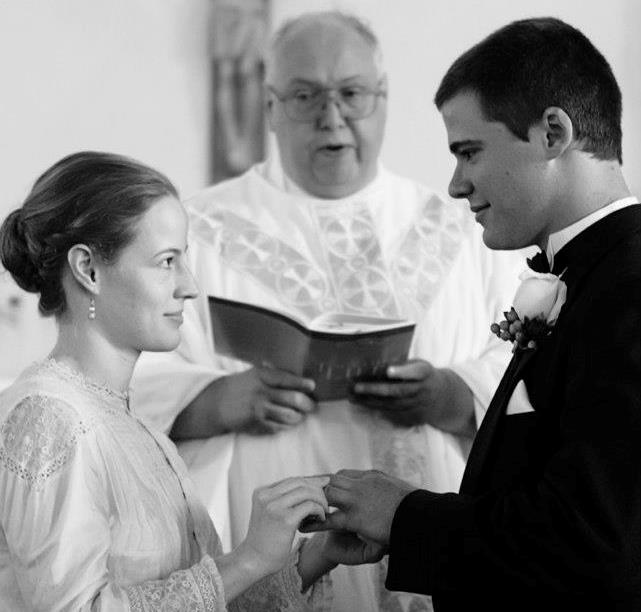
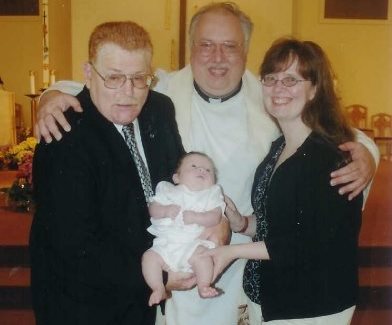
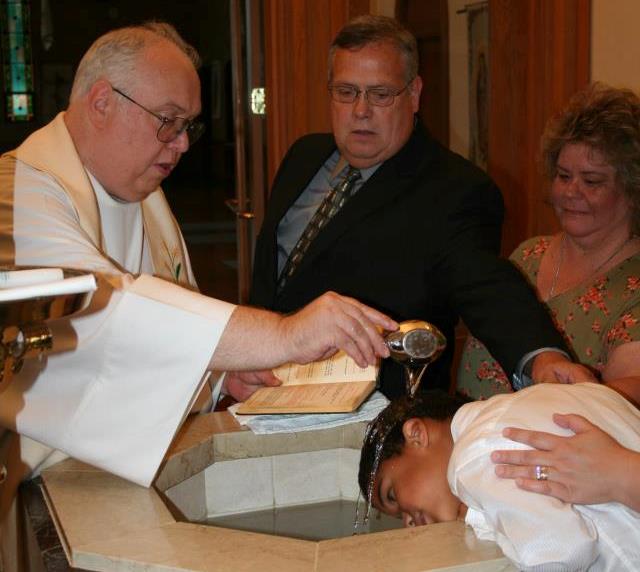
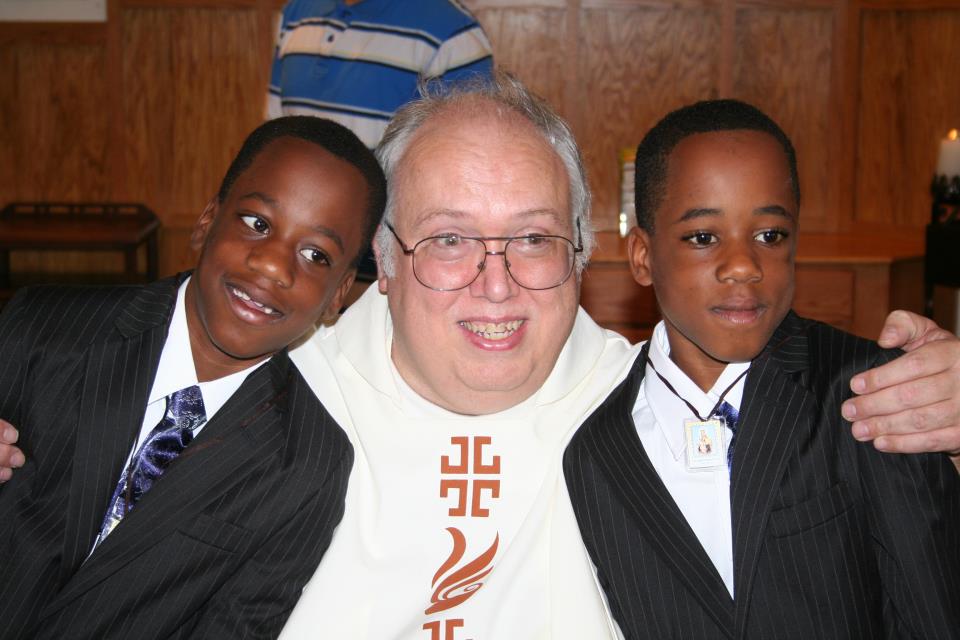
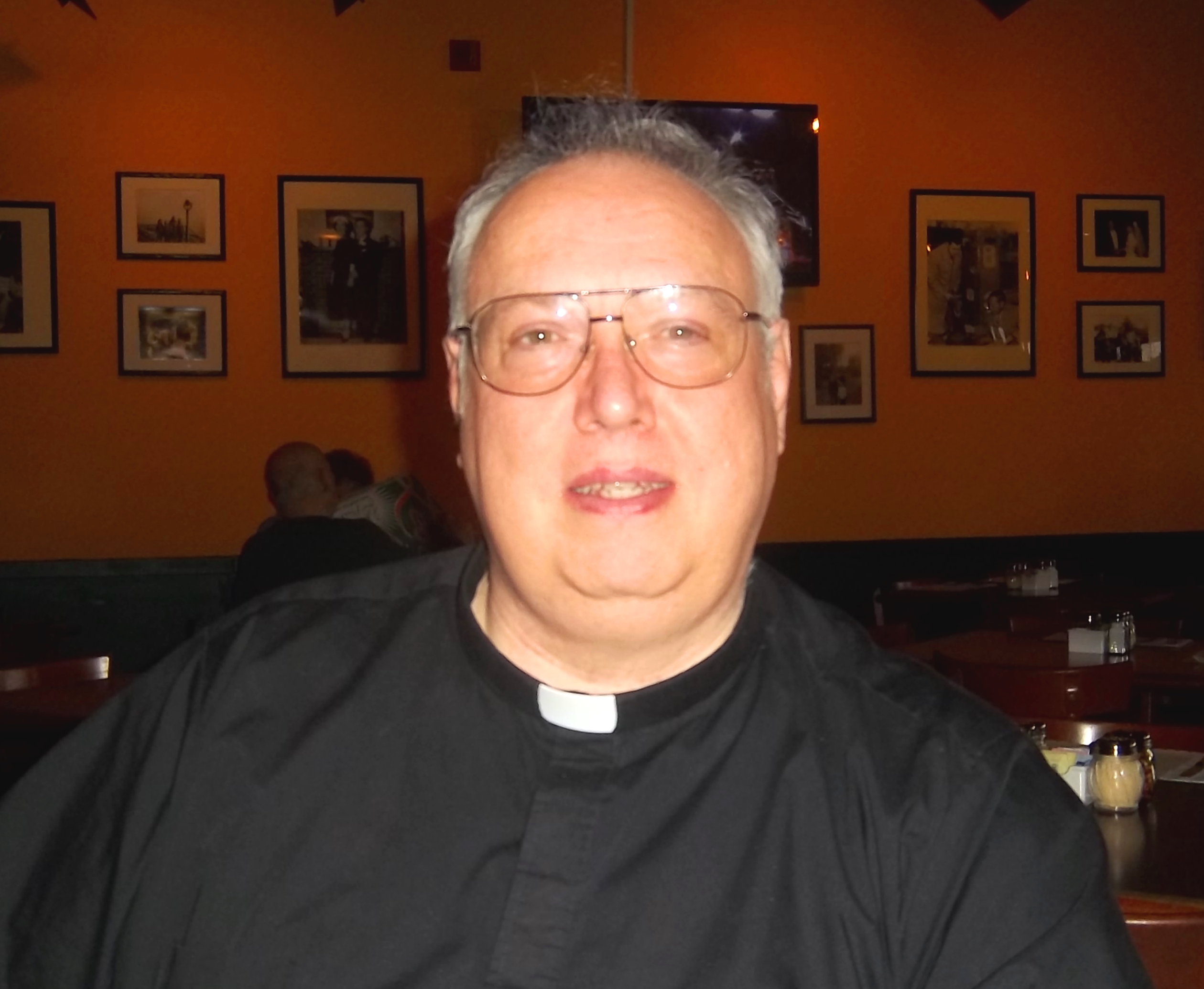
    Fr. Joseph Jenkins

  • The blog header depicts an important and yet mis-understood New Testament scene, Jesus flogging the money-changers out of the temple. I selected it because the faith that gives us consolation can also make us very uncomfortable. Both Divine Mercy and Divine Justice meet in Jesus. Priests are ministers of reconciliation, but never at the cost of truth. In or out of season, we must be courageous in preaching and living out the Gospel of Life. The title of my blog is a play on words, not Flogger Priest but Blogger Priest.

  • Archives

  • Categories

  • Recent Posts

  • Recent Comments

    Jeremy Kok's avatarJeremy Kok on Ask a Priest
    Gary Joseph's avatarGary Joseph on Old Mass or New, Does It …
    Barbara's avatarBarbara on Ask a Priest
    Anonymous's avatarAnonymous on Ask a Priest
    forsamuraimarket's avatarforsamuraimarket on Ask a Priest

Ask a Priest

Feel free to submit a new question or concern in the comment box below.  Various topics and questions are archived here for easy retrieval.  Please be courteous.  Comments are moderated so please be patient in waiting for them to appear and for any responses.  God bless you!
aboutfrjoe

NEW MESSAGES/HOMILIES   CHRISTIAN REFLECTIONS   DEFENDING THE FAITH
QUESTIONS & ANSWERS   MARY OUR MOTHER

NEWMAN COLLEGE OUTLINES

5,417 Responses

  1. Hello, Father Joe, here is the quote about the Virgin Mary not having a role in holding back God’s wrath

    Father Maurizio Gronchi, a Christology expert and consultant to the Vatican Dicastery for the Doctrine of the Faith, warned that considering the Virgin Mary as “Co-Redemptrix” or “Mediatrix” distorts the Christian faith and leads to a superstitious view.

    “It is superstition to think that the Virgin Mary has the role of holding back God’s wrath. Whoever thinks this way is not in accordance with the Gospel,” 

    FATHER JOE:

    I knew a Mariologist back in 1978 who argued with us on retreat, saying that the notion of Mary holding back the wrath of Christ was heretical. However, I suspect that he needed a more nuanced appreciation of matters.  The wrath of God is not divine anger but rather divine justice.  Mary intercedes for her spiritual children, that they will NOT be punished as they deserve but rather saved by God’s mercy. Mary, as a special intercessor and conduit for sanctifying grace, helps to bring the forgiveness of Calvary to those for whom Jesus died. I would argue that the very substance or fabric of Mary’s protective mantle of mercy is her Son, the Divine Mercy. There is no clash between wills. The immaculate heart and the sacred heart both beat as one in love for us.

    Father Maurizio Gronchi is right about doctrine, but I suspect he is too fearful about superstition in Mary’s regard.  Indeed, the challenge today is not any organized heresy about the Blessed Mother, but rather an ignorance (both in and out of the Church) about what we believe regarding Christ.  The recent promulgation against the Marian titles “co-redemptrix” and “mediatrix” was unnecessary. The Vatican has even walked back the document, admitting that the prohibition in using the terms was not absolute.

    Father Gronchi states that Mary is not a goddess. Yes, she is a blessed creature.  Jesus is our one Mediator and Redeemer. Again, the answer is yes— this is at the core of the Christian faith. The problem with the titles, which is a hurdle mostly for our Protestant friends, is that they are misunderstood or poorly defined. Mediatrix has to do with Mary’s role as the one hailed by an angel as “full of grace.” The graces of God pass from the head to the body of the mystical body through Mary.  Co-redemptrix refers to Mary’s cooperative role with her Son in his saving work.  As the Immaculate Conception, she says YES to God for all humanity at her annunciation. Indeed, this YES is threaded through her entire life, climaxing at the Cross on Calvary where she surrenders her Son to our heavenly Father. The final proof of her cooperation with Christ is when Jesus commends her to our emissary John, “Behold your mother!”

    Most Mariologists I have read feel that the prohibition of the two titles is itself dangerous given that the titles are found in tradition and in the writings of popes, including recent ones. 

  2. Thank you for for the answer about Santa .The other priest answered in the same way in his expanded answer .

  3. Hello, Father Joe Is it a sin to break promises made against one’s will or unknowingly? If so, is it a grave matter?

    FATHER JOE: How does one unknowingly break a promise?

  4. Dear Father, Is it a sin to get angry at an orthodox priest? He labeled the pope as the face of the Anti-Christ. He is a famous youtube influencer. I think father you might want to try Youtube for spreading the gospel. We need more Catholic priests on Youtube. Anyway, why is it that some Orthodox priests are anti-catholic? I researched about the Filioque issue and I honestly think that it was not the best decision for the Catholic Church to not call for a council before adding a clause. Maybe the Orthodox priests reject Filioque because their leaders weren’t part of the decision making. However, I doubt if the members of thee Catholic and the Orthodox church make a big deal about this. It seems like this is a problem between the intellectuals of both churches. I also understand that this a dogma of the Catholic Church so I wholeheartedly obey. About the orthodox priest, I am not angry at him as a priest, but by his actions because I think he is causing more division. Thank you, padre.

    FATHER JOE:

    We should seek civility with all. Certain orthodox clergy and theologians suffer from an arrogance that makes ecumenical outreach difficult to impossible.

    The Church of the East and West have been separated for around a thousand years.  Efforts were made at reconciliation between the Orthodox and Catholics in 1274 (Council of Lyon) and in 1439 (Florence).  While motivated by politics and a desire for military aid against the Islamic Turks, the East formally acceded to Rome’s doctrinal claims. However, with the fall of the empire in the East, what was negotiated fell apart. All bets were off the table when the emperor died at the Council of Lyon.  The Orthodox bishops, themselves, after Florence, had their efforts at reunion vetoed by lower clergy and the people they influenced. The issues over which they were at odds, became increasingly contentious: papal supremacy (not simply the first among equals), the “filioque” insertion into the creed (more about its unilateral addition than an aversion to Western theology), purgatory (although they pray for the dead and purification as we do), and the Immaculate Conception (although they also subscribe to our Lady as the “sinless Virgin Mary). Lacking the unity between churches that defines Rome, it is difficult to find consensus with the Orthodox. The churches of the East ten to be national churches.    

  5. Father,

    I am wondering if things such as telling children about Santa, Tooth Fairy, etc. are considered sinful lies.

    A priest on the internet said not to lie about these things and he advised to confess them.

    FATHER JOE: The Tooth Fairy might actually be a parent. Santa finds his roots in St. Nicholas. Are the parables lies? Can we not make up stories? What about fairy tales and folklore. Are these things not elements of culture. What lessons can be learned from them? My parish this weekend is sponsoring LUNCH WITH SANTA. It is not a sinful lie but an exaggeration for good fun. We seek to preserve the innocence of childhood. One of my favorite images is that of Santa kneeling in prayer before the Christ Child in a manger. The secular bends the knee to the sacred.

  6. Hello, Father Joe

    Is it a sin to break a promise you made out of ignorance or under duress, or if you don’t remember the content of the promise you made to another person? If yes, then is it a grave matter?

    FATHER: Coercion or manipulation mitigates against the gravity of sin. The gravity depends upon the level of intimidation, the particular promise broken and the circumstances.

  7. Hello, Father Joe recently a Vatican expert commented that the Virgin Mary does not have a role in holding back God’s wrath. Therefore, what is the church’s teaching on this?

    Thank you

    FATHER JOE: If you give me the quotation I will try to make a response. What you are referencing is the protection of Mary’s mantle of mercy. It is regarded as a help in the face of divine justice.

  8. Dear Father,

    Regarding this message of Our Lady of Fatima:

    “Pray, pray very much, and make sacrifices for sinners;for many souls go to hell because there are none to sacrifice themselves and to pray for them.

    I have been praying for my dad who passed 23 yrs ago, offering rosaries and Gregorian Masses.

    May I trust in God’s infinite mercy that this is a sign of grace that my father is saved?

    I often worry about the afterlife. I understand I must trust God but the reality of hell is troubling me. And heaven is also puzzling me.

    I ask what is the point of going to heaven if I won’t be reunited with the people that I love? I know my love for God should be greater than my love for my parents… but I couldn’t fully get behind that truth?? I feel resistance deep within me…

    I also ask what is the point of going to heaven if I will see those who hurt me there? If they are repentant, yes I am willing to see them there… but what about those victims of murder or rape? How does God expect victims to share heaven with their oppressors?

    What should I change in my mindset as a Catholic with little faith? Thank you, Padre!

    FATHER JOE: There is value in prayer and especially in indulgences for the dead. The latter requires that we ourselves be in a state of grace and fulfill various conditions. However, while we can intercede for the poor souls in purgatory, the ultimate reckoning of a soul in heaven or hell is between the moral decisions and orientation of a person and the providence of God. We can neither save ourselves nor others. We are utterly dependent upon the Lord and his saving mediation. As for the joys of heaven, nothing is diminished for the saints. Nothing of hell can hold heaven hostage. Thus there will be no sorrow or grieving for the damned nor aversion to former enemies who victimized us and with whom we are destined to share heaven. The beatific vision fills the soul with such joy or happiness that there is no room for sadness.

  9. Hello, Father Joe,

    Was there an ancient custom in the Catholic Church at the Easter Vigil Mass wherein the newly baptized was given, not just the Eucharist, but honey and milk (as told by Saints Hippolytus, Jerome and Ambrose)?

    FATHER JOE: While distinct from the Eucharist, yes, milk and honey were given to the newly initiated at the vigil signifying their spiritual entry into the promised land of Christ’s kingdom (the Church).  It was connected to the biblical antiphon that describes Cannan as “flowing with milk and honey” (Exodus 3:5). This antiphon is now found in the liturgy for Easter Monday. There is also a connection with the love poetry in Song of Songs 4:11: “Your lips drip honey, my bride, honey and milk are under your tongue; And the fragrance of your garments is like the fragrance of Lebanon.” Often the newly initiated would wear a white garment. The baptized was washed and anointed. There is a fragrance attached to the oil. We are made brand new or born again in the waters of regeneration. One might also draw a line to Psalm 119:103: “How sweet to my tongue is your promise, sweeter than honey to my mouth!” Each new believer is in turn given the great commission to proclaim the Gospel to others.  Having been incorporated or born again into the Church, the milk and honey was symbolic of the sweet spiritual sustenance provided by the Church and her sacraments. Note the contrast of Easter joy with the penitential days of Lent that preceded the vigil.  The practice of giving milk and honey subsided as the focus turned to the Paschal Candle and the water itself. The liturgy was already rich with symbolism.

  10. Hello, Father Joe,

    What is the nature of these Catholic liturgical commemorations?

    FATHER JOE:

    Epiphanytide – The commemoration is within the Christmas season and extends from the Epiphany to the Baptism of the Lord.

    Ascensiontide – The commemoration is a sub-season of Easter, from the Ascension to Pentecost.

    Assumptiontide – There was once an octave from the Assumption to the Immaculate Heart.

    Allhallowtide – This is what we call the three day observance that includes All Hallows’ Eve (Halloween), All Saints’ Day, and All Souls Day.

  11. Dear Father, My question concerns what moral responsibility I have to report possibly unsafe construction although that may result in discord in my family. A relative along with a friend of his, who I was told is a licensed contractor, installed an underground gas line for an outdoor grill at his father’s house about 1.5 years ago. I told him that the installation required a building permit but none was obtained. Consequently there was no building code inspection for proper materials and installation to ensure safety. The home was eventually sold. I felt I should at least tell the new owner to have the gas line inspected. My wife informed me that could cause a lot of conflict in the family. I tend to be scrupulous so I asked my confessor. He told me to say nothing and that it was not my responsibility. I understand that but still wonder if I’m being charitable to the new and unsuspecting owner?

    FATHER JOE: It is my understanding that there is a building code inspection done every time a building is sold. That makes the matter a mute one.

  12. Dear Father,

    If God is outside of time, and God’s mercy is infinite, can we pray for Martin Luther and petition that he repent and come back to the Catholic faith before his last breath? Thank you, Padre.

    FATHER JOE: God is outside time but we are not. Luther is dead and has experienced a particular judgment. There is no repentance after death. But you can pray for anyone that they might know God’s mercy.

  13. Dear Father,

    My father died 23 yrs ago. Can I ask a priest to grant him Apostolic Pardon? The priest can pray for him now and God out of his mercy can apply that before my father’s last breath. Thank you, father!

    FATHER JOE: A priest can not absolve or pardon a person who is already dead. You can pray for the dead and seek an indulgence for the poor souls. But the dead can no longer receive the sacraments.

  14. Hi Father

    If God is outside of time, and I can still pray for the people who died many years ago… then nobody should be in hell? The Catholic Church is always praying for everyone and all souls. I mean… Padre Pio prayed for a peaceful death for his grandparents even if they died many years ago. And God still accepts those kinds of prayers. Does it mean that we can empty hell too? Because we can pray for them now and God will apply it when they were still alive. Thank you, father.

    FATHER JOE: That which belongs to God, and to a certain degree to the angels, does not belong to men. We are not pure spirits. As composites of flesh and spirit (soul), we live in time. Our judgment takes place in time, not in eternity. Once we die, our orientation is fixed. Those in purgatory are destined to join those in heaven. Those in hell (because of mortal sin) are forever cut off from divine grace and are damned. There is no repentance or conversion in hell. Damned souls have broken off their friendship with God and the Lord allows them to do so. It is a terrible but real exercise of our freedom. We must accept this and move on. We do not pray for the damned in hell. We do not pray for the saints in heaven. Padre Pio and all others pray for the poor souls in purgatory that they might be sped on their way to heaven. Those are the only dead who are open to our prayers and need them. At the last judgment, purgatory will pass away and there will only be two realities– heaven and hell.

  15. Hello, Father Joe, what is the church teaching on Benedictio Armorum or the blessing of weapons?

    FATHER JOE: You likely know as well as I do that there is a tradition of blessing arms that goes back to the days of the knights (regarding armor and swords) and even earlier to hunters (bows, spears and knives). Clergy still regularly bless military ships and aircraft. However, there would be limits to what the Church would bless. For instance, a benediction directly over an electric chair or a nuclear weapon of mass destruction would constitute obscenity and blasphemy.

  16. Hello Father,

    Thank you for taking the time to read this. I recently experienced something following prayer and confession that I cannot fully understand or shake, and I’m hoping you might offer some spiritual insight.

    I am a practicing Catholic, but my father is not as devout. Recently he became gravely ill, so ill that he received the Last Rites. Doctors could not determine what was happening. During that time, I poured my heart into the Divine Mercy Chaplet. While praying, Jesus placed an image of a fungus in my mind. I kept it to myself, because in a hospital setting such things can sound strange or alarming, and I thought it could also be my imagination.

    A few days later, as my father was actively dying, I felt strongly compelled to go to confession before visiting him. After confessing, I had a deep sense that I needed to remain in a state of grace and dedicate myself to prayer for my father right away. Call it an act of desperation or the Holy Spirit, I am not sure, but it was strong. I HAD TO go straight from Confession to his hospital room and pray. I didn’t even want to talk to my mother during this time. I had never done anything like this before, but I had such a conviction in me that I had a job to do, and nothing was going to get in my way. At the hospital, I prayed over him, recited the Litany of the Saints, invoked the Holy Trinity and Our Lady, and anointed him with relic oil from St. Padre Pio that I always have with me. As a matter of background, that same oil and my rosary were also blessed by the hand of St. Jude when his relic recently came to the United States.

    That night, exhausted, I fell asleep praying for my father. But, in the middle of the night, I was suddenly awakened by a strong, warm wind striking my face. It tingled and even stung slightly, but not painfully. I then felt myself rising up in the middle of this storm, and I clearly remember saying to myself, “Oh wow, is this it? Am I being taken to Jesus? I guess so … yay!” As I ascended, I instinctively began praying a Hail Mary with great peace and I was unafraid. Then, I felt myself slowly being laid back into bed, after which I looked around at my room, and then drifted into sleep. People will say I was dreaming, but Father, I am certain I was awake during this experience. In fact, it affected me so deeply that in the following days I set up a camera in my room to record myself sleeping, hoping to capture it if it happened again. In the end, my father spent a month in the hospital, and it was discovered that he had contracted a rare airborne fungus in his lungs, something only the Infectious Disease specialists were able to diagnose. By God’s grace, he made a full recovery and is now attending church with us.

    I know in my heart that all of this was because of Jesus, and I am profoundly grateful to Him for hearing my desperate prayers. I truly believe I was heard, and I was visited by something that night. I thought I had felt the Holy Spirit before, but Father, this was next level strange but familiar, and it was palpable. If what I felt was the Holy Spirit, what was it doing to me? Have you ever heard of someone experiencing something similar?

    Thank you for your time.

    FATHER JOE: Only you can interpret such an experience, but I would not question the intervention of divine grace. Praise God!

  17. Father Joe,

    I have a question about Absolution. When I go to confession, my confessor,

    says, I forgive your sins in the name of the father, the son and the holy spirit “

    I never know if my sins are actually forgiven.

    he is a fairly new priest and came from France.

    he speaks English extremely well.

    should I approach him or my pastor or do nothing.

    thank you,

    Debra Calitri

    FATHER JOE:

    The full formula is as follows . . . “God, the Father of mercies, through the death and resurrection of his son has reconciled the world to himself and poured out the Holy Spirit for the forgiveness of sins; through the ministry of the church may God grant you pardon and peace, and I absolve you from your sins in the name of the Father, (+) and of the Son, and of the Holy Spirit.”

    The essential words for absolution are . . . “I absolve you from your sins in the name of the Father, (+) and of the Son, and of the Holy Spirit.”

    If the priest has said the essential words then you are absolved.

Leave a comment