


• Our Blogger

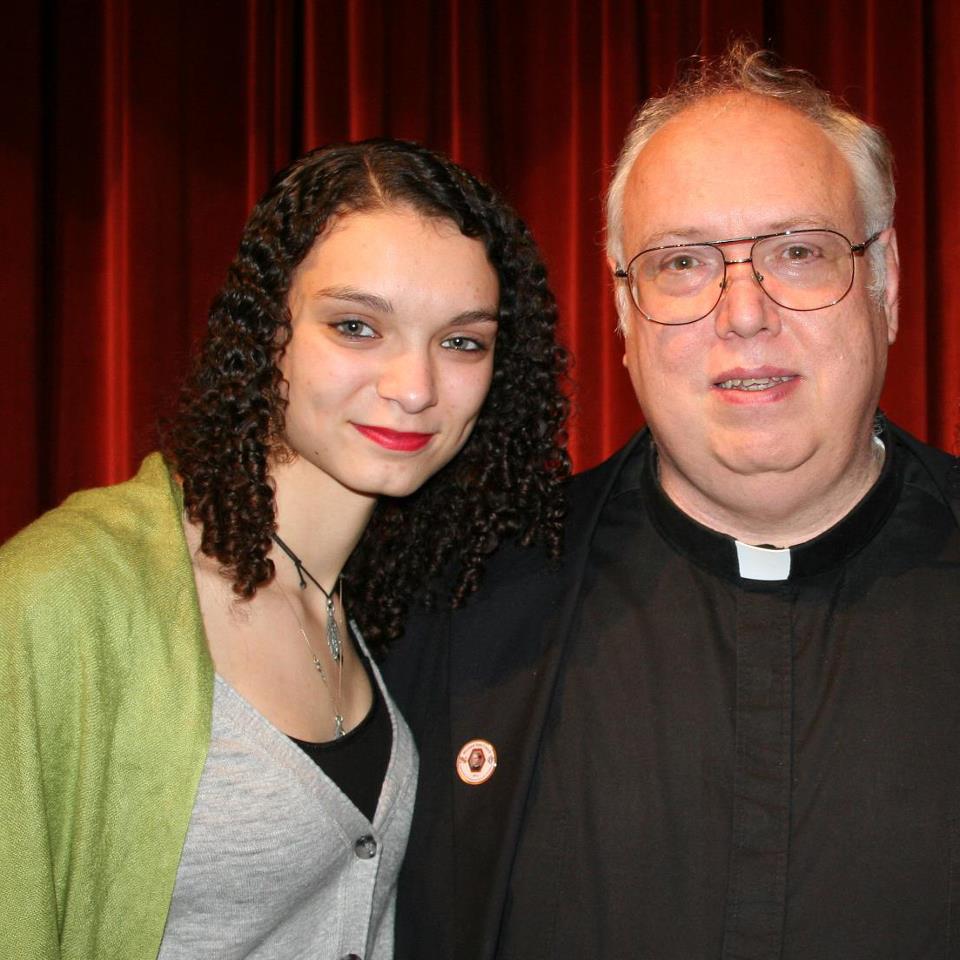
    Fr. Joseph Jenkins

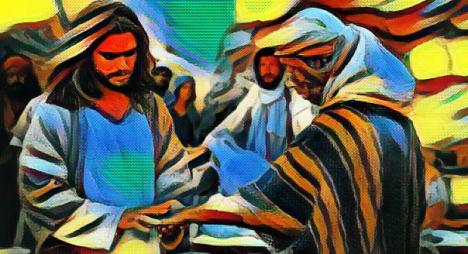
  • The blog header depicts an important and yet mis-understood New Testament scene, Jesus flogging the money-changers out of the temple. I selected it because the faith that gives us consolation can also make us very uncomfortable. Both Divine Mercy and Divine Justice meet in Jesus. Priests are ministers of reconciliation, but never at the cost of truth. In or out of season, we must be courageous in preaching and living out the Gospel of Life. The title of my blog is a play on words, not Flogger Priest but Blogger Priest.

  • Archives

  • Categories

  • Recent Posts

  • Recent Comments

    Anonymous's avatarAnonymous on Ask a Priest
    Michael J's avatarMichael J on Ask a Priest
    Jeremy Kok's avatarJeremy Kok on Ask a Priest
    Mike Zias's avatarMike Zias on Ask a Priest
    Jeremy Kok's avatarJeremy Kok on Ask a Priest

[77] Sixth Sunday in Ordinary Time

151836448978737067

Readings: Leviticus 13:1-2, 44-46 / Psalm 32 / 1 Corinthians 10:31-11:1 / Mark 1:40-45

The Levitical law about lepers was intended to protect the community from contagion; however, the individual sufferer was both physically ostracized and stigmatized as one who was punished by God.  The leper lost everything:  his place in the community, his job, his family, etc.  Indeed, failure to abide by the regulations about proximity could result in his execution.  By appearance and by proclamation, “Unclean, unclean!” he announced his coming into the local vicinity.  Sometimes the healthy villagers or families had locations where food was left for the afflicted.  Later, those suffering from leprosy would also ring a bell, particularly if they had trouble speaking.  Just as the Jewish priest passed sentence for the expulsion, if cleansed a similar process of washing and examination might allow a (former) leper to return to his family and community.  Lepers often traveled alone although some gathered for companionship or formed their own colonies.  Most were intensely afraid of any association with them.

The situation with leprosy reminds me of what was encountered by those afflicted with AIDs in the early 1980’s.  As a priest working at a hospice in Washington, DC, I quickly saw the cancer patients outnumbered by those dying from AIDs.  There were few drugs to treat it back then and the disease quickly killed its victims.  Many of the patients I visited were young men in their 20’s.  Certain rigid fundamentalists asserted that it was God’s condemnation upon the homosexual community.  Even children and others who contracted the disease through blood transfusions were vilified and segregated.  The virus was found in all the fluids of the body, even sweat and tears.  I recall one young man who wept when I anointed him with the holy oil.  Everyone who approached him was dressed up like an astronaut and wore rubber gloves.  Much to the chagrin of the staff I insisted on applying the oil with my bare hand.  When I asked the poor man why he cried, he responded, “Father, everyone is afraid to come near me.  You are the first person to actually touch me with his bare hand in over a year.”  I was summoned to another dying patient by his parents.  As I approached the door, a young man stood before me and angrily shouted, “I am George and I am his boyfriend!  What do you think about that?  He was angry and wanted a fight.  I was not going to give it to him.  I replied, “My name is Father Joe and I am so sorry about the situation.  I have come to bring the mercy and healing of Jesus, not to debate.”  I prayed with him and the poor man’s parents.  I gave him the Last Rights.  Upset at the situation and anger at the Church seemed to disappear.  This was the real face of the Church.  Jesus did not put conditions on his love.  Our Lord said that he came not for the righteous but for sinners.  He did not shy away from others but deliberately went out to the poor, the sick, the sinners and the marginalized.  How could I or any priest do any differently?  St. Paul said in the second reading today, “Be imitators of me, as I am of Christ.”  This was the manner in which we bring salvation to others.  When family and friends learned of my hospice ministry, I was assigned my own plate, fork, spoon and a cup (with my name on it).  Because of my ministerial association with modern-day lepers, many became afraid to immediately relate with me.  Fortunately, such a hysterical response has long since subsided; but it is nothing that I will ever forget.  I took comfort from the Scriptures, knowing that our Lord was condemned and spurned because of his outreach to God’s alienated people.

The responsorial exhorts, “Blessed is he whose fault is taken away, whose sin is covered… ‘I confess my faults to the LORD.’”  We are all sick.  We are all sinners.  Nevertheless, we often look down upon others as less or as more afflicted than ourselves.  Believers are always tempted to be like the self-righteous Pharisee, seeking to justify ourselves as better than others or at least not as sinful as someone else.  But sin is sin, no matter if great or small.  We are all broken and need healing.  The Church, like Christ, does not close her doors to those afflicted by sin.  Yes, we have strong views about right and wrong.  We should never compromise our moral truths.  But likewise, we should appreciate that we have all fallen short.  We live in a messy world.  We invite God’s grace to forgive and to transform us.  This process begins in the here-and-now but for some it will not be complete until the purification in the life to come.  As vehicles or prophets of grace, we need to open the doors of the faith to all who are searching for meaning and reconciliation with God.  This is a hallmark of Pope Francis’ notion of accompaniment.

The leper in the Gospel takes a terrible chance, as does our Lord.  He approaches Jesus and begs to be healed.  This “approach” itself is forbidden by their law.  Our Lord is not worried about such things.  We read, “Moved with pity, he stretched out his hand, touched him, and said to him, ‘I do will it.  Be made clean.’” The Scriptures are deliberate here.  Our Lord “touched” the untouchable leper.  He made himself unclean in the sight of the religious leadership.  This is a whole magnitude more serious than eating and drinking with tax collectors.  Even the religious leadership would partake of Matthew’s food and hospitality, although without sitting at the same table with him and other condemned sinners.  The leper was absolutely off limits.  Jesus tells the man to show himself to the Jewish priest.  This is the same process we read about in the first reading.  This man is not merely physically healed, but this act of mercy restores him socially to his community and family.  It is no wonder that he could not keep secret about this great blessing in his life.  However, word of the event causes the crowds to balloon.  Such intervention would also further harden the hearts of those who oppose Jesus.  They are more concerned about rules and their standing in the Jewish community than about the plight of the poor and hurting.

  • Are there people with whom we refuse to associate?
  • Have we ever felt abandoned or rejected?
  • Are we ever afraid to become involved or to witness Christ to others?
  • Have we belittled others through stereotypes and bigotry?


[74] Fifth Sunday in Ordinary Time

15177789398859516

Readings: Job 7:1-4, 6-7 / Psalm 147 / 1 Corinthians 9:16-19, 22-23 / Mark 1:29-39

Job speaks of life as “drudgery” or as a battle to survive.  Like “hirelings” we must work to live and to put food on the table.  This is not our true home and we are wayfarers in a foreign land.  We are a “slave” to the mortal condition, longing for leisure and comfort from our toil.  One might summarize his remarks thusly:  life is hard and life is short. When he speaks about the lack of hope and that he “shall not see happiness again,” he is speaking about the fleeting joy or satisfaction this world offers.  Job is not spurning God but he does indicate that there is something about the mystery of pain that remains unintelligible.  Any of us who have endured loss or grown old or know sickness and pain can add our voices to the truth of what Job says.  We get older and know that there are more days behind us than before us.  We appreciate that our bodies fail us and there are some ailments from which we will not recover.  Pain becomes the constant companion to many of us.  While as Christians we trust that the Lord can restore all that the world takes away, the world will not let go of us until it has killed us.

The Book of Job is not a testament to despair, but rather is a witness of faith against the harsh truth of existence in the mortal world.  I am reminded of St. Teresa of Avila and her appraisal as a Christian of hardship. She was on her way back to the convent during a torrential storm.  She tumbles down an embankment into a pool of mud.  Dragging herself out, she looks up to heaven with this address to the Almighty:  “If this is how you treat your friends, it is no wonder that you have so few of them!” Perpetually in conversation with God, her assessment is no affront to the deity, but is a tenacious expression of an existential truth in facing the mystery of suffering.

Visitors to his home attempt to convince Job that his dire plight must be a punishment for some crime or sin.  The Jews saw this view as safeguarding God’s goodness and divine justice.  Suffering is perceived as self-inflicted or as the price for sin.  That assessment also feeds into our notion of original sin.  God as the creator is good and in no way can be the source of evil.  Sin is the consequence of our violation of freedom— a transgression of the moral law— and is an offense against God, the divine lawgiver.  It follows that God as the just judge rewards good and punishes evil.  This reckoning of the moral order would have us interpret suffering as “justified evil.”  However, the story of Job, while not invalidating this stance, shows that it is overly simplistic.

Pope John Paul II writes in Salvifici Doloris that Job is “the story of this just man, who without any fault of his own is tried by innumerable sufferings… loses his possessions, his sons and daughters, and finally he himself is afflicted by a grave sickness.” Job honestly reflects upon his life and upon the good he has done.  He can see no grounds upon which he deserves the punishment that comes to him.  “In the end, God himself reproves Job’s friends for their accusations and recognizes that Job is not guilty. His suffering is the suffering of someone who is innocent and it must be accepted as a mystery, which the individual is unable to penetrate completely by his own intelligence.”  The notion of an innocent victim will find its prime paradigm in Jesus Christ.  The setting for the testing of Job is one that emerges from the devil’s provocation.  “And if the Lord consents to test Job with suffering, he does it to demonstrate the latter’s righteousness.”  Francis Bacon once wrote, “In order for the light to shine so brightly, the darkness must be present.”

While life can be hard and suffering comes to all, we are admonished not to despair.  The psalm tells us, “He heals the brokenhearted and binds up their wounds.”  The Church realizes this promise by extending the message and mission of Jesus.  Our souls are healed and we know forgiveness.  One day we will be restored, body and spirit.  While we live in a world where some seem to suffer more than their lot, we are also told that “The LORD sustains the lowly; the wicked he casts to the ground.”  The innocent might sometimes suffer and the wicked may appear to flourish.  But God sees everything, and the innocent will be gifted with mercy while evil doers will merit justice.  The early Jews largely defined divine reward as wealth, power, property and children in this world.  The question of Job and suffering would move them to consider life after death.  There has to be an existence where the scales are balanced in favor of the innocent.

Most eulogies celebrate life and leave unspoken certain truths that make us fearful.  We selectively remember someone as fun to be around or who knew how to have a good time or who did not make too many demands upon us.  Nothing is said about a general lack of charity or a failure to sacrifice for others or one too self-preoccupied to worry about anyone else.  We extract a list of secular virtues that would make one well-remembered in this world but still largely unknown in the next. We mention his favorite food, that he was a fan for the local football team, and that his dog will miss him.  “We will never forget him.  He will always remain in our memories.” That is what we tell ourselves. Of course, life goes on and a short time later most would have put him out of mind.  His name will go unspoken.  Photos will be filed away in an album that will one day be opened by relatives not yet born.  They will look at his picture and wonder, who is that?  People of faith tend to focus on the positive.  They figure that we might as well imagine he is in heaven so as not to distress his family and friends.  After all, if he is in hell, who among us  will know until we are dead?  Catholics might pray for his soul as one in purgatory, but are fearful of asking others to pray with them since it means that judgment after death is real.  We are attracted to Christ as the Divine Mercy, but not so much to the Lord as Divine Justice.  Nevertheless, they are both truthful assessments about his identity. Love is stronger than death.  Love is forever and in Christ it has conquered the grave.  God will love us forever and thus he gives us a share in his life.  This is the great consolation for believers.  But we must not forget that just as the beatific vision and the joy of the saints is eternal, so is hell-fire.

St. Paul tells the Corinthians, “To the weak I became weak, to win over the weak. I have become all things to all, to save at least some.” The Christian kerygma is one that challenges basic Jewish presumptions about social position reflecting divine favor.  The apostle is literally saying that he is making himself a slave for others.  He is fulfilling the summons of Christ to take up the cross in following him.  That is fundamental to the sacrifices made by priests and religious to celibacy, poverty and obedience.  They embrace for the kingdom that which is traditionally regarded as punishment or curse.  The Christian meaning of suffering would forever be associated with the Paschal Mystery of Christ.  If we die with Christ then we can live with him.  We offer ourselves as grafted to the crucified Savior.  We take all the struggle, sickness, pain, loss, and hurt we experience and make them redemptive in the Lord.  Catholicism emphasizes that even the dark things of life can come to God’s glory.

It was this message about suffering that was a hallmark in the witness of the late Mother Teresa.  It was also a truth about which her critics despised and maligned her.  Those who saw no value in pain hated Mother Teresa.  They are the same voices that speak in favor of abortion and euthanasia, today.

Turning to the Gospel, Jesus heals Simon’s mother-in-law. Later, we are told that “the whole town was gathered at the door. He cured many who were sick with various diseases, and he drove out many demons, not permitting them to speak because they knew him.”  Everyone he healed would get sick and die.  All his miracles and healings pointed to the lasting healing of the soul, in the forgiveness of sins.  He will give us a share in his Easter mystery.  Jesus is the revelation of the Father, the face of God.  When our Lord acts, it is always to heal and to liberate.  All who suffer can find solidarity in Christ.

  • When we cannot escape pain, do we become frustrated and angry?
  • Have we ever embraced suffering and discomfort as mortification and penance?
  • How do we take up our crosses in following Jesus?
  • Can we add our struggle to the passion of Jesus as an offering to the Father?
  • Do we place our hopes in what this world offers or in the kingdom of Christ?
  • If we should die today, are we prepared for judgment?
  • Have we experienced cases where the wicked flourished and the innocent suffered?
  • While we believe that the scales of justice will be balanced in the world to come, what is our obligation to building up the kingdom in the here-and-now?


A Cold Wind Blows Against the Cross

151768519222713340

The Cross of Jesus literally marks the spot.  It pierces the icy heart of a fallen creation. Our Lord enacts his claim upon the world with two pieces of wood.  Nothing would ever again be the same.  However, not everyone would be saved.  God come down from heaven had infinite power; but the price of freedom was that this deity would become small and vulnerable.  He would compress himself into the finite.  The mysteries of sin and death had been conquered but not undone.  During the time of unraveling there would still be iniquity, sickness and suffering.  The world’s harmony would remain broken, at least until the day of final consummation.

All would one day be light except for one very tiny corner, a crack where the irreformable would hide as specks in the shadow.  Life is eternal.  Ours is not a deity who forgets or annihilates his creation.  The blessed see God and know his joy.  The damned cower blind in the darkness and suffer hell-fire.

Our Lord came with a message about God’s love and the brotherhood of man.  The angels once sang songs to the newborn Prince of Peace. A promise of peace was extended to men of good will.  But this did not mean that all men who came to the manger would be good.  Indeed, it would be even less so when men came to Calvary.  Christ would die for sinners.  But would sinners live for Christ?  We have all played the part of betrayer, some like Peter who would reconcile and others like Judas who would despair.

After a few generations the Roman Empire became Christian.  But was the empire truly converted or was it the faith that was compromised?  The floodgates opened and the Church blossomed.  However, the world did not suddenly become a heaven on earth.  Some teachings were thrown aside, especially those about putting away the sword, about loving our enemies and about forgiving those who hurt us.  Hypocrisy was frequently the poison to the potion of faith.

I suspect our Lord shivered on the Cross, knowing the cold indifference and duplicity of men who would claim to belong to him.  All in his name, but really due to the hardness of hearts, many would be spurned, tortured and murdered as heretics, apostates and infidels.  Victims would be burned at the stake and heads chopped off.  Crusades would be fought against those who refused to accept Christ and wars enacted against those Christians who broke away from Holy Mother Church.  That cold wind that blew upon Golgotha must have been a terrible wind, indeed.  Naked to the cold, our Lord would die, not for the innocent, but for the guilty.

The true face of the Church would not show itself with earthly kings and the sword; rather, it would emerge in the witness of unarmed missionaries and those risking their own wellbeing in caring for the sick and suffering.  The model of Christ is not that of a king dressed in splendor but one attired in work clothes.  Even these would be reduced to rags as he is the king who lays down his life for his subjects.  He makes himself the slave of all and summons his followers, especially the one called ROCK to be the servant of the servants of God.