



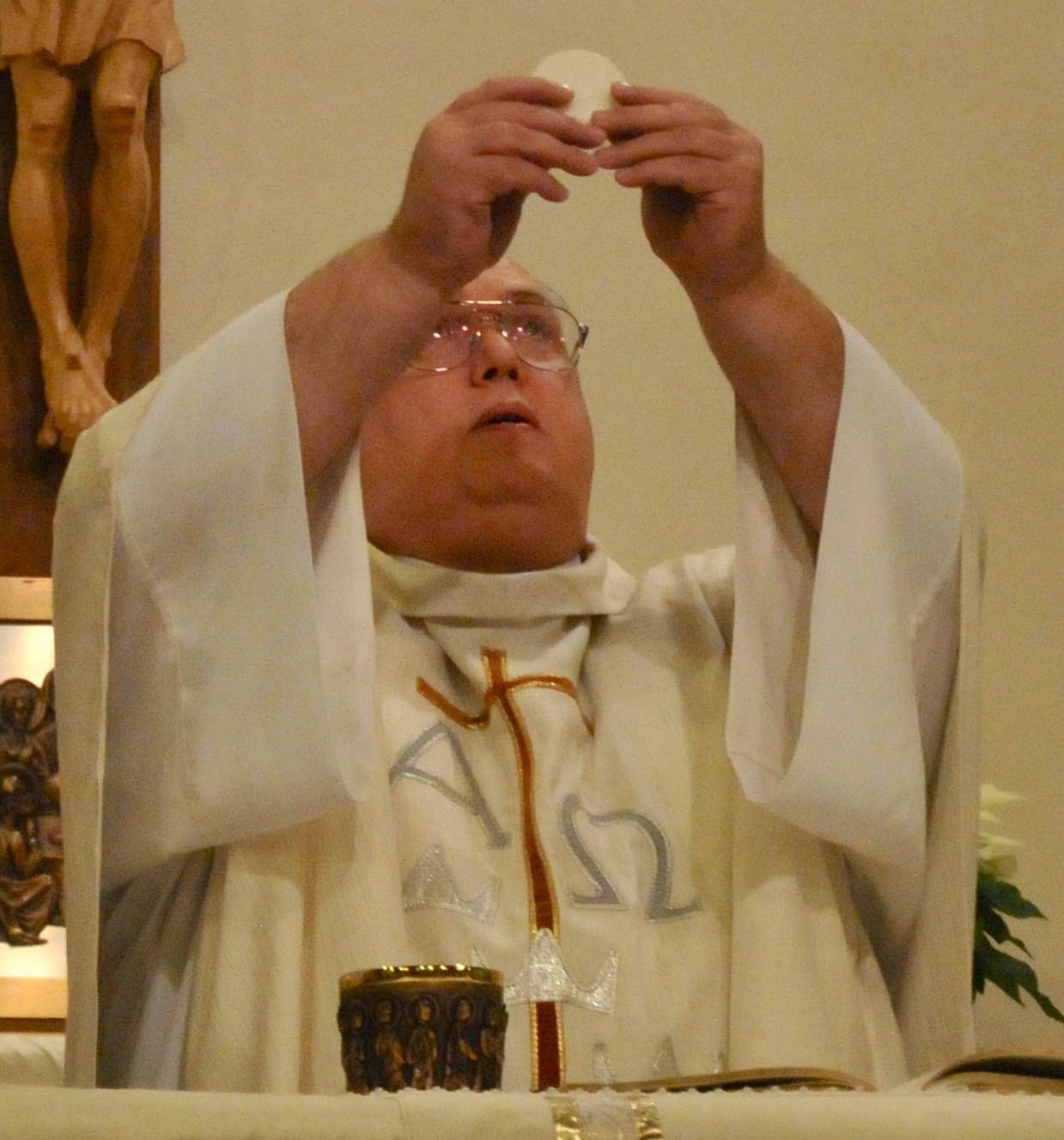









 What was said about the significance of the bread at the Offertory can be said of the wine that is changed into the sacramental-physical presence of the glorified Christ. No whether one receives the host or from the cup, one receives the whole and entire Christ. The sign value of the separate consecrations of the bread and wine is that we are proclaiming the death of Christ. Such was shown in his last moments by the separation of blood and body on the Cross— the sign of death. We need our drink as we need our bread for sustenance. So the Lord tells us to drink his blood as an indication of its life-sustaining value. As ordinary liquid is to our human life, the wine turned into precious blood sustains our spiritual life. Why did our Lord use those apparently indelicate words: “eat, drink, body and blood” in connection with the Eucharist? The words, “body and blood,” make it abundantly clear the kind of presence in the Eucharist. It is not the presence as hailed in God’s proclaimed Word, the Scriptures. Nor is it the same as in us when we are in a state of grace. Rather, it is the real substantial, living and glorified Christ. The only place his “physical” body is present is at the right hand of the Father and in the Eucharist. This is why we call it THE REAL PRESENCE. Not that the other presences are not real, but this is the presence par excellence. We respond to that spiritual reality by saying, “When we eat this Bread and drink this Cup, we proclaim your Death, O Lord, until you come again.” He does not die again, but his real presence is actualized and presented to us in the Eucharist. Of course, Christ cannot suffer again, but the Mass makes present the death and resurrection of Christ. His dispositions at Mass are the same as they are on Calvary; he is obedient to his Father’s will and offers praise and thanks to the Father. The Eucharist is not only a divine presence, but a divine activity. He who is present is above and beyond time; he makes his death-resurrection present to us. The sign, bread and wine, changed into the body and blood of Christ under the appearance or accidents of bread and wine, does what they signify. Life, nourishment, strength and healing come to us from the Eucharist on our way to our Father’s house. Indeed, it is Christ under the appearance of bread and wine that helps us on that journey.
Filed under: Awalt Papers |











 Blogger Priest
Leave a comment