



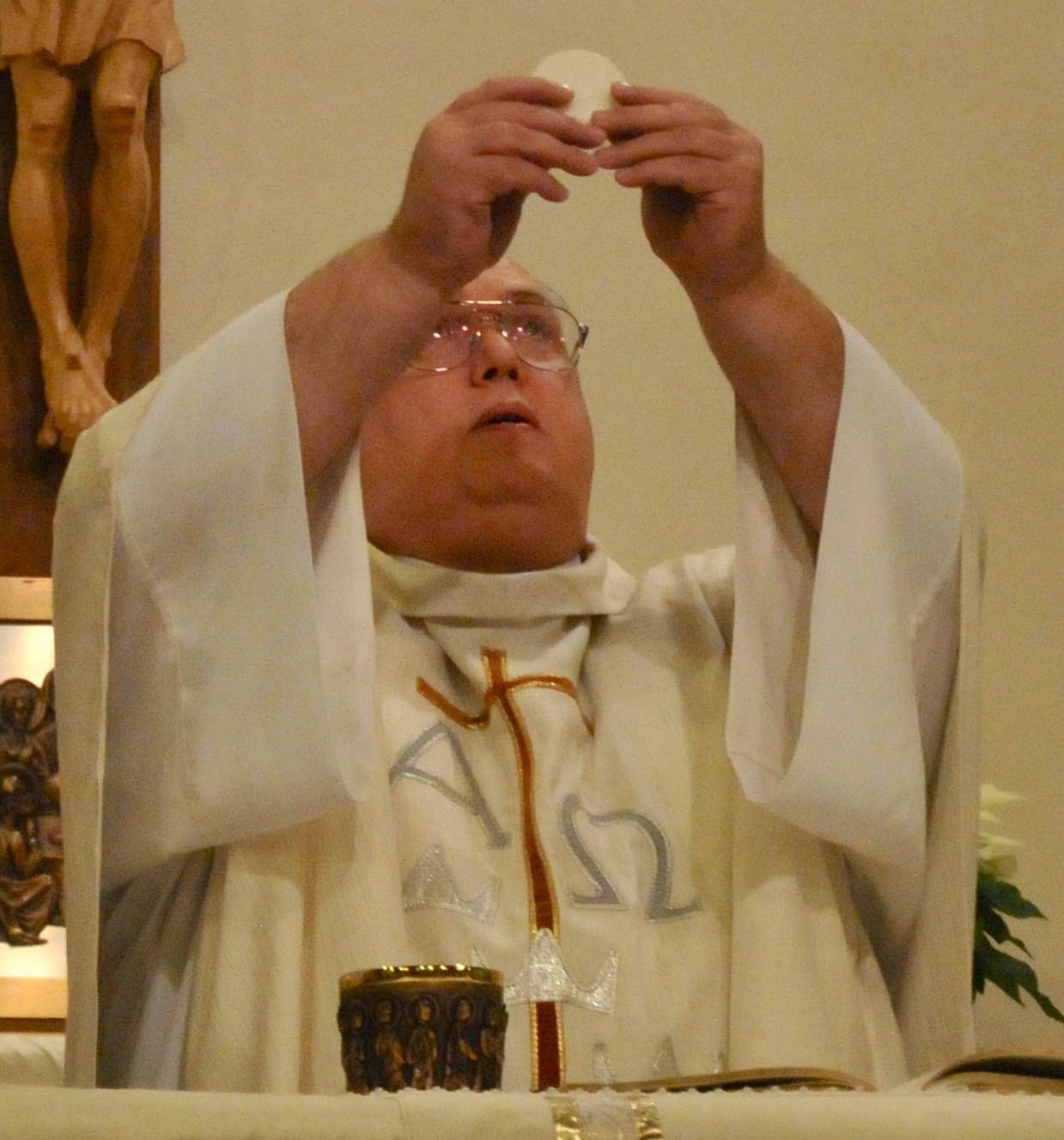










 Sometimes we receive communion under both species, which is the consecrated bread and wine. Reception under both species does not mean that we receive more than when we receive under one species. The sick person who can only swallow a fragment of the host receives the whole resurrected Christ. The one who only drinks of the consecrated cup receives the whole Christ. While there is a separate consecration and then elevation of the host and chalice, either communion with the consecrated bread only or the consecrated cup only brings us the whole living presence of Christ. We might speak of this as a physical presence, but given that we use sacred signs, we more properly refer to it as a sacramental presence. It is still the REAL Jesus. St. Paul says, “Whether you eat this bread or drink this blood unworthily you are guilty of the body and blood of Christ.” So why did Christ seemingly separate the host from the cup? It was a sign of the manner in which Christ is present and comes to us. Christ could have said simply, “It is I,” or “I am there.” But when the words, body and blood are used, it differentiates that presence from the other modes in which God is present with us. This is the sacramental-physical presence of Christ which is different from his spiritual presence as when we come together for prayer, when Christ is in us by grace, and when Christ is present in the reading of the Scriptures. There is no doubt that when Christ used the words “body and blood” we are talking about the actual substantial presence of Christ. The host is not just a part of Christ. The whole physical presence of Christ comes to us either in the host or in the precious blood, taken together or singly. Also, the two consecrations of the host and wine are signs of Christ’s death. His body seemingly separates from the blood. The blood seemingly separates from the body. A living body has blood and the blood courses its way through a living body. Later in the Mass, when the priest drops a particle of the host into the chalice, he says, “May this mingling of the Body and Blood of our Lord Jesus Christ bring eternal life to us who receive it.” Seemingly, this looks like a reunion of the body and blood, but it is a sign again of the resurrected Christ. It is the sacramental-physical resurrected Christ we receive in communion.
Editor’s Note: Msgr. Awalt likes to use the word “physical” in reference to the real presence in the sacred species. It is not his desire to circumvent the more inclusive “sacramental” presence. He simply wants to stress the fact that the presence is substantial and genuine. We are not dealing merely with a spiritual or ghostly presence. Language falls short to express the Eucharistic mystery. I have hyphenated the word “sacramental” to his word “physical” to help avoid confusion. A figurative or empty symbolic representation would be no authentic presence at all. A spiritual presence would speak to Christ’s soul and his divinity, but not to the full implications of the bodily resurrection. A mere physical presence might be crudely understood as the presence of a corpse. It has pained me to hear some teach the real presence in such terms, as if the Eucharist is merely our Thanksgiving turkey ready for the carving. Jesus is sacramentally and substantially present. The Eucharist is the risen Lord, whole and complete. He is totally present in every fragment of the host and in every drop of the precious blood. This point is what the late pastor tries vigorously to emphasize.
Filed under: Awalt Papers |












 Blogger Priest
Leave a comment