




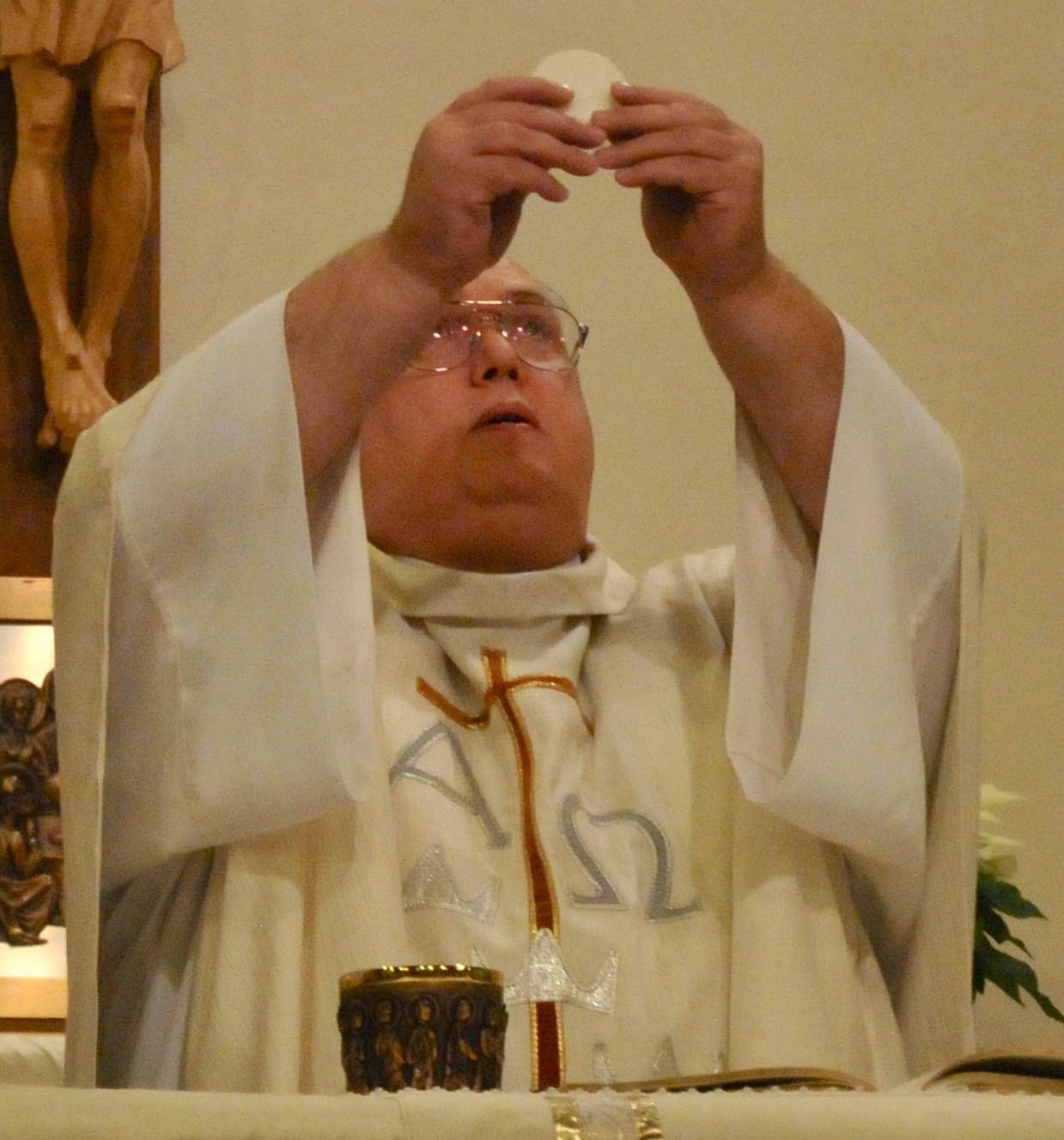











 When a bishop offers Mass, he greets the people with “Peace be with you.” At the sign of peace, the priest acknowledges their unity in Christ by saying, “The peace of the Lord be with you always.” In both cases, the congregants respond, “And with your spirit.” This extension of peace and variations on the dialogue response are frequently used in the liturgy. When congregations are scattered throughout a large church, instead of the handshake, some make the symbolic “V” sign with their fingers. The “V” sign that was so significant in years past is not seen as much today. After the Second World War it signified victory. During the 1960’s it was a secular sign of peace. But in either case, we ought to rediscover what these words and that gesture mean. This is particularly true of that which is commonplace in the liturgy. What finer salutation can the celebrant at Mass make to the congregation than “the Lord be with you.” It is a wakeup call to the indwelling of God in our souls for those in a state of grace. God, who is all powerful, all merciful, and all wise, lives in us. Do we speak to God present there? God is present in us, in our celebrant and in our neighbor. Are we conscious of that in our dealings with each other, or is the ritual so routine or commonplace that it stirs us not at all? This phrase is put into action at the “sign of peace,” when by any decent gesture we may choose (it is not specified), we greet each other. We often see a quick kiss between spouses, a hug or a handshake. We extend to each other God’s peace. It has a deeper meaning than renewing old friendships and just being polite socially. Our appreciation of peace comes from the Hebrew word, “shalom,” as peace is our devout desire and prayer for our co-worshippers. It is not a Dale Carnegie greeting or a “hail fellow” well met— it is deeper than that. Try to think of difficult neighbors as being vicariously present in the person standing next to you. Do we really forgive them? Do we ask to be forgiven, as in “Forgive us our trespasses as we forgive those who trespass against us”? SHALOM means not just the absence of hostility. It means things that cannot be fully expressed in a single word. This peace means forgiveness, joy, comfort, support, tranquility and God’s presence with you. This is a great preparation for communion, which expresses our unity in the Body of Christ. Peace be with all who read this. Let us be cognizant of what we say and why we are saying it.
Filed under: Awalt Papers | 1 Comment »














 Blogger Priest