












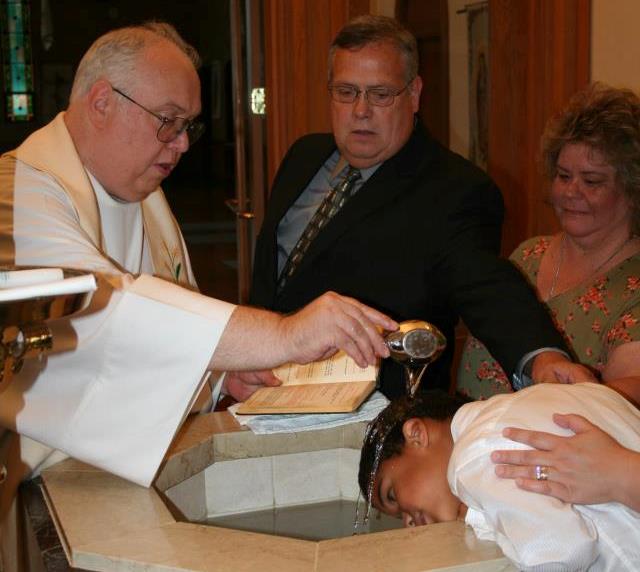





 Another important Catholic sacramental is oil. Either in the back or in an upper corner of the church sanctuary there is a small cabinet (modern ones often have glass doors or windows, but they can also be solid wood or metal) called an ambry. This cabinet contains the holy oils used in the administration of the sacraments. These oils are blessed during Holy Week by the archbishop (or bishop) and distributed to parish priests to be kept in a special place until needed for the sacraments. The oils are used in Baptism, Confirmation, Holy Orders and the Anointing of the Sick. The first three are one-time sacraments; the fourth can be administered repeatedly as long as the infirmed person is alive. One is called the Oil of Catechumens or the Oil of Baptism. Small infants and converts receive this oil before being washed in the waters of Baptism. As of old, athletes would receive oil on their bodies to keep opponents from securing a grip on them in a contest. Our struggle as Christians is not merely against enemies of flesh-and-blood, but Satan. This anointing with the Oil of Catechumens is to prevent Satan from getting a grip on us. The Oil of Chrism in its spelling looks like the Oil of Christ. It is used in Baptism after the pouring of the water and it expresses that we are bonded to Christ and must act like Christians. It also reminds us that we are by our Baptism made members of God’s family and we should act accordingly. Children are anointed as priest, prophet and king. Following Baptism or Reception, adults are usually Confirmed with the Chrism and given a more full share of the Holy Spirit. Chrism is also used in ordinations. The Oil of the Sick or Infirmed is used in grave illness or accident to bring healing and to join our crosses to that of Christ. We are reminded that we do not suffer alone. Rather, we make up in ourselves that suffering wanting in Christ’s suffering. It is not that he did not suffer enough; rather, we suffer some things that Christ did not suffer and join those pains to the sufferings of Christ. The ambry containing these oils may be near the baptismal font although it is traditionally close to the altar where the re-presentation of the death and resurrection of Christ takes place at Mass.
Filed under: Awalt Papers | Leave a comment »

















 Blogger Priest