




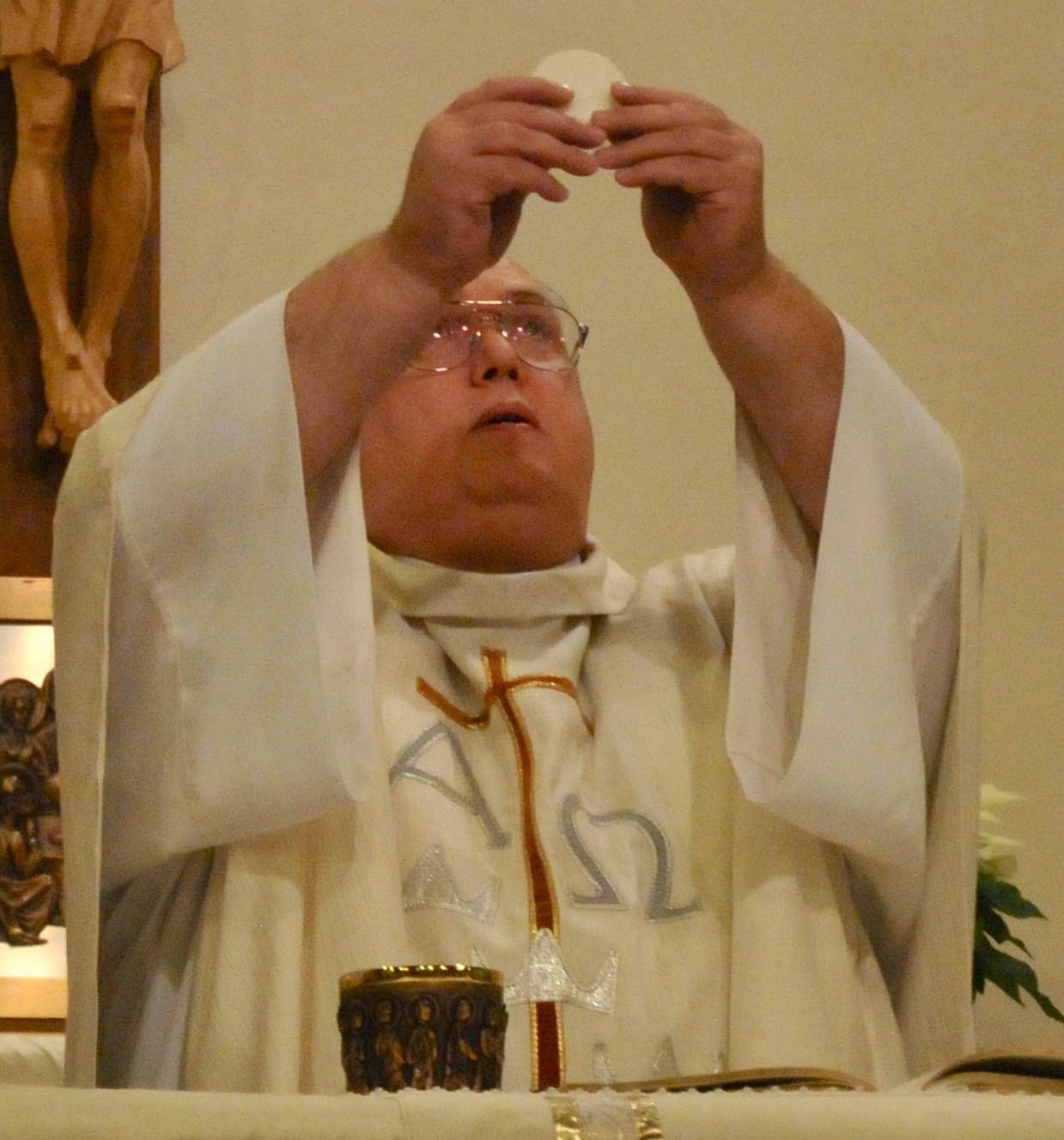











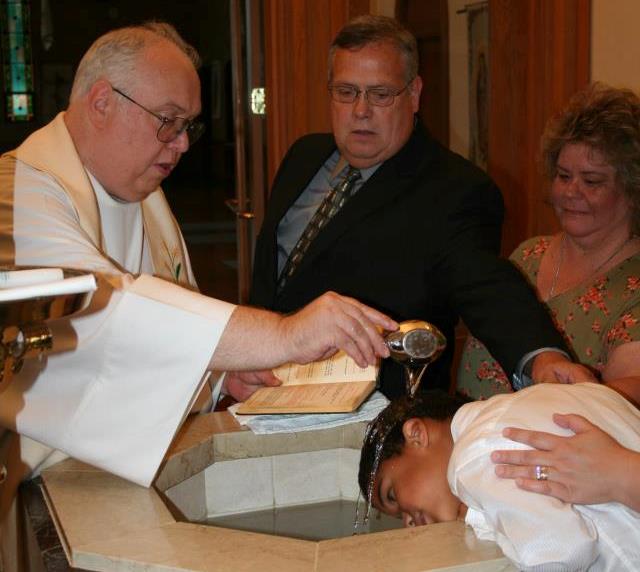






The information about vestments that follows was derived in part from Rev. Richard Kugelman, C.P.’s introduction to the Saint Joseph Daily Missal published in 1957.
For the Priest
The Amice – A square of white material (traditionally linen) wrapped around the neck and covering the shoulders. [Today some albs have a higher collar to replace the amice.] During the Middle Ages, the amice was worn as a hood to protect the head in cold churches. The amice symbolizes the “helmet of salvation,” i.e. the virtue of hope (1 Thess. 5:8), that helps the priest to overcome the attacks of Satan.
The Alb – A long white garment reaching to the feet, it symbolizes the innocence and purity that should adorn the soul of the priest who ascends the altar.
The Cincture – The cord used as a belt to gird the alb. It symbolizes the virtues of chastity and continence required of the priest.
The Stole – Roman magistrates wore a long scarf when engaged in their official duties, just as our judges wear a court gown. Whenever a priest celebrates Mass or administers the sacraments, he wears the stole about his neck. Vesting for Mass, the priest traditionally begged God to give him on the last day the “garment of immortality” that was forfeited by our sinful first parents.
The Chasuble – It is the outer vestment put on over the others. Returning to its original shape, contemporary chasubles are full garments, shaped like a bell and reaching almost to the feet all the way around. During a bad artistic period, the 18th and 19th centuries especially, the chasuble suffered much from a process of shortening and stiffening. The chasuble symbolizes the virtue of charity, and the yoke of unselfish service in the Lord, which the priest assumes at ordination.
For the Deacon
The Dalmatic – In addition to a stole, worn from the left shoulder to the right side, the deacon may wear a dalmatic. It is an outer sleeved tunic that came to Rome from Dalmatia, whence came its name. It is worn in place of the chasuble by the deacon during Solemn Mass. It symbolizes the joy and happiness that are the fruit of dedication to God.
Msgr. William J. Awalt
Filed under: Awalt Papers | Leave a comment »


















 Blogger Priest